The University of Arizona Press

May 21, 2026
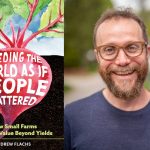
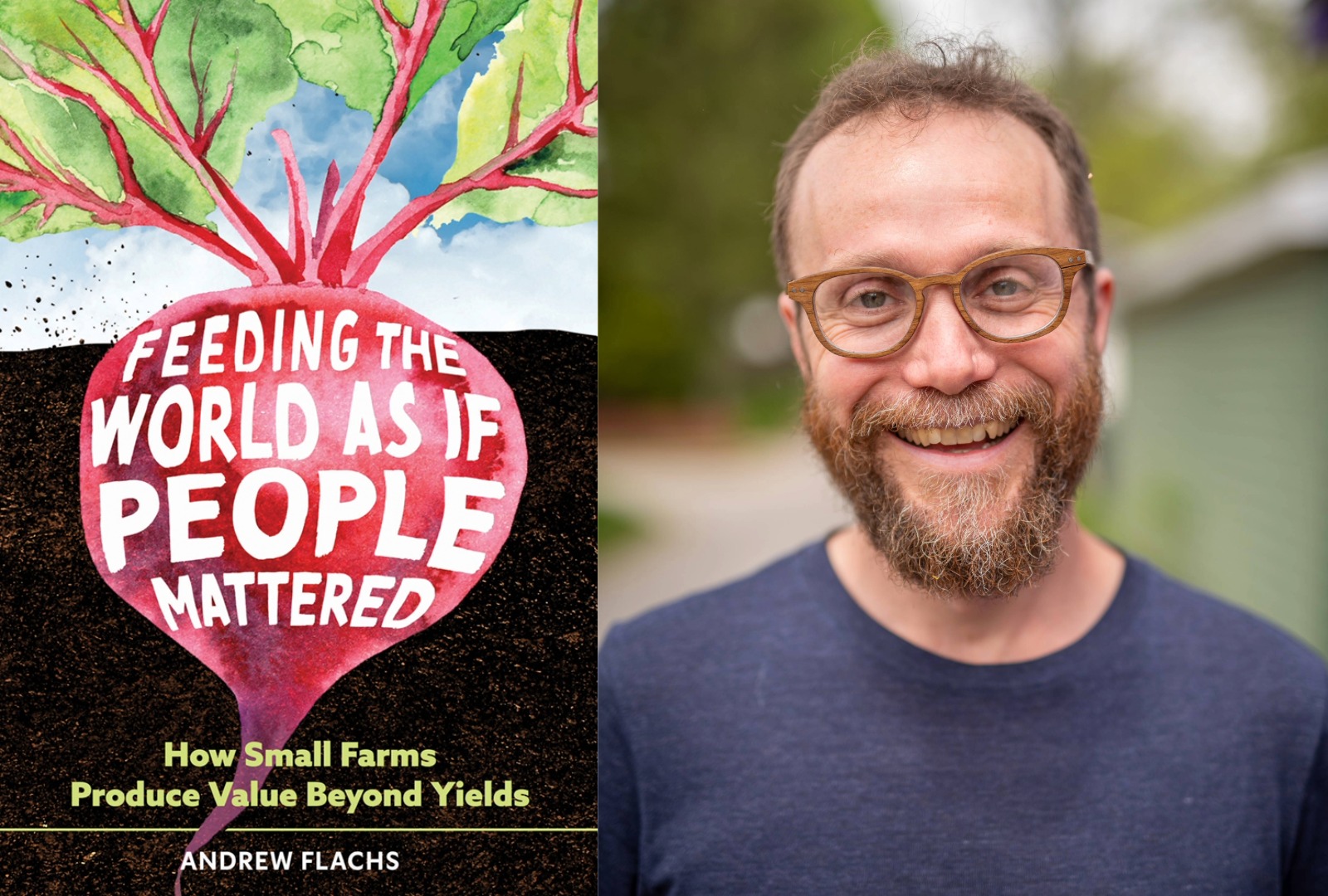
“Down to Earth, Planet to Plate” podcast host Mary-Charlotte Domandi recently interviewed Andrew Flachs author of Feeding the World as if People Mattered: How Small Farms Produce Value Beyond Yields. Flachs is an associate professor of anthropology at Purdue University, a father of two children, and a semi-retired musician.
Asked about how food became a global industrial commodity, Flachs replied that as an anthropologist, he takes a long view of 10,000 to 20,000 years. He said, “There was a lot of diversity in the past, and even in some places today, where agricultural practices actually increase biodiversity and the capacity of land to sustain life. But there was a big break around the 1300s, 1400s, and 1500s. And that reorganization we can accurately name colonialism and capitalism. This was social, political, and ecological control that is responsible for the long hangover of destructive behaviors and failure of diversity that we see today.”
Listen to the full podcast here, on Spotify, Apple or wherever you find podcasts.
About the book:
Backyard gardens flush with cucumbers, tomatoes, and peppers where bees buzz and chickens scratch. Beyond, a forest filled with blackberries and jewelweed. Inspired by childhood memories of his grandmother’s overflowing backyard garden, author Andrew Flachs has embarked on a multi-continent, decades-long look at agriculture and its value.
The dominant view of agriculture has focused only on what we produce. It sees value in terms of capital gains or yield efficiency, masking how our global food system produces tremendous amounts of food commodities while failing to feed people, support rural communities, or enhance ecological well-being. Feeding the World as if People Mattered asks us to look more deeply and more humanely at what we perceive to be most valuable in our agricultural systems.
This book draws on fifteen years of anthropological research, taking readers to fields in South India, Eastern Europe, and North America, where people are already feeding the future amid global change. From these fields, Flachs shows us how a radical rethinking of the value of small farms and farmers is already happening. Bringing together conversations in agriculture, economics, anthropology, and the environmental humanities, Flachs deftly shows how small farms reproduce social and ecological relationships that are the only sustainable path forward.