The University of Arizona Press


October 29, 2026
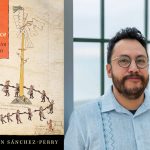
The University of Arizona Press’ podcast features an interview with Josefrayn Sánchez-Perry, author of Incense and Performance: The Lives of Mexica Ritual Specialists. Sánchez-Perry is an assistant professor of religious studies at Loyola University Chicago, whose research focuses on Indigenous traditions of Mesoamerica in the fifteenth and sixteenth centuries, including histories of science, medicine, and well-being.
Asked about how he came to the topic of Nahua ritual specialists in sixteenth century Mexico, Sánchez-Perry explained that he first came across this history in the Benson Latin American Collection at the University of Texas, Austin: “I found ‘geographic reports’ that tried to document, on a mass scale, regional and local practices across Mexico. And one thing that emerged through this research is the identification, naming, and explaining of the labor of those ritual specialists in specific communities. That is what ended up being my dissertation and turned into this book.”
Listen to the full podcast here.
About the book:
At the time of the conquest of Mexico, the anonymous authors of the Anales de Tlatelolco (1560s) recorded the deaths of two Mexica ritual specialists. During the tumultuous events of the times, Quauhnochtli (a telpochcalli specialist) and Quauhcoatl (a calmecac specialist) died protecting the temple of Huitzilopochtli and his bundled embodiement in the neighborhood of Huitznahuac.
Scholar Josefrayn Sánchez-Perry reconstructs the lives and labors of the two specialists, articulated through Nahuatl-language texts, material culture from neighborhood and temple spaces, and the academic study of religion. The book expands on known theories on Mexica ritual specialists by providing new insights about telpochcalli and calmecac duties, their interrelated educational models, and the collective practices that brought people, animals, flora, specialists, and teteo (more-than-human forces) together. The book demonstrates that telpochcalli and calmecac specialists shared the ritual responsibilities of collective and elective practices.