The University of Arizona Press

September 2, 2025
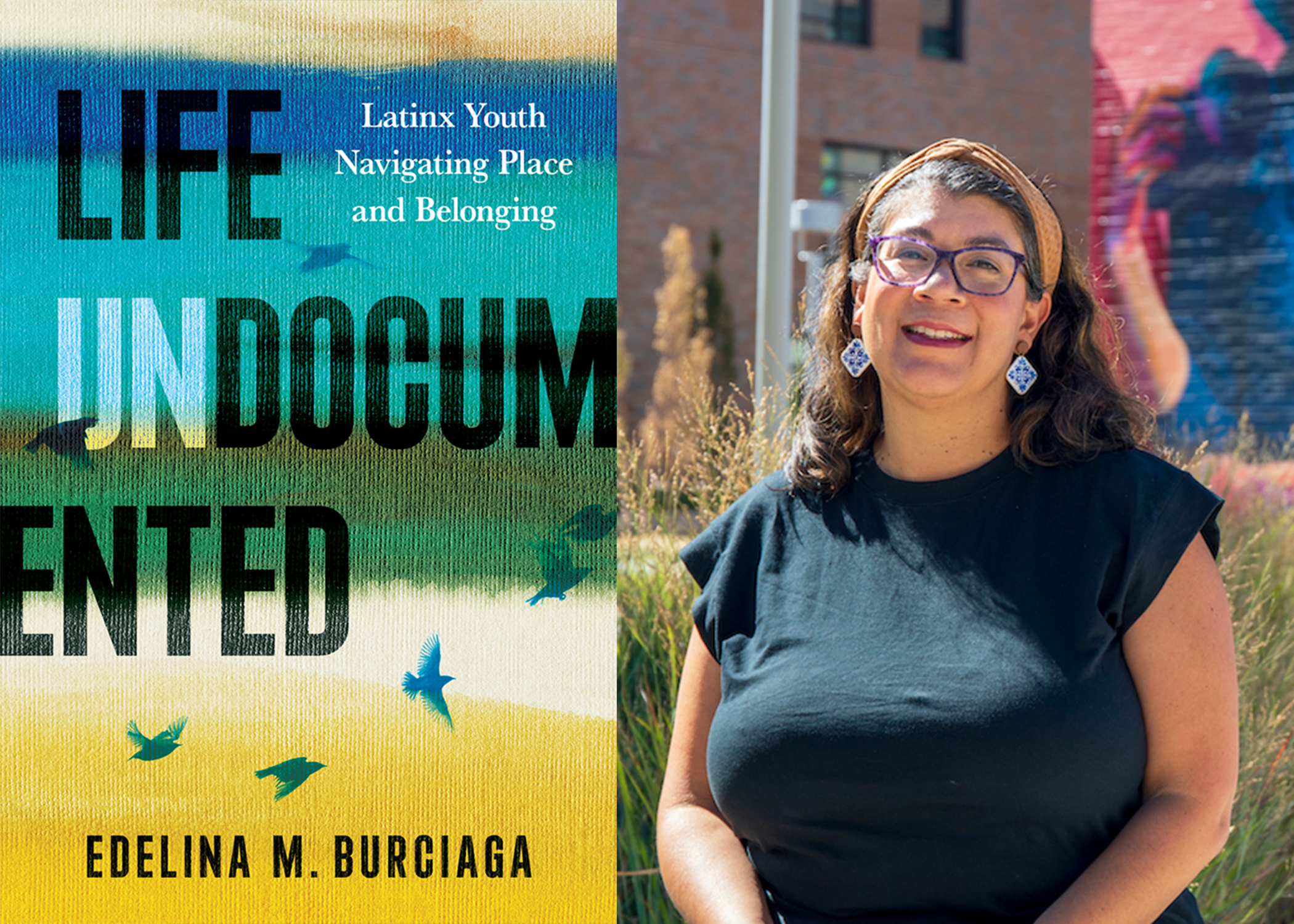
Life Undocumented: Latinx Youth Navigating Place and Belonging by Edelina M. Burciaga captures the compelling stories of Latinx undocumented young adults growing up and living in two distinct sociopolitical contexts: California, which provides legal pathways into higher education for undocumented youth, and Georgia, which does not.
The book is about how undocumented young adults in these two contexts navigate the pathway to and through adulthood, and the powerful role state laws and policies play in shaping their prospects for social mobility and their sense of belonging. Burciaga examines how state laws and policies in California and Georgia shape the pathways to adulthood for these individuals. California, with its supportive legal frameworks, contrasts sharply with Georgia’s restrictive environment, highlighting the significant impact of state-level immigration policies. Read an excerpt from the book’s Introduction below.
Vanessa, an eighteen-year-old Deferred Action for Childhood Arrivals (DACA) recipient, greets me at the door to her home in the Atlanta metropolitan area. It is a mid-weekday morning, and as we sit at her family’s dining room table, Vanessa and I discuss how she and her family ended up in the Atlanta area, migrating from Uruguay when Vanessa was six years old. Like many immigrant families, Vanessa’s father was the first to migrate to the United States, and she, her mother, and her brother followed three months later, migrating on a ninety-day tourist visa. Vanessa started kindergarten at a local elementary school and quickly picked up English. Within that same school year, she moved to first grade and was identified as gifted, remaining in advanced courses through high school. When Vanessa entered high school in 2010, Barack Obama had been president for about two years. In her first year of high school, Vanessa wrote three essays about what it was like to be an undocumented immigrant living in Atlanta, Georgia. She shared that at the time, she was “really tired of people saying that I’m an alien, that I’m ‘illegal,’ that my parents are freeloaders, that I’m a freeloader. Because I’m not. I have struggled my whole life. We pay taxes. We do all of these things.” She chose “the best essay,” recorded herself reading it, and posted the video to YouTube. She was shocked when there were a thousand views in three days. The video also received the attention of her high school principal, who advised her to “lay low” until she turned eighteen, and Vanessa followed his advice, instead focusing on school and her goal of getting into college. Nevertheless, making the video did have one unintended benefit, as Vanessa was connected to a small group of other undocumented students in her high school. By her senior year, Vanessa knew that college would be expensive, but she did not know yet about “the ban” or the University System of Georgia Board of Regents Policies 4.1.6 and 4.3.4, which together effectively exclude undocumented students living in the state of Georgia from attending a public college. Although Vanessa graduated at the top of her high school class and would have been eligible for a state-funded scholarship to attend the University of Georgia, she instead found herself taking a “gap year” as she waited for admissions and funding decisions from out-of-state colleges—a prospect that caused anxiety because she played an important role in her family. She articulated her worries about the possibility of leaving for college in this way: “By me leaving, it’s like who does my mom have to talk to during the day because, like, my brother doesn’t speak well in Spanish, the kids [her younger siblings] don’t speak very well in Spanish. Who is she going to talk to? And my dad, who is going to help him with work problems because he can’t really, like, he can’t express himself well, but you know, it’s just [trails off] . . . Who is going to help my brother out with his homework, who is going to help my other [younger] brother with his homework?”
Vanessa’s experience is emblematic of the experiences of many of the undocumented young people I interviewed in the Atlanta, Georgia, area. Like Vanessa, they were caught between wanting to realize their dreams of going to college close to home and being excluded by restrictive policies in the state. Because of the anti-immigrant context in the state of Georgia, these young people played an important role in their family’s lives, helping them navigate daily life and long-term family goals, as Vanessa described. In sharp contrast, I met Miriam for our interview at her college campus in Southern California. Miriam, a nineteen-year-old DACA recipient, migrated to the United States when she was five years old on a tourist visa with her mother and two sisters. Like many undocumented immigrants, Miriam’s family migrated to Southern California because they had family in the region. Miriam’s father and mother had been living in the Los Angeles, California, area for a year while Miriam and her sisters stayed with their grandparents in Mexico. Miriam’s mother returned to Mexico to bring Miriam and her sisters to California. Miriam recalled they made the trip around her fifth birthday and her mom promised a trip to Disneyland. While the possibility of visiting Disneyland was enticing, Miriam was most excited to see her dad and to have her family be together again. Miriam started kindergarten and, like Vanessa, she learned English quickly and excelled in school. But she also learned early on that she would need to advocate for her education, revealing the everyday complexities of race, immigration, and educational opportunity. During our interview, she shared,
When I went to kindergarten, my teacher used to treat me like I didn’t know anything. She would forget that I was even there. When they [the other students] would start learning the alphabet, they would change me
to a class where a teacher actually spoke Spanish, so that I could learn the alphabet in Spanish, but I already knew it. So, it made me angry. I told my mom that I wanted her to go to the principal’s office and tell them that I didn’t want to be changed to a different classroom. She went, and they got into a fight, but at the end of the day, I was able to stay in my class. I started learning more English then.
By 2014, the same year Vanessa graduated from high school, Miriam was applying to colleges. Unlike Georgia, California has been at the forefront of educational access for undocumented students. California enacted Assembly Bill (AB) 540 in 2001, extending in-state tuition to eligible undocumented students. By 2013, as Miriam was aware, “The California Dream Act was already in order.” The California Dream Act, AB 130 and AB 131, extended state and institutional financial aid to undocumented students who are ineligible for federal financial aid, making it slightly easier for undocumented students to pay for college. While Miriam confronted various barriers throughout college related to her legal status, she planned to graduate in three years and attend law school or graduate school. She shared, “I’m supposed to graduate in 2017. I plan my life a lot, so I have different plans: Plan A, Plan B, Plan C, and everything after that. Plan A would be to graduate from here [college] and go directly to New York University or Cornell to study international law. Maybe get a dual degree, a PhD. But if there’s nothing I can do about the whole [immigration] reform, I’m probably going to end up going to a law school here in California because I can practice here in California.” Although she was cautious about making declarations for her future because of her legal status and an uncertain policy context at the federal level, she was poised to experience the type of social mobility that the “American Dream” promises.
Edelina M. Burciaga is an assistant professor of sociology at the University of Colorado, Denver. Her research focuses on undocumented Latinx youth in the United States, examining how state and local laws shape their transition to adulthood. She has conducted studies in California, Georgia, Colorado, and Arizona. Burciaga’s work has been published in several academic journals, contributing to the understanding of the experiences and challenges faced by undocumented immigrant young people in the United States. Burciaga has published her research in journals including Law & Policy, Ethnicities, Mobilization: An International Quarterly, Association of Mexican American Educators Journal, Journal of College Admissions, and elsewhere.