The University of Arizona Press

September 25, 2025
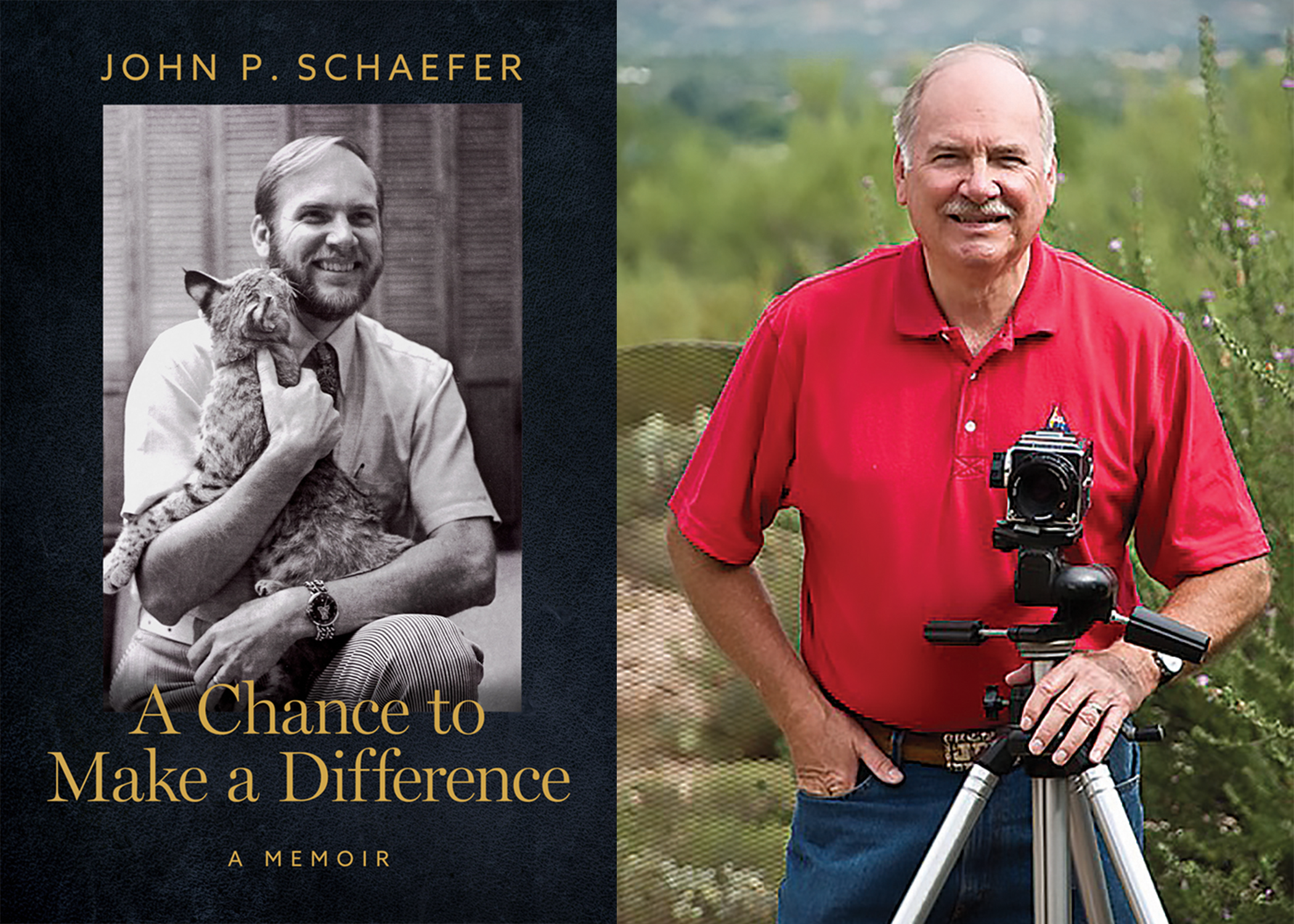
John P. Schaefer was only thirty-six years old when he assumed the role of fifteenth president of the University of Arizona in 1971. Earning a PhD in chemistry in 1958, Dr. Schaefer’s career skyrocketed through the ranks of academia, moving him from junior faculty to university president in a mere decade. As president, he led the University of Arizona through a transformational period of growth and is credited with securing the university’s status as a top-tier research institution.
His new memoir, A Chance to Make a Difference, recounts poignant, eye-opening, and often humorous stories from childhood to presidency, revealing the characteristics of an inspiring university leader.
Today, we go on a short virtual tour of the University of Arizona to explore Schaefer’s legacy and highlight a few anecdotes from his memoir.

Describing the summer of 1961 after his first year in Arizona, Schaefer recalled, “The chemistry building was not air conditioned. I began to arrive at seven in the morning to beat the heat. The laboratories were so hot that I came to work in shorts and a T-shirt every day…I decided to buy an air- conditioning unit myself. ‘Sorry, you can’t do that. It’s against university policy. The only reason for allowing the installation of an air-conditioning unit is if it’s required to protect a sensitive instrument.’ Faculty members were clearly not sensitive instruments, worthy of preservation or protection.”
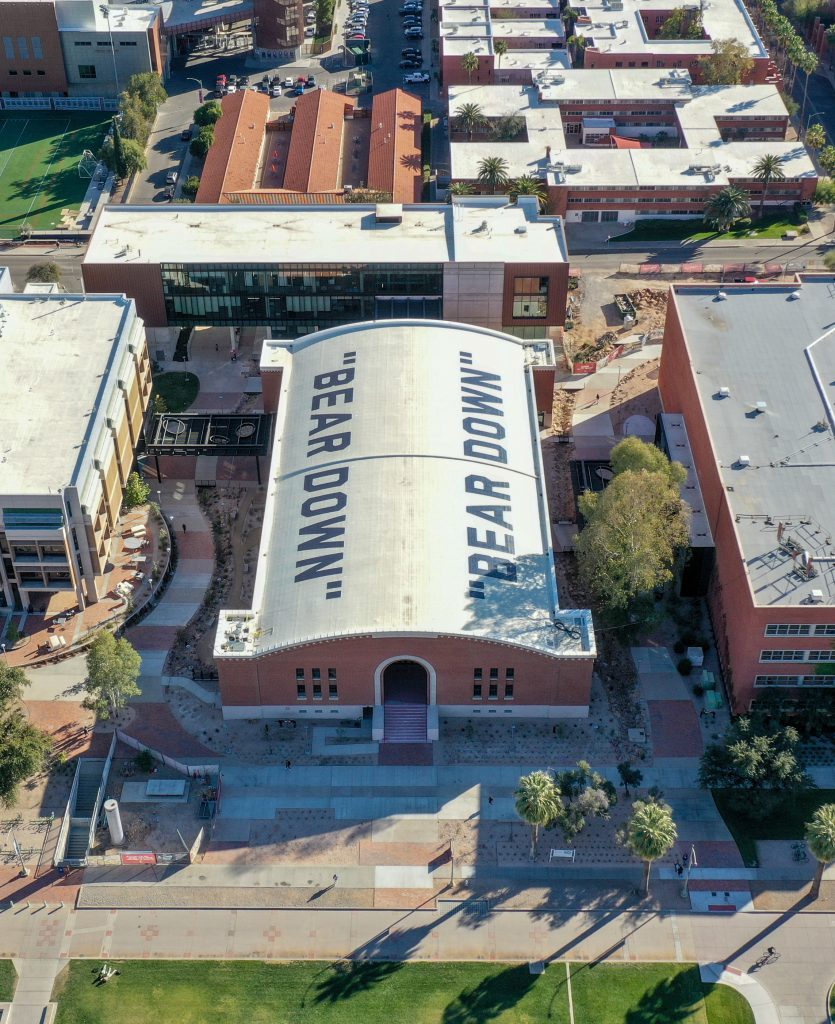
“The records of the University of Arizona in football and basketball compared to Arizona State University and others resulted in [President Richard] Harvill being labeled as anti-athletics by boosters and alums. The football facilities were unlikely to attract aspiring stars. Basketball was being played in Bear Down Gym, built in 1926. With fold-down bleachers, it could seat a few thousand spectators, but it was rarely filled. However, Harvill and [Richard Clausen] succeeded in getting funding to build McKale Memorial Center, a state-of-the-art arena with office space and facilities to house the entire athletic department. The basketball court would seat over fourteen thousand fans. That would prove to be a catalyst for change and progress.”
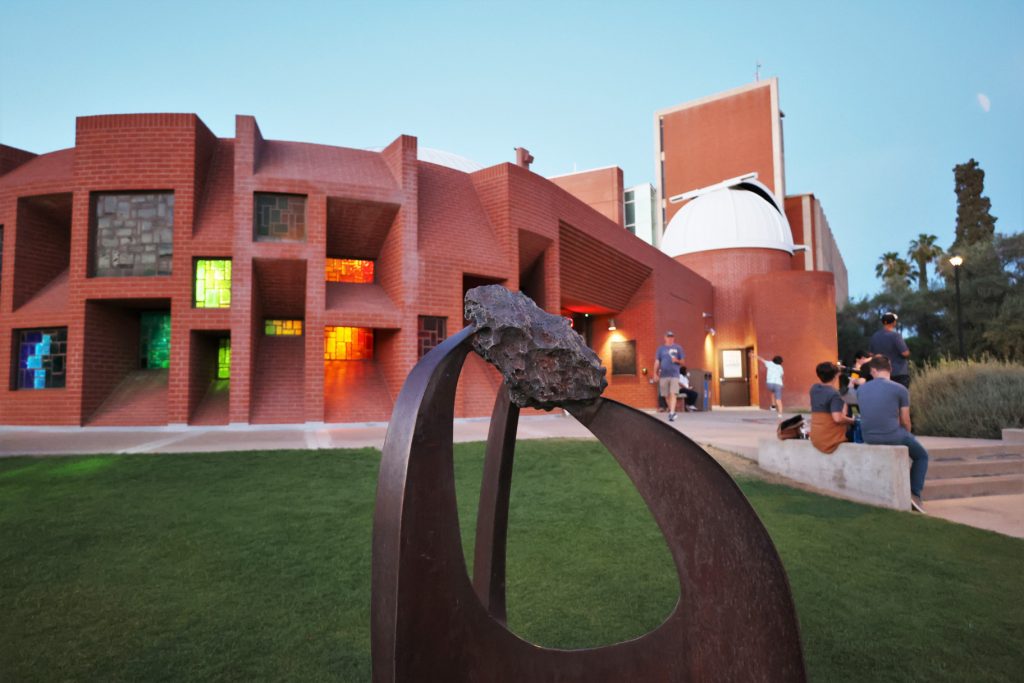
“Grace Flandrau was a successful and well- respected novelist, writer of short stories, and journalist. She came to Tucson in the 1940s and stayed with the family of Isabella Greenway, her husband’s niece and founder of the Arizona Inn. In 1960, she purchased a home near the inn and became a familiar presence in the community. She died in 1971 and left a portion of her estate to the university, given with the understanding that the university president would use it to benefit the institution. I chose to use it to build a planetarium.”
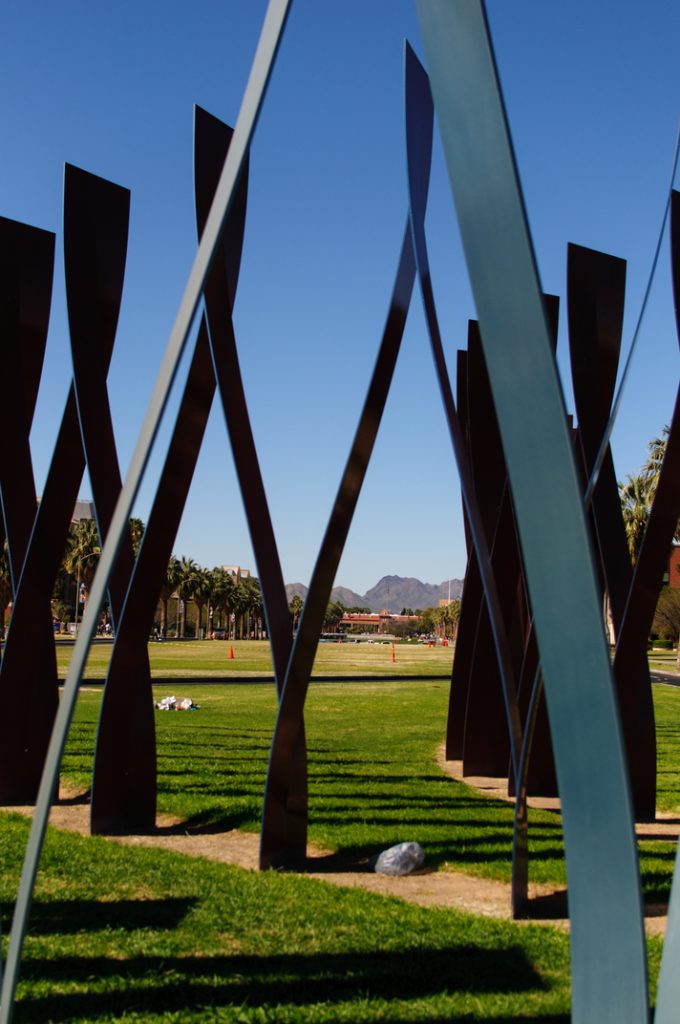
“Over the years, Curving Arcades has come to be an object of affection, sometimes likened to ‘marching clothespins’ or ‘dancing daddy longlegs.’ Art can be provocative as well as beautiful. The art committee deserves our lasting gratitude for their dedication to seeing the project through to completion, despite the public criticism they had to endure. And, over the years, I have come to regard the work as lovely in its simplicity and an enduring enhancement to the campus landscape.”

“The College of Agriculture provided a horse and plow to celebrate the
groundbreaking of the new library building, July 27, 1973…Libraries are the only college and university facilities that are never finished. Books and journals and records of all sorts are constantly being added. Computers expand the access to news and ideas; new approaches to teaching and learning evolve. Libraries are the heart of a university!”
John P. Schaefer is president emeritus of the University of Arizona, where he had an active twenty-one-year career in teaching and research. A conservationist and avid birdwatcher, he helped organize the Tucson Audubon Society and found the Nature Conservancy in Arizona. In addition to his academic and conservation work, Dr. Schaefer is a skilled photographer. He is the author of several books on photography, including Desert Jewels: Cactus Flowers of the Southwest and Mexico. He and Ansel Adams founded the Center for Creative Photography at the University of Arizona in 1975.