The University of Arizona Press

October 21, 2025
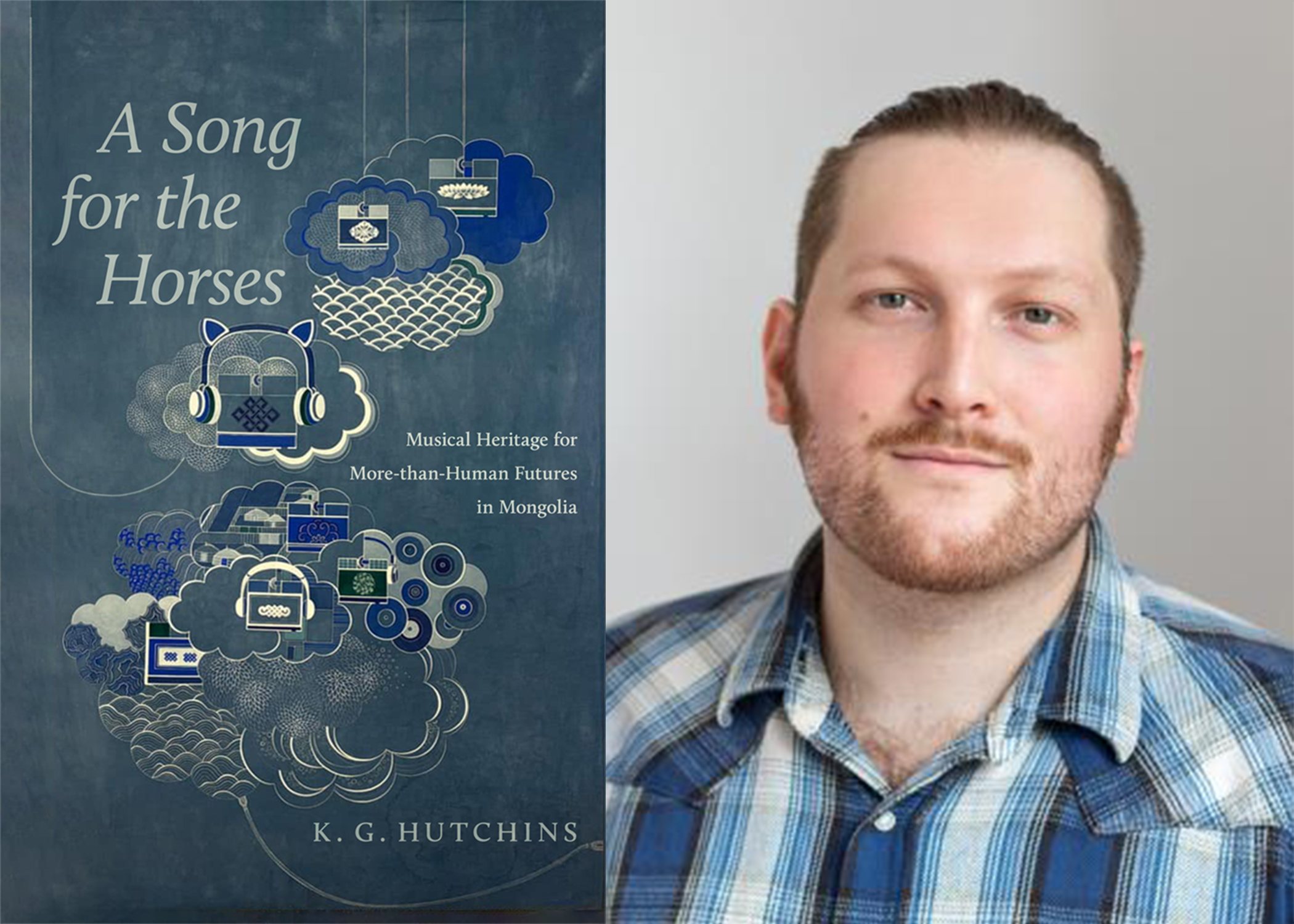
This month we publish A Song for the Horses: Musical Heritage for More-than-Human Futures in Mongolia by Kip Hutchins. As permafrost in Siberia continues to melt and the steppe in the Gobi turns to desert, people in Mongolia are faced with overlapping climate crises. Some nomadic herders describe climate change as the end of a world. They are quick to add that the world has ended before for Indigenous people in North Asia, as waves of colonialism have left the steppe with a complicated web of apocalypses. A Song for the Horses by K. G. Hutchins examines cases in which people respond to the pressures of climate change by drawing on cultural heritage to foster social resiliency. Today we the author about his research and playing the horse fiddle.
How did you first become interested in Mongolia as a place for research?
When I started my undergraduate degree, I signed up for Mongolian language class for the simple reason that it was the one language on offer that I had never heard anyone speak before. Through language classes I became involved in the local Mongolian community, which then led to traveling to Mongolia to teach English and take music lessons. When I arrived in Mongolia, I found a country where nomadism is still going strong, which is exceedingly rare in an era in which most nomadic communities are relentlessly oppressed by settler states or coerced into urbanization by the demands of capitalism. This realization opened my eyes to the fact that other ways of living are still possible. If other ways of living are possible, then other futures are possible too.
Your experience as a musician enriches your research. Tell us about one of your favorite times playing the horse fiddle in Mongolia.
The fiddle has always been one of my primary research tools. Playing with other musicians or, better yet, learning a song from a seasoned fiddler, has opened up conversations that I don’t think would have come about otherwise. A couple of my more standout memories of playing the horse fiddle appear in the book. It starts off with probably my favorite memory of playing the fiddle, when I learned from three venerated nomadic elders in the rural Gobi at a local kind of celebration called a nair. This event is paired against a later story about me shivering through a winter rehearsal with an orchestra in the capital city. That particular rehearsal sticks out in my mind because the heat had not yet been turned on in the concert hall, so all the performers were in full winter coats, some trying to play their fiddles through fingerless gloves. Perhaps my strangest performance was when a former student of mine asked me to do a fiddle performance and short talk in Mongolian as an interlude in a full day TedXUlaanbaatar event for an audience of hundreds of people in the Corporate Hotel in Ulaanbaatar. I think the official video from the event is still floating around online somewhere.

In one part of your book, you write that the three singers imagined a different part of the Gobi landscape while performing. How does geography and spiritual connection to land shape the way Mongolian music is performed?
There is a genre of Mongolian traditional music called urtyn duu, commonly referred to in English as “long-song.” Singers unspool dense, relatively short poetic texts over soaring, semi-improvisational melodies. Central to the philosophy of this genre is the idea that landscapes have particular moral characters. The steppe, vast and expanding, carries with it serenity and generosity. The high mountains of the Altai, with peaks packed in tightly, are garrulous and joyful. Long-song singers let the topography of the land guide their improvisations, singing melodies that move slowly through gently warbling sustained notes to evoke the steppe, or that briskly rise and fall to mimic the dramatic silhouettes of the mountains. Ideally, a great performance allows the singer to tap into the moral character of that landscape and inspire similar feelings in their audience.
What does the concept “more-than-human futures” mean, and how do you see Mongolian herders and musicians using music to imagine alternative, non-extractive ways of living with the land and animals?
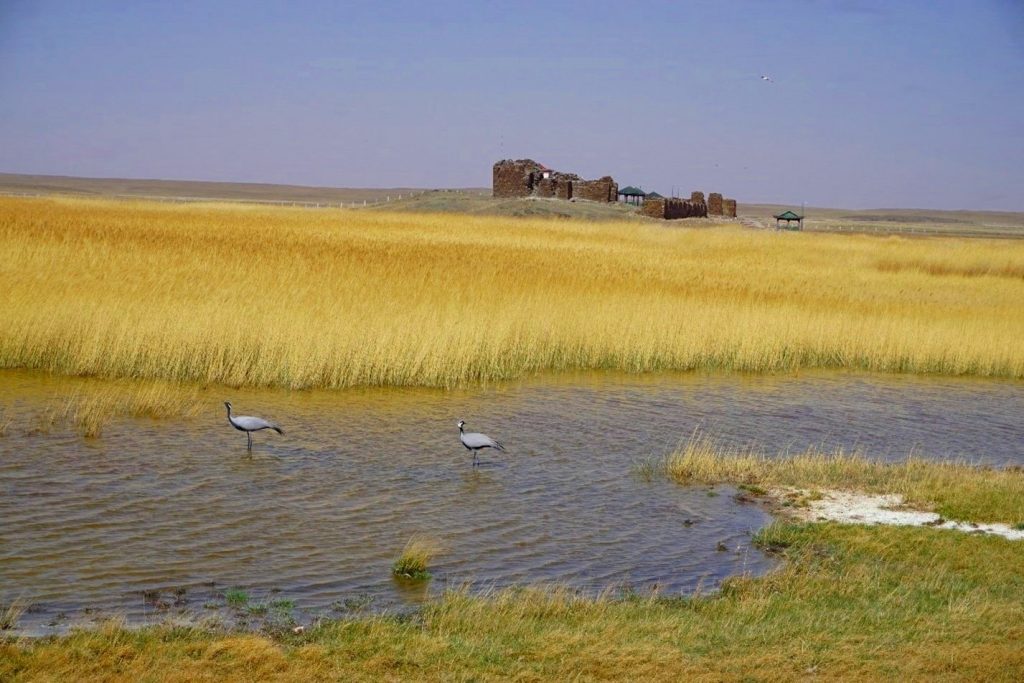
Put simply, a more-than-human future is a vision of what could be that is defined not by human domination over nature, but by a purposeful recognition of people’s interdependence with nonhuman animals, plants, and the land itself. Mongolia is caught between the southward spread of permafrost melting in Siberia and the northward creep of desertification in the Gobi. People throughout the country, from nomadic herders to the most cosmopolitan urbanites, find themselves faced with two encroaching walls of anthropogenic ecological disaster that they have contributed little to and have basically no control over. In response, musicians and herders have been using music to build connections with nonhuman animals and spiritual landscapes to put together a blueprint for a future that is resilient against worsening ecological conditions—precisely because it positions humans alongside those ecological nonhumans, rather than above them.
You touch on the tension between rural musical practices and the urban institutions that now teach horse fiddle. How is the growing distance between young urban musicians and rural livestock affecting the transmission of Mongolian musical heritage?
Most of the horse fiddle instructors at places like the National Conservatory or the Arts and Culture University grew up in an era in which it was very common for musicians to come from rural nomadic backgrounds. In that time, it was an expected part of life that you would visit rural encampments somewhat often, even if you were employed as a professional musician in the city. As Mongolia continues to urbanize, it is becoming less and less likely for new fiddle students to have that pastoralist background. Some horse fiddle teachers are afraid that their students won’t be able to connect as well with the many songs in the fiddle’s traditional canon that are meant to evoke the particular sounds and rhythms of different horse gaits. In response to this anxiety, teachers and students alike have been experimenting with a variety of creative ways to bring the sounds of horses and other parts of nomadic life into professional music education.
About the Author
K. G. Hutchins is a cultural anthropologist interested in the intersection of music and the environment. He is a visiting assistant professor in the Department of Anthropology at Oberlin College. His research focuses on the roles that nonhuman animals, spirits, and other beings can play in cultural heritage, particularly in Mongolia and southern Appalachia. His first book, A Song for the Horses, draws on research with nomads and musicians he has undertaken since 2010.