 The University of Arizona Press

November 4, 2025
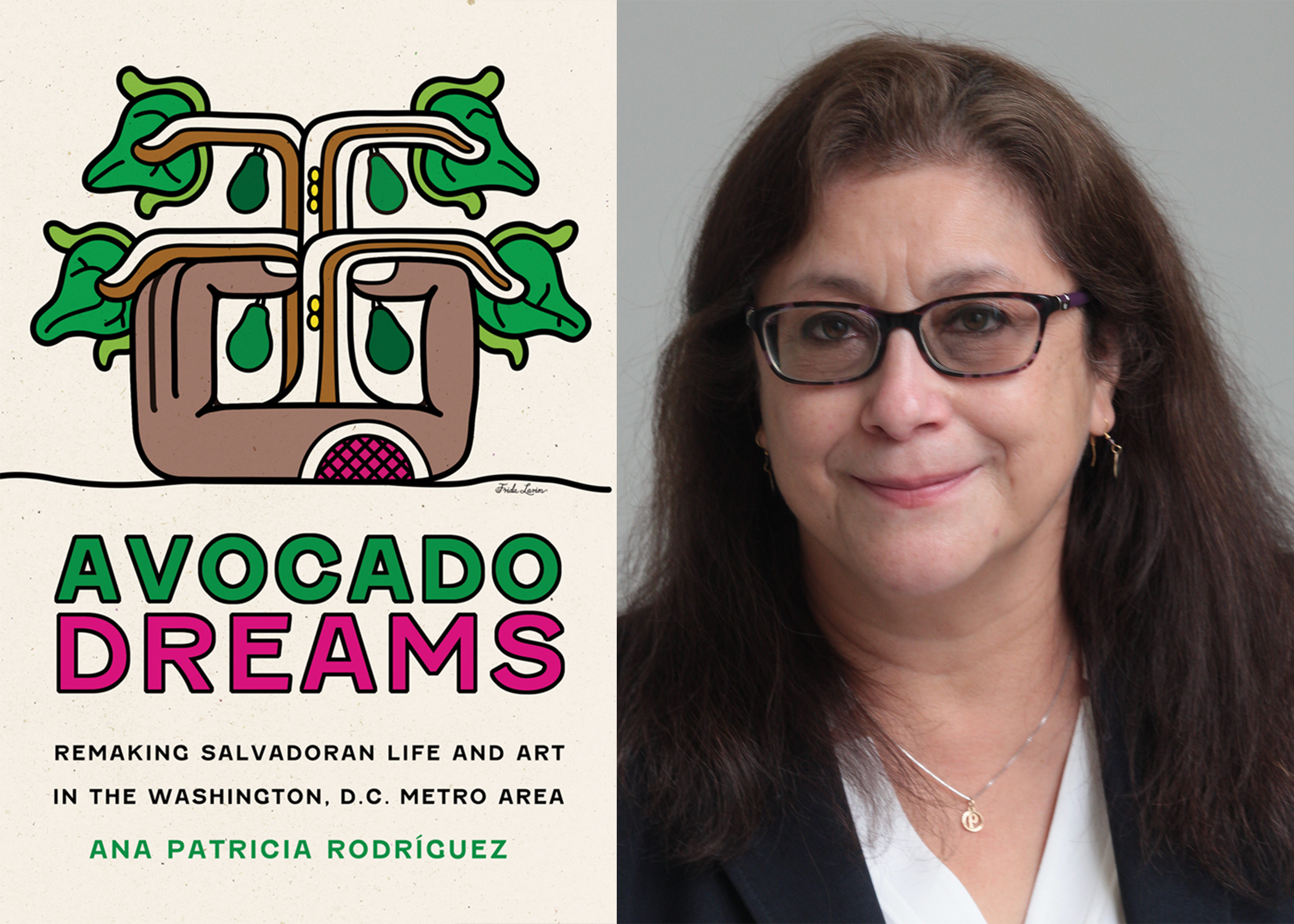
For more than four generations, Salvadorans have made themselves at home in the greater Washington, D.C. metropolitan area and have transformed the region, contributing their labor, ingenuity, and culture to the making of a thriving but highly neglected and overlooked community. In Avocado Dreams, Ana Patricia Rodríguez draws from her own positionality as a Salvadoran transplant to examine the construction of the unique Salvadoran cultural imaginary made in the greater D.C. area.
Through a careful reading of the creative works of local writers, performers, artists, and artivists, Rodríguez demonstrates how the people have remade themselves in relation to the cultural, ethnoracial, and sociolinguistic diversity of the area. She discusses how Salvadoran people have developed unique, intergenerational Salvadoreñidades, manifested in particular speech and symbolic acts, ethnoracial embodiments, and local identity formations in relation to the diverse communities, most notably Black Washingtonians, who co-inhabit the region. This timely and relevant work not only enriches our understanding of Salvadoran diasporic experiences but also contributes significantly to broader discussions on migration, identity, and cultural production in the United States. Read an excerpt from Chapter 1 below.
In 2011, Salvadorans became the third-largest Latino/a/x demographic group in the United States, after Mexicans and Puerto Ricans (Brown and Patten; Moslimani et al.), as well as consolidated their long-standing status as the largest immigrant, foreign-born, and Latinx ethnic group in the DMV (Singer et al.; see also “American Community”). Ronald Luna, a DMV-based demographer of Salvadoran descent, has noted that from 1990 to 2000, there was a 62 percent nationwide increase in the number of Salvadorans, with an increase of 130 percent in D.C., 118 percent in Maryland, and 132 percent in Virginia, percentages that have continued to grow in successive census counts. In 2019, the U.S. Census Bureau estimated that Salvadorans accounted for 2.8 percent of the population of Washington, D.C.; 3.2 percent of the population of Maryland; and 2.1 percent of the population in Virginia. At that time, approximately 19,984 Salvadorans resided in the District of Columbia, 198,863 in Maryland, and 179,437 in Virginia. Overall, 328,477 of these Salvadorans lived just in the D.C. metropolitan area (“B03001”).1 Although the Salvadoran population count in the region is somewhat imprecise due to the large number of undercounted, undocumented, and newly arrived or arriving immigrants, what is certain is that the number of Salvadorans in the Washington, D.C. metropolitan area will continue to increase.
In contrast to California and the Southwest, where a majority of Latinxs are of Mexican heritage, or the Northeast and Southeast, where Latinxs of Caribbean or other descents predominate, the DMV is home to the largest concentration of Salvadorans in one region of the United States (Singer; Singer et al.). As such, according to DMV-based sociolinguist Amelia Tseng, Salvadorans serve as the premier Latinx referential group, standing in for Latinidad in the Washington, D.C. metropolitan area (“Advancing”; Empanadas). They make up a great part of the labor force not only in the District of Columbia but also in Maryland and northern Virginia and contribute greatly to the local economy and cultural scene. For these reasons, there is a need to understand how Salvadorans make home in the Washington, D.C. metropolitan area, or the DMV, transform it, and shape it through their significant socioeconomic and cultural contributions, as well as how, in turn, they are transformed by the people, communities, and histories of the Chocolate City, as the District of Columbia is known for its historically Black communities (Asch and Musgrove). This chapter examines how Salvadoran ethnoracial identities are shaped and transformed in diaspora and in proximity to other racialized groups like Black Americans, African and Caribbean migrants, Afro-Latinxs, and Afro-Centroamericanos/ as in sites like the greater DMV. Special attention is paid to the work of D.C. Latino poets Quique Avilés and Sami Miranda and filmmaker Ellie Walton (La Manplesa: An Uprising Remembered), who represent the everyday places, exchanges, and code-meshings of intersecting communities sharing spaces, precarities, and struggles, or what I call the we-is-placemaking of the DMV. Indeed, D.C. is made not by its monuments but by the diverse people and communities that call it home.
Ana Patricia Rodríguez is an associate professor of U.S. Latina/o and Central American literatures at the University of Maryland, College Park. She is the author of Dividing the Isthmus: Central American Transnational Histories, Literatures, and Cultures and co-editor of De la hamaca al trono y al más allá: Lecturas críticas de la obra de Manlio Argueta. She is past president of the Latina/o Studies Association (2017–2019).
