The University of Arizona Press

November 10, 2025
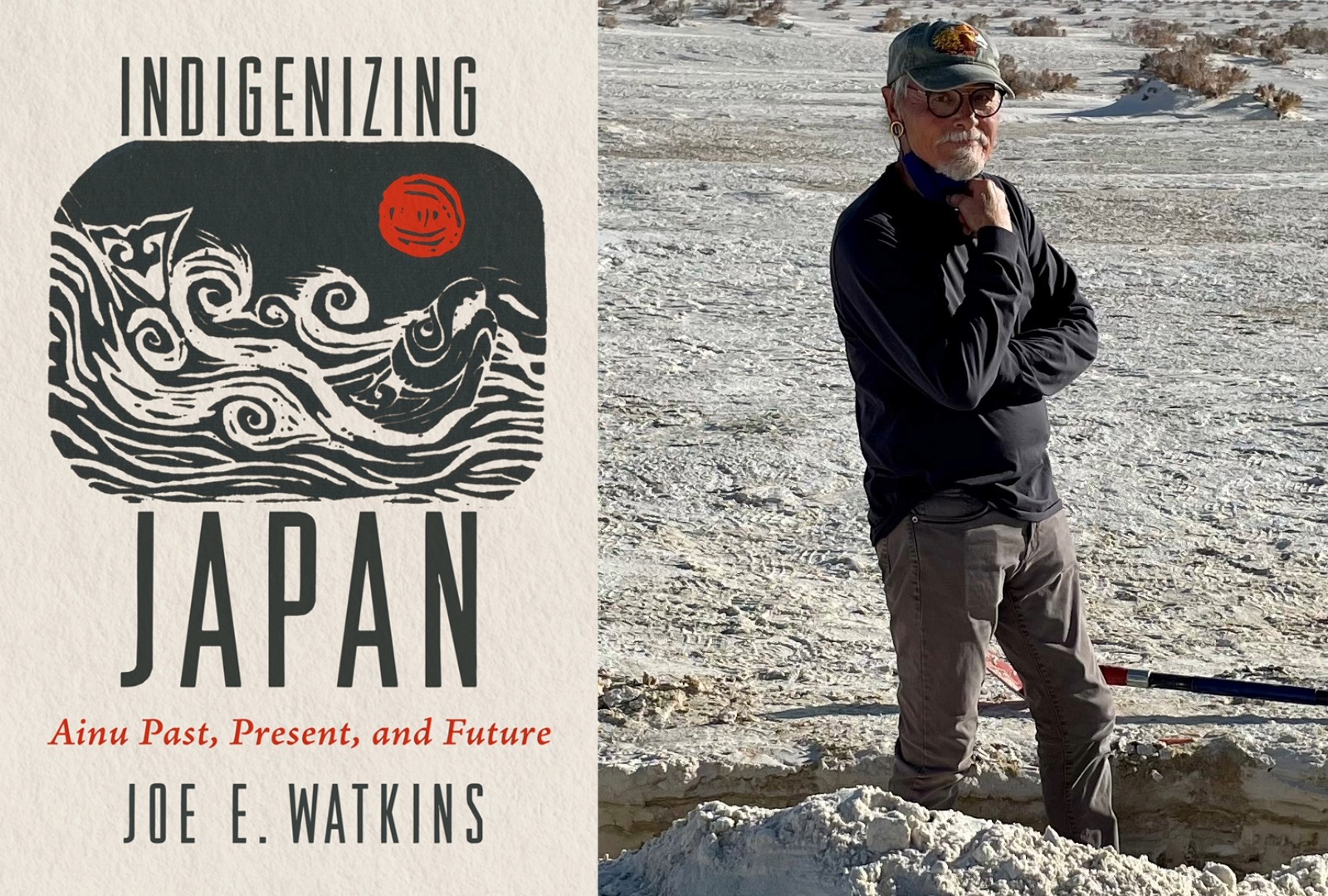
The University of Arizona Press’ podcast features an interview with Joe Watkins author of Indigenizing Japan: Ainu Past, Present, and Future. Watkins, a member of the Choctaw Nation of Oklahoma, is an affiliated faculty member in the School of Anthropology at the University of Arizona. He was president of the Society for American Archaeology from 2019–2021. His study interests concern the ethical practice of anthropology and anthropology’s relationships with descendant communities and populations on a global scale.
Asked about how he became interested in the Ainu people, Watkins answered, “A colleague at Hokkaido University in Japan asked if I would come to Japan to talk about the issues American Indians faced in terms of membership status, issues of repatriation and other issues of archaeology. . . . The four-day trip to Sapporo where I talked about these issues was the beginning of seventeen years of work with Hokkaido University on archaeological excavations that involved Ainu history, and of working with Ainu individuals to further discuss how archaeological work can impact Ainu communities.”
Listen to the full podcast here.
About the book:
Relaying the deep history of the islands of Japan, Watkins tells the archaeological story from the earliest arrivals some 40,000 years ago to 16,000 years ago when local cultures began utilizing pottery and stone tools. About 2,300 years ago, another group of people immigrated from the Korean peninsula into the Japanese archipelago, bringing wet rice agriculture with them. They intermarried with the people who were there, forming the basis of the contemporary Japanese majority culture. As the Japanese state developed on the central Islands of Honshu, Ryukyu, and Shikoku, the people of Hokkaido continued developing along a different trajectory with minimal interaction with the mainland until colonization in the mid-nineteenth century, when the people known as the Ainu came under Japanese governmental policy.