The University of Arizona Press

November 18, 2025
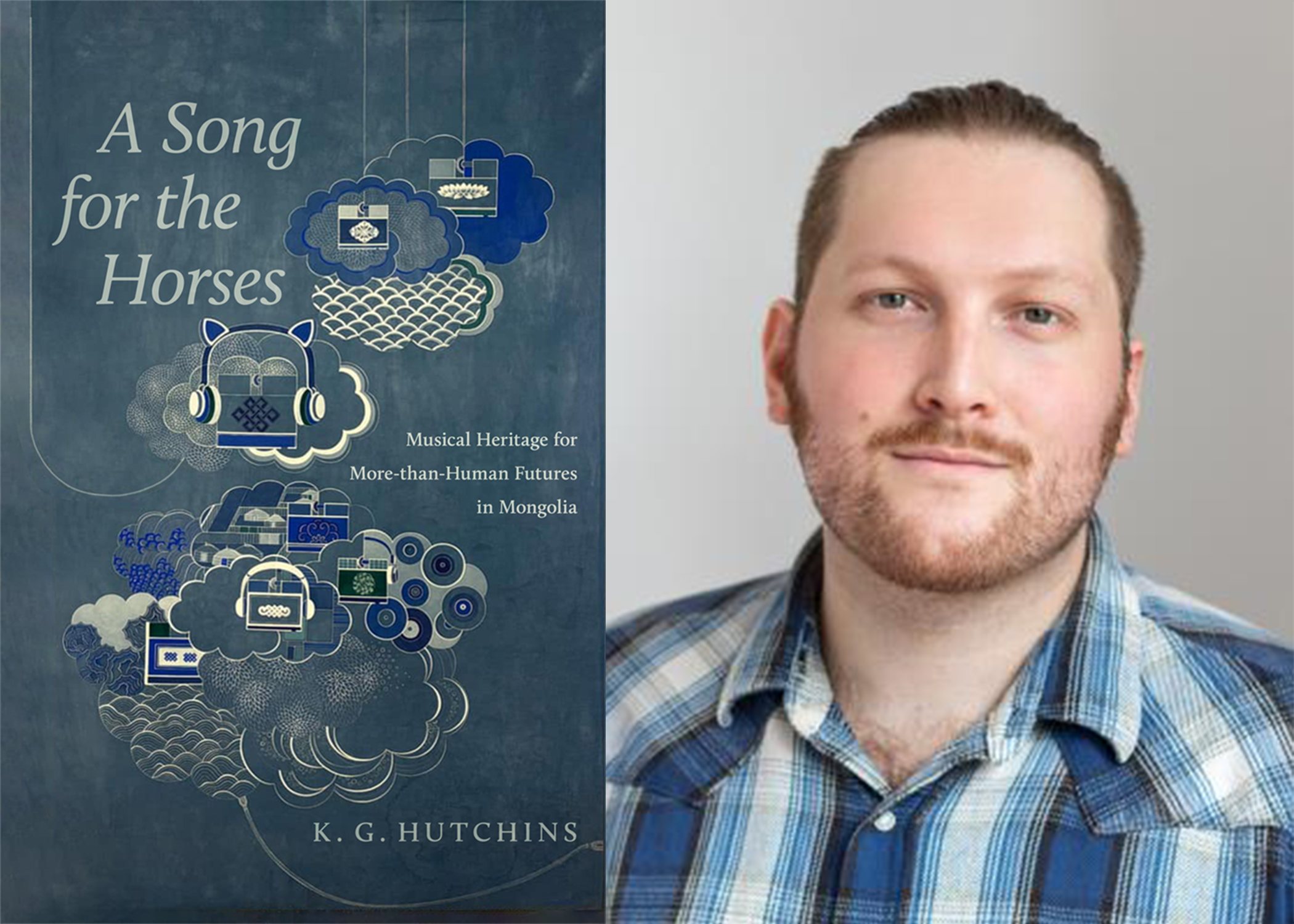
The University of Arizona Press’ podcast features an interview with K.G. Hutchins author of A Song for the Horses: Musical Heritage for More-than-Human Futures in Mongolia. Hutchins is a cultural anthropologist interested in the intersection of music and the environment. His research focuses on the roles that nonhuman animals, spirits, and other beings can play in cultural heritage, particularly in Mongolia and southern Appalachia.
Asked about how the context of his Mongolia research, Hutchins answered, “I’m a cultural anthropologist with a music background . . . so I asked musicians, ‘what’s important to know about Mongolian music, especially about the morin khuur, or horse fiddle?’ It permeates the soundscape of north Asian music, but we don’t know much about it. My advisors said that if you want to know about the horse fiddle, you need to know about the horses and the role they play in the way that you learn the instrument, and the way that you learn to be a listener of the instrument.”
Listen to the full podcast here.
About the book:
As permafrost in Siberia continues to melt and the steppe in the Gobi turns to desert, people in Mongolia are faced with overlapping climate crises. Some nomadic herders describe climate change as the end of a world. They are quick to add that the world has ended before for Indigenous people in North Asia, as waves of colonialism have left the steppe with a complicated web of apocalypses. A Song for the Horses by K. G. Hutchins examines cases in which people respond to the pressures of climate change by drawing on cultural heritage to foster social resiliency.
Hutchins’s ethnographic research, spanning more than a decade, provides a vivid and intimate portrayal of Mongolian life. Musicians use the morin khuur, or ‘horse fiddle,’ to engage with the subjectivities and agencies of nonhuman animals and other beings. This work is a significant contribution to the posthuman turn in social sciences, engaging with theories from prominent scholars such as Donna Haraway and Anna Tsing.