The University of Arizona Press

January 29, 2026
The University of Arizona Press, in partnership with Path to Open and the libraries that support it, has opened up access to four important works of scholarship. These books bring a new lens to archaeology in eastern North America, urban Indigeneity, conservation labor in Madagascar, and Central American migration in the twenty-first century. Path to Open is an initiative with JSTOR that supports the transition of high-quality scholarly monographs to open access at scale.
Our four newest OA titles are part of the first 100 books, which were originally published in 2023 and are now available to readers around the world.
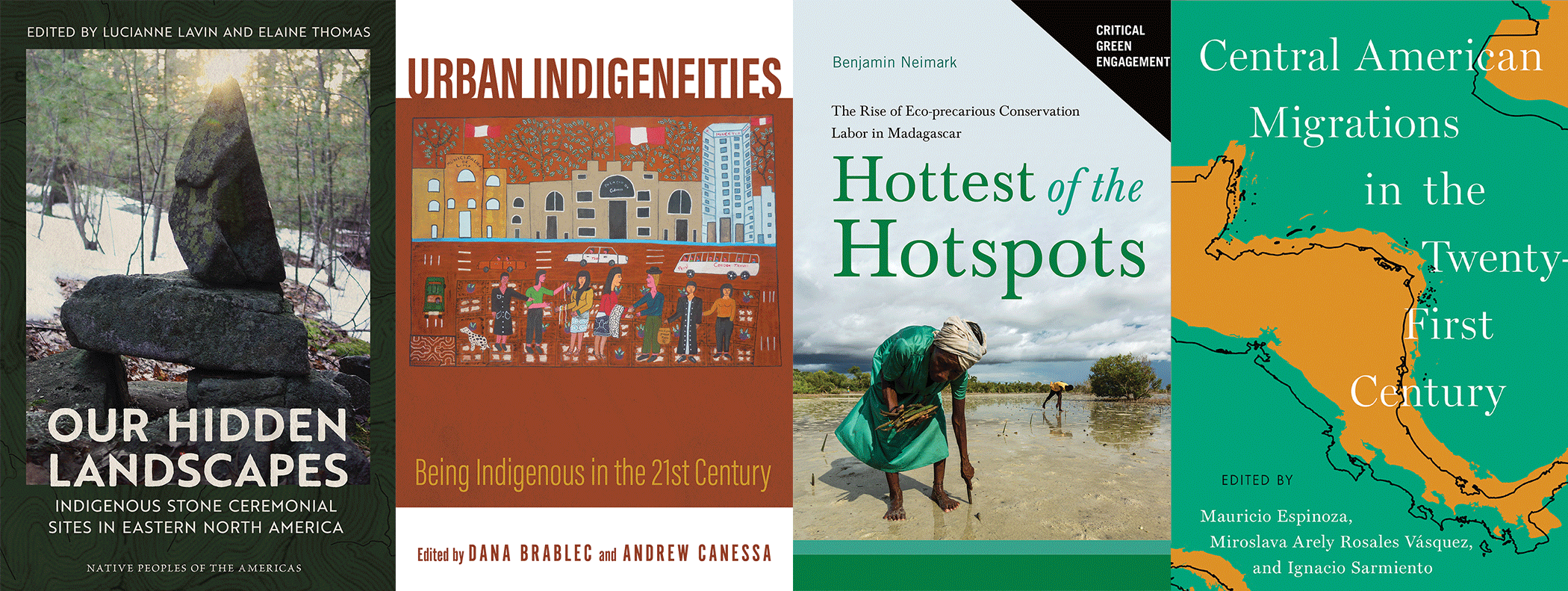
Our Hidden Landscapes

Our Hidden Landscapes introduces people to eastern North America’s Indigenous ceremonial stone landscapes (CSLs)—sacred sites whose principal identifying characteristics are built stone structures that cluster within specific physical landscapes. This volume presents these often unrecognized sites as significant cultural landscapes in need of protection and preservation. Chapters from Indigenous community members, archaeologists, and anthropologists provide a variety of approaches for better understanding, protecting, and preserving these important sacred spaces.
Urban Indigeneities

Increasing numbers of Indigenous peoples are living in cities, yet the vast majority of studies focus solely on rural Indigenous populations. This is the first book to look at urban Indigenous peoples globally and present the urban Indigenous experience—not as the exception but as the norm. Dismissing the false idea that indigeneity is only “authentic” when it is practiced in remote rural areas, these wide-ranging essays show that a vigorous, vibrant, and meaningful indigeneity can be created in urban spaces too and offers perspectives and tools to understand a contemporary Indigenous urban reality.
Hottest of the Hotspots

Continually recognized as one of the “hottest” of all the world’s biodiversity hotspots, the island of Madagascar has become ground zero for the most intensive market-based conservation interventions on Earth. This book details the rollout of market conservation programs, including the finding drugs from nature—or “bioprospecting”—biodiversity offsetting, and the selling of blue carbon credits from mangroves. It documents the tensions that exist at the local level and provides a voice for community workers many times left out of environmental policy discussions, ultimately in the hope of offering critiques that build better conservation interventions with perspectives of the locals.
Central American Migrations in the Twenty-First Century

Central American Migrations in the Twenty-First Century tackles head-on the way Central America has been portrayed as a region profoundly marked by the migration of its people. The essays use an intersectional approach to demonstrate the complexity of the migration experience. This volume opens a dialogue between humanities and social sciences scholars on the complex migratory processes of the region.