 The University of Arizona Press


March 23, 2026
We are thrilled to be attending the 2026 Latina/o/x Studies Association conference in Austin this week! From March 26 to 29, find our table in the LSA Plaza, “a dynamic space to get together with long-time friends and colleagues—and find new ones—over coffee and conversation.” Navigation help and additional details are available on the LSA website.
We’ll have a curated selection of our new, featured, and popular Latinx studies titles on display. To order books, enter AZLSA26 at checkout on our website for 40% off all titles through 4/23/26.
New & Featured Latinx Studies Titles

Central American Women in Diaspora by Karina Alma and Ester E. Hernández focuses on Central American women’s voices within the growing narrative of the Central American diaspora. It provides a tapestry of testimonios—from grandmothers, mothers, daughters, and sisters—who explore what it means to be Central American women in the United States. An intervention that centers gendered experiences and challenges oppressive structures, this volume celebrates the solidarity, cultural memory, and healing found within transnational ties.
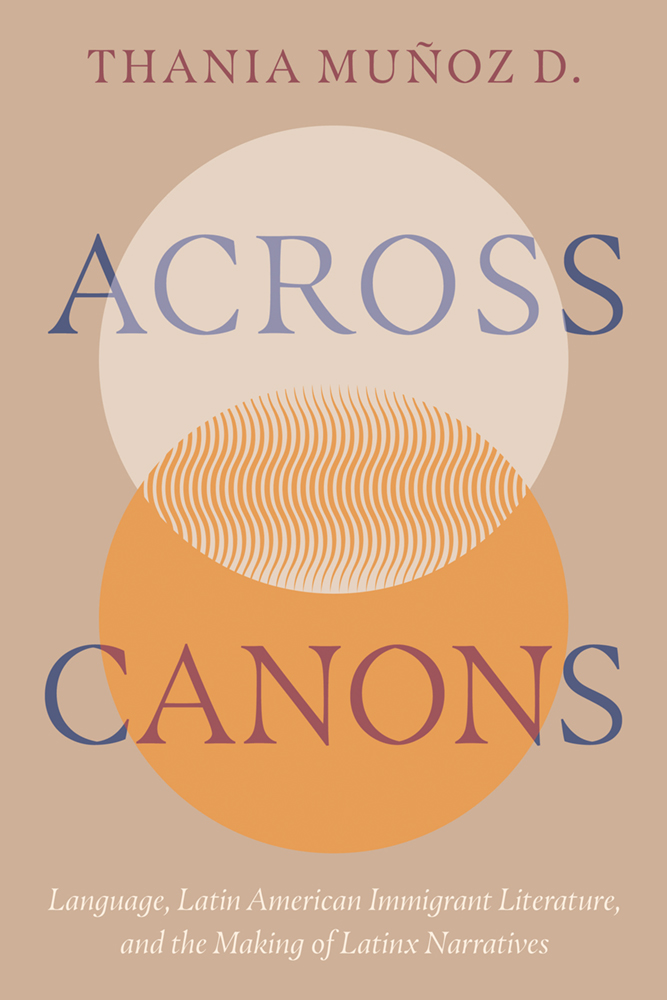
Excavating narrative memories, Thania Muñoz looks at immigrant experiences impacted by a prism of social and political factors. Across Canons examines literary allusions to a classic Latin American canon that resurface in the work of Latin American writers who live and work in the United States. The immigrant literature of Edmundo Paz Soldán, Alberto Fuguet, and Cristina Rivera Garza from the late 1990s and early 2000s provides an important glimpse into representations of Latin America’s relationship with the United States and how immigration has shaped it.
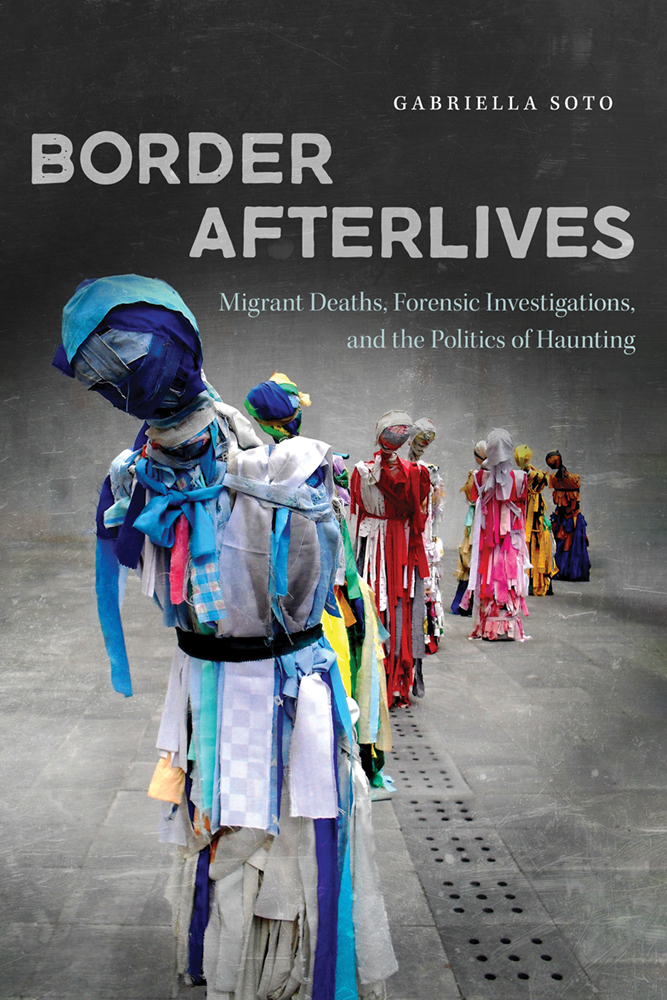
Border Afterlives begins with the undocumented individuals who die crossing the U.S.-Mexico border—deaths that are both preventable and politically produced. Drawing on over a decade of ethnographic, participatory, and community-engaged research, author Gabriella Soto examines the postmortem journeys of these migrants through the fragmented infrastructure of medicolegal death investigation in the U.S. Southwest. She reveals how the state’s deterrence-based border policies not only generate death but also fail to provide adequate care for the dead.

Contentious Citizenship reshapes how we understand belonging, identity, and political participation in the context of migration. Drawing on decades of Salvadoran activism, Arely M. Zimmerman offers a powerful ethnographic account of how migrants challenge exclusionary state practices and redefine citizenship on their own terms using transnational networks and revolutionary politics that transcend borders. Zimmerman’s work honors the ingenuity and resilience of Salvadoran activists and invites readers to consider what it means to belong.

Forging a Mexican People shows how illustrated print culture helped to construct and deconstruct versions of “a people” in postrevolutionary Mexico. Through meticulous research, Pablo Zavala uncovers the ways photographers, graphic artists, writers, and activists used print culture to challenge hegemonic conceptions of state-guided narratives and forge alternative collective subjectivities. This book offers a fresh perspective on the sociopolitical landscape of postrevolutionary Mexico, revealing how cultural artifacts simultaneously crafted and reflected the people.
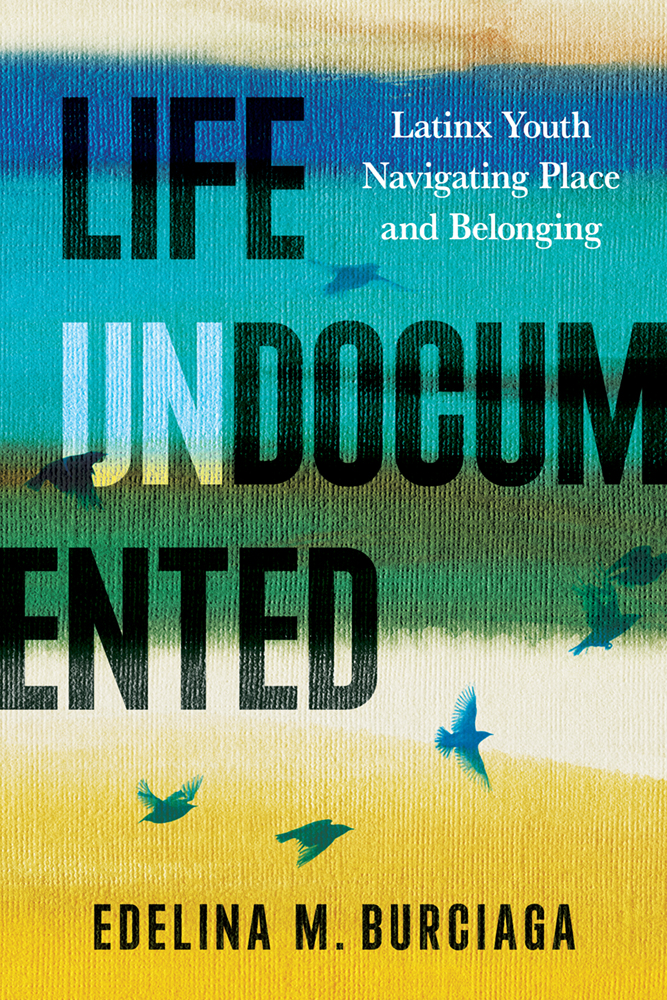
Life Undocumented captures the compelling stories of Latinx undocumented young adults growing up and living in two distinct sociopolitical contexts: California, which provides legal pathways into higher education for undocumented youth, and Georgia, which does not. Edelina M. Burciaga examines how undocumented young adults in these two contexts navigate the pathway to and through adulthood, and the powerful role state laws and policies play in shaping their prospects for social mobility and their sense of belonging.
Featured Series
BorderVisions engages the U.S.-Mexico borderlands’ dynamic histories and cultures and expands our understanding of the borderlands beyond a site of geopolitical inquiry. The series conceptualizes borderlands as both a place and a methodology and addresses the constraints of traditional fields, challenging authors to think creatively and critically about the expansive frameworks and possibilities of borderlands studies.
The Feminist Wire Books: Connecting Feminisms, Race, and Social Justice is a new series from The Feminist Wire (TFW) and the University of Arizona Press that presents a cultural bridge between the digital and printing worlds. These timely, critical books will contribute to feminist scholarship, pedagogy, and praxis in the twenty-first century.
Latinx Pop Culture is a new series that aims to shed light on all aspects of Latinx cultural production and consumption as well as the Latinx presence globally in popular cultural phenomena in the late twentieth and early twenty-first centuries.
The Critical Issues in Indigenous Studies series anchors intellectual work within an Indigenous framework that reflects Native-centered concerns and objectives. Series titles expand and deepen discussions about Indigenous people beyond nation-state boundaries, and complicate existing notions of Indigenous identity.
Arizona Crossroads explores the history of peoples and cultures, events and struggles, ideas and practices in the place we know today as Arizona.
Are you an author or editor? Do you have a project that would be a great fit for The University of Arizona Press? For questions or to submit a proposal to any of these series, please contact Editor-In-Chief Kristen Buckles at KBuckles@uapress.arizona.edu.
