The University of Arizona Press

March 11, 2026
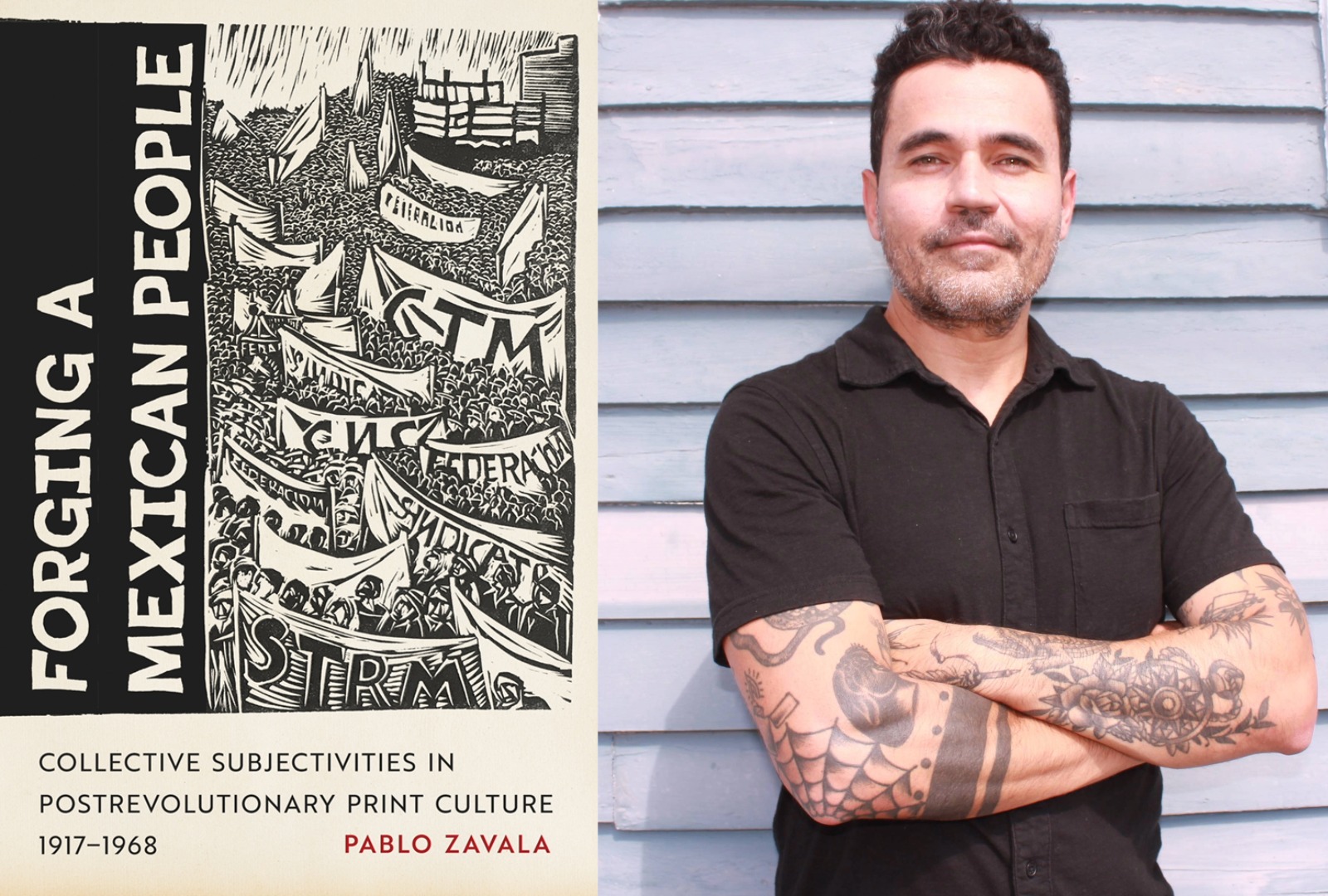
In Forging a Mexican People, scholar Pablo Zavala shows how illustrated print culture helped to construct and deconstruct versions of “a people” in postrevolutionary Mexico. The author demonstrates how print culture provided alternative—sometimes contradictory—collective subjectivities that challenged hegemonic conceptions of a so-called national people in the formative years of the Mexican state. Today he offers an inside look at some of the archival works discussed in his new work.
By Pablo Zavala
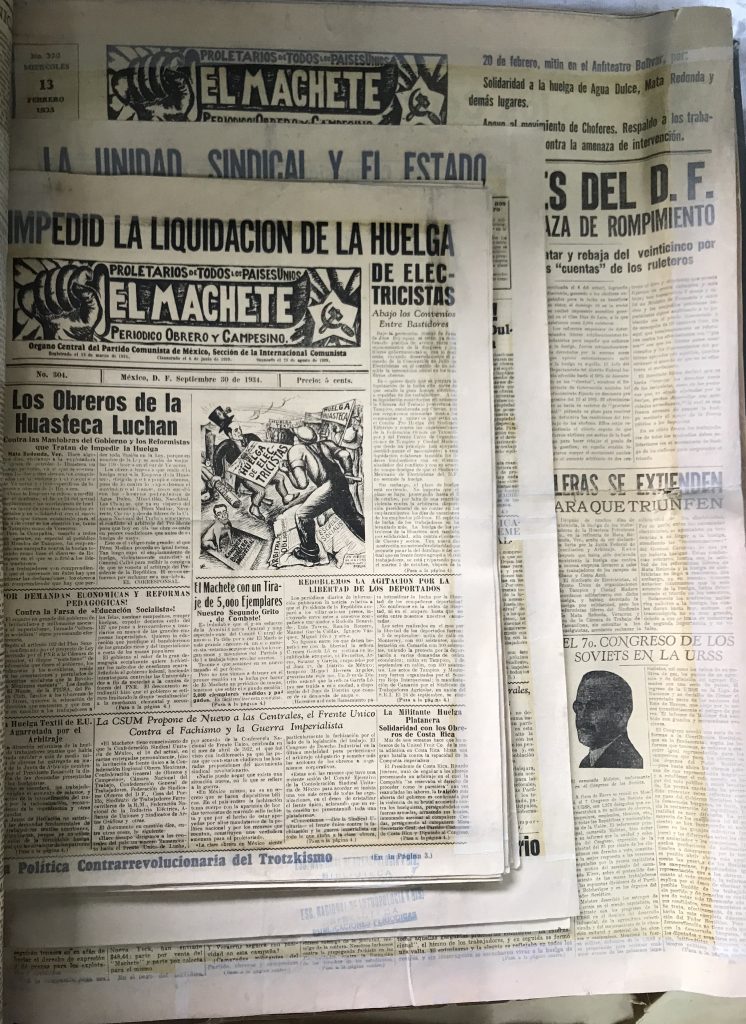
de la Memoria de Nuestra América (CAMeNA), Universidad Autónoma de la Ciudad de México. Photograph by the author.
Doing archival research is always simultaneously an adventure and an investigation. El Machete, the one-time newspaper of the Mexican Communist Party, is not digitized anywhere; rather, its original issues live in Mexico City’s archives. Located at the Autonomous University of Mexico City, the CAMeNA generously allowed me to look through their copies of the radical newspaper. As I put on the latex gloves and donned a surgical mask to flip through the timeworn pages, I slowly entered a time warp that took me to the days after the revolution (1910-20), when Mexico experienced a wave of optimism that promised a more equitable country. Such enthusiasm floods the pages of the periodical, shown in the picture here in its different sizes that include a smaller version published when the newspaper was outlawed during the late 1920s and early 1930s.

At other times, the archival investigation for Forging a Mexican People consisted not so much of a geographical exploration but a quest to acquire the publishing permissions. In the case of The Masses (1935), I contacted José Clemente Orozco’s grandson who has been extremely kind in this regard. I think that such collaboration allows the world to continue studying and preserving historical memory through cultural artifacts, Orozco’s images in this case, especially in light of new ways of thinking about the past and present. I like this image because it shows the different, cacophonous, and often contradictory ways there have been to portray a people.
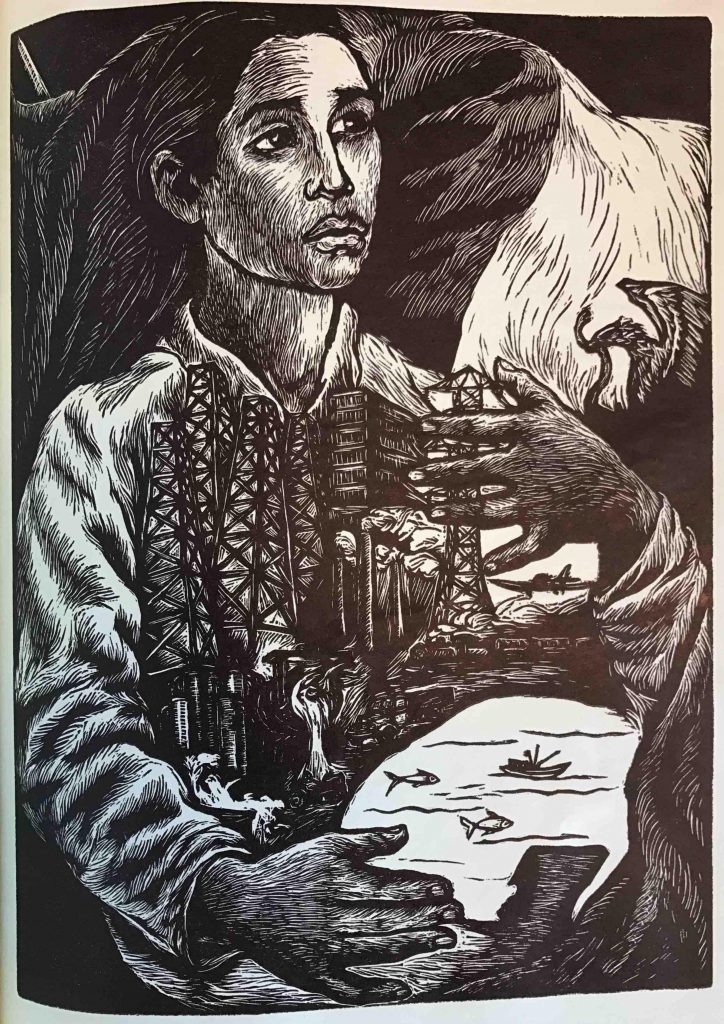
Some images, fortunately, are also stored in archives outside of Mexico. I found Celia Calderón’s 1960 Mexico, Owner of All Its Resources in a public library in Milwaukee where the librarians in the Rare Books Collection have been very helpful in giving patrons access free of charge and providing, with an appointment, a special viewing room. According to their website: “The Milwaukee Public Library’s rarities collection gathers, preserves, and provides access to significant materials of historic and aesthetic value for the people of the City of Milwaukee and future generations of residents.” The image’s portrayal of the people as a giant Leviathan recalls Thomas Hobbes’s allusion to a powerful state, but Calderón subverts that interpretation by vesting a woman of color with the ability to safeguard the nation’s sovereignty.

When Mexican students protested their repressive state in the summer of 1968, their prints were often done anonymously and quickly, responding to the exigencies of the situation. Arnulfo Aquino and Jorge Perezvega, present at the protests, subsequently gathered, categorized, identified, and eventually published the prints over the years in collections distributed by the Autonomous National University of Mexico (UNAM) in Mexico City. They also donated the primary artifacts to the UNAM’s art museum, now called the University Museum of Contemporary Art (MUAC). This particular print references the biases of some of the mainstream mass media at the time, like the newspaper El Sol de México, toward the government’s narrative that blamed the students for the skirmishes.

Finally, Ester Hernandez’s La Virgen de Guadalupe defendiendo los derechos de los Xicanos shatters the society-imposed gender confines by representing a radical Virgin of Guadalupe. Such iconoclastic narratives are fundamental in challenging exclusionary practices, like the kind Chicanas faced then and continue to encounter today. Hernandez’s graphic art is iconic of the Chicano movement and beyond and prominent cultural institutions like the Smithsonian Institution have recently recognized her work (e.g., in ¡Printing the Revolution! The Rise and Impact of Chicano Graphics, 1965 to Now. I was fortunate enough that Hernandez responded positively to my work and granted me permission and a high-resolution version of the print to include in my analysis.
***
About the Author
Pablo Zavala is an assistant professor of Spanish and Latin American Studies and director of the Center for Latin American and Latinx Studies (CLAXS) at Loyola University New Orleans. He was born in Ciudad Juárez and now resides in New Orleans.