The University of Arizona Press

March 25, 2026
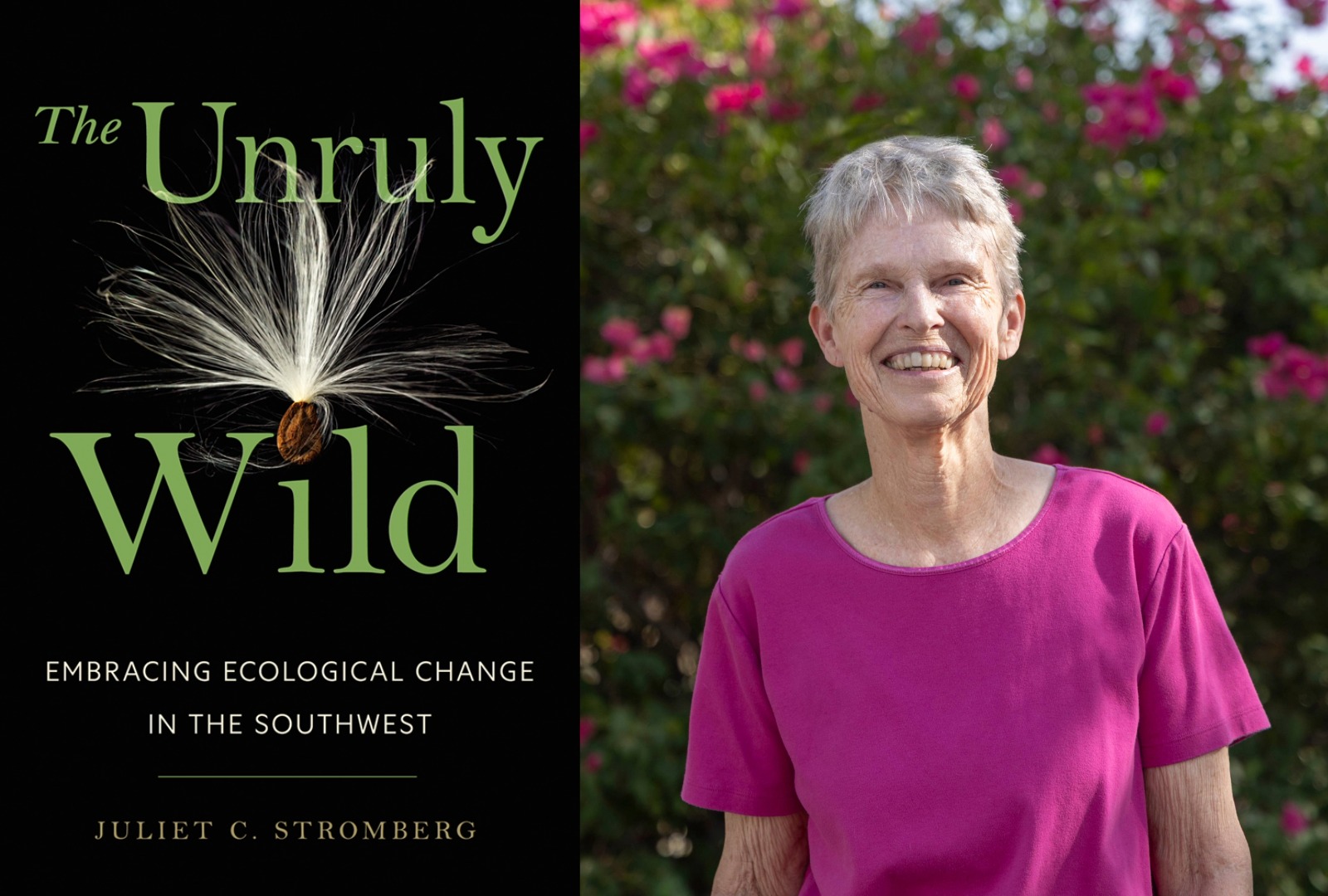
In The Unruly Wild: Embracing Ecological Change in the Southwest, author Juliet C. Stromberg challenges the traditional invasion biology paradigm. She invites readers to reconsider the “alien invader” narrative and explore the beneficial roles that newly arrived plants can play in our ecosystems. Drawing from her extensive experience as a plant and restoration ecologist, Stromberg introduces a cast of plant characters that includes longtimers as well as newcomers. Through compelling stories and scientific insights, she explains why some plants are thriving while others are in decline. Stromberg is the photographer of photos below unless otherwise indicated.

Prickly stems of silverleaf nightshade (Solanum eleagnifolium)
I authored this book because there was a story that needed to be told. In truth, I wish there hadn’t been a need. I do not enjoy the controversy that comes with challenging entrenched and outmoded paradigms or with confronting deeply-held beliefs.


Left: Abandoned farm field in the desert with “volunteer” annual plants and brittlebush (Encelia farinosa). Right: Western pygmy blue butterfly nectaring on globe chamomile (Oncosiphon pilulifer), photo by Liz Makings
However, I felt a sense of obligation. My ecological field studies and the works of others were painting a more complex and nuanced picture of “invasive” species. Management actions based on a philosophy of native plant purism seemed increasingly extreme, rigid, and even harmful. I wanted to provide an alternative view and explain why my views on plant conservation biology have transformed over the decades.

Sacaton (Sporobolus) grasslands persisting along the San Pedro River, photo by Liz Makings
As a botanist, I feel compelled to help others understand the world from the perspective of a plant. As an ecologist, I want us to consider how our actions influence the environment of plants, whether they are growing in a city, rangeland, or wildland preserve. When we understand why new plants arrive and thrive in our neighborhoods, I believe we are less likely to condemn them. When we know their stories, we may be inspired to deepen existing relationships and to widen our networks and embrace something new.

A moth navigating the intricate flowers of nodding milkweed, Asclepias elata, photo by Liz Makings
While sharing my views during one-on-one conversations with fellow plant enthusiasts, I often sense a release of tension and a receptivity to a new world view. Just the other day, at a meeting of the Arizona Native Plant Society, I heard someone say, “I always felt that pulling that plant was not the right thing to do.” It was time to reach a larger audience. This book, in a sense, is one more “seed” blowing in the wind. But like a viable seed, it contains information. As you read it you will find guidelines on how to adapt to the changing world, how to nurture your relationships with plants—be they wild, feral, or domesticated, and how to strengthen your inner ecologist. You also will encounter suggestions for actions you can take to address the root causes of undesirable change. Enjoy!
Juliet C. Stromberg, professor emerita at Arizona State University, is a plant ecologist who specializes in riparian ecosystems. She studied plant community dynamics and vegetation-hydrology interactions in the American Southwest for several decades and authored one hundred peer-reviewed publications. She continues to write about plants while also tending a food forest in the city.