The University of Arizona Press


April 30, 2026
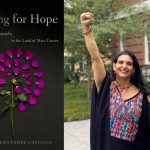
In the shadow of Mexico’s ongoing human rights crisis, Digging for Hope offers a powerful feminist ethnography of resistance, care, and collective memory. Drawing on nearly a decade of fieldwork, R. Aída Hernández Castillo documents the courageous work of women-led search collectives who, in the face of extreme violence, search for their disappeared loved ones. Digging for Hope is essential reading for anyone seeking to understand the gendered dimensions of violence and the grassroots movements that rise in response. With clarity and compassion, Hernández Castillo brings readers into the intimate spaces of grief and resistance, offering a model for feminist ethnography that is both rigorous and deeply humane.
Through physical and spiritual practices such as exhumation, mourning, and poetic remembrance, these women reclaim dignity for the dead and challenge a society that has normalized disappearance. At the heart of this book is a profound exploration of what Hernández Castillo calls a “pedagogy of love”—a political and ethical framework rooted in care, solidarity, and the refusal to forget. These women are not only searching for bodies; they are building emotional communities, crafting new languages of justice, and offering a reimagining of what it means to resist violence. Their practices, often overlooked by traditional scholarship, restore humanity and dignify the disappeared. Read an excerpt from the book’s Sorographic Overture below.
During almost a decade (since 2016) of walking alongside searching collectives in Mexico, I have often listened to the relatives of the disappeared claim that in order to be in solidarity, one must put one’s body in the search. Anything else is lip service. Churches, government officials, political parties, and the academic community have publicly addressed the phenomenon of enforced disappearances and the need to stop violence and promote a culture of peace. Nevertheless, most of the time, these speeches are performed on the sidelines, by people who have never picked up a shovel, wheatpasted a disappeared person poster, or helped someone submit a police report. When we approach their fights, these collectives invite us to “make a path by walking” (hacer camino al andar. . .), to walk alongside them on the streets, to join them in their searches, to be willing to learn from them. In this shared walk, a sense of community is built. It transcends families and embraces anyone who is willing to “put their body in it.”
Sometimes, this walk also implies witnessing tensions and conflicts, agreements and disagreements. Sharing risks, but also findings; disappointments, but also hope . . . In this text, I use the concept of “sorography,” originally developed by my friend and colleague Lucy Bell to refer to ethnographic writing as a political act that contributes to the construction of sororal communities. She uses this term to describe the political project of the Hermanas en la Sombra (Sisters in the Shadows) editorial collective. This is a form of sorority that does not deny differences but acknowledges the multiple intersections of violence that mark the lives of female searchers, a form of sorority committed to the possibility of
building a community based on diversity. With said commitment, I have “made a path by walking” alongside them, going down ravines and wandering into territories controlled by organized crime, all while taking care of each other.
During the final revision process for this book, my friend Angélica Rodríguez Monroy, with whom I share one of the strongest bonds I have encountered during this social struggle, invited me to walk the streets of Guadalajara along with her, joining the alive-search for her daughter, Viridiana Morales Rodríguez, who disappeared on August 12, 2012. After overcoming many bureaucratic obstacles, Angélica managed to get the State of Mexico Public Prosecutor’s Office (an institution from the state where her daughter disappeared) to promote a coordinated search with the Jalisco Search Commission, an institution from the state where certain evidence suggested her daughter was abducted as a victim of trafficking. While the General Law on Disappearance established the right of relatives to participate in the searches, the logistical and financial support to make this possible depends on the families’ persistence and ability. Angélica’s thirteen-year experience looking for her daughter has transformed her into a professional searcher who has traversed the labyrinths of judicial and forensic bureaucracy multiple times.
This was not the first time that Angélica and members of her collective traveled from Cuernavaca to Jalisco to search for Viridiana. With the support of a sensitive official from the Comisión Nacional de Derechos Humanos (National Human Rights Commission, CNDH), a search caravan was conducted in Jalisco. Persons in prison mentioned they had seen a young woman similar to Viridiana, describing certain details and body marks. A window of hope opened, hope of finding her alive. When plans for a third trip—which I was invited to, alongside other searchers close to Angélica—were just beginning, we could not have imagined that our visit would coincide with the discovery of a forced recruitment and extermination camp in the Teuchitlán municipality, an hour and a half from Guadalajara.
R. Aída Hernández Castillo is a professor and senior researcher at the Centro de Investigaciones y Estudios Superiores en Antropología Social (CIESAS) in Mexico City. Since her undergraduate days, Hernández Castillo has combined her scholarship with feminist activism and projects in radio, video, and journalism. Her academic work has promoted Indigenous and women’s rights in Latin America. Her research interests cover Indigenous studies, legal and political anthropology, decolonial feminisms, and activist research. She has published twenty-two books, and her scholarship has been translated to English, French, Portuguese, and Japanese.