The University of Arizona Press

April 23, 2026
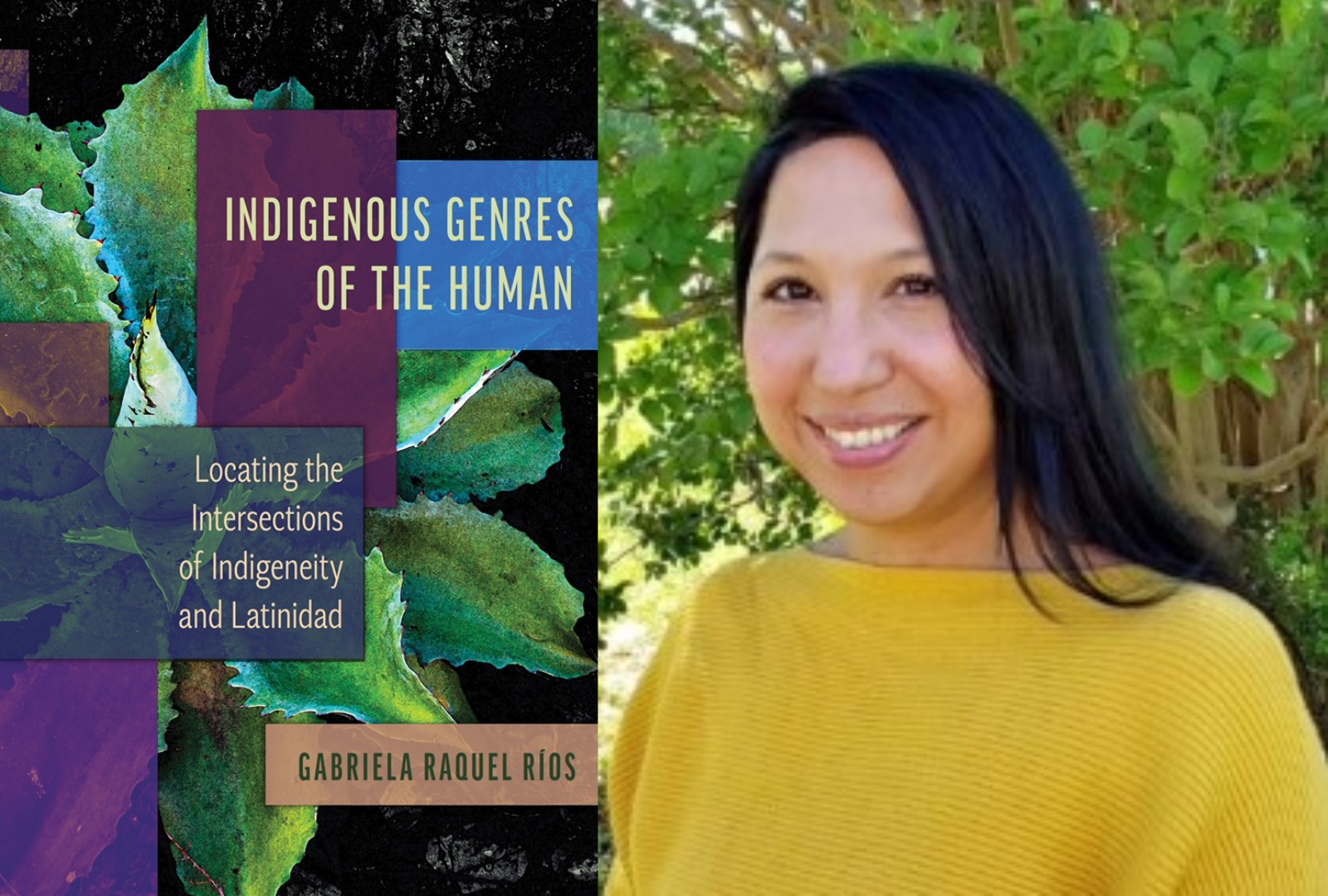
In Indigenous Genres of the Human: Locating the Intersections of Indigeneity and Latinidad, scholar Gabriela Raquel Ríos considers how Latina/o/x communities engage in the ethical reclamation of indigeneity. Through case studies that include testimonios and other Indigenous storytelling practices, Ríos reveals how cultural logics of colonization continue to shape—and often constrain—understandings of indigeneity across Latin America and in the United States. Addressing different genres of human and what contemporary indigeneity and reclaiming indigeneity looks like across Latin American contexts, chapters in this work examine digital bruja poetry, Aymara women’s Lucha Libre in Bolivia, Raramuri dance in Mexico, and Indigenous Khipu in the Andes. The author weaves her own story of being from southern Texas and traveling to Mexico throughout the book.
Bridging Sylvia Wynter’s theory of “genres of the human” with critical Latinx indigeneity studies, Chicana/o/x studies, decolonial theory, and rhetorical new materialisms, this book challenges readers to rethink what it means to be human, Indigenous, and Chicanx in the wake of colonial violence. Rather than reinforcing binaries defined by settler colonialism, Ríos proposes a framework that centers community knowledge and grounded practices. Her work opens space for dialogue, listening, and healing, emphasizing that reclaiming indigeneity requires attention to the stories, movements, and rhetorical practices that emerge from within communities themselves. Read an excerpt from the book’s Preface below.
This book suggests that to address the problem of how we reclaim our Indigeneity we need to listen to what stories emerge as we read and engage with each other across rhetoric and composition studies, Indigenous studies, Chicanx studies, decolonial critiques of racialized humanism, and knowledge created “on the ground” to better account for the breadth of colonial violence that Sylvia Wynter (2003) calls “the coloniality of being.” Why do I include “academia” in this process? Because we cannot deny that much of our Indigenous history and objects have been stolen and then housed or archived in academic institutions. However, I do not privilege academia as the arbiter of this history and knowledge—in
fact, I have had to unlearn a lot of what I have been taught in academia about Indigeneity and my own relationship to it. Still, there is important work being done in academia and by academics in this area. I am especially excited by folks who are coming back for what was stolen and who are taking education into their own hands, struggling as we all do, with how to do that work in the wake of ongoing colonization, shifting racial dynamics, and contending with racial and power dynamics that we have ignored for far too long. That is, I am doing this work in the wake of MeToo, #BlackLivesMatter, #PoderPrieto, issues of “ethnic fraud,” and dehumanizing immigration policy, all of which do not necessarily highlight anything new as much as they shed new light and perspective on issues that we sometimes take for granted.
This book takes you on my journey as I listen across and through these very spaces, hoping to better understand the current ethics of Indigenous reclamation for Chicanx folks in particular. As I moved through these spaces, some of my own preconceived beliefs and ideas about Indigeneity were challenged. At times I cried, at times I was angry, at times I felt defensive, at times I felt erased, and probably most importantly, at times I was truly humbled—basically, I moved through all the feels in typical Pisces moon fashion. But I ultimately tried to be accountable to what I was finding—even
when it challenged my own beliefs—and to come to some opening space for reconciliation across internal differences. “Internal” here takes on two layers of meaning in that I am talking about my personal experiences and my own internal processes, but, following testimonio storytelling practice, I am also speaking to and with the “we”—the internal collective that makes up the Chicanx community (primarily academics), who make up my target audience. But I am also speaking to and with the various Indigenous and Native American communities both in the United States and across the border in Latin America (primarily academics); we have all been separated by these ongoing colonial logics, structures, and practices.
Gabriela Raquel Ríos is an assistant professor with a joint appointment in the Program for Writing and Rhetoric and the English Department at the University of Colorado. As a Chicana rhetorician, her work focuses on rebuilding and reclaiming Indigenous Chicana/o/x rhetorics. Her work has appeared in Rhetoric Review and Rhetoric Society Quarterly, as well as several book collections.