 The University of Arizona Press

April 8, 2026
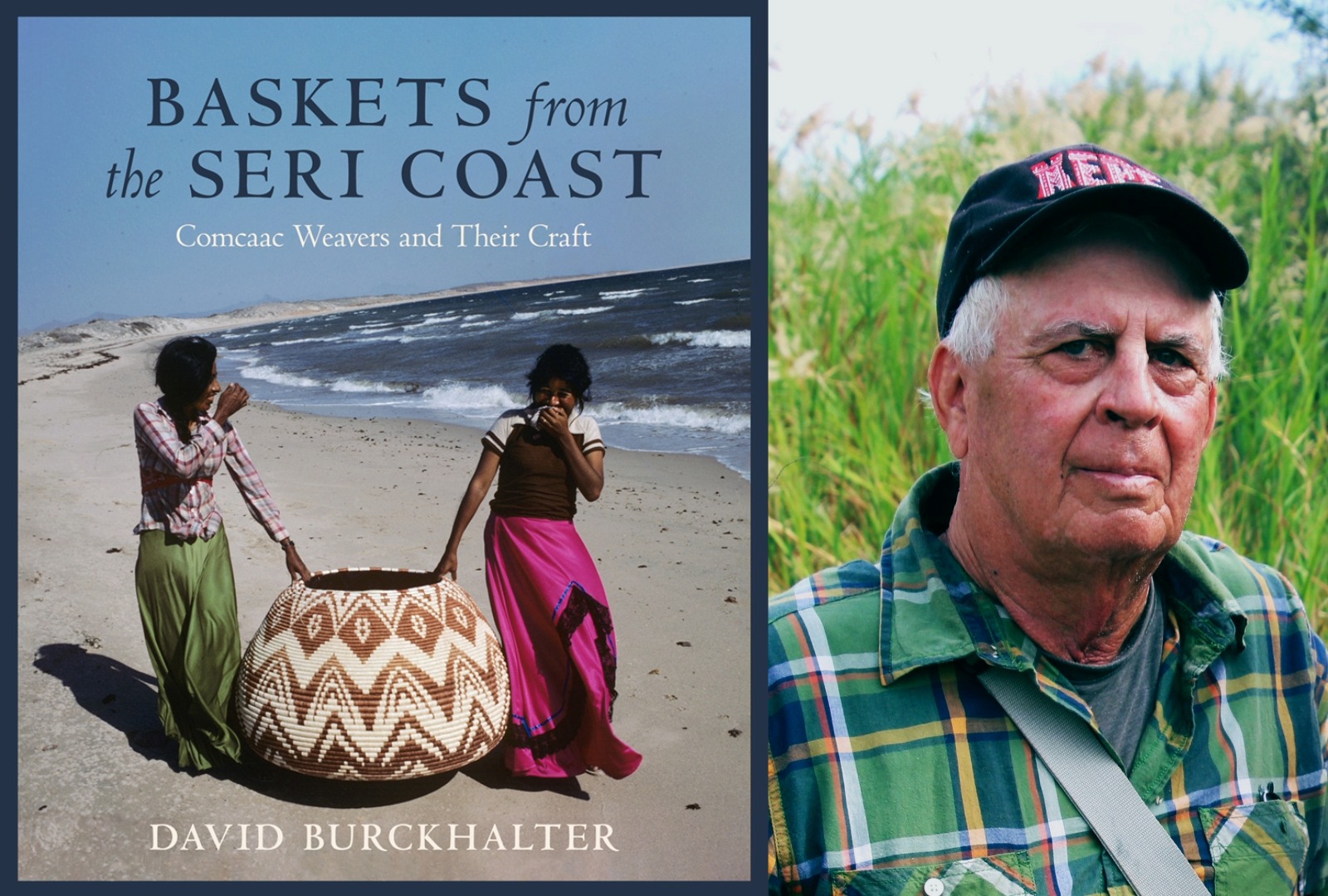
Blending striking photography with reflections from years as a trader and observer of Seri culture, photographer David Burckhalter traces the evolution of Seri basketry from a utilitarian craft to a celebrated art form. Baskets from the Seri Coast: Comcaac Weavers and Their Craft examines how Seri weavers have navigated the influences of the craft economy, outside forces like anthropologists, and changing traditions, while preserving their unique oral history and spiritual connections. With detailed insights into the artistry, labor, and legends surrounding Seri baskets, this work is a tribute to the resilience and creativity of Seri women, whose weaving continues to be passed on to future generations. Today, Burckhalter answers four questions about his five decades as a photographer on the Seri coast.
What first drew you to document Seri basketry and the lives of the Comcaac people through photography, and how has that initial spark evolved over the decades?
I liked the people from the start, including the ironwood sculptures of desert and sea animals they were selling. I was charmed by the women who emerged with their artistic baskets. Getting to know the Seris/Comcaac as a commercial buyer who routinely visited the Punta Chueca and Desemboque villages, I built friendships where taking a few photos posed no problem. Yes, the spark is still there.
Seri basketry is deeply tied to survival and tradition. How does this book showcase the intersection of artistry and necessity?
My book starts with historic black and white photos showing how Seri women once used their baskets, for example, as daily burden carriers and to winnow edible seeds. Since 1970, due to their demand as Native American art, Seri baskets have been woven only to sell. Today, a steady production of Comcaac baskets continues to provide important income for the weavers.
When photographing baskets, what aspects of design and production were you hoping to document?
I focused on photographing tightly woven Seri baskets with strong designs, creations both traditional and original. I have documented all aspects of Seri basketmaking, for example, the collection and preparation of plant materials with a focus on the weaving process. In the book, I also touch on stories from Seri oral history about their baskets.
Do you share the photos with the Seri community?
Over the years, I have shared my photos with most Seri friends, and of course, with the basketmakers I patronized in order to give them a record of their work. These days I publish photos on Instagram @dlburckhalter where some seventy Comcaac are my followers.
About the author:
David Burckhalter is a photographer and research associate at the Southwest Center of the University of Arizona. After settling in Tucson, he worked for years as an importer of Seri (Comcaac) arts and crafts into the United States. He continues to visit friends in Seri villages. He is the photographer/author of two other University of Arizona Press books: Baja California Missions: In the Footsteps of the Padres (2013) and The Seris (1976).
