The University of Arizona Press

July 7, 2026
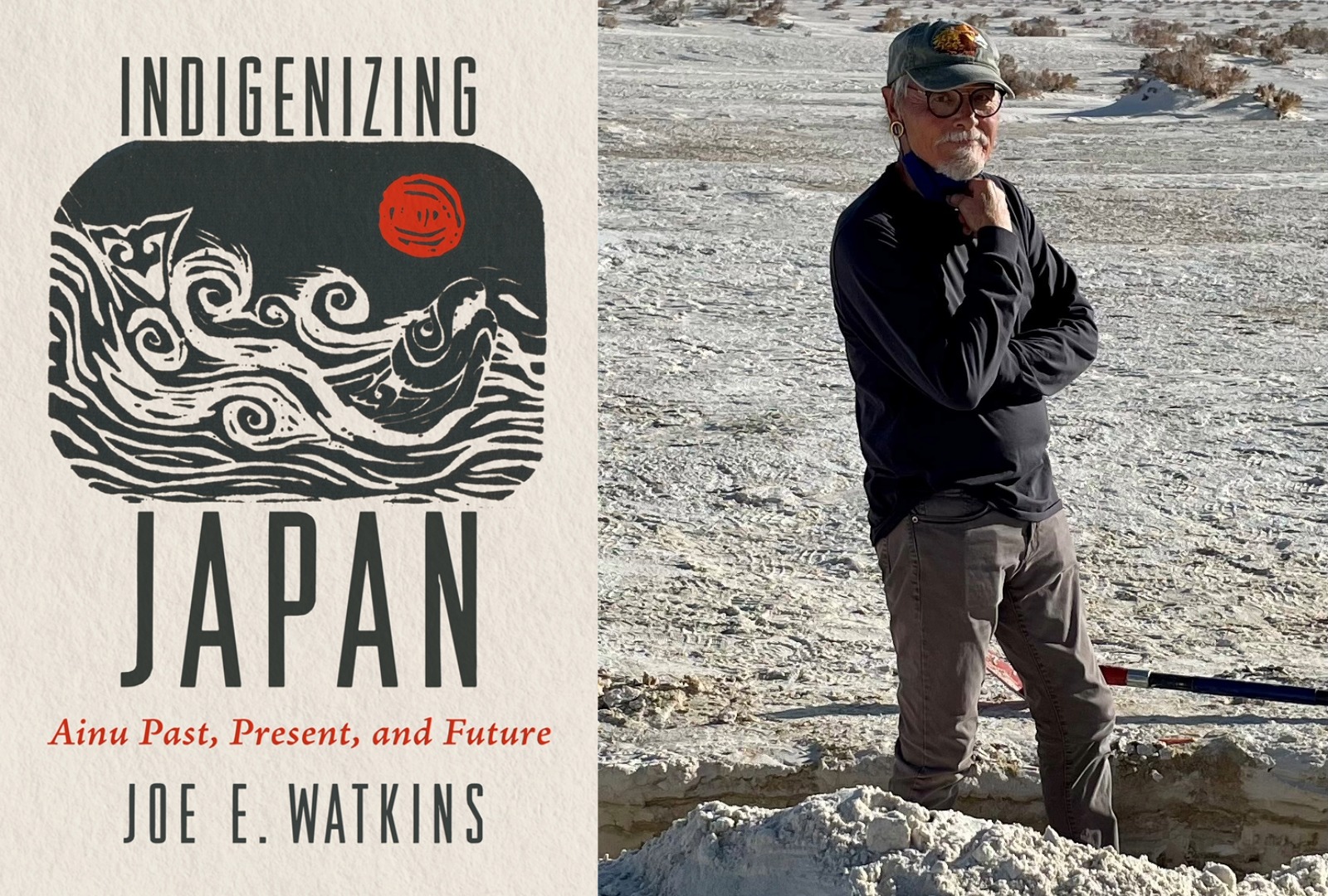
Joe Watkins, author of Indigenizing Japan: Ainu Past, Present, and Future, spoke as part of the Tumamoc Author Series with Carol J. Ellick, Executive Director of Archaeological and Cultural Education Consultants.
In this Southwest Center video of the event, Watkins discusses his work with the Ainu, the indigenous people of Hokkaido, Japan. The talk explains the history and archaeology behind the divergence in cultural trajectories between mainland Japan and Hokkaido, and the recent cultural revival following the 2007 recognition of the Ainu as Japan’s Indigenous people.
Watkins explains how Ainu culture developed differently from Japan’s Waijin ethnic majority culture: “On Hokkaido, the climate cannot allow wet rice agriculture, as was developed on the Japanese mainland on Honshu, Shikoku, and Kyushu in 5000 BC, as seen in the archaeology. So the Ainu on Hokkaido [and other northern islands] developed in place. So with that archaeological distinction as well as the genetic distinction from the Wajin of the mainland, we start getting the cultural differences, the historical differences, and we still see the expression of genetic differences in many Ainu.”
The event was presented by Desert Laboratory on Tumamoc Hill, The University of Arizona Press, and The Southwest Center.
Joe E. Watkins, a member of the Choctaw Nation of Oklahoma, currently works as a senior consultant for Archaeological and Cultural Education Consultants (ACE Consultants) and is an affiliated faculty member in the School of Anthropology at the University of Arizona. He was president of the Society for American Archaeology during 2019–2021. His study interests concern the ethical practice of anthropology and anthropology’s relationships with descendant communities and populations on a global scale.