The University of Arizona Press

September 8, 2026
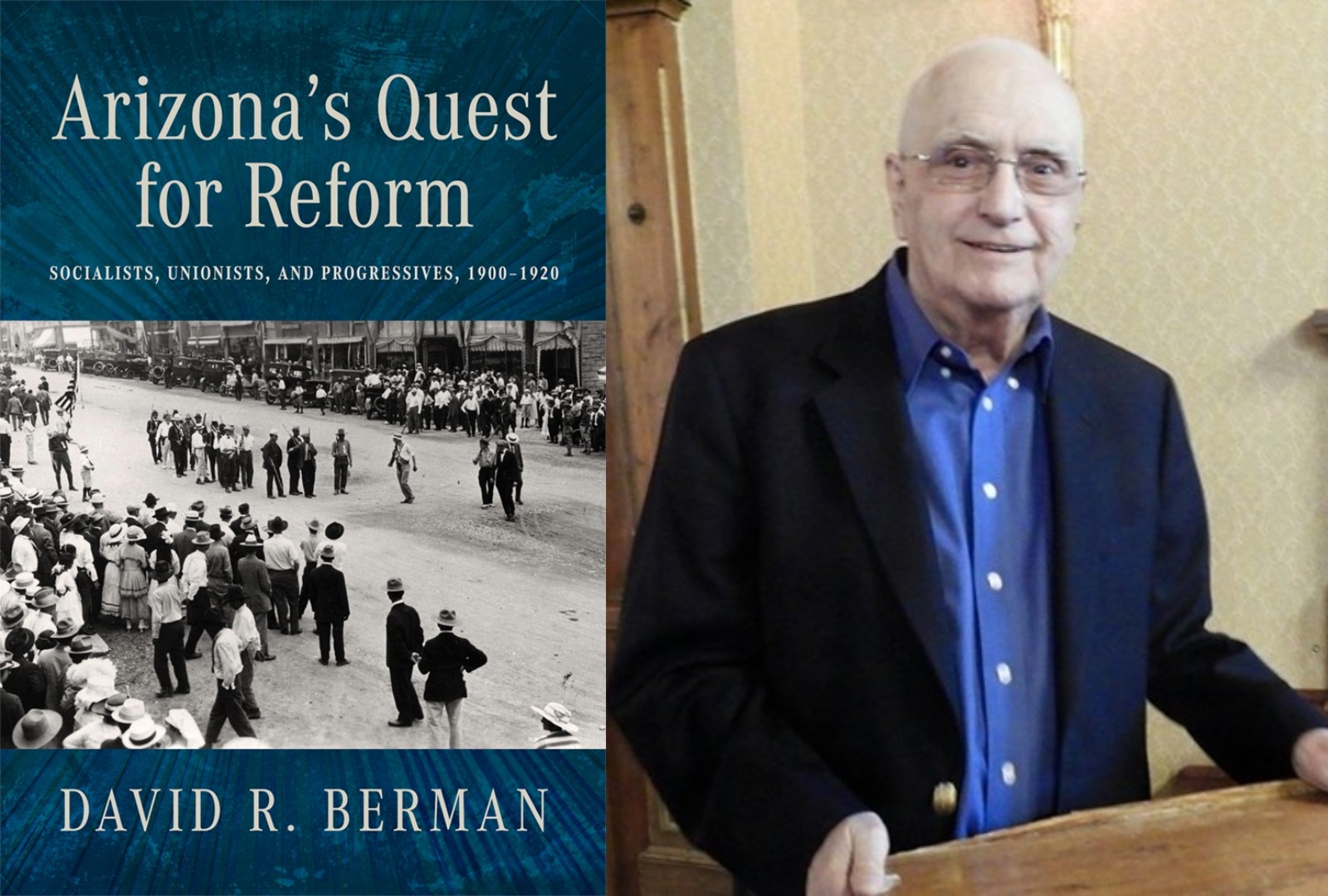
In Arizona’s Quest for Reform: Socialists, Unionists, and Progressives, 1900–1920, David R. Berman traces the rise and fall of a dynamic coalition of socialists, labor activists, and progressive Democrats led by the influential Governor George Hunt as they pursued sweeping reforms in a rapidly changing state. From the fight for workers’ rights and women’s suffrage to the use of the initiative process and the role of radical newspapers, Berman brings to life the people and movements that shaped Arizona’s early political identity. This landmark work will appeal to scholars of western history, labor studies, and political science, as well as general readers interested in Arizona’s unique place in the national Progressive movement.
Arizona’s Quest for Reform not only deepens our understanding of the past but also offers timely insights into the enduring challenges of coalition building, grassroots activism, and political reform. Drawing on extensive primary sources and organized in a clear chronological structure, Berman’s study reveals the tensions, alliances, and dramatic events that defined Arizona’s reform efforts between 1900 and 1920. The book explores the impact of powerful mining interests, railroad companies, and labor unions, while also examining the racialization of Mexican miners and their evolving role in the labor movement. Read an excerpt from the book’s Introduction below.
Newspapers were of considerable importance in this study, not only as a major source of information on what was going on but because they were combatants in the political and industrial struggles, taking sides and affecting both the course of reform and the perception and success of the radical forces. In 1914 the state had, by one count, sixty newspapers, forty-six of which were published weekly, thirteen of which were published six times a week, and one, the Arizona Republican in Phoenix, which was published daily. Not included in this count were socialist and radical labor papers, the editors of which, as Linda J. Lumsden has pointed out, were “activists first, journalists second.”
Some of the mainstream newspaper editors declared that their newspapers were politically independent, a claim that others contended was far from accurate. Many more papers were openly aligned with a political party or a particular faction within one of the major parties. The third-party press made its presence known in the 1912–1914 period, but from 1915 to 1919, most of the papers were aligned with one of the two major parties. During the period under review, a majority of the papers were aligned with the Democratic Party (though many of these were on the conservative side). Editors were well known in their communities and often influential political figures. Still, the “facts” they printed ran the risk of being ignored, misinterpreted, or rejected by the “public communities” they served.
Political parties initially subsidized many newspapers, and when the party’s candidates won, the party papers received valuable government printing contracts. Aspiring politicians often purchased or launched newspapers to promote their candidacies. As time went on, railroads and mining companies also sought to promote their interests through the purchase of a paper or, more commonly, by exerting control through the financial hold they had on a newspaper because of a loan made somewhere down the line. Over time, corporations replaced political parties as the financial supporters of newspapers.
Changes in the ownership and direction of papers were common. In 1901, for example, the sale of the Tucson Citizen converted it from a Republican paper to a Democratic paper, and another purchase in 1910 converted it back to a Republican paper. In a 1914 survey, the Arizona Gazette in Phoenix was found to have changed hands and its political orientation more often than any other paper in the history of the state or territory. Originally a Republican paper, it switched from one party to another several times.
While partisanship helped shape mainstream newspapers’ opinion pages and coverage of events, corporate ownership and control over many if not most of the mainstream daily papers, be they aligned with the Republicans or Democrats, was far more salient in Arizona politics by promoting a common pro-business, free-enterprise perspective regardless of the papers’ party affiliations. Railroads spread the message through the party newspapers they controlled—the Santa Fe through papers affiliated with the Republican Party, the Southern Pacific acting through papers affiliated with the Democratic Party. Mining companies, too, used the papers they controlled—some Democratic, some Republican—to advance the conservative business cause. By 1905 mining companies were said to control at least nine daily papers and five weekly papers in the territory.
David R. Berman is a professor emeritus of political science at Arizona State University. He has written twelve books and more than one hundred published papers, book chapters, or refereed articles. His latest book is Arizona Politics and Government; others include Socialist Mayors in the United States, Governors and the Progressive Movement, and George Hunt: Arizona’s Crusading Seven-Term Governor.