The University of Arizona Press

September 3, 2026
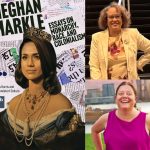
This bold and timely anthology interrogates the British monarchy through the lens of race, gender, and postcolonial critique. The contributors of ten original essays use Meghan Markle’s public life and identity as a nexus for understanding the enduring legacies of empire, white supremacy, and institutional exclusion. In Meghan Markle: Essays on Monarchy, Race, and Colonialism, edited by Duchess Harris and Julie Schwietert Collazo, each chapter blends academic analysis with the authors’ own lived experiences and identities, creating a deeply engaging and multifaceted narrative. Essays cover media representation, mental health, motherhood, and the politics of belonging.
Written in an accessible and engaging style, this volume speaks to readers interested in the intersections of monarchy, race, feminism, and celebrity culture. Through its interdisciplinary approach and critical insight, these essays reveal how one woman’s experience within the royal family brings into focus broader social and historical processes of racial identity making and colonial power. This is essential reading for anyone seeking to understand the cultural and political significance of Meghan Markle’s story—and what it tells us about the world we live in. Read an excerpt from the book’s Chapter 1: Under the Gaze.
Prior to her marriage to Prince Harry, Meghan Markle’s public appearances and speech were arguably race neutral: unmarked, inoffensive, and palatable to the public at large. The ease with which she appeared to occupy spaces such as the United Nations as a goodwill ambassador, the roles she played as an actress, and even her self-presentation on platforms such as Instagram all pointed to a woman who seemed to have evaded the limitations of race, particularly the unique burdens placed on Black women in the entertainment industry. What changed, then, when she married Prince Harry and became the Duchess of Sussex? How did a woman seemingly acceptable to the mainstream media and the public become so vilified, even accused of collapsing the British monarchy? We propose that the answer is because Markle dared to exercise her voice and agency, and in doing so, she moved from being raceless to raced. In sum, she became Black.
Historically, women who have married into the British royal family have survived and thrived in their roles either by being silent or by being silenced. Markle, a Black American woman, defied this code. In the overwhelmingly white space that is the palace, she talked back, and she talked Black. This was a problem. This chapter interrogates the shift in media perceptions of her from this standpoint. We argue that although in the past Markle may have performed race neutrality in professional and public settings, and hence, stayed silent on matters of race, politics, and social justice, this posture was impossible at the palace. There, she was, in the words of Zora Neale Hurston, “thrown against a sharp white background” and thus hyper-visible. There, she was forced to confront realities of Black womanhood that she, a light- skinned biracial woman, may have previously evaded. In this vein, central to our argument is the notion of the palace (a term used interchangeably throughout this essay for the royal family and the British monarchy as an institution) as a site of racial and cultural reckoning for Markle. Specifically, pitched against the whiteness of the palace, Markle became Black. That is, as argued by Stuart Hall, the shift in public perception of Markle and the ways in which she, after leaving Britain as a “working royal,” now clearly aligns with the Black community on race matters and social justice attest to the notion that identity is not static. It is a constant production of both being and becoming.
In this chapter, we have selected moments in the public lives of Markle and Prince Harry, loosely categorized under the labels of courtship, engagement, marriage, and life outside England. We analyze examples from these to show how Markle progressively becomes Black in media representations. As her relationship with the prince deepens, Blackness is publicly thrust upon her and she must decide either to embrace it or ignore it with the world watching.
Courtship
To understand Markle’s relationship with Prince Harry, and the many courses it has taken in the public eye, one needs to place Markle and her transition from an actress to a member of the royal family in historical context: Traditionally, there have been limited roles available to Black women in the public sphere, and Hollywood has been instrumental in ensuring this. As a commercialized entity, the film industry aided and abetted in cultural and discriminatory practices. The image of Black and other nonwhite people suffered. The roles minorities occupied reinforced colonial and slave-era stereotypes, namely Black people as subordinate, marginalized, or subjugated individuals or criminals. The presence of Black and nonwhite people existed to bolster the presence of white people and to affirm white superiority as societal norm. Specifically in America, cinema became a space in which contested ideas about history, citizenship, and racial and gender identities were debated and solidified. David Wark (D. W.) Griffith’s The Birth of a Nation (1915), the first feature-length film, tackled all these subjects, but from a particular viewpoint. On the surface, Birth is a narrative that is clichéd: Two families, geographically and politically opposed, one based in the slaveholding South and the other in the North, collide when their sons befriend each other at school. Griffith uses this simple narrative, however, to present a particular vision of American society that emphasizes racist ideologies and Black abnormality—for example, the inherent criminality of Black people and the uncontrollable sexual appetites of Black men that endanger white women. The popularity of Griffith’s film —aided by its viewing at the White House on February 18, 1915, by then-president Woodrow Wilson— helped cement problematic Black presence in American cinema.
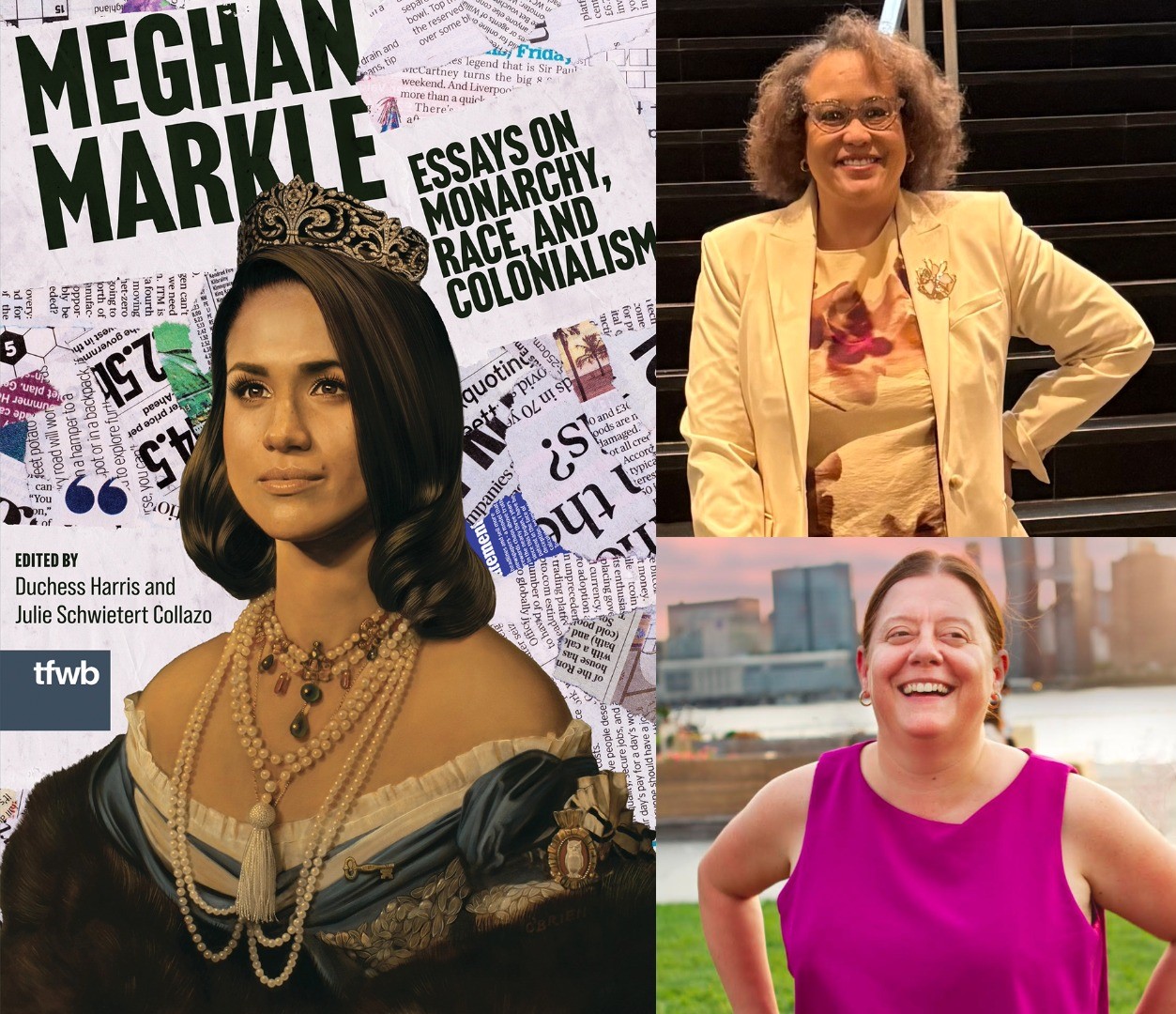
Duchess Harris is the chair of the history department at Macalester College. She is a professor of American studies and is also an affiliated member of the political science department. Her academic books include Racially Writing the Republic: Racists, Race Rebels, and Transformations of American Identity with Bruce D. Baum, four editions of Black Feminist Politics (2009, 2011, 2018, and 2026) and Black Girl Magic Beyond the Hashtag: Twenty-First-Century Acts of Self-Definition with Julia S. Jordan-Zachary.
Julie Schwietert Collazo is a former social worker and creative arts therapist turned writer-editor-translator. She holds a BA in English and women’s studies from Emory, a MSW from NYU, and she has completed doctoral work in Spanish at Centro de Estudios Avanzados in Puerto Rico. She has written or worked for a number of media outlets, including Audubon Magazine, the Guardian, Longreads, and the New York Times, among many others. She is the co-author of The Book of Rosy, which was named by Kirkus as one of the best nonfiction books of 2020.