The University of Arizona Press

September 23, 2026
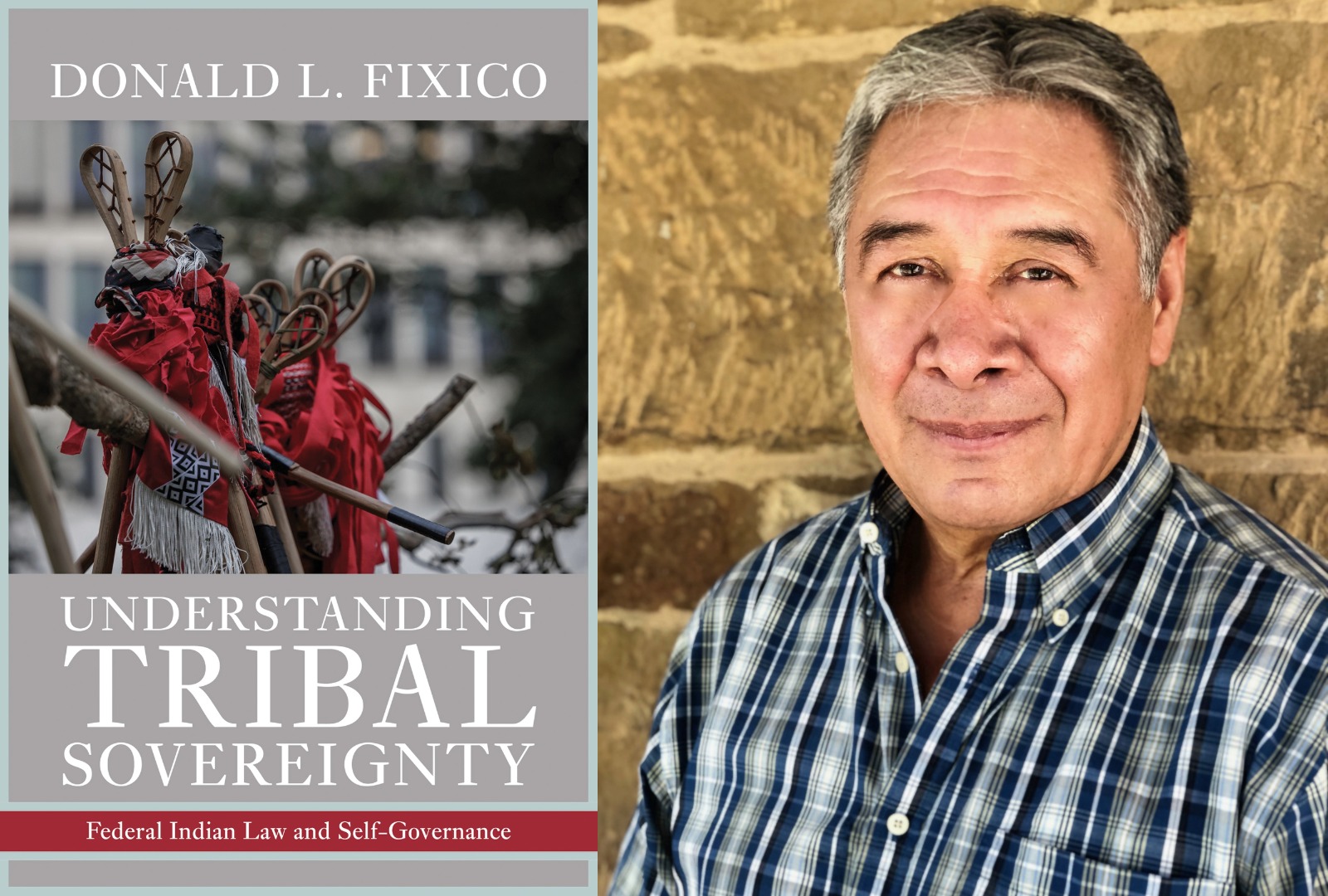
In the new work Understanding Tribal Sovereignty historian Donald L. Fixico unpacks the complex history and legal foundations of tribal sovereignty in the United States. From traditional Native governance to landmark treaties, federal laws, and court cases, Fixico guides readers through the evolution of tribal self-rule and its modern expressions—from tribal constitutions to license plates and casinos.
Today, the author answers a few questions about this new work.
What started you thinking about this topic, and in particular, as a book in this format?
As tribal sovereignty became more evident in the last twenty-five years, I wanted more people to understand the legal rights for tribes to have casinos, license plates, and the opportunity to build museums, colleges, businesses, health clinics and hospitals on their reservations.
Your work is grounded in history, taking readers back to understand traditional sovereignty grounded in sacred places. It also gives readers an overview of treaty history in the United States. Why did you start this work, which is very topical, with historical context?
Native nations have a very long collective past that began well before the arrival of Columbus, and it is within this early Indigenous reality where traditional sovereignty began with the forming of these tribal nations. Origins of natural freedom often derived from sacred places and the nature of sovereignty was reshaped by treaties and federal laws.
Why is it important to understand the evolution of tribal self-rule and its modern expressions?
A lot of people have a misunderstanding of tribal sovereignty or do not even know that it exists. Most important is understanding how and why it has changed throughout the course of U.S.-Indian relations and how tribes express tribal self-rule today. When you look across the modern landscape of many reservations today, it is astonishing what the tribal nations have accomplished during the last 100 years. This is modern tribal sovereignty at work for Native people and non-Native people living nearby.
This work is accessible and very readable. Who do you think are the primary audiences?
The primary audience is everyone from people who are curious about Indian legal rights, including students, teachers, professors, paralegals, lawyers, tribal leaders, and bureaucrats at all levels. Tribal sovereignty is complex, and this volume is meant to be a go-to book for understanding the evolution of tribal sovereignty.
What are you working on now?
Presently, I am working on a comprehensive history of Indian Territory and Manifest Destiny. It involves stories about removal, cattle drives, outlaws, lighthorsemen, battles, missionaries, the Civil War, land allotment, and how the Indian nations rebuilt their communities against the competing forces of Manifest Destiny.
Donald L. Fixico (Shawnee, Sac and Fox, Muscogee and Seminole) is Regents’ and Distinguished Foundation Professor of History at Arizona State University. He has been on faculty at four universities and a visiting professor at seven universities, including in England and Germany, with postdoctoral fellowships at UCLA and the Newberry Library in Chicago. He has worked on more than twenty-five documentaries on American Indians, and he is the author and editor of twenty books.