The University of Arizona Press

October 6, 2026
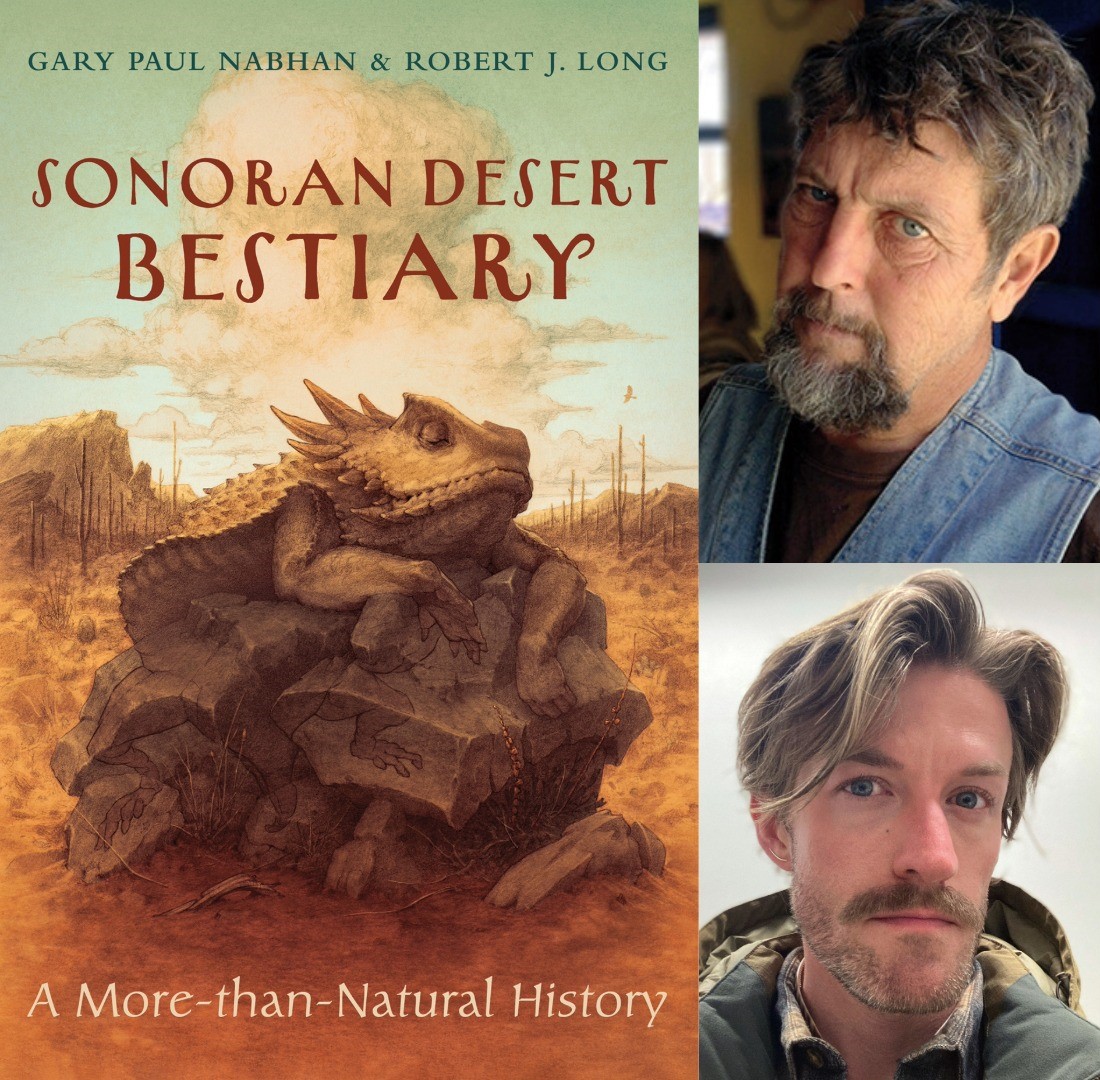
The Sonoran Desert has many marvelous and well-known creatures such as the javelina and the coyote, often found on postcards and lawn ornaments. But what about the lesser-known creatures—the ones that are underfoot yet unseen, that lurk only in the shadows and in our imaginations? In Sonoran Desert Bestiary: A More-than-Natural History naturalist Gary Paul Nabhan and artist Robert J. Long team up to celebrate these unsung beings of the Sonoran Desert. Today, we share a mini-interview with Bobby Long about collaboration and his creative process.
How did you approach illustrating animals and beings that are partly documented, partly imagined, and sometimes deeply rooted in traditional stories?
I began by reading draft chapters carefully, pausing to look up words I didn’t know or found to have some kind of visual thread I could follow. For animate and inanimate forms I encountered in this close reading, I dove into some loose sketching, all the while looking to reference images, whether searching for photos and 3D models, or seeking out tangible reference where possible to give myself a strong understanding. My plan was to leave no conceptual stone unturned and to practice drawing any potential subjects pretty accurately, from different angles and poses, before building some kind of deeper visual story. I tell my design and illustration students that drawing is thinking-on-paper, and I find this to hold true when I’m trying to shake ideas loose, out onto a paper playground where I can have a practical look at them, constantly playing with ways I could combine an inspiring piece of one with an interesting element from another into a composite that says more than any one source image could. In the end, I wanted to offer fairly accurate (where applicable), close-up, charismatic depictions of these beings out of respect for them and their time on this planet… I think they’re already complete and are in no need of embellishment or decoration.
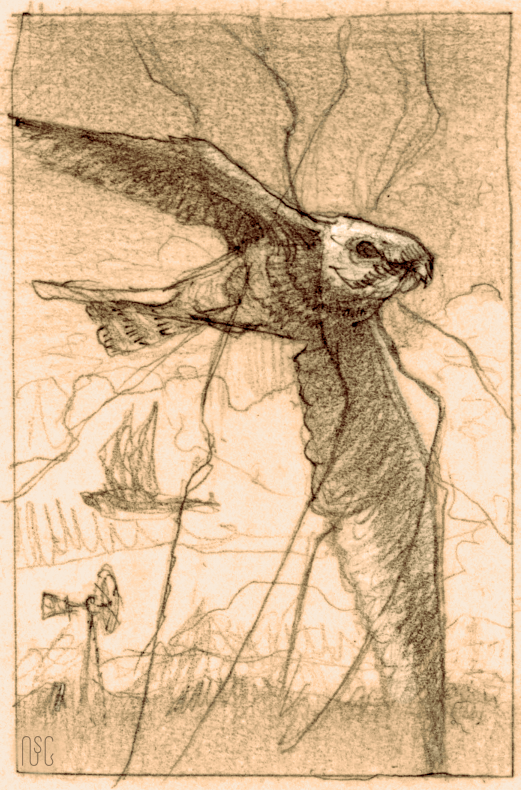
On the more technical side of things, I’d redraw and refine successful sketches larger into the final pencil drawings that live inside the book illustrations. I scanned these into my computer at a high resolution and then used Adobe Photoshop and a digital drawing tablet to paint-in translucent layers of color to float over my analog pencil renderings.
The UA Press team saw dozens of your sketches for this book. Will you walk us through your process from reading Gary Paul Nabhan’s writing and/or talking with him to final illustration? What kind or research, sketching or visual experimentation took place?
Gary and I arrived at twelve beings right away, but we took a while to choose who would fill each slot, or our “beast list.” We wanted to avoid clichés and to not devote main chapters to anything already covered heavily in pop culture. And as an aside, my previous magazine illustrations that drew Gary my way in the first place had depicted desert insects up-close and full of approachable character. I think Gary’s fondness for that side of my work carried over to this project, because we were quickly finding that our list was filling up with insects and creepy-crawlies. So while I was secretly glad to have converted another person to the dark arts of entomology, we did continue to tinker until we felt we had many walks (and swims) of life represented. From there, I didn’t really begin drawing anything until Gary’s chapter drafts started to materialize and make their way to me. As for visual experimentation, I’d soon start sketching my ever-loving brains out, and both Gary and UA Press gave me all the room in the world to breathe and figure things out. It was just me, my pencil, and the hamster wheel in my head for long stretches of time. I’d sling some drafts their way to check-in and ask some questions here and there. But all in all, I got plenty of support from my collaborators and felt free and trusted to pursue my interpretations of the written words.
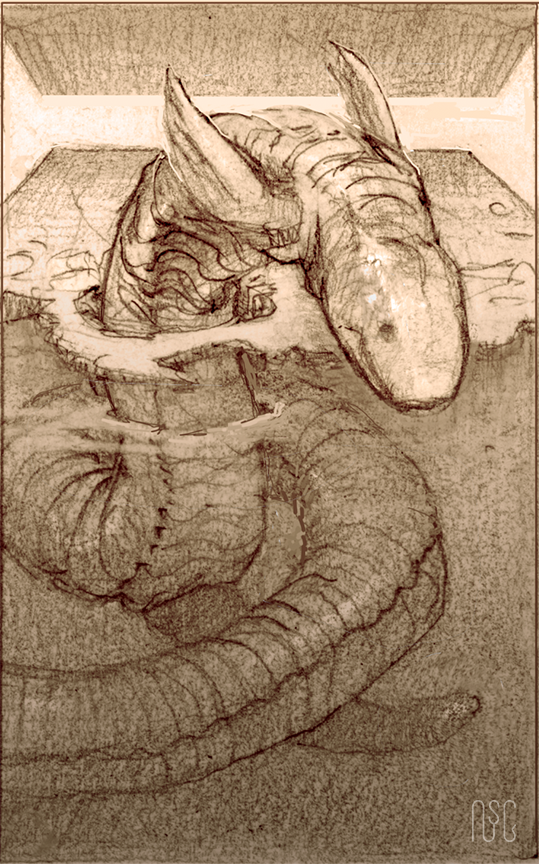
Which illustrations in the book were the most challenging or surprising to create, and why?
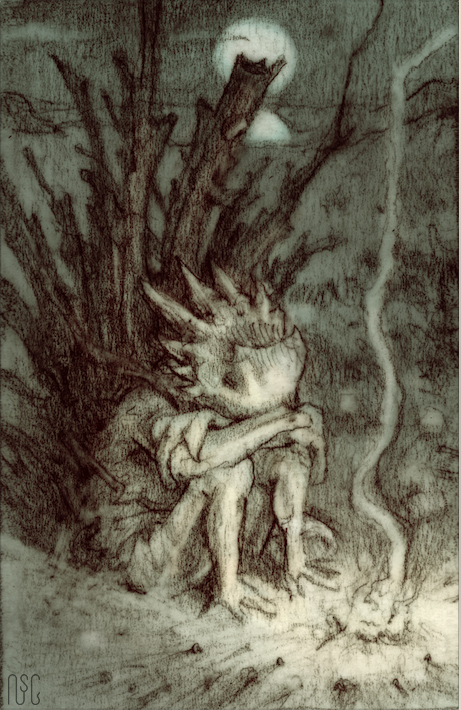
Each full-page illustration had its own set of challenges. Some of the illustrations took a while to conceptualize, especially once I had a scope already established for the first couple. For others the idea came more quickly, but were tough to depict in a dynamic perspective or in a tall, narrow page format. Anyway, it’s tough to point to just one problem child (or favorite), but I did spend a lot of time on the Desert Leaf Cutter Ant. I’ve drawn lots of bugs before, even desert ants, but I think I felt like I had to one-up my previous ant work. I also wanted to create really extreme perspective to make the viewer feel like they were tiny enough to rub the ant’s belly, while getting swallowed up by a big nest cavern.

So I zoomed in close to some scientific 3D scans of very similar species to see how perspective might warp the body and legs if you’re a centimeter from its chin, then adjusted the under-drawing to apply the attributes for the correct species for the chapter. Finally, I had a couple major re-draws of the ant’s background. I first got absorbed in drawing fungal spires, hanging like sea sponge chandeliers. But then realized this ant’s partner fungus doesn’t usually form spires and that the complex shapes I drew didn’t really frame the ant well anyway. So a behind-schedule rework left me with a solution I now love: the oculus letting in sunlight, like a Byzantine halo backlighting the ant in its dark home. I had been wanting my ant’s exoskeleton to glow a bit and look a little translucent, so with some new sunlight behind him, it was my guy’s time to shine.
The Sonoran Desert is full of subtle textures, colors, and forms that many people overlook. What visual details of the desert landscape or its wildlife do you find most inspiring as an artist?
I agree! In some slices of space and time our favorite desert’s bounty beats you over the head and in other interactions you have to open your eyes a little wider. If you’re into flashy things or are used to someone telling you what beauty should look like, you’re likely to miss it in the Sonoran Desert. But if you can get lost in something small or understated, or in something that makes you feel small then beauty probably found you. And it’s probably rough around the edges or muted in color to survive there. When I first moved to Arizona, my eyes were already attuned to intimate subjects in my close-up camera lens, but I was also easily distracted by big weird plants and sunsets and landscapes painted by evening colors more brilliant than I was used to. Now that I’m accustomed to all that, I can narrow my focus onto the unsung heroes, like hefty ironclad beetles wobbling along, old creosote branches sun-bleached silver, and my word, so many interesting little rocks everywhere.
You have worked on so many illustration and design projects from the Flandrau Science Center and Planetarium in Tucson to the Feral Ecologies Lab in Rotterdam, the Netherlands. What is your current or next big project?
I don’t know what my next big art project will be, but I’m thinking I’d like to rely less on digital finishing and have fewer temptations to press the cursed “undo” button. And I would like to revisit some analog art materials I haven’t touched in a long time, like watercolor, ink, oil paint, or something with more chance involved. Currently, I’m working on some logo designs for various people and organizations to build up enough of a logo portfolio to show on my website. Logo design is my favorite niche in graphic design, and while it is a very digital process near the end, I still start out a logo project with sketching ’til the cows come home, and I do enjoy the many ways its demand for simplicity and visual problem-solving differ from my mode of drawing.
Robert J. Long is an associate teaching professor of visual communication at Northern Arizona University. He earned his MFA in studio art at the University of Arizona in 2013. His visual art, made under the pen name NearsightGraphite, has been published through Frontiers in Microbiology, Manifest Press, the Confluencenter for Creative Inquiry, and Edible Baja Arizona magazine, among others. His award-winning work has been shown in juried gallery exhibitions in the United States and abroad since 2008. His art installations include Undersea Discovery (2023–present) and Wild World of Bugs (2021–present) in the Flandrau Science Center and Planetarium at the University of Arizona. In 2013, Long became Arizona’s first finalist in the internationally juried Adobe Design Achievement Awards. Find his work at https://www.nearsightgraphite.com/