When: April 7-9, 2022
Where: Las Cruces, NM
We are excited to attend the Arizona-New Mexico History Convention in Las Cruces this spring! The Arizona-New Mexico History Convention will be held April 7-9, 2022, at the New Mexico Farm and Ranch Heritage Museum, 4100 Dripping Springs Road, Las Cruces, New Mexico. The Arizona History Convention welcomes anyone interested in Arizona History to attend. Amateur and professional historians explore Arizona’s rich and colorful past through papers, talks, workshops, discussions, book displays, and field trips. Established in 1960, the Arizona History Convention offers a congenial venue for historical researchers to share the results of their labors with one another and the public.
Make sure to visit our table and browse our new and recent books!
When: March 30-April 3, 2022
Where: Chicago, IL
We are so excited to be attending the 87th annual Society for American Archaeology meeting this spring! SAA’s Annual Meeting brings together the archaeological community to share ideas, best practices, and state of the art knowledge; meet and network in interest groups, panels, symposia, and committees; and to celebrate their field.
We can’t wait to see you all in-person again! Please visit us in the exhibit hall at booths 401 and 403 to browse our recent books and tell us about your current projects. We’re also offering a great conference discount! Visit this link and use the code AZSAA22 to access 40% off plus free U.S shipping on a wide selection of archaeology titles.
When: March 23-26, 2022
Where: Philadelphia, PA
We are so excited to be participating in the 2022 AWP Conference & Bookfair! The AWP Conference & Bookfair is the annual destination for writers, teachers, students, editors, and publishers of contemporary creative writing. It includes thousands of attendees, hundreds of events and bookfair exhibitors, and four days of essential literary conversation and celebration. The AWP Conference & Bookfair has always been a place of connection, reunion, and joy, and we are excited to see the writing community come together again in Philadelphia, Pennsylvania in 2022.
In light of the tremendous success of the virtual 2021 AWP Conference & Bookfair, AWP will incorporate a virtual component to #AWP22. In addition to offering an in-person event schedule in Philadelphia from March 23-26, 2022, they will live-stream several in-person events and offer a selection of prerecorded virtual events.
Make sure to visit us at booth 1113 to browse our recent books and tell us about your current projects! We are also offering a conference discount. Visit this link and use the code AZAWP22 for 30% off with free U.S. shipping.
Book Signings:
Friday, March 25 at 12pm to 2pm:
Reyes Ramirez will be signing copies of his new book, The Book of Wanderers. Learn more about the book here.
Friday, March 25 at 2pm to 4pm:
Carlos Aguasaco and Jennifer Rathbun will be signing copies of their new collection, Cardinal in My Window with a Mask on It’s Beak. Learn more about the book here.
When: April 20-24, 2022
Where: Online
Come celebrate and reflect on 50 years of Activist Scholarship! In March of 1972, a group of Social Science scholars representing their Chicano caucuses in the field met at the Southwestern Social Science Association conference in San Antonio, TX and discussed the need for a Chicano organization of scholars. They were at the nascent stage of creating the intellectual arm of the Chicano movement. Fifty years later, the Chicana/o/x community has its intellectual base of scholar-activists in an organization now called the National Association for Chicana and Chicano Studies (NACCS).
Always committed to the community, NACCS has been at the vanguard of social justice activist scholarship. Providing a critique of racist academic tendencies and offering a forum for the challenging of mainstream white supremacist academy, NACCS in its earliest form encouraged scholarship that centered on Chicanos. Since its founding, some Chicana and Chicano scholars grappled with the racism, sexism, and homophobia of mainstream society, with our students often taking the lead. In 1984, the Chicana Caucus was formed to challenge patriarchy and sexism specifically within the then-named NACS. The Chicana Caucus sponsored the formation of the Lesbian Caucus in 1992, which also eventually led to the formation of the Joto Caucus (eventually becoming the Joteria Caucus). By 1996, the National Association for Chicano Studies renamed itself to confirm equal status in gender and became the National Association for Chicana and Chicano Studies (NACCS). By the new millennium, heterosexism was part of the critique of its scholarship and activism. Today, with its recognition of the continued need to challenge injustice within society, NACCS has moved its scholarship beyond narrow conceptions of gender and acknowledges a Chicanx identity not rooted in destructive binary assumptions. Always a part of the social justice movement, NACCS has used its platform to challenge racism, sexism, classism, heterosexism, and cisgenderness in its scholarship and activism. The organization has consistently sought to remain and be a part of the activist Chicana/o/x community by contributing supportive statements and providing scholarship critiquing social inequality.
Unwilling to let mainstream academia be the only space of scholarship, NACCS, like its diverse sister organizations, was formed out of the student activist and labor movements of the 1960’s and they all converged in their experiences in higher education often as the only Chicana or Chicano in traditional department as graduate students. NACCS has evolved, changed, fought, and flourished in its 50 years of activist scholarship and is still in many ways the intellectual arm of the Chicano Movement.
The MALCS 2021 Summer Institute will take place virtually on July 26-30, 2021. The MALCS 2021 Summer Institute’s theme is: Abriendo caminos, abriendo corazones: Renewing Mind, Body, and Spirit in the Time of COVID. Temporarily moving to a virtual format, the MALCS Executive and Coordinating Committees are pleased to bring you a wonderful week of programming meant to bridge the distance by bringing love, healing, and community to you—wherever you are. Fraught with loss, sadness, and worry—exacerbated by continued social injustice, social inequity, and political unrest, the pandemic and its accompanying uncertainties wreaked havoc on our physical, mental, and emotional wellbeing.
Use the code AZMALCS21 for 40% off all University of Arizona Press titles, with free U.S. shipping.
June 16, 2021
If you are attending the virtual NAISA conference, be sure to check out the live roundtable on University of Arizona Press author Laura Harjo’s book, Spiral to the Stars. The roundtable, titled “Emergence Geographies: A Roundtable on Laura Harjo’s Spiral to the Stars: Mvskoke Tools of Futurity”, starts at 1:00 p.m. EDT. If you’re registered for the conference, you can find more information here.
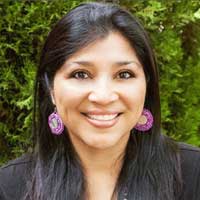 Laura Harjo is a Mvskoke scholar, geographer, planner, and Indigenous methodologist. She is an assistant professor of community and regional planning at the University of New Mexico.
Harjo’s award-winning book, Spiral to the Stars, offers a critical and concrete map for community making that leverages Mvskoke way-finding tools of energy, kinship, knowledge, power, and spaces. It is must-have book for community organizers, radical pedagogists, and anyone wishing to empower and advocate for their community.
November 17-21, 2021
Join us for the 2021 AAA Hybrid Annual Meeting! This year we will be participating virtually, but the conference will be happening simultaneously in Baltimore.
This year’s theme is “Truth and Responsibility.” This theme is a call to re-imagine anthropology to meet the demands of the present moment. The imperative to bear witness, take action, and be held accountable to the truths we write and circulate invites us to reflect on our responsibility in reckoning with disciplinary histories, harms, and possibilities. To whom are we giving evidence and toward what ends? For whom are we writing? To whom are we accountable, and in what ways?
We look forward to connecting with you during the conference, and we hope to connect with you in-person again someday in the future.
October 27- 30, 2021
We’re excited to be virtually participating in the 61st annual Western History Association conference, which is simultaneously taking place in-person in Portland, Oregon!
This year’s theme is: “To the West and Beyond: The Global and the Local in Western History”.
We are looking forward to connecting with you during the conference, and we hope to see you all in-person again someday in the future.
June 14-21, 2021
Join us for the first ever virtual NAISA conference!
“In 2021, the NAISA annual meeting will be virtual but the connections will be real. We envision this virtual conference space as an opportunity to pursue and implement Indigenous principles and practices of exchanging ideas and experiences. We welcome proposals that foster conversation and/or dialogue in ways that help to cultivate and establish relations, advance scholarship, and strengthen or create collaborative engagements based on an ethics of care.”
Use the code AZNAISA21 at checkout here on our website to receive 40% off with free U.S. shipping!
April 14-16, 2021
Join us for the first ever virtual NACCS conference!
“The 2021 NACCS conference invites us to come together to hash things out as we have always done—sharing our work, debating, disagreeing, re-connecting—to find ways of deepening old alliances and forging new ones as we work to move forward through this incredibly challenging time in which there are no easy answers, except perhaps for the knowledge that the struggle continues anew, now more than ever.”
Please be sure to visit our virtual exhibit, and use the code AZNACCS21 to at checkout here on our website to receive 40% off all titles with free U.S. shipping!
 The University of Arizona Press
