The University of Arizona Press

July 10, 2026
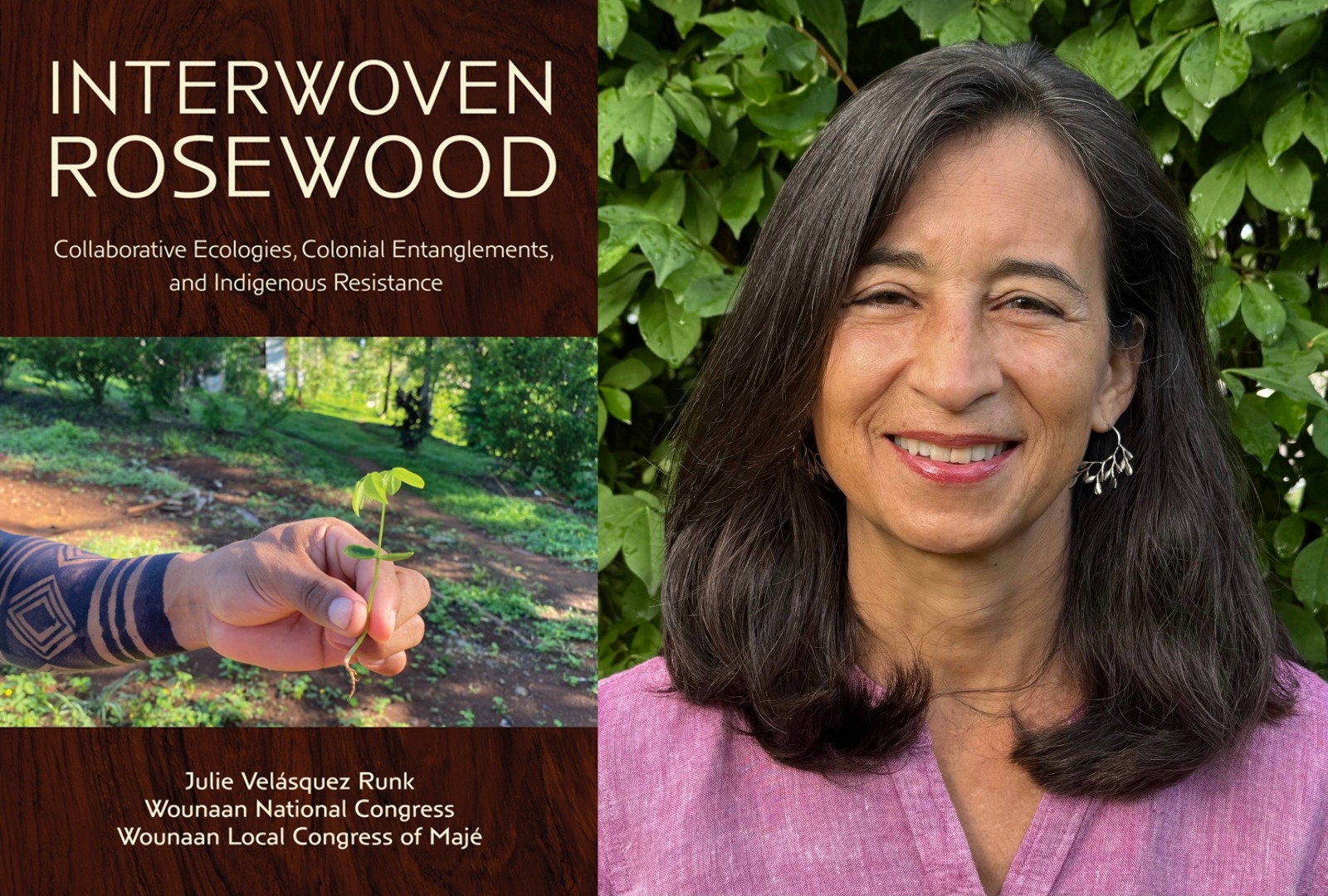
Interwoven Rosewood: Collaborative Ecologies, Colonial Entanglements, and Indigenous Resistance authors Julie Velásquez Runk, Wounaan National Congress, and Wounaan Local Congress of Majé recently launched a website featuring resources and background for their book. The Interwoven Rosewood website includes a remarkable digital collage photo of the book’s authors and collaborators, as well as videos from the Wounaan community.
The Wounaan Podpa Nʌm Pömaam (Wounaan National Congress) is comprised of all Wounaan in urban and rural areas and the sixteen Wounaan communities in Darien and Panama Provinces of Panama. The Wounaan Podpa Nʌm Pömaam is the highest body of religious, cultural, and political-administrative expression, deliberation, and decision-making of Wounaan in Panama. The Wir Haigpai Podpa Nʌm Majé (Wounaan Local Congress of Majé) is made up of members of the community of Majé and elected authorities. It also is part of the Wounaan Podpa Nʌm Pömaam. Julie Velásquez Runk is director, professor, and Weigl Fellow in Environment and Sustainability Studies at Wake Forest University and a research associate at the Smithsonian Tropical Research Institute. Trained as an ecologist and anthropologist and taught by Indigenous Wounaan, she has fostered socioecological research through community-based knowledge co-production for more than thirty years.
About the book:
Interwoven Rosewood is a collaborative exploration of the global rosewood trade and its entanglements with Indigenous lifeways, colonial histories, and environmental crises. Co-authored by Julie Velásquez Runk and members of the Wounaan National Congress and its Local Congress of the Majé community, this book traces the story of cocobolo rosewood from Wounaan lands in Panama to international markets, revealing how centuries of settler colonialism and extractive capitalism continue to shape landscapes, livelihoods, and relationships. At its heart, the book is a meditation on well-being and belonging—how people live in relation to land, each other, and the more-than-human world.
Drawing on more than a decade of community-based research and six collaborative book workshops, the authors weave together first-person narratives, ecological analysis, historical context, and Indigenous knowledge. The result is a richly textured account that challenges dominant narratives of environmental degradation by centering Wounaan experiences of joy, resistance, and conviviality. The book’s structure reflects its method: interwoven chapters authored or spoken by Wounaan colleagues, grounded in consent protocols and shaped by ancestral storytelling traditions.