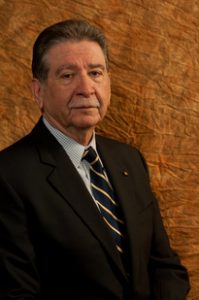
The ALLA Book Award Committee members, Gilberto Ross, Elaine Peña, and Diane Garbow offer this reflection on the important scholarly contribution of Dr. Vélez-Ibáñez’s work: “Velez-Ibáñez’s text underlines the manner in which gender, race, and class emerge out of local and global processes. The book emphasizes that from the Spanish era to the United States invasion, to the new reach of the Mexican state in the Southwest North American Region, languages and their ideological constructs were imposed upon resident populations in complex, ‘hydra-headed’ approaches to the negotiations, accommodations, and resistances. Revolts, hybridities, and other kinds of recalcitrant inventiveness are the result, ‘spiced by spaces and places’ for experimental and discontent ‘translanguaging’. No hegemony is complete, in the best of the Gramscian tradition.”
Carlos G. Vélez-Ibáñez is Regents’ Professor and the Motorola Presidential Professor of Neighborhood Revitalization in the School of Transborder Studies and a professor of human evolution and social change at Arizona State University. His numerous honors include the 2004 Robert B. Textor and Family Prize for Excellence in Anticipatory Anthropology and the 2003 Bronislaw Malinowski Medal. Vélez-Ibáñez was elected Fellow of the American Association for the Advancement of Science in 1994 and was named as a corresponding member of the Mexican Academy of Sciences (Miembro Correspondiente de la Academia Mexicana de Ciencias) in 2015.
We’re pleased to announce Margaret Bruchac has been awarded the inaugural Council for Museum Anthropology Book Prize for her work Savage Kin: Indigenous Informants and American Anthropologists. The Council for Museum Anthropology (CMA), a section of the American Anthropological Association, recognizes innovative and influential contributions to the field of museum anthropology. The Council for Museum Anthropology BookAward was created to recognize and promote excellence in museum anthropology. The award is awarded biennially to a scholar within the field of museum anthropology for a solo, co- or multi-authored book published up to two years prior to the award date.
As part of this year’s AAA Annual Meeting, the 2018 CMA Book Prize will be awarded to Margaret Bruchac, with honorable mention awarded to Laura Peers and Alison Brown for their book Visiting with the Ancestors (2016).
According to the award’s committee members, “Savage Kin is an insightful examination of the previously hidden histories of Native interlocutors who helped to facilitate and make anthropological knowledge about Native North American communities possible. Using ‘restorative methodologies’ to examine a vast array of archival and museum collections, Bruchac raises important issues about the history of bicultural relationships that inform anthropology, the possibilities and value of archives and museum collections for research, and the sociology of knowledge production. This book will we feel not only push the discipline to rethink our received disciplinary histories but will also encourage other scholars to take more seriously the complicated legacies within archival and museum collections.”
Margaret Bruchac is an Assistant Professor of Anthropology at the University of Pennsylvania, where her areas of specialization include NAGPRA and repatriation, indigenous archaeologies, museum anthropology, and Native American studies. She is the author of numerous book chapters and academic articles, as well as prose, plays, and poetry for a variety of regional historical and folklife centers. Bruchac has received awards from the American Philosophical Society and Ford Foundation, and was given the Aesop Award from the American Folklore Society in 2006.
On winning the inaugural CNA Book Prize, Bruchac said, “It seems so poetic to have my critical analyses of museums in the past recognized by museum scholars in the present! Serendipitously, this award also coincides with the resolution of several key repatriation cases I was working on. So, the good work continues, as I turn to focus on reconnecting other lost objects and stories.”
Part of our Native Peoples of the Americas series, Savage Kinrestructures readers’ views of relationships between Indigenous informants, such as Gladys Tantaquidgeon, Jesse Cornplanter, and George Hunt, and anthropologists, such as Frank Speck, Arthur C. Parker, William N. Fenton, and Franz Boas. Like other texts focused on this era, it features anthropological luminaries credited with saving material that might otherwise have been lost. Unlike other texts, it highlights the intellectual contributions of unsung Indigenous informants without whom this research could never have taken place.
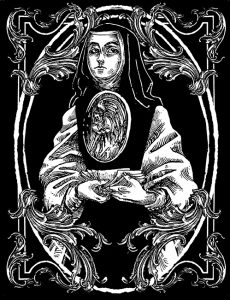
A sixteenth-century Mexican nun, Sor Juana Inés de la Cruz, has become one of the most rebellious and lasting icons in modern times, on par with Mahatma Gandhi, Ernesto “Che” Guevara, and Nelson Mandela. Referenced in ranchera, tejana, and hip-hop lyrics, and celebrated in popular art as a guerrillera with rifle and bullet belts, Sor Juana has become ubiquitous. In anticipation of the release of his forthcoming book, Sor Juana: Or, the Persistence of Pop, we’re excited to share a brief excerpt from Ilan Stavans’ meditations on the legacy of this celebrated feminist icon.
Eko, “Primero Sueño Series,” 1
She shows up as a guerrillera, with rifle and bullet belts. Or replaces the screamer in Edvard Munch’s famous expressionist painting of 1910. She dances in heaven with Marc Chagall’s ethereal characters. Stands next to the Beatles and other added luminaries in Sgt. Pepper’s Lonely Hearts Club Band. Wears a shoulder tattoo. Is the protagonist of a telenovela. Or a 1993 opera. The target of countless homages by literati such as Gabriela Mistral, Amado Nervo, Xavier Villaurrutia, and José Lezama Lima. A play mounted by the Royal Shakespeare Company, staged in Stratford-upon-Avon in 2012. A Halloween custom. And an animated TV series.
Even more frequently, she is paid tribute to in ranchera, tejano, and hip-hop lyrics. Is on a stamp. And, between 1988 and 1992, on the $1,000 peso bill, which was pushed out by inflation, becoming the $200 peso note, also with her semblance. She is a doll. A piñata. Drops by in high heels. Is on T-shirts. On expensive watches. Chillin’ next to an open book. And, frequently, chatting on her iPhone.
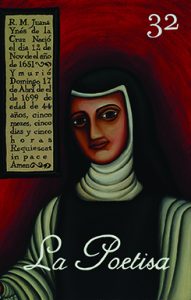
The conduits keep multiplying: statues, Lotería cards, key chains, recipe books, coffee mugs, Día de los Muertos costumes . . . Along with Ernesto “Che” Guevara and Evita Perón, she is ubiquitous.
Teresa Villegas, “Sor Juana: Lotería” (2000)
Ironically, Juana de Asbaje—alias Sor Juana de la Cruz—died in anonymity. Her grave was unmarked for almost three hundred years, until the 1970s, when the Convent of Santa Paula of the Order of San Jerónimo, where she spent her last years, underwent renovation and her remains were purportedly identified. It was a symbolic moment, since she was firmly grounded in the pantheon of Mexican icons. A few years later, Octavio Paz would publish a landmark—if controversial—biography, Sor Juana: Or, The Traps of Faith (1982), portraying her as a key intellectual figure in the journey of Latin America toward modernity, which in his view “is still an unhealed wound.”
Even with the honorific “the Tenth Muse,” it would surely surprise her to come across the iconographic machine she has nurtured. In the land of “bad hombres,” she is a rabble-rouser. A vocal one. Virginia Woolf once said: “The truth is, I often like women. I like their unconventionality. I like their completeness. I like their anonymity.” The truth is, after her death nothing related to Sor Juana is anonymous.
In poor health and besieged by the merciless campaign of intimidation her superiors were orchestrating, she drafted her uneasy lines meticulously, as if aware that she was signing her own death sentence. She was forty-three.
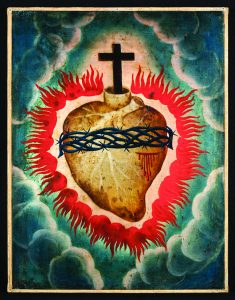
Jim Reed, “Sor Juana’s Heart” (2009)
Until a few months earlier, her star had shone bright and high. Time and again she had challenged the male-dominated intellectual milieu, emerging triumphant to the applause of one viceregal court after another. While she was occasionally confronted by a prioress, cautioned by her confessor against sacrilegious misconduct, and reprimanded by a representative of the archbishop of Mexico, Francisco Aguiar y Seijas, her position in the Convent of Santa Paula was secure. And her reputation as the premier Baroque poet in New Spain, as Mexico was known in the seventeenth century, reached far beyond—from Quito to Lima, from the Philippines to the Iberian Peninsula.
But now, sequestered in her convent cell, she was alone and lonely. As she drafted her response, dated March 1, 1691, she knew her fate was no longer in her hands. The delicate balance that she had successfully maintained most of her adult life had finally collapsed. Envy and resentment surrounded her. So she made sure her double message was unclouded. She confessed her “insignificance” as a woman, her “vile nature,” her “unworthiness.” She did so mainly because she wished “no quarrel with the Holy Office, for I am ignorant, and I tremble that I may express some proposition that will cause offense or twist the true meaning of some scripture.” However, she seized the occasion to denounce openly the repressive, misogynistic atmosphere that surrounded her and the criticism that had targeted her as a poet.
While she wrote it as a private letter, she had reason to believe it would become a civic affront, and so she let herself go. Sick, anxious, persecuted by visible ghosts, Sor Juana allowed herself un último grito—a final scream, a shriek of desperation—promising afterward to lose herself forever in the passive piety forced by the Catholic Church on scores of anonymous nuns.
Ilan Stavans at his Amherst home.
Ilan Stavans is the Lewis-Sebring Professor of Humanities and Latin American and Latino Culture at Amherst College. An internationally renowned, award-winning essayist and translator and the recipient of many honors, his recent books include Quixote, Borges, the Jew, and I Love My Selfie.
University of Arizona author Martha Few was featured on a recent episode of New Books Network to discuss her new book, For All of Humanity.
“Professor Martha Few’s For All Humanity: Mesoamerican and Colonial Medicine in Enlightenment Guatemala (University of Arizona Press, 2015)describes the implementation of public health reforms in late eighteenth-century Guatemala and the diverse ways that indigenous communities engaged and resisted these programs. Contrary to expectations, colonists were often ahead of administrators in Spain in adopting new medical methods, such as inoculating patients against smallpox. But bringing these to rural communities, some with a significant degree of autonomy, required adaptation and compromise; and if resistance was stiff, medical officers reacted with the persecution of indigenous practices in ways that mirrored the church’s anti-idolatry purges. By bringing Guatemala and its native residents into the networks of Atlantic medicine in the eighteenth century, For All Humanity illuminates the plurality of medical cultures that interacted in the production of the Enlightenment.
Martha Few is Professor of Latin American History and Gender, Women’s, and Sexuality Studies at Penn State University.”
“In U.S. Central Americans: Reconstructing Memories, Struggles, and Communities of Resistance (University of Arizona Press, 2017) editors Karina O. Alvarado, Alicia Ivonne Estrada, and Ester E. Hernandez have produced the first anthology to focus on the scholarship and experiences of 1.5 and second -generation Central American migrants to the United States. Consisting of nine interdisciplinary essays, the volume challenges and complicates the ever-budding field of Latina/o Studies by disrupting chronologies, theories, and narratives that fail to account for the diverse experiences of isthmian migrants. Analyzing oral history, cultural celebrations, literature, art, and the use of public space, the contributors explore the intersecting themes of memory, culture, struggle, and resistance, while giving voice to Central American migrants (primarily from the Northern Triangle—Guatemala, Honduras, and El Salvador) as essential actors in the history and future of the Americas. Addressing the erasure and assumed silence of central-americanos within both the U.S. nation-state and U.S. Latinidad, this timely and trailblazing anthology challenges scholars and educators to reconsider the attention paid to the experiences and subjectivities of migrantes de Guatemala, Belice, Honduras, El Salvador, Nicaragua, Costa Rica, y Panama.”
University of Arizona Press author Silviana Wood was featured on a recent episode of the New Books Network podcast to discuss her book, BarrioDreams.
“Silviana Wood is a legend of Chicano theater. Through her involvement with Teatro Libertad, Teatro Chicano, and El Teatro Nacional de Atzlán she has created plays where working class Chicanos are center stage. Despite her insistence that she is ‘a storyteller, not an activist,’ her plays reflect her deep connection to the Movimiento Chicano. They are also funny, imaginative, and heartbreaking, sometimes all in the same scene. Her book Barrio Dreams collects five of her plays.”
“Late in 1872, as the United States sought to clear the newly incorporated Southwest of its indigenous inhabitants, a company under Capt. James Burns came upon an encampment of Kwevkepayas (a branch of Yavapais) sheltering in the shadow of rock overhang above the Salt River Canyon. The soldiers wasted no time on the formalities of battle. They rained down fire, bullets ricocheting from the roof the cave, felling the refugees below. They even pushed down boulders. None survived.
Well, almost none. A few days prior, the advancing soldiers had come across a young boy of eight or nine looking for a missing horse. “They made a rush for me,” Hoomothya would later write. “They pulled me over rocks and bushes. The men didn’t care whether I got hurt or not.” But unlike Burns’ Kwevkepaya siblings, aunts, uncles, cousins, and grandfather, the invaders did not kill him. In fact, the man responsible for his family’s extermination would adopt the young Hoomothya as something between a son and a servant, renaming him Mike Burns.
Over a century later, the prolific writer and editor Gregory McNamee has brought us Burns’ remarkable story. In The Only One Living to Tell: The Autobiography of a Yavapai Indian (University of Arizona Press, 2012), Burns recounts his survival of the massacre, his time as a scout for the U.S. military on the campaign against Geronimo, his education n white schools, and eventual reconnection with his Yavapai community. “Mike Burns lived in two worlds,” McNamee tell us, “and he was at home in neither.” But his intelligence, humor and compassion illuminates both in profound and unexpected ways.”
University of Arizona author, Erica Prussing, was featured on a recent episode of New Books Network podcast to discuss her new book, White Man’s Water.
“For the past half century, Alcoholics Anonymous and its 12-step recovery program has been the dominant method for treating alcohol abuse in the United States. Reservation communities have been no exception. But as Erica Prussing vividly describes in her new book, White Man’s Water: The Politics of Sobriety in a Native American Community (University of Arizona Press, 2011), a one-size-fits-all approach to treatment does not, in fact, fit all.
An assistant professor of anthropology and community and behavior health at the University of Iowa, Prussing lived for three years on the Northern Cheyenne Reservation in Montana, working with community organizations, building long-lasting relationships, and gathering testimonies of alcohols’ often disruptive impacts on the lives of many Northern Cheyenne. While many young women have embraced the 12-step program, others – particularly of the older generation – find its moral assumptions foreign and unhelpful. What emerges from Prussing’s account is not a reductive and totalizing “Cheyenne culture” but rather a complex negotiation of tradition, community, and recovery in the face of persistent colonial challenges. This nuance and attention to detail makes Prussing’s call for indigenous self-determination in health care all the more powerful.”
“The question of how we come to understand who we are–nationality-wise–is a thorny one. In a widely-read book, Benedict Anderson said we got nationality, inter alia, by reading about it in books. William Beezley‘s got a different, though complementary, thesis regarding Mexicans of the 19th century: they were shown nationality in things like puppet shows. That’s right. Puppet shows. In his excellent Mexican National Identity. Memory, Innuendo and Popular Culture (University of Arizona Press, 2008) he explores how Mexicans were taught Mexican nationality through a variety of popular performances, games, carnivals, holidays, and household items. “Taught” might be a little too strong, as the point of each of these folk enterprises was, well, enterprise and entertainment. In any event, Mexican nationality seems to have came from the bottom up, not the top down. Seems about right to me. I learned I was American by reading a comic book called ‘Sergeant Rock.’”
The University of Arizona Press publishes the work of leading scholars from around the globe. Learn more about submitting a proposal, preparing your final manuscript, and publication.
The University of Arizona Press is proud to share our books with readers, booksellers, media, librarians, scholars, and instructors. Join our email Newsletter. Request reprint licenses, information on subsidiary rights and translations, accessibility files, review copies, and desk and exam copies.
Support a premier publisher of academic, regional, and literary works. We are committed to sharing past, present, and future works that reflect the special strengths of the University of Arizona and support its land-grant mission.
 The University of Arizona Press