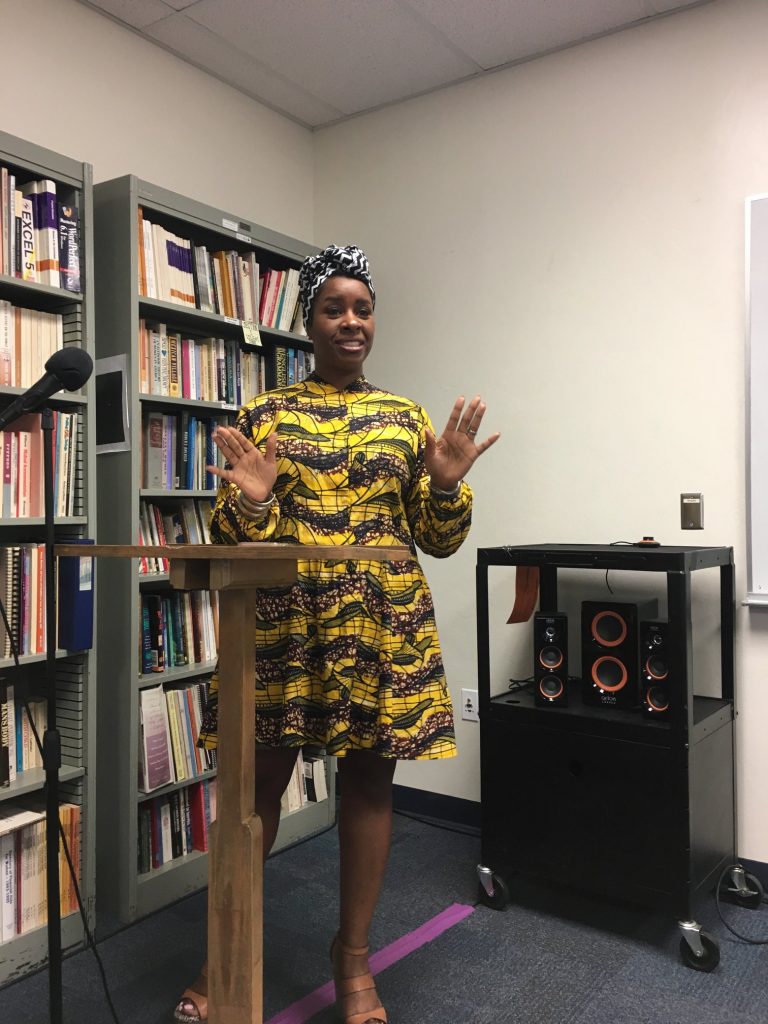
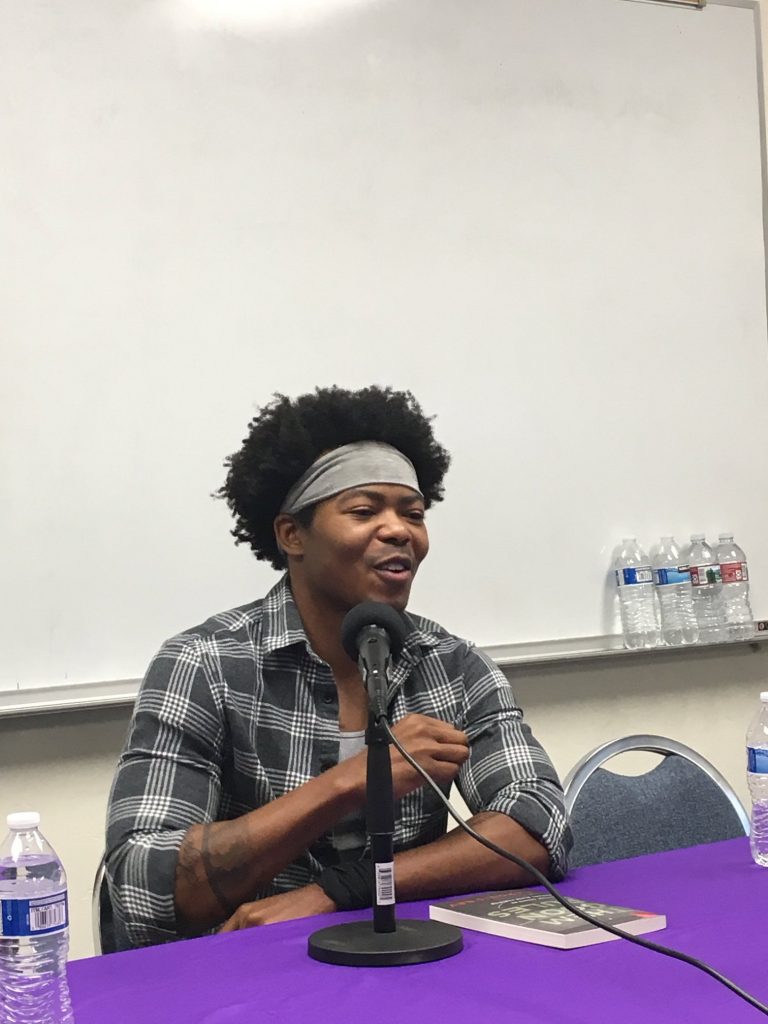
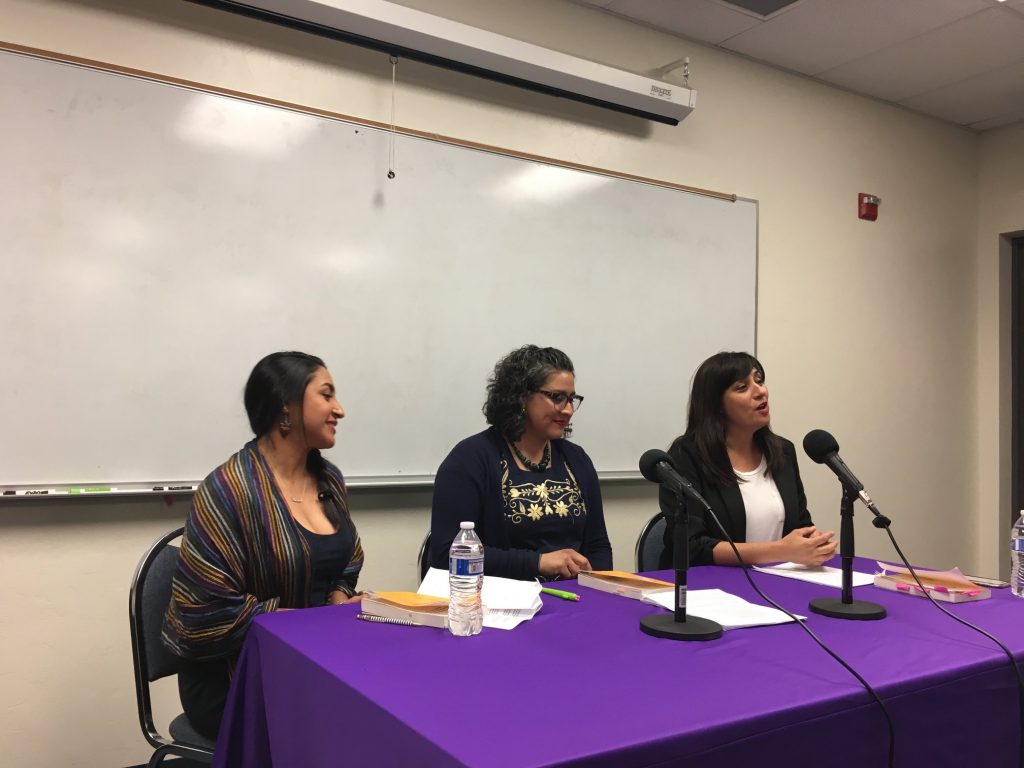
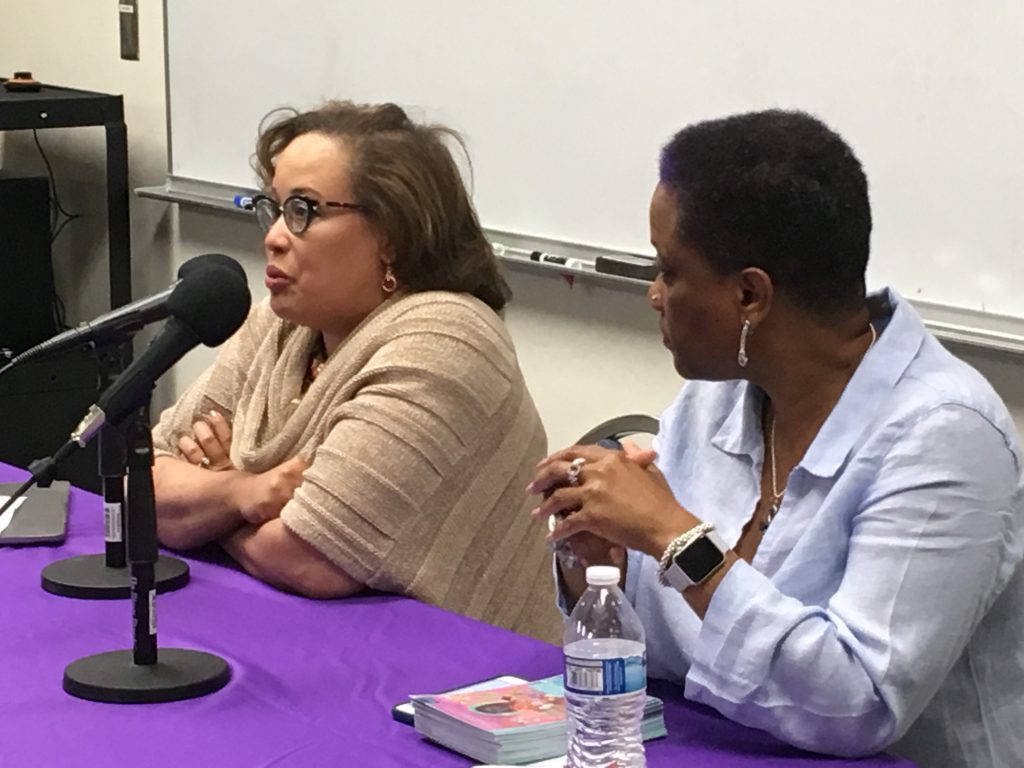
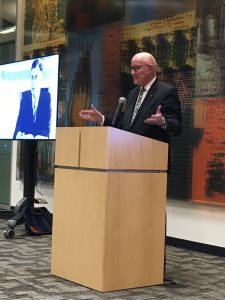
Last Wednesday brought scholars from both sides of the country to the Old Pueblo to celebrate the long-awaited launch of The Feminist Wire Books Series. It was an honor to host series editors Monica Casper and Tamura Lomax, alongside Marquis Bey, Judith Pérez-Torres, Christine Vega, Michelle Téllez, Duchess Harris, and Julia Jordan-Zachery. It was a truly powerful night, culminating in a collective soul-bearing that reaffirmed our own mission to elevate under-supported voices in academia.
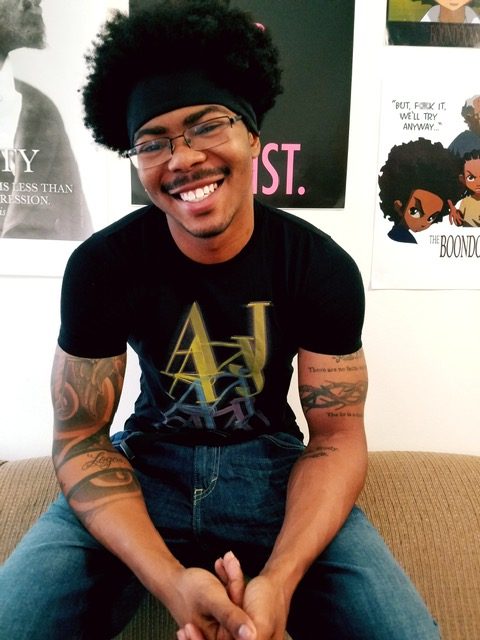
Tamura Lomax describing how she came to co-found The Feminist Wire, from the “intellectual Wu Tang Clan” to an online community and intellectual home for more than a million activists, scholars, and artists. Marquis Bey discussing the intellectual history of his debut work in Them Goon Rules.Co-editors of The Chicana M(other)work Anthology. From left to right: Judith Pérez-Torres, Christine Vega, and Michelle Téllez. Co-editors of the forthcoming Black Girl Magic Beyond the Hashtag volume Duchess Harris and Julia Jordan-Zachery.
Special thanks to the College of Social and Behavioral Sciences, the University Libraries, the Office of the Provost, the Department of Gender and Women’s Studies, the Africana Studies Program and the Department of Religious Studies and Classics for their generous support of The Feminist Wire Book Symposium.
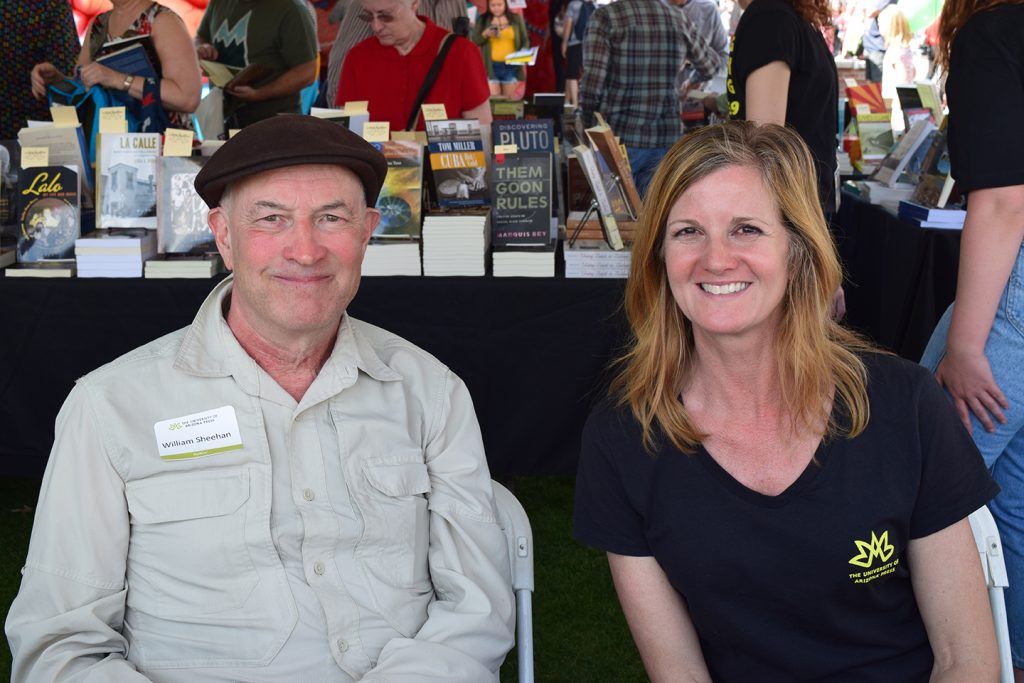
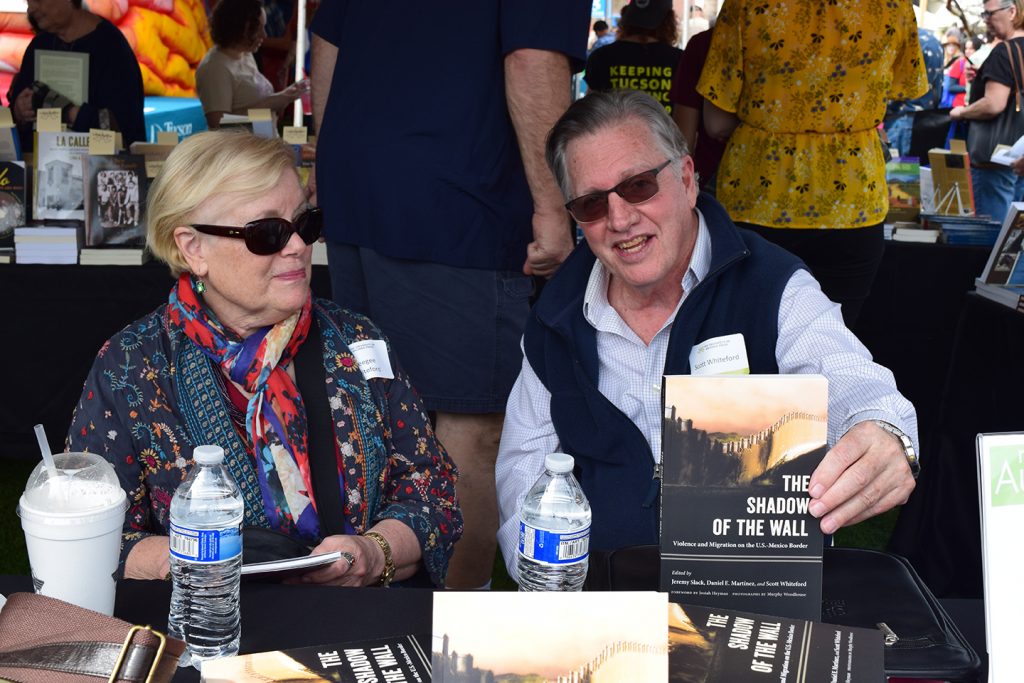
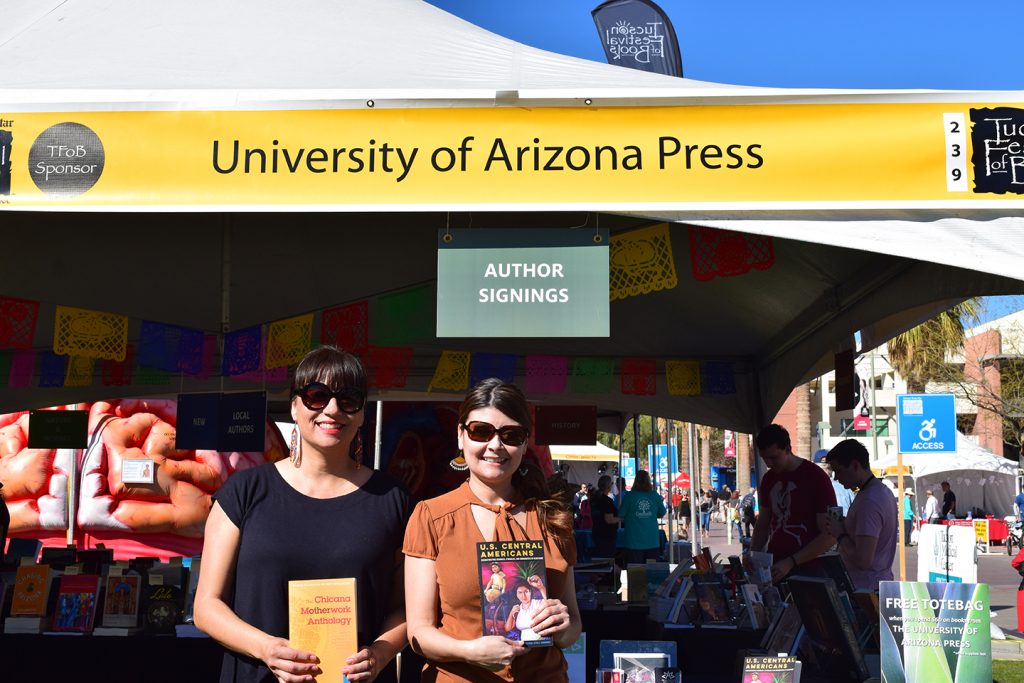
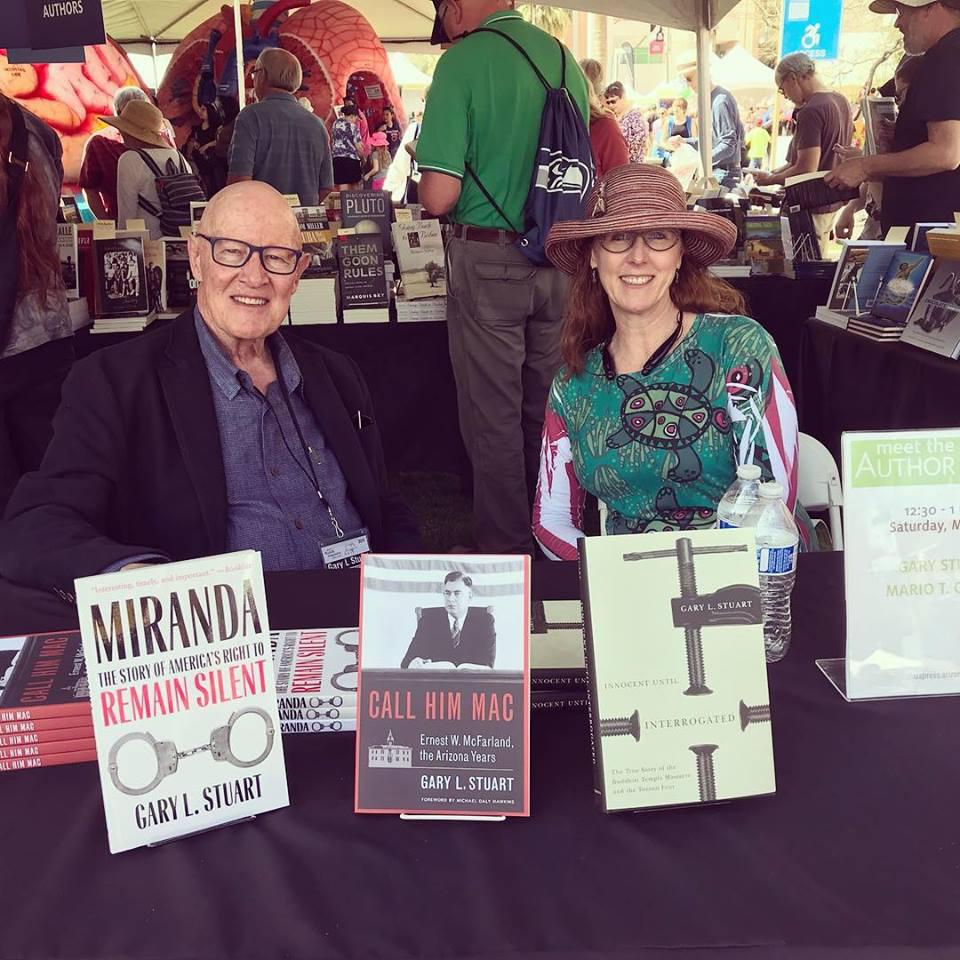
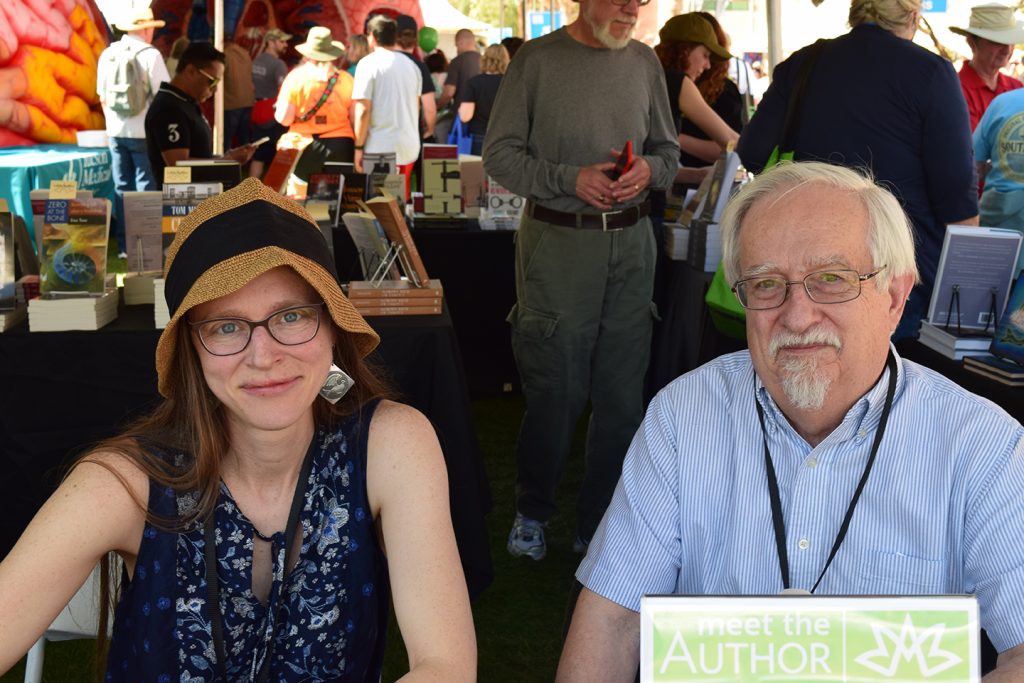
An estimated 130,000 book lovers attended this past weekend’s 11th annual Tucson Festival of Books. We’ve been a proud supporter of the festival since its inception, and we’re thrilled to have had more than thirty of our authors participate in panels, readings, and booth signings during this year’s event.
Internationally renowned, award-winning essayist Ilan Stavans presented his UA Press Latinx Pop Culture series book Sor Juanaat both the Pima County Libraries Nuestra Raices and UA Social and Behavioral Sciences stages.
Mario T. García, who has published more than twenty books on Chicano history, also flew in for the event. He presented his most recent UA Press book The Making of a Mexican American Mayor.
Author, speaker, educator, and literacy advocate Pat Mora had a whirlwind weekend at the Tucson Festival of Books. Her weekend started off with a panel exploring ways to bring the joy of poetry to children, moderated by Tucson’s own Jennifer Flores. Next she joined Tucson poets Logan Philips, Mele Martinez, and Mari Herreras for a community reading of her latest collection, Encantado.
Inspired by Edgar Lee Masters’s Spoon River Anthology and Thornton Wilder’s Our Town, Mora’s Encantado paints a vivid portrait of a community through its inhabitants’ own diverse voices.
Each poem forms a story that reveals the complex and emotional journeys we take through life. Mora shares the thoughts of Encantado’s residents—the mothers and sisters, brothers and fathers in whom we see slivers of ourselves and our loved ones—and brings us to the heart of what it means to join in a chorus of voices. A community.
Mora was thrilled to partner with Tucson’s own unique poetic voice. “I have always wanted to hear Encantado, the voices performed by a community of poets,” said Mora after the panel.
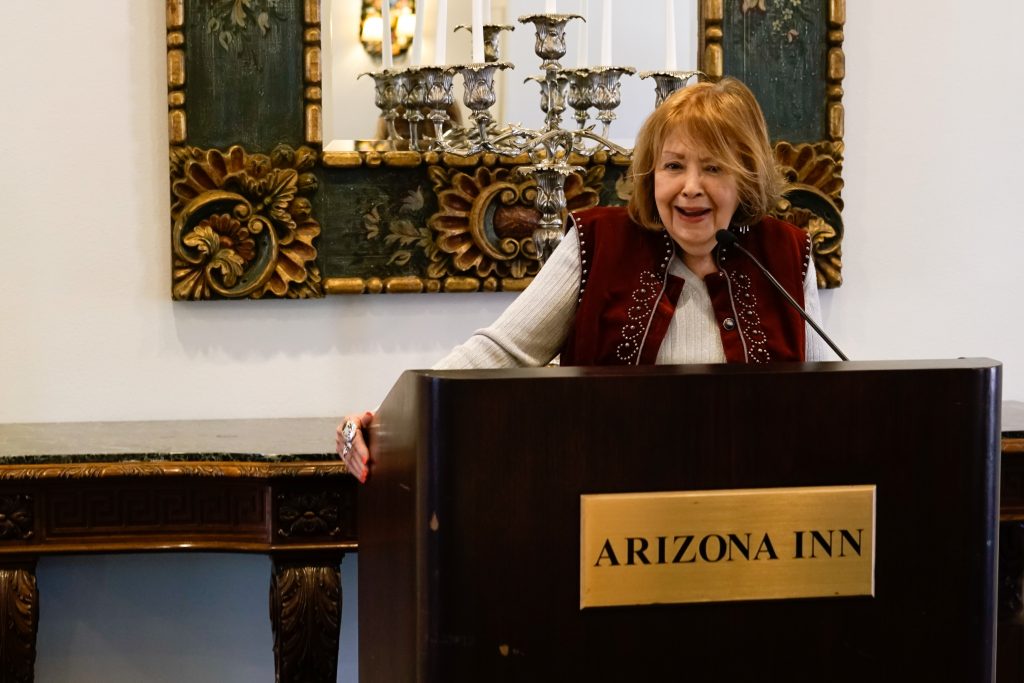
Before heading back to Santa Fe, Mora was honored to be the keynote speaker for the University of Arizona Libraries’ Annual Luncheon. She read poems from Encantado and spoke to the importance of libraries. She told the audience, “Supporting university libraries is noble work—they are treasure houses.”
Mora has dedicated her life to inspiring readers of all ages. She is the founder of Children’s Day, Book Day/El día de los niños, El día de los libros, an internationally recognized celebration of reading. Through all of her work, Mora promotes creativity, inclusivity, and what she calls, “bookjoy.”
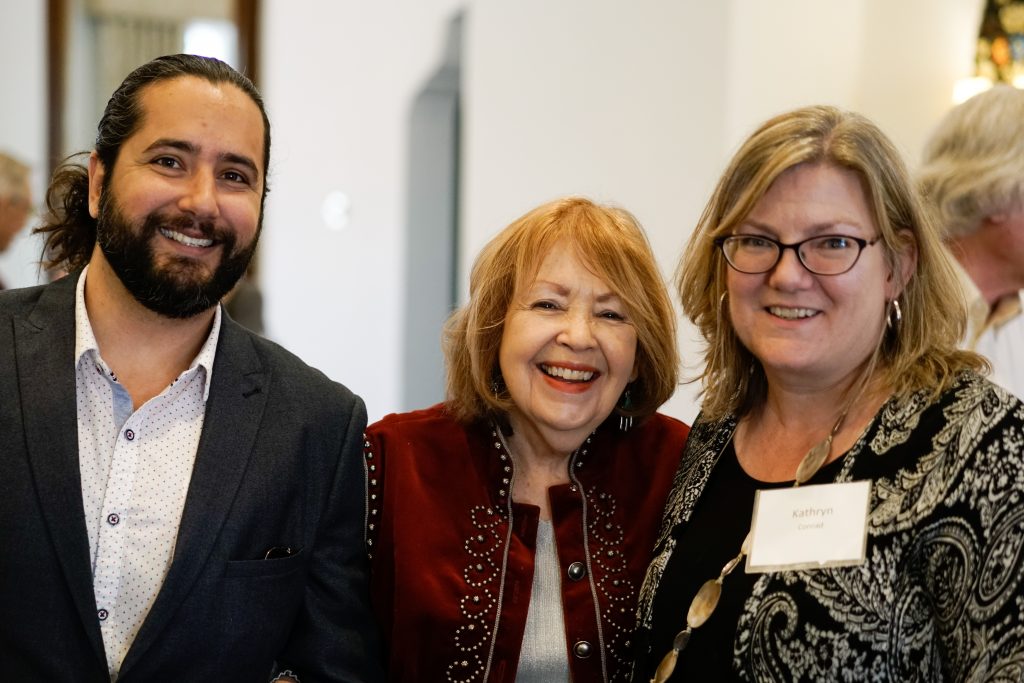
Pat Mora speaks to her lifelong commitment to literacy advocacy and her El día de los niños/El día de los libros (Children’s Day/Book Day) epiphany. University of Arizona Press Assistant Editor Scott De Herrera, Director Kathryn Conrad, and author and literacy advocate Pat Mora.
The late Francisco X. Alarcón (1954–2016) was an award-winning Chicano poet and educator. He authored fourteen volumes of poetry, published seven books for children through Lee & Low Books, and taught at the University of California, Davis, where he directed the Spanish for Native Speakers Program.
He was a poet who lived beyond borders. His poetry straddled cultures and bridged generations. His words are carried on in the spark he ignited in the great many readers, fellow writers, and dreamers his life touched.
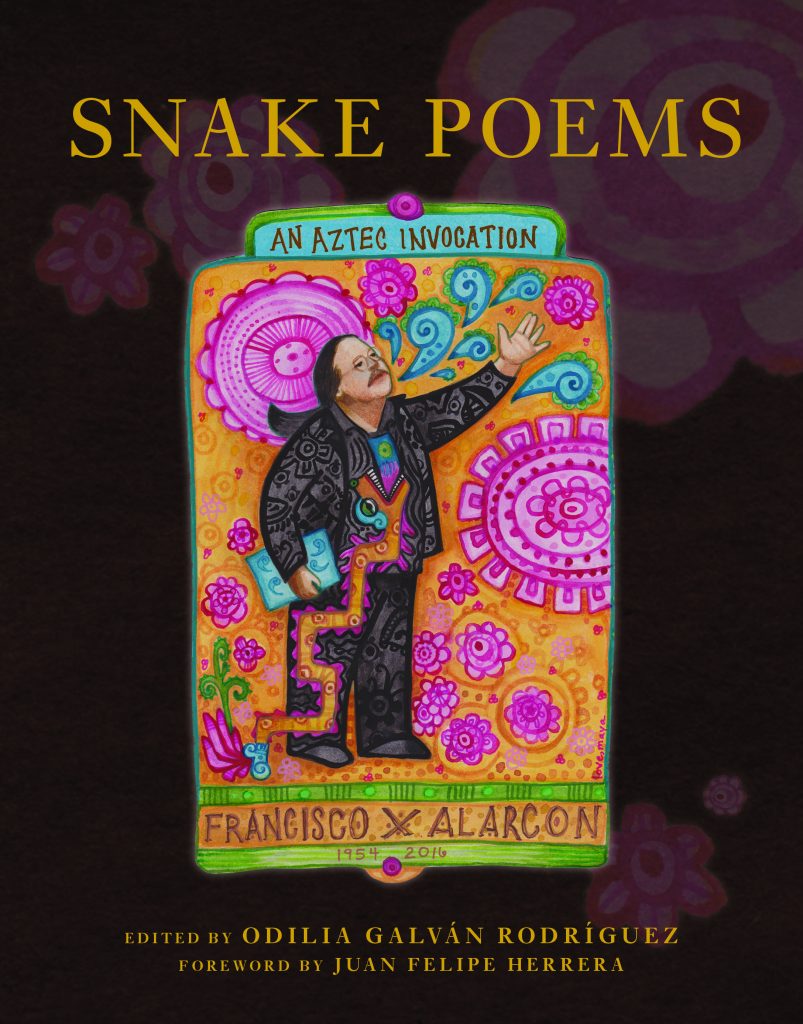
For beloved writer and mentor Francisco X. Alarcón, the collection Snake Poems: An Aztec Invocation was a poetic quest to reclaim a birthright. Originally published in 1992, the book propelled Alarcón to the forefront of contemporary Chicano letters.
This spring, the University of Arizona Press is honored to release a special edition of Snake Poemsas a tender tribute to Alarcón, who passed away in 2016. This edition includes Nahuatl, Spanish, and English renditions of the 104 poems based on Nahuatl invocations and spells that have survived more than three centuries. The book opens with remembrances and testimonials about Alarcón’s impact as a writer, colleague, activist, and friend from former poet laureate Juan Felipe Herrera and poet and activist Odilia Galván Rodríguez, who writes, “This book is another one of those doors that [Francisco] opened and invited us to enter. Here we get to visit a snapshot in time of an ancient place of Nahuatl-speaking ancestors, and Francisco’s poetic response to what he saw through their eyes.”
Today on Francisco X Alarcón’s birthday, we’re pleased to share scholar and renowned poet Alfred Arteaga’s thoughts on the collection and Alarcón’s enduring legacy:
This present collection is something much more than just another new volume by a contemporary poet. For as new as Snake Poems is, it is bound inextricably to the past. It is like the serpent of fire that opens up its mouth to meet its double at the center of the exterior ring of the Sun Stone commonly known as the Aztec calendar. This text by Californian poet Francisco X. Alarcón is an encounter with another test completed in 1629 by one Hernando Ruiz de Alarcón, a Catholic parish priest from Atenango, a small town in the present state of Guerrero, Mexico.
The
poetry of Snake Poems emerges
as an encounter with the Ruiz de Alarcón’s colonial manuscript on Native
American beliefs, Tratado de las supersticiones y
costumbres gentílicas que hoy viven entre los indios naturales desta Nueva
España (Treatise
on the Superstitions and Heathen Customs That Today Live Among the Indians
Native to This New Spain). Ruiz de Alarcón labored more
than ten years compiling, translating, and interpreting the Nahuatl spells and
invocations. The only extant copy of the handwritten Tratado
is now found in the Museo Nacional de Antropología in
Mexico City.
Ruiz de Alarcón’s Tratado was compiled a hundred years after the Spanish conquest of Mexico and remains one of the most important sources on Native religion beliefs and medicine. Its importance lies in the spells, curing practices, and myths that were transcribed in the original Nahuatl, the language of the Aztecs. It is this language transcription that allows so much of the original speakers to come to us today, despite the compiler’s insidious intent. Simply stated, Ruiz de Alarcón wrote on a mission for the Christian God, to expose heathen practice among the Indians and to extend the repressive practice of the Spanish Inquisition in Mexico. To gather the raw data for his catalog of practices, the author did not stop short of torturing his informants. Ruiz de Alarcón was admonished for his overzealous interview techniques and yet was able to finish his work undisturbed. Ironically, he was even promoted to ecclesiastical judge because of the extreme zeal of his faith.
What Francisco X. Alarcón has captured from the Tratado in Snake Poems is the spirit of the Indian informants, a sense of Native culture alive, despite efforts to misread and suppress it.
Francisco
X. Alarcón’s poems reflect the worldview and belief systems of Indians of Mexico
three and a half centuries ago. But clearly, Snake
Poems is poetry, not ethnography, and the
reflection it casts of the Tratado is
nowhere near a mirror image. It is good that this is so. The poems are poems
that stand as such, completely on their own. What Francisco X. Alarcón has captured
from the Tratado in
Snake Poems is the spirit of the Indian
informants, a sense of Native culture alive, despite efforts to misread and
suppress it.
Commentators on the Tratado frequently mention Ruiz de Alarcón’s poor translation and weak evaluation of some spells in Nahuatl, which seem only guided by his religious prejudice and cultural bias. Francisco X. Alarcón reads through the Tratado, past the surface prepared for the Inquisition, down to the living speakers, whose spells and chants and beliefs are recorded, down to Martín de Luna, Mariana, Domingo Hernández, Magdalena Petronila Xochiquetzal, and other named Indians. And while their words can only come by way of Ruiz de Alarcón, Snake Poems reflects the gaps, the
lacunae, the interstices of cultural survival.
All
quotations and references that appear in Snake
Poems come directly from Ruiz de Alarcón’s
Tratado, with five very telling
exceptions. There is an invocation by the Mazatec María Sabina and a quote from
the New Mexican weaver Agueda Martínez. There are allusions to living poets, to
the Chicanos Tino Villanueva and Lucha Corpi and the Nicaraguan poet, priest,
and former Sandinista Minister of Culture Ernesto Cardenal. For Francisco
consciousness survives not only in the collective memory but also in the live words
of the descendants of the original Indian authors. So, while the poem “Mestizo”
celebrates the many strands that meet the hybridize in New World people, the
epigraph by Agueda Martínez grounds identity very clearly, “ya que seamos hispanos,
mexicanos; somos más indios”: more than Hispanics or Mexicans, we are Indians.
There
are 104 Snake Poems,
not an arbitrary number but one chosen for its significance in Native thought.
The Mesoamerican calendar is based on a fifty-two-year cycle: half of 104. It
is as if one cycle was completed with the first translation of Nahuatl thought,
Ruiz de Alarcón’s Tratado,
and the second cycle occurs now with Snake Poems.
The first section of Snake Poems,
“Tahui,” contains twenty poems, one for each day of the Mesoamerican month. The
final section, “New Day,” contains six poems, alluding to the new era of the
Sixth Sun.
The
poems are spare in line length and in language. Nothing is wasted; very much is
said. On the page, some of the poems appear long and lean like serpents on the
desert floor. And there are the illustrations that somehow seem as much at home
beside English and Spanish as they do beside Nahuatl. Beside the epigraph of
Tino Villanueva’s invocation to Tlacuilo, there is the image of the writer, the
speaker, making words. Image and form intertwine with the voices and languages
of the past and present: a poetics of ancient oral magic and modern verse. Snake
Poems is alive with a simultaneously
present and past passion and concern; it brims with the spirit of those who
sang despite the fact that their very songs could lead to punishment and death.
Read these poems as expressions of life, as a celebration of the Native heritage of Mestizo America. Some poems uplift and some are humorous, and when taken together, they sing in collective spirit, vigorous, denying death. But then: stop reading, put your ear to the page, and hear the faint yet persistent echoes. I do.
Alfred Arteaga
English Department, University of California, Berkeley
February 20, 2019
A series of essays that reads like a critical memoir, Marquis Bey’s Them Goon Rules queries the function and implications of politicized Blackness, Black feminism, and queerness. Bey binds together his personal experiences with social justice work at the New York–based Audre Lorde Project, growing up in Philly, and rigorous explorations of the iconoclasm of theorists of Black studies and Black feminism. Bey’s voice recalibrates itself playfully on a dime and today we’re excited to share a brief excerpt from this much anticipated debut:
Whence We Are Sent
These people are my access to me; they are my entrance to my own interior life. Which is why the images that float around them—the remains, so to speak . . . surface first, and they surface so vividly and so compellingly that I acknowledge them as my route to a reconstruction of a world, to an exploration of an interior life that was not written and to the revelation of a kind of truth.
—Toni Morrison, “Site of Memory”
I was sent, tell that to history.
—Lorna Goodison, “Nanny”
If I am here, wherever here is, it is because I was sent
here by folks who have been putting in work for a minute. I am here with them
even if they are not where I am. We collide in a critical intimacy where what I
say is only possible because it has been made so by things that they’ve already
said. A method for living, of sorts, this intimacy is rugged. This intimacy
fissures boundaries imposed, a method that methodically interrogates
methodology. Methodological interrogation is the fugitivity I will be speaking
about; it is a way of inhabiting the world, a posture of interrogation and
refusal, like on some perpetual Nah-type shit; a breaking of the
regime that tried to fix us but didn’t know that we arose in the breaking, were
made by a breakage that generates the refusal to be broken. A sustenance by way
of getting out of the maelstrom of the typical is what I mean. The sustenance is
engendered by experimentation, improvisation, unruliness, because their rules
stifle what comes in the break of the cut. It’s where we keep finding life
lived otherwise, life on the run in inexhaustible exhaustion.
If this running is a political, disruptive act, then here I
want to engage that disruption, revel in it, let it flex on ’em with humbled hubris.
The life of my mind, my intimate, my private past, is, as any feminist worth
their salt will tell you, deeply political. I want to speak from that private,
underground place where sinners dwell, where sin as a transgressive act against
divine law is what is shared between us; where we keep open secrets of queer
conspiracies whispered on underground rooftops; where we use vernacular, words
that break free of grammar’s lexical dictates: we fix food
instead of cook it, cut instead of turn lights on, so
they can’t figure out what we talmbout. Our den of sin, as it were, our
promiscuous and shadowy presence, preserves a space for stowaways to be, and
choose to be, stowed. This is fugitive coalition, fugitive kinship. This
shadowy, stowaway presence, reminiscent of wrecked ships—which is to say, ships
we have brought wreck to—is the knowledge and livelihood of fugitivity.
I grew up in Philly and its outskirts, where hip-hop was our
unofficial language (Power 99 fm; 100.3 The Beat!), unlaced Timberland boots
and Carhartt jackets were our unofficial uniforms, summer mornings were the
color of orange juice mixed with fresh blood, and you carried an entire archive
of meaning based on which part of Philly you repped. We lived right next to an
abandoned house, no porch—like, that shit was just gone—so my cousin Marcus and
I would go down into the basement of the house, rummaging around in the
subterranean belly of its structure, before we’d get scared and run out. (Well,
I
got scared.) Unbounded curiosity, we youngbuhls had. To dare to
explore without the presumption of conquest, an exploration of the interstices
of the indoors with the wilderness-knowledge of the outdoors, is an outlawish
and out-of-lawish praxis. And it stretched to our imaginations: we revised
video game narratives, yearning for larger worlds. We imagined worlds filled
with live Pokémon, with Charizard’s and Mewtwo’s tenacity. We lived loudly in
our minds, oozing with vitality while simultaneously surrounded by poverty. We tried
to remain afloat, but some of us did not, as they misguidedly say, “make it.”
Marcus fell prey to the conditions that middle-fingered our lives from our
inception. His thin 6′3″ frame
not eradicated, but reduced to being bound indoors with cigarettes and
television. Now, more than two decades later, still two years older than me,
still funny on the sneak, still with calligraphic handwriting, Marcus rests
largely skill-less and jobless after a raucous bout with drugs—marijuana, cocaine, heroin too—and diagnosed
schizophrenia. What happened here, cuz? What stingy alchemy concocted a brew so
pungent as to singe your flourishing?
He seemed to have picked up a fate similar to that of so
many people we cohabited around. The plight of the Black and poor. But I am
awed, truly, at how joyous and dope our lives were despite the fact that we
were geographically destined for not only economic but also emotional poverty.
I am awed, in other words, at how we still live. We crack jokes in the face of
abjection. Like that Christian messiah who did not die, who is said to live
perpetually in the all of the world, we have always and already risen,
Jesus-like, because the only ones who can feed that many people with such
paltry rations are “big mamas.”
It’s like Double Dutch in the streets, making the passing cars wait until you trip up—but you never trip; like laughing at cartoons, your body and the TV on the floor so the bullets flying inches above you from drive-bys don’t interrupt Spongebob and Patrick’s shenanigans; like cookouts where your niece is telling everyone how beautiful her dark skin is because the sun loved her so, so, soooo much, or where your uncle is acting a fool, talking about how he “still got it” even after his six decades of life. Despite every reason not to, we still smile, we still laugh, we still love, we still Black, y’all. We still. We lived, we sang, we danced, we gleaned textured life from a milieu that said we weren’t supposed to celebrate our own existence. Our joy was, and still is, radical.
We made do with what we did and didn’t have. Imaginative
games became not only fun but also life-sustaining. We flourished in the face
of abjection, like Nah, we don’t do that over here. And we made do, in
the simplest of ways. Like, you wanna play some basketball? Well, you ain’t got
no court, but you do have a milk crate, some nails, and a telephone pole. We
cut out the bottom of one of those orange milk crates, climbed on somebody’s
shoulders, hammered some nails into that jawn, and voilà, basketball in the
’hood. I was forged in this resilient and inventive space.
Marquis Bey is a PhD candidate in English at Cornell University. He has received fellowships from Humanities New York and the Ford Foundation.
But when I wasn’t shooting hoops—or rather, shooting crates—I dwelled in the recesses of my own fraught mind, the “break” in which Black life is situated, where unavoidable subjection meets a radical breakdown. Or a radical boogeydown. I was a precocious kid, but quiet. I preferred to listen—listen for knowledge, for language, for the texture of the in-between space housing the incendiary edges of life. I’d lay low, though that is not to say that something wasn’t going on. I spoke infrequently, as I understood the consequences of speaking out of turn, “talking back.” In the “old school” from which Mom and Grandma hail, where they plait switches to tear into insolent youngsters, children were meant to be seen, not heard; they were meant to be obedient, to stay in line, which stifled my unchained and unchainable thoughts. But I knew not to invite punishment, the backhand lick, the slap across the face that would catch you off guard, the I wish you would. My laying-low covert ops were a strategy of survival, a way to ensure the continuation of the thoughts they couldn’t stop me from thinking.
Marquis Bey’s debut essay collection unsettles normative ways of understanding Blackness, Black feminism, and queerness. Them Goon Rulesis an un-rulebook, a long-form essayistic sermon that meditates on how Blackness and nonnormative gender impact and remix everything we claim to know.
Quantum Entanglement & Traversing the Desert Circus: Discussing the Vibrant World of Rosa’s Einstein and Poetic Healing
February 15, 2019
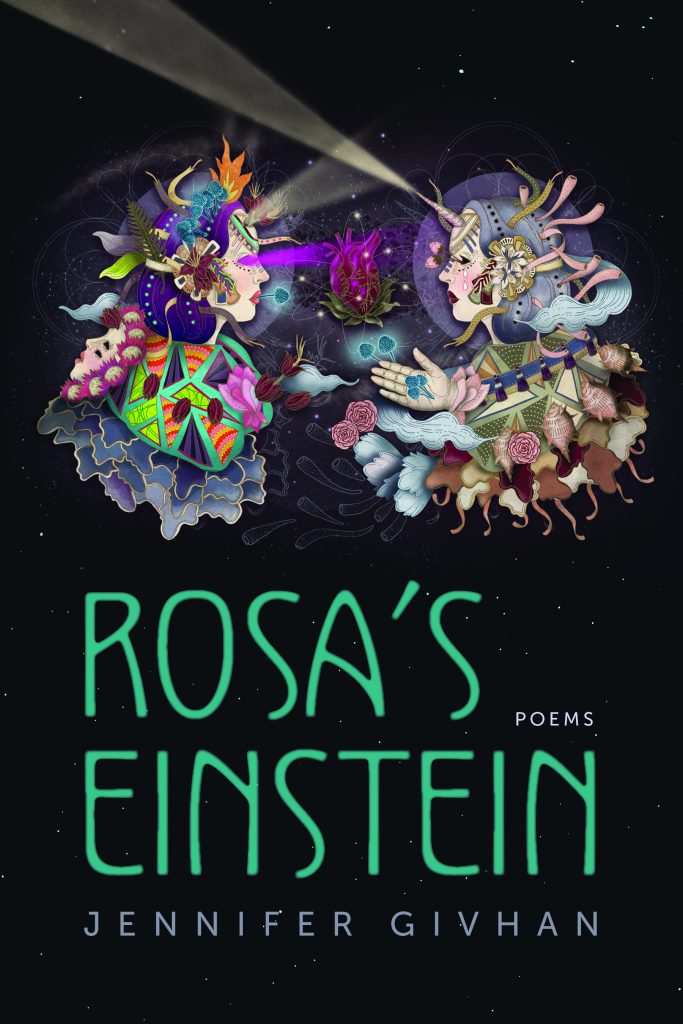
Rosa’s Einsteinis a Latinx retelling of the Brother’s Grimm’s Snow-White and Rose-Red, reevaluating border, identity, and immigration narratives through the unlikely amalgamation of physics and fairy tale. Jennifer Givhan offered insightful and beautiful responses to a few questions that come to mind when reading her new collection.
What drew you towards including Albert Einstein and his mysterious lost daughter Lieserl as significant figures in this collection?
I’d become obsessed with time travel while breastfeeding my daughter and struggling with postpartum depression in a new landscape— we’d moved from the Southern California desert on the Mexicali border to Albuquerque, New Mexico. I’d set to work on a new novel, Trinity Sight (forthcoming this October, 2019, from Blackstone Publishing), about a Latina anthropologist who falls into an indigenous myth, and I sought ways to coalesce science and faith. I also sought succor for my deep depression and the fear and anxiety it wrought. All of this concurring, I read A Brief History of Time after seeing Stephen Hawking on a David Blaine street magic showcase on television, I watched every episode of Through the Wormhole fanatically, as though it were gospel, as though it could save me (from myself), and I came upon Einstein’s first wife Mileva Maric in a poetry collection by Van Jordan called Quantum Lyrics (it’s gorgeous— you should read it). Absolutely fascinated, I took to the internet and began studying their lives, how Maric helped Einstein out with many of his earliest equations and papers, and how she is not credited anywhere, and discovered that while in school together, she bore his child out of wedlock, and that child virtually disappeared from history as well. She haunted me. The amalgam of mother/daughter relationships, women/girls lost to history— and their haunting power, their intelligence, their creativity, their possibility with them— sent me half-scurrying, half-falling down the poetry hole as Rosa led the way. And I realized, of course, Lieserl (Einstein’s lost daughter) and Nieve (the counterpart sister to Rosa) truly orchestrated the show. Deeper and deeper into the desert circus I went. Along the way, healing, healing.
What inspired you to weave the concepts of physics and fantasy together in Rosa’s Einstein?
They ever-connect for me. The possible and the impossible connected by a thread we’re unraveling, together, as we breathe and write and love our way through our lives. I’ve become enamored of the mathematics that bind us together, and though I am not a mathematician and cannot follow the equations, I’ve had the joy of my life working through the impossible/possible conundrum through language, through poetry, through story. They are one and the same. There is no conundrum. We are all expressions of the selfsame whole. And there is such peace in that, for me.
How did you decide to blend a distinctly Latina experience with a figure of German and Serbian descent?
One of the poems in the collection, “Reinas de STEM,” speaks of the seeming lack of representatives and role models in the sciences for Latinas. Growing up, I never learned about women of color. Especially not in relationship to the sciences. My own father is a scientist, and taught high school Chemistry and Physics all through my childhood. He is of German descent, and now has white hair, a white beard. In many ways, I sought to recreate my own childhood in this collection, with a definitive twist. Latina girls are front and center. We lead the way. Einstein follows us. The next creations, the next discoveries, await us— they are ours for the claiming.
What parallels can be drawn between Rosa and Lieserl that cross the boundaries of culture?
This collection is a lovesong for all precocious girls wandering the deserts, creating ruckuses and circuses and finding love where before there was only pain— for all the lost daughters of time, reclaiming ourselves, singing ourselves, triumphant. This is our hero’s journey.
Did your interest in quantum physics and other scientific concepts precede your decision to craft Rosa’s Einstein, or did it manifest from the work you put into this collection?
It’s quantum entanglement. Though Einstein called it spooky action at a distance and claimed he didn’t believe. My heart believes. Nothing is random. We are all connected. The science saved me as the poetry saves me— and I pray something in Rosa, Nieve, and Lieserl’s journey saves at least one reader. Then we are entangled forever in this ever expanding Universe where I’m determined the final rule is this: love.
Below, find a poem selected from Rosa’s Einstein.
Lieserl’s Yellow
What I'm searching for, Father,
what I'm trying to tell you in my simple way:
you spoke in the language of mathematics
beautifully precise— & I never spoke at all
beyond the sounds babies make for pleasure
but these like soft, round toes or grubby fingers
so full of life—
Remember how I pulled you off the couch
& your head hit the floor when the coal-burning
stove would have killed you?
They say it was your friend Zangger
but it was your little ghost of a girl
you must have known all along for you said:
Put your hand on a hot stove for a minute,
it seems like an hour. Sit with a pretty girl for an hour,
it seems like a minute. That's relativity.
It's an act of peace, communicating with the dead—
yellow against yellow.
I've become a periodic
table of elemental disasters
flowering despite the last frost
                   before spring, come too soon.
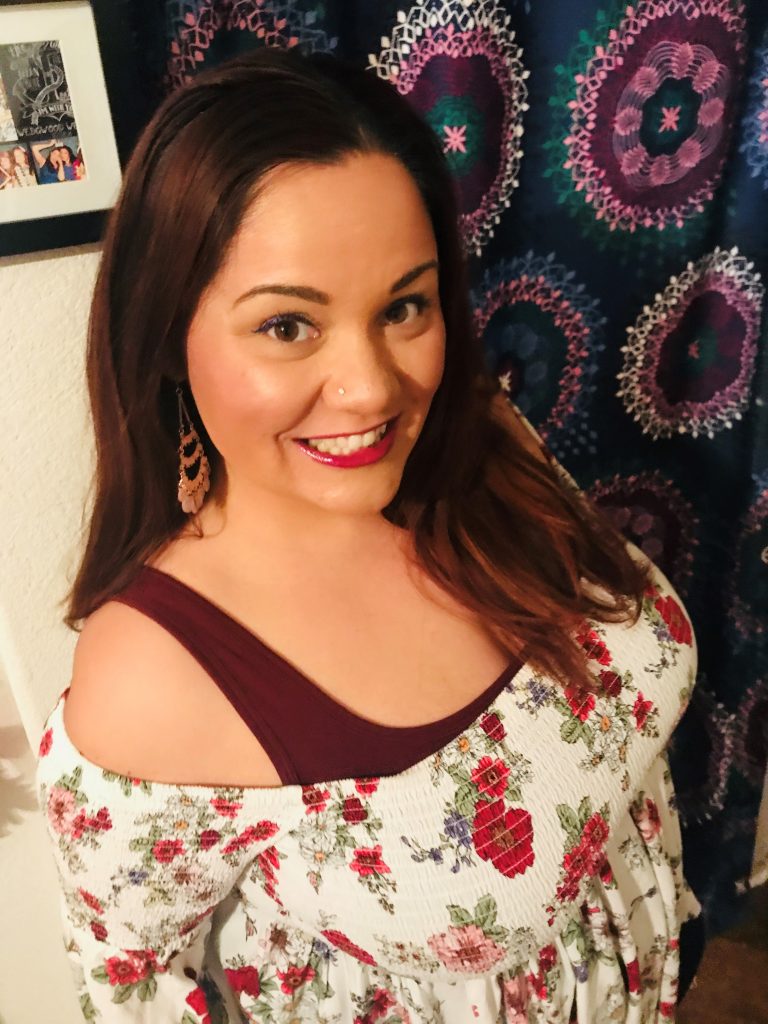
Jennifer Givhan is an NEA Fellowship recipient and author of three previous collections of poetry, including Girl with Death Mask. She teaches English at Western New Mexico University.
We’re nearly three weeks away from Tucson’s largest literary event! The Tucson Festival of Books is one of the largest literary festivals in the country, regularly drawing more than 300 authors from across the U.S. and more than 135,000 attendees.
The University of Arizona Press is proud to have been a part of the Festival since its inception in 2009, and we look forward to continuing to bring diverse voices in literature to the Old Pueblo.
Panels for Everyone
We are thrilled to have more than twenty authors participating in this year’s festival.
From the Mojave Desert to Bears Ears, the Southwest contains some of the most special landscapes on the globe. Panelists Rebecca Robinson, Stephen Strom, Lawrence Walker, and Frederick Landau discuss the special places they’ve recorded in their new books, and how photography and storytelling help them and their readers connect with those places in their panel “Stories from Special Places.”
What makes a great moment in history? Is it the people? Or the times in which they live? Authors Gary Stuart, Mario García, Heidi Osselaer have written biographies of politicians who reached great political heights, serving their communities. What propelled them? They will talk about this during their panel “Capturing the Political Zeitgist.”
Three important contemporary voices, Maritza Cardenas, Luis Plascencia, and Anna O’Leary, track Latino identity in the U.S. today across different times, geographies, and generations. These identities range from Mexican workers to Central American immigrants to the emerging Latinx generation. They will discuss this and more during their panel “Contested Latino Identities: Past, Present, and Future.”
Meet Our Authors
Stop by our booth for special discounts, to meet our authors, and to get your University of Arizona Press books signed. Be sure to download the Tucson Festival of Books app and look for us in booth #239!
The Tucson Festival of Books is from 9:30 a.m. to 5:30 p.m., March 2–3, 2019, on the campus of the University of Arizona. See tucsonfestivalofbooks.org for the complete schedule of events.
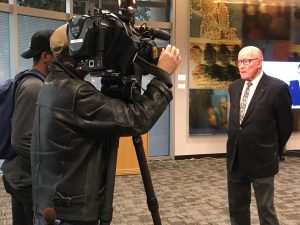
Gary L. Stuart speaks to KVOA prior to taking the podium at “An Evening Celebrating Ernest “Mac” McFarland.
Last week, University of Arizona Press author Gary L. Stuart rendered an intimate portrait of one of Arizona’s most notable politicians, Ernest “Mac” McFarland, at a special event hosted in the University of Arizona Libraries’ Special Collections. The event marked the Tucson release of Stuart’s Call Him Mac: Ernest W. McFarland, the Arizona Years.
A young, ambitious country lawyer, McFarland left an enduring legacy as one of the few men to hold all three of the highest political positions in the state of Arizona. Although much is known about the man’s political legacy, Stuart entertained Tucsonans with a look at the man whose hard-won victories were achieved by a his ability to build real relationships with his constituents, including his rousing victory over the favored incumbent Sen. Henry F. Ashurst.
“If Arizona had a Mount Rushmore, the men on it would be Carl Hayden, Ernest McFarland, Barry Goldwater and John McCain.”
– Gary Stuart quoting Arizona Historian Marshall Trimble
Special thanks to all who took part in the event, including UA President Emeritus Dr. Peter Likins and Tucson lawyer Burton J. Kinerk, as well as John D. Lewis from the McFarland Historical State Park Advisory Committee.
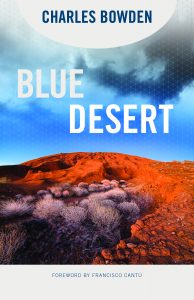
Originally published in 1986, the University of Arizona Press has reprinted one of the most striking pieces of literature on the Sonoran Desert. With a thoughtfully crafted forward by Francisco Cantú, this new edition of Blue Desert belongs in the hands of desert dwellers and literature connoisseurs far and wide.
Reading Charles Bowden’sBlue Desert paints Southern Arizona more vividly than the human eye, and if you’ve ever spent a night on cold sand beneath a mesquite tree— or foolishly taunted the tightening coil of a rattlesnake— this book is a rush of sensory memory. Beyond his masterful ability to capture the feeling of cactus thorns on tired flesh, or the way old homes crumple just-so in Ajo, Bowden twists his perceptive knife so much deeper into the heart of the Southwest. Broken into three parts— Beasts, Players, and Deserts— Blue Desert delves into topics that feel just as pertinent today as they did in 1986.
Despite his stern narrative voice, Bowden’s love for the land and reverence for the creatures that roam it is overwhelmingly evident throughout all of Blue Desert. Nowhere is this more apparent than the “Beasts” section of the book, in which he writes, “Species are worth saving because a world with less life is less of a world.” Bowden takes us on a tour through delicate bat skeletons picked clean by beetle larvae as their numbers drop drastically, and he outlines the throaty cry of the endangered Sonoran pronghorn as researchers attempt to capture more information on these elusive, threatened animals.
Bowden then takes us into the heart of Ajo, a place which he describes as being “…not of the desert, it just happens to be in a desert.” He chronicles the history of the mining town, and the people who have both thrived and suffered there over the years. His fascination and disgust with desert cities, such as Phoenix and Palm Springs, is summed up in a single thought: “The desert has offered the American people many possibilities, not because they made something of the desert but because it offered a blankness, a clean sheet of map paper where they could live out their lives and not be bothered with other places or concerns.” Throughout Blue Desert, there is a sense that the Southwest both embodies and corrupts the notion of the American Dream. It would be fascinating to hear Bowden’s reflections on these desert empires as we step closer to the end of 2018.
As the book starts to approach a close, we are taken on perhaps the most powerful journey that the pages contain. Bowden decides to walk across the U.S.- Mexico border in Sonora with little food and water, and what he finds is an explosion of wildlife, death, peace, decay, and resilience. Rooting himself in the cruelty of the desert allows for a raw and intensely detailed account of the Sonoran borderlands and what it means to journey across them. Peering out at the desert landscape before him, Bowden makes a beautifully surreal observation that captures the spirit of Blue Desert. “The mountains rise azure, the ocotillo waves blue wands, the creosote whispers by my feet, and everything is awash with a rich, bright blue…I have entered this blue world and I accept it totally. It means peace… The peace works deep into my muscle and my body works harder and harder and yet feels ease. I begin to glide. Ahead Big Pass waits with dark blue jaws… But I glide. I know I glide. Blue.”
Charles Bowden (1945-2014) was the author of many acclaimed books about the American Southwest and U.S.-Mexico border issues. He was a contributing editor for GQ, Harper’s, Esquire, and Mother Jones. His honors include a PEN First Amendment Award and the Lannan Literary Award for Nonfiction.
“Between 1769 and 1834, an influx of Spanish, Russian, and then American colonists streamed into Alta California seeking new opportunities. Their arrival brought the imposition of foreign beliefs, practices, and constraints on Indigenous peoples.
Edited by Kathleen Hull and John Douglass, Forging Communities in Colonial Alta California (University of Arizona Press, 2018), reorients understandings of this dynamic period, which challenged both Native and non-Native people to reimagine communities not only in different places and spaces but also in novel forms and practices. The contributors draw on archaeological and historical archival sources to analyze the generative processes and nature of communities of belonging in the face of rapid demographic change and perceived or enforced difference. Contributors provide important historical background on the effects that colonialism, missions, and lives lived beyond mission walls had on Indigenous settlement, marriage patterns, trade, and interactions. They also show the agency with which Indigenous peoples make their own decisions as they construct and reconstruct their communities. With nine different case studies and an insightful epilogue, this book offers analyses that can be applied broadly across the Americas, deepening our understanding of colonialism and community.”
The University of Arizona Press publishes the work of leading scholars from around the globe. Learn more about submitting a proposal, preparing your final manuscript, and publication.
The University of Arizona Press is proud to share our books with readers, booksellers, media, librarians, scholars, and instructors. Join our email Newsletter. Request reprint licenses, information on subsidiary rights and translations, accessibility files, review copies, and desk and exam copies.
Support a premier publisher of academic, regional, and literary works. We are committed to sharing past, present, and future works that reflect the special strengths of the University of Arizona and support its land-grant mission.
 The University of Arizona Press