The University of Arizona Press

Date: Wednesday, March 11, 2026
Time: 6 p.m., EST
Place: Mercantile Library, 414 Walnut Street #1100, Cincinnati, OH
Tickets: Free, registration is required
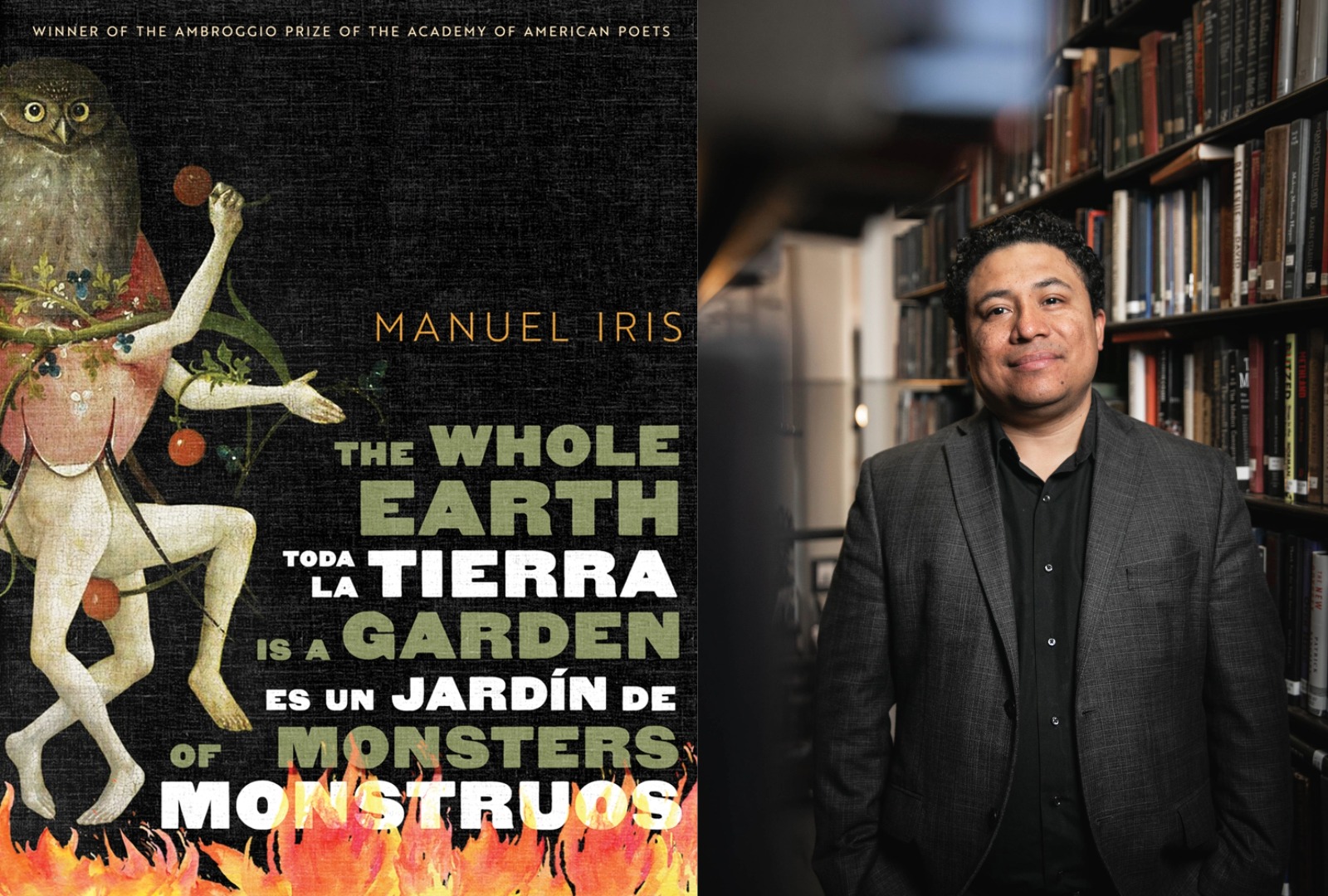
Manuel Iris will celebrate the publication of The Whole Earth Is a Garden of Monsters / Toda la tierra es un jardín de monstruos at his book launch party at the Mercantile Library in Cincinnati. He will read from this poetry collection and be joined in conversation with Cincinnati Poet Laureate, Dick Hague, and poet and professor Felicia Zamora. The Spanish and English poetry collection is the Winner of the Ambroggio Prize of the Academy of American Poets. Manuel Iris is a Mexican-born American poet who has served as poet laureate of Cincinnati, Ohio, writer-in-residence at the Cincinnati and Hamilton County Public Library, and writer-in-residence at Thomas More University.
The event is free and open to the public, and registration is required.
About the book:
This award-winning bilingual collection intertwines the lives of a Renaissance painter and a modern migrant worker, offering a fresh perspective on art and migration.
In this highly imaginative work, the lives of the northern Renaissance painter Hieronymus Bosch (1450–1516) and an imagined contemporary migrant worker named Juan Coyoc, later known as Juan Domínguez, run in parallel as they mirror each other across languages, time, and continents.
By comparing and at times intertwining these two poetic narratives, the book explores themes of art, migration, narco-violence, family, spirituality, and the idea that every human being represents all humanity at any moment in history. Both Hieronymus Bosch and Juan Domínguez become relatable and intimate figures, part of our own story.
Written in simple, sharp language, the book employs surprising imagery and a novel structure to blur the boundaries between reality and fiction, while examining the intricacies of the human condition—from the life of Saint Anthony to the violent acts of narcos across Central America and the U.S.-Mexico border. With formal sophistication and philosophical depth, this work enriches the tradition of poetry about both migration and art, contributing to the literary heritage of Mexico and the United States over the past several decades.