The University of Arizona Press

Date: Wednesday, February 11, 2026
Time: 5:30 p.m., MST
Where: Tumamoc Hill Boathouse, 1675 W Anklam Rd, Tucson
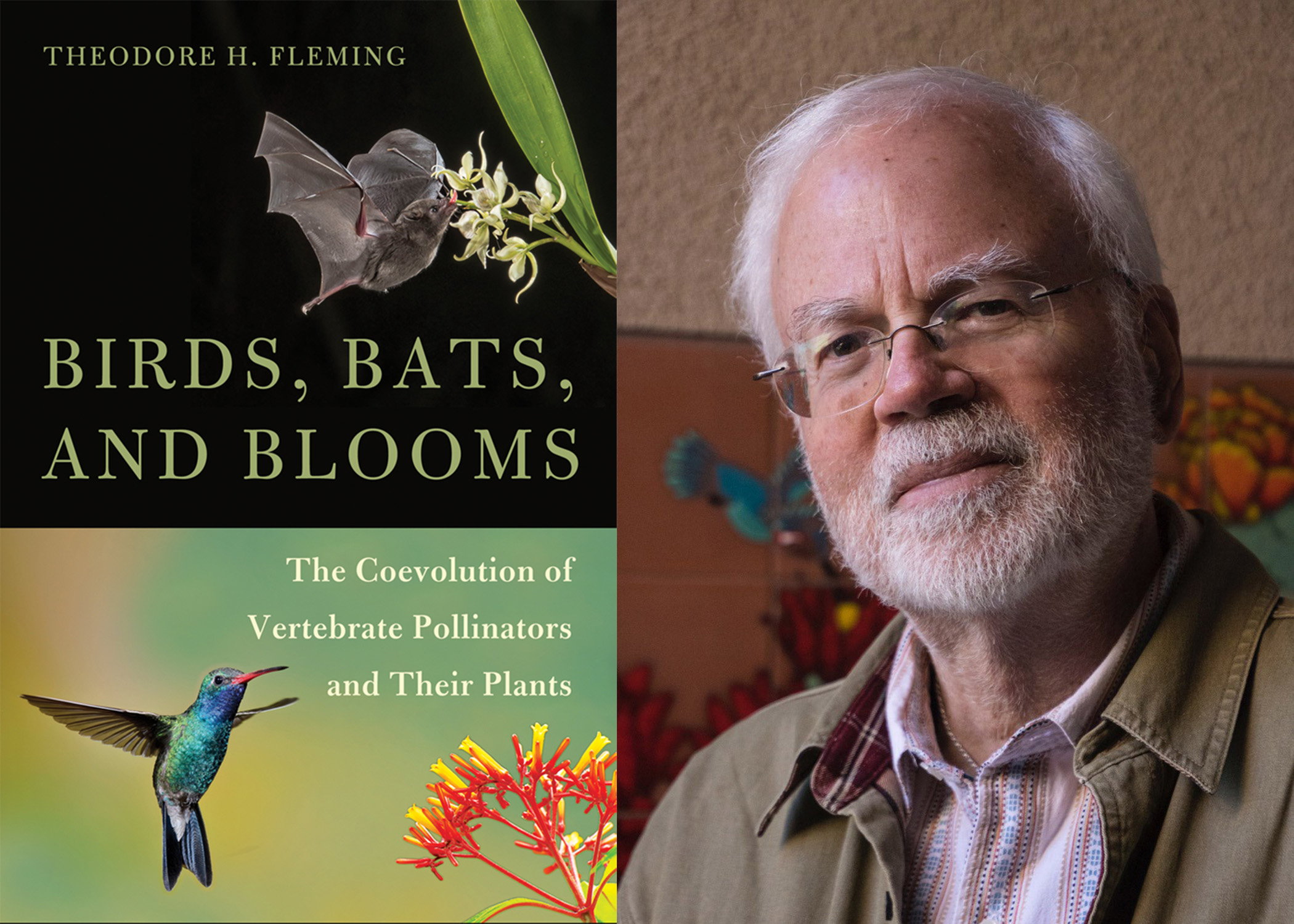
For birdwatchers in the Sonoran desert, hummingbirds are the stars of the show. See beautiful photographs of birds, bats, and the flowers that they pollinate. Ted Fleming will speak about his book, Birds, Bats, and Blooms: The Coevolution of Vertebrate Pollinators and Their Plants. Fleming spent thirty-nine years in academia at the University of Missouri–St. Louis and the University of Miami, teaching ecology courses and conducting research on tropical rodent populations and plant-visiting bats and their food plants in Panama, Costa Rica, Australia, Mexico, and Arizona. He will be in conversation with Tucson bee expert, Steven Buchmann. Buchmann is the author of What a Bee Knows.
This talk will be held at the boathouse, at the base of Tumamoc Hill. The event is presented by Desert Laboratory on Tumamoc Hill, The University of Arizona Press, and The Southwest Center, and is free and open to the public. Books will be available for purchase, and the author will be available for signing following the talk. Reserve your spot here (not required but helps us know how many people to expect).
About the book:
Vertebrate pollinators like bats and birds are keystone species of the Sonoran Desert. Biologist Theodore H. Fleming uses these species—found in the desert around his home—to address two big questions dealing with the evolution of life on Earth: How did these animals evolve, and how did they coevolve with their food plants?
A deeply thoughtful and researched dive into evolutionary history, Birds, Bats, and Blooms offers an engaging trip across evolutionary trajectories as it discusses nectar-feeding birds and bats and their coevolution as pollinators with flowering plants. The primary focus is on New World birds such as hummingbirds and their chiropteran counterparts (nectar-feeding bats in the family Phyllostomidae). It also discusses their Old World ecological counterparts, including sunbirds, honeyeaters, lorikeets, and nectar-feeding bats in the Pteropodidae family. Fleming also addresses the conservation status of these beautiful animals.