The University of Arizona Press

Date: Wednesday, November 18, 2026
Time: 6 p.m., MST
Where: Tumamoc Hill Boathouse, 1675 W Anklam Rd, Tucson
Free: Please RSVP here.
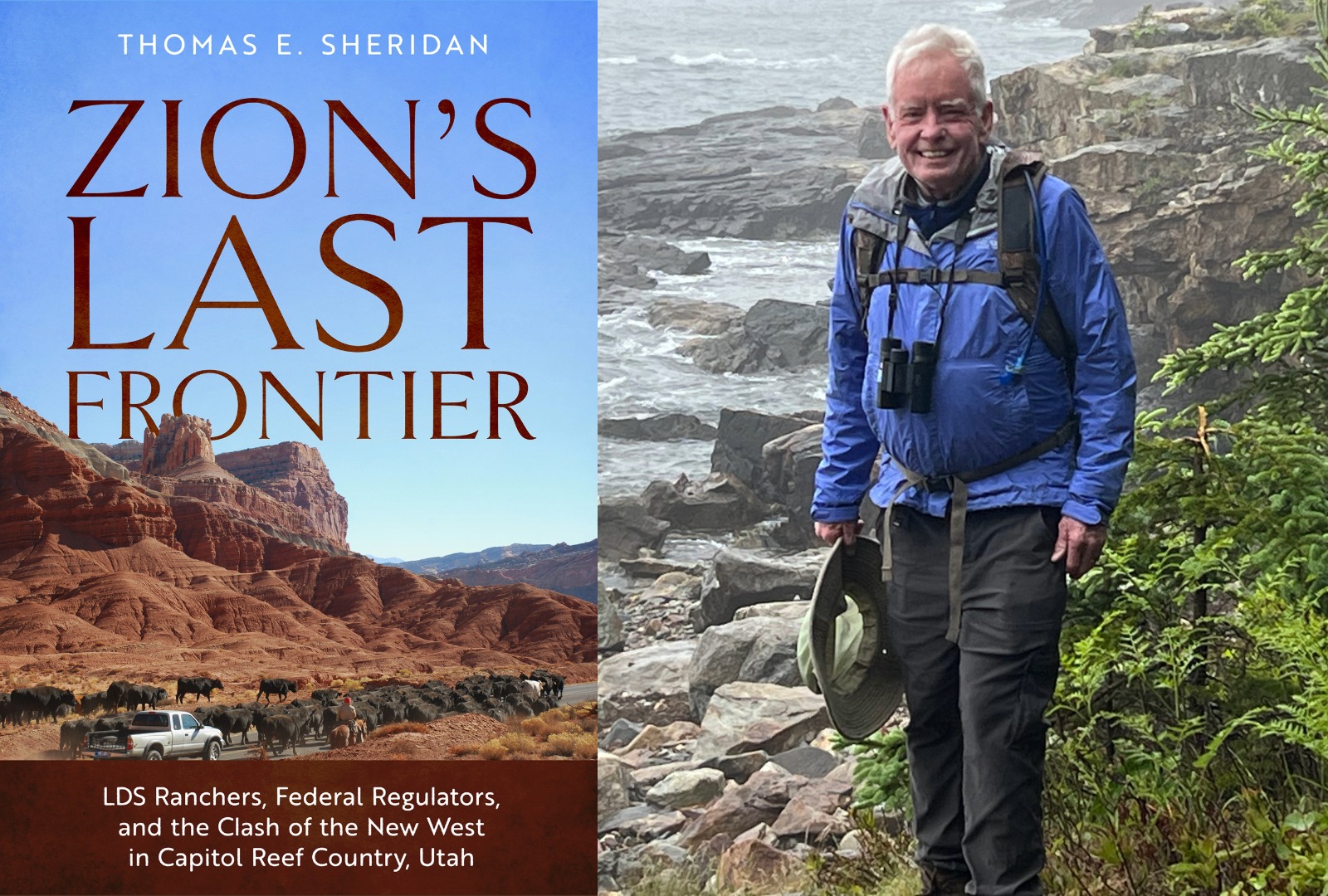
author of Zion’s Last Frontier: LDS Ranchers, Federal Regulators, and the Clash of the New West in Capitol Reef Country, Utah, will speak about the book on November 18 as part of the Tumamoc Author Series. Sheridan will connect the themes of Zion’s Last Frontier to the ranching traditions of southern Arizona, where desert grasslands and borderlands created a distinctive ranching culture that persists today. Through compelling storytelling and deep research, he brings to life the challenges ranchers faced—from scarce water and harsh climates to environmental change and shifting political boundaries. This talk offers fresh perspective for anyone interested in western landscapes, environmental issues, or the cultural legacy of ranching.
The event will be held at the boathouse at the base of Tumamoc Hill. The event is presented by Desert Laboratory on Tumamoc Hill, The University of Arizona Press, and The Southwest Center, and is free and open to the public. Books will be available for purchase, and the author will be available for signing following the talk. Please RSVP here.
About the book:
From the arrival of the first LDS pioneers in the 1870s to fifth- and sixth-generation descendants of those pioneers today, anthropologist Thomas E. Sheridan documents their ongoing struggles with the federal and state agencies that control 96 percent of the land they ranch. Changing policies and management philosophies profoundly impact the ranchers’ livelihoods and ways of life. Sheridan explains how the ranchers qualify as “Traditionally Associated People,” allowing them access to park lands where some ranchers still drive their cattle on horseback along the few canyons that cut through the Waterpocket Fold as they move their herds from their traditional summer grazing lands to their winter grazing lands.
Pushing beyond binary arguments, Sheridan offers an empathetic look at the lived experiences of rural communities often mischaracterized in debates over public lands and environmentalism. Tensions have been aggravated by a massive increase in the number of tourists that swarm the area in the warmer months and a steady increase in the number of seasonal residents who build second homes there. Zion’s Last Frontier provides an in-depth look at the clash of cultures between the agrarian Old West and the New West of tourism and second-homers that is playing itself out across so many parts of the rural West today.