Why University Presses are a Good Investment

April 30, 2019

University presses ensure academic excellence and amplification of valuable scholarly research. We are also a good investment. As stewards of the resource investment from our parent institutions, we extend their brands to local and global audiences. Our colleagues Darrin Pratt, director of the University Press of Colorado, and Susan Doerr, assistant director of the University of Minnesota Press, recently wrote about the many ways university presses are a good investment in an article in University Business. Today we offer a brief excerpt:

Universities mobilize tremendous resources in support of a single pursuit: the advancement of research-based knowledge. Their careful stewardship of public and private resources to nurture knowledge yields returns that can be recognized not only on spreadsheets but also in the lives of students and communities.

More than 100 North American universities and colleges choose to invest in a university press—a mission-driven publisher that maintains rigorous standards in identifying, preparing, and delivering scholarly research to local, national, and global audiences. And, as a recent Association of University Presses’ survey indicates, university presses deliver substantially on these investments.

In 2018, the 61 US and Canadian presses that participated in this annual survey reported receiving a collective institutional budget of $32.3 million. From that allocation, the presses generated… read more

More than 100 North American universities and colleges choose to invest in a university press

Farid Matuk Receives Holloway Residency for Poetry

April 25, 2019

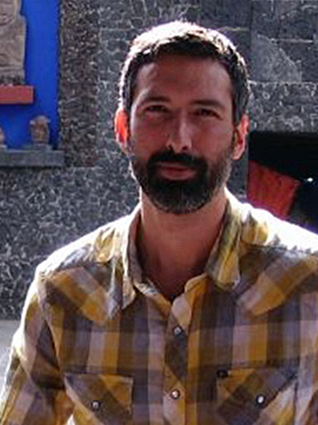
Congratulations to poet Farid Matuk, author of collection The Real Horse. He has been named visiting Holloway Professor in Poetry & Poetics at UC Berkeley. Farid will occupy the post in the spring of 2020.

The Holloway Series in Poetry is funded through an Endowment made by Roberta C. Holloway in 1981. Each academic year the Holloway Series honors one distinguished poet with a residency at the University of California, Berkeley. Residents teach a semester-long creative writing workshop, are welcomed in the annual fall faculty poetry reading, and give a featured reading in the Holloway Series.

A sustained address to the poet’s daughter, The Real Horse takes its cues from the child’s unapologetic disregard for things as they are, calling forth the adult world as accountable for its flaws and as an occasion for imagining otherwise. Offering a handbook on the possibilities of the verse line, the collection is precise in its figuring, searching in its intellect, and alert in its music. Farid interrogates the confounding intersections of gender, race, class, and national status not as abstract concepts but as foundational intimacies.

Learn More about the Halloway

Bridging the Print and Digital Publishing Worlds

April 2, 2019

This spring marks the long-anticipated launch of The Feminist Wire Books: Connecting Feminisms, Race, and Social Justice. The series is an innovative collaboration between The Feminist Wire (TFW) and the University of Arizona Press that bridges the digital and print worlds.

The Feminist Wire has long provided an online community and intellectual home for more than a million activists, scholars, and artists.
Building on their mission to “valorize and sustain pro-feminist representations and create alternative frameworks to build a just and equitable society,” the book series provides a platform for longer-format critiques of popular culture, media, and politics from a diversity of perspectives The Feminist Wire followers have come to expect.

“At a time when misinformation and disinformation travel with head-spinning speed, TFW’s short-form books let readers pause,” said University of Arizona Press Director Kathryn Conrad during this year’s University Press Week. “They are provocative conversation starters that call us to think and to act.”

From Indigenous and Latinx studies to current anthropology, the Press has a long history in publishing works that elevate and examine the social and political issues our world faces. As we enter our sixtieth year, this series provides yet another exciting avenue to explore both contemporary and pertinent social justice issues.

“This partnership benefits both parties,” said Tamura Lomax, co-founder of The Feminist Wire. “The UA Press has an established reputation publishing books about race and social justice, thus serving as a strategic and welcoming outlet for books in this series.”

“Not only does it complement the Press’s charge to bring scholarship to readers all over the world, but it is yet another opportunity to engage with the wonderful students and faculty in our campus community,” said Conrad.

With the release of the first two titles within the series, we’re excited to bring the conversation to the University of Arizona campus with The Feminist Wire Books Symposium.

Slated for April 10, the symposium will host series editors Tamura Lomax and Monica Casper for an evening of readings and panel discussions with authors, contributors, and editors.

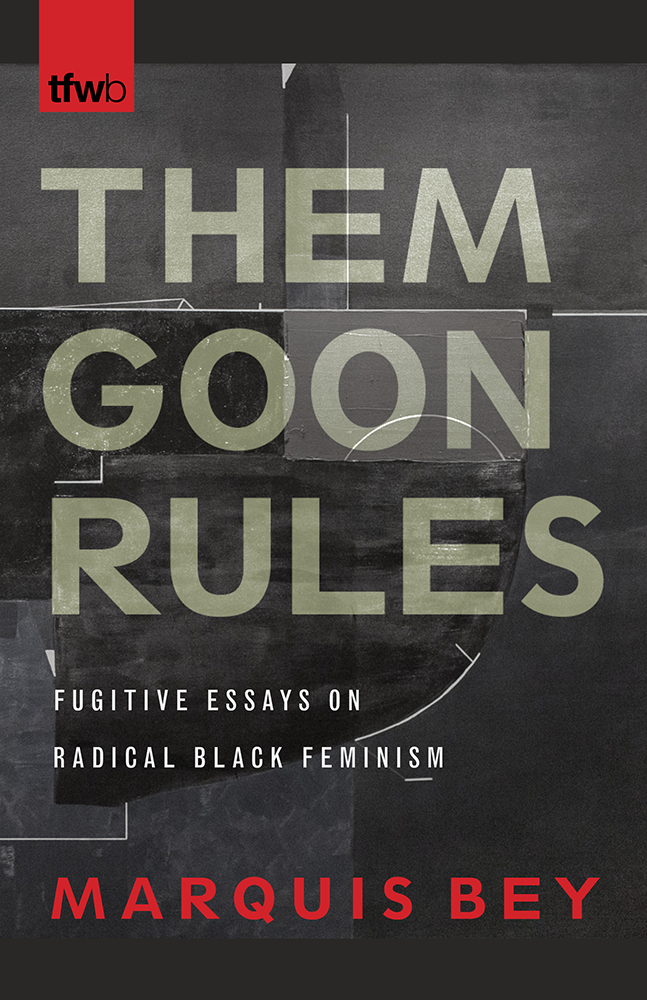
Marquis Bey will present his debut essay collection, Them Goon Rules, and his work to unsettle normative ways of understanding Blackness, Black feminism, and queerness.

“I’m hoping those who tune in take away a sense of how life persists amid abjection, and how radically recalibrating what we’ve come to know about Blackness and feminism and gender might give us over to a world that is otherwise than this, a world in which we all might finally be able to live,” said Bey, who is currently a PhD candidate in English at Cornell University.

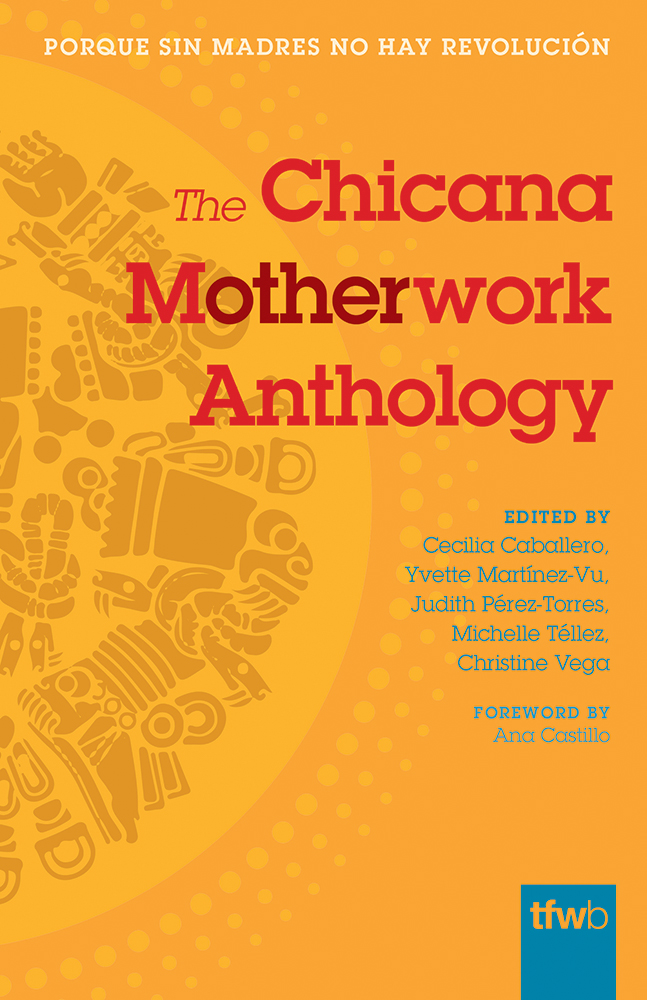
Editors from The Chicana M(other)work Anthology will speak to their work to bring together emerging scholarship and testimonios by and about self-identified Chicana and Women of Color mother-scholars, activists, and allies who center mothering as transformative labor.

“I’m thrilled to have our project be part of this event not only because we get to be in conversation with other brilliant scholars and writers, but also because The Feminist Wire Books series already shows evidence of highlighting intersectional, groundbreaking scholarship and activism that is central to transforming the ways in which we understand knowledge production inside and outside of the academy,” said Michelle Tellez, an editor of The Chicana M(other)work Anthology and assistant professor in the UA Department of Mexican American Studies.

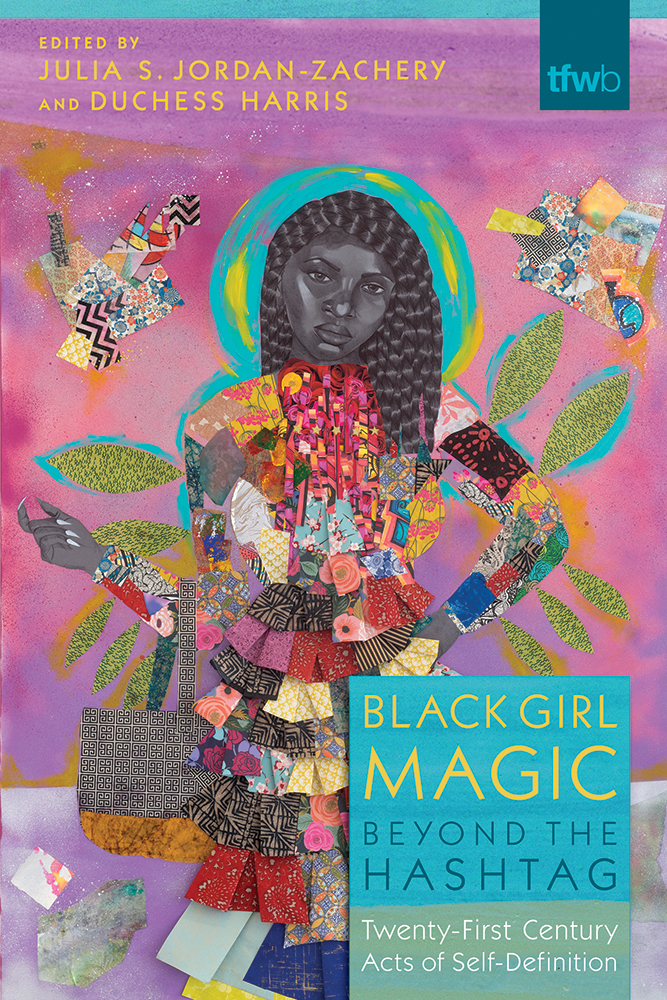
To close out the evening, Julia Jordan-Zachery and Duchess Harris will preview their forthcoming book in the series, Black Girl Magic Beyond the Hashtag, which

Special thanks to the College of Social and Behavioral Sciences, the University Libraries, the Office of the Provost, the Department of Gender and Women’s Studies, the Africana Studies Program and the Department of Religious Studies and Classics for their generous support of The Feminist Wire Book Symposium.

Join us in celebrating The Feminist Wire Books, Wednesday, April 10 at 5:30 p.m. at the UA Women’s Studies Building (925 N. Tyndall Ave.) or via the livestream and stay tuned for more from the series.

Pushing Publishing Boundaries, Sharing Open Access Scholarship

February 6, 2019

The University of Arizona Press is pleased to announce the launch of Open Arizona. This new online portal allows the press to bring back out-of-print titles as open access (OA) e-books.

The books available on Open Arizona focus on the histories and experiences of Indigenous and Latino groups in the southwestern United States, foundational areas of the Press’s long publishing history. The first eight projects now available touch on topics that range from the impact of government policy on Indigenous communities to the experiences of Mexican American communities throughout the 20th century.

Open Arizona was funded by the Andrew W. Mellon Foundation in 2017 and is a three-year initiative to make available in open access format two dozen critical works of scholarship.

Please join us in celebrating these new OA books:

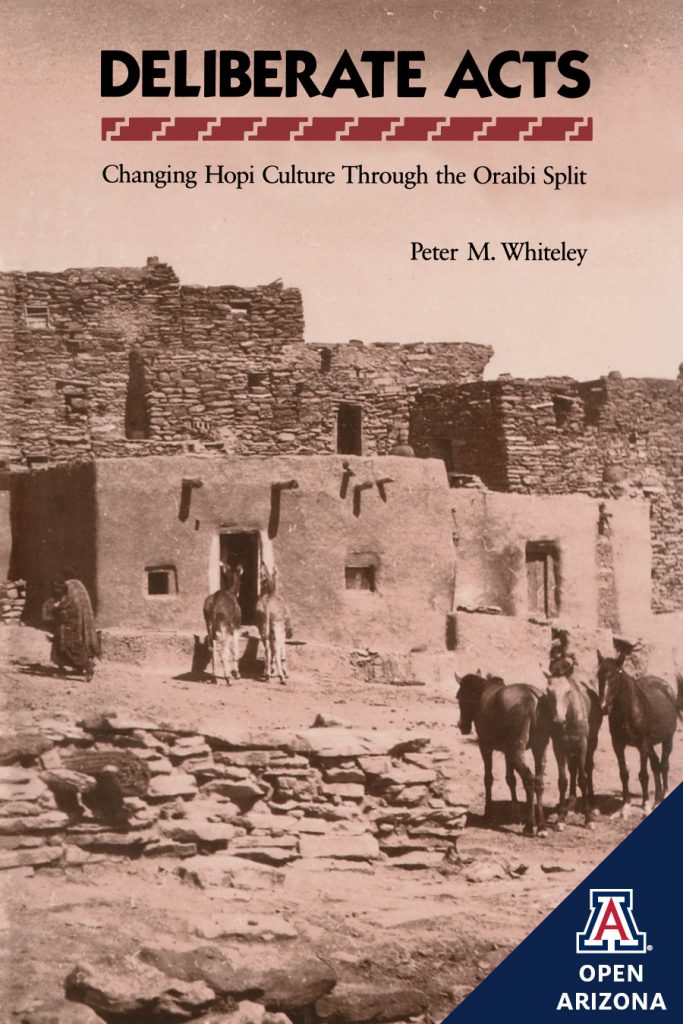
Deliberate Acts
Peter M. Whiteley

Drawing on oral accounts from Hopi consultants and contemporary documents, Peter M. Whiteley argues that the Oraibi split of 1906 was the result of a conspiracy among Hopi politico-religious leaders, a revolution to overturn the allegedly corrupt Oraibi religious order.

Farmers, Hunters, and Colonists

Edited by Katherine A. Spielmann

Eight contributors discuss early trade relations between Plains and Pueblo farmers, the evolution of interdependence between Plains hunter-gatherers and Pueblo farmers between 1450 and 1700, and the later comanchero trade between Hispanic New Mexicans and the Plains Comanche.

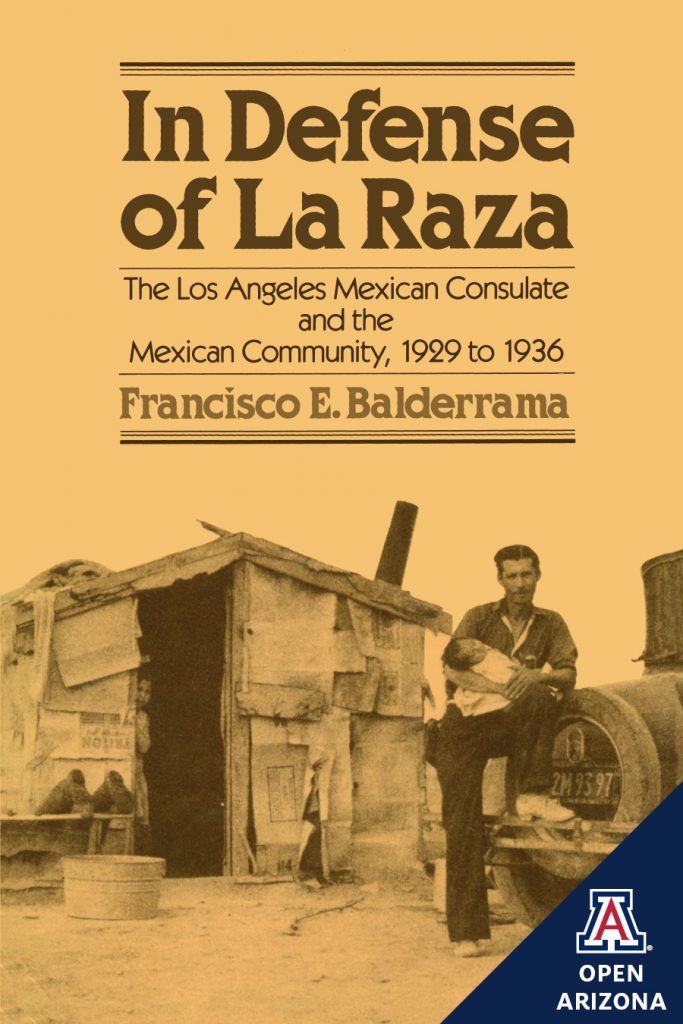
In Defense of La Raza

Francisco E. Balderrama

Mexican communities in the United States faced more than unemployment during the Great Depression. Discrimination against Mexican nationals and similar prejudices against Mexican Americans led the communities to seek help from Mexican consulates, which in most cases rose to their defense.


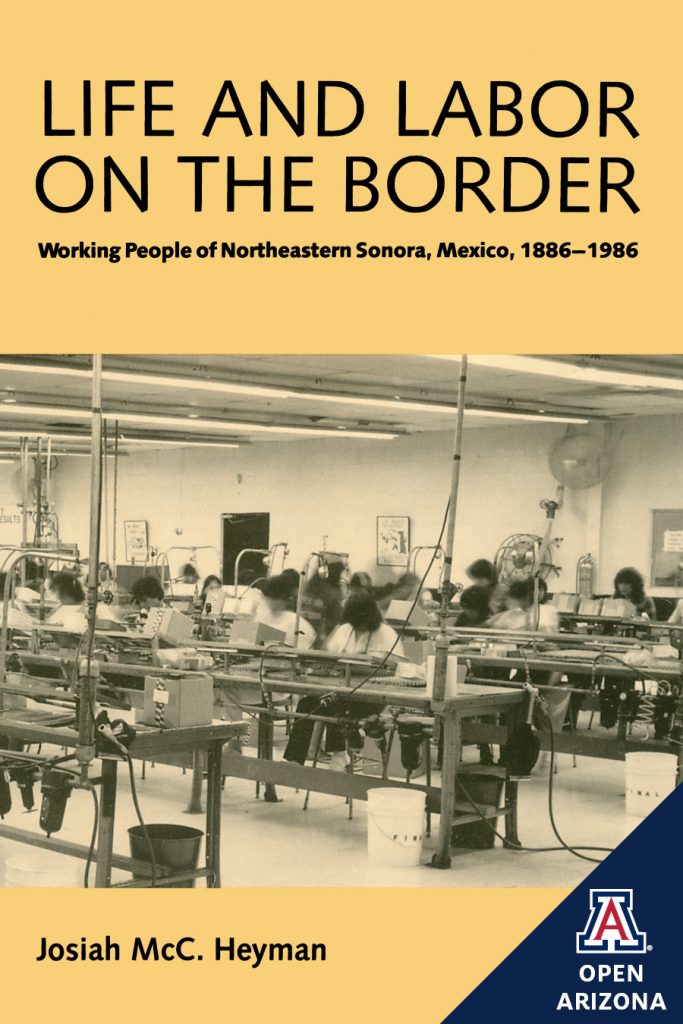
Life and Labor on the Border

Josiah McC. Heyman

This book traces the development of the urban working class in northern Sonora over the period of a century. Heyman describes what has happened to families over several generations as people have left the countryside to work for American-owned companies in northern Sonora or to cross the border to find other employment.

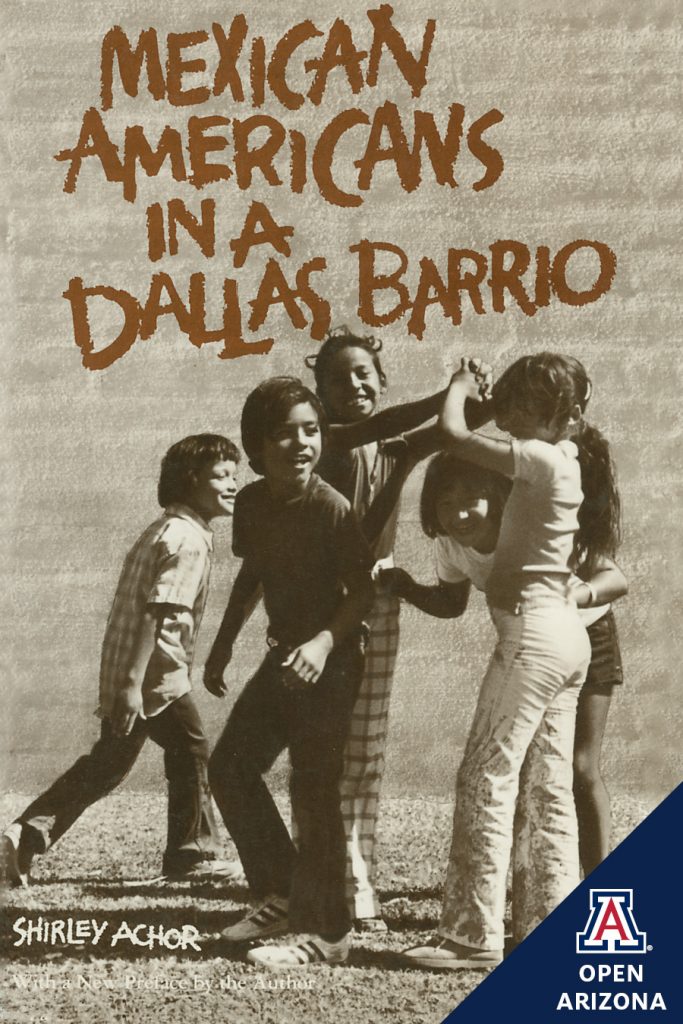
Mexican Americans in a Dallas Barrio

Shirley Achor

This book vividly describes day-to-day barrio life in Dallas. Achor’s portrayal of the residents challenges stereotypes of traditional Mexican American culture and southwestern barrio life.

Missionaries, Miners, and Indians

Evelyn Hu-Dehart

More than a tale of Yaqui Indian resistance, Missionaries, Miners, and Indians documents the history of the Jesuit missions during a period of encroaching secularization. The Yaqui rebellion of 1740, analyzed here in detail, enabled the Yaqui to work for the mines without repudiating the missions; however, the erosion of the mission system ultimately led to the Jesuits’ expulsion from New Spain.

Reconstructing a Chicano/a Literary Heritage

Edited by María Herrera-Sobek

This collection of essays offers a critical examination of key texts produced in the Southwest from 1542 to 1848. Drawing on research in the archives of southwestern libraries and applying literary theoretical constructs to these centuries-old manuscripts, the contributors demonstrate that these works should be recognized as an integral part of American literature.

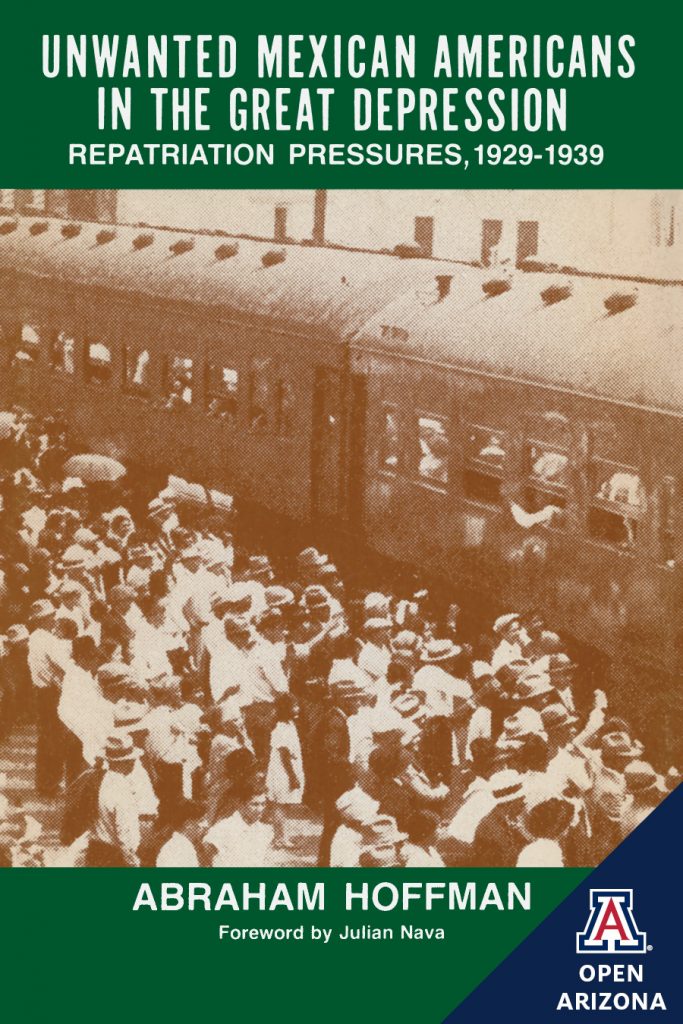
Unwanted Mexican Americans in the Great Depression

Abraham Hoffman

Discouraged by widespread unemployment and alarmed by anti-Mexican sentiment, nearly five hundred thousand Mexican Americans returned to Mexico between 1929 and 1939. Historian Abraham Hoffman captures the despair of these thousands of people of Mexican descent—including those with U.S. citizenship—who were actively coerced into leaving the country.

Turning It Up! University Press Week 2018

November 12, 2018

We’re thrilled to celebrate University Press Week along with our peers in the Association of University Presses. Since 2012, the Association has celebrated University Press Week each year to help tell the story of how university press publishing supports scholarship, culture, and local and global communities. Emphasizing the critical role of university presses in providing a voice for authors, ideas, and communities beyond the scope of mainstream publishing, this year’s theme is #TurnItUP.

“University presses publish authors from around the world and right at home, writing on subjects that are broad, niche, and at every level of inquiry in between,” said AUPresses Executive Director Peter Berkery. “Without university presses, many of these authors or subjects would not be heard in the marketplace of ideas. We’re delighted to make this aspect of our work the focus of UP Week 2018.”

Amplifying scholarship and minority voices has long been a mission of the University of Arizona Press.

Founded in 1959, the University of Arizona Press has been an ardent supporter of the international scholarly conversation in the fields of anthropology, archaeology, environmental science, history, Indigenous studies, Latinx studies, Latin American studies, and the space sciences. We continue to look for new opportunities to bring this scholarship to readers all over the globe. One such example of this is our Open Arizona initiative. Thanks to support from the Mellon Foundation, we’re exploring open access opportunities for foundational texts that document histories and experiences of Indigenous and Latino groups of the southwestern United States. The Open Arizona project will include works that touch on topics such as the impact of government policy on Indigenous communities and the experiences of Mexican American communities throughout the twentieth century.

We’ve supported emerging and established voices in Indigenous and Latinx fiction and poetry through our award-winning literary series for nearly fifty years.

The University of Arizona Press was one of the first publishers to celebrate Native American and Indigenous voices in poetry and fiction through our Sun Tracks series, established in 1971. One of the latest books in that series comes from Kathy Jetnil-Kijiner, the first published Marshallese poet.

We were one of the first publishers to support Latinx voices in poetry and fiction through our Camino del Sol series, established in 1997. Former U.S. Poet Laureate Juan Felipe Herrera was the inaugural author in the series, and we had the honor of publishing the debut full-length collection from Vickie Vértiz, Palm Frond With Its Throat Cut, which was just named a Pen America Literary Award winner in Poetry.

We’re turning it up this spring with a brand new series.

We’re thrilled to release the first two books from The Feminist Wire Books, a new series from The Feminist Wire (TFW) and the University of Arizona Press that presents a cultural bridge between the digital and printing worlds. Marquis Bey’s debut essay collection unsettles normative ways of understanding Blackness, Black feminism, and queerness. Them Goon Rules is an un-rulebook, a long-form essayistic sermon that meditates on how Blackness and nonnormative gender impact and remix everything we claim to know. The Chicana M(other)work Anthology is a call to action for justice within and outside academia. Using an intersectional lens, this volume brings together emerging scholarship and testimonios by and about self-identified Chicana and Women of Color mother-scholars, activists, and allies who center mothering as transformative labor.

“At a time when misinformation and disinformation travel with head-spinning speed, TFW’s short-form books let readers pause,” said University of Arizona Press Director Kathryn Conrad. “They are provocative conversation starters that call us to think and to act.”

Thank you for celebrating with us this week!

Send us your #UPShelfies or tag us with your favorite University of Arizona Press titles that really #TurnItUP. From all of us at the Press, thank you for your support!

Mark Nelson wins Independent Publisher’s Evergreen Medal

August 27, 2018

We’re thrilled to announce that Mark Nelson has been honored with an Independent Publisher Living Now Evergreen Medal for his book Pushing Our Limits: Insights from Biosphere 2.

One of the eight crew members locked in Biosphere 2 during its first closure experiment, Mark Nelson offers a compelling insider’s view of the dramatic story behind the mini-world. His book is a fresh examination of Biosphere 2, the world’s first man-made mini-world, twenty-five years after its first closure experiment. Exploring the project’s implications for today’s global environmental challenges, Pushing Our Limits offers a pathway for reconnecting people to a healthy relationship with nature.

Conducted annually, the Independent Publisher Book Awards honor the year’s best independently published titles from around the world and their Living Now Award Evergreen Medals commemorate world-changing books for “their contributions to positive global change.”


Native American and Indigenous Studies Association 2018 Meeting Recap

May 24, 2018

Last weekend we attended the tenth annual meeting of the Native American and Indigenous Studies Association (NAISA), the largest scholarly organization devoted to Indigenous issues, communities, and research. Indigenous studies is a key area for the University of Arizona Press, and we’ve been attending this meeting since its inception. It’s exciting to see how attendance has grown, and we appreciate the opportunity to meet scholars from around the world and learn more about important issues in Indigenous studies.

This year’s meeting in downtown Los Angeles had a fantastic turnout and a roster of fascinating panels. As always, we were delighted to see UAP authors and other friends of the Press. Thanks to all who stopped by and to the organizers for a great conference!

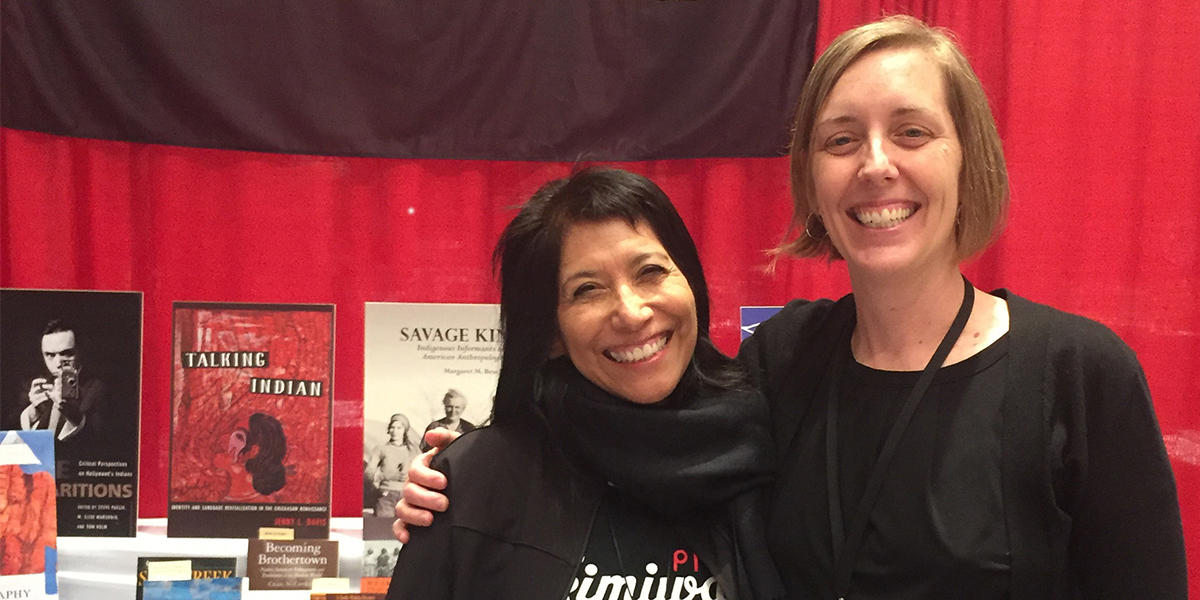
Red Medicine author Patrisia Gonzales and UAP Editor-in-Chief Kristen Buckles

Natasha Varner and The Learned Ones author Kelly S. McDonough

Yaqui Indigeneity author Ariel Zatarain Tumbaga


Allison Adelle Hedge Coke, editor of the poetry anthology “Sing

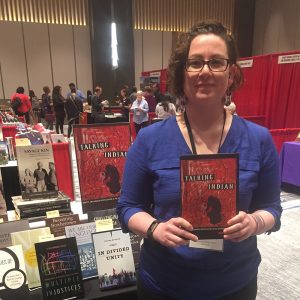
Talking Indian author Jenny L. Davis

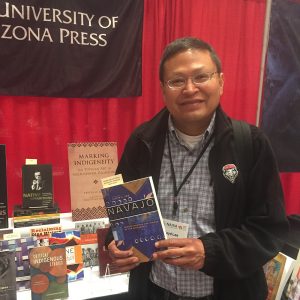
Lloyd L. Lee, editor of “Navajo Sovereignty and “Diné Perspectives

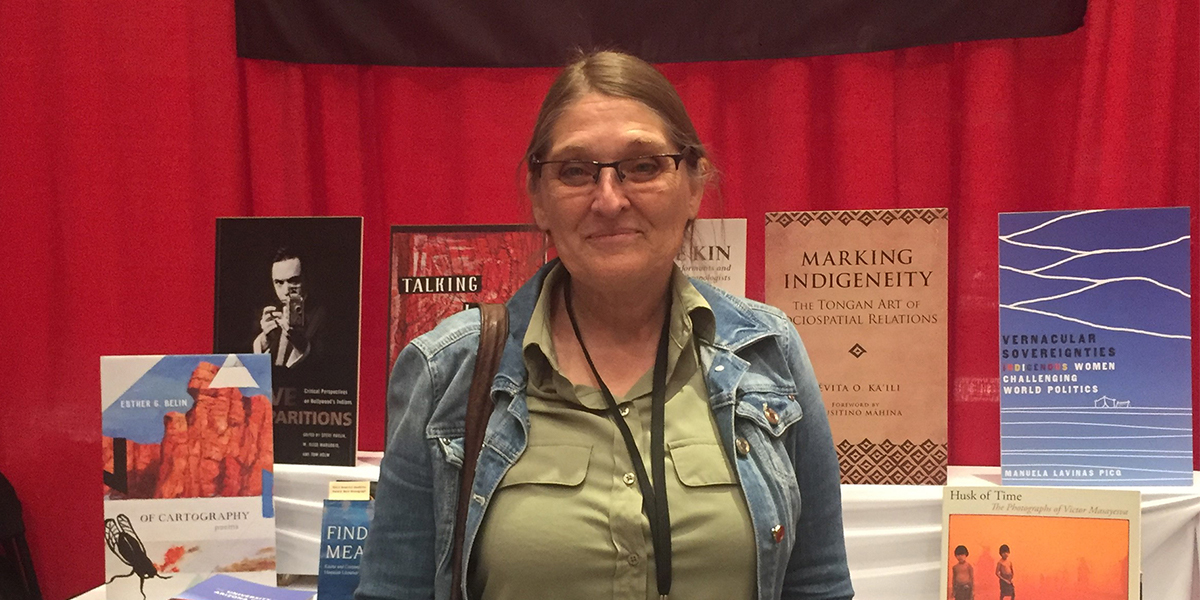
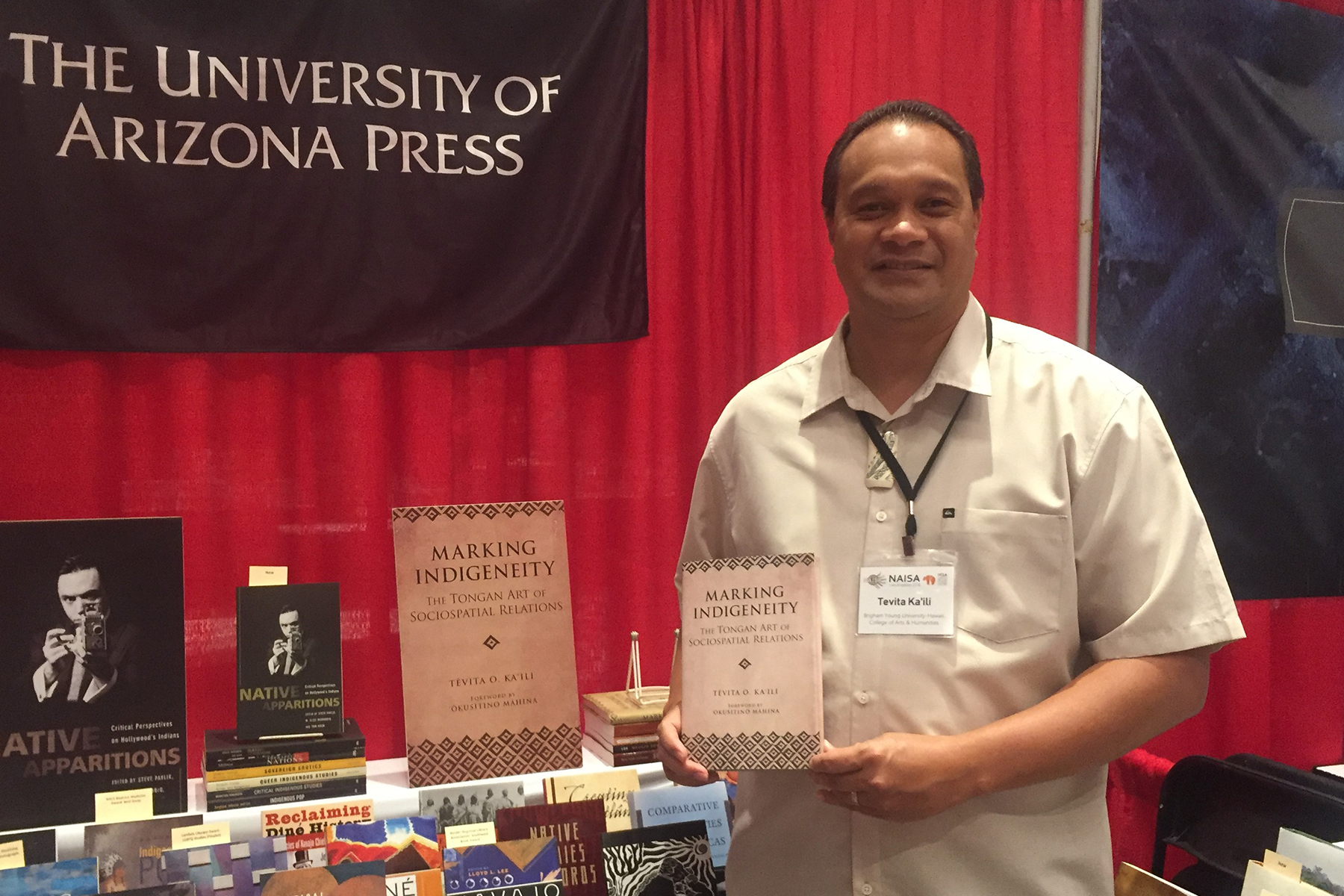
Marking Indigeneity author Tevita O. Ka‘ili

All They Will Call You is 2018–2019 Book in Common

May 10, 2018

We are thrilled to share the news that Tim Z. Hernandez’s documentary novel All They Will Call You has been selected as the California State University, Chico and Butte College Book in Common for the 2018–2019 academic year.

The Book in Common is “a shared community read, designed to promote discussion and understanding of important issues facing the broader community. It is chosen each year by a group of CSU, Chico and Butte College faculty and staff and members of the local community. As in past years, CSU, Chico, Butte College, the City of Chico, and Butte County will sponsor panel discussions, lectures, and other public events to celebrate and promote the Book in Common.”

In the announcement, California State University, Chico President Gayle Hutchinson said, “We are committed to the Book in Common and to using a shared reading experience not only to educate ourselves on important subjects, but also to bring us together as a community to engage in conversations about issues of our time. Tim Hernandez’s compelling book serves these purposes beautifully, exploring the subjects of immigration, identity, and disenfranchisement through the exploration of 1948 tragedy.” Butte College President Samia Yaqub said the book’s “themes of immigration and labor . . . still resonate deeply in California,” adding, “This is a book that speaks to our time and place.”

We at the Press are tremendously honored by this recognition. Congratulations, Tim!

Carlos Vélez-Ibáñez Receives Inaugural Saber es Poder-IME Academic Excellence Award

April 30, 2018

Last week the University of Arizona’s Department of Mexican American Studies (MAS) celebrated their inaugural presentation of the Saber es Poder-IME Academic Excellence Award in Mexican American Studies.  The new award recognizes the world’s leading scholars who have dedicated their careers to advancing the interdisciplinary field of Mexican American Studies.

This year’s recipient, Dr. Carlos G. Vélez-Ibáñez, is the author of four books published by the University of Arizona Press. In his introduction to the award, UA College of Social and Behavioral Sciences Dean John Paul (JP) Jones III said, “Dr. Carlos Vélez-Ibáñez [is] a legend in the field of Mexican American Studies, which he helped to establish. He has had a remarkable career distinguished by both a passion to break orthodox academic boundaries and to produce scholarship that enhances the lives of the less privileged.”

More than 150 scholars and community members came together for the lively event. Congratulations to Carlos on this much-deserved recognition!

Tom Sheridan, Alva Torres, and Lydia Otero.


Raquel Rubio-Goldsmith and Curtis Acosta.


Carlos G. Vélez-Ibáñez receives his award.


Weegee Whiteford and Scott Whiteford.


UAP titles on display.


Society for American Archaeology 2018 Meeting Recap

April 18, 2018

The Society for American Archaeology’s eighty-third annual meeting brought more than 5,000 archaeologists from across the Americas and around the globe to Washington, D.C. In keeping with the location, several panels delved into critical topics around legislation and its effects on archaeologists. Panels on Bears Ears, the Antiquities Act, colonialism, heritage programs, collaborative archaeology, and much more infused the meeting with energy and conversation.

Several authors stopped by our booth to say hello and showcase their work to their colleagues. The meeting was fantastic, and we can’t wait to see everyone in Albuquerque for SAA 2019!

T.J. Ferguson, co-editor of Footprints of Hopi History.


UA Press Senior Editor Allyson Carter and Deb Nichols, co-editor of Rethinking the Aztec Economy.


Matt Peeples with his new book, Connected Communities.


Kathy Arthur with her new book, The Lives of Stone Tools.


Clay Mathers, co-editor of Native and Spanish New Worlds.


Allyson Carter and Pat Gilman, co-author of Mimbres Life and Society.


John Douglass, co-editor of the forthcoming Forging Communities in Colonial Alta California, with Allyson Carter.


Emma Britton with Steve LeBlanc, co-author of Mimbres Life and Society.


Scott Ingram, co-editor of Traditional Arid Lands Agriculture, and Allyson Carter.


Michael Waters, author of Principles of Geoarchaeology.


Chip Colwell, co-editor of Footprints of Hopi History.


Paul Minnis, co-editor of Discovering Paquimé, and Lisa LeCount, co-editor of Classic Maya Provincial Politics.


Michael Searcy with his book The Life-Giving Stone.


Lee Panich, co-editor of Indigenous Landscapes and Spanish Missions.

For Authors

The University of Arizona Press publishes the work of leading scholars from around the globe. Learn more about submitting a proposal, preparing your final manuscript, and publication.
Inquire

Requests

The University of Arizona Press is proud to share our books with readers, booksellers, media, librarians, scholars, and instructors. Join our email Newsletter. Request reprint licenses, information on subsidiary rights and translations, accessibility files, review copies, and desk and exam copies.
Request

Support the Press

Support a premier publisher of academic, regional, and literary works. We are committed to sharing past, present, and future works that reflect the special strengths of the University of Arizona and support its land-grant mission.

Give