Free and open to all! A reception will follow the program.
Educated, restless, inquisitive, plucky, intrepid. These words describe women whose influence and impact in the American Southwest in the early 20th century have largely been left out of the pages of history. Natalie Curtis, Carol Stanley, Mary Cabot Wheelright, and Louisa Wade Wetherill, to name a few. In honor of Women’s History Month, author and historian Lesley Poling-Kempes will show historic photos and discuss the research journey that became her celebrated book, Ladies of the Canyons: A League of Extraordinary Women & their Adventures in the American Southwest.
This is a presentation in the Arnold and Doris Roland Distinguished Speaker Series, made possible by the generosity of Dr. and Mrs. Roland. The reception is underwritten by the ASM Director’s Council.
Laura Harjo is a Mvskoke scholar, Indigenous methodologist, and associate professor in the Department of Community and Regional Planning at the University of New Mexico. Her research and teaching centers on Indigenous spatialities, community caretaking, Indigenous feminist community planning praxis, and community engaged knowledge production. Her recent project focuses on employing Mvskoke and Indigenous feminist epistemologies, and theories of Indigenous space, place, and mapping in a community praxis of futurity.
Spiral to the Stars: Mvskoke Tools of Futurityposes questions about what community is, how to reclaim community, and how to embark on the process of envisioning what and where the community can be. Harjo demonstrates that Mvskoke communities have what they need to dream, imagine, speculate, and activate the wishes of ancestors, contemporary kin, and future relatives— all in a present temporality— which is Indigenous futurity. This book offers a critical and concrete map for community making that leverages Indigenous way-finding tools. Mvskoke narratives thread throughout the text, vividly demonstrating that theories come from lived and felt experiences. This is a must-have book for community organizers, radical pedagogists, and anyone wishing to empower and advocate for their community.
The book launch is located at the George Pearl Hall Auditorium in Albuquerque, New Mexico. The book talk begins at 2:00 p.m. followed by a reception and zine/ map making at 3:00 p.m.
Join Rebecca Robinson and Stephen Strom in the community room at Sedona Public Library. President Barack Obama established Bears Ears National Monument on primarily undeveloped land in Southeastern Utah in 2016, with co-management by BLM, the US Forest Service, and a coalition of the Navajo Nation, Hopi, Ute Mountain Ute, Ute Indian Tribe of the Uintah, and Ouray Reservation and the Pueblo of Zuni. Though President Donald Trump has attempted to reduce the monument by 85%, legal challenges have so far preserved the land.
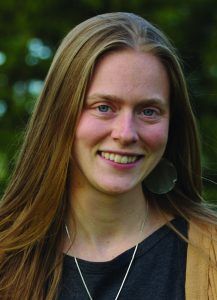
Author Rebecca Robinson
Rebecca Robinson has edited a collection of 22 individual voices and personal histories of those involved in the debate about the future of the monument in her book, Voices from Bears Ears: Seeking Common Ground on Sacred Land. Photographer Stephen Strom, whose photographs also appear in Voices from Bears Ears as well as in his book, Bears Ears: Views from a Sacred Land, has created an awe-inspiring visual celebration of the rugged beauty of the canyons, mesas, and spires of Bears Ears.
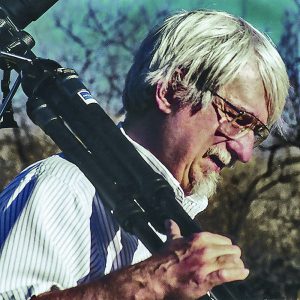
Photographer Stephen Strom
Book sales and signing will follow the presentation. This program, supported by the Arizona State Library, Archives & Public Records, a division of the Secretary of State with federal funds from the Institute of Museum and Library Services, is free and open to the public.
The Sedona Public Library is located at 3250 White Bear Road, Sedona, AZ.
Please join us in the University of Arizona Libraries Special Collections for a talk by author Derek Sears for the occasion of the 50th anniversary of the Apollo 11 Moon landing. In this talk, Sears will present the new biography Gerard P. Kuiper and the Rise of Modern Planetary Science, which describes the life of a man who lived through some of the most dramatic events of the twentieth century and ended up creating a new field of scientific research—planetary science. As NASA and other space agencies explore the solar system, they take with them many of the ideas and concepts first described by Gerard P. Kuiper. With an introduction by Tim Swindle, Director of the Lunar and Planetary Lab at the University of Arizona, we welcome you to join us for this exciting and timely lecture.
The University of Arizona Libraries Special Collections are located at 1510 E University Blvd, (adjacent to the Main Library) Tucson, AZ 85721.
Wednesday, April 10 at 5:30 p.m. – Join us in celebrating The Feminist Wire Books: Connecting Feminisms, Race, and Social Justice with series editors Tamura A. Lomax and Monica J. Casper and special remarks from University of Arizona Press Editor-in-Chief Kristen Buckles. The Feminist Wire Books is a new series from The Feminist Wire (TFW) and the University of Arizona Press dedicated to the sociopolitical and cultural critique of anti-feminist, racist, and imperialist politics.
Location:
Women’s Studies/SIROW, Room 100, 925 N. Tyndall Ave.
Julia Jordan-Zachery and Duchess Harris, Editors Black Girl Magic Beyond the Hashtag: Twenty-First Century Acts of Self-Definition (forthcoming Fall 2019)
The event is free and open to the public, and books will be available for purchase at a reception following the program.
The program is cosponsored by the College of Social and Behavioral Sciences, the University Libraries, the Office of the Provost, the department of Gender & Women’s Studies, the department of Africana Studies, and the department of Religious Studies and Classics.
Thursday, May 9 – Marge Bruchac presents “Voices Carry: Recovering Messages from Indigenous Archives.” She will be the featured speaker in seminar series “Current Research in Anthropological Archives” at the Smithsonian Museum of Natural History in Washington, DC. The event is open to public.
Friday, April 19 – Marge Bruchac presents “Reverse Ethnography: Investigating the History of Anthropological Search and Rescue,” a talk for anthropology department at Rutgers University in New Brunswick, New Jersey. The event is open to public.
Sunday, April 14 – Marge Bruchac presents “Reconsidering (and Recovering from) Acts of Ethnographic Search and Rescue,” a talk for Indigenous Voices in Plainfield at the Cummington Community House, in Cummington, Massachusetts. The event is open to public.
Saturday, April 13 – Marge Bruchac will present “Rural Indigenousness: A History of Iroquoian and Algonquian Peoples of the Adirondacks.” This will be a panel discussion with Melissa Otis and Joseph Bruchac at the Ndakinna Education Center at the Greenfield Center in New York. The event is open to the public.
Tuesday, May 14 at 5:30 p.m. – The Bi-National Arts Institute will host Beth Henson for a discussion of her recently released book Agrarian Revolt in the Sierra of Chihuahua, 1959-1965 at Bisbee’s Copper Queen Library. The early 1960s are remembered for the emergence of new radical movements. One such protest movement rose in the Mexican state of Chihuahua. With large timbering companies moving in on the forested sierra highlands, campesinos and rancheros did not sit by as their lands and livelihoods were threatened. Henson’s book is the story of how they organized and demanded agrarian rights—ultimately with deadly consequences.
For Authors
The University of Arizona Press publishes the work of leading scholars from around the globe. Learn more about submitting a proposal, preparing your final manuscript, and publication.
The University of Arizona Press is proud to share our books with readers, booksellers, media, librarians, scholars, and instructors. Join our email Newsletter. Request reprint licenses, information on subsidiary rights and translations, accessibility files, review copies, and desk and exam copies.
Support a premier publisher of academic, regional, and literary works. We are committed to sharing past, present, and future works that reflect the special strengths of the University of Arizona and support its land-grant mission.
 The University of Arizona Press


 Apollo 11 Moon landing. In this talk, Sears will present the new biography