Brandy McDougall Is Keynote Speaker at Schools of the Future Conference

October 31, 2023

Brandy Nālani McDougall will speak at the The Schools of the Future Conference (SOTF Conference) on November 16, 1 -2 p.m., in Honolulu. In her keynote presentation, she will share her poems and poems by other Hawaiʻi poets, as well as reflections on her experience as both a haumana (student) and as a kumu (teacher) within Hawaiʻi school systems.

McDougall, the author of  Aina Hanau/Birth Land and Finding Meaning, (Kanaka ‘Ōiwi) is a poet, scholar, mother, and aloha ‘āina from Aʻapueo, Maui, and now living with her ʻohana in Kalaepōhaku, Oʻahu. She is director of the Mānoa Center for the Humanities and Civic Engagement and an associate professor of Indigenous studies in the University of Hawaiʻi at Mānoa’s American Studies Department.

The SOTF Conference explores a wide-range of topics and ideas related to best and emerging practices in education. The annual conference is the largest event of its nature in Hawai’i and serves as an opportunity for teachers and administrators, across Hawaii’s public, private and charter schools, to reflect upon how to better serve children. The conference is produced annually in partnership with the Hawai’i State Department of Education, the Hawai’i Association of Independent Schools, the Hawai’i Community Foundation and the Hawai’i Society for Technology in Education.

OSIRIS-REx Celebration in Downtown Tucson

October 16, 2023

On October 14, author Dante Lauretta hosted an “Orbits and Elixirs Celebration” for contributors and supporters of the NASA OSIRIS-REx Mission, at the Don Martini Bar on top of the Rialto Theater in downtown Tucson. Lauretta and Mayor Regina Romero spoke; they talked about the sample return mission, the work of the mirror lab for the Giant Magellan Telescope, and the opening of the Center for Astrobiology.  UA Press Director Kathryn Conrad and Editor Allyson Carter joined in the celebration, along with UA Lunar Planetary Laboratory Director Mark Marley. Below are photos from the event.

About the book: Bennu 3-D, Anatomy of an Asteroid, is the world’s first complete (and stereoscopic) atlas of an asteroid, is the result of a unique collaboration between OSIRIS-REx mission leader Dante Lauretta and Brian May’s London Stereoscopic Company. Lauretta’s colleagues include Carina Bennett, Kenneth Coles, and Cat Wolner, as well as Brian May and Claudia Manzoni, who became part of the ultimately successful effort to find a safe landing site for sampling. The text details the data collected by the mission so far, and the stereo images have been meticulously created by Manzoni and May from original images collected by the OSIRIS-REx cameras.

Dante Lauretta speaks about the mission to Bennu and back.

Allyson Carter, Dante Lauretta, and Kathryn Conrad

Slide show celebrating all University of Arizona space and astronomy accomplishments.

Tucson Mayor Regina Romero congratulates the OSIRIS-REx team on a successful mission.

October 12, 2023

In Bringing Home the Wild, A Riparian Garden in a Southwest City, author Julie Stromberg demonstrates how ecologically guided gardening develops a sense of place, restores connections to nature, and brings joy and meaning to our lives. When living in a large sprawling city, one may feel disconnected and adrift. Finding ways to belong and have positive effects is challenging. Today, Stromberg has provided us with field notes and insights into her work.

For three decades of my life, I was a professor at Arizona State University. During that time, I made many field trips to rivers of the American Southwest and published many research papers about the ecological relationships of riparian plants. These studies increased our understanding of the ways in which human activities alter riparian plant communities and informed the efforts of those who were working to restore them.

A riparian ecosystem in the mountains of Arizona
Author relaxing in a ratama (Parkinsonia aculeata)

Once I retired, my engagement with riparian biota became more personal. My attention turned to the forests and shrublands my partner and I were tending on a patch of abandoned farmland we had purchased near the Salt River. Revitalizing our own patch of green has been deeply satisfying. I love engaging with trees not just as study organisms, but as partners and even as friends. Ecosystem restoration has been called, somewhat dismissively, glorified gardening. I am proud to be a gardener. I firmly believe that urban gardeners, collectively, can do much to help tackle the pressing issues of our time. Our ecosystem garden is a multitasker. For one, we have a working food forest of velvet mesquite, a tree which once covered much of the area that is now Phoenix. Agroecosystems such as these are a sustainable alternative to industrialized agriculture.

Second, by tending a bioproductive climate garden, we help mitigate the rising air temperatures in the city and offset a share of our own carbon emissions. Connecting with the plants who sequester the carbon is an important first step in undertaking climate action.

Third, our patch of green provides habitat for birds, mammals, and other wildlife whose numbers are in decline. Pollinators, herbivores, predators, and decomposers all thrive in our ecosystem garden: all have roles to play. The diversity of life in our garden has astounded me.

Finally, our garden provides ecotherapy. Anxiety is high among many urban dwellers, but the colors, sounds, smells, and patterns of the flora and fauna keep us calm and hopeful. Ecotherapy is a powerful force, especially when the greenery embraces you right as you step outside the door.

I wrote this book to inspire and guide others. I hope that our joyful experiences in urban ecosystem gardening will tempt others to deepen their connection to the natural world and nurture life-filled bounty in their own backyards. I hope more urban dwellers will unplug from the digital world, for a bit, and put on their gardening gloves. When we connect strongly to a place and feel as if we are part of the local ecosystem, we are more likely to take actions that benefit us all.

***

Julie Stromberg is a professor emeritus at Arizona State University and a plant ecologist who specializes in wetland and riparian ecosystems of the American Southwest. For the past thirty years, she has studied plant population and community dynamics and vegetation-hydrology interactions. The author of more than a hundred peer-reviewed publications, Stromberg continues to write about plants while also tending a riparian forest garden in the city.

Myrriah Gómez Speaks at ASU Science and Mathematics Colloquium

October 9, 2023

Myrriah Gómez, author of Nuclear Nuevo México, was a guest speaker at the Science and Mathematics Colloquium series presented by the College of Integrative Sciences and Arts at Arizona State University.

“In her book and through her public outreach, she is bringing to light the long-term impacts of the nuclear industrial complex, emphasizing what she sees as the five tenets of nuclear colonialism: intergenerational trauma; disease and death; contamination; secrecy and obscurity; and environmental racism. Gómez argued that a combination of these injustices continue to plague Nuevomexicano communities,” Sona Patel Srinarayana wrote in an ASU News article about the series.

About Nuclear Nuevo México:

Contrary to previous works that suppress Nuevomexicana/o presence throughout U.S. nuclear history, Nuclear Nuevo México focuses on recovering the voices and stories that have been lost or ignored in the telling of this history. By recuperating these narratives, Myrriah Gómez tells a new story of New Mexico, one in which the nuclear history is not separate from the collective colonial history of Nuevo México but instead demonstrates how earlier eras of settler colonialism laid the foundation for nuclear colonialism in New Mexico.

Gómez examines the experiences of Nuevomexicanas/os who have been impacted by the nuclear industrial complex, both the weapons industry and the commercial industry. Gómez argues that Los Alamos was created as a racist project that targeted poor and working-class Nuevomexicana/o farming families, along with their Pueblo neighbors, to create a nuclear empire. The resulting imperialism has left a legacy of disease and distress throughout New Mexico that continues today.

Shelby Tisdale Presents “No Place for a Lady” at the University of Arizona

September 19, 2023

Shelby Tisdale gave a talk on her recent book, No Place for a Lady, on September 18th, 2023 at the University of Arizona’s ENR2 building. We were delighted to attend this event, which was hosted by the Arizona Archaeological and Historical Society. Thanks for including us!

Held in the beautiful ENR2 building on the University of Arizona campus, we were happy to display Shelby Tisdale’s recent No Place for a Lady (2023) and Federico (2021), which she edited.
Shelby Tisdale gave a wonderful presentation on the life and work of Marjorie F. Lambert, the subject of No Place for a Lady.
Thanks to everyone for coming and attending on Zoom!
We love our authors!

About No Place for a Lady:

In the first half of the twentieth century, the canyons and mesas of the Southwest beckoned and the burgeoning field of archaeology thrived. Among those who heeded the call, Marjorie Ferguson Lambert became one of only a handful of women who left their imprint on the study of southwestern archaeology and anthropology.

In this delightful biography, we gain insight into a time when there were few women establishing full-time careers in anthropology, archaeology, or museums. Shelby Tisdale successfully combines Lambert’s voice from extensive interviews with her own to take us on a thought-provoking journey into how Lambert created a successful and satisfying professional career and personal life in a place she loved (the American Southwest) while doing what she loved.

Through Lambert’s life story we gain new insight into the intricacies and politics involved in the development of archaeology and museums in New Mexico and the greater Southwest. We also learn about the obstacles that young women had to maneuver around in the early years of the development of southwestern archaeology as a profession. Tisdale brings into focus one of the long-neglected voices of women in the intellectual history of anthropology and archaeology and highlights how gender roles played out in the past in determining the career paths of young women. She also highlights what has changed and what has not in the twenty-first century.

Women’s voices have long been absent throughout history, and Marjorie Lambert’s story adds to the growing literature on feminist archaeology.

Texas Book Festival Invites García and Momen

September 15, 2023

Authors Alma García and Mehnaaz Momen have been invited to the Texas Book Festival in Austin, Texas, November 11 -12. García will talk about her debut novel, All That Rises, and Momen will discuss Listening to Laredo, A Border City in a Globalized Age.

The Texas Book Festival (TBF) began with a simple purpose: to bring authors and readers together in a celebration of literature and literacy. Founded in 1995 by Laura Bush (a former librarian and then First Lady of Texas), Mary Margaret Farabee, and a dedicated group of volunteers, the TBF set out to honor Texas authors, promote the joys of reading, and benefit the state’s public libraries. The first Festival took place in November 1996 and is now one of the nation’s premier annual literary events, featuring 300 authors of the year’s best books and drawing 50,000 book lovers. Discover all the 2023 Festival authors.

Congratulations to Alma and Mehnaaz!

About All That Rises:

In the border city of El Paso, Texas, two guardedly neighboring families have plunged headlong into a harrowing week. Rose Marie DuPre, wife and mother, has abandoned her family. On the doorstep of the Gonzales home, long-lost rebel Inez appears. As Rose Marie’s husband, Huck (manager of a maquiladora), and Inez’s brother, Jerry (a college professor), struggle separately with the new shape of their worlds, Lourdes, the Mexican maid who works in both homes, finds herself entangled in the lives of her employers, even as she grapples with a teenage daughter who only has eyes for el otro lado—life, American style.

About Listening to Laredo:

Nestled between Texas and Tamaulipas, Laredo was once a quaint border town, nurturing cultural ties across the border, attracting occasional tourists, and serving as the home of people living there for generations. In a span of mere decades, Laredo has become the largest inland port in the United States and a major hub of global trade. Listening to Laredo is an exploration of how the dizzying forces of change have defined this locale, how they continue to be inscribed and celebrated, and how their effects on the physical landscape have shaped the identity of the city and its people.

Tom Zoellner Is Keynote Speaker for Arizona Library Association

August 31, 2023

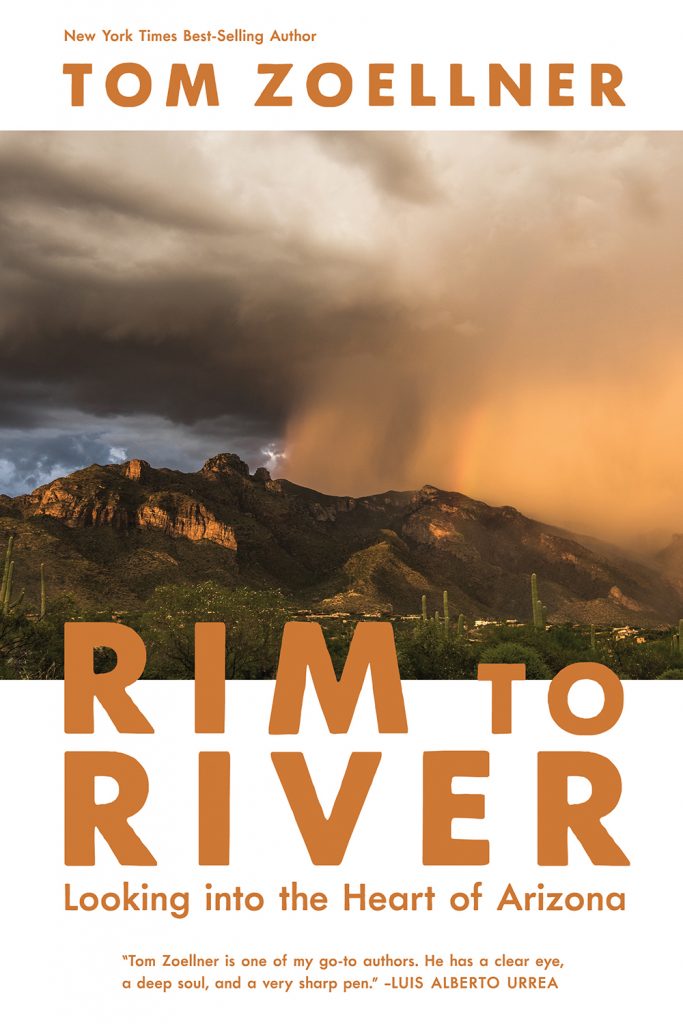
Tom Zoellner will speak on “The Arizona Literary Tradition” at the Arizona Library Association conference on October 19, 2023, at the We Ko Pa Resort in Fort McDowell, Arizona. Zoellner, author of Rim to River, will talk about the writing tradition in Arizona. Many great works of non-fiction come from Arizona; however, something is missing. He says, “There have been plenty of very good novels set here, but none that has truly captured the essence of the state. This is a challenge laid before the state’s fiction writers: where is the Great Arizona Novel? Can you write it, please?”

About the book:

Rim to River is the story of Zoellner’s walk on the Arizona Trail. Follow his extraordinary journey through redrock country, down canyons, up mesas, and across desert plains to the obscure valley in Mexico that gave the state its enigmatic name. The trek is interspersed with incisive essays that pick apart the distinctive cultural landscape of Arizona: the wine-colored pinnacles and complex spirituality of Navajoland, the mind-numbing stucco suburbs, desperate border crossings, legislative skullduggery, extreme politics, billion-dollar copper ventures, dehydrating rivers, retirement kingdoms, old-time foodways, ghosts of old wars, honky-tonk dreamers, murder mysteries, and magical Grand Canyon reveries.

Aldama, Lomelí & Gómez Finalists for 2023 International Latino Book Award

August 28, 2023

We are pleased to announce that two of our books were recently selected as finalists for the 2023 International Latino Book Awards: Latinx TV in the Twenty-First Century, edited by Frederick Luis Aldama in the “Best Academic Themed Book, College Level – English” category, and Juan Felipe Herrera: Migrant, Activist, Poet Laureate, edited by Francisco A. Lomelí and Osiris Aníbal Gómez in the “Best Biography” category.

The International Latino Book Awards recognize excellence in literature, honoring books written in English, Spanish, and Portuguese, with the goal of “growing the awareness for books written by, for and about Latinos.”

Frederick Luis Aldama, also known as Professor Latinx, is the Jacob & Frances Sanger Mossiker Chair in the Humanities and Affiliate Faculty in the Department of Radio-Television-Film at the University of Texas at Austin, as well as Adjunct Professor and Distinguished University Professor at The Ohio State University. He is the award-winning author of more than forty-eight books, including the bilingual children’s books The Adventures of Chupacabra Charlie and With Papá. He is editor or co-editor of nine academic press book series, including Latinographix, which publishes Latinx comics. He is the creator of the first documentary on the history of Latinx superheroes and the founder and director of UT Austin’s Latinx Pop Lab.

Francisco A. Lomelí is professor emeritus and distinguished professor of Chicano/a studies and Latin American literature at the University of California, Santa Barbara. He has published extensively on Mexican, Chilean, Argentine, and Chicano/a literatures, as well as multiple reference works in the field of Chicano/a studies.

Osiris Aníbal Gómez is an assistant professor in the Department of Spanish and Portuguese Studies at the University of Minnesota, Twin Cities. His areas of expertise include contemporary Indigenous literatures of Mexico, Mexican literature, Chicano/a literature, and translation studies. His work explores the condition, aesthetics, and social justice possibilities of bilingual Indigenous and Chicanx writers.

Congratulations to all!

Dante Lauretta and Brian May Interviewed about “Bennu 3-D”

August 29, 2023

In England, The Guardian newspaper featured Bennu 3-D, Anatomy of an Asteroid and its authors in the week leading up to the book launch at the London Museum of Natural History on July 27. Dante Lauretta told his side of the story about how he and Brian May came to collaborate: “As the OSIRIS-REx mission progressed, I couldn’t help but share some of the latest developments with him … To my delight, Brian showed a keen interest in the mission and the science behind it. It was clear that he was not just a casual fan, but a true space enthusiast and an advocate for space exploration.” Lauretta eventually brought May on to the mission, who, alongside his collaborator Claudia Manzoni, created stereo images from original images that were collected by the OSIRIS-REx cameras.

Space.com’s Tereza Pultarova interviewed Brian May, co-author of Bennu 3-D. She spoke with May about his role in bringing stereoscopic photography to the OSIRIS-REx NASA mission.

The rock-star-turned-astrophysicist explained how he came to be part of the team: “So what happened with me and Dante, is that I sent him just off the cuff a couple of OSIRIS-REx images which I’d made into 3D. And he was amazed. He said ‘I have never seen it like this, this is such a great tool and this might be able to help us find the landing site that we need in order to get that sample safely.'”

In another article focusing on the book, Space.com listed May’s other scientific projects. May, who holds a PhD in astronomy, had previously collaborated with the science teams behind Europe’s comet-chasing Rosetta probe and NASA’s Pluto explorer New Horizons. He joined the OSIRIS-REx team in January 2019, a few months after the probe reached its destination, after striking up a friendship with Lauretta over shared interests.

In fact, NASA’s OSIRIS-REx chief scientist Dante Lauretta and Brian May challenge Space.com readers to photograph objects in the solar system. The prize? A signed copy of Bennu 3-D, Anatomy of an Asteroid. Watch the contest announcement video here. Astrophotographers can submit their entries into the competition by email to spacephotos@space.com by Sept. 15. Be sure to include “astrophoto competition” in the subject line to be considered.

About the book:

The world’s first complete (and stereoscopic) atlas of an asteroid, this book is the result of a unique collaboration between OSIRIS-REx mission leader Dante Lauretta and Brian May’s London Stereoscopic Company. Lauretta’s colleagues include Carina Bennett, Kenneth Coles, and Cat Wolner, as well as Brian May and Claudia Manzoni, who became part of the ultimately successful effort to find a safe landing site for sampling. The text details the data collected by the mission so far, and the stereo images have been meticulously created by Manzoni and May from original images collected by the OSIRIS-REx cameras.


The print edition includes 120 illustrations, 50 maps, 80 stereoscopic images, and includes stereoscopic glasses.

Diego Báez and the Evolution of his Political Consciousness in Alta

August 28, 2023

In the Alta article Abolition, Anarchism, and a Question of Action, Diego Báez reflects on the books and editorials that have shaped his political view. He begins his review in 2009 and concludes with the present time. These writings include Class Struggle and the Origin of Racial Slavery: The Invention of the White Race, The New Jim Crow: Mass Incarceration in the Age of Colorblindness, Bad Mexicans: Race, Empire and Revolution in the Borderlands, and an editorial for the New York Times titled “Yes, We Mean Literally Abolish the Police.”

Diego Báez has a debut collection coming out in February 2024, Yaguareté White. In this collection English, Spanish, and Guaraní encounter each other through the elusive yet potent figure of the jaguar. 

The son of a Paraguayan father and a mother from Pennsylvania, Baéz grew up in central Illinois as one of the only brown kids on the block—but that didn’t keep him from feeling like a gringo on family visits to Paraguay. Exploring this contradiction as it weaves through experiences of language, self, and place, Baéz revels in showing up the absurdities of empire and chafes at the limits of patrimony, but he always reserves his most trenchant irony for the gaze he turns on himself.

For Authors

The University of Arizona Press publishes the work of leading scholars from around the globe. Learn more about submitting a proposal, preparing your final manuscript, and publication.

Inquire

Requests

The University of Arizona Press is proud to share our books with readers, booksellers, media, librarians, scholars, and instructors. Join our email Newsletter. Request reprint licenses, information on subsidiary rights and translations, accessibility files, review copies, and desk and exam copies.

Request

Support the Press

Support a premier publisher of academic, regional, and literary works. We are committed to sharing past, present, and future works that reflect the special strengths of the University of Arizona and support its land-grant mission.

Give