Last weekend we attended the tenth annual meeting of the Native American and Indigenous Studies Association (NAISA), the largest scholarly organization devoted to Indigenous issues, communities, and research. Indigenous studies is a key area for the University of Arizona Press, and we’ve been attending this meeting since its inception. It’s exciting to see how attendance has grown, and we appreciate the opportunity to meet scholars from around the world and learn more about important issues in Indigenous studies.
This year’s meeting in downtown Los Angeles had a fantastic turnout and a roster of fascinating panels. As always, we were delighted to see UAP authors and other friends of the Press. Thanks to all who stopped by and to the organizers for a great conference!
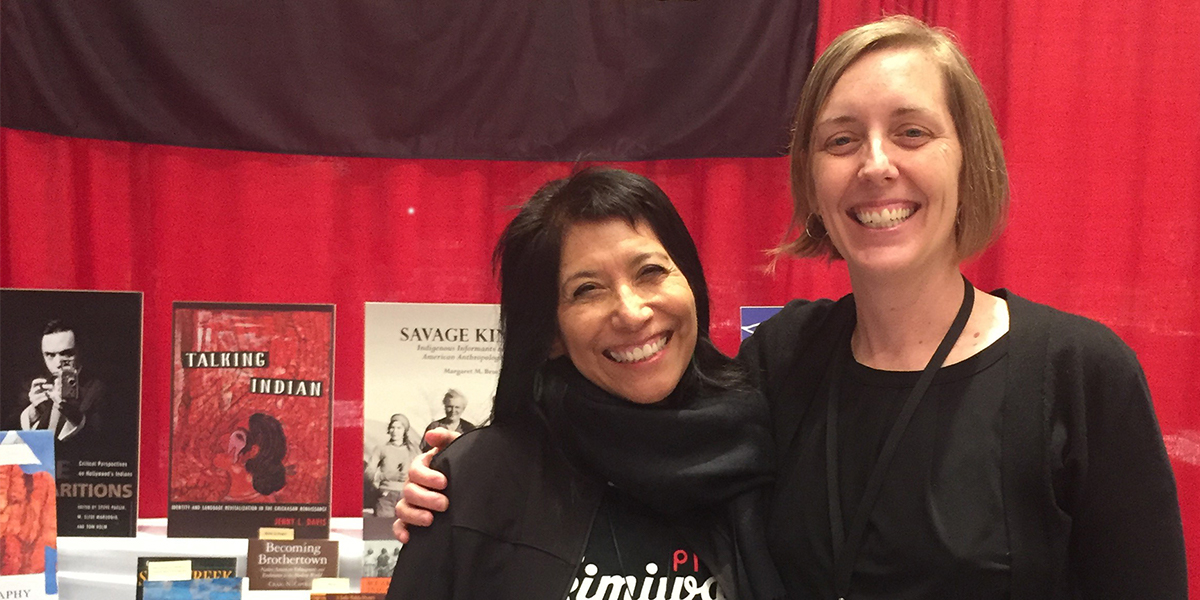
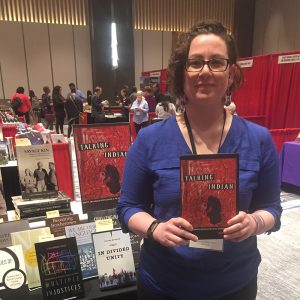
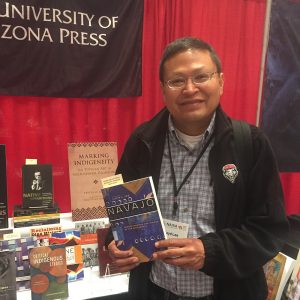
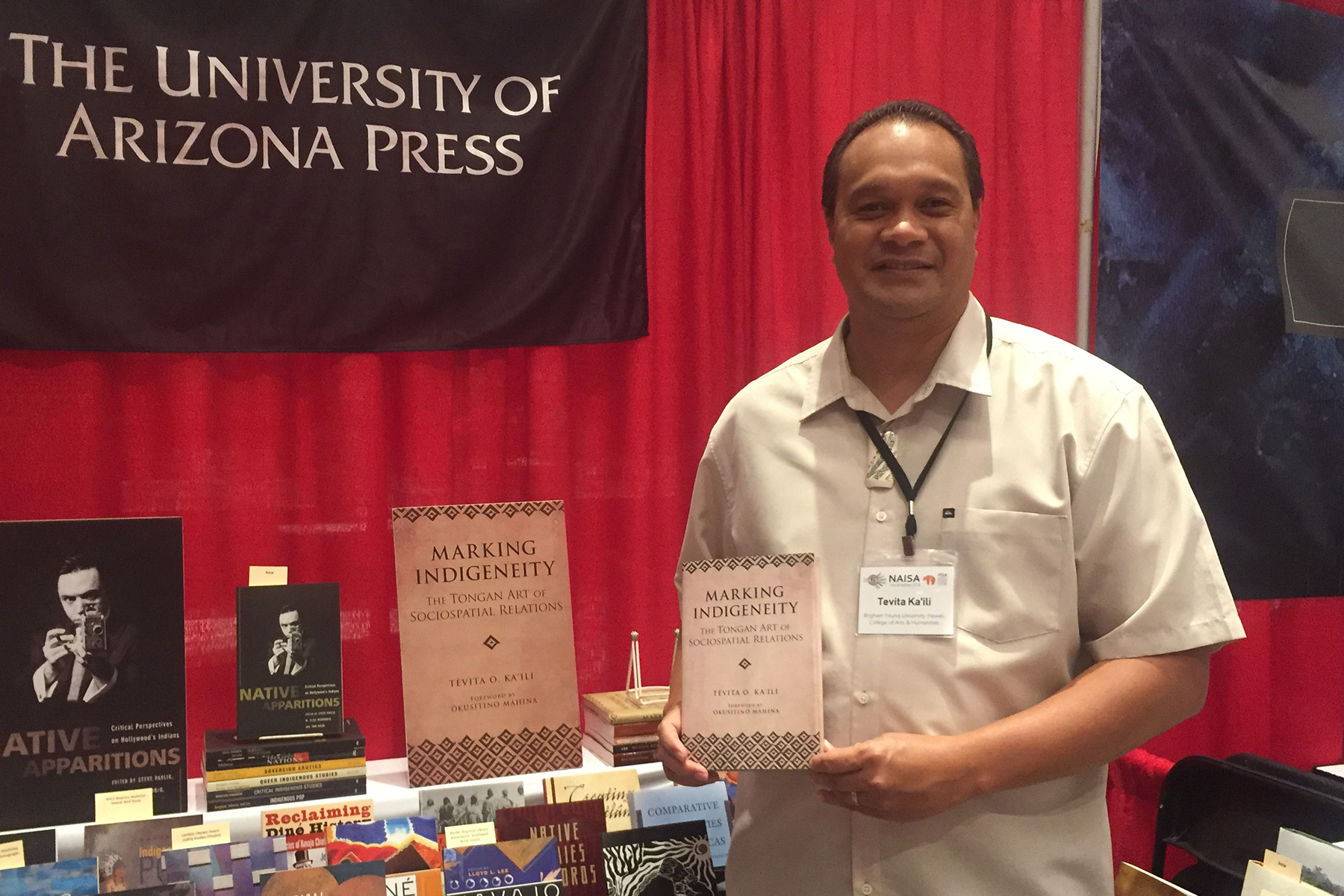
“Red Medicine” author Patrisia Gonzales and UAP Editor-in-Chief Kristen BucklesNatasha Varner and “The Learned Ones” author Kelly S. McDonough“Yaqui Indigeneity” author Ariel Zatarain Tumbaga
The Society for American Archaeology’s eighty-third annual meeting brought more than 5,000 archaeologists from across the Americas and around the globe to Washington, D.C. In keeping with the location, several panels delved into critical topics around legislation and its effects on archaeologists. Panels on Bears Ears, the Antiquities Act, colonialism, heritage programs, collaborative archaeology, and much more infused the meeting with energy and conversation.
Several authors stopped by our booth to say hello and showcase their work to their colleagues. The meeting was fantastic, and we can’t wait to see everyone in Albuquerque for SAA 2019!
AWP, or the Association of Writers & Writing Programs if you’re not into the whole brevity thing, is a nonprofit organization whose mission is to foster literary achievement and advance the art of writing as an essential component of education and stewardship. Each year more than 10,000 writers, students, educators, editors, and publishers gather in attendance at AWP’s annual conference to immerse themselves in the larger writing community, networking with fellow authors and industry insiders.
This year’s meeting found us in Tampa. For four days the local convention center, pleasantly situated along the Hillsborough River at the southwest edge of Tampa’s downtown district, was overrun with writers, its labyrinth of walkways, meeting rooms, and common areas monopolized entirely by the conference. Likewise, attendees filled their agendas to capacity, spending each day engaged in a myriad of presentations, panels, focused discussions, and readings.
Jennifer Elise Foerster and colleagues stop by the booth to proudly pose with a poster of her most recent collection.
Beyond the multitude of scheduled events outlined in the conference program, perhaps the biggest attraction at AWP is the bookfair. Held in an astonishingly vast assembly hall large enough to rival your local supercenter, the bookfair is a marketplace comprised of more than 800 exhibitors from literary presses and journals, universities, creative writing programs, and other related organizations. It is here attendees assemble in droves, drifting from one booth to the next until something, or someone, piques their interest. Everyone knows this is the spot. The place to be. It’s where friends and colleagues alike congregate between panels, where you can run into your favorite author, where discounted books can be bought on the cheap (a small mercy to the many students in attendance), and where you just might find the future publisher of your manuscript. In other words, the bookfair provides the optimal setting for The University of Arizona Press to interact with readers and writers through a shared passion for books.
Literary legends Allison Hedge Coke and Joy Harjo.
As an exhibitor at AWP and other similar conferences, our primary aim is, of course, to meet with current and prospective authors, and to showcase a modest suite of relevant new and notable titles. But beyond just the sales and networking opportunities, easily the best thing about attending these meetings is getting to witness from the ground floor all the positive energy and enthusiasm surrounding the books we publish. I think for many of us working in this industry, it’s easy to become so entrenched in the day-to-day workload, always looking forward, moving from one project to the next, that we often forget to take a step back and reflect on everything that brought us here. So being able to see a reader’s excitement as they eagerly browse through the booth, or catch a momentary glimpse of unbridled pride on an author’s face when they show their book off to a friend, or hear firsthand about the extraordinary impact one of our titles has had on someone, is a beautiful reminder to pause every once in a while and appreciate the work we’ve done and its value to the community.
Speaking of communities, though the Press typically flies solo at these meetings, this year we deviated from that tradition by partnering with the Latinx Writers Caucus in a shared booth. This collaboration was the result of several conversations I’d had with writer and poet Ruben Quesada at last year’s meeting. As we discussed our work, trading insights and comparing notes on the various efforts our organizations make to connect with the community, it became abundantly clear how similar our missions really are. The Caucus and Press both strive to shine a spotlight on Latinx writers and provide a platform for their words to be heard. We work with many of the same authors, scholars, educators, and publishing professionals, and we both share a profound respect and admiration for the unprecedented richness and depth of talent within the Latinx community. Put simply, we’re part of the same family. So when presented with the option of working in unity at AWP this year, it seemed only natural that we take advantage of the opportunity.
Vanessa Angelica Villarreal and Urayoán Noel.
To say the endeavor was a success would be an understatement. Not a minute went by, it seemed, our booth wasn’t bursting with writers, poets, and ardent readers. Some of the Press’s many wonderful authors and friends dropped by to catch up or say hello, including Rigoberto González, Allison Hedge Coke, Emmy Pérez, Jennifer Foerster, Urayoán Noel, Sergio Troncoso, and Francisco Aragón, to name a few. Every day was met with a full schedule of book signings organized by members from the Latinx Writers Caucus, featuring a host of remarkable writers such as Marcelo Hernandez Castillo, Claudia Castro Luna, Rita Maria Martinez, Ariel Francisco, Vanessa Angélica Villarreal, and Javier Zamora. The excitement concentrated around the booth was contagious; I couldn’t help but watch as it permeated throughout the bookfair, drawing more and more people in all the time.
Another particularly noteworthy detail captured my attention over the course of the meeting, an unmistakable sense of closeness within this community, evidenced in how its members connect with one another, share experiences and exchange ideas, and elevate each other’s work through a collective voice. I think that’s one of the defining features that makes this community special. So many of the authors emerging from what is a relatively small corner of the market continue to have a profound influence on the broader readership, and the need for their works is undeniable. The Press is tremendously proud to be part of this community, and we remain forever grateful for all their encouragement and support. Thank you especially, Alexandra Lytton Regalado, Suzi F. Garcia, and Ruben Quesada, for sharing the love, and for working with us to make AWP 2018 such a great success. I look forward to seeing how far we’ve come the next time our paths cross again.
Cheers,
Scott DeHerrera Associate Editor, University of Arizona Press
One of the eight crew members locked in Biosphere 2 during its first closure experiment, UA Press author Mark Nelson had an active visit to Tucson this past weekend. He participated in two panels at the Tucson Festival of Books as well as multiple signings across the University of Arizona campus, and was a crowd favorite following his appearance on the cover of last week’s Tucson Weekly.
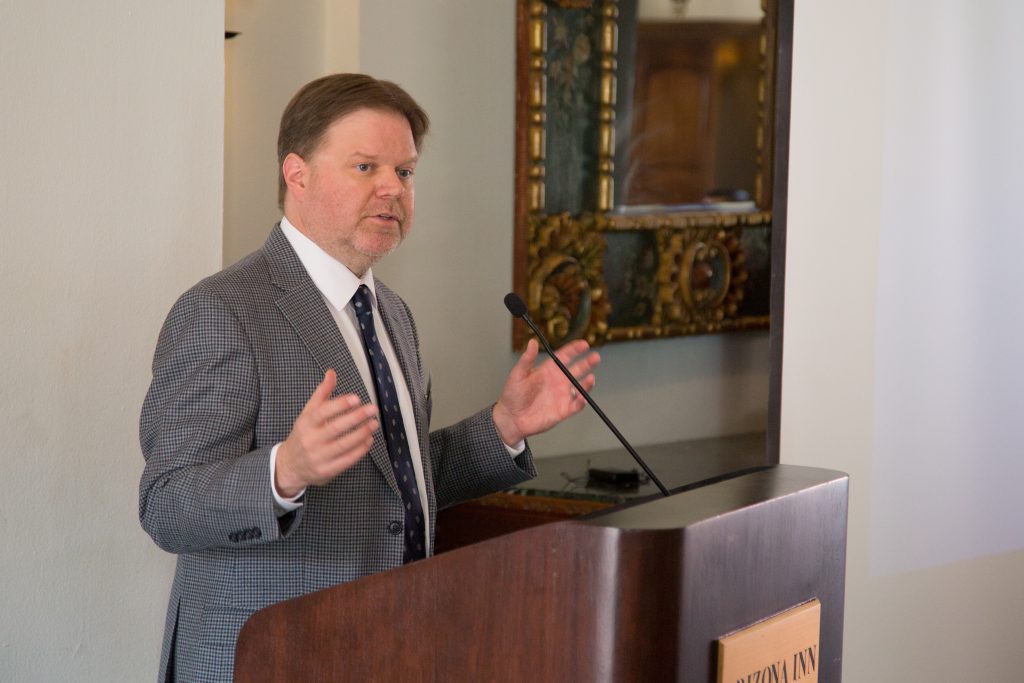
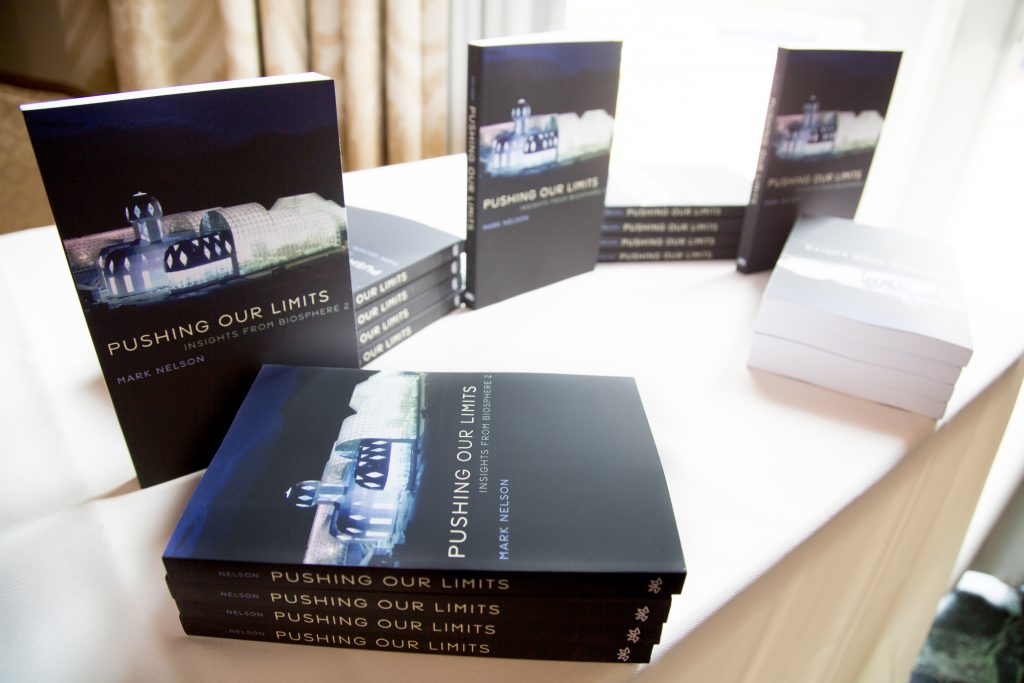
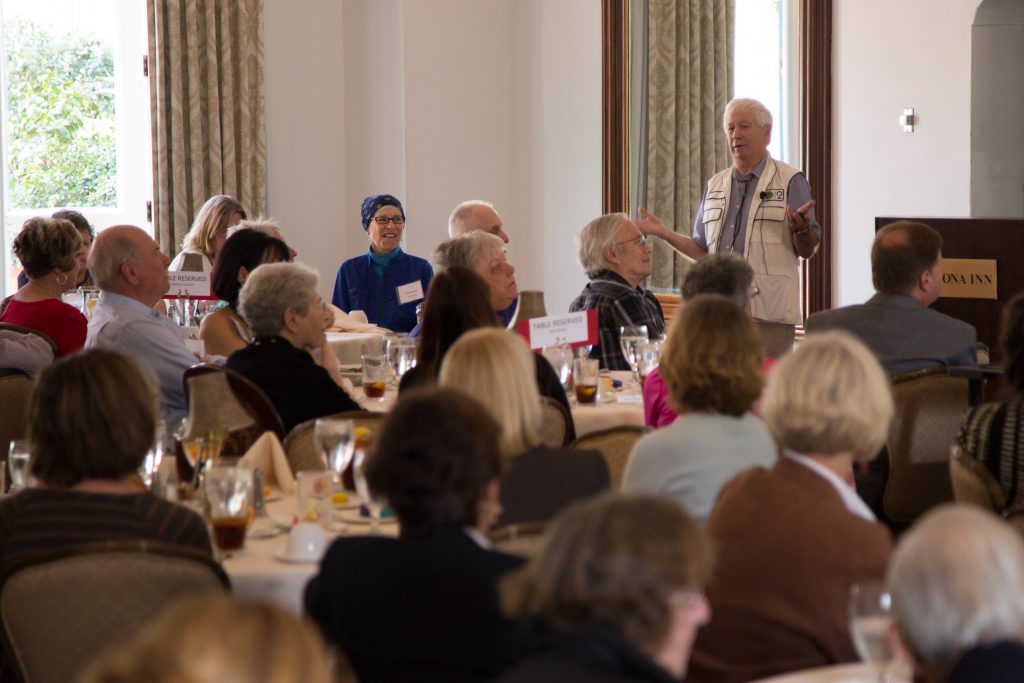
One of the many highlights of his trip was presenting his new book Pushing Our Limits as part of the University of Arizona Libraries’ annual luncheon at the Arizona Inn the Monday following the festival. Nelson offered luncheon attendees a rare and compelling insider’s view of the dramatic story behind the mini-world and cleared up a few common misconceptions about the 1991–1993 closure experiment. Today we look back at some of the highlights of that talk:
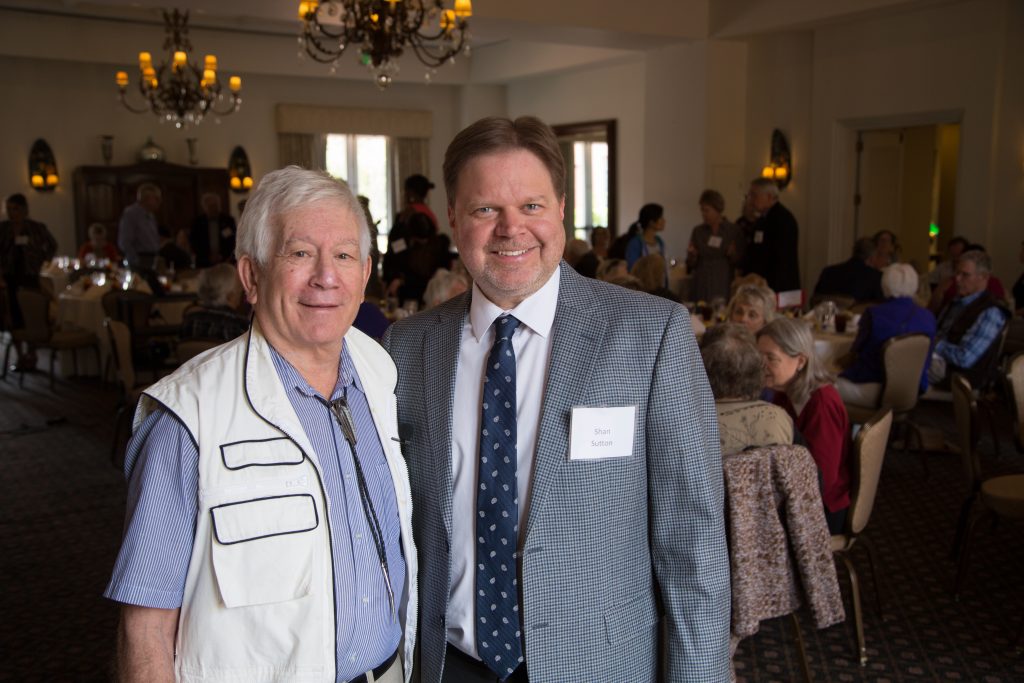
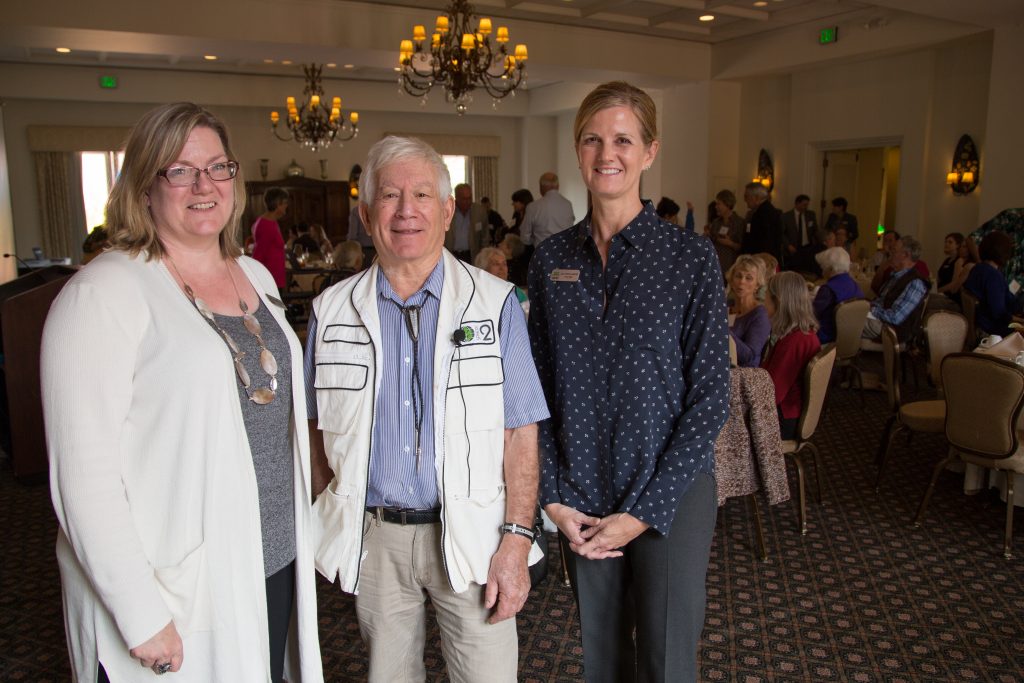
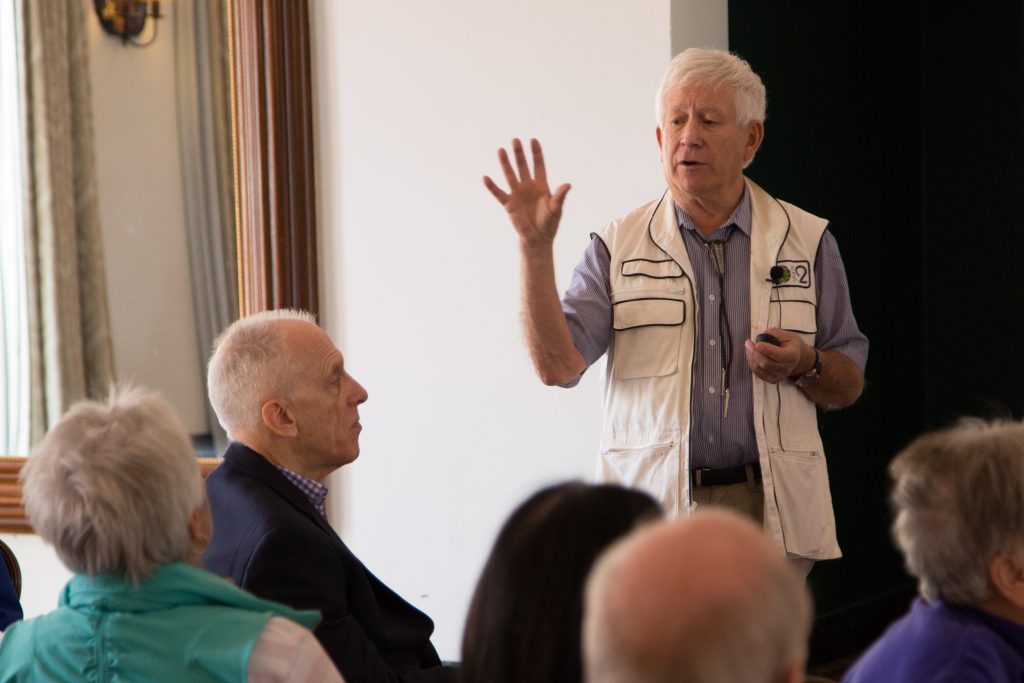
University of Arizona Libraries Dean Shan Sutton and UA Libraries Annual Luncheon keynote speaker Mark Nelson.Sutton provides luncheon attendees with an update on the state of the libraries and previews exciting upcoming projects before introducing Mark Nelson.A display of Mark Nelson’s Pushing Our Limits: Insights from Biosphere 2 provided by our friends at the University of Arizona Bookstores.From left to right: UA Press Director Kathryn Conrad, Mark Nelson, and UA Press Senior Editor Allyson Carter.Nelson presents the goals and results of the Biosphere 2 experiment and the project’s implications for today’s global environmental challenges.To close, Nelson stressed the importance of reconnecting people to a healthy relationship with nature.
Photos courtesy Aengus Anderson
March 14, 2018
An estimated 130,000 book lovers attended this weekend’s 10th annual Tucson Festival of Books. It was a very busy weekend for the Press, with more than twenty of our authors participating in panels, readings, and booth signings. Today we look back at some of the highlights of the two-day event:
A display of just a few of our Nature & Science titles, including the festival favorite and thirteen pound space science photography book Mars: The Pristine Beauty of the Red Planet.UA Press authors Chip Colwell and T.J. Ferguson kick of our rolling booth signings early Saturday morning with a discussion of their most recent edited volume Footprints of Hopi History: Hopihiniwtiput Kukveni’at.Representing Camino del Sol at the festival, authors Daniel Olivas, Frederick Aldama, and Vickie Vértiz take a moment to pose for photographers on the Pima County Libraries Nuestra Raices stage.Latino literature’s most prominent new wave authors, Daniel Olivas and Vickie Vertiz discuss writing borderland poetry.With an estimated 130,000 festival attendees, there was a constant flow of book lovers perusing UA Press titles in our booth off of the UA’s main mall.Two prolific Latino literary greats, Frederick Aldama and Luis Alberto Urrea, discuss Latinx representation in popular culture at their booth signing Saturday afternoon.Luis Alberto Urrea takes a moment to chat with fans before rushing off to his second panel of the day.Mark Nelson, one of the eight-person crew for the first two-year closure experiment in Biosphere 2, teases UA Press publicity manager Rose Brandt at his booth signing Saturday afternoon.UA Press author Mark Nelson discusses wastewater recycling and his new book Pushing Our Limits: Insights from Biosphere 2 at his booth signing.Playwright and performance artist Virginia Grise joins UA Press poet Vickie Vertiz for a dynamic discussion on resistance and survival, both on the personal, day-to-day, level and in a broader sense as individuals situated within systems and cultures of oppression.Our dedicated roving photographers, UA Press interns Nate Berry and Ally Purcell, take a break in the Press booth Saturday afternoon.The Press’s Sara Sue Hoklotubbe discusses writing a strong sense of place in her Sadie Walela Mystery series with authors Cara Black and Katayoun Medhat.Vickie Vertiz’s reads from her new collection Palm Frond with its Throat Cut.After returning to Tucson following this year’s AWP conference in Florida, poet Farid Matuk took the time to sign copies of his latest collection The Real Horse at the UA Press booth.Cuba’s leading export to Tucson has been Tom Miller, the longtime Cubanista whose latest book from UA Press is Cuba, Hot and Cold. Tom reads from his work at a panel honoring his prolific career.Despite the threat of rain, festival goers stop to browse UA Press titles late Saturday afternoon.UA Press authors Daniel Olivas and Sara Sue Hoklotubbe joke with fans at their booth signing Sunday afternoon.
The tents are up and we’re eagerly putting the final touches together for what is sure to be a Tucson Festival of Books for the record books. In the last decade, the Tucson Festival of Books has become one of the city’s most anticipated events. With over 400 authors and an estimated 130,000 attendees, the Festival symbolizes the importance of togetherness and community, facilitated through books and the shared love of reading.
The University of Arizona Press is proud to have been a part of the Festival since its inception in 2009 and we look forward to continuing to bring diverse voices in literature to the Old Pueblo. We are thrilled to have more than twenty authors participating in this year’s Festival.
The University of Arizona Press is gearing up for the tenth anniversary of the Tucson Festival of Books (TFOB), to be held Saturday, March 10, and Sunday, March 11, on the University of Arizona campus in Tucson, Arizona!
TFOB is a major literary event, regularly drawing more than 400 authors from across the country and more than 135,000 attendees. Panels, readings, and other author activities present a fantastic opportunity to hear from talented authors on a wide range of subjects. Visit the TFOB website and browse the offerings by participant or genre, then create a personalized schedule. There are plenty of family and entertainment activities, including a free concert on Saturday night by the star-studded Rock Bottom Remainders, the self-proclaimed “hard-listening” band.
The UA Press will have a large booth on the mall with a wide selection of books for sale at great discounts and signings by our authors. Stay tuned for more information!
January 29, 2018
On a clear, cold January morning in 1948, a plane reportedly carrying thirty-two passengers caught fire over Los Gatos Canyon. The engine exploded, the left wing ripped apart from the fuselage, and more than a hundred witnesses watched as the airship spiraled out of control and crashed on the edge of the Diablo Valley.
All aboard were lost to the flames, including the flight crew and twenty-eight Mexican nationals, many of them bracero workers returning home. National media only reported the names of the white pilots, stewardess, and immigration officer. The others were simply listed as “deportees.” Their remains were buried in a mass unmarked grave.
They would remain anonymous for the next seven decades.
Inspired by Woody Guthrie’s protest song “Plane Wreck at Los Gatos (Deportee),” author Tim Z. Hernandez set out to right this wrong. Hernandez, the son of migrant farmworkers and a professor at the University of Texas El Paso, embarked on a six-year search to identify the “deportees,” fund a memorial gravestone, locate the victims’ families, and give voice to their stories in his book All They Will Call You.
This weekend marked the seventieth anniversary of the tragedy. Hernandez commemorated the lives lost in the plane wreck at Los Gatos Canyon with a public gathering at the victims’ last resting place at Holy Cross Cemetery in Fresno, California.
The memorial service began with a sage blessing and a moment of silence, followed by music from Hernandez and Lance Canales. The family of deceased passengers were the guests of honor.
On Monday, January 29, the California State Senate convened to formally recognize the seventieth anniversary of the plane wreck at Los Gatos Canyon and Hernandez’s work. The event was an effort led by Senator William Monning and Senator Ben Hueso, with support of the California Latino Legislative Caucus. In the seven decades since the tragedy, never has the incident been officially acknowledged or recognized by any governmental agency, until now.
Tim Z. Hernandez was born and raised in California’s San Joaquin Valley. An award-winning poet, novelist, and performer, he is a recipient of the American Book Award for poetry, the Colorado Book Award for poetry, the Premio Aztlán Literary Prize for fiction, and the International Latino Book Award for historical fiction. His books and research have been featured in the Los Angeles Times, the New York Times, CNN, Public Radio International, and National Public Radio. He continues to perform and speak across the United States and internationally, but he divides his time between Fresno and El Paso, where he is an assistant professor in the MFA Program in Creative Writing at the University of Texas, El Paso.
The 16th Biennial Southwest Symposium was held in Denver, Colorado, this past weekend and celebrated the theme “Pushing Boundaries.” The symposium explored the formation and meaning of Bears Ears National Monument, new research in chronology and chronometry, Plains-Pueblo interactions, and new developments in museum archaeology and collections-based research.
UAP Senior Editor Allyson Carter was on the ground at the conference, manning the booth, meeting with authors, and presenting a joint publishing workshop. “It was a good conference,” she was pleased say, “the sessions were great, the papers were high-quality, everything was organized very well.”
A number of our authors were in attendance and made a special point of stopping by our booth to browse new titles and pose with their books:
From left to right: Authors Patricia Gilman, Michael Searcy, and Paul Minnis.Matthew Peeples holding a copy of his forthcoming book for the first time.
Thanks to everyone who stopped by our booth at the American Anthropological Association’s annual meeting in Washington, D.C.! We always love meeting our authors face-to-face, and a few folks were kind enough to allow us to take their photos in the booth:
We look forward to seeing you all next year in San Jose!
For Authors
The University of Arizona Press publishes the work of leading scholars from around the globe. Learn more about submitting a proposal, preparing your final manuscript, and publication.
The University of Arizona Press is proud to share our books with readers, booksellers, media, librarians, scholars, and instructors. Join our email Newsletter. Request reprint licenses, information on subsidiary rights and translations, accessibility files, review copies, and desk and exam copies.
Support a premier publisher of academic, regional, and literary works. We are committed to sharing past, present, and future works that reflect the special strengths of the University of Arizona and support its land-grant mission.
 The University of Arizona Press