Latinas/os, Hipster Racism, and Post-Racial TV

June 14, 2018

Interweaving discussions about the ethnic, racial, and linguistic representations of Latinas/os within network television comedies, Isabel Molina-Guzmán’s Latinas and Latinos on TV: Colorblind Comedy in the Post-racial Network Era probes published interviews with producers and textual examples from hit programs like Modern Family, The Office, and Scrubs to understand how these prime-time sitcoms communicate difference in the United States. Understanding the complex ways that audiences interpret these programs, Molina-Guzmán situates her analysis within the Obama era, a period when ethnicity and race became increasingly grounded in “hipster racism,” and argues that despite increased inclusion, the feel-good imperative of TV comedies still inevitably leaves racism, sexism, and homophobia uncontested:

Colorblind Humor

Given the imperative to avoid controversy and broadcast programming able to attract the largest audience possible, the social and political context in which post-racial era comedy airs is central to understanding the role of colorblind ideology. For example, the first season of The Office was created, produced, and broadcasted at the peak of post–September 11th ethnic and racial tensions toward immigrants. Indeed, two months after “Diversity Day” aired, the U.S. House of Representatives passed the “Sensenbrenner Bill,” H. R. 4437, a bill targeting the U.S.–Mexico border and Mexican immigration as potential sites of terror. In this context, Carell’s deadpan delivery and Oscar’s angry but muted response potentially reinforce the show’s colorblind humor, a type of comedy that depends on audiences’ agreement, or at least familiarity, with the national anti-immigrant discourse and the white heteronormative values of the show. The network’s censorship decisions in this episode further illustrate the social boundaries of racial humor.

By the logic of the network’s censors, it is permissible to air comedy grounded in racist views about Mexicans, but it is not acceptable to equate racism with sexual aberrance and class on the air. Within the story arc of the series, Carell’s character is never demoted and rarely disciplined for his socially inappropriate and legally questionable actions.

The episode illustrates Doane’s (2014) observation that colorblind ideology in U.S. popular culture depends on the ability to see skin color and understand socially appropriate behavior even as audiences ignore the significance of color, race, or ethnicity to U.S. political and cultural life. As “Diversity Day” illustrates, the joke depends on Oscar’s ethnic identity as a Mexican American. The only two supporting characters originally written into the pilot were Kevin and African American office mate Stanley Hudson (Leslie David Baker). Although Nuñez is Afro-Cuban, the writers specifically developed his character as Mexican American. It may be reasonably concluded that the writers saw the actor’s and character’s ethnic identity as central to the production of the show. In another episode considered central to the development and success of the series, the character of Oscar, whom the writers decided to depict as a gay man after season 1, is accidentally outed by Michael (“The Gay Witch Hunt” 2006).

Colorblind humor is particularly effective for network television because it shifts social responsibility from the text and its production to the audience and its reception of the text. It is not the executives’ or producers’ problem, after all, if the biases of mainstream white audiences shape how they read the text. Yet, as Kristen Warner  (2015) notes, colorblind ideology in U.S. popular culture depends on the everyday invisibility of white privilege, even as ethnic and racial inequalities persist. Changes in the writing of Michael’s character from the first season to the third further contribute to the erasure of whiteness and white male privilege. Throughout the first three seasons, the rudeness and more explicitly racial and ethnic prejudices of Michael’s character made him more culpable and less likeable to audiences. As the series progressed, Carell’s depiction of Michael softened, eventually giving way to a more sympathetic, well-meaning character who through no fault of his own is an ingénue when it comes to ethnic, racial, gender, and sexual difference. Michael’s character is, as Warner describes, the result of white prejudice as “rare and aberrational rather than systemic and ingrained” (8). Michael’s character becomes the symbol of implicit individual bias rather than the racist production of white privilege. By the end of the series, it is the character’s ridiculous behavior (and not his status as a white heterosexual man) that is the primary source of laughter. The success of The Office’s comedy depends on the mainstreaming of colorblind ideology on entertainment TV.

Hipster Racism

Post-racial-era TV comedy is characterized by the absence of the laugh track and the colorblind approach to ethnic and racial difference that provide the setup for the comedy of hipster racism, a colorblind form of comedy that depends on racial, ethnic, gender, and sexual differences. Hipster racism reinforces the colorblind values even as the characters’ differences are increasingly central to the production of laughter. The colorblind values of contemporary comedies together with the use of hipster racism make it possible for audiences to hold contradictory readings of television scripts, interpretations that release audiences of white guilt or social discomfort yet create a contested space of visibility and subversive pleasure for audiences of color (Doane 2014).

Returning to “Diversity Day” as an example, the ethnic, racial, gender, and sexual humor in The Office almost exclusively revolves around Michael’s socially inappropriate behavior and beliefs and the ensemble’s improvised responses or lack of responses to Michael’s prejudicial assumptions about race, gender, and sexuality. The focus on Michael’s individual ethnic, racial, and sexual transgressions is one of the main adaptations the U.S. writers of The Office made to the original British comedy. Throughout the series, the writers position Carell’s character in opposition to his unwilling antagonist,  the socially conscious human resource officer Toby Flenderson (Paul Lieberstein, a writer on the show). In the series, Lieberstein’s subdued and apathetic Toby is routinely called in to legally intercede with regard to the racist, sexist, and/or homophobic behavior of Carell’s emotionally exaggerated Michael. In the series narrative, the hostile work climate created by Carell’s character is never depicted as the institutional result of white patriarchal culture and heteronormative privilege, but rather as another joke to illustrate the individual flaws of Michael Scott, the self-centered boss.

The comedic writing that surrounded Carell’s character points to a key characteristic of the post-racial TV era: the normalizing of hipster racism. A central component of the normalization of hipster racism is the development of sympathetic yet socially flawed white lead characters. Using racism as a form of comedy is not a new convention. As Angela Kinsey, who played Angela on the show, recognized of “Diversity Day”: “Whenever I read our scripts, there were so many that we did that were part of the cringe humor. I think Archie Bunker did that on All in the Family, which is a super old call-back because I’m an old lady [laughs]. But one of your lead characters is inappropriate, you get to call them out on their crap. Say, ‘No, that’s wrong, dude!’” (Burns and Schildhause 2015b). Evoking All in the Family as a referent is interesting because communication research on the program documented the way audiences read the show as both a critique of racism and as an affirmation of racist views (Wilson, Gutiérrez, and Chao 2013). The primary difference is that while the laugh track on All in the Family (1971–79) directly cued audiences to when it was socially acceptable to laugh, post-racial era comedies do not provide any explicit cues. In The Office there are no such explicit cues, and Michael’s character is rarely explicitly called out for his assumptions. Indeed, most of the time his transgressions are met with silence and stares of disbelief by the characters.

Instead, the use of racism, sexism, and homophobia as humor in post-racial era comedies depends on a more ambiguous set of codes to signal socially appropriate laughter. For example, the humor around the famously improvised kiss between Carell and Nuñez is dependent on the actors’ physical performance, audiences’ familiarity with the narrative and character history of the show, prior knowledge of the relationship between the characters, and their own experiences and ability to relate to the characters in the scene (see figure 2). In the season 3 episode “Gay Witch Hunt,” Michael is unaware of Oscar’s sexual identity until Toby disciplines him for using the word “faggy.” The next scene cuts to Michael’s confessional interview: “I would have never called him that if I knew. You know. You don’t call retarded people retards. It’s bad taste. You call your friends retards when they are acting retarded. And I consider Oscar a friend.” The creative decision to depict the show’s lead character as equating gay people to people who are developmentally delayed is an example of the normalization of hipster racism.

Carell’s emotionally sincere delivery of the potentially offensive monologue effectively produces sympathy for Michael. Where some audience members might cringe at the comedic use of the socially charged term “faggy,” others might welcome the term as a critique of progressive demands for “political correctness.” Published interviews with the show’s creators, writers, and actors make clear their awareness of the social boundaries around diversity and inclusion. For audiences familiar with gray-and white-collar workplace policies regarding sexual harassment and discrimination, Carell’s performance pokes satiric fun of the institutional privileging of multiculturalism. At the same time, the effectiveness of hipster racism depends on a shared agreement that the white lead character’s flaws are socially innocent and not institutionally and intentionally systemic. Doing so reaffirms television comedy’s commonsense logic of colorblindness as it reduces racism, sexism, and homophobia to individual pathology rather than the effect of systemic and structural inequalities.

Hipster racism in a workplace comedy provides the producers increased agency to portray socially unacceptable and legally actionable behaviors and language, and it is that cultural transgression that produces the humor. The production of hipster racism depends on scripting potentially controversial or politically risky moments of humor, such as having Michael apologize to Oscar for calling him “faggy” in front of his fellow office workers, thereby outing the socially conservative Oscar. The editing and nonverbal performances of the ensemble cast reinforce the transgressions. First, the camera cuts from Carell to observe the religious and socially conservative Angela sanitizing her hands as she glares at Oscar. Then the camera pans to Oscar’s silent response of disgust and disbelief. In published interviews on the improvisational nature of The Office, Nuñez points to the above scene as an effective example of the ensemble’s collaborations around socially inappropriate comedy. For the socially conscious humor embedded in the nonverbal interactions between the actors in this scene to work, it depends on some audiences’ familiarity with homophobic stereotypes of gay men as diseased and homosexuality as physically infectious. In this reception context, Angela’s display of prejudiced ignorance is the butt of the joke. But it is the silence that also produces hipster racism, or in this instance hipster homophobia. The writers’ decision to make the interaction nonverbal enhances the comic ambiguity necessary to produce hipster racism or in this case hipster homophobia. In the episode’s concluding interview, Oscar reveals that he was more amused than offended by Michael’s public apology and that he filed a grievance against Michael for which he was compensated with paid leave. The scripting of the episode and the way that Nuñez’s character ultimately benefits from being the target of homophobia further justifies post-racial values by shifting the social burden of prejudice and discrimination to the individual and highlighting the ways the system benefits and protects minorities.

Colorblind comedy produces a marketable interpretative ambiguity through contradictions in the show’s writing and character development. Indeed, part of NBC’s investment in The Office was the program’s ability to bring in a young, highly educated audience, similar in profile to the Scrubs audience but consistently larger. Such an audience might not care about or be concerned with contemporary social norms and mores, but these audiences are at least aware of socially appropriate behavior and contemporary identity politics. It must also be recognized that audiences of post-racial era comedies are not likely to identify as white supremacists, because white supremacist audiences do not generally watch mainstream television programming (King 2014). Rather, audiences of post-racial era comedies are the type that understand hipster humor is socially inappropriate and see themselves as socially conscious, even though they may also be equally uncomfortable with changes in sexual culture, ethnic and racial demographics, and the ever-shifting terrain of identity politics in the United States. Much the way All in the Family did for its audience, post-racial era comedies allow white audiences to laugh at or even sympathize with racist, sexist, or homophobic language and behavior as these are normalized as the result of individuals’ inability to adjust to the “new” mores of a more socially conscious culture.

Isabel Molina-Guzmán is an associate professor of media and cinema studies and Latina/Latino studies at the University of Illinois at Urbana–Champaign. Latinas and Latinos on TV: Colorblind Comedy in the Post-racial Network Era was published this spring through our Latinx Pop Culture Series.


Adventures in Open Access

May 22, 2018
By Kathryn Conrad

Innovation is one of our core values at the University of Arizona Press. This means tackling some of the toughest problems in scholarly publishing, be it alone, with our colleagues at the University of Arizona Libraries, or with colleagues around the world.

Kathryn Conrad, UA Press Director

No problem is tougher than finding business models that maintain the high standards of monograph publishing that are the hallmark of university presses while increasing access to content. The average cost of publishing a high-quality digital-only monograph ranges from $28,747 to $39,892, depending on what is included in the calculation, according to research published in The Costs of Publishing Monographs. How can we cover these costs while reducing or even eliminating costs for readers?

The University of Arizona Press is committed to improving access. We seek external funding for every book we publish to keep prices as reasonable as we can, and up to two thirds of the books we publish each year receive some form of external support. Meanwhile, with the generous support of the Andrew W. Mellon Foundation we are building a platform for open monograph publishing at the University of Arizona. Under the Open Arizona project, we will make some two dozen currently out-of-print Latinx and Indigenous studies titles available as free ebooks as part of the larger Humanities Open Book Program, jointly sponsored by the National Endowment for the Humanities and the Andrew W. Mellon Foundation. The project will not only allow us to make previously inaccessible content available for free, it allows us to experiment with and refine new workflows for open-access publishing.

We are also proud to be participating in the fifth pledging round of Knowledge Unlatched (KU). Knowledge Unlatched is a global crowdfunding initiative supported by more than 500 libraries. Its aim is to make Open Access for books and journals sustainable in all disciplines of science and research. It helps libraries to shift their budgets from traditional acquisition patterns to supporting OA on a larger scale. Six press titles have been chosen for KU Select 2018.

“KU only works because publishers like the University of Arizona Press submit excellent content that appeals to researchers and librarians worldwide,” says Dr. Sven Fund, KU’s managing director. “We are glad to see strong usage of the open content funded in prior rounds, and we are glad to see a lot of sympathy and support for our work worldwide.”

Libraries can pledge their support for Knowledge Unlatched and the University of Arizona Press’s titles between now and the end of November 2018 at the KU Select site. Look for more information about Open Arizona this fall. Together, these are just some of the innovations we’re making to continue to connect scholarship and creative expression to readers worldwide.


One Last Time: Signing Off As the UA Press Marketing Intern

May 2, 2018

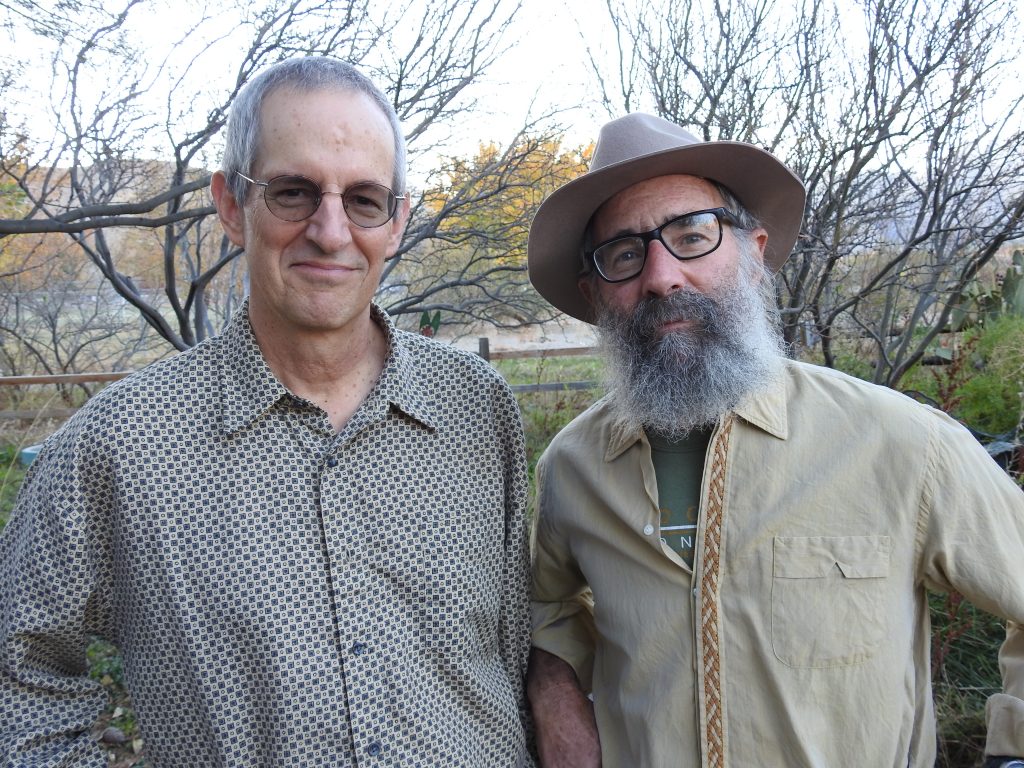
You’ve probably not seen me, but chances are pretty great that you’ve come across some of my work this spring. My name is Nathaniel Barry, and I’m writing this as one of my final duties for the Marketing internship at the University of Arizona Press. As an English major, I plan to go into the field of Advertising and Public Relations, creating copy for professional ballet and theatre companies across the United States.
I remember, once, not getting hired for a certain marketing internship because my knowledge of literature was, quoted directly, “very Eurocentric.” While I understood what that statement literally meant, I had a hard time figuring out the communicative implications of it. Can I be blamed for my exposure—or lack thereof—to minority authors? After all, I’ve been reading exactly what my teachers have assigned, so what’s the fault?

The fault, indeed, was in my choice, conscious or not, to avoid expanding my horizons. The United Nations Educational, Scientific, and Cultural Organization (UNESCO) estimates that just over 800,000 books are published across the world each year; I’m lucky if I read maybe fifteen of them. I made the decision this semester to change that fault, and start my marketing career with a publishing house that was already in the mindset I wanted to embrace.

The University of Arizona Press works diligently to vocalize underrepresented authors from all backgrounds. They are the premier publisher for scholarly work from the fields of anthropology, archaeology, environmental science, history, Indigenous studies, Latinx studies, Latin American studies, and space studies in the state of Arizona. In just one semester, I’ve worked with around thirty authors, each differing in needs surrounding their upcoming titles. I’ve arranged press opportunities, reviewed course adoptions, solicited book reviews, and have been secretly updating the UA Press Instagram page!

More than anything, I’ve been cultivating experiences with authors. I’ve been listening to their stories, reading their books (or at least snippets), and figuring out what works best for them as writers. I could say that’s just the “customer service” in me, but everyone at the Press carries this attitude. I’ve always viewed marketing in a certain sort of way: marketing isn’t about selling the consumer something, it’s about developing a relationship that makes the consumer want to buy. It’s kind of like when your best friend buys you a coffee.

Or when your grandmother cooks you dinner even though you ate an hour ago.

The Press is like a family—that’s more what I’m trying to get at. During my internship, I’ve felt needed, useful, and like I’ve made a difference in the lives of those recently-published authors, whether it was their first book or their twelfth. What I’ve truly loved most about working with the Press is the experience it’s provided me and the people that I’ve met along the way.

And when I reflect on this past spring with the University of Arizona Press, that’s what stands out the most: listening to the experiences of these underrepresented authors, and sharing in the culture they’ve spent their entire lives cultivating.


One last time,

Nathaniel Barry


Thinking about a career in publishing? University of Arizona Press interns are exposed to the many facets of book publishing, including insight into how manuscript projects are submitted, reviewed, and selected for publication; the process of editing, designing, and producing a book; and the various aspects involved with marketing and advertising new titles. Visit our internship program page for more information on opportunities to get involved.


A Way Forward in the Mojave Desert

March 30, 2018

Lawrence R. Walker and Frederick H. Landau are plant ecologists who have 65 years between them living in the Mojave Desert. Together, they co-wrote A Natural History of the Mojave Desert. Today, they share what they see as the future for the desert they love, and why they embarked on writing the book.

Protected areas are marked with lines on a map. However, many disruptions, whether natural or anthropogenic in origin, are unaffected by boundaries. The construction of roads or solar power plants might be stopped by a fence, but the spread of droughts, fires, or climate change is not. Invasive plant and animal species could, theoretically, be controlled at boundaries, but in practice the invasion front is usually too diffuse to monitor closely. In addition, species ranges are now shifting with climate change, further complicating designations on a map. Therefore, natural resource protection must be addressed at regional and broader spatial scales. Further, such protection is most successful when it represents an integrated response from multiple groups. Government and nongovernment agencies, scientists, managers, residents, and visitors all have a vital role in the creation of a best-case scenario for the future of the Mojave Desert. Government leads public discussions and then sets policy; nongovernment groups act as watchdogs for the development and implementation of policy; scientists ask questions, conduct research, and supply knowledge to guide policy choices; managers integrate many demands into practical approaches; residents lobby for permanent, balanced compromises between resource use and abuse; and visitors support wise management choices when they pay to visit natural areas. Finally, educators inform about process, decisions, and policy and lead the promulgation of values to the next generation.

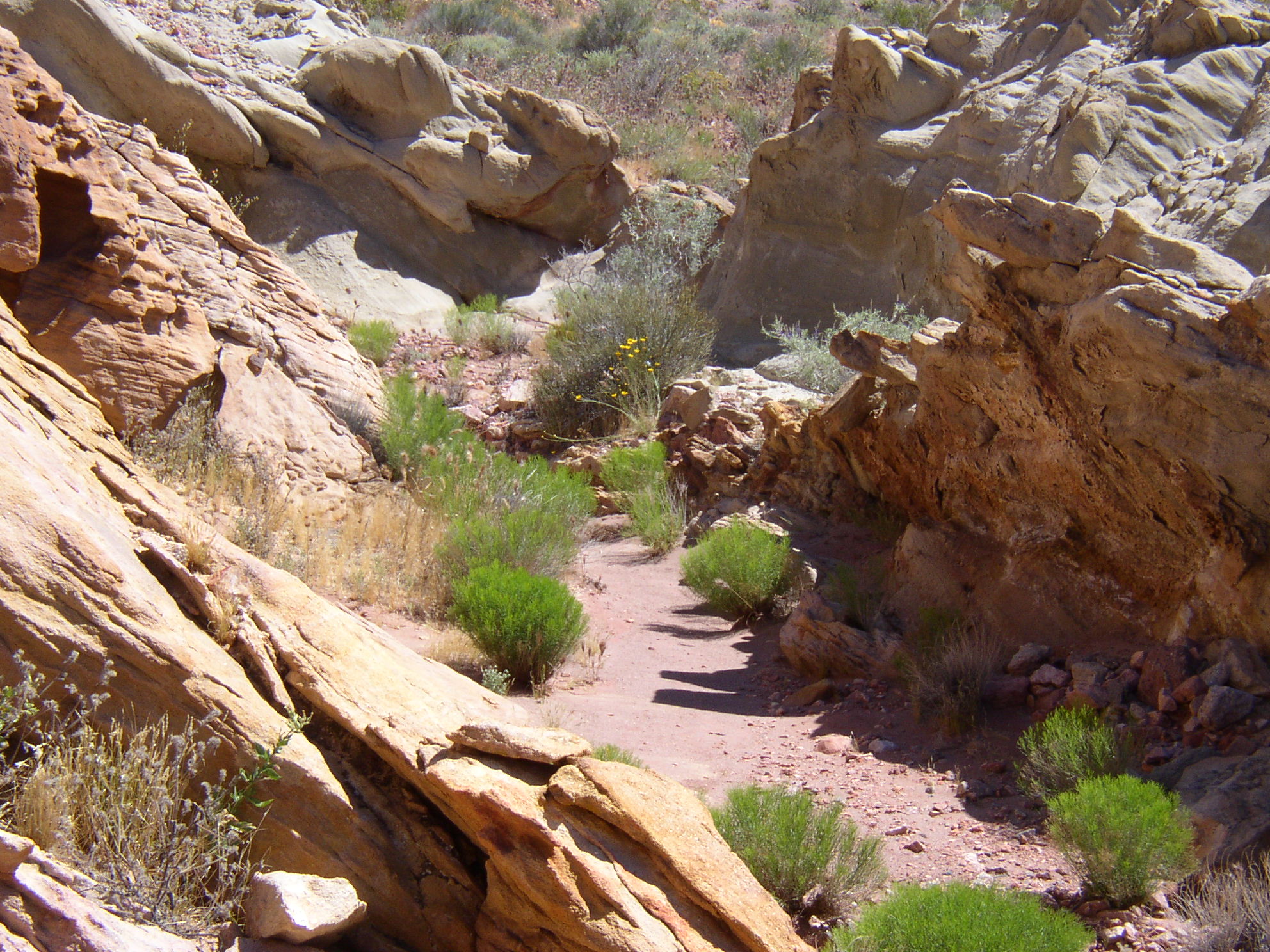
Desert wash. Photo by Frederick Landau.

The future of the natural resources of the Mojave Desert is hard to predict. Certainly, challenges lie ahead as the region likely becomes hotter and drier but possibly sees more frequent summer rains. Depending on their intensity and duration, these monsoonal rains might lead to increased erosion. Organisms that can move rapidly enough will move, north or to higher elevations, for example. Focused mostly on our own needs, humans will also adapt to the future. We have technological tools that will help us improve water extraction and conservation. We have social tools that will help us reconfigure our societies around a hotter, drier climate. But what we hope will also be utilized are the ecological tools that natural systems provide. Our human creations are often based on natural models: dam construction and consequences from beavers; flight mechanics and efficiencies from birds; cooling techniques from colonial insects and leaf anatomy. It is our hope that we can also take the lessons of our senses, our aesthetic appreciation of the Mojave Desert to help mold a livable, inspiring future for ourselves. Finally, we hope that the future that we help shape keeps as many as possible of the myriad desert organisms and their ecosystems intact.

In A Natural History of the Mojave Desert we attempted to convey our enthusiasm about the natural history of the Mojave Desert. We hope that we succeeded. We used the writing process as an excuse to reexamine our relationship with our environs, visiting old haunts and discovering many new ones. What follows are some final musings, including our hope that you begin or continue your own personal exploration of this remarkable Desert.

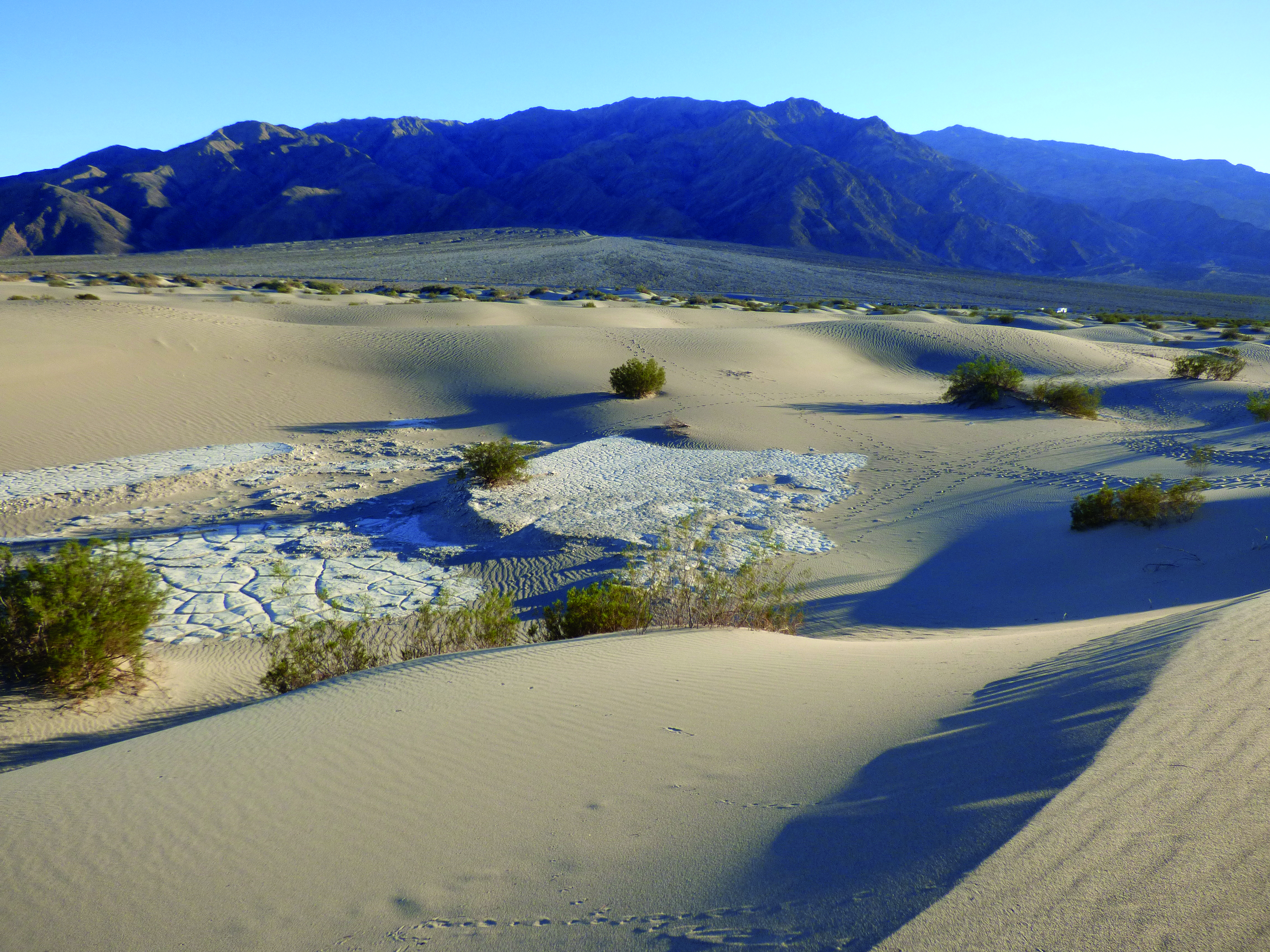
Death Valley dunes near Stovepipe Wells. Photo by Cindy Phillips.

We traveled the edges of the desert, trying to sort out where to draw a boundary line. We asked people at those amorphous edges: “Do you live in the Mojave Desert?” We got lots of interesting answers, reinforcing our original belief that such edges are mostly artificial human constructs. But just like so much in ecology and natural history, what cannot be easily delineated or defined still has a distinct reality. That reality is shaped by geology, geography, climate, and organisms, including humans. On big spatial scales, the collisions of crustal plates shaped our mountains in long, linear, north-south rows. Wetter climates in the past filled the basins between the mountain ranges with vast lakes interconnected by rivers. All of those lakes eventually dried up and are now salt flats. Three of the rivers that are fed from wetter uplands outside the Mojave Desert still flow. The largest, the mighty Colorado River, has been damned to create three new lakes or reservoirs that impact aquatic and terrestrial organisms and many human activities in the region. The Mojave River is dammed near its source and rarely reaches its onetime outlet, Soda Lake. The Amargosa River, as intermittent as it is, still supports a national hotspot of biodiversity, Ash Meadows.

These deserts are vast open spaces, mostly unobstructed by buildings or even trees. At night, the stars are pinpricks of silver light, pulling us to muse on what lies beyond. By day, we are presented with the gentle pastels of the surrounding environments: the coral-colored hills, the dark, tear-stained streaks of desert varnish, the red sands of eroded Aztec sandstone, and the striking black of rugged basalt. The Mojave Desert is a spare place. The land will not support the people, animals, and plants that other lands can. But it is a place where one can breathe deeply, and be unhurried and inquisitive. As Joseph Wood Krutch has written, deserts are a place where one kind of scarcity is compatible with, and maybe necessary for, another kind of plenty.

Our book mentions many of our observations and joys while exploring the Mojave Desert and we will continue our adventures into the future. But now we urge you to step away from your computer and explore. Take a water bottle and your own curiosity and, whether it is your first or one hundredth time on this terrain, parts of the Mojave Desert will open up to you as if for the first time. We hope that you go out and experience the peaceful satisfaction that comes from a walk in the desert.

Author photo by Elizabeth Powell.

Lawrence R. Walker is a professor of plant ecology at the University of Nevada, Las Vegas. He is the (co)author or (co)editor of nine previous books, including The Biology of Disturbed Habitats. Frederick H. Landau is a research associate at the University of Nevada, Las Vegas. Walker and Landau have twenty-five years of scientific collaboration that includes projects in Nevada, New Zealand, and Puerto Rico. They both enjoy hiking and back-road adventures throughout the Mojave Desert.


Cover photo courtesy Cindy Phillips

Post-Border Visions by Carlos G. Vélez-Ibáñez

February 9, 2018

In 1996, anthropologist Carlos G. Vélez-Ibáñez published Border Visions: Mexican Cultures of the Southwest United States with the University of Arizona Press. The book was hailed as a comprehensive guide to border culture, distilling historical, sociological, and anthropological perspectives. It has been taught in courses across the country. Today, the author reflects on the book’s publication and what’s changed since its publication.

Carlos Velez-Ibanez
School Director & Regents Professor
School of Transborder Studies
Arizona State University

It has been twenty-two years since Border Visions was published and the U.S.-Mexico transborder region has suffered through many changes. Since then, my own work has changed significantly. Fundamentally, I understand now that my previous work generally cut off at that bifurcation we call the border. Border Visions began much more broadly in telling the narrative of the south-to-north movements from the pre-Hispanic eras to the nineteenth century, and then I conveniently strayed only north. Part of it, I think, emerged from an almost desperate desire to tell a narrative alternative to those previously composed about this population north of the line. My model had been the works of Eric. R. Wolf and others like Richard N. Adams, books investigating big ideas over big areas. Few scholars had applied a similar scope to the Southwest North American region, with the notable exception of James Diego Vigil in From Indians to Chicanos. In my own book, I also expanded into the areas of art and literature, as well as social science and history.

It seems that Border Visions has had resonance over the last twenty-two years, and it can still stand for that period and in part for today. However, it stopped at the border for the most part, even though most of the narratives and many of the experiences that I knew to be true were in fact transborder—culturally, linguistically, socially, and certainly economically. These include seeing my father come home one day saddened and shattered by being told to “go back to Mexico” when he asked for a raise in the automobile garage in which he had worked for many years, even though he had attended Roskruge Junior High and worked as a Western Union delivery boy as a kid in Tucson, Arizona. Or the countless stories of the Mexican Revolution that my mother told, including the tales of revolutionary young men dying of wounds in her home’s courtyard as her mother tried to staunch their wounds with pillowcases and bedsheets. This occurred while an explosive bullet to the stomach was killing her father, fighting on the opposite side. The narratives of multiple crossings went on and on: I was practically born on the dividing line between the two Nogaleses when my pregnant mother, my father, and my sister were returning to Tucson after visiting relatives in Magdalena, Sonora. Birth pains began a few miles from the borderline, and we barely made it to St. Joseph’s Hospital, where I was born. It was said that my bassinet was placed by the hospital window, which was next to the cyclone fence dividing Sonora from Arizona, allegedly with my feet facing south and my head facing north.

So culturally, linguistically, economically, politically, and ecologically, I had not written Border Visions with what my early birth, almost between borders, taught me, nor did I reflect on growing up in the reality of the transborder region. I had paid insufficient attention to the enormous growth of the maquiladoras and the persistent and telling migration north during the 1970s, even though it was obviously present. New populations of Mexicans were moving from central and southern Mexican states into my old Tucson neighborhood, and the neighborhood changed from bilingual to monolingual Spanish-speaking. In 1985, I returned to the area and stopped by a local supermarket where I had worked as a teenager. Now its shelves were filled with Mexican brands, piñatas hung from the ceiling, and Spanish flowed through the aisles. I had been the only one of ten or twelve cashiers who spoke Spanish; those numbers were now reversed.

Yet in the schools, the old, oppressive practices of monolingualism remain to this day. Teachers no longer punished children for speaking Spanish with “swats” to their rear ends, but there are more pernicious and supposedly “beneficial” techniques, such as the extensive use of tests and “immersion” to rid children of their invaluable linguistic and cultural resources. Coupled with an Arizona legislature determined to upend the demographic changes created by a transborder economy, the population once again faced many of the same educational circumstances that structured the way in which children learned, even though the pedagogies of “immersion” are known to be faulty, theoretically and methodologically. This is true to this day in many states and especially Arizona.

I tried to make up for this inattentiveness since I had not adequately told the transborder narrative. So relatively recently I did so in three other books: An Impossible Living in a Transborder World (2010), Hegemonies of Language and their Discontents (2017), and The U.S.-Mexico Transborder Region (2017) with Josiah Heyman. The first is an economically oriented work that crosscuts the border bifurcation and lays out a sound theoretical platform from which to understand the movements and adaptations of Mexican populations moving north. The second book focuses on language policies filtered through the Spanish empire, the Mexican Republic, and the United States. It focuses on the impacts and responses to the imposition of language on populations inhabiting the “Southwest North American Region,” which is the ecological setting over which languages were impressed as one of the central means of reducing or eliminating the cultural underpinnings of Indigenous- and later Mexican-origin populations. The third book is a strong theoretically and methodologically informed collaboration of new and exciting young scholars who have experienced, researched, and lived in the region and who have nailed down the sources, processes, and structures of the asymmetry and inequality of the region.

These complete a kind of triangle of works in English that makes up for the limitations of Border Visions, without which they would not have been developed. Yet even these were not sufficient in reality to fix the transborder narrative, because these were all in English. So I began to publish works in Spanish like Visiones de acá y de allá (2015) and a number of others with Mexican colleagues, and in so doing I have tried to cement a level of scholarship that is effectively transborder. Colleagues from the north and south of the bifurcation are equal partners in an otherwise asymmetrical economic and political region.

Thus what began as a venture into a limited arena of scholarship north of the bifurcation emerged over the past twenty-two years as much more complete ecological, economic, political, cultural, linguistic, and social narrative of the Southwest North American Region.

Carlos G. Vélez-Ibáñez is Regents’ Professor in the School of Transborder Studies and the School of   Human Evolution and Social change and the Motorola Presidential Professor of Neighborhood Revitalization at Arizona State University. His numerous honors include the 2004 Robert B. Textor and Family Prize for Excellence in Anticipatory Anthropology and the 2003 Bronislaw Malinowski Medal. Vélez-Ibáñez was elected Fellow of the American Association for the Advancement of Science in 1994 and was named as a Corresponding member of the Mexican Academy of Sciences (Miembro Correspondiente de la Academia Mexicana de Ciencias) in 2015.

Mural, The Last Supper (José Antonio Burciaga at Casa Zapata, Stanford University) photo courtesy Gozamos, shared via creative commons license.

Capturing the Singular Beauty of Bears Ears Country

December 15, 2017

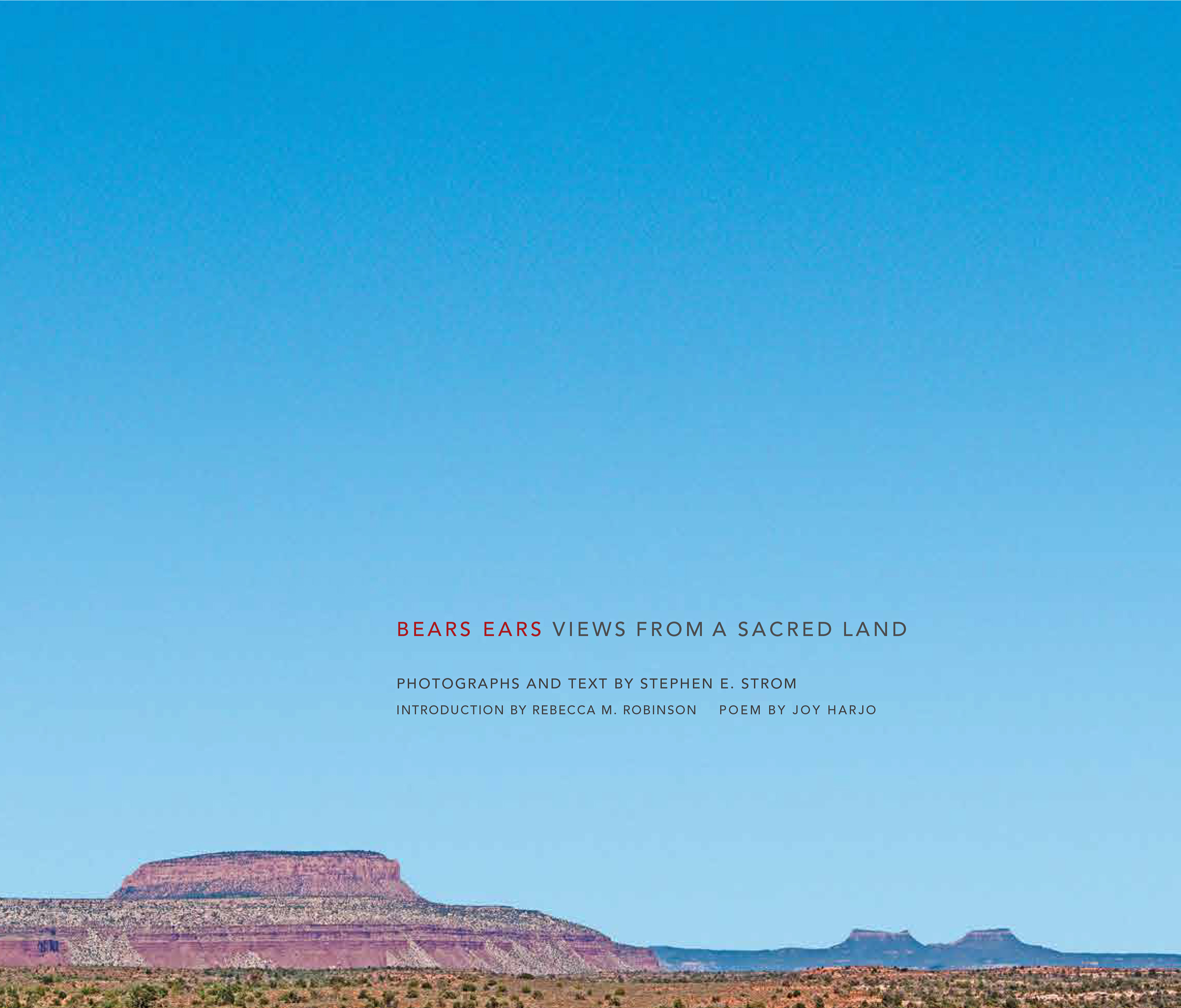
Rebecca Robinson is a freelance journalist who has spent decades exploring the landscapes of Bears Ears country. Today she speaks to the singular beauty of the region captured by photographer Stephen E. Strom in his forthcoming book Bears Ears: Views from a Sacred Land.

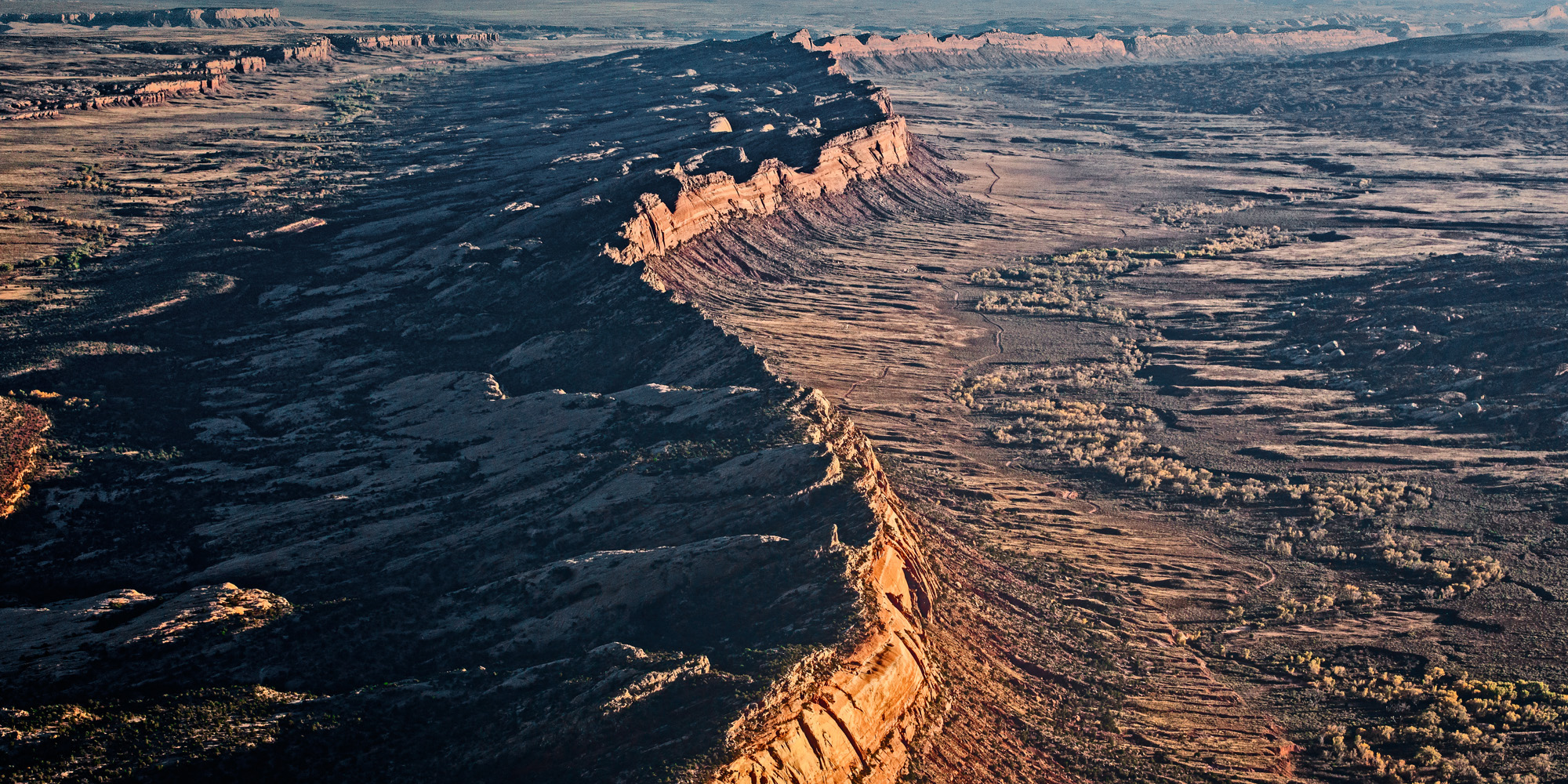
Should an eighth wonder of the world ever be proclaimed, a strong case could be made for the landscape of southeastern Utah, a region so striking it has become a visual shorthand for the wild majesty of the American West. Visitors to Utah’s portion of the Four Corners region find themselves mesmerized by its endless ridges, buttes, spires, natural bridges, and exquisite canyons—each one, like a sandstone fingerprint, completely unique. The vivid vermillion hues that define the region’s red-rock country are complemented by softer, cream-colored layers and the subtle green of sagebrush, whose ubiquity and resilience testify to stubborn survival in a harsh land. This vast terrain bears scars as well: of explosive emergence and tectonic shifts that shaped Earth into otherworldly formations of stark cinder cones, rainbow bentonite hills, and impossibly steep anticlines. These landmarks, formed millions of years ago, painted and sculpted by water and wind, provide a visible record of deep time.

Evidence of the prehistoric abounds in the region. Fossils of plant and marine life, along with those of early amphibians and mammals, inspire awe in visitors and scholars alike. The stories of eons past, preserved within the layered landscape, illuminate how life on the Colorado Plateau—of which Bears Ears is a part—evolved and adapted to the land’s slow march northward from the equator as it endured radical shifts in climate and inundations by oceans and inland seas. Today’s rich and diverse assemblage of plant and animal life is as fragile as it is tenacious. Each patch of lichen, herd of mule deer, and field of sagebrush plays a vital role in a delicately balanced ecosystem in which Nature’s rhythms must be respected to ensure their survival.
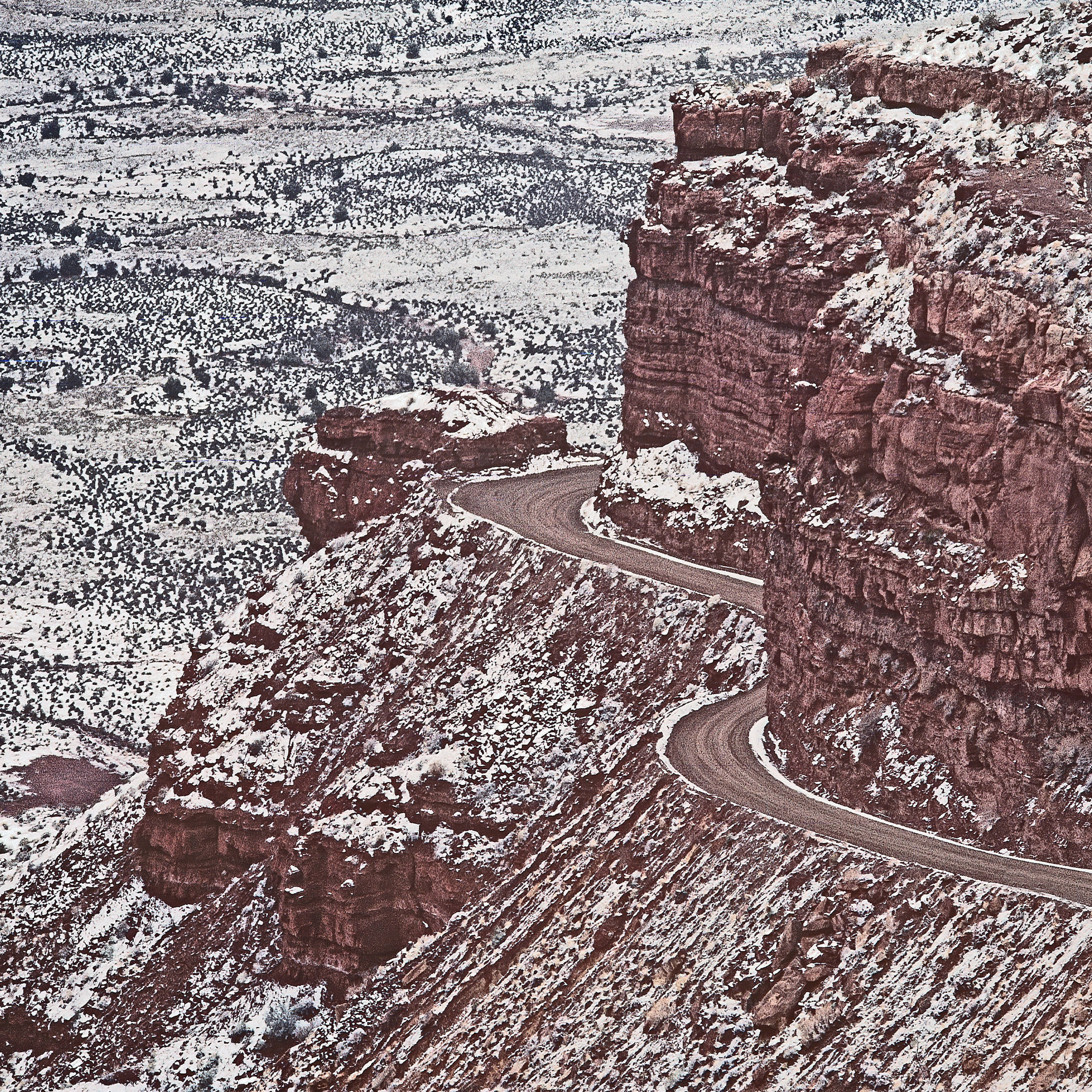
Talk to people who know and love this landscape, and you’ll quickly discover that it’s impossible for them to describe a favorite canyon, trail, or vista without a touch of reverence. Sometimes they will point, tracing the path of a raptor or the meanders of a river. Some will subconsciously place their hands over their heart, an unspoken expression of deep love for a land that lives within them—and, in some cases, changed them forever.

This land of rugged beauty and rich history is Bears Ears, a new national monument declared by President Barack Obama on December 28, 2016. Named for twin buttes visible for sixty miles in all directions, Bears Ears National Monument protects an area spanning 1,350,000 acres—more than 2,000 square miles; larger than the state of Delaware.
The movement to protect Bears Ears is the product of a unique moment in time, the result of an unprecedented effort by Native American tribes and a powerful endorsement of tribal sovereignty by a receptive U.S. President. At the same time, it is yet another chapter in America’s long history of conflicts over how best to protect and steward public lands. Similar debates predate it, and similar struggles will succeed it. Taken together, these debates and attempts to resolve them speak to the ongoing search for common ground in deeply divided communities. But therein lies a sense of hope for the future: Polarized as each group is, they collectively express the same belief that the land is everything and not just a place to live in, explore, or make a living. The land is a source of strength, renewal, and identity to all who call Bears Ears country home. Natives and Anglos in San Juan County, regardless of their spiritual beliefs or world view, have used the same words to explain their connection to Bears Ears: “The land is who we are.”

What both the land and people of Bears Ears country yearn for is healing: between the tribes and the federal government; among the region’s tribes who share histories of bitter conflict; among the tribes and residents of San Juan County—Native and Anglo, Mormon and non-Mormon, staunch supporters and steadfast opponents of the national monument; and of the land, protecting an eighth wonder of the world from efforts to exploit its riches for private financial gain.

In many ways, San Juan County’s challenge to find common ground and common purpose mirror those of the nation as a whole. True healing can only be achieved through collective listening, respect, compassion, and leadership and acknowledging that past wounds—including military action—inflicted by the federal government on both Native Americans and the Mormon people are many and, in some cases, shared. The future will depend on the courage of all to speak truths, to commit to hear and respect all voices, and to seek mutual understanding that will allow citizens to create a just and sustainable future that benefits all.

In Bears Ears: Views from a Sacred Land Stephen E. Strom’s photographs capture the singular beauty of Bears Ears country in all seasons, its textural subtleties portrayed alongside the drama of expansive landscapes and skies, deep canyons, mystifying spires, and towering mesas. To Strom’s alert and sensitive eyes, a scrub oak on a hillside or a pattern in windswept sand is as essential to capturing the spirit of the landscape as the region’s most iconic vistas. In seeing red-rock country through his lens, viewers can begin to discover the rich beauty, remarkable diversity, seductive power, and disarming complexity that embody Bears Ears National Monument’s sacred lands.

Years from now, these images may serve as either a celebration of the foresight of visionary leaders, from President Teddy Roosevelt’s original vision of national monuments for America to the recent vision of tribal leaders and President Obama, or, should President Trump and his allies rescind the Bears Ears National Monument declaration, as an elegy for what was lost—for the tribes and for future generations of Americans.


Rebecca Robinson was born in Baton Rouge, Louisiana and makes her home in Portland, Oregon. Her journalism work has been widely published and broadcast in numerous print, online, and radio outlets, and she has received awards from the Society of Professional Journalists, the Alliance for Women in Media, and the Associated Press.

Through twenty individual stories, her forthcoming book Voices from Bears Ears: Seeking Common Ground on Sacred Land (Fall 2018) captures the passions of the debate that led to the creation of Bears Ears National Monument, a land of unsurpassed natural beauty and deep historical significance. She continues to capture the passions of those on opposing sides of the Bears Ears battle with weekly online updates.

Stephen E. Strom was born in New York City. After receiving his B.A., M.A., and Ph.D. in astronomy from Harvard University, he spent forty-five years as a distinguished research astronomer. He began photographing in 1978, and his work has been exhibited widely throughout the U.S. and is in the permanent collections of the Center for Creative Photography and Museum of Fine Arts, Boston, among others.


Photos courtesy Stephen E. Strom

On Archaeology and Social Identities in the Ancient Past

December 12, 2017

Archaeologist Matthew A. Peeples has spent more than a decade working at sites across the Southwest. In his forthcoming book Connected Communities, Peeples looks to comparative social sciences and contemporary social movements to understand how social identities formed and changed in the ancient past. Today, he shares with us the inspiration behind his new book.

“Who were the people who lived here?”

I often hear this question when I give site tours for the public or conduct fieldwork in places where locals might pay a visit. It is a question that probably sounds simple and straightforward to the person asking it.

To an archaeologist like me who has spent a lot of time thinking about how social groups form and change, this question opens the door to all kinds of complexity. If I suspect that my visitor is looking for a quick answer—or if we have a looming project deadline—I may give her the short and way-too-simple version. This usually means providing the typical archaeological cultural or regional designation (“they were Ancestral Pueblo people” or “they were Hohokam people” or “they were the ancestors of people living at Zuni today”). If I am feeling a bit more inspired—or looking for an opportunity to have a longer conversation in the shade—I may go into the particular social and demographic histories, describing archaeological evidence for migration streams or material evidence for how the nature and scale of families, communities, or larger social groups changed through time.

In my experience, the long answer to this deceptively simple question resonates quite well with members of the public and archaeologists alike, provided that I can find a clear and compelling way to describe interesting patterns and processes in the data.

In an effort to come up with better ways of explaining the complexities inherent in social group identities, how they change, and how we study that process archaeologically, I have often found it useful to rely on analogy with contemporary events and institutions. Most people living in the world of nation-states and borders have a good sense of what it means to have multiple and nested identities. When I turn the tables and ask my inquisitive visitors “who are you?” I find that they seldom stop at one or two labels and often rattle off quite a few. These might include their nationality, state/territory/city/neighborhood of residence or birth, ethnic heritage, familial ties, religion, occupation, or many other designations. Importantly, some of these designations are based on their own direct relationships, while others link them to groups much larger than they could ever hope to know personally.

In the United States, where I do my research, most people are well acquainted with the metaphor of the “American melting pot”—the romanticized notion of how the diverse populations that make up the nation came to represent a coherent whole—and they probably also have some notion of the diversity of people living in the United States through its ethnic neighborhoods and the waves of immigration that shaped such places.

Such contemporary examples make it much easier to explain how archaeologists document similar migration streams, identify socially diverse communities or enclaves, and track the ways people marked or masked differences in the past. We see archaeological evidence of the same historical processes that drive the formation, maintenance, or dissolution of social groups in the world today. Identity is a complicated tapestry for us, and there is no compelling reason to believe it was less so in the past.

Conversations with the public like these brought me to the research for my book Connected Communities. Since I first started studying archaeology, I have been interested in understanding how people form very large social groups, especially those that are so large that they include people who will probably never meet. Searching for analogues and new perspectives on such large-scale social groups, I turned to a body of literature focused on nationalism, ethnic identity, and the drivers of social change in the contemporary world. This work suggests that the formation of social groups and the process of social change are intrinsically linked, and, importantly, researchers working from this perspective have developed tools and theoretical frameworks for exploring such relationships (i.e., social network analysis). The more I read, the more the underlying processes and mechanisms at work felt familiar to me as an archaeologist studying social change at regional scales in the ancient Southwest.

At the same time, and somewhat to my dismay, I found that researchers working within this paradigm from a contemporary perspective often made assumptions about the supposed absence of certain kinds of identities and interactions in premodern societies that are, to my mind, unfounded. Still, I considered that the methods and models used to untangle the complicated web of identities in the contemporary world might have some utility for exploring social groups in the more distant past through archaeological evidence.

Might such models push us toward new and interesting revelations about identity and social change in the past? Could archaeologists contribute to the broader debate in the social sciences by expanding the scope of such frameworks to kinds of societies that have not yet been considered or by using new kinds of evidence? I hope to take the first steps toward addressing these important questions in my work.

Matthew A. Peeples is an assistant professor of anthropology and the research director of the Center for Archaeology and Society in the School of Human Evolution and Social Change at Arizona State University.

For Authors

The University of Arizona Press publishes the work of leading scholars from around the globe. Learn more about submitting a proposal, preparing your final manuscript, and publication.

Inquire

Requests

The University of Arizona Press is proud to share our books with readers, booksellers, media, librarians, scholars, and instructors. Join our email Newsletter. Request reprint licenses, information on subsidiary rights and translations, accessibility files, review copies, and desk and exam copies.

Request

Support the Press

Support a premier publisher of academic, regional, and literary works. We are committed to sharing past, present, and future works that reflect the special strengths of the University of Arizona and support its land-grant mission.

Give