Congratulations to The University of Arizona Press Editing, Design, and Production team: Amanda Krause, Leigh McDonald, and Sara Thaxton! Because of their amazing creativity and dedication to excellence, the team received three awards for book design at The Publishers Association of the West’s (PubWest) 2024 conference.
UA Press designers won gold in the Academic/Reference category for Woven from the Center, Native Basketry in the Southwest by Diane Dittemore. The awards committee noted about Woven from the Center: “Amazing cover! Perfectly on point for the genre. Great design and package all around. Good crossover potential from Academic to trade.”
PubWest is a national trade organization of publishers and associated publishing-related members. The association presents annual design awards for book design, book cover design, and graphic novel design.
Celebrate winter with four new collections of poetry from UA Press. We publish two veteran poets, the Ambroggio Prize winner, and one poet’s first collection. May this poetry bring light and warmth to close out 2023, and begin the new year brightly.
Light As Light brims with giddy, wistful long-distance love poems that offer a dialogue between the speaker and his beloved. Simon Ortiz (Acoma Pueblo) writes in conversational style; and this volume claims poetry for everyday life as the poems find the speaker on a morning run, burnt out from academic responsibilities, missing his beloved, reflecting on sobriety, walking the dog, and pondering the act of poem making. Celebrate on January 30, 2024, with Ortiz as he reads and discusses his poetry on the University of Arizona campus. Click here for details.
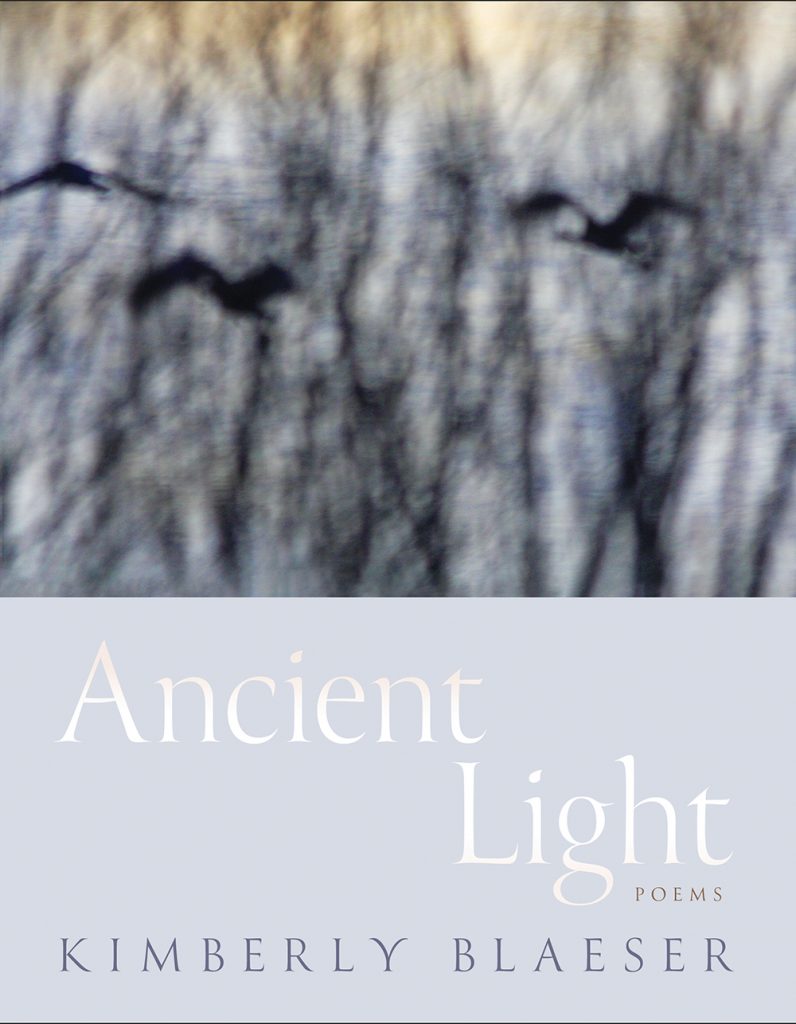
Kimberly Blaeser, former Wisconsin Poet Laureate and founding director of In-Na-Po, Indigenous Nations Poets, is a writer, photographer, and scholar. In her new collection, Ancient Light, she uses uses lyric, narrative, and concrete poems to give voice to some of the most pressing ecological and social issues of our time. Blaeser’s innovative poems trace pathways of kinship, healing, and renewal. They celebrate the solace of natural spaces through sense-laden geo-poetry and picto-poems.
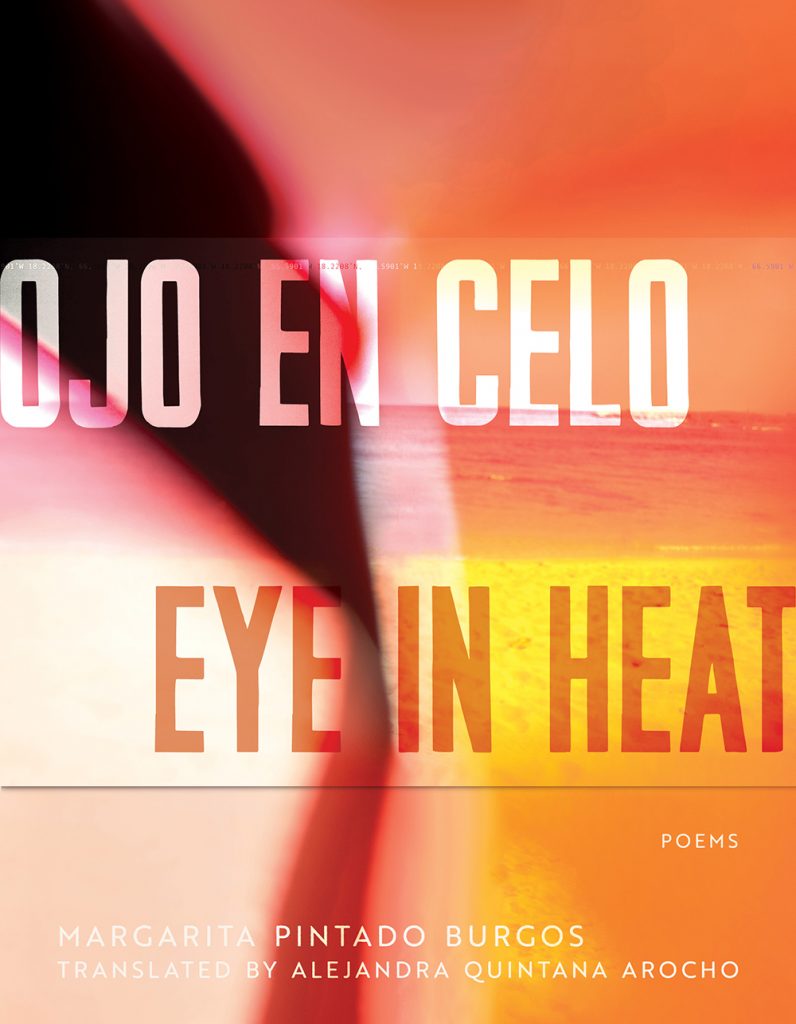
Ojo en Celo / Eye in Heat, by Margarita Pintado Burgos (Author) and Alejandra Quintana Arocho (Translator), is the Winner of the 2023 Ambroggio Prize of the Academy of American Poets. With devastating clarity, Pintado Burgos’s poems, presented in both Spanish and English, give voice to the world within and beyond sight: the plants, the trees, the birds, the ocean waves, the fruit forgotten in the kitchen, the house’s furniture. Inspired by the poet’s homeland in Puerto Rico, light takes on new dimensions to expose, manipulate, destroy, and nourish.
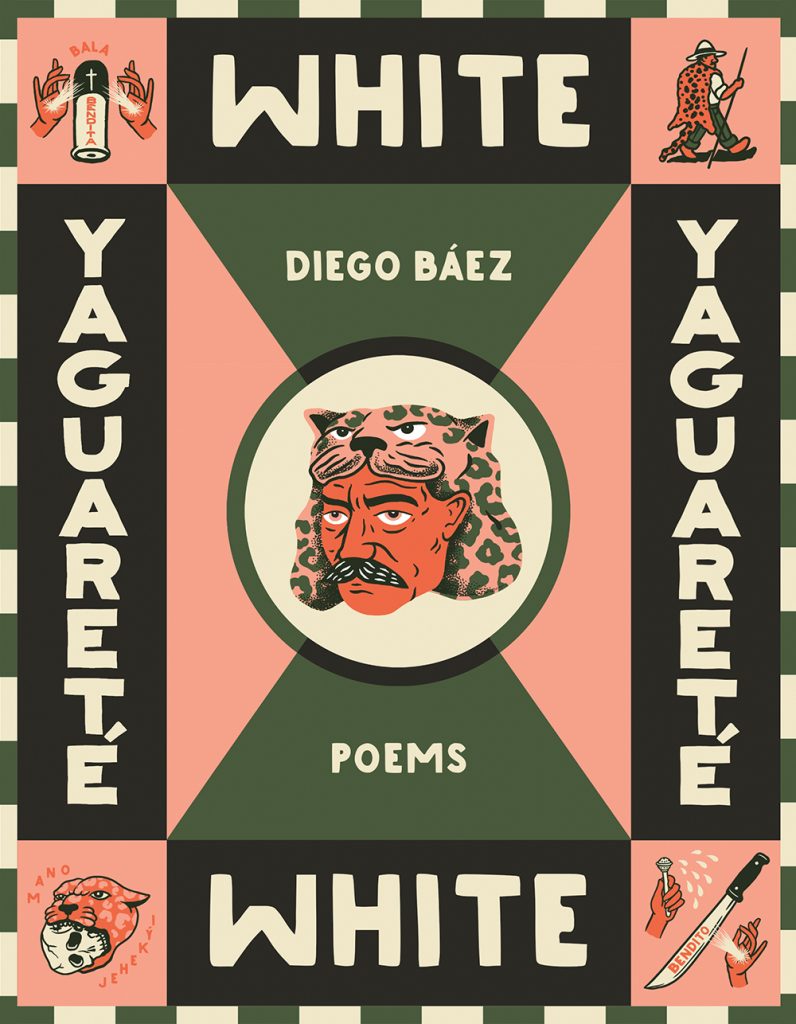
In his first published collection Yaguareté White,Diego Báez writes in English, Spanish, and Guaraní. The languages encounter each other through the elusive yet potent figure of the jaguar. The son of a Paraguayan father and a mother from Pennsylvania, Baéz grew up in central Illinois as one of the only brown kids on the block—but that didn’t keep him from feeling like a gringo on family visits to Paraguay. Exploring this contradiction as it weaves through experiences of language, self, and place, Baéz revels in showing up the absurdities of empire and chafes at the limits of patrimony, but he always reserves his most trenchant irony for the gaze he turns on himself.
November 20, 2023
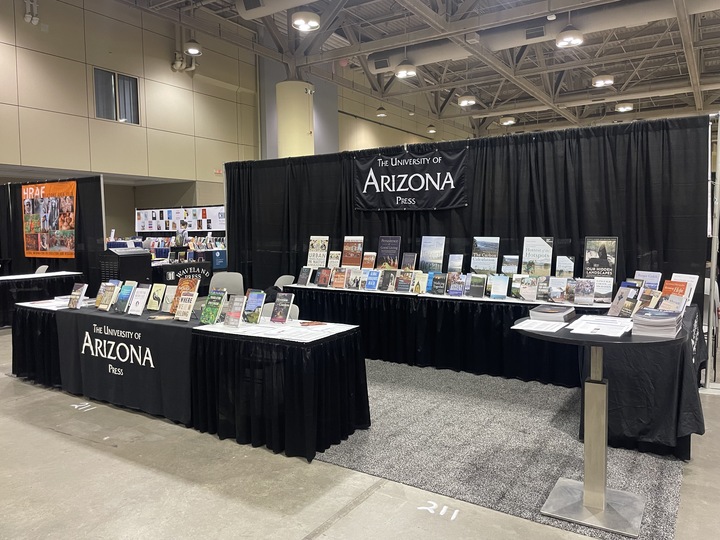
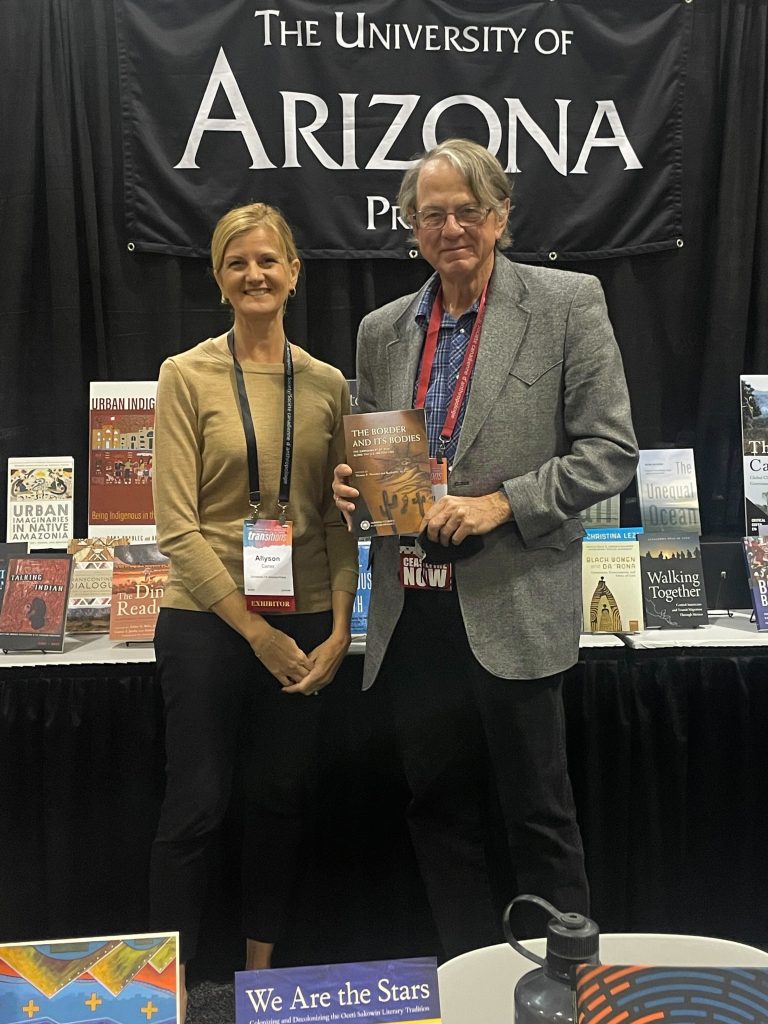
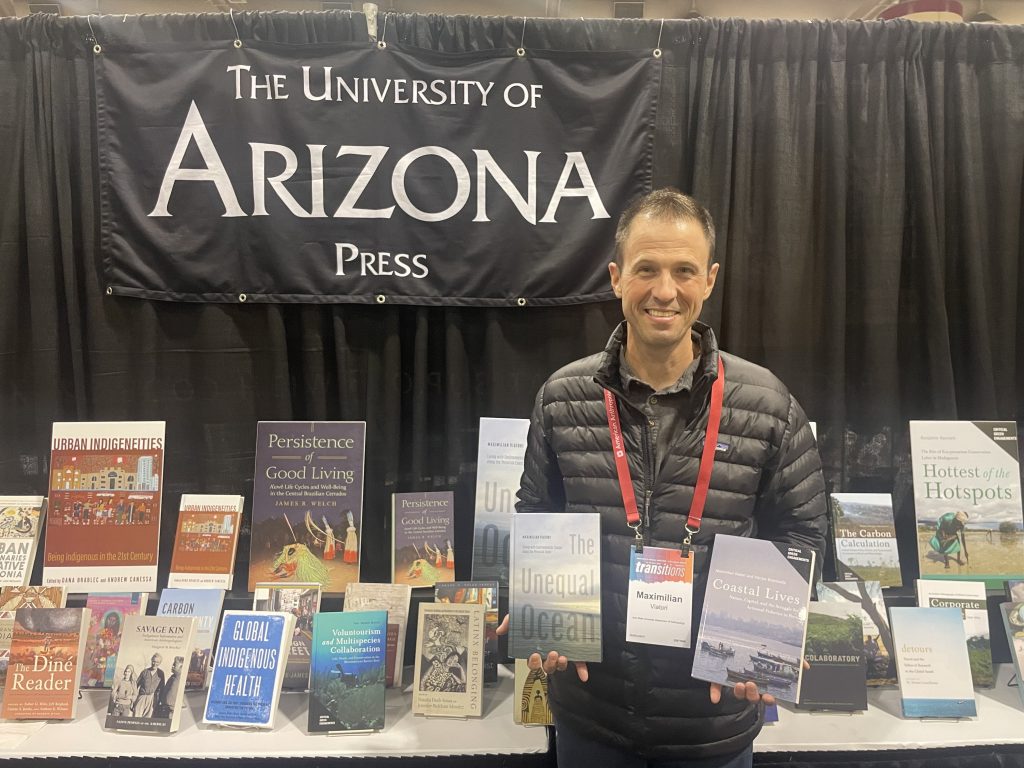
We were thrilled to see so many authors and editors stop by our booth at the joint conference of the American Anthropological Association and the Canadian Anthropology Society in Toronto this year! If you weren’t able to visit our booth, there’s still time to order the books we had on display. Get 35% off with discount code AZAAA23 at checkout in our website shopping cart until 12/19/23.
Check out the photos of the event below!
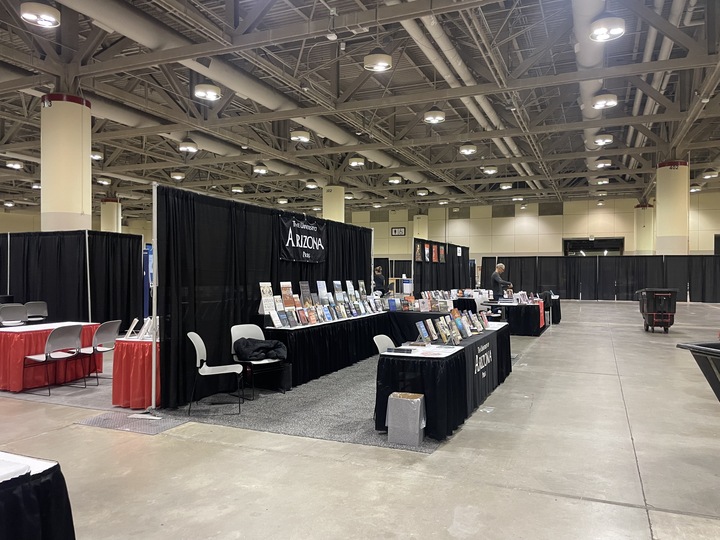
A quiet moment before the exhibit hall opened on the first day of the conference.
Look at all those books! So many new Anthropology titles to display.
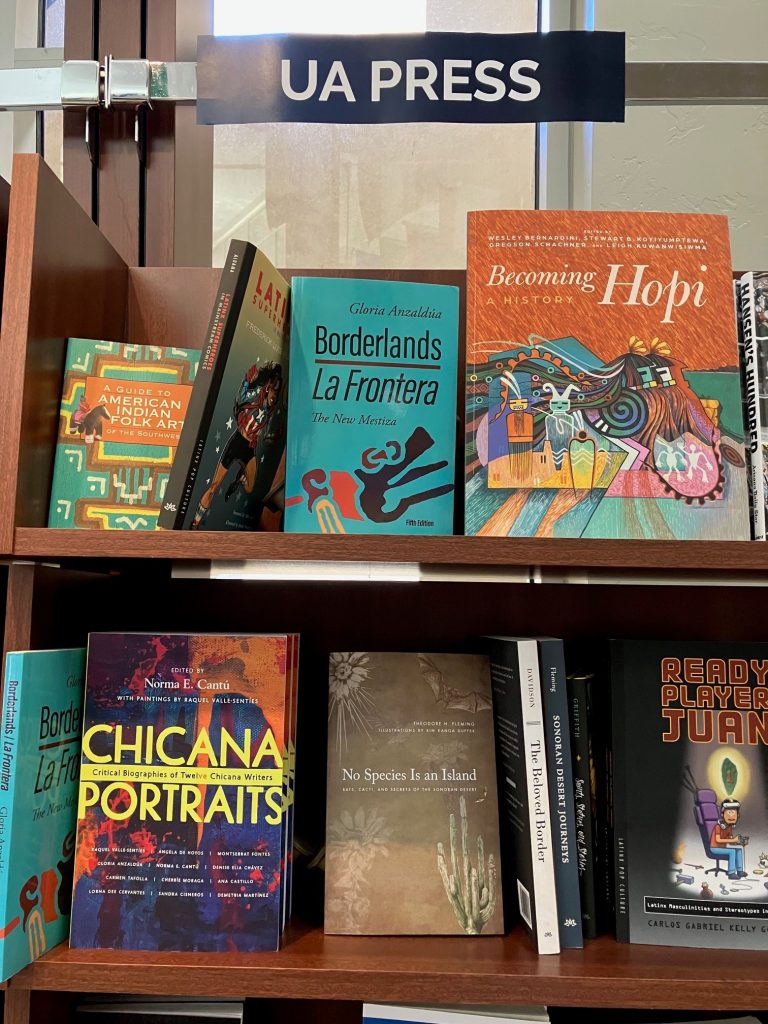
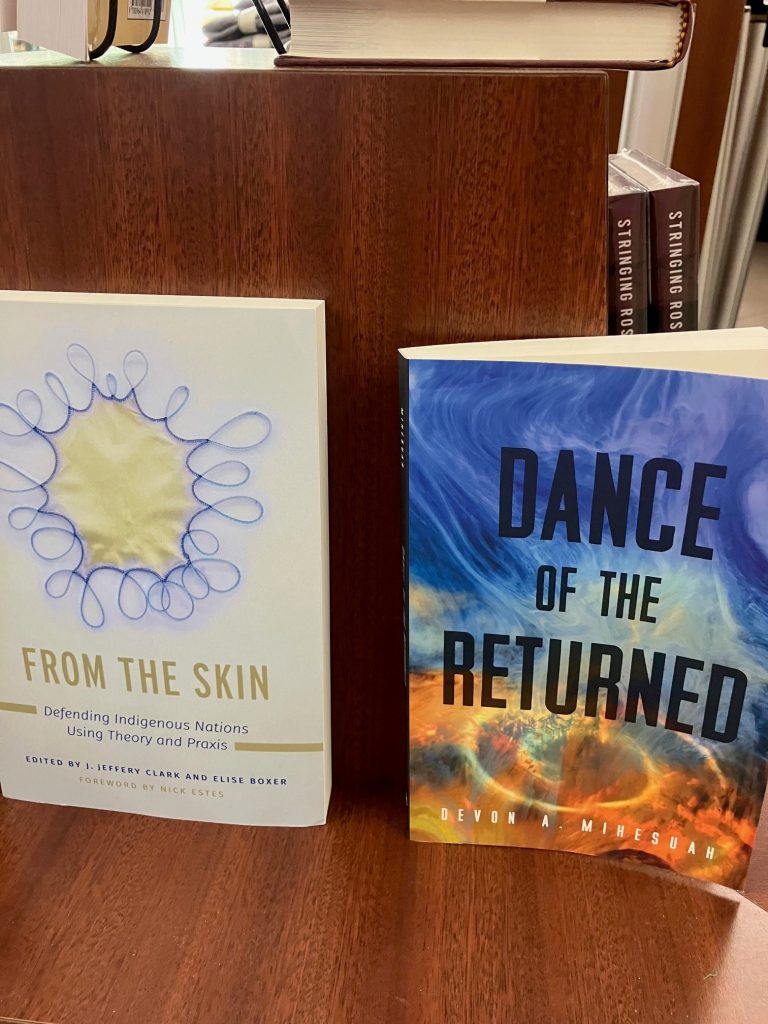
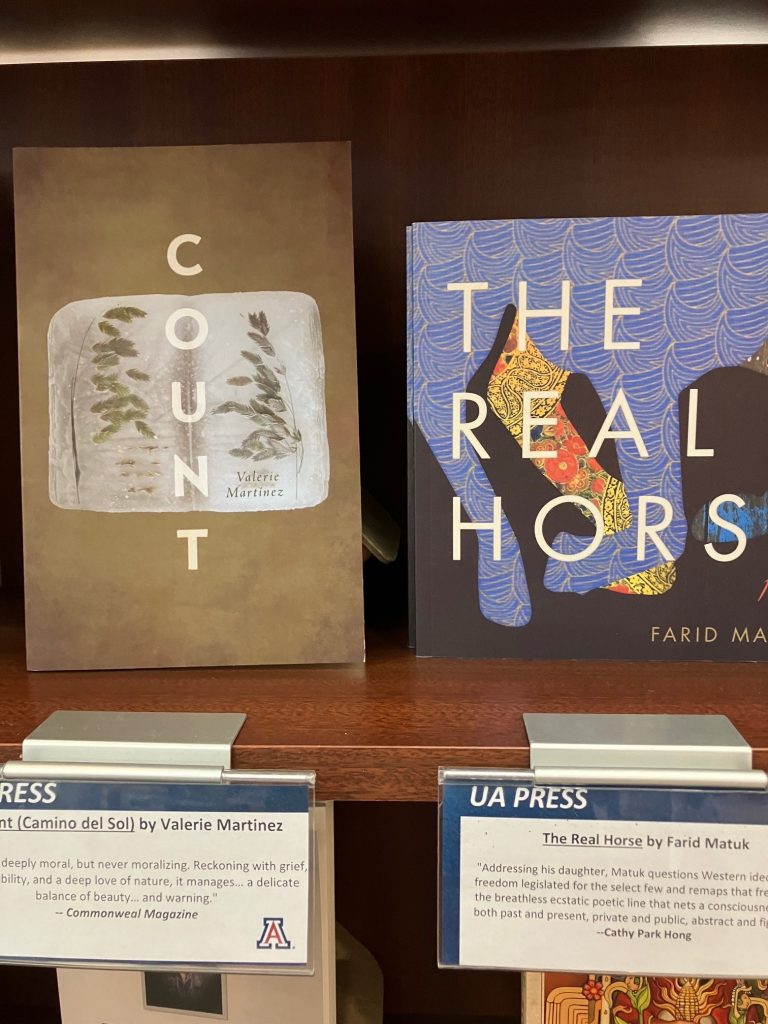
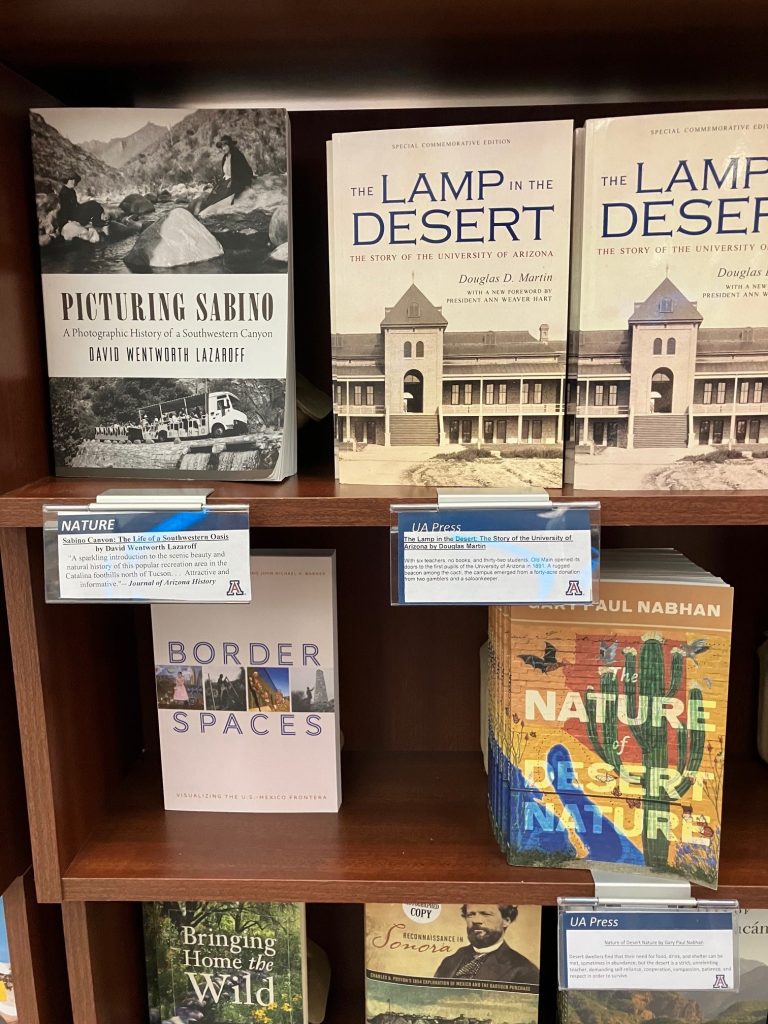
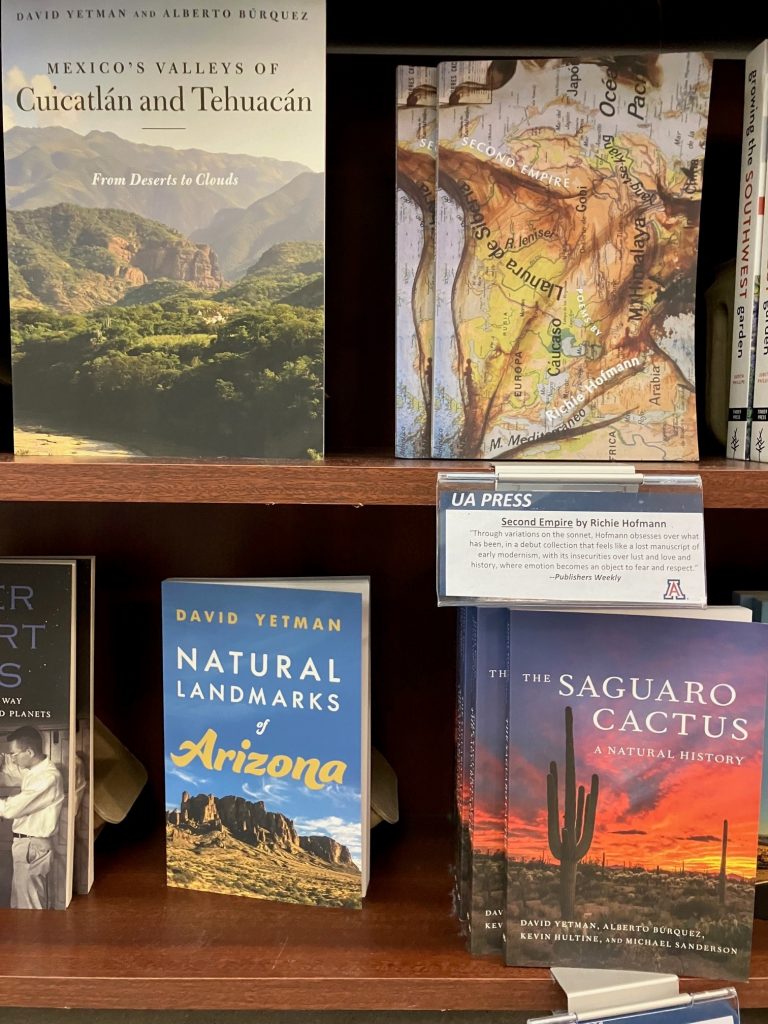
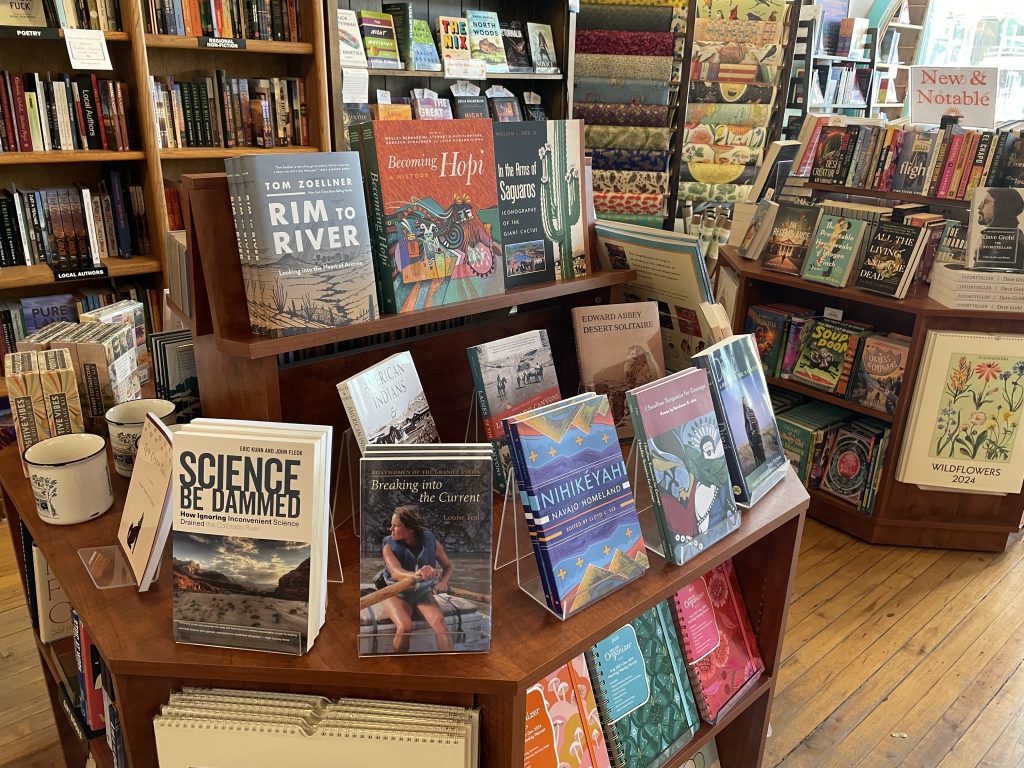
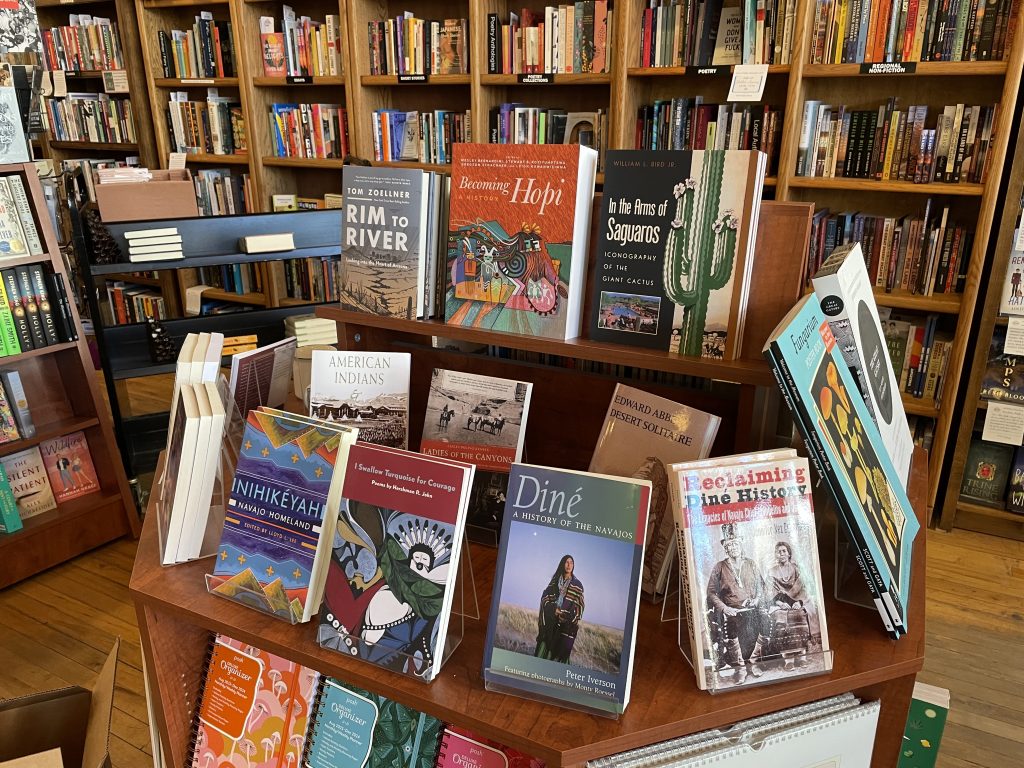
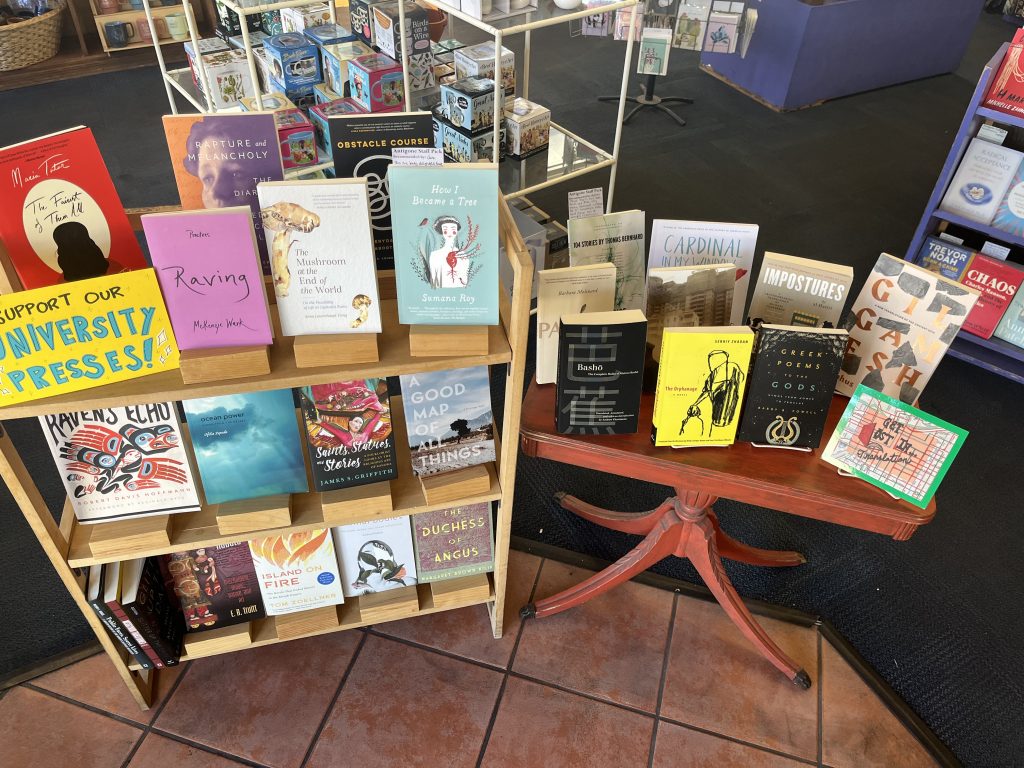
Thank you to Bright Side Bookshop in Flagstaff, Antigone Books in Tucson, and the University of Arizona Bookstore for highlighting University of Arizona Press books this week! They are part of a national independent bookstore campaign to celebrate University Press Week, November 13 – 17, 2023.
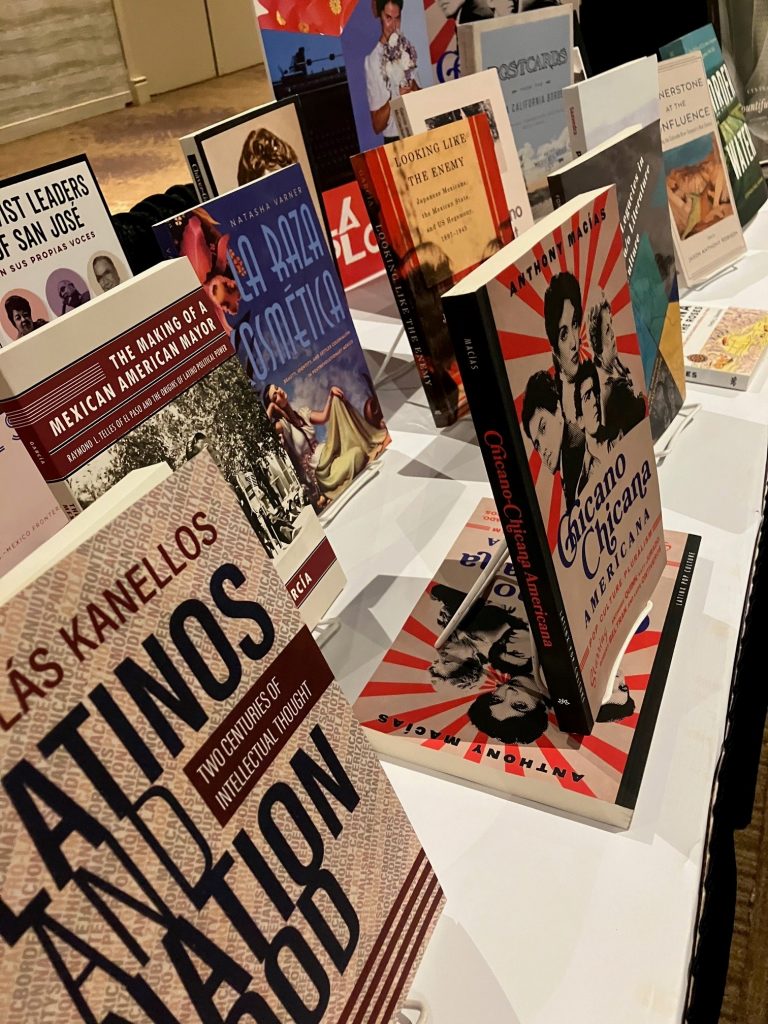
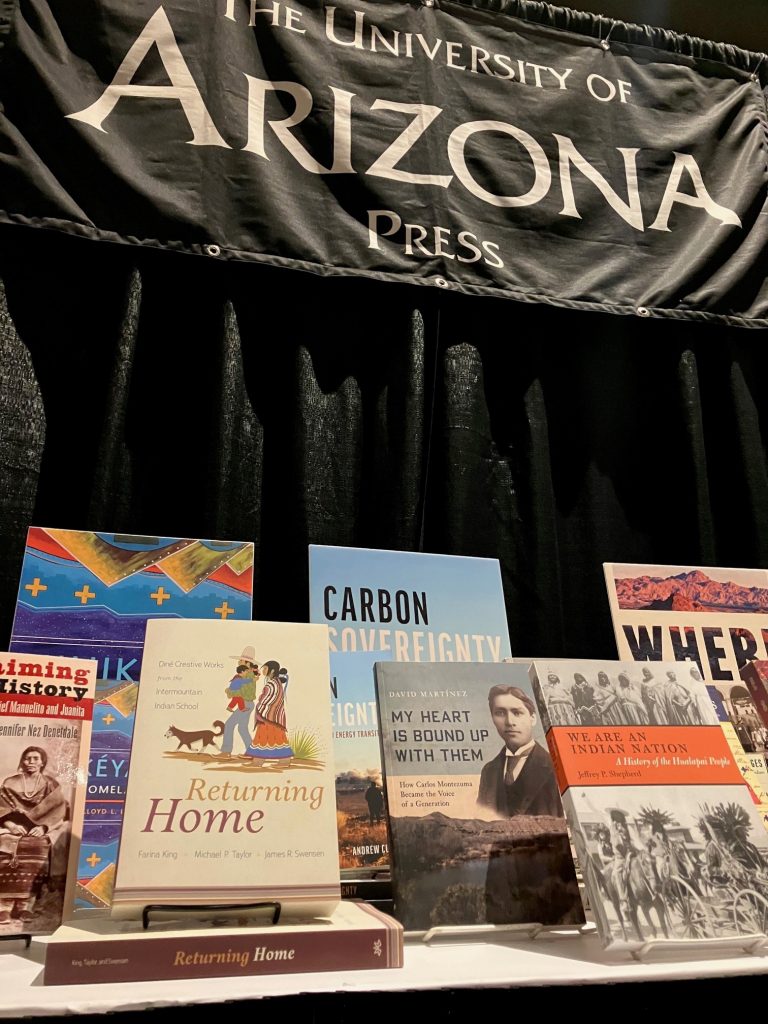
The Association of University Presses‘s theme for this year’s University Press Week is ”Speak UP.” See the complete list of SpeakUP books here. The SpeakUP list of 103 publications represent the many areas in which university presses and their authors #Speak UP. Below are a few photos from Arizona bookstores that show the range of University of Arizona Press books.
Photos from University of Arizona bookstore above show our latest books in borderlands studies, Chicano/Chicana studies, Indigenous studies, best-selling poetry, and desert natural history books.
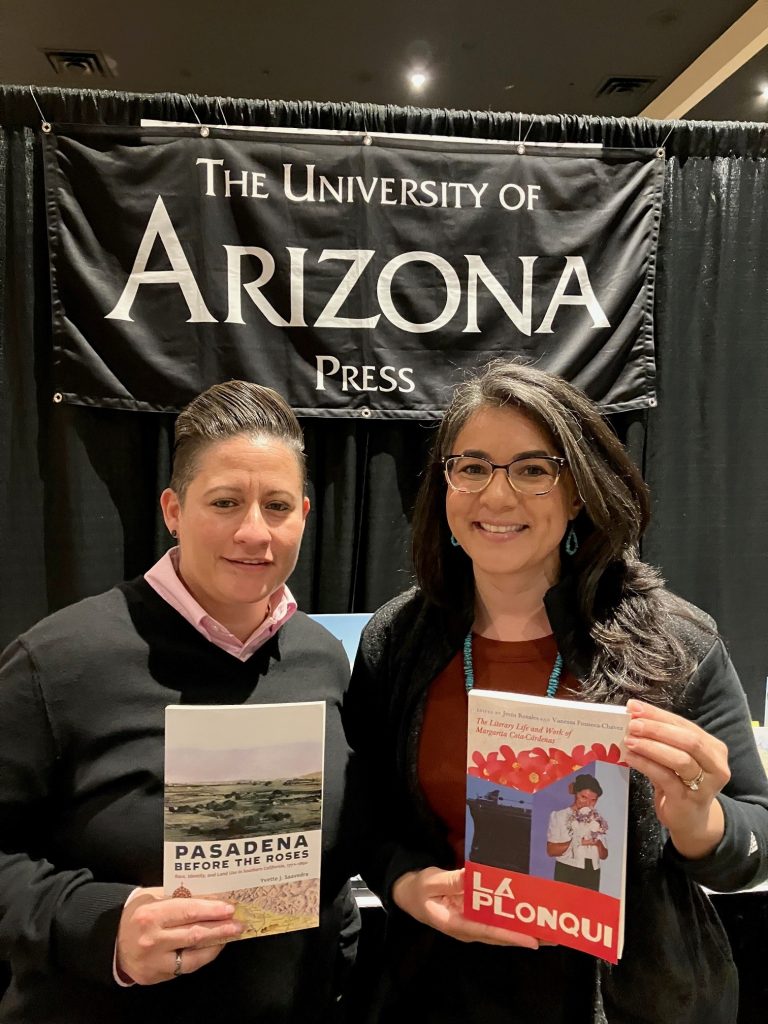
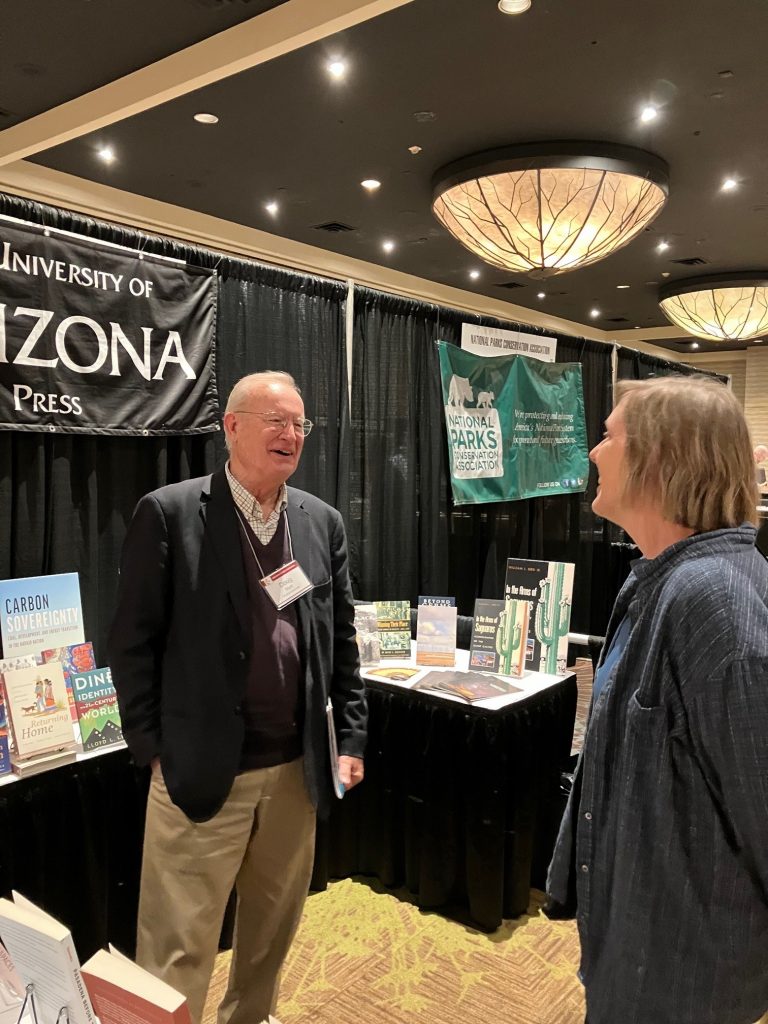
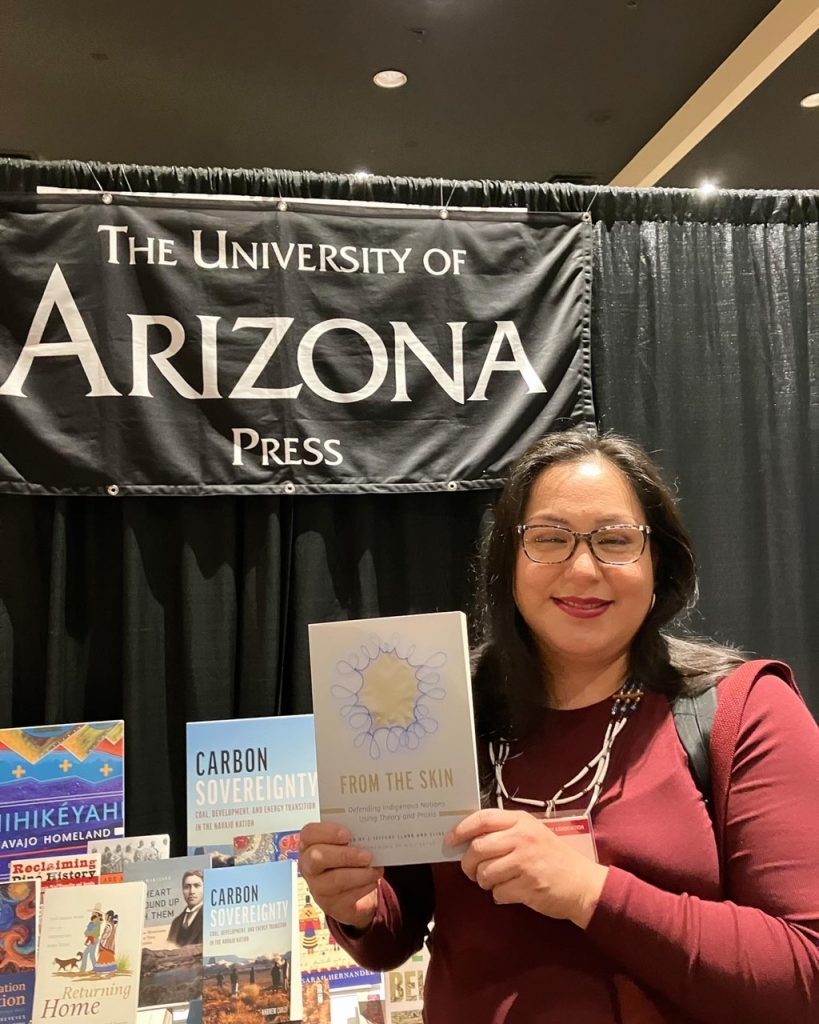
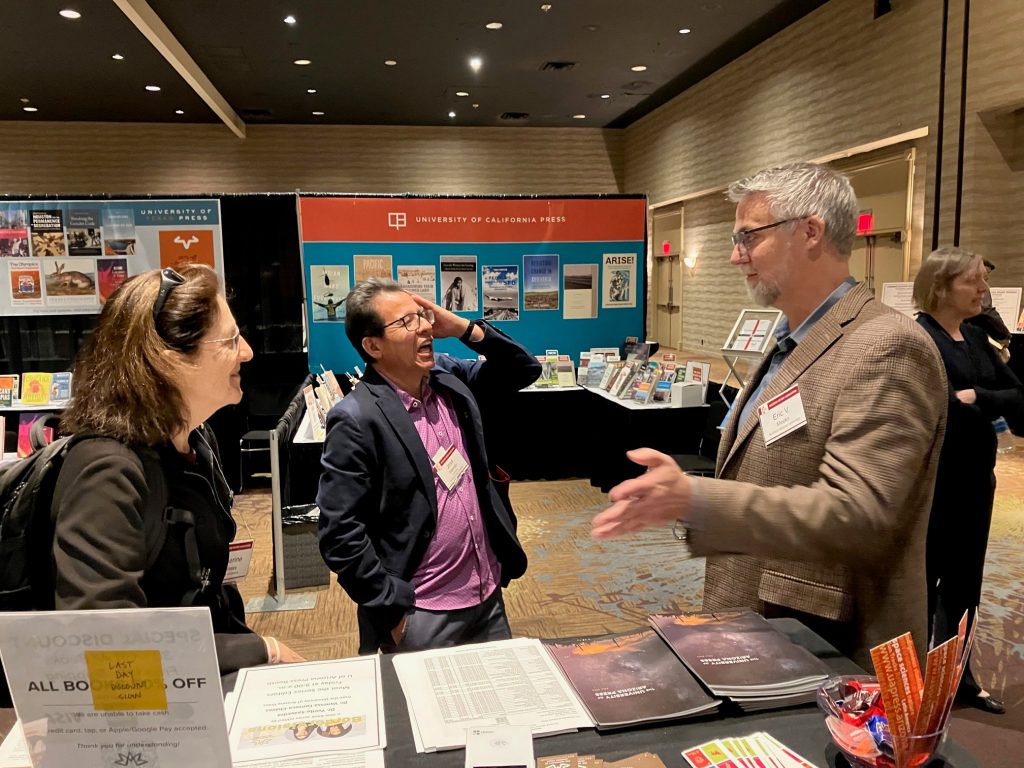
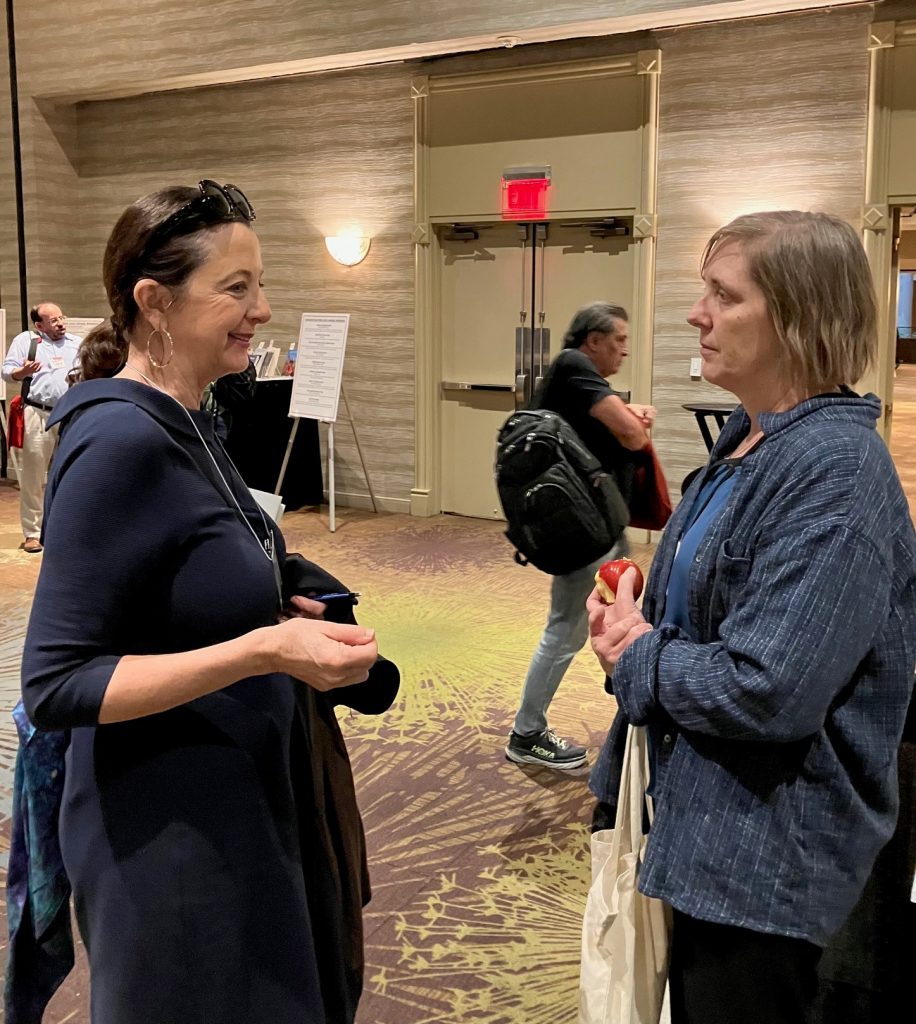
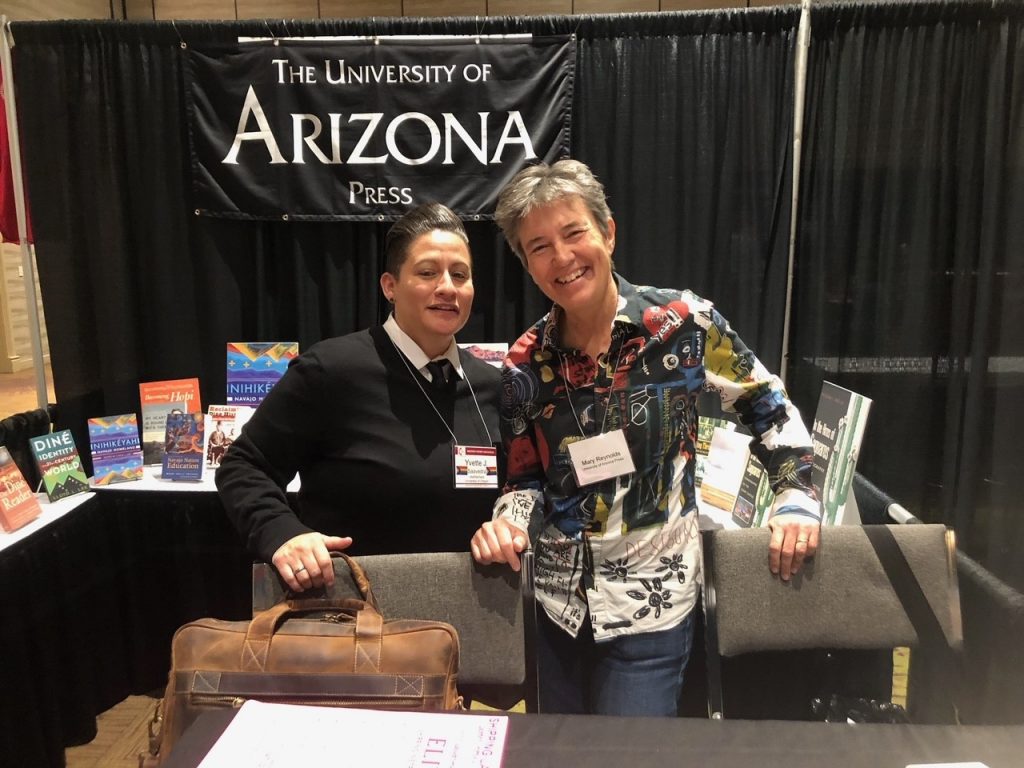
We were thrilled to see so many authors and editors stop by our booth at the Western History Association Conference in Los Angeles in October. If you weren’t able to stop by, there’s still time to order our western history titles. For 30% off and free shipping in the continental U.S., use discount code AZWHA23 at checkout in our website shopping cart. The discount ends 11/28/23.
Yvette Saavedra and Vanessa Fonseca-Chavez with their books. They are also editors for our new series BorderVisions.
Author Doug Hurt speaks with Editor-in-Chief Kristen Buckles.
Co-Editor Elise Boxer with her new book!
José Alamillo (center) speaks with Arizona Crossroads series editors Katherine Morrissey (left) and Eric Meeks (right).
Author Nancy Marie Mithlo speaks with Kristen Buckles.
Yvette Saavedra (Pitzer) and Publicity Manager Mary Reynolds (Pomona) realize they are both Claremont Colleges graduates. Go Sagehens!
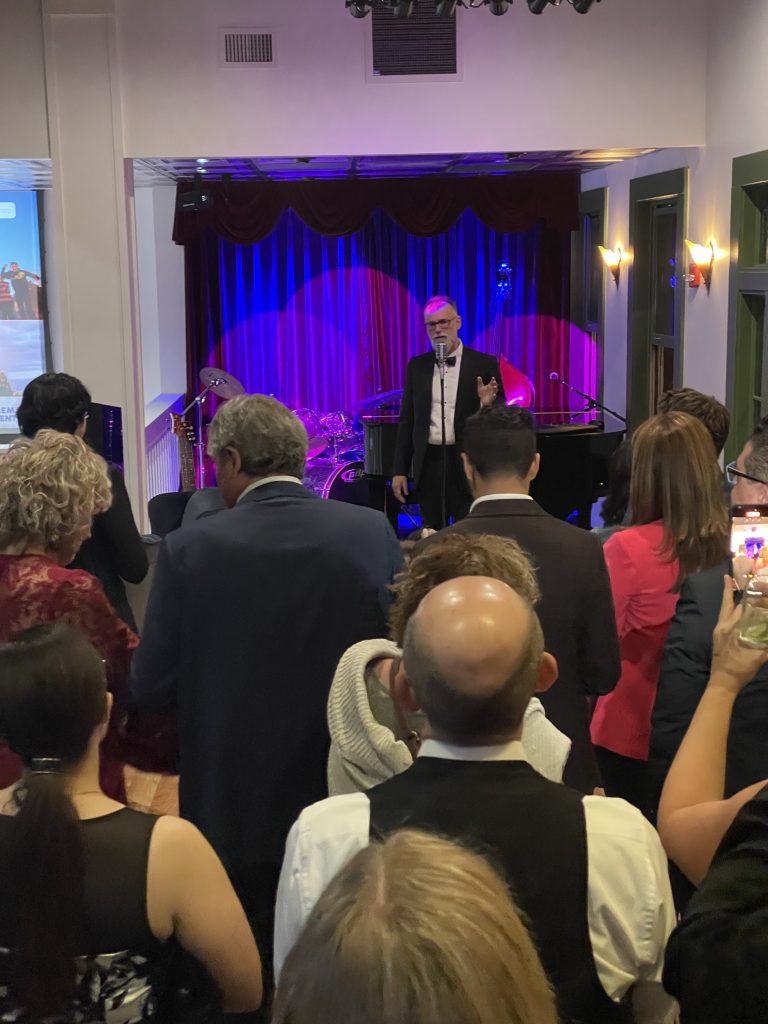
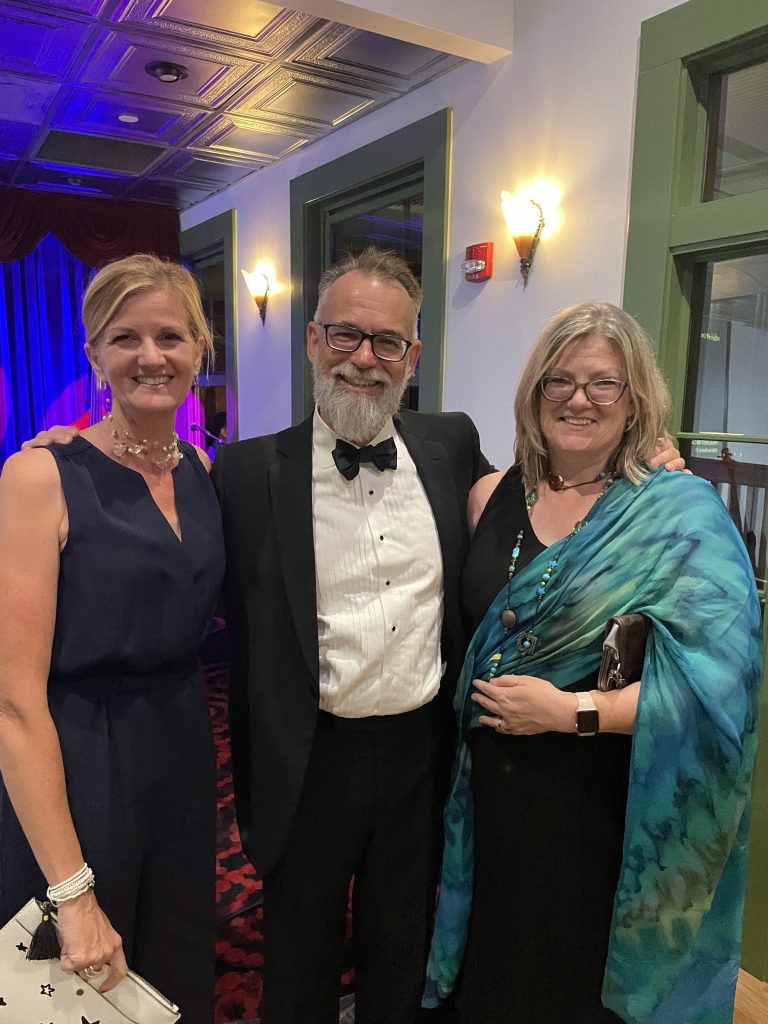
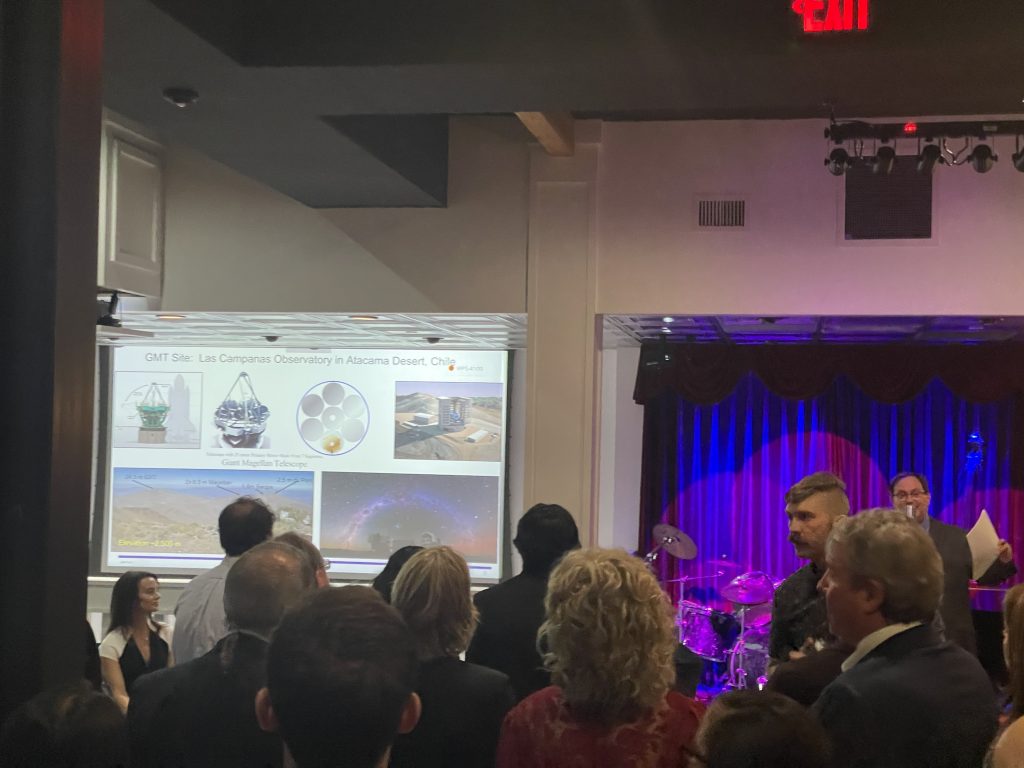
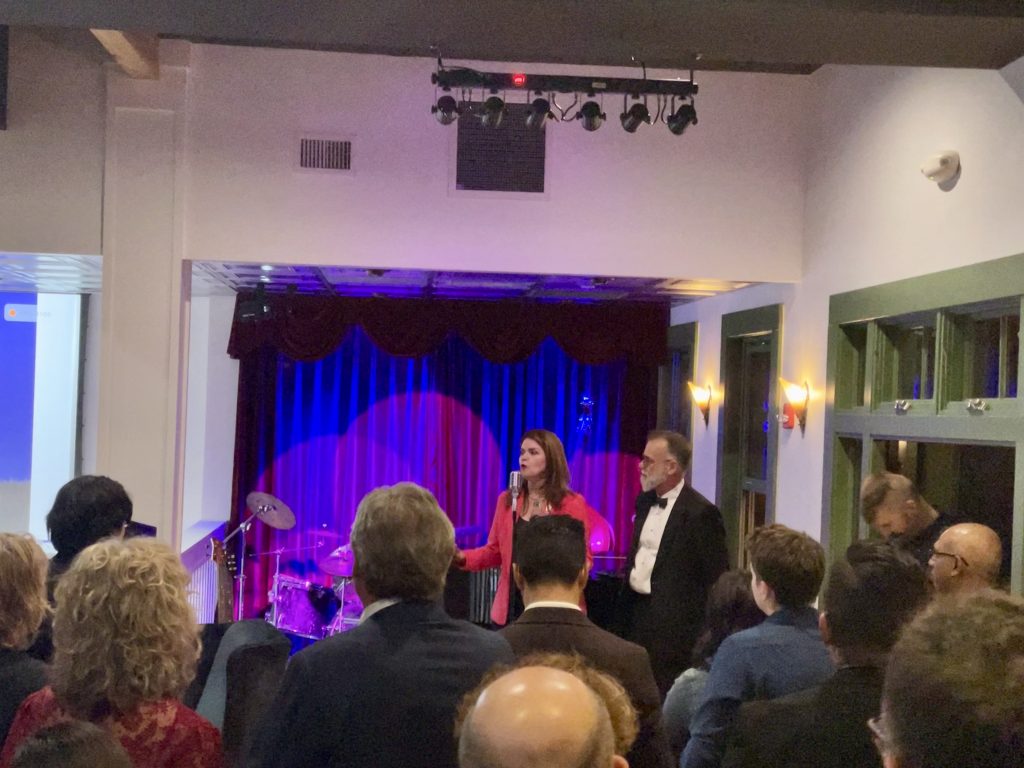
On October 14, author Dante Lauretta hosted an “Orbits and Elixirs Celebration” for contributors and supporters of the NASA OSIRIS-REx Mission, at the Don Martini Bar on top of the Rialto Theater in downtown Tucson. Lauretta and Mayor Regina Romero spoke; they talked about the sample return mission, the work of the mirror lab for the Giant Magellan Telescope, and the opening of the Center for Astrobiology. UA Press Director Kathryn Conrad and Editor Allyson Carter joined in the celebration, along with UA Lunar Planetary Laboratory Director Mark Marley. Below are photos from the event.
About the book: Bennu 3-D, Anatomy of an Asteroid, is the world’s first complete (and stereoscopic) atlas of an asteroid, is the result of a unique collaboration between OSIRIS-REx mission leader Dante Lauretta and Brian May’s London Stereoscopic Company. Lauretta’s colleagues include Carina Bennett, Kenneth Coles, and Cat Wolner, as well as Brian May and Claudia Manzoni, who became part of the ultimately successful effort to find a safe landing site for sampling. The text details the data collected by the mission so far, and the stereo images have been meticulously created by Manzoni and May from original images collected by the OSIRIS-REx cameras.
Dante Lauretta speaks about the mission to Bennu and back.
Allyson Carter, Dante Lauretta, and Kathryn Conrad
Slide show celebrating all University of Arizona space and astronomy accomplishments.
Tucson Mayor Regina Romero congratulates the OSIRIS-REx team on a successful mission.
The rain falls on everyone’s skull with equal charity in a lapse from realism makes us subjects of something more than flesh and blood we are children of water of longing of uncertainty.
Elizabeth Torres, “The Rain” (Lotería, 2023)
In Tucson, the month of August is always exciting: school is about to resume, the students begin to trickle back into town, and new books are on their way. But this year, the natural flow of the season has been hampered by the unrelenting heat and scarcity of serious rain. Even the desert’s best-adapted plants have struggled to make it through this summer’s heat-wave.
At the University of Arizona Press, we find that it’s a little easier to exercise hydrological patience by looking back to some of our favorite water-writing. We hope you’ll enjoy this roundup of monsoon books—and who knows—maybe you’ll even be reading one on your back porch when the rain starts. We can always hope!
The vision begins with a river. From this river, you can see a village, marine life, and ancestral rituals. It is here that you recognize origins, and a poison beginning to spread through paradise. Suddenly, a premonition: a wounded animal. The certainty of war cries. What you take with you is what you become, each movement a gamble, a lottery of life that transforms you until this moment, when uncertainty becomes an ally.
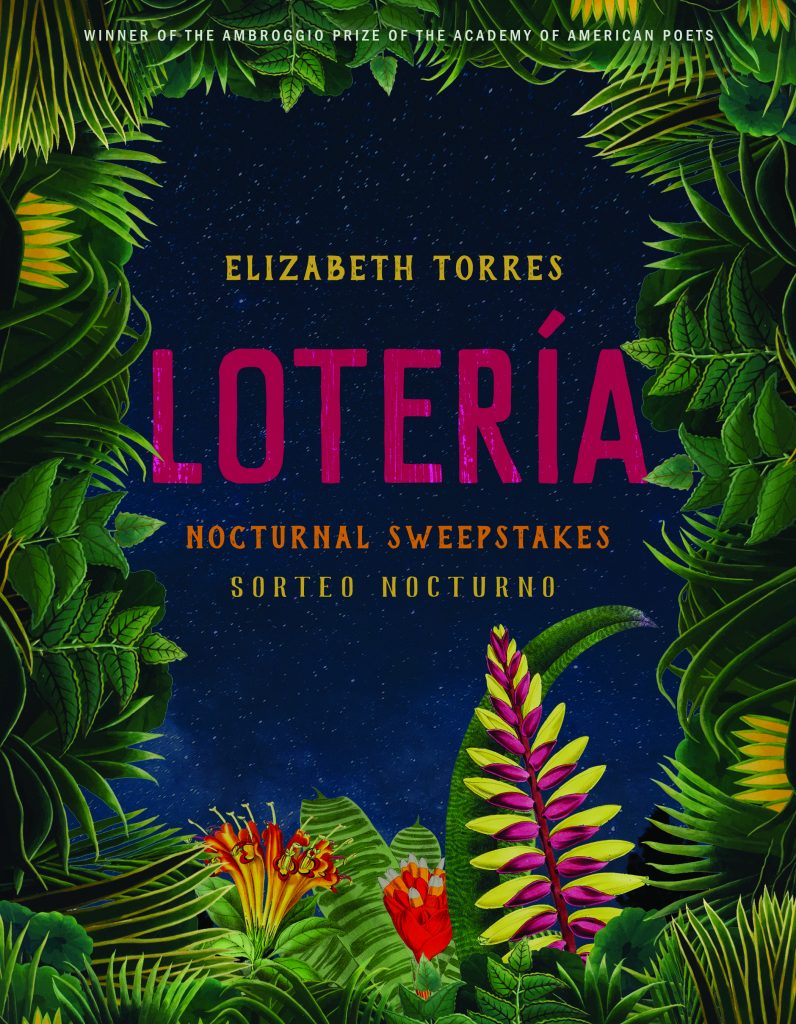
Lotería: Nocturnal Sweepstakes is a collection of deeply evocative coming-of-age poems that take the reader on a voyage through the intimate experiences of displacement. Conjuring dreamlike visions of extravagant fruits and rivers animated by the power of divination, these poems follow the speaker from the lash of war’s arrival through an urgent escape and reinvention in a land that saves with maternal instinct but also smothers its children.
In this bilingual collection, Colombian American poet Elizabeth Torres threads together the stories of family dynamics and the realities of migration with the archetypes of tarot and the traditional Lotería game, used for centuries as an object of divination and entertainment. Through these themes and images, the poems in Lotería narrate intimate moments in the lives and journeys of migrants, refugees, and all who have been forced into metamorphosis in order to reach the other side of the river.
Winner of the 2022 Ambroggio Prize of the Academy of American Poets, this collection showcases masterfully crafted and translated poems.
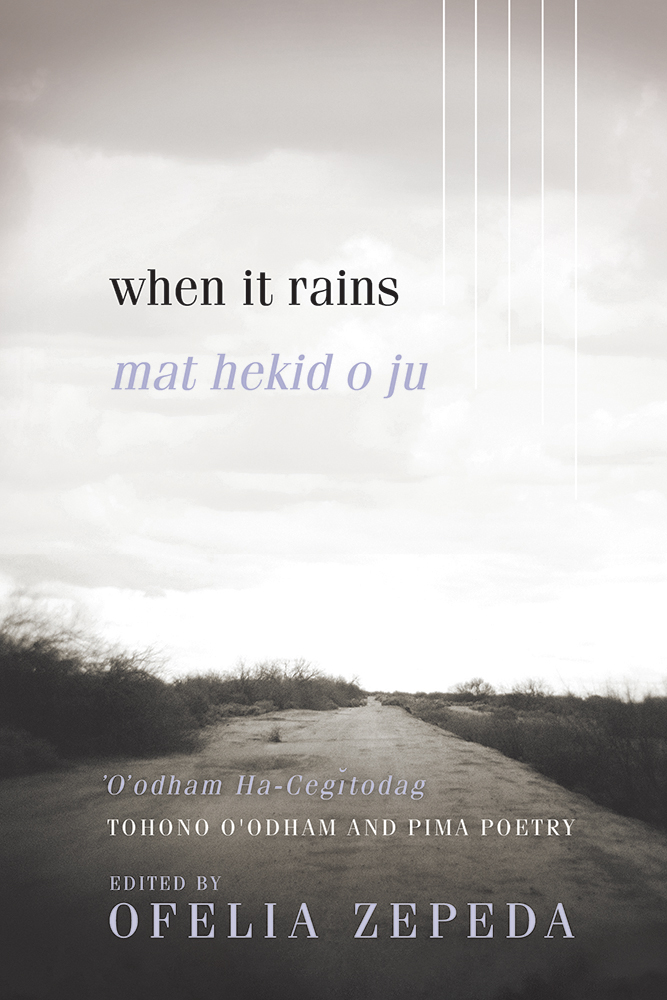
When it was first released in 1982, When It Rains was one of the earliest published literary works in the O’odham language. Speakers from across generations shared poems that showcased the aesthetic of the written word and aimed to spread interest in reading and writing in O’odham.
The poems capture brief moments of beauty, the loving bond between family members, and a deep appreciation of Tohono O’odham culture and traditions, as well as reverent feelings about the landscape and wildlife native to the Southwest. A motif of rain and water is woven throughout the poetry in When It Rains, tying in the collection’s title to the importance of this life-giving and sustaining resource to the Tohono O’odham people. With the poems in both O’odham and English, the volume serves as an important reminder of the beauty and changeability of the O’odham language.
Please note: this book is forthcoming in October 2023
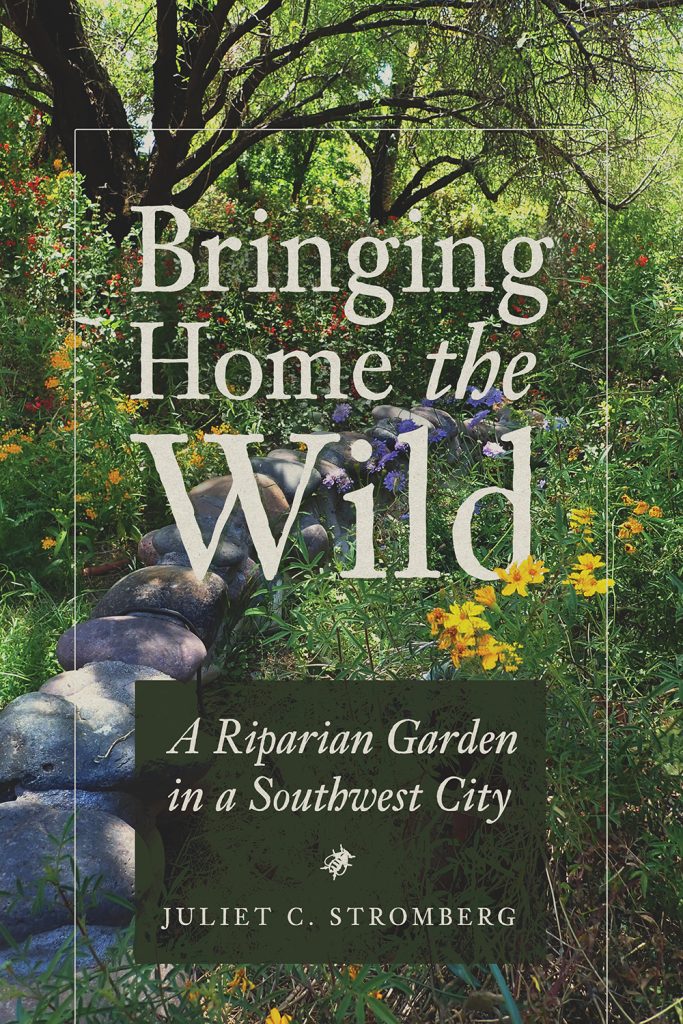
When living in a large sprawling city, one may feel disconnected and adrift. Finding ways to belong and have positive effects is challenging. In Bringing Home the Wild, botanist Juliet C. Stromberg demonstrates how ecologically guided gardening develops a sense of place, restores connections to nature, and brings joy and meaning to our lives.
This book follows a two-decade journey in ecologically guided gardening on a four-acre irrigated parcel in Phoenix, Arizona, from the perspective of a retired botanist and her science historian partner. Through humor and playful use of language, Bringing Home the Wild not only introduces the plants who are feeding them, buffering the climate, and elevating their moods but also acknowledges the animals and fungi who are pollinating the plants and recycling the waste. Some of the plants featured are indigenous to the American Southwest, while others are part of the biocultural heritage of the cityscape. This book makes the case for valuing inclusive biodiversity and for respectful interactions with all wild creatures, regardless of their historical origin.
As author and partner learn to cohabit with the plants who feed them, calm them, entertain them, and protect them from the increasing heat, their desire to live sustainably, ethically, and close to the land becomes even stronger, revealing the importance of observing, appreciating, and learning from the ecosystems of which we are a part.
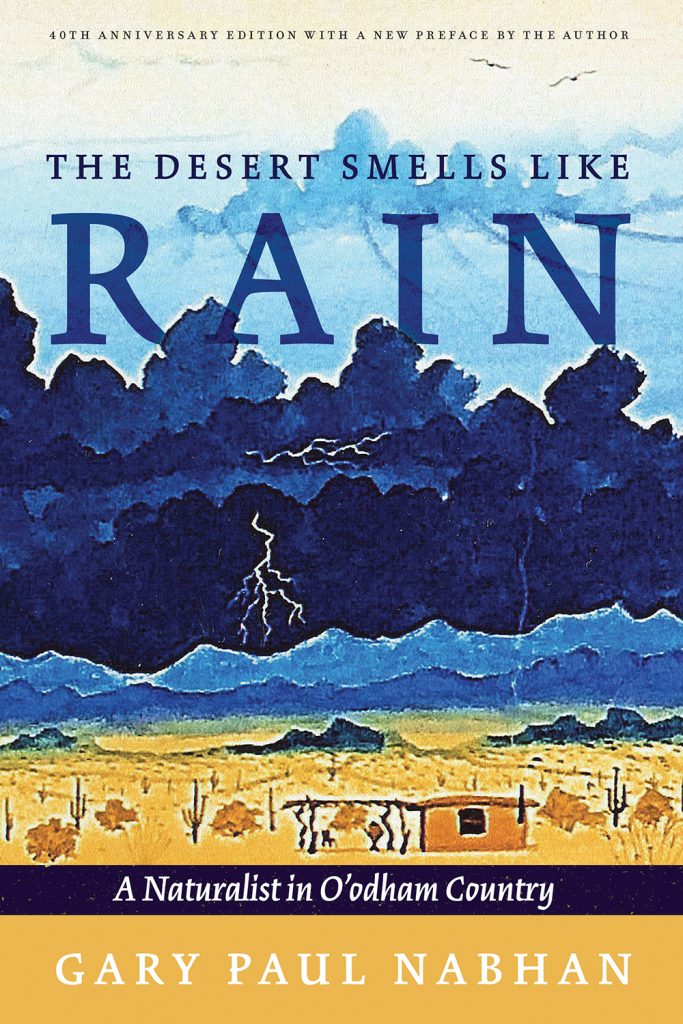
Published more than forty years ago, The Desert Smells Like Rain remains a classic work about nature, how to respect it, and what transplants can learn from the longtime residents of the Sonoran Desert, the Tohono O’odham people.
In this work, Gary Paul Nabhan brings O’odham voices to the page at every turn. He writes elegantly of how they husband scant water supplies, grow crops, and utilize edible wild foods. Woven through his account are coyote tales, O’odham children’s impressions of the desert, and observations of the political problems that come with living on both sides of an international border. Nabhan conveys the everyday life and extraordinary perseverance of these desert people.
This edition includes a new preface written by the author, in which he reflects on his gratitude for the O’odham people who shared their knowledge with him. He writes about his own heritage and connections to the desert, climate change, and the border. He shares his awe and gratitude for O’odham writers and storytellers who have been generous enough to share stories with those of us from other cultural traditions so that we may also respect and appreciate the smell of the desert after a rain.
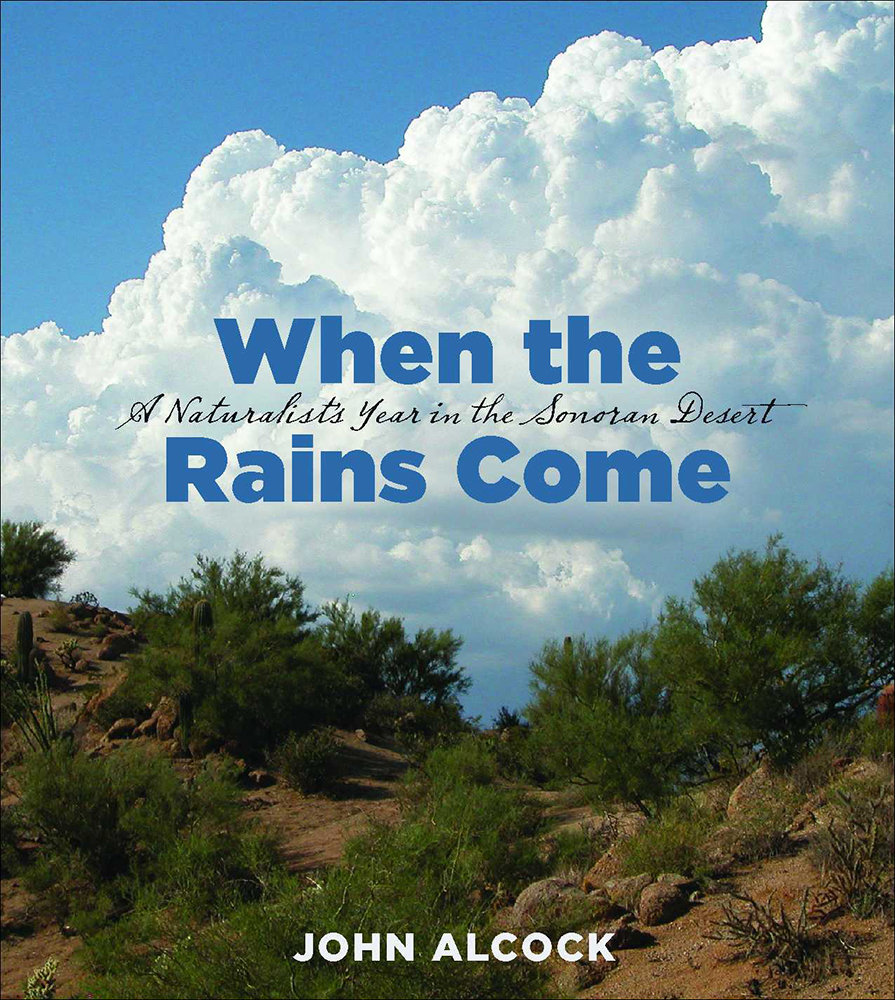
Life in the desert is a waiting game: waiting for rain. And in a year of drought, the stakes are especially high.
John Alcock knows the Sonoran Desert better than just about anyone else, and in this book he tracks the changes he observes in plant and animal life over the course of a drought year. Combining scientific knowledge with years of exploring the desert, he describes the variety of ways in which the wait for rain takes place—and what happens when it finally comes.
When the Rains Come is brimming with new insights into the desert, from the mating behaviors of insects to urban sprawl, and features photographs that document changes in the landscape as drought years come and go. It brings us the desert in the harshest of times—and shows that it is still teeming with life.
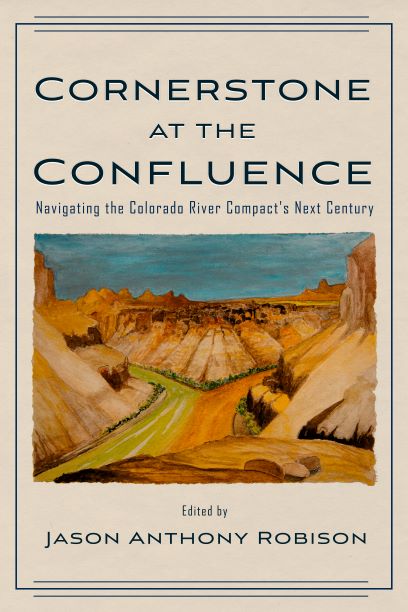
Signed on November 24, 1922, the Colorado River Compact is the cornerstone of a proverbial pyramid—an elaborate body of laws colloquially called the “Law of the River” that governs how human beings use water from the river system dubbed the “American Nile.”
No fewer than forty million people have come to rely on the Colorado River system in modern times—a river system immersed in an unprecedented, unrelenting megadrought for more than two decades. Attempting to navigate this “new normal,” policymakers are in the midst of negotiating new management rules for the river system, a process coinciding with the compact’s centennial that must be completed by 2026.
Animated by this remarkable confluence of events, Cornerstone at the Confluence leverages the centennial year to reflect on the compact and broader “Law of the River” to envision the future. It is a volume inviting dialogue about how the Colorado River system’s flows should be apportioned given climate change, what should be done about environmental issues such as ecosystem restoration and biodiversity protection, and how long-standing issues of water justice facing Native American communities should be addressed.
In one form or another, all these topics touch on the concept of “equity” embedded within the compact—a concept that tees up what is perhaps the foundational question confronted by Cornerstone at the Confluence: Who should have a seat at the table of Colorado River governance?
Summer is a great time to meet the people at the University of Arizona Press who turn book dreams into reality. We are a small but mighty team.
Today, we feature our Marketing Specialist, Cameron Quan.
Hello Cameron, what do you do for the Press?
I am the Marketing Specialist for the University of Arizona Press. One of the major components of my job is facilitating exhibits, which is all about the press’s physical presence: knowing which conferences and events make sense to attend, handling pre-exhibit logistics, representing the press at events, and generally just making sure that our books and authors are visible in their communities. I also contribute to advertising and social media, and I submit our authors’ books for awards.
How long have you been at UAP? About a week—I’m brand new! While I have a background in literature, publishing, advertising, and education, this is my first time working at a university press. In my previous life as a student at the University of Arizona, I always admired the mysterious folks on the fifth floor of the library, who seemed to materialize incredible books at a breakneck pace, and now I’m excited to be part of the action.
What do you like most about working here? The experience and knowledge of my colleagues is incredible. Being surrounded by people who are passionate about literature and language is nurturing, and everyone I’ve met has been welcoming and supportive. I love being part of a culture that acknowledges the profound responsibility and privilege of getting to help shepherd these books into the world. I also love that marketing is involved in the whole life of the book, getting to see it in its primordial state and then being able to observe its impact on people out in the world. It’s pretty magical.
What would people be surprised to learn about your work? One of the things that is currently boggling my mind is how far out the planning needs to happen. Everyone is constantly thinking about the next season, the next year. Marketing requires so much attention to detail, and when those details are provisional, or TBD, or a year out, it requires a lot of flexibility and scrappiness to make sure that people and things are where they need to be. The stakes are high, too! Our authors’ ideas are crucial.
What do you like to do in your free time? I’ve been rock climbing since I was a teenager, and it’s my favorite way to catch up with friends, spend time outside in the desert, move around, and (cheesy as it sounds) be in the present. Climbing is playful, social, and mentally/physically engaging, so it checks all my boxes for quality recreation.
Summer is a great time to meet the people at the University of Arizona Press who turn book dreams into reality. We are a small but mighty team.
Today, we feature our Publicity Manager, Mary Reynolds.
Hello Mary, what do you do for the Press?
I let everyone know about our awesome books! Book promotion starts early. Pre-publication, I work with trade authors to find people to write blurbs for their books. I send out press releases, digital and print Advance Reader Copies of books, review copies to scholarly journals and popular media outlets. I contact podcasters, bloggers, radio shows, and more to get our authors and books promoted in as many places as possible. I manage UA Press social media and write news and event items for our website. I also coordinate author events for our trade authors.
How long have you been at UAP? Seven whole months! I’m a rookie at the Press, but I’ve worked in the areas of publicity, writing, and editing for 20 years or so. And once upon a time, I even worked in a bookstore.
What do you like most about working here? I like knowing what’s behind the scenes in book publishing and working with other friendly people who love books. I love working with authors to bring their books out into the world, and learning about how authors came to write a particular book. But my favorite part so far is working at the UA Press tent at the Tucson Festival of Books where I can see authors interacting with readers, and witness the joy on everyone’s faces. I also see this at author events, authors enjoy answering readers’ questions.
What would people be surprised to learn about your work? Unless you are a published author, you would be surprised at how early our team starts to work on publicity for your book. About a year before the publication date, we contact trade authors and talk with them about our process. We partner with authors on publicity; authors come up with great ideas themselves about book promotion, and how to reach their target audiences. For trade and scholarly titles, we work way in advance of publication date to get books into our catalog, on our website, on other online distribution sites; and for scholarly titles, we send their books to appropriate journals for review. I am always looking for ways to promote our authors. Early book buzz is the best book buzz.
If you could travel anywhere in the world, where would you go and why? Someday, I will travel to Machu Pichu and hike the Inca Trail. I’ve wanted to make the trip since I learned about the Incas in my 7th grade Spanish class. I’m in awe of the stone remains of this intriguing civilization. I’m happy in high mountains, I enjoy hiking, and I would love to visit other Inca sites in the Peruvian Andes, too.
Summer is a great time to meet the people at the University of Arizona Press who turn book dreams into reality. We are a small but mighty team.
Today, we feature our Editorial, Design, and Production Manager, Amanda Krause.
Hello Amanda, what do you do for the Press?
I oversee our Editorial, Design, and Production department, handle manuscript editorial tasks like maintaining our house style guide and hiring freelance copyeditors, manage the production schedules of all our new books and reprints, and host of other tasks to make sure our books are both timely and something we and the authors can be really proud of.
How long have you been at UAP? I just hit my ten-year anniversary earlier this year, though I’ve been in university press publishing in some capacity or another for about fifteen. In a past life, I’ve also worked in other editorial and publishing jobs as a proofreader for a company that made marketing materials for colleges and universities, an assistant editor at a buildings and facilities trade magazine, and a beat reporter for covering school boards for two small-town newspapers in eastern Iowa.
What do you like most about working here? The people! Both our authors and our staff here at the press are some of the smartest, most creative and passionate people you’ll ever meet. I constantly learn new things from the people I get to work with—both interesting facts and new ways of thinking. . . . And I’d be remiss in my duties as a bibliophile if I didn’t also say that I love that new-book smell.
What would people be surprised to learn about your work? How collaborative a process making a book is. When a manuscript goes through copyediting, it isn’t just a “hey we’ve edited your book to conform to the press’s house style and we’re done”; there’s a lot of back-and-forth between the copyeditor and the author, and then oftentimes consultation with me on the best way to handle a particular style issue for a particular book. Grammar isn’t a one-size-fits-all thing where all the rules can or should apply uniformly to all text. The goal instead is to make sure the author’s ideas are communicated clearly and the style is consistent, and you have to take into consideration how to make sure the language is free of bias, which could undermine the author’s expertise. And language doesn’t stay static over time. Plus there’s all the internal communication on everything from schedules to cover design. It’s a lot of meetings and emails.
If you could travel anywhere in the world, where would you go and why? Morocco! I studied French from middle school up through college (I missed the last class needed for a minor in order to do an internship at Northwestern University Press), and I became fascinated with Francophone Africa. Morocco has such a unique blend of French, Arabic, and African cultures. And I recently read one of Karen Armstrong’s books about the prophet Muhammad and am very interested in learning more about the Islamic world as well. Unfortunately, I’d really need to brush up on my French before I go—my language skills are VERY rusty after years of disuse, though I used to be pretty conversational.
For Authors
The University of Arizona Press publishes the work of leading scholars from around the globe. Learn more about submitting a proposal, preparing your final manuscript, and publication.
The University of Arizona Press is proud to share our books with readers, booksellers, media, librarians, scholars, and instructors. Join our email Newsletter. Request reprint licenses, information on subsidiary rights and translations, accessibility files, review copies, and desk and exam copies.
Support a premier publisher of academic, regional, and literary works. We are committed to sharing past, present, and future works that reflect the special strengths of the University of Arizona and support its land-grant mission.
 The University of Arizona Press