The University of Arizona Press is thrilled to announce Arizona Crossroads, a new series celebrating Arizona’s history in partnership with the Arizona Historical Society. For more info on the series, please visit the series page here.
Throughout its history, Arizona has long served as a crossroads between Native peoples, settler colonists, and immigrants from around the world. It has been a contested site among peoples, nations, and empires; it is also a place where events, decisions, and struggles have had far-reaching consequences beyond its shifting borders. As the series title suggests, series editors Anita Huizar-Hernández, Eric V. Meeks, and Katherine G. Morrissey, welcome books that deepen our understanding of Arizona as a diverse crossroads and meeting ground within broad national and transnational contexts, whether topical, thematic or geographic (the region, the nation, the borderlands).
Open to any topic within any time period of Arizona history, the series will publish scholarship that is cutting-edge and innovative, yet generally accessible and readable to an educated general audience. We are open to a variety of book formats: monographs, multi-authored works, and edited collections as well as broader more synthetic works. Interdisciplinary projects that engage the past are encouraged.
Series editors:
Anita Huizar-Hernández is Associate Professor of Spanish in the School of International Letters and Cultures at Arizona State University. She is a literary critic whose teaching and research focus on the literatures and cultures of the U.S.-Mexico borderlands with a particular emphasis on the Arizona borderlands. Her book, Forging Arizona: A History of the Peralta Land Grant and Racial Identity in the West (Rutgers 2019), examines a nineteenth-century land grant scheme in which a con artist falsified archives around the world to steal part of the Arizona and New Mexico Territories. Other publications include articles in the Journal of Arizona History, MELUS (Multi-Ethnic Literatures of the United States), SAIL (Studies in American Indian Literatures), and English Language Notes. Her current book project investigates the early-twentieth century writings of Mexican Catholic political exiles in the United States. She is also engaged in multiple digital public-facing projects centered in Arizona, including “Reporting on Race and Ethnicity in the Borderlands (1882-1924): A Data-Driven Digital Storytelling Hub” and “DETAINED: Voices from the Migrant Incarceration System.”
Eric V. Meeks is Professor of History at Northern Arizona University. His research and teaching focus primarily on the history of the US-Mexico borderlands and race and ethnicity in North America. His book, Border Citizens: The Making of Indians, Mexicans, and Anglos in Arizona, examines how racial classifications and identities of the diverse indigenous, mestizo, and Euro-American residents of Arizona’s borderlands evolved as the region was politically and economically incorporated into the United States. A new updated edition was published by University of Texas Press in 2020. Other publications include articles in the Journal of Arizona History, Western Historical Quarterly, Journal of the Southwest and the Latin American Research Review. His current book project is a history of the US-Mexico borderlands from the late eighteenth century to the present, under contract with Yale University Press in cooperation with the Clements Center for Southwest Studies at Southern Methodist University.
Katherine G. Morrissey is Department Head and Associate Professor of History at the University of Arizona. Her research and teaching focus on cultural, environmental, borderlands/Southwest and North American West history. Her books include Mental Territories: Mapping the Inland Empire and two co-edited books with the University of Arizona Press, Border Spaces: Visualizing the U.S.-Mexico Frontera, with John-Michael H. Warner and Picturing Arizona: The Photographic Record of the 1930s, with Kirsten Jensen. Publications also include book chapters as well as articles in the Journal of Arizona History, Pacific Historical Review, Global Environment, and Frontiers: A Journal of Women Studies. Her current book project, Visual Legacies: Reimagining the US/Mexico Borderlands, traces efforts to mark and visually represent the meanings of the border through the long 20th century. She is co-PI for the “Reporting on Race and Ethnicity in the Borderlands (1882-1924)” digital project.
To learn more, register for our virtual series launch on Friday, September 9, 2022, 12:30 p.m. For event info, go here. For questions or to submit a proposal, please contact University of Arizona Press Editor-in-Chief Kristen Buckles, kbuckles@uapress.arizona.edu.
The Southwest Books of the Year are chosen by a panel of reviewers who examine new books focused on Southwest subjects or by Southwest authors. Pima County Public Library has published Southwest Books of the Year for more than four decades, helping us celebrate the best of literature, nonfiction, and regional books.
From Gregory McNamee on The Diné Reader:
… The editors of this splendid collection of Diné writing proceed in that spirit. Their pages are full of delights and surprises, beginning with excerpts from Blackhorse Mitchell’s Miracle Hill, which appeared a year before N. Scott Momaday’s House Made of Dawn, the novel credited with starting the modern Native literary renaissance. Many roads here lead to Luci Tapahonso, an inspiration to generations of Diné poets; the editors’ literary genealogies (with Esther Belin citing Nia Francisco as the first Diné writer she read) and interviews with writers lend special value to the collection. The Diné Reader belongs in every collection of Native American letters, and every Native literature deserves an anthology so thoughtful and well constructed.
Bruce Dinges chose Becoming Hopi:
The product of fifteen years of collaborative research among archaeologists, anthropologists, and tribal consultants conducted under the auspices of the Hopi Cultural Preservation Office, Becoming Hopi describes the dynamic evolution of society and culture from scattered precontact villages to large, complex, stable communities intimately connected to the land. Hopi resiliency, the authors convincingly argue, is a testament to the people’s adaptability to constant change and the expression of a lifeway that is always in the process of becoming. Appendices include site descriptions and maps, clan migration routes, and radiocarbon dates. To their credit, the contributors avoid academic jargon in an effort to make their conclusions accessible to a broad Native and non- Native audience. Fact-filled and lavishly illustrated, this landmark study sets an exemplary standard for future tribal histories.
Gregory McNamee chose Natural Landmarks of Arizona:
Arizona has a lot of mountains—3,928 of them, in fact, with nary a horizon without at least a peak or two. David Yetman, intrepid explorer and host of In the Americas, writes that he came to Arizona as a child from flatland New Jersey and, with brief sojourns here and there, has never left it, at least in part because of his fascination with our state’s geography and geology. In this compendium, he runs the mountainous gamut from Agathla, with its “touch of Mount Doom,” to Yarnell Hill, a good place to scope out the Harquahalas, which harbor the same geological sequence that can be seen in the Grand Canyon and which constitute “perhaps the Sonoran Desert’s most impressively purely desert range.” Geology is a notoriously difficult subject to write about, but Yetman—something of a landmark himself—handles it with skill and flair. Lovers of mountains, whether as things to climb or to behold, will delight in traveling alongside him.
Elizabeth Wilder was recently named assistant editor in the University of Arizona Press’s Acquisitions Department. Wilder first joined the Press in April 2020 as editorial assistant.
As assistant editor, Wilder oversees the Press’s two award-winning literary series, Camino del Sol and Sun Tracks, the annual Ambroggio Prize, and supports the lists of the University of Arizona Press Editor-in-Chief Kristen Buckles. She holds a PhD in English from Stanford University.
We are thrilled to announce that Urayoán Noel‘s poetry collection, Transversal, has been selected for the Longlist of the 2022 PEN America Open Book Award. Finalists will be announced in early 2022 and the winner will be honored at the 2022 PEN America Literary Awards Ceremony.
“These Longlists are a ‘who’s who’ of the most exceptional writers of our generation and the next,” said Clarisse Rosaz Shariyf, senior director of literary programs at PEN America. “Reading their names evokes memories of some of our all-time favorite works that brought us comfort during this strange year.”
Transversal takes a disruptive approach to poetic translation, opening up alternative ways of reading as poems get translated or transcreated into entirely new pieces. Noel masterfully examines his native Puerto Rico and the broader Caribbean as sites of transversal poetics and politics. Transversal seeks to disrupt standard English and Spanish, and it celebrates the nonequivalence between languages. Inspired by Caribbean poet and philosopher Édouard Glissant, the collection celebrates Caribbean practices of creolization as maximalist, people-centered, affect-loaded responses to the top-down violence of austerity politics. This groundbreaking, modular approach to poetic translation opens up alternative ways of reading in any language.
The Longlists represent 11 PEN America literary awards. The PEN Open Book Award, formerly the Beyond Margins Awards, invites book submissions by authors of color, published in the United States during the applicable calendar year. The Open Book Award was created by PEN America’s Open Book Committee, a group committed to racial and ethnic diversity within the literary and publishing communities. Works of fiction, literary nonfiction, biography/memoir, poetry, and other works of literary character are strongly preferred.
From Pen America:
In an era of publishing consolidation, more than half (53 percent) of the longlisted titles come from independent and university presses. Almost a quarter come from small independent publishers (12 percent) and university presses (nine percent).
“Our Longlists highlight the groundbreaking and vital work produced by independent publishers, many of which continue to face significant challenges in today’s publishing market,” Shariyf said. “These publishers are often leaders in promoting diverse voices and stories not just along racial and gender lines, but showcasing cultural and geographic diversity, too. The Awards ceremony allows writers and publishers to gather with readers and champions of creative free expression and celebrate the power of storytelling as an inclusive literary community.”
Check out all literary award Longlists, including the Open Book Award, here. You can also read the press release here.
Here’s a preview of our upcoming Spring 2022 season with the best the University of Arizona Press has to offer, from Latinx poetry, to Indigenous studies, space sciences, as well as the variety of the unique global scholarship the Press has committed to bring to readers worldwide. You know the drill. Tuck in.
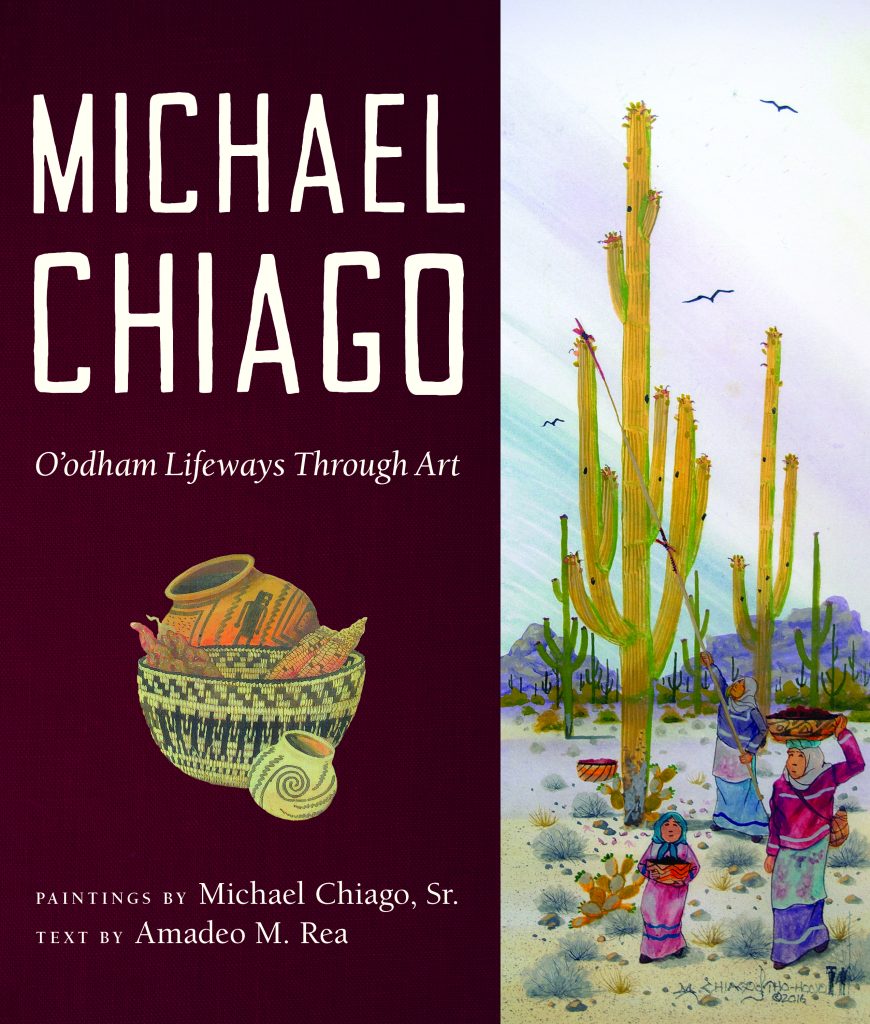
Michael Chiago: O’odham Lifeways Through Art, by Michael Chiago Sr., and Amadeo M. Rea, offers an artistic depiction of O’odham lifeways through the paintings of internationally acclaimed O’odham artist Michael Chiago Sr. Ethnobiologist Amadeo M. Rea collaborated with the artist to describe the paintings in accompanying text, making this unique book a vital resource for cultural understanding and preservation. A joint effort in seeing, this work explores how the artist sees and interprets his culture through his art. By combining Chiago’s paintings of his lived experiences with Rea’s ethnographic work, this book offers a full, colorful, and powerful picture of O’odham heritage, culture, and language, creating a teaching reference for future generations.
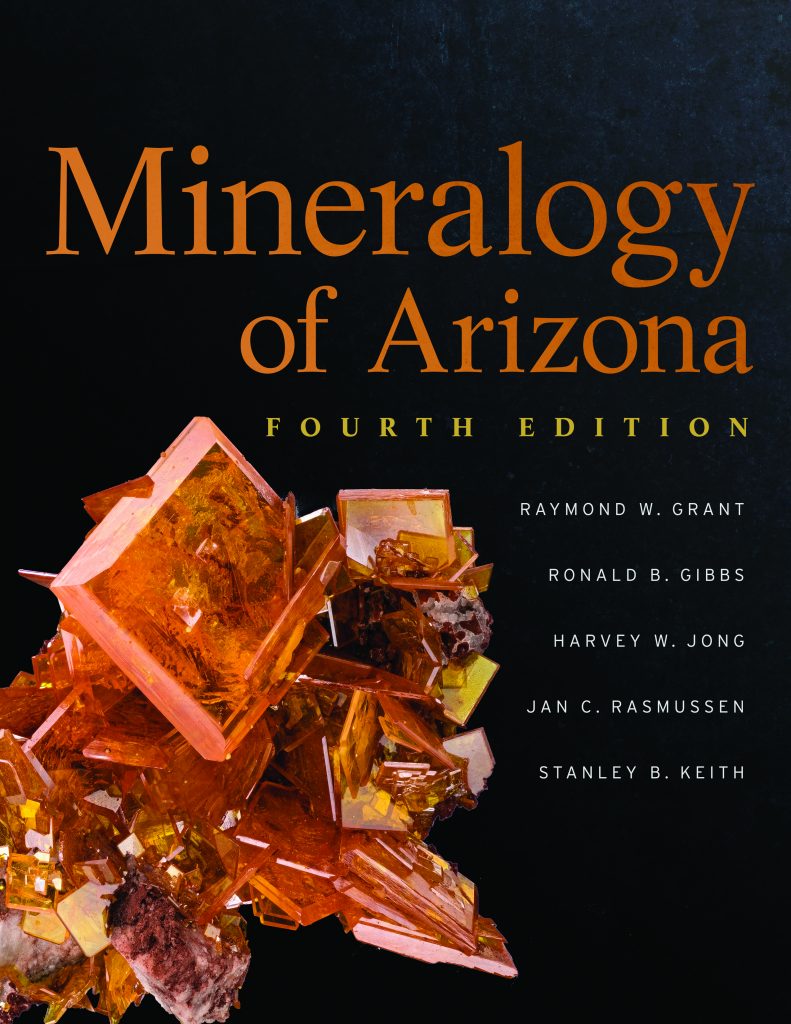
Completely revised and expanded, this fourth edition of Mineralogy of Arizona, Fourth Edition, by Raymond W. Grant, Ron Gibbs, Harvey Jong, Jan Rasmussen, and Stanley Keith, covers the 986 minerals found in Arizona, showcased with breathtaking new color photographs throughout the book. The new edition includes more than 200 new species not reported in the third edition and previously unknown in Arizona. Arizona’s rich mineral history is well illustrated by the more than 300 color photographs of minerals, gemstones, and fluorescent minerals that help the reader identify and understand the rich and diverse mineralogy of Arizona. Anyone interested in the mineralogy and geology of the state will find this the most up-to-date compilation of the minerals known to occur in Arizona.
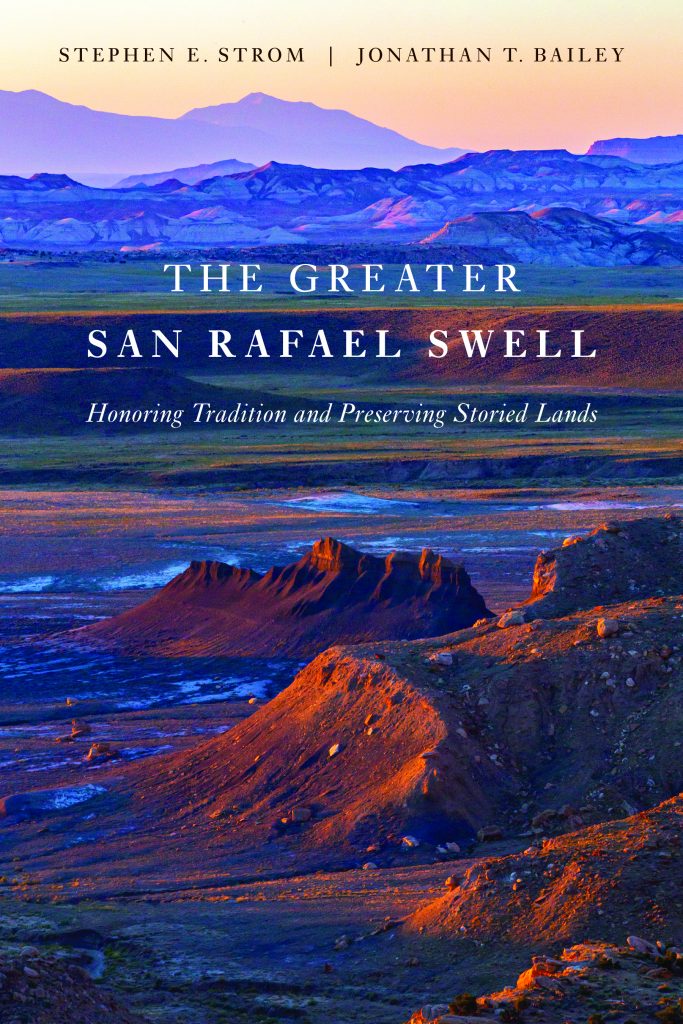
The Greater San Rafael Swell: Honoring Tradition and Preserving Storied Lands, by Stephen E. Strom, Jonathan Bailey, chronicles hopeful stories for our times: how citizens of Emery and three other counties in the rural West worked to resolve perhaps the most volatile issue in the region–the future of public lands. Both their successes and the processes by which they found common ground serve as beacons in today’s uncertain landscape–beacons that can illuminate paths toward rebuilding our shared democracy from the ground up. Authors Strom and Bailey paint a multi-faceted picture of a singular place through photographs, along with descriptions of geology, paleontology, archaeology, history, and dozens of interviews with individuals who devoted more than two decades to developing a shared vision of the future of both the Swell and the County.
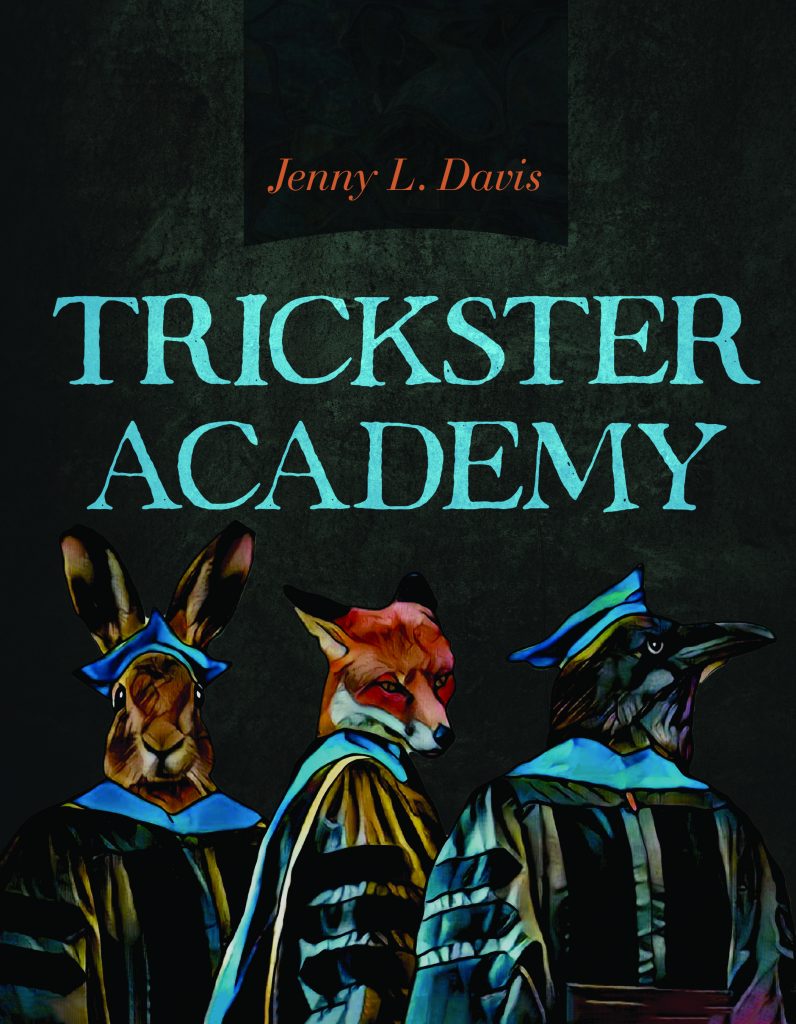
Trickster Academy, by Jenny L. Davis, is a collection of poems that explore being Native in Academia—from land acknowledgement statements, to mascots, to the histories of using Native American remains in anthropology. Davis’ collection brings humor and uncomfortable realities together in order to challenge the academy and discuss the experience of being Indigenous in university classrooms and campuses. Organized around the premise of the Trickster Academy—a university space run by, and meant for training, Tricksters—this collection moves between the personal dynamics of a Two-Spirit/queer Indigenous woman in spaces where there are few, if any, others and a Trickster’s critique of those same spaces.
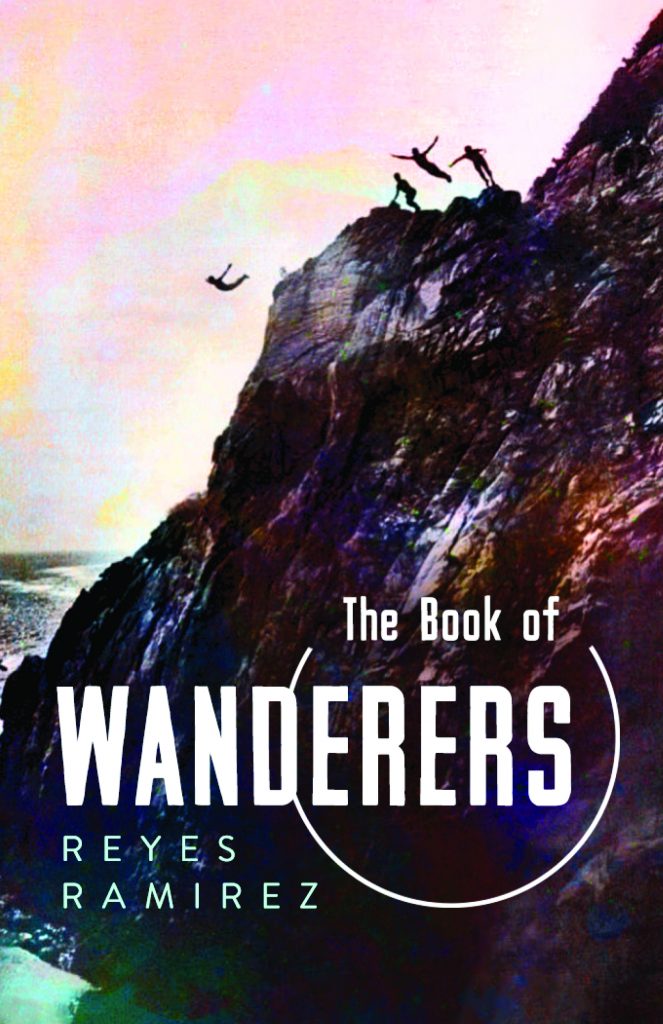
Reyes Ramirez’s The Book of Wanderers is a dynamic short story collection that follows new lineages of Mexican and Salvadoran diasporas traversing life in Houston, across borders, and even on Mars. Themes of wandering weave throughout each story, bringing feelings of unease and liberation as characters navigate cultural, physical, and psychological separation and loss from one generation to the next in a tumultuous nation. The Book of Wanderers deeply explores Houston, a Gulf Coast metropolis that incorporates Southern, Western, and Southwestern identities near the borderlands with a connection to the cosmos. As such, each story becomes increasingly further removed from our lived reality, engaging numerous genres from emotionally touching realist fiction to action-packed speculative fiction, as well as hallucinatory realism, magical realism, noir, and science fiction.
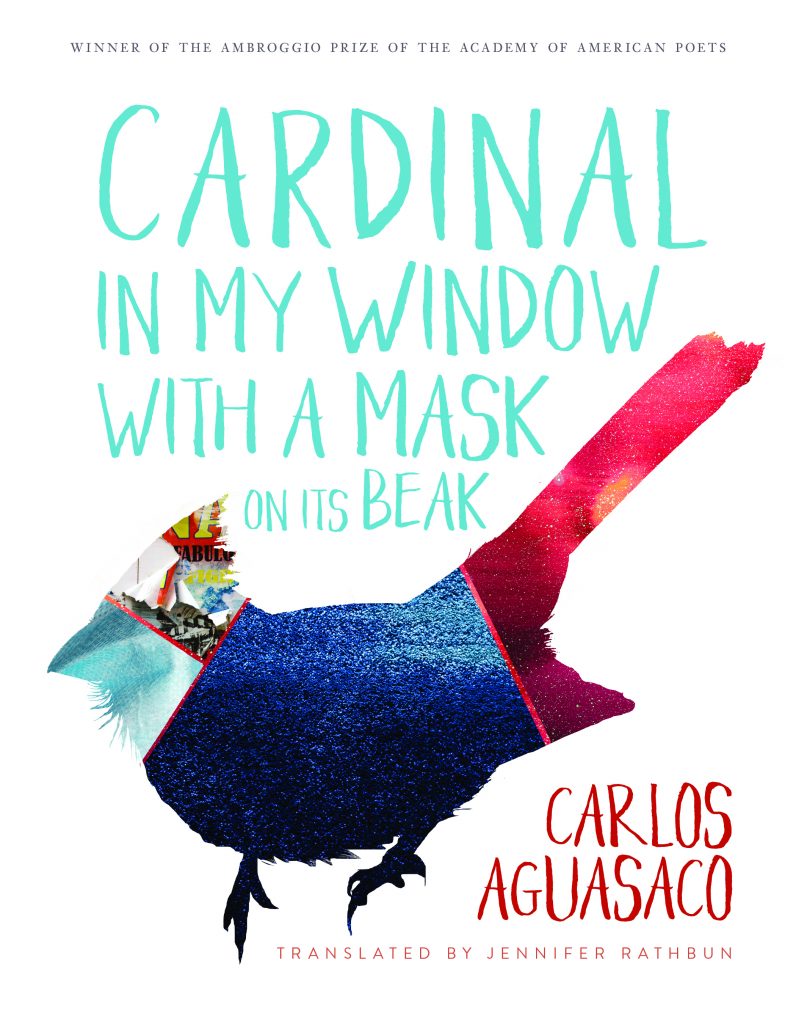
Carlos Aguasaco, a first-generation immigrant to the United States, embraces his transborder/transnational/intercultural identity by building a bridge across time and distance to unite the great voices of the Renaissance with his lyrical poems in his new collection, Cardinal in My Window with a Mask on Its Beak. The collection offers bold and fascinating dialogue with Spanish authors such as Juan Boscán, Francisco de Quevedo, Garcilaso de la Vega, and Sor Juana Inés de la Cruz. The poems examine the fundamental liberties inherent to humanity through stunning verse. In a quest for freedom, the poems openly criticize the treatment of immigrants in the United States, drawing poignant parallels with human rights abuses throughout history.
A Love Letter to This Bridge Called My Back, edited bygloria j wilson, Joni Boyd Acuff, and Amelia M Kraehe, recognizes the challenges faced by women of color in a twenty-first-century world of climate and economic crises, increasing gun violence, and ever-changing social media constructs for women of color. It also retains the clarion call Bridge set in motion, as Moraga wrote: “A theory in the flesh means one where the physical realities of our lives—our skin color, the land or concrete we grew up on, our sexual longing—all fuse to create a politic born of necessity.” The central theme of the original Bridge is honored, exposing the lived realities of women of color at the intersections of race, class, gender, ethnicity, and sexuality, advancing those early conversations on what it means to be Third World feminist conscious.
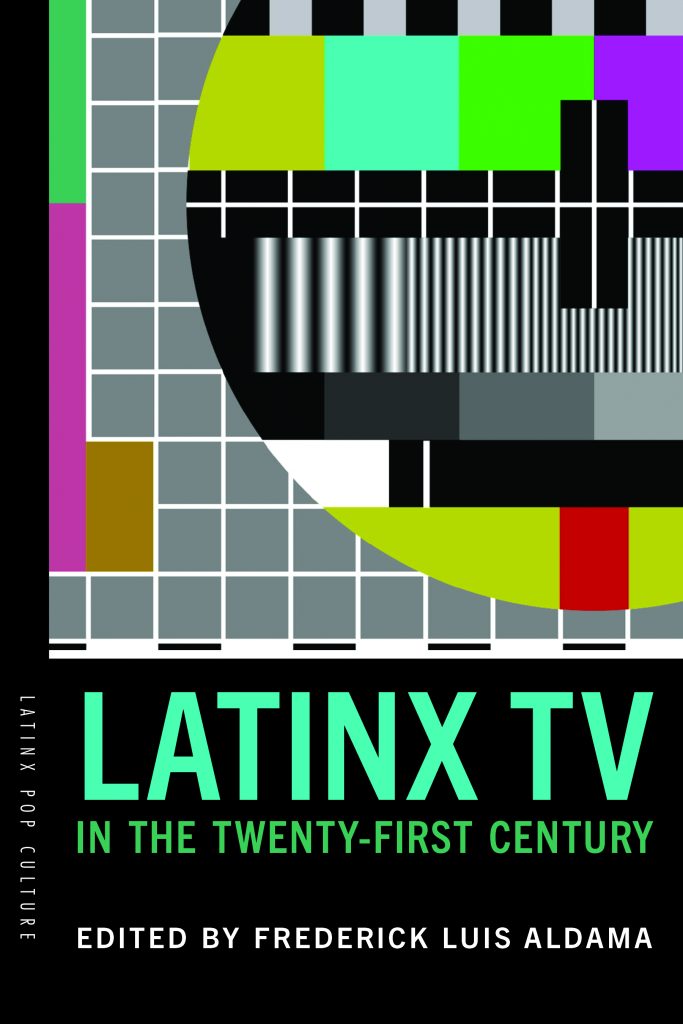
Latinx TV in the Twenty-First Century, edited by Frederick Luis Aldama, argues that Latinx TV is not just television—it’s an entire movement. Digital spaces and streaming platforms today have allowed for Latinx representation on TV that speaks to Latinx people and non-Latinx people alike, bringing rich and varied Latinx cultures into mainstream television and addressing urbanization, immigration, family life, language, politics, gender, sexuality, class, race, and ethnicity. Once heavily underrepresented and harmfully stereotypical, Latinx representation on TV is beginning to give careful nuance to regional, communal, and familial experiences among U.S. Latinx people. This volume unpacks the negative implications of older representation and celebrates the progress of new representation, recognizing that television has come a long way, but there is still a lot of important work to do for truly diverse and inclusive representation.
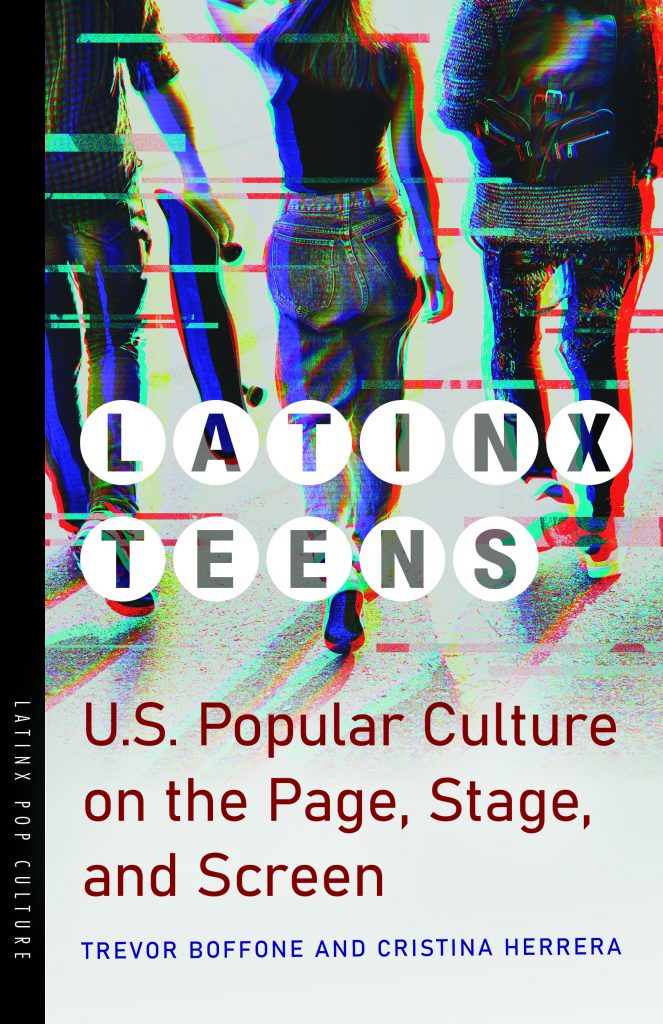
Latinx Teens: U.S. Popular Culture on the Page, Stage, and Screen, by Trevor Boffone, and Cristina Herrera, answers this question: What can Latinx youth contribute to critical conversations on culture, politics, identity, and representation?This book offers an energetic, in-depth look at how Latinx teenagers influence twenty-first-century U.S. popular culture. Boffone and Herrera explore the diverse ways that contemporary mainstream film, television, theater, and young adult literature invokes, constructs, and interprets adolescent Latinidad. As the first book that specifically examines Latinx adolescence in popular culture, Latinx Teens insists that we must privilege the stories of Latinx teenagers in television, film, theater, and literature to get to the heart of Latinx popular culture. Exploring themes around representation, identity, gender, sexuality, and race, the works explored in this groundbreaking volume reveal that there is no single way to be Latinx, and show how Latinx youth are shaping the narrative of the Latinx experience for a more inclusive future.
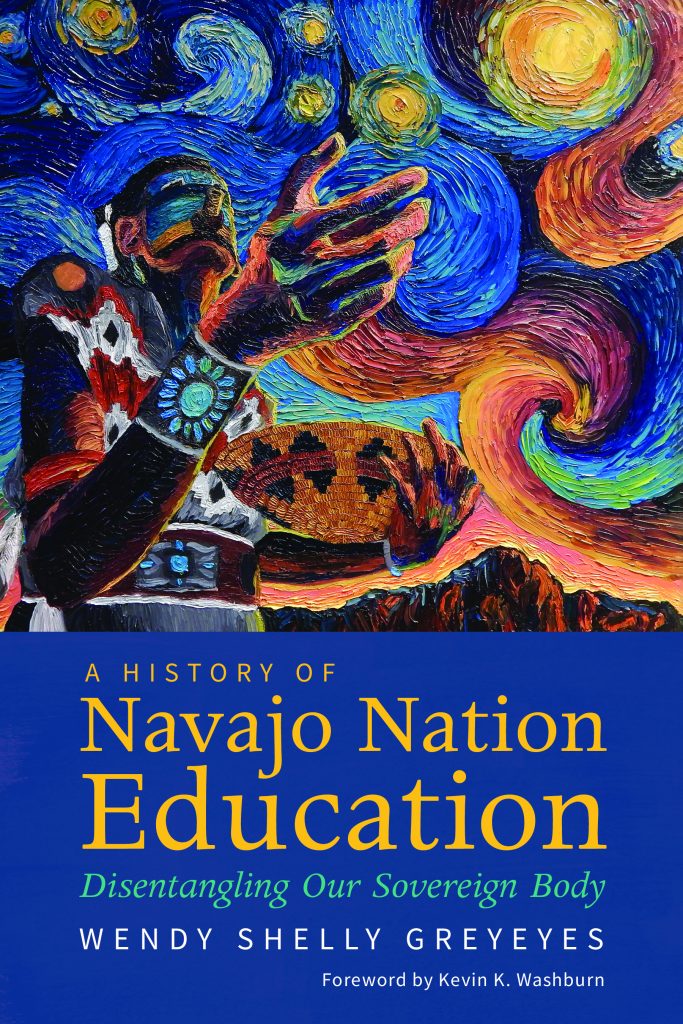
A History of Navajo Nation Education: Disentangling Our Sovereign Body, by Wendy Shelly Greyeyes, unravels the tangle of federal and state education programs that have been imposed on Navajo people and illuminates the ongoing efforts by tribal communities to transfer state authority over Diné education to the Navajo Nation. On the heels of the fiftieth anniversary of the founding of the Department of Diné Education, this important education history explains how the current Navajo educational system is a complex terrain of power relationships, competing agendas, and jurisdictional battles influenced by colonial pressures and tribal resistance.
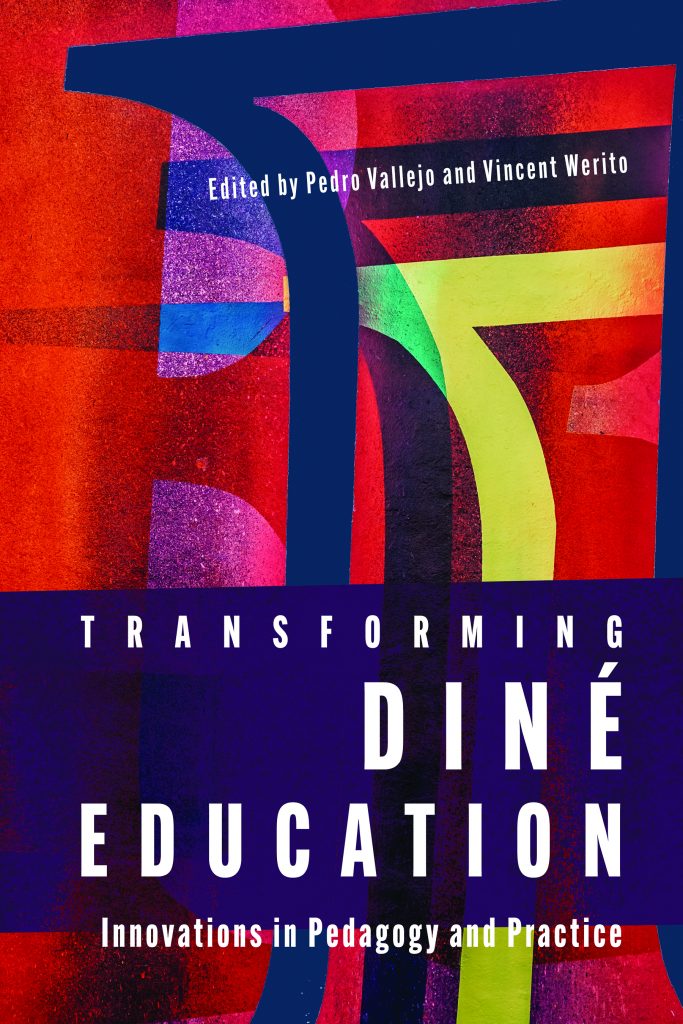
Transforming Diné Education: Innovations in Pedagogy and Practice, edited by Pedro Vallejo, and Vincent Werito, gathers the voices of Diné scholars, educators, and administrators to offer critical insights into contemporary programs that place Diné-centered pedagogy into practice. Bringing together decades of teaching experience, contributors offer perspectives from school- and community-based programs, as well as the tribal, district, and university level. They address special education, language revitalization, wellness, self-determination and sovereignty, and university-tribal-community partnerships.
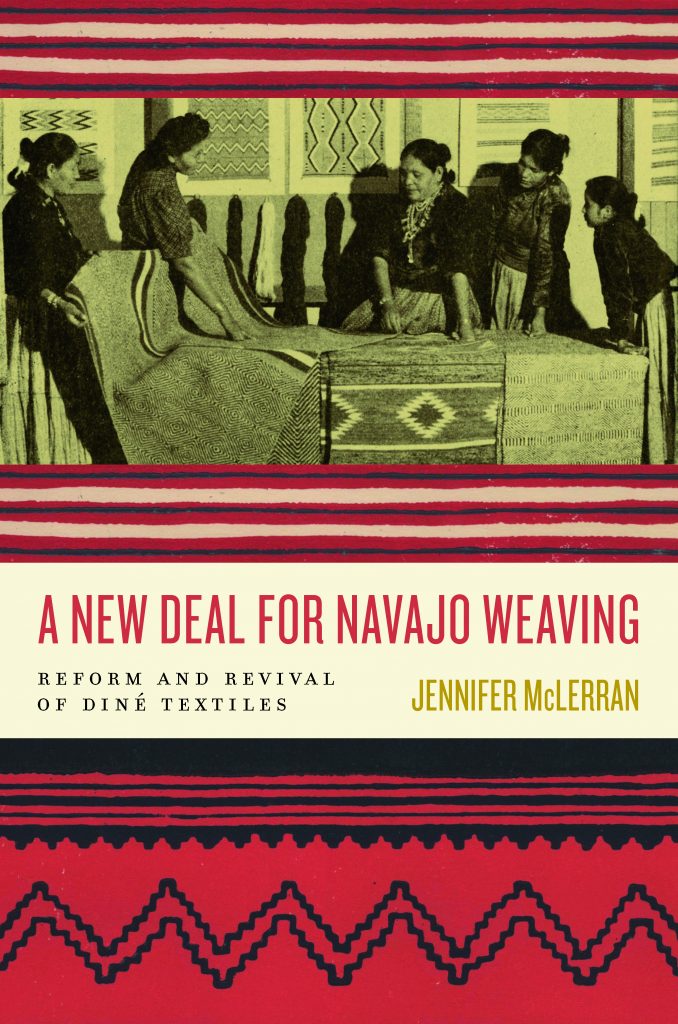
A New Deal for Navajo Weaving: Reform and Revival of Diné Textiles, by Jennifer McLerran, provides a detailed history of early to mid-twentieth-century Diné weaving projects by non-Natives who sought to improve the quality and marketability of Navajo weaving but in so doing failed to understand the cultural significance of weaving and its role in the lives of Diné women. McLerran details how government officials sought to use these programs to bring the Diné into the national economy; instead, these federal tactics were ineffective because they marginalized Navajo women and ignored the important role weaving plays in the resilience and endurance of wider Diné culture.
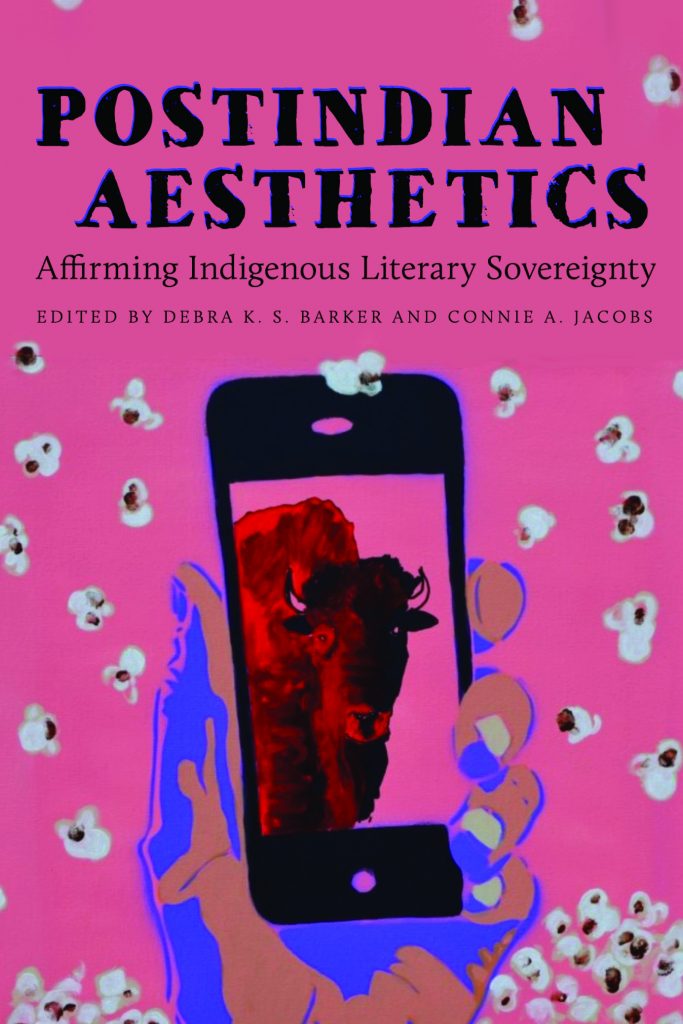
Postindian Aesthetics: Affirming Indigenous Literary Sovereignty, edited by Debra K. S. Barker, and Connie A. Jacobs, is a collection of critical, cutting-edge essays on Indigenous writers who are creatively and powerfully contributing to a thriving Indigenous literary aesthetic. This book argues for a literary canon that includes Indigenous literature that resists colonizing stereotypes of what has been and often still is expected in art produced by American Indians. The works featured are inventive and current, and the writers covered are visionaries who are boldly redefining Indigenous literary aesthetics. The artists covered include Orlando White, LeAnne Howe, Stephen Graham Jones, Deborah Miranda, Heid E. Erdrich, Sherwin Bitsui, and many others.
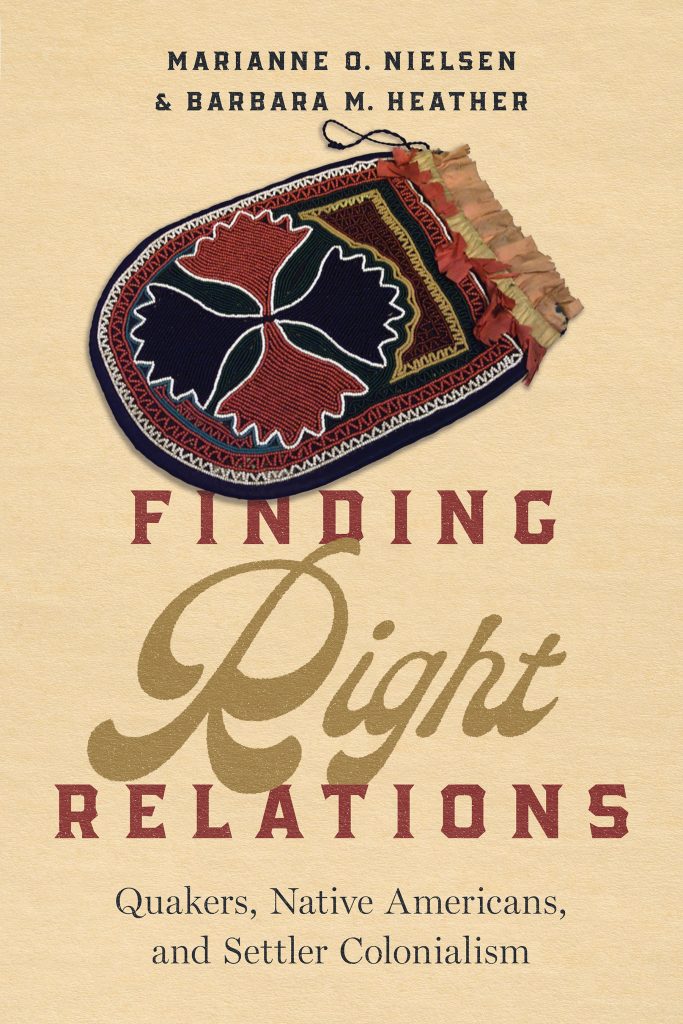
Finding Right Relations: Quakers, Native Americans, and Settler Colonialism, by Marianne O. Nielsen, and Barbara M. Heather, centers on the relationship between Quaker colonists and the Lenape people, exploring the contradictory position of the Quakers as both egalitarian, pacifist people, and as settler colonists. Quakers were one of the early settler colonist groups to invade northeastern North America. William Penn set out to develop a “Holy Experiment,” or utopian colony, in what is now Pennsylvania. Here, he thought, his settler colonists would live in harmony with the Indigenous Lenape and other settler colonists. This book explores major challenges to Quaker beliefs and resulting relations with American Indians from the mid-seventeenth century to the late nineteenth century. It shows how the Quakers not only failed to prevent settler colonial violence against American Indians but also perpetuated it.
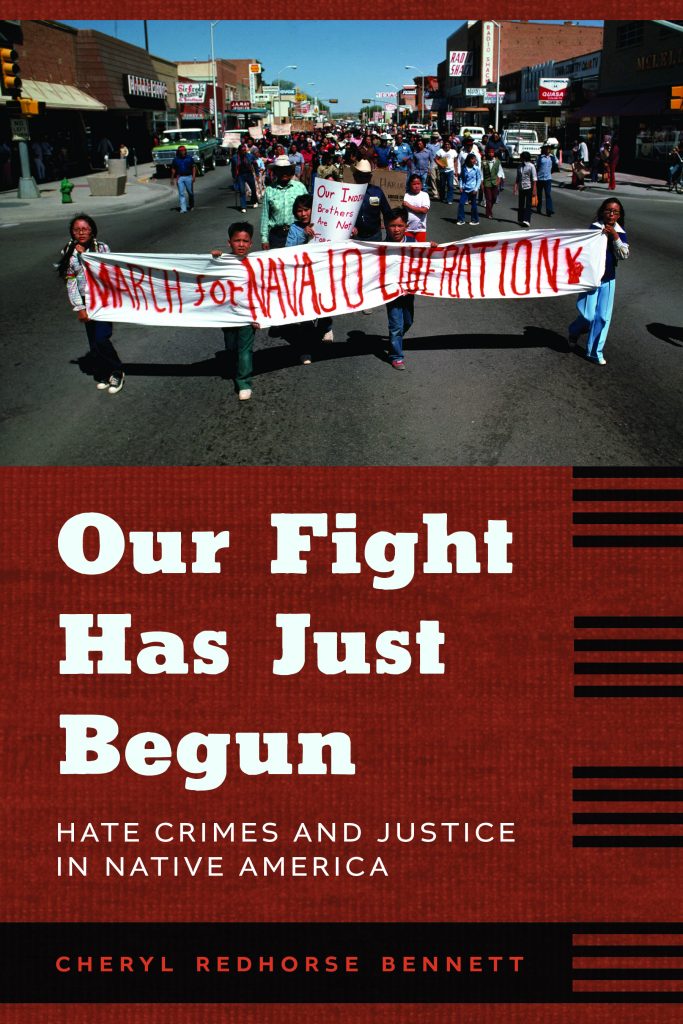
Our Fight Has Just Begun: Hate Crimes and Justice in Native America, by Cheryl Redhorse Bennett, is a timely and urgent work. The result of more than a decade of research, it revises history, documents anti-Indianism, and gives voice to victims of racial violence. Navajo scholar Cheryl Redhorse Bennett reveals a lesser-known story of Navajo activism and the courageous organizers that confronted racial injustice and inspired generations. Illuminating largely untold stories of hate crimes committed against Native Americans in the Four Corners region of the United States, this work places these stories within a larger history, connecting historical violence in the United States to present-day hate crimes.
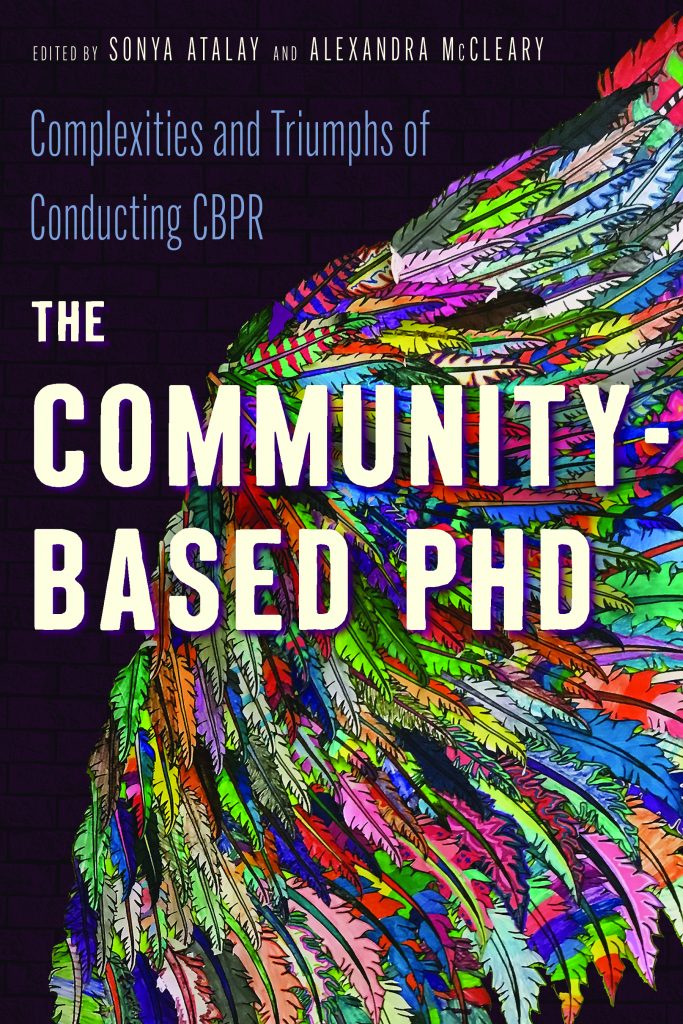
The Community-Based PhD: Complexities and Triumphs of Conducting CBPR, edited by Sonya Atalay, and Alexandra C McCleary, brings together the experiences of PhD students from a range of disciplines discussing CBPR in the arts, humanities, social sciences, public health, and STEM fields. They write honestly about what worked, what didn’t, and what they learned. Essays address the impacts of extended research time frames, why specialized skill sets may be needed to develop community-driven research priorities, the value of effective relationship building with community partners, and how to understand and navigate inter- and intra-community politics.
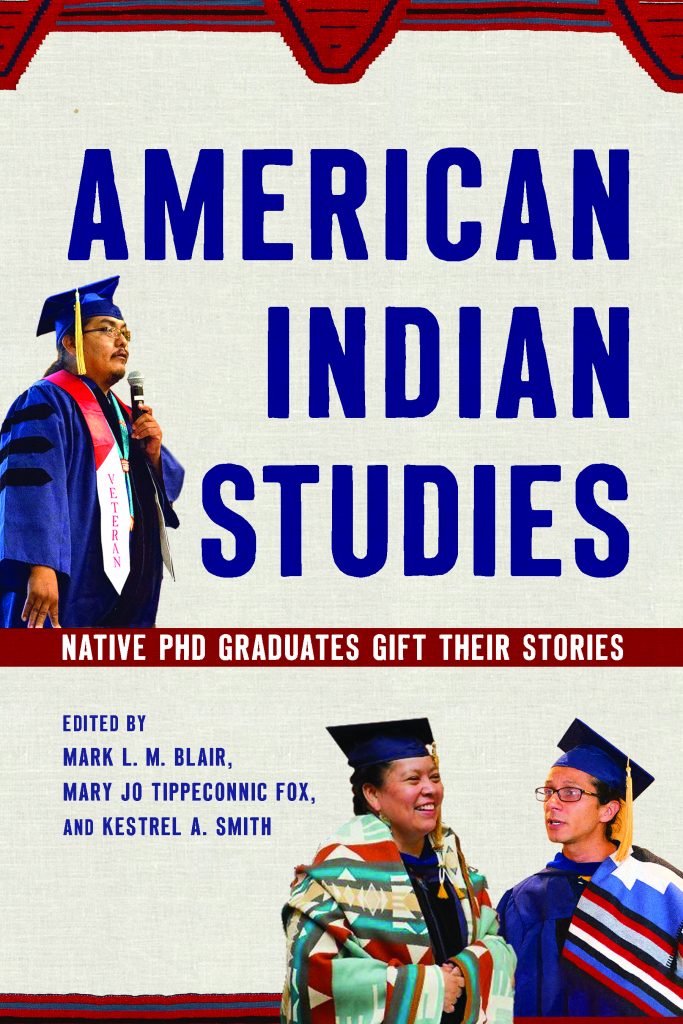
In American Indian Studies: Native PhD Graduates Gift Their Stories, edited by Mark L. M. Blair, Mary Jo Tippeconnic Fox, and Kestrel A. Smith, Native PhD graduates share their personal stories about their educational experiences and how doctoral education has shaped their identities, lives, relationships, and careers. This collection of personal narratives from Native graduates of the University of Arizona’s American Indian Studies (AIS) doctoral program, the first such program of its kind, gifts stories of endurance and resiliency, hardship and struggle, and accomplishment and success. It provides insight into the diverse and dynamic experiences of Native graduate students. The narratives address family and kinship, mentorship, and service and giving back. Essayists share the benefits of having an AIS program at a mainstream academic institution—not just for the students enrolled but also for their communities.
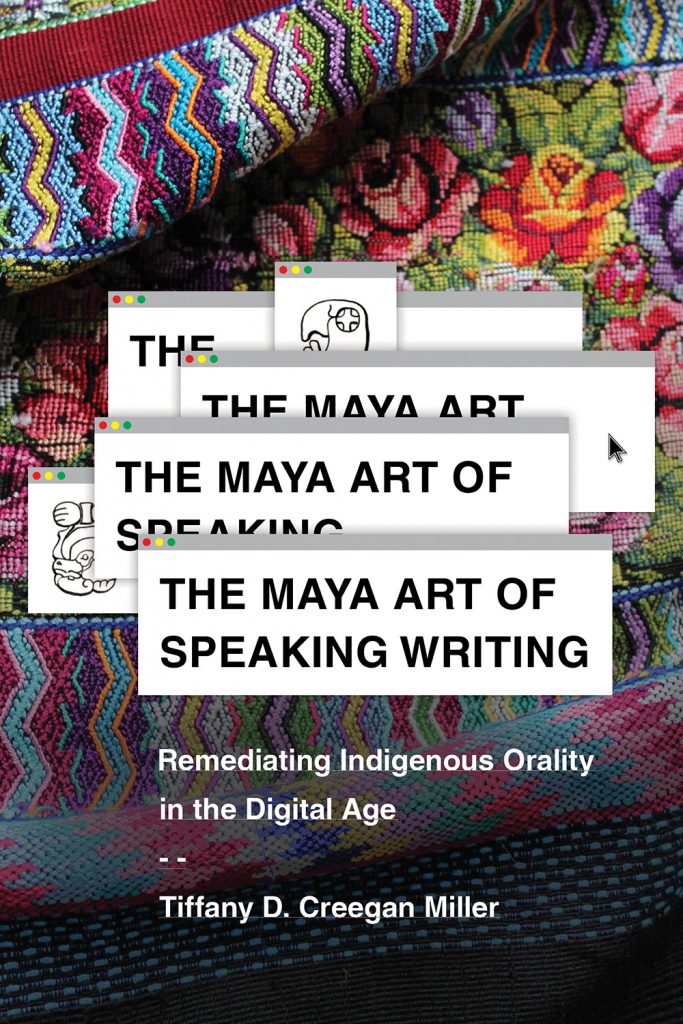
The Maya Art of Speaking Writing: Remediating Indigenous Orality in the Digital Age, by Tiffany D. Creegan Miller, challenges the distinctions between “old” and “new” media and narratives about the deprecation of orality in favor of inscribed forms, drawing from Maya concepts of tz’ib’ (recorded knowledge) and tzij, choloj, and ch’owen (orality) to look at expressive work across media and languages. Based on nearly a decade of fieldwork in the Guatemalan highlands, Creegan Miller discusses images that are sonic, pictorial, gestural, and alphabetic. She reveals various forms of creativity and agency that are woven through a rich media landscape in Indigenous Guatemala, as well as Maya diasporas in Mexico and the United States. Miller discusses how technologies of inscription and their mediations are shaped by human editors, translators, communities, and audiences, as well as by voices from the natural world.
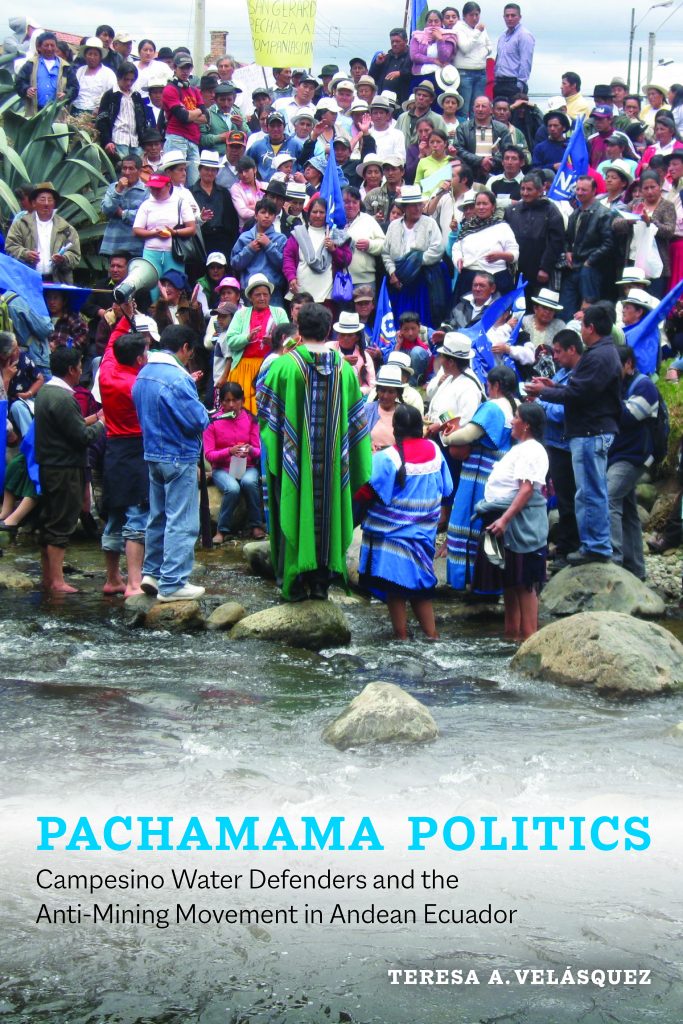
Pachamama Politics: Campesino Water Defenders and the Anti-Mining Movement in Andean Ecuador, by Teresa A. Velásquez, provides a rich ethnographic account of the tensions that follow from neoextractivism in the southern Ecuadorian Andes, where campesinos mobilized to defend their community-managed watershed from a proposed gold mine. Positioned as an activist-scholar, Velásquez takes the reader inside the movement—alongside marches, road blockades, and river and high-altitude wetlands—to expose the rifts between social movements and the “pink tide” government. Ecuador became the first country in the world to grant the Pachamama, or Mother Earth, constitutional rights in 2008. This landmark achievement represented a shift to incorporate Indigenous philosophies of Sumak Kawsay or Buen Vivir (to live well) as a framework for social and political change.
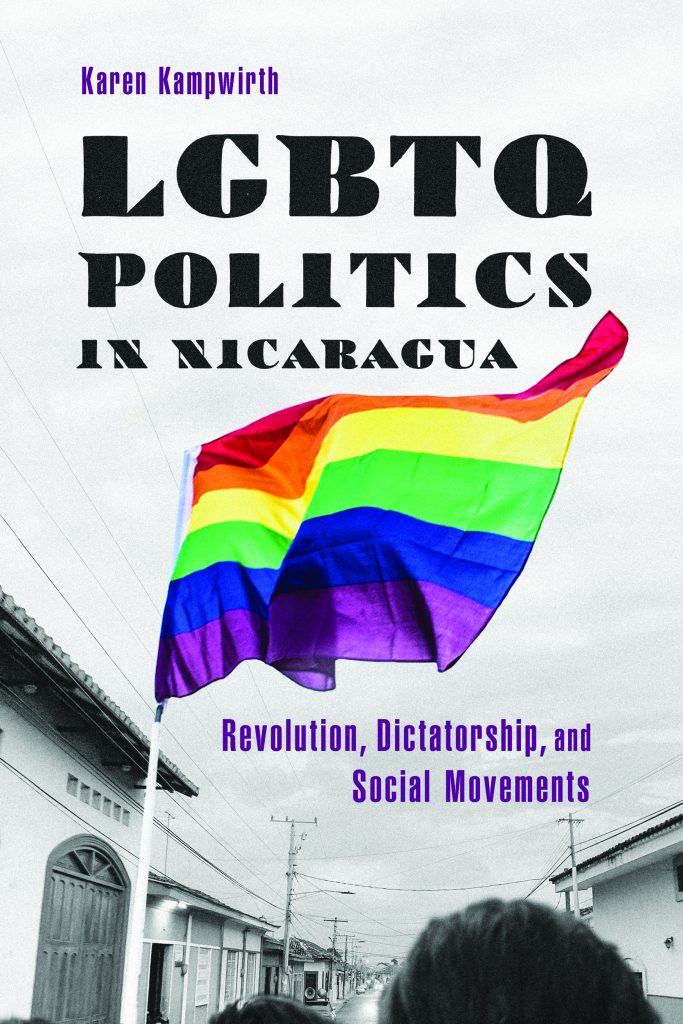
LGBTQ Politics in Nicaragua: Revolution, Dictatorship, and Social Movements, by Karen Kampwirth, explores the untold stories of the LGBTQ community of Nicaragua and its role in the recent political history of the country. Kampwirth is a renowned scholar of the Nicaraguan Revolution, who has been writing at the intersection of gender and politics for decades. In this chronological telling of the last fifty years of political history in Nicaragua, Kampwirth deploys a critical new lens: understanding politics from the perspective of the country’s LGBTQ community. Kampwirth details the gay and lesbian guerrillas in the 1960s and 1970s, Nicaragua’s first openly gay television wizard in the 1980s, and the attempts by LGBTQ revolutionaries to create a civil rights movement and the subsequent squashing of that movement by the ruling Sandinista party.
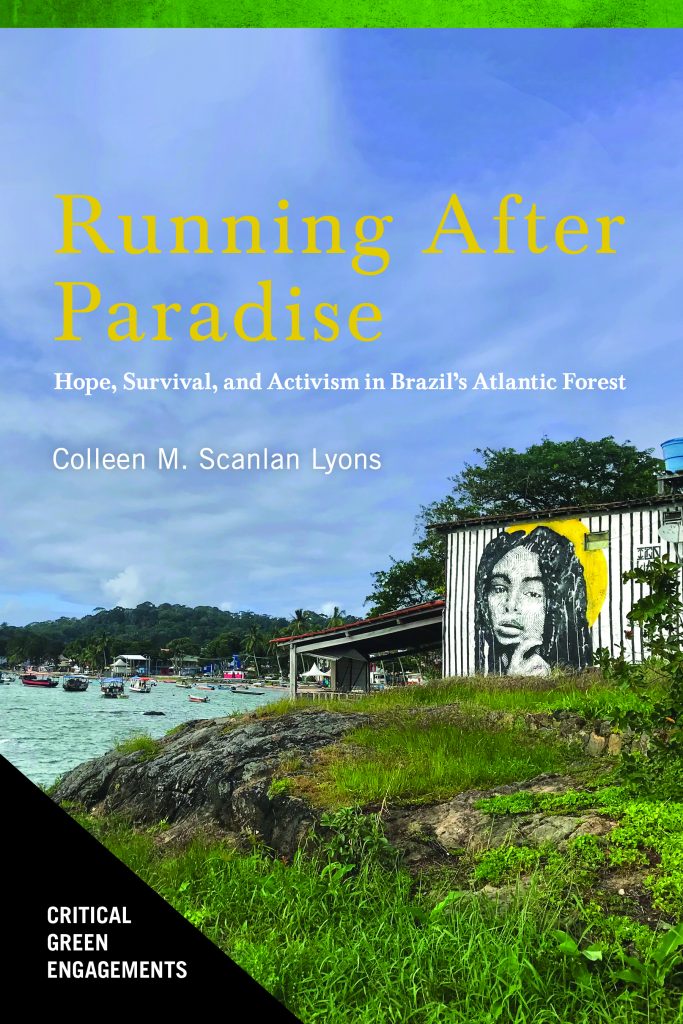
Anthropologist Colleen M. Scanlan Lyons brings the eye of a storyteller to present this complex struggle, weaving in her own challenges of balancing family and fieldwork alongside the stories of the people who live in this dynamic region in Running After Paradise: Hope, Survival, and Activism in Brazil’s Atlantic Forest. Southern Bahia is at a crossroads: develop a sustainable, forest-based economy or run the risk of losing the identity and soul of this place forevermore. Through the lives of environmentalists, farmers, quilombolas, and nativos—people who are in and of this place—this book brings alive the people who are grappling with this dilemma. Intertwined tales, friendships, and hope emerge as people both struggle to sustain their lives in a biodiversity hotspot and strive to create their paradise.
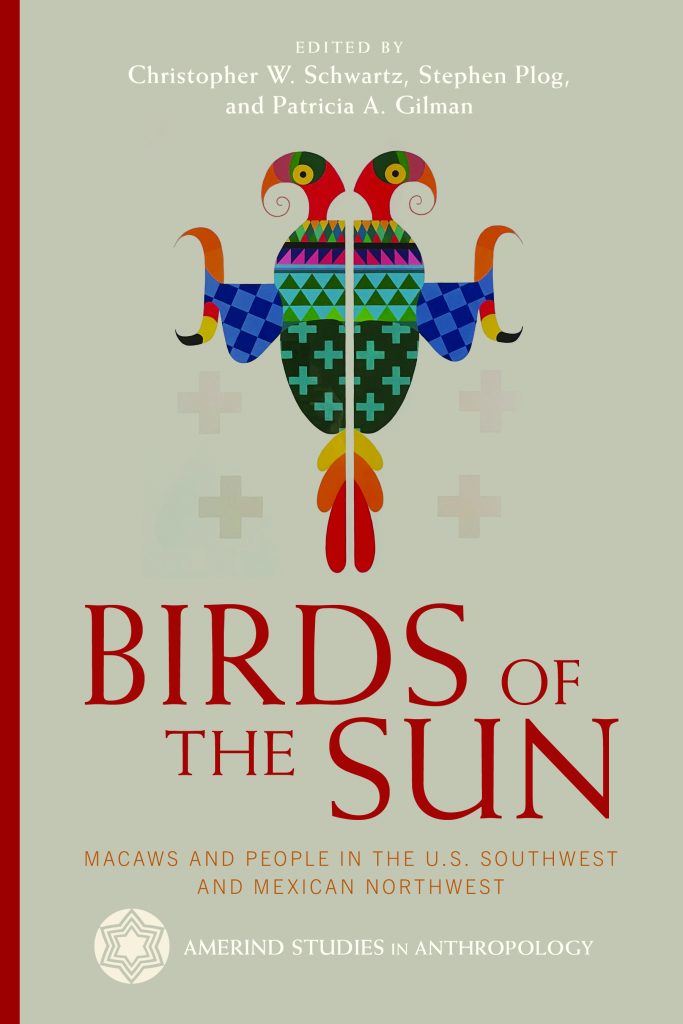
Birds of the Sun; Macaws and People in the U.S. Southwest and Mexican Northwest, edited by Christopher W Schwartz, Stephen Plog, and Patricia A. Gilman, explores the many aspects of macaws, especially scarlet macaws, that have made them important to Native peoples living in this region for thousands of years. Leading experts discuss the significance of these birds, including perspectives from a Zuni author, a cultural anthropologist specializing in historic Pueblo societies, and archaeologists who have studied pre-Hispanic societies in Mesoamerica and the U.S. Southwest and Mexican Northwest. Scarlet macaws are native to tropical forests ranging from the Gulf Coast and southern regions of Mexico to Bolivia, but they are present at numerous archaeological sites in the U.S. Southwest and Mexican Northwest. Although these birds have been noted and marveled at through the decades, new syntheses of early excavations, new analytical methods, and new approaches to understanding the past now allow us to explore the significance and distribution of scarlet macaws to a degree that was previously impossible.
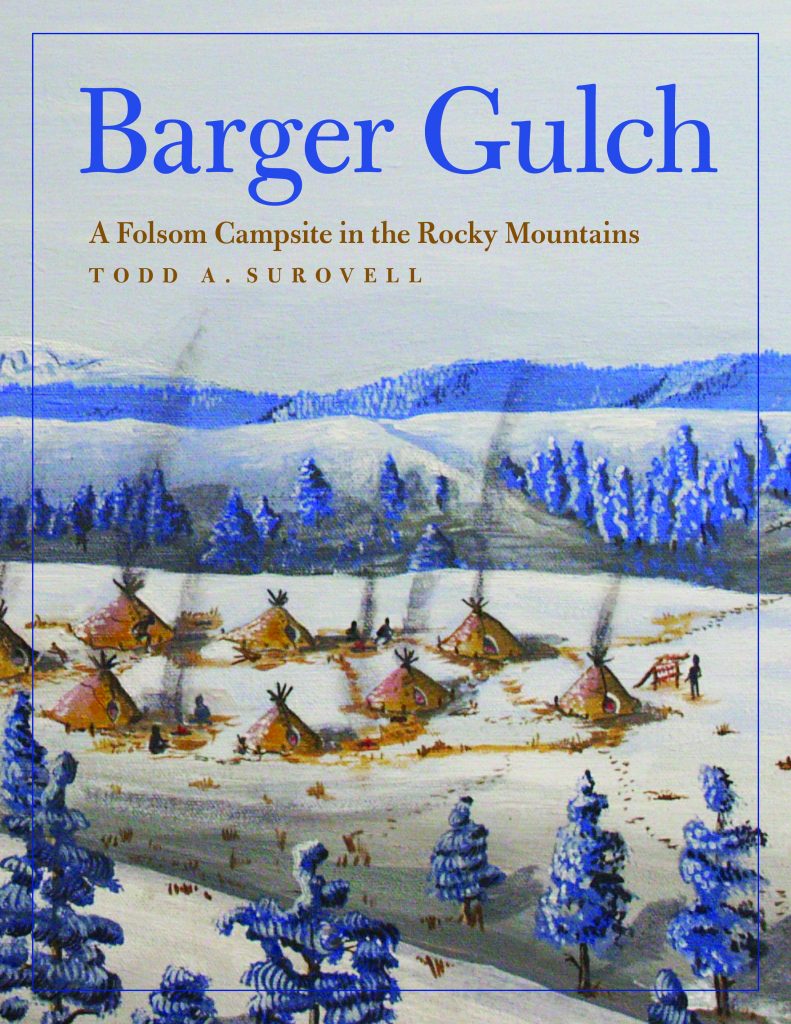
Through the analysis of more than 75,000 pieces of chipped stone, archaeologist Todd A. Surovell is able to provide one of the most detailed looks yet at the lifeways of hunter-gatherers from 12,800 years ago in Barger Gulch: A Folsom Campsite in the Rocky Mountains. At the end of the last Ice Age in a valley bottom in the Rocky Mountains, a group of bison hunters overwintered. The best archaeological sites are those that present problems and inspire research, writes Surovell. From the start, the Folsom site called Barger Gulch Locality B was one of those sites; it was a problem-rich environment. Many Folsom sites are sparse scatters of stone and bone, a reflection of a mobile lifestyle that leaves little archaeological materials. The people at Barger Gulch left behind tens of thousands of pieces of chipped stone; they appeared to have spent quite a bit of time there in comparison to other places they inhabited.
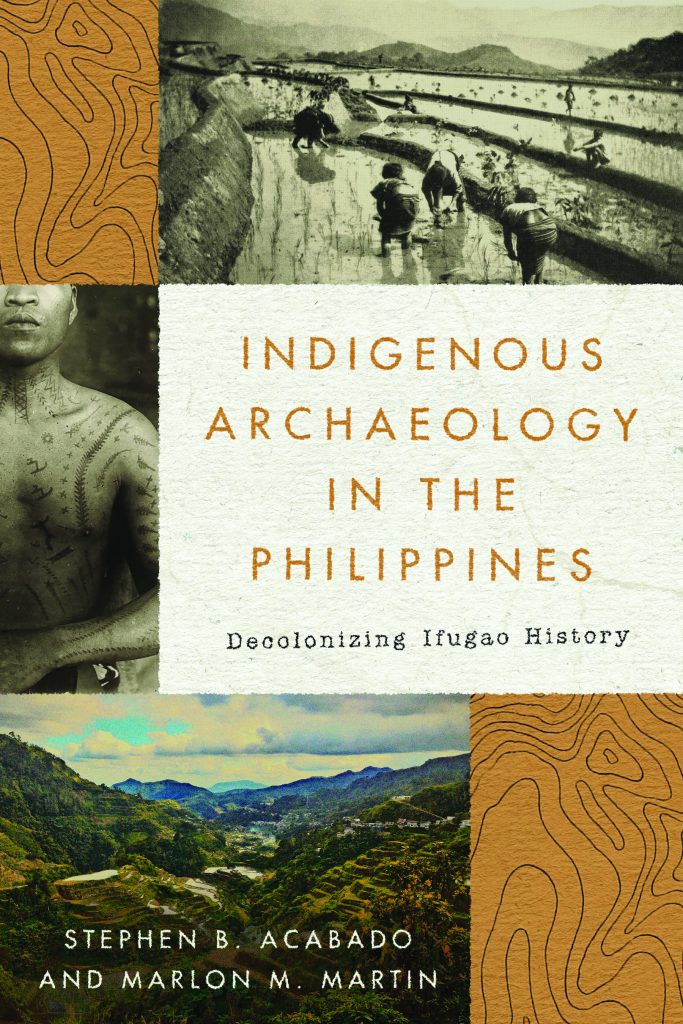
Indigenous Archaeology in the Philippines: Decolonizing Ifugao History, by Stephen Acabado, and Marlon Martin, highlights how collaborative archaeology and knowledge co-production among the Ifugao, an Indigenous group in the Philippines, contested (and continue to contest) enduring colonial tropes. Acabado and Martin explain how the Ifugao made decisions that benefited them, including formulating strategies by which they took part in the colonial enterprise, exploiting the colonial economic opportunities to strengthen their sociopolitical organization, and co-opting the new economic system. The archaeological record shows that the Ifugao successfully resisted the Spanish conquest and later accommodated American empire building.
Keep in touch with us regarding Spring 2022 events, special sales, and author and book news! Sign-up here to receive our newsletters. Happy reading!
This winter season as we eagerly watch the desert sky for anything wet, the University of Arizona Press is pleased to offer an end-of-year discount to help you stock up for winter reading. December 1 through December 31, 2021 use code AZDEC21 on our website and receive a 40% discount on your order. You’ll also receive free shipping on all orders shipping in the U.S.
The University of Arizona Press is thrilled to announce BorderVisions, a new series centering and celebrating topics reflecting both sides of the U.S.-Mexico border edited by Vanessa Fonseca-Chávez and Yvette J. Saavedra.
BorderVisions engages the U.S.-Mexico borderlands’ dynamic histories and cultures and expands our understanding of the borderlands beyond a site of geopolitical inquiry. The series conceptualizes borderlands as both a place and a methodology and addresses the constraints of traditional fields challenging authors to think creatively and critically about the expansive frameworks and possibilities of borderlands studies. This series will deepen our understanding of the ways in which gender, class, race, sexuality, and other intersectional concerns are reflected in humanities and humanistic social science borderlands scholarship.
The University of Arizona Press, founded in 1959, is the premier publisher of academic, regional, and literary works in the state of Arizona. Headquartered 70 miles from the U.S.-Mexico border, the Press centers a variety of borderlands voices through scholarly and literary titles.
Series editors Fonseca-Chávez and Saavedra seek to foster an intellectual space that envisions and manifests the multitude of perspectives for understanding the borderlands through interdisciplinary humanities and humanistic social sciences scholarship. They are especially interested in books that address the complexities and richness of borderlands experiences at different historical, cultural, and socio-political moments.
The University of Arizona Press is proud and excited to be part of a $400,000 grant awarded by the National Endowment of the Humanities through the American Rescue Plan: Humanities Organizations program, aimed at providing economic relief and recovery for cultural and educational institutions affected by the COVID-19 pandemic.
The grant represents a cross-institutional collaboration at its best to create Reclaiming Cultural Heritage in the Borderlands, a new project with the Press, the Confluencenter for Creative Inquiry, the Alfie Norville Gem and Mineral Museum, and the Writing Skills Improvement Program.
The goals behind the grant encompass achieving greater support for research that elevates local heritage and historically excluded narratives, expanding public access to cultural spaces and resources, and strengthening academic skills programs for underrepresented student populations. The Press will receive $125,000 from the grant to digitize additional backlist Latinx and Indigenous titles to further accessibility for students and scholars. Ten percent of the newly digitalized titles will be made available for free through Open Arizona, the Press’s open access platform.
“We are grateful to the National Endowment for the Humanities for enabling us to expand the reach of borderlands studies scholarship, an emphasis of our publishing program for more than sixty years,” said Kathryn Conrad, director of the University of Arizona Press.
The activities of the project under this grant align with the HSI and land-grant missions of the university. In 2018, the University of Arizona was designated as a Hispanic Serving Institution by the U.S. Department of Education. The designation was awarded for the success in the enrollment of Hispanic students and in providing educational opportunities to them. The annual designation is defined by the Higher Education Act as an institution of higher education with an undergraduate student enrollment that is at least 25 percent Hispanic.
The Academy of American Poets announced today the winner of the Ambroggio Prize 2021, Carlos Aguasaco’s Cardenal en mi ventana con una máscara en el pico / Cardinal in My Window with a Mask on its Beak, translated by Jennifer Rathbun.
The Ambroggio Prize is a $1,000 publication prize given for a book-length poetry manuscript originally written in Spanish and with an English translation. The winning manuscript is published by the University of Arizona Press. Established in 2017, the Ambroggio Prize is the only annual award of its kind in the United States that honors American poets whose first language is Spanish. This year’s judge was Rigoberto González.
From the Academy:
Carlos Aguasaco is the Professor of Latin American Cultural Studies and Chair of the Department of Interdisciplinary Arts & Sciences at the City College of the City University of New York (CUNY). He has edited eleven literary anthologies and published seven books of poems, most recently The New York City Subway Poems (Ashland Poetry Press, 2020). He has also published a short novel and an academic study of Latin America’s prime superhero, El Chapulín Colorado. He is the editor of Transatlantic Gazes: Studies on the Historical Links between Spain and North America (IF-UAH, 2018). Carlos is the founder and director of Artepoetica Press (artepoetica.com). He is also director of The Americas Poetry Festival of New York (poetryny.com) and coordinator of The Americas Film Festival of New York (taffny.com). His poems have been translated into English, French, Portuguese, Romanian, Galician, and Arabic.
Jennifer Rathbun is a Spanish Professor and Chair of the Department of Modern Languages and Classics at Ball State University. She’s published fourteen books of poetry in translation by Hispanic authors such as Alberto Blanco, Minerva Margarita Villarreal, Fernando Carrera and Juan Armando Rojas Joo; two anthologies of poetry denouncing femicide along the US-Mexico border; and the poetry collection El libro de las traiciones / The Book of Betrayals (Artepoetica Press, 2021). Rathbun completed her Ph.D. at the University of Arizona in Spanish, specializing in contemporary Latin American Literature. She’s a member of The American Literary Translators Association and she’s the Associate Editor of Ashland Poetry Press.
About Aguasaco’s winning manuscript, judge Rigoberto González said: “Cardenal en mi ventana con una máscara en el pico / Cardinal in My Window with a Mask on its Beak takes the reader on a journey through the surreal and the melancholic, to inventive scenarios like an encounter between Stein and Vallejo going to the movies, to the heartbreaking stories of sideshow attractions where bodies are stripped of their humanity. Yet this book reaches beyond surprising premises and literary inspirations to arrive at a place where the poet also finds wonder in everyday encounters and solace in the sobering knowledge that everything comes to an end, but not before dispelling its magic upon the world: like that red bird mirroring the masked face during the pandemic, like the arresting language of the poet that will eventually succumb to silence. Each poem in this exquisite collection brings a startling (and necessary) revelation about our aches, follies, and mortality, to light.”
For Authors
The University of Arizona Press publishes the work of leading scholars from around the globe. Learn more about submitting a proposal, preparing your final manuscript, and publication.
The University of Arizona Press is proud to share our books with readers, booksellers, media, librarians, scholars, and instructors. Join our email Newsletter. Request reprint licenses, information on subsidiary rights and translations, accessibility files, review copies, and desk and exam copies.
Support a premier publisher of academic, regional, and literary works. We are committed to sharing past, present, and future works that reflect the special strengths of the University of Arizona and support its land-grant mission.
 The University of Arizona Press