Manuela Lavinas Picq wins Activist Scholar Award

March 7, 2025

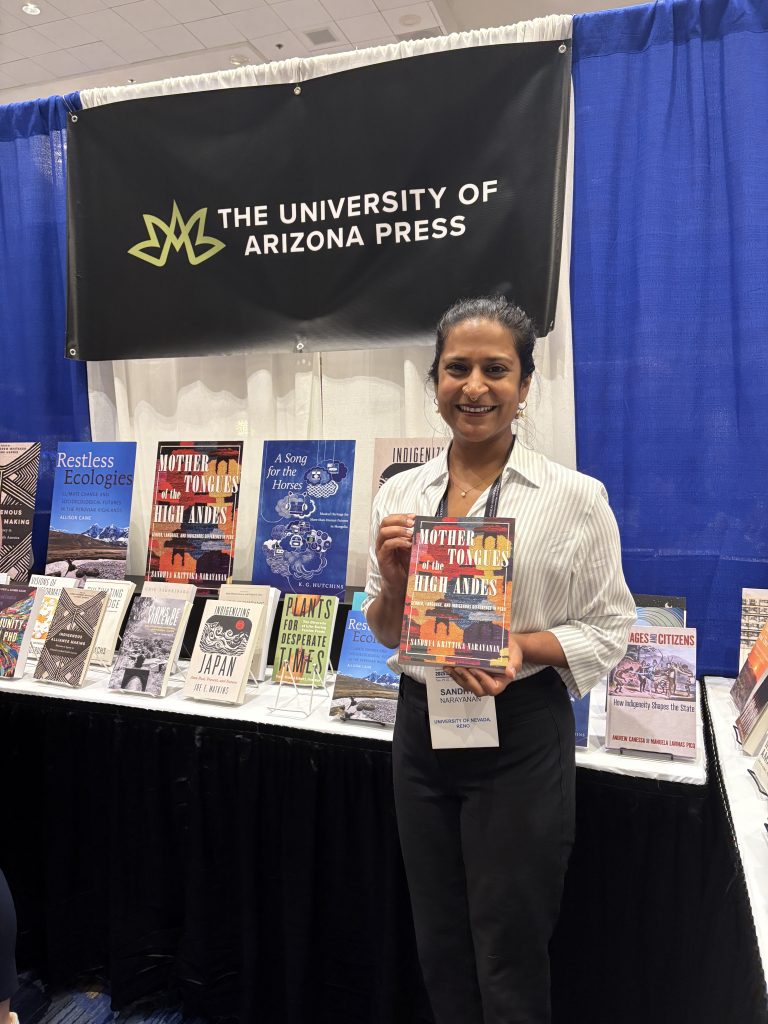
The International Studies Association, International Political Economy Section gave Manuela Lavinas Picq the 2024 Outstanding Activist Scholar Award. She is co-author with Andrew Canessa of Savages and Citizens: How Indigeneity Shapes the State.

To celebrate the award, Picq recently participated in a roundtable, “When Our Bodies Stand for Our Ideas” at the Plenary Session of Development Days Conference 2025 in Helsinki, Finland. Other roundtable participants were previous award-winner Teivo Teivanen, Barry Gills, who co-founded the award, and Bonn Juego, who is Director of the Finnish Society for Development.

Congratulations, Manuela!

About the book:

Delving into European political philosophy, comparative politics, and contemporary international law, the Savages and Citizens shows how the concept of indigeneity has shaped the development of the modern state. The exclusion of Indigenous people was not a collateral byproduct; it was a political project in its own right. The book argues that indigeneity is a political identity relational to modern nation-states and that Indigenous politics, although marking the boundary of the state, are co-constitutive of colonial processes of state-making. In showing how indigeneity is central to how the international system of states operates, the book forefronts Indigenous peoples as political actors to reject essentializing views that reduce them to cultural “survivors” rooted in the past.

Octavio Quintanilla Inducted into the Texas Institute of Letters

March 6, 2025

Members of the Texas Institute of Letters (TIL) approved Octavio Quintanilla as one of thirty-two new writers to the TIL, a distinguished honor society established in 1936 to celebrate Texas literature and recognize distinctive literary achievement.

Las Horas Impossibles | The Impossible Hours, written by Quintanilla and co-translated by the poet and Natalia Treviño, is his latest literary work. Quintanilla is also the author of the poetry collections If I Go Missing (Slough Press, 2014) and The Book of Wounded Sparrows (Texas Review Press, 2024). He is the founder and director of the literature and arts festival VersoFrontera; publisher of Alabrava Press; and former poet laureate of San Antonio, Texas. His visual poems Frontextos have been published and exhibited widely. He teaches literature and creative writing at Our Lady of the Lake University.

In the media release, TIL President David Bowles said of the newly inducted members: “We are overjoyed and honored to welcome such a varied and stellar group of literary talents. These folks are some of the very best in their respective fields, and we congratulate not only their nomination and induction, but also the years they have each dedicated to Texas letters.”

Congratulations, Octavio!

Bojan Louis Wins USA Fellowship

February 25, 20225

Bojan Louis, contributor to The Diné Reader: An Anthology of Navajo Literature, was named a USA (United States Artists) Fellow by Chicago-based nonprofit organization United States Artists. The organization recognizes artists in writing, design, crafting, dance, film, media, music and theater. The USA Fellowship comes with an unrestricted $50,000. Since its inception in 2006, the program has distributed more $41 million to more than 1,000 artists.

“We are honored to announce the 2025 USA Fellowship with this wonderfully skilled and multifaceted group of Fellows,” said Judilee Reed, president and CEO of United States Artists, in a statement. “Much like this cohort, our support through the USA Fellowship is enduring and manifold, extending beyond a momentary and monetary contribution to establish a durable and sustainable relationship that artists may draw on at each stage of their careers.”

Louis is Diné of the Naakai dine’é, born for the Áshííhí. In addition to teaching at the Institute for American Indian Arts, Louis is an associate professor of English and American Indian Studies in the University of Arizona College of Social and Behavioral Sciences. He said, “I write a lot about addiction, fatherhood and being Navajo – what that means and what it means to be a wanderer. My real love is fiction and short stories. I love poetry, but I gravitate toward short stories.”

Congratulations Bojan Louis!

Field Notes: The Hohokam and Their World

February 20, 2025

In the new book The Hohokam and Their World: An Exploration of Art and Iconography, authors Linda M. Gregonis and Victoria Riley Evans offer readers the opportunity to explore how various images and objects may have been used by the Hohokam, and what the icons and objects may have meant, including how the Hohokam conveyed ideas about water, the Sonoran Desert, the ocean, travel, ancestors, and the cosmos. Today, the authors share photos of artifacts, places, and notes on how they researched this fascinating topic.

By Linda M. Gregonis and Victoria Riley Evans

We met at an artifact analysis class taught by Linda at Pima Community College Archaeology Centre, where we discovered a common interest in Hohokam pottery and a fascination with design. We started working together, analyzing pottery for a cultural resources management company in Tucson.

In the U.S. Southwest, pottery is used to determine cultural affiliation and time period because artists changed the designs through time. The examples with animals shown above date to the AD 700s and 800s; the examples with more abstract curves and zigzags date to the AD 600s.

One reason that pottery can be used to determine cultural affiliation is that the artists worked from a shared palette of symbols and design layouts. For Hohokam pottery, the layouts and symbols are similar across a large area, from Gila Bend east towards the Safford area and from south of Tucson to the Verde Valley.

As we analyzed pottery, we began to wonder what the symbols meant to the people who made the vessels and if and how the symbols were used across different artistic media, such as shell, stone, and rock imagery. We wondered how various images connected the Hohokam to groups in West Mexico and the U.S. Southwest and how those images fit in to Hohokam views of the world. So we decided to write a book.

We started our research by looking through the many site reports that have been written since the 1960s as a result of environmental laws that require archaeological work to be done prior to land development. We also visited museums and rock imagery sites, searching for objects and images that could give us a glimpse into the Hohokam world.

Victoria Evans taking snapshots at Picture Rocks and imagery from this site near Tucson.

Linda Gregonis looking at collections at the Amerind Foundation.

Along the way, we discovered numerous examples of particular images that were used in a variety of artistic media. We used those images—important, widespread cultural symbols—to suggest connections to a deep past in West Mexico and more recent connections to the O’odham and the Sonoran Desert. The connections and their possible meanings form the body of our book.

This image can be found on pottery, stone, and shell throughout the Hohokam region. Because of its resemblance, it has been interpreted as a “cipactli,” a mythical Mesoamerican beast. We think it may be a Hohokam interpretation of that beast, but that it is more likely a representation of a coyote or fox—both animals with “trickster” qualities. Coyotes are especially important in O’odham lore as one of the Creators. This pendant is made from a piece of shell.

This stone censor or bowl in the Amerind Foundation’s collection depicts stick figures with what appear to be tails carved around the entire surface. It is possible that this represents lizards transforming into humans. The ability to transform is a widely held belief among Indigenous people throughout the Americas.

On this piece of pottery, also from the Amerind Foundation, there is a bird, or perhaps a masked bird-human facing down into a bowl. Several other birds or bird-humans occur around the rim of the bowl, all with their heads pointing toward the center. The layout of the bowl is suggestive of a Mesoamerican voladores ritual where men dress as birds in directional colors (red for east, black for west, white for north, and yellow for south) and descend upside down on ropes from a symbolic world tree. For the Hohokam, this may have represented a transformative ritual (human-bird, bird-human) or was a symbolic way of connecting them to a West Mexican ritual.

Boulders at Painted Rocks, a rock imagery site west of Gila Bend. The lizards, bighorn sheep, snakes and other images are symbols that can be found on shell, pottery, and stone (as well as other rock imagery) throughout the Hohokam region. This site combines Hohokam and Patayan imagery. The Patayan were people who lived from the western Phoenix Basin west into California. There is evidence that Hohokam and Patayan people lived together in this western portion of the Hohokam region.

***

Linda M. Gregonis is an independent researcher with a master’s degree in anthropology from the University of Arizona. She has spent more than forty years researching various aspects of Hohokam culture, including iconography, while working primarily as a ceramics analyst. Victoria R. Evans is an archaeologist who has conducted research in the Sonoran Desert for more than twenty years. Evans recently retired from New Mexico Highlands University, where she served as the anthropology laboratory director.

“Arizona Friend Trips” Authors Appear on “Good Morning Arizona”

February 14, 2025

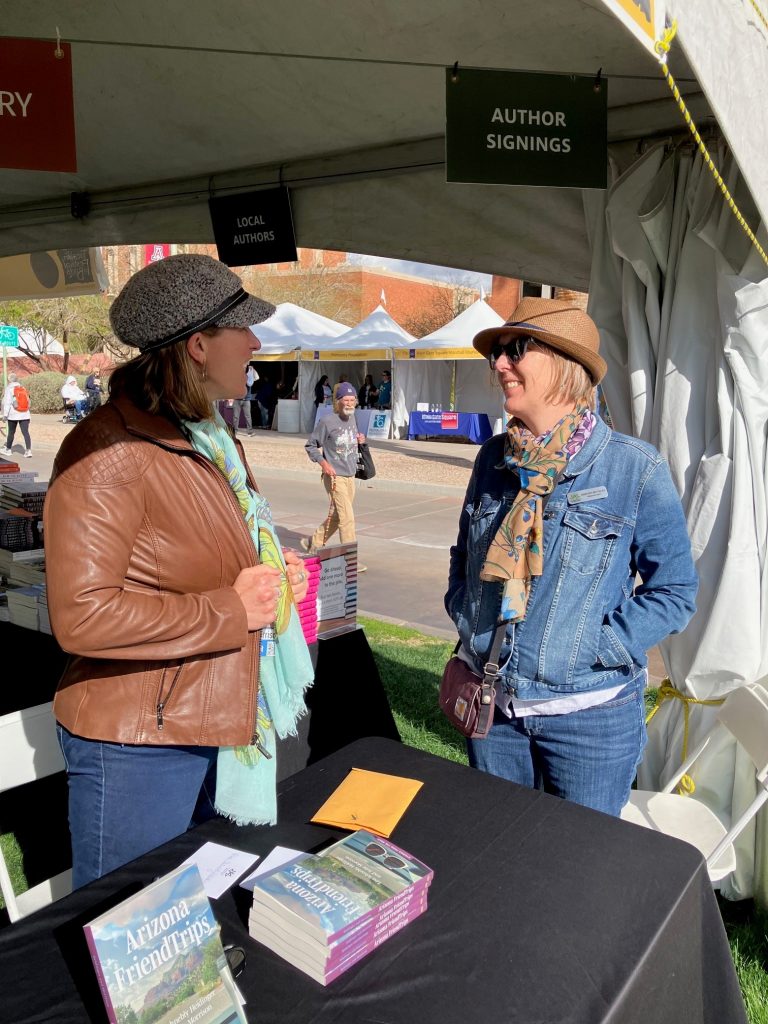
Arizona Friend Trips authors Lisa Schnebly Heidinger and Julie Morrison appeared on Phoenix’s Channel 5 “Good Morning Arizona” program last week. They shared tales of travels that inspired the new book and also revealed their new podcast “Celebrating Arizona.” In the interview, Morrison explained, “We started taking trips near where each of us lived . . . and our first trip was to El Tiradito, ‘the sinners shrine’ in Tucson.” Each place they visited became a chapter in the book.

Watch TV interview here.

In the Celebrating Arizona podcast, “Two Arizona writers who adore their state share travels to landmarks famous and obscure, with lots of impressions, insights and laughter along the way,” as described on the podcast webpage. In the first episode, they visit the famous El Tovar hotel at the Grand Canyon.

Find all podcast episodes here.

About the book:

In Arizona Friend Trips, Lisa Schnebly Heidinger and Julie Morrison invite readers to explore the state’s most cherished places through a blend of poetry, prose, and photography. From the iconic landmarks to hidden gems, each chapter of this captivating travelogue provides a rich tapestry of historical insight, personal anecdotes, and emotional reflections, painting a vivid portrait of Arizona’s diverse landscapes and vibrant culture. Be part of this unique journey as Lisa and Julie embark on an unforgettable adventure, filled with laughter, nostalgia, and a deep appreciation for the beauty of the Grand Canyon State.

Arizona Friend Trips is a celebration of friendship, discovery, and the enduring spirit of exploration.

Anthropologist Meena Khandelwal Investigates “Drudgery”

February 13, 2025

Meena Khandelwal, author of Cookstove Chronicles, Social Life of a Women’s Technology in India, used her book as a lens to investigate “What Counts as ‘Drudgery’ and Who Decides?” in Anthropology News. A serendipitous encounter with an engineering professor in 2011 sparked Khandelwal’s curiosity about solar, biomass, and modern gas cookstoves in southern Rajasthan. A decade of collaboration with engineers, archaeologists, and others has led her to reimagine the humble mud stove as a women’s technology. In Anthropology News, Khandelwal described the replacement of the chulha, India’s traditional wood-burning mud stove, with modern stoves; and she suggests the transition is not necessarily welcomed by women who report missing time socializing with their friends while chopping trees and carrying wood.

Khandelwal wrote, “The word ‘drudgery’ evokes the physical work women chulha users do to feed their families, as if it is a straightforward description of fuelwood harvesting when it is actually an ideological claim. As a development buzzword, ‘drudgery’ uses emotional calls to action (i.e., development interventions) while being profoundly decontextualized, vague, and formulaic; it is precisely these features that make buzzwords powerful. Undoubtedly, having to cut and haul fuelwood home from a forest is hard, physical work and a burden that in India falls primarily to women, but this doesn’t necessarily make it drudgery.”

Read the full article here.

About the book:

Based on anthropological research in Rajasthan, Cookstove Chronicles argues that the supposedly obsolete chulha persists because it offers women control over the tools needed to feed their families. Their continued use of old stoves alongside the new is not a failure to embrace new technologies but instead a strategy to maximize flexibility and autonomy. The chulha is neither the villain nor hero of this story. It produces particulate matter that harms people’s bodies, leaves soot on utensils and walls, and accelerates glacial melting and atmospheric warming. Yet it also depends on renewable biomass fuel and supports women’s autonomy as a local, do-it-yourself technology.

Meena Khandelwal employs critical social theory and reflections from fieldwork to bring together research from a range of fields, including history, geography, anthropology, energy and environmental studies, public health, and science and technology studies (STS). In so doing she not only demystifies multidisciplinary research but also highlights the messy reality of actual behavior.

Field Notes: “Arizona Friend Trips” Hits the Road

February 11, 2025

In Arizona Friend Trips, authors Lisa Schnebly Heidinger and Julie Morrison invite readers to explore the state’s most cherished places through a blend of poetry, prose, and photography. From the iconic landmarks to hidden gems, each chapter of this captivating travelogue provides a rich tapestry of historical insight, personal anecdotes, and emotional reflections, painting a vivid portrait of Arizona’s diverse landscapes and vibrant culture. Be part of this unique journey as Lisa and Julie embark on an unforgettable adventure, filled with laughter, nostalgia, and a deep appreciation for the beauty of the Grand Canyon State. Check out a few trip snapshots and stories from the book below.

Photo by Lisa Schnebly Heidinger.

Julie talks to tractor driver Jimmy Lewis who prepares the Sonoita Fairgrounds for quarter horse racing. Lisa observes, “Julie, as I know her, lives in my world but speaks the lingua franca and talks about sires and hands and races easily. I see for the first time the little girl who came down with her mother and got nervous before events and had ice cream afterward.”

Photo by Lisa Schnebly Heidinger.

Julie and Lisa replenish calories and liquids after a long hike in Navajo National Monument. Lisa writes, “Fortunately, while I stumble and melt down, Julie stays calm and encouraging, sharing her water, and resourcefully finding shade for rests that she calls with calm authority. I’m a dazed obeying mess.”

Photo by Lisa Schnebly Heidinger.

The authors walked the streets of Tombstone just like U.S. Marshall Wyatt Earp and Sheriff John Behan did in the 1880s. Lisa remembers, “We come here to feel. We want to absorb some sense of what it was like to watch the Earps and the Cowboys exchange about thirty gunshots in as many breathless seconds. We want to walk where the jingle of outlaw spurs seems just out of hearing.”

Photo by Lisa Schnebly Heidinger.

This storm made for a challenging drive on I-10, just east of Willcox. Lisa writes, “Streams spring up on each side of the road with standing water on the asphalt, so fast does the sky release the water. Driving gingerly, not because of bad road, but in fear of hydroplaning, we are at least not too nervous to appreciate the utterly transformed scenery we behold.”

Photo by Lisa Schnebly Heidinger.

At Tumacácori National Monument, Lisa reflects on who is missing from the narrative, “Written history of such a site tends to focus on the mission’s managers, Jesuits, but we are also aware that one man’s success comes at another’s cost. In the burial ground behind the mission, graves of the Natives, which far outnumber those of the padres, are unmarked. That makes the holiness harder to find.”


Lisa Schnebly Heidinger inherited her father’s “red-setter gene,” gladly jumping into any open car door regardless of destination in Arizona. Television, newspaper, and magazine reporting from all areas of the state, she’s authored twelve books on aspects of Arizona, including the official Centennial book, which was voted OneBookAZ. This led to speaking in libraries from Concho to Humboldt as well as the Tucson Festival of Books. She loves visiting Arizona’s iconic lodges and inns and says she’s never had a bad cup of coffee, although a pot brewed at Two Gray Hills Trading Post in the morning and consumed in the afternoon came closest.

Julie Morrison has an irrepressible need to know what’s around the next corner, even if she gets easily carsick. She is the author of Barbed: A Memoir as well as published short stories and essays. She’s had individual poems performed live and published, but this is her first collection. Still grappling with a travel bug, she has resided in four states outside and five cities inside Arizona, and has visited thirty-eight other states and twelve countries. She is a former transportation planner, rancher, and investments analyst, and current dog person, coffee drinker, and hat enthusiast.  

Washington Post Interviews Tim Z. Hernandez

February 4, 2025

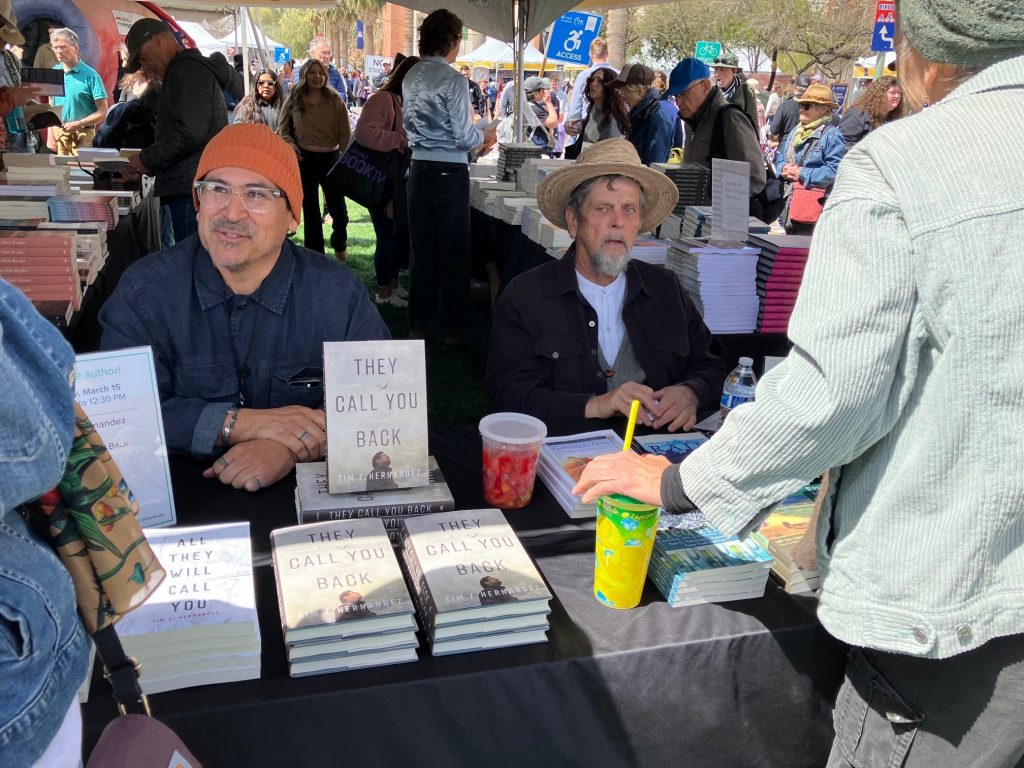
Tim Z. Hernandez, author of All They Will Call You and They Call You Back, spoke to Washington Post reporter Petula Dvorak about deportees who were victims of the 1948 plane wreck in Los Gatos Canyon, California.

In the article “Deportees died in a plane crash. Woody Guthrie wrote a song about it,” Hernandez shared some of his research from interviews about the plane wreck: “’There were hundreds of Mexicans in line waiting to be deported, and they were cramming many into that first plane,’ Hernandez said. The stories suggest that some passengers may have been sitting in the aisle or on baggage, overloading the World War II surplus plane. He found an eyewitness account from a man who tried to get on that first plane, but it was too full. They made him wait and board the second one, saving his life. It was the deadliest crash in California history.'”

Read the Washington Post article here.

About All They Will Call You:

All They Will Call You is the harrowing account of “the worst airplane disaster in California’s history,” which claimed the lives of thirty-two passengers, including twenty-eight Mexican citizens—farmworkers who were being deported by the U.S. government. Outraged that media reports omitted only the names of the Mexican passengers, American folk icon Woody Guthrie penned a poem that went on to become one of the most important protest songs of the twentieth century, “Plane Wreck at Los Gatos (Deportee).” It was an attempt to restore the dignity of the anonymous lives whose unidentified remains were buried in an unmarked mass grave in California’s Central Valley. For nearly seven decades, the song’s message would be carried on by the greatest artists of our time, including Pete Seeger, Dolly Parton, Bruce Springsteen, Bob Dylan, and Joan Baez, yet the question posed in Guthrie’s lyrics, “Who are these friends all scattered like dry leaves?” would remain unanswered—until now.

About They Call You Back:

In this riveting new work, Hernandez continues his search for the plane crash victims while also turning the lens on himself and his ancestral past, revealing the tumultuous and deeply intimate experiences that have fueled his investigations—a lifelong journey haunted by memory, addiction, generational trauma, and the spirit world. They Call You Back is the true chronicle of one man’s obsession to restore dignity to an undignified chapter in America’s past, while at the same time making a case for why we must heal our personal wounds if we are ever to heal our political ones.

Theodore H. Fleming on WICN’s “Inquiry”

January 24, 2025

Get to know our authors via podcasts and radio programs!

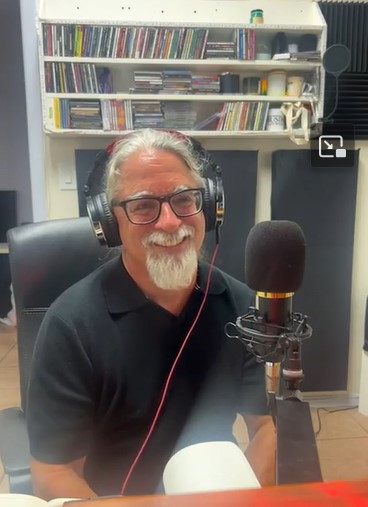
New England radio station WICN’s “Inquiry” host Mark Lynch recently interviewed Theodore H. Fleming about his book Birds, Bats, and Blooms: The Coevolution of Vertebrate Pollinators and Their Plants.

During their conversation, Fleming speaks about differences in the way bats and hummingbirds carry pollen. He says, “Hummingbirds tend to be highly territorial when they are feeding, and they have small territories. But bats are not territorial and have large feeding ranges. They can carry pollen kilometers at a time.”

Fleming also talks about early hummingbird fossils found in Europe: “The earliest fossils dating from 32 to 30 million years ago were first unearthed in shale deposits in Germany. Previous to this fossil discovery in 1984, we thought of hummingbirds as New World only, but now we think they probably developed in tropical Eurasia.”

Listen to the entire interview here.

***
Theodore H. Fleming is a professor emeritus of biology at the University of Miami. He spent thirty-nine years in academia at the University of Missouri–St. Louis and the University of Miami, teaching ecology courses and conducting research on tropical rodent populations and plant-visiting bats and their food plants in Panama, Costa Rica, Australia, Mexico, and Arizona. He lives in Tucson.

Stephanie Opperman on the “Unsung History” Podcast

January 21, 2025

Get to know our authors via podcasts and radio programs!

Stephanie Baker Opperman spoke with “Unsung History” podcast host Kelly Therese Pollock recently about Isabel Kelly, the subject of the new book Cold War Anthropologist: Isabel Kelly and Rural Development in Mexico.

Opperman remembers discovering Kelly when looking through archives in Mexico related to her dissertation work, “I came across this thoughtfully articulated ethnographic report of a community and a community center with all of its details about what was working in this community and what wasn’t. And it was written in English. It seemed like a thorough and well-researched piece. . . . and I wanted to know who is this person? What is her story?”

Opperman also discusses how Kelly’s story illuminates changes happening in Mexico and in the field of anthropology at the time. “In the post-World War II period, Mexico is going through industrialization, towards unification, towards having global alliances,” Opperman says. “The field of anthropology is also changing in the midst of all of this. It’s going through changes, many ups and downs and swerves and twists in this period. And for me, she’s the connecting piece.”

Listen to the full podcast here.

***

Stephanie Baker Opperman is a professor of Latin American history at Georgia College. Her work has been published in the Journal of Women’s History, Bulletin of Latin American Research, the Latin Americanist, and Endeavour.

For Authors

The University of Arizona Press publishes the work of leading scholars from around the globe. Learn more about submitting a proposal, preparing your final manuscript, and publication.

Inquire

Requests

The University of Arizona Press is proud to share our books with readers, booksellers, media, librarians, scholars, and instructors. Join our email Newsletter. Request reprint licenses, information on subsidiary rights and translations, accessibility files, review copies, and desk and exam copies.

Request

Support the Press

Support a premier publisher of academic, regional, and literary works. We are committed to sharing past, present, and future works that reflect the special strengths of the University of Arizona and support its land-grant mission.

Give