We started taking our families in 2014 when our kids were quite young. And from year to year we started to notice the parade route itself was still the same, but the participants had changed. There seemed to be an overwhelming presence of policing units, of the military, U.S. Customs and Border Protection, Border Patrol and several junior exploration programs where we saw young young kids—the adolescent age and even younger—who were kind of marching in unison as they were wearing whatever uniform they were representing. And so that kind of it caught our attention.
Morales expanded on her life in the borderlands:
I grew up in El Paso, she grew up in Anthony, New Mexico. So we have experienced what it’s like being in the margins—not only the geographical margins, but the margins in terms of social class immigration status. I am a second generation Mexican, so my parents came from Juárez and then my upbringing was really on both sides of the U.S.-Mexico border. I was born in the El Paso side, but I very much had relatives and social events and activities on the Mexican side of the border. And so I grew up with this very rich, bicultural experience, and it’s something that really shaped the way that I look at the world.
The topic of mothers and mothering transcends all spaces, from popular culture to intellectual thought and critique. This collection of essays bridges both methodological and theoretical frameworks to explore forms of mothering that challenge hegemonic understandings of parenting and traditional notions of Latinx womxnhood. It articulates the collective experiences of Latinx, Black, and Indigenous mothering from both sides of the U.S.-Mexico border.
Thirty contributors discuss their lived experiences, research, or community work challenging multiple layers of oppression, including militarization of the border, border security propaganda, feminicides, drug war and colonial violence, grieving and loss of a child, challenges and forms of resistance by Indigenous mothers, working mothers in maquiladoras, queer mothering, academia and motherhood, and institutional barriers by government systems to access affordable health care and environmental justice.
This month author Tim Z. Hernandez published They Call You Back, a memoir about the investigations that have shaped the greater part of the author’s life. He takes us along on an investigative odyssey through personal and collective history to uncover the surprising conjunctions that bind our stories together. Hernandez continues his search for the plane crash victims while also turning the lens on himself and his ancestral past, revealing the tumultuous and deeply intimate experiences that have fueled his investigations—a lifelong journey haunted by memory, addiction, generational trauma, and the spirit world. Today, Tim answers five (plus bonus) questions:
In some ways, this memoir is a continuation of All They Will Call You, which documents your work to find the families of the twenty-eight Mexicans who were killed in the 1948 plane wreck at Los Gatos Canyon. In this new book, you describe your ongoing work tracking down the plane crash victims. Can you give us a peek at what you’ve uncovered since ATWCY was published in 2017?
Since the publication of ATWCY in 2017, I’ve located seven more families and was able to highlight some of them in this new book. But other exciting things have happened since then too. For instance, in 2018 the California State Senate formally recognized the accident and the families on the Senate floor. That was an exciting closure for the families who were there with me that day. This work is about so much more than ATWCY. How have your searches for the victims intersected with your own life?
I wouldn’t necessarily say they “intersected” with my life, but in my pursuit to find these families I found myself having to grapple with some of my own family’s past, our history, the ups and downs. It was as if looking for their families I came to discover my own, and that’s what I tried to capture in this book.
You have several events this Fall, including one later this month at the Los Gatos Plane Crash Memorial. Why is it so important to present this story in public spaces with the community?
I feel like it’s important for the families so that they can finally receive some long overdue closure for what happened to their relative seven decades ago. But also, it’s a story that contains a lot of power—compassion, empathy, and a message of interconnection—so it’s only beneficial to the larger community if we share it far and wide.
We are probably biased, but we love the cover! How did it come together?
Haha! Yes, I love it too, VERY much! That’s the genius of University of Arizona Press cover designer Leigh McDonald! I knew I wanted the cover to reflect my own personal journey in some way while at the same time conveying it was still very much based on the historic Los Gatos plane crash. So I sent her a few photos of me looking “contemplative” and suggested there be an airplane in the sky somewhere distant. Leigh found a Douglas DC-3 photo and placed it in the sky, but it’s also slightly offset from my eye line, which is intentional because I didn’t want it to appear like it’s in the same space with me, but rather that it just also happens to exist in some parallel world. But then Leigh added the texture and just some really special nuances that brought the whole thing together. I’ve worked with her on past covers before too, and she’s always a pleasure to work with, but I have to say, this time she really hit it out of the park!
In addition to community collaborations, you are also collaborating with musicians. What has that been like?
Yes, I’ve always collaborated with musicians over the last 25 years of my writing career. Music is my second love after writing. For this book I actually co-wrote a song with one of my favorite indie folk-musicians, Ted Nunes, and he recorded it. It’s titled “They Call You Back” and as suspected it’s based on the book and my journey. I think music is always a good vehicle for stories and poems, and I try and bring that aspect to my performances as well. I want the work to always be engaging and entertaining, as much as educational. And music just helps with that.
We can’t help it. We have one more question. What’s next?
Haha! I’d like to keep some of the mystery, but I’ll just say that I’m working on a fictional novel for this next one. And it’s about an issue that is a concern to us all, but because of the approach I’m taking I’m really having to use my “dark tools” to write it. It’s unlike anything I’ve written before. It requires me to enter a very cynical state of mind to write it, which is not at all how I operate. Whereas the subjects of my books and poems are usually about interconnections and compassion, this one is very much about division and what happens when one goes down a twisted path that one can’t return from. Fiction feels like a nice break for the time being.
****
About the Author Tim Z. Hernandez is an award-winning author, research scholar, and performer. His books include fiction, nonfiction, and poetry, and he is the recipient of numerous awards, including the American Book Award. His work has been featured in international media, and in 2018 he was recognized by the California Senate for his work locating the victims of the 1948 plane wreck at Los Gatos, which is chronicled in his book, All They Will Call You. Hernandez is an associate professor in the University of Texas at El Paso’s Bilingual Creative Writing program.
Focusing on service-learning and Latina/o/e communities within a variety of institutional contexts, Working en comunidad: Service-Learning and Community Engagement with U.S. Latinas/os/es provides a practical framework grounded in theoretical approaches that center Latina/o/e experiences as foundational to understanding how to prepare students to work in the community and en comunidad.
We recently had a chance to interview editor and author Elena Foulis about the book, asking about the origin of the project, the concept of comunidad, and the benefits of service-learning.
Your work, and the work of the contributors in this book, provides a guide to service-learning that is both ethical and reciprocal. How did you come to see that there was a need for this kind of guide?
As a growing population, there is an increased interest to interact and learn about Latina/o/e communities, yet it typically tends to be brief, during a semester, or rather extractive, whether this is intentional or not. In the past two decades, more and more academic programs across the U.S. want to work with Latina/o/e communities, and as someone that identifies as part of this community and who has engaged with these communities with my students for over a decade, I wanted to offer a set of best practices to understand how to work with and in community with such a complex and diverse group.
Comunidad is a central, unifying concept for this book. How did you and the other editors formulate this idea?
When we (all of us editors and authors in this book) think of service-learning, we think of comunidad— there is no other ethical way to do this. Service-learning is reciprocal, mutually beneficial, and should lead to sustainable practices. Seeing communities as integral, long-term collaborators requires that we spend time with each other to develop a respectful and trusting relationship. This is what comunidad is all about! A coming together to build unity and work together to build a better future for us and the generations that come after us.
In Chapter 1, you lay out the importance of cultural humility and empathy as part of the pedagogical preparation for service-learning. You employ the wonderful phrase “listening to understand.” Can you talk about what that means, or what it looks like?
As scholars and students, we can think that our textbook or academic knowledge about a community makes us experts of their issues, but we are not. We have an educated understanding that is true and necessary, but we must be humble in our approach to working with communities outside of our institutions. Communities understand their needs and the structural systems that have prevented them from accessing resources, so our job is to listen. As a Latina, I don’t have all the answers about my own community, because we have different experiences, so we must teach ourselves and our students to listen to their concerns and to the solutions that work best for them. In this interaction, our book knowledge takes a back seat, and we become “vulnerable observers,” as anthropologist Ruth Behar puts it.
What are some of the benefits or changes you’ve seen among students, educators, and community members who participate in the kind of service-learning this book advocates for?
Well, students never forget these classes. It is often the only service-learning class they’ve ever taken, so I regularly hear back from them to tell me what they are doing or how the class led them into non-profit work, law, education, and medical school because they want to continue to work—within their chosen professions—in the community. There really is much care among community organizations, students and educators, and those who are served by the organizations. I get to see real changes, joy, and empathy for all involved in this work. Just this year, I heard about how much my students are having a positive impact working with an organization that serves adult learners. They often asked when students would be back, because they’d had such a great rapport with them.
What are you working on now?
I am working on a monograph on oral history with Latina/o/e communities. I developed my passion for service-learning and oral history almost at the same time. The tentative title is Embodied Encounters: Bilingual Oral History Archives of Latina/o/e Experiences. I also have several articles coming out on Latina/o/e digital humanities, translanguaging and trauma-informed oral history.
Elena Foulis is an assistant professor and program director of Spanish Language Studies at Texas A&M University–San Antonio. She has directed the oral history project Oral Narratives of Latin@s in Ohio since 2014. Foulis’s research explores Latina/o/e voices through oral history and performance, identity and place, ethnography, and family. She has more than ten years of experience in service-learning pedagogy.
September 5, 2024
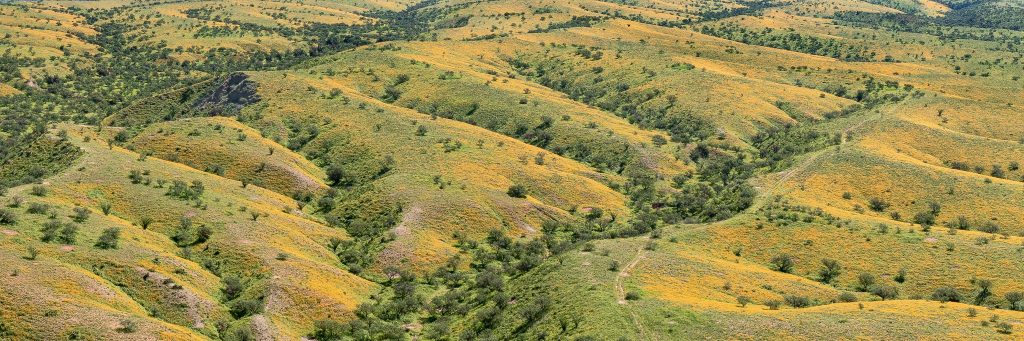
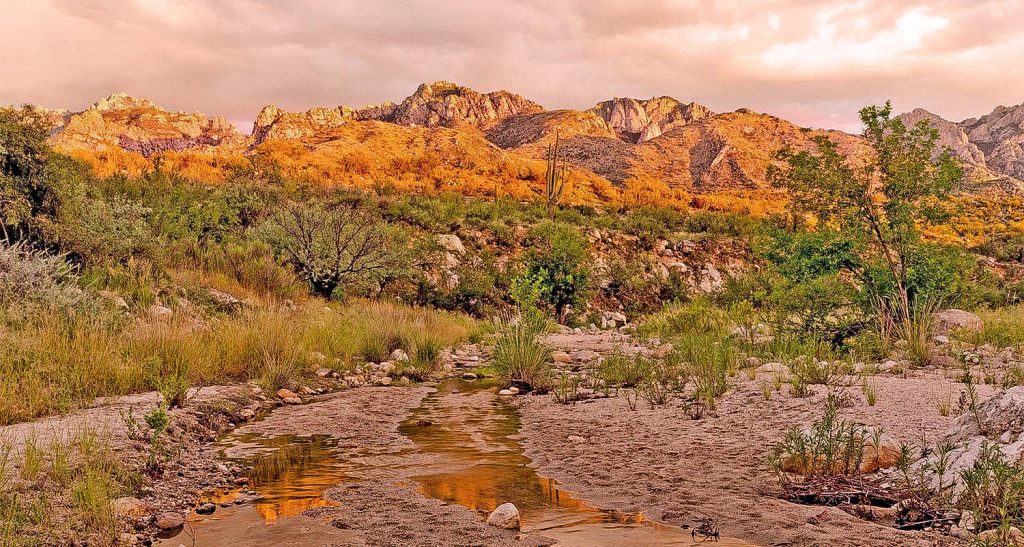
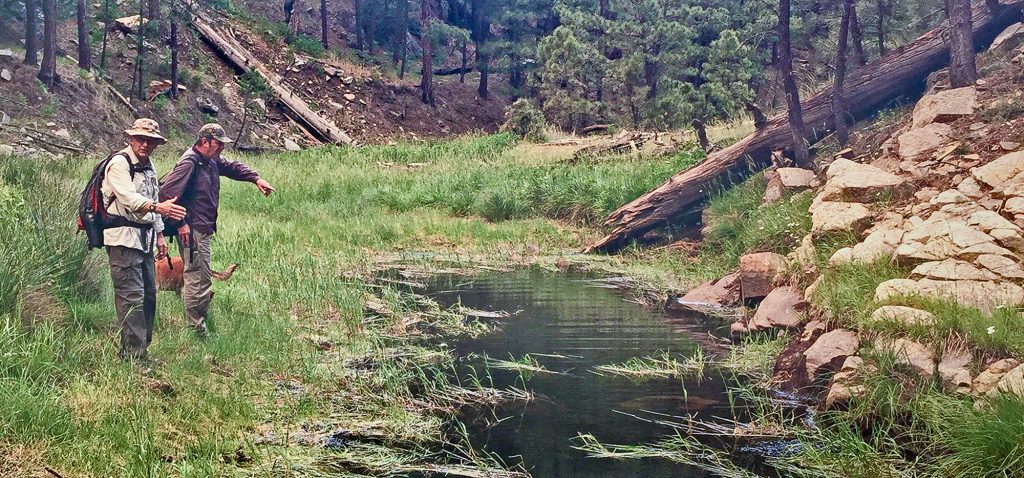
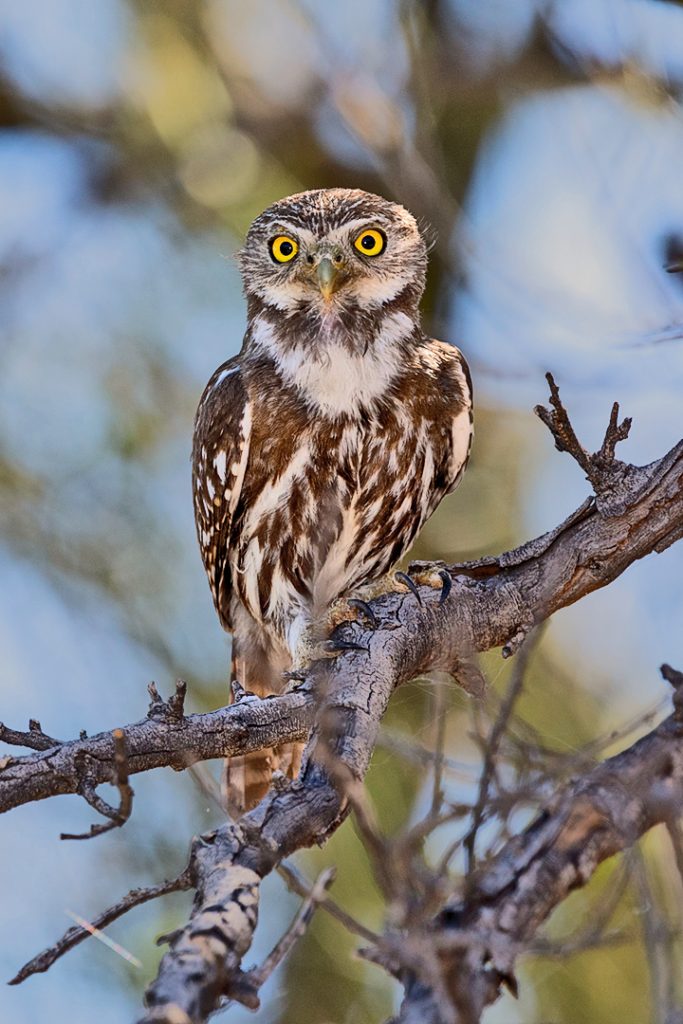
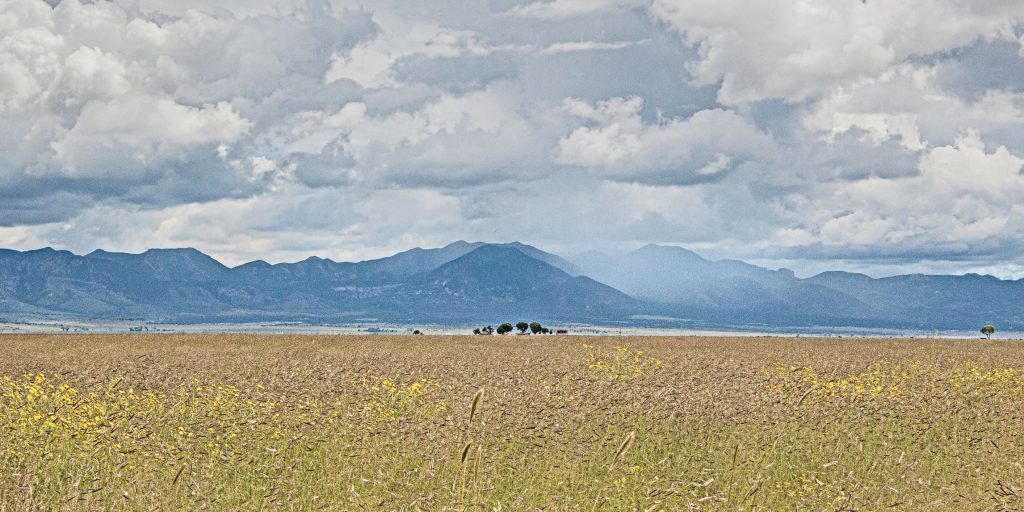
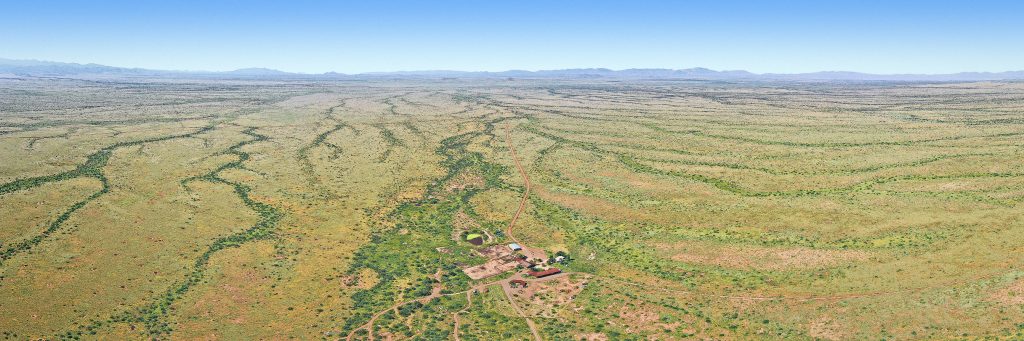
Forging a Sustainable Southwest: The Power of Collaborative Conservationintroduces readers to four conservation efforts that provide insight into how diverse groups of citizens have worked collaboratively to develop visions for land use that harmonized sometimes conflicting ecological, economic, cultural, and community needs. The book contains 153 color images. We interviewed author Stephen E. Strom to learn more about his research and photography for this book. All photos by Stephen E. Strom unless noted otherwise.
Grasslands adjacent to Sonoita Creek in Arizona
Why did you write this book?
The rapid growth of the West continues to fragment landscapes, threaten watersheds, and undermine the complex interactions among plants, animals, and people, disrupting the natural functions and equilibria of ecosystems. In the 170 years since gold was found in Sutter’s Creek, more than 165,000 square miles of the West’s “wide open spaces” have been lost to development: an area larger than that of the entire state of California.
The consequent loss and fragmentation of open space has undermined the health of forests, grasslands, and watersheds, with resulting detrimental effects on wildlife, species diversity, and water supply. Ecosystems that could otherwise store carbon have been lost or disrupted, and the unquantifiable values of scenic beauty and solitude have been diminished. Climate change threatens to exacerbate the magnitude of these threats and to compress the time available for ecosystems to restore balance and function.
The urgent need to address the challenges posed by the rapid and continuing growth of the West motivated me to explore a number of pressing questions: What lands do we need to conserve or protect in order to foster functioning ecosystems? How do we conserve them? Is it possible to restore some of the damage already inflicted on lands and water? And how do we meet the goals of both sustainable land stewardship and economic vitality in a context where cities, suburbs, and exurbs continue to grow in response to increasing population?
To gain insight into how these questions might best be answered, I spent the better part of three years listening to individuals whose interests and expertise span a broad range of interests and ideologies—ranchers, developers, conservationists, ecologists, representatives from government agencies and NGOs, along with citizen activists. Their message: achieving critical conservation and land stewardship goals will require an all-hands approach involving broad public participation in shaping strategic plans to steward and protect landscapes on scales of hundreds of thousands of acres, and to address the economic, cultural and spiritual needs of citizens who live among and adjacent to these lands.
Pronghorn
Forging a Sustainable Southwest describes four large-landscape conservation efforts, each of which provides an example of how to integrate human and environmental needs on regional scales, and to as well create a positive social context for long-term cooperation among multiple stakeholders.
As Matthew McKinney, Lynn Scarlett, and Daniel Kemmis suggest, forming such collaborative efforts to address large-landscape conservation challenges “might well result in a healing of not only ecosystems, but also related human systems. As traditionally adversarial conservation, community, and economic interests search for common ground, one arena of shared interest is a growing recognition that unscarred landscapes, clean water, fresh air, and a rich biodiversity based on healthy ecosystems, are becoming the best economic engine available to many local communities. Perhaps even more appealing is the prospect that, in the course of working hard to discover and claim that common ground, the people who inhabit those ecosystems will have contributed to the strengthening of their civic culture, and to expanding their capacity to address the next set of challenges.”
Catalina State Park, Arizona (photo credit: Catalina State Park)
How do organizations get people from across the political spectrum to work together to preserve large landscapes?
In Forging a Sustainable Southwest, The Nature Conservancy’s Peter Warren reflects on his experiences in working with groups committed to large-landscape conservation efforts:
To come up with a cohesive conservation approach to something on the scale of one hundred thousand acres, or five hundred thousand acres, or a million acres . . . requires collaboration among different landowners and land managers. I’ve come to view successful collaborations as team problem-solving, troubleshooting, brain-storming efforts based on shared experience.
To develop successful conservation strategies across a large area with multiple landowners—public, private and Tribal—requires ongoing collaborative efforts in which people share a common vision for the future. Most successful conservation efforts start out locally, where individuals motivated by attachment to and passion for a place initiate conversation about the effects of land use on their future. Efforts that endure are those that include individuals with diverse interests—from large-scale landowners and ranchers to the business community and entrepreneurs in the region, other advocates for conservation, and community members who care about the place.
The groups and individuals that shepherded the four successful conservation efforts described in Forging a Sustainable Southwest share the following attributes: recognizing and respecting cultural and ideological differences; understanding with compassion the fears of individuals about their future; taking the time to build relationships and trust; and finding a way to harmonize economic, cultural and conservation goals.
Mountain spring in southern Arizona
Pygmy owl and long-nosed bat
Do you know of other collaborations outside of the southwest that are working toward similar goals?
Efforts to work collaboratively to effect large-landscape conservation have grown significantly over the past twenty years. The Four Forest Restoration Initiative and the Wyoming Landscape Initiative represent two notable examples that demonstrate the effectiveness of collaborative conservation in developing strategies for stewarding and protecting lands in regions facing very different environmental and political challenges.
The Four Forest Restoration Initiative (4FRI) is a restoration initiative for 2.4 million acres of ponderosa pine forestland along the Mogollon Rim in Arizona encompassing four national forests: Apache, Coconino, Tonto, and Kaibab. The principal goals of the program are to restore forest ecosystems so that they are more resilient to naturally and human- caused fires; increase the diversity of plants; protect springs and streams; and promote industries that depend on wood products to the benefit of local economies. The collaboration involves local, county, and state governments, representatives from industrial and environmental communities, as well as other stakeholders.
4FRI has successfully implemented large-scale forest thinning operations to reduce the risk of catastrophic wildfires. The Initiative has also significantly improved habitat conditions for wildlife species, enhanced the health of watersheds, and provided economic benefits to local communities through job creation and the promotion of sustainable forest industries.
Rain in the mountains next to Animas Valley, New Mexico
The Wyoming Landscape Conservation Initiative (WLCI) is a partnership including representatives from the BLM, U.S. Geological Survey, U.S. Fish and Wildlife Service, U.S. Forest Service, National Park Service, Natural Resources Conservation Service, Wyoming Department of Agriculture, Wyoming Game and Fish Department, six county commissions, eleven conservation districts, and industry and landholders. Its dual goals are to conserve and enhance fish and wildlife habitat at landscape scale using science-based programs, and to support responsible energy, mineral, and other development.
WCLI has been successful in developing conservation agreements with ranchers and private landowners, which have helped to preserve open rangelands and to maintain traditional land uses like grazing. By working together with local communities, these agreements have conserved critical habitats for wildlife, such as sage-grouse, mule deer, and pronghorn, while allowing ranchers to maintain viable operations.
Furthermore, WCLI efforts have helped to restore riparian areas across Wyoming—vital for maintaining healthy watersheds and provide essential habitats for fish, birds, and other wildlife. The restoration work includes planting native vegetation, reducing erosion, and improving water quality, benefiting both the environment and local communities.
The initiative has also worked with energy companies to minimize the impacts of oil, gas, and wind energy projects on sensitive landscapes and wildlife habitats.
Chiricahua leopard frog and Swainson’s hawk
What are the challenges of photographing large landscapes, fitting so many square miles into the frame, and how did you overcome them?
I envisioned photographs playing a pivotal role in conveying why the regions discussed in Forging a Sustainable Southwest merit a mix of protection, sustainable stewardship and in some cases restoration. To document the wide range of landscapes discussed in the book, required capturing them from a variety of perspectives. For more intimate evocations, I used a DSLR camera, while aerial images obtained from drones and light aircraft flying from heights of 400 to 4,000 feet above the ground enabled me to capture the sweeping expanses (up to 60 miles in all directions) of the area’s grasslands, forests, riparian areas and watersheds.
I’m currently gathering ground- and aerial-based photographs to complement The Northwest in Transition: Envisioning the future of the Columbia River Basin, a book currently in preparation by journalist and author Rebecca Robinson. To quote Rebecca: “The book aims to capture a pivotal moment when a confluence of events has inspired an urgent search for solutions to a decades-long debate over energy, economic development, and tribal treaty rights in the Columbia River Basin, a 258,000-square-mile region encompassing parts of seven U.S. states and southern British Columbia, Canada.” Robinson is the author of Voices from Bears Ears: Seeking Common Ground for which I provided images of landscapes throughout the Bears Ears National Monument in southeast Utah.
*** Stephen E. Strom has spent forty-five years as a research astronomer after receiving undergraduate and graduate degrees in astronomy from Harvard. He began photographing in 1978, after studying the history of photography and silver and nonsilver photography at the University of Arizona.
July 1, 2024
Miranda Melcher of New Books Network podcast interviewed Ricardo Quintana-Vallejo, author of Growing Up in the Gutter: Diaspora and Comics. In the interview, Quintana-Vallejo offers many examples of what happens in the gutter, the margins between the story panels in graphic novels and comics. For example, he explains a specific subtext in one author’s illustration style. In The Best We Could Do, author Thi Bui chose a particular color to convey their message:
“In using orange in order to represent that wound, that trauma, that she has to carry as a child into adulthood, the author and illustrator is kind of leveraging something that we might think is decorative in order to convey so much meaning.”
Ricardo Quintana-Vallejo, in Comics and Graphic Novels on New Books Network
Quintana-Vallejo is an assistant professor at Rhode Island College. He is the author of Children of Globalization: Diasporic Coming-of-age Novels in Germany, England, and the United States. He studies migration and diasporas in narratives about youth development in the context of globalized and de facto multicultural societies. His essays have appeared in Literary Geographies, Norteamérica, the North Meridian Review, and Chasqui, and in several edited volumes. He grew up in Mexico City.
About Growing Up in the Gutter:
Growing Up in the Gutter offers new understandings of contemporary graphic coming-of-age narratives by looking at the genre’s growth in stories by and for young BIPOC, LGBTQ+, and diasporic readers. Through a careful examination of the genre, Quintana-Vallejo analyzes the complex identity formation of first- and subsequent-generation migrant protagonists in globalized rural and urban environments and dissects the implications that these diasporic formative processes have for a growing and popular genre.
Unraveling a complex web of tension, distrust, and political maneuvering, Damming the Gilacontinues the story of the Gila River Indian Community’s struggle for the restoration of its water rights.
We recently had a chance to interview author David H. DeJong about the book, asking about the origin of the project, the lessons we should learn from this history, and what’s next in DeJong’s water chronicles.
What first sparked your interest in the story of the Gila River and the San Carlos Irrigation Project?
I was 16 years old when I first traveled through what was once the “breadbasket” of the Gila River Indian Community. Being from an agricultural background, I was struck by how many acres of land were lying fallow. It was apparent to me that many thousands of acres had once been irrigated but were now lying abandoned. I resolved then that I would seek to answer why so much land on the reservation had gone out of production. I later learned the San Carlos Irrigation Project was intended to restore the agricultural economy of the Community, but as with so many federal promises, it failed to do so. I have now spent over 40 years researching and learning the why of this failure.
This is the third volume in your chronicle of the history of water rights on the Gila River Indian Reservation, spanning nearly 100 years. Did you always plan for this series to have three parts?
Damming the Gila follows Stealing the Gila (2009) and Diverting the Gila (2021). It will be followed by Fighting for the Gila and Restoring the Gila. I always envisioned a two-volume history that would cover the history of Akimel O’otham agriculture through the 1940s. Once I joined the Pima-Maricopa Irrigation Project in 2001, I realized there was much more to the story than two volumes could contain. After the Gila River series is completed in 2030, I plan to shift my focus to the Pee Posh (Maricopa) and the story of their struggle to secure rights to Salt River water. I also have several federal-Indian policy books in the works.
Damming the Gila shifts focus toward the Coolidge Dam and its failed promise to benefit the Gila River Indian Community. Was it politics, lack of foresight, or something else entirely that made this project flop?
Coolidge Dam and the San Carlos Irrigation Project (SCIP) were hailed in the 1920s and early 1930s as “the savior of the Pima.” Coolidge Dam was the central component of the SCIP as it regulated flows and stored water for future needs. It was also first and foremost for the “benefit of the Pima Indians of the Gila River Indian Reservation.” Ever the master politician, Carl Hayden sold Congress on the SCIP based on the legal and moral claims of the Akimel O’otham, but he then employed a distributive policy to spread the benefits of the irrigation project to include non-Indian growers. These non-tribal growers were politically well-heeled and, as voting constituents, had the ear of Hayden who was not beholden to the Akimel O’otham since they could neither vote prior to 1924, nor exercised much political authority. In the end, it was politics and continued upstream diversions and groundwater pumping that deprived the Community of the benefits of the SCIP.
What lessons should policymakers be taking from this chapter of the Gila River’s history as water becomes an increasingly limited resource in Arizona and the Southwest?
While they had been extraordinary growers prior to upstream diversions, the Akimel O’otham were completely marginalized from the discussions related to the SCIP and the Gila Decree. Pinal County and Arizona political leaders largely ignored the voice of the Akimel O’otham, with the result that there was never any buy-in for the project by the Community since they believed the project and decree deprived them of their rights. Add to this the reality that Akimel O’otham lacked the financial resources to put their water to use—individual tribal growers were assigned uneconomical 10-acre allotments at Gila River and the land could not be mortgaged, combined with the continued theft of their water by Upper Valley growers—left Community growers in a difficult position. The lesson is that policy makers must include a seat at the table of decision making for tribal nations when making decisions that affect all Arizonans.
What are you working on now?
I am currently working on the fourth volume of the Gila River series: Fighting for the Gila. This volume will cover the Community’s legal battles beginning in the 1930s and continuing through the 1950s and 1960s Indian Claims Commission, the U.S. Court of Claims, and the enforcement of the Gila Decree in federal district court. It will then transition to the Arizona Gila River general stream adjudication. All of these legal engagements culminated in the Arizona Water Settlements Act of 2004. The battle against unlawful diversions and water uses, however, continues today as the Community seeks to enforce the decree and provisions of the water settlement act.
David H. DeJong holds MA and PhD degrees in American Indian policy studies from the University of Arizona. He has published seven books, including Stealing the Gila, as well as dozens of articles about federal Indian policy. DeJong is director of the Pima-Maricopa Irrigation Project, a construction project funded by the U.S. Bureau of Reclamation and designed to deliver water—from the Central Arizona Project, the Gila River, and other sources—to the Gila River Indian Reservation.
Focusing on both Mexico’s northern and southern borders, Border Killers uses Achille Mbembe’s concept of necropolitics and various theories of masculinity to argue that contemporary Mexico is home to a form of necropolitical masculinity that has flourished in the neoliberal era and made the exercise of death both profitable and necessary for the functioning of Mexico’s state-cartel-corporate governance matrix. Today, author Elizabeth Villalobos answers questions about the work:
Your work engages with Mexican cultural production to better understand the violence along Mexico’s borders, both north and south. How did you come to this project?
The northern border of Mexico has always had primacy over the southern border in many ways, and there are many academic studies that have been done on the northern limits of the country as a geographical, political, social, economic, and cultural space. It was important for me to focus my research on this area because I grew up on the northern border, but at the same time, it seemed necessary to include the context of the southern border because of the lack of critical studies that examine the literature, theater, and film of both borders. I’ve always felt close to the south, where my father lives. In fact, this project originated even further south in Argentina, where I did research on human rights in the context of detention centers for the torture and extermination of about thirty thousand people in the last dictatorship between 1976 and 1983. I was able to interview survivors from these concentration camps, and one of them challenged me, saying, “What are you doing here when Mexico has its own killers?” That conversation set me off on the last twenty years of investigation of killers in Mexican cultural production.
You demonstrate how border violence was and is often misrepresented, dismissed, and sensationalized by popular Mexican news media. Therefore, one must turn to creative work to get a fuller understanding of the underlying forces resulting in violence. What are some of the works you discuss?
The book advances a theory of works that I call “interstitial narratives,” many created by artists born in the 1970s. Such narratives investigate the impact of neoliberalism in the Mexican border milieu with a distinctive approach to violence. These works are unlike the famous and much-studied narcocorridos and narcocinema that lionize the violence specialists of narcotrafficking cartels and replicate the iconography of narcoculture. In addition, they vary from la nota roja [blood-soaked journalism] that reproduces gory death ad infinitum in the news and media. Rather, my book argues that interstitial works have different aesthetic and ideological commitments. These works decenter cartels, place violence off stage or off the page, and are characterized by five qualities or topical concerns: refusal; spectrality; the flattening of cultural hierarchies; the failure of the state and its national imaginaries; and mass production in a neoliberal global order.
Some of the most well-known works from the eight cultural narratives that I discuss in my book in prose, theater, and film are the noir detective novel Partitura para mujer muerta by Vicente Alfonso, the play Ánima sola by Alejandro Román, and the documentary film La libertad del diablo by Everardo González.
This study is grounded in Achille Mbembe’s theorization of necropolitics,the idea that states profit by inflicting death on the many, including their own citizens. How are creative works demonstrating the real-world impacts of this idea in the borderlands?
These creative works abstain from graphic displays of violence to instead examine necropolitics and its connections with past forms of oppression. The interstitial narratives discussed in Border Killers tell us about the tragedies of workers in contemporary Mexico’s neoliberalism, in spheres such as maquiladoras, narcotrafficking, human trafficking, criminal gangs, the military, the police, and the sicariato [hired assassins]. While many scholarly works explore the perspectives of victims in Mexico’s cultural production, my book is one of a smaller number that investigate the perspective of the perpetrators, who are revealed to be victimizers and, in a sense, victims as well, trapped within collapsing possibilities for bettering their lives.
Your work underscores the important and sobering contributions of the arts in critiquing and drawing attention to violence and its impact on lives in the borderlands. What do you see as hopeful in this kind of work?
Art that is critical of the impact of neoliberalism in Mexico is devastating, but it is necessary to identify and reflect on the systems of violence that affect daily life in border areas. These works allow us to recognize the humanity of both victims and perpetrators and demystify the idea that assassins are merely monsters. We must face the reality that murderers are human beings who commit terrible acts but also have stories that deserve to be told and are capable of experiencing all the feelings of any other human being. So, this work is hopeful in that it allows us to see art as a weapon that can disarm the official and popularized discourses in the media about murderers, masculinity, and violence in Mexico and its borderlands.
What are you working on now?
At the moment, I’m working on a comparative study of documentary theater and film about life after the implementation of necropolitics in Argentina and Mexico. Writing Border Killers was a reaffirmation for me that one of my main interests in researching violence and human rights is in analyzing the different ways in which people are able to affirm life after being deeply affected by the terrifying conditions of extremely violent regimes. There is an increasing number of creative works in this vein that require wider dissemination and research within and outside of academia.
I’m also working on another project investigating the cultural semiotics of visual images of the transborder U.S.-Mexican space in photography, painting, graphic design, sculpture, and installation works by artists that integrate an interdisciplinary perspective about migration, ecocriticism, gender, and human rights.
***
Elizabeth Villalobos is an assistant professor of Spanish literature at the University of Nevada, Reno, and a scholar of Latin American literature and contemporary cultural production of Mexico and its border regions. She has conducted research on border studies and human rights in Mexico, Argentina, and Germany. Her research focuses on the intersections of gender, neoliberalism, and violence represented in prose, theater, and cinema of Mexico’s northern and southern border regions.
In Mexico today, the terms “Indigenous” and “science and technology” are rarely paired together. When they are, the latter tend to be framed as unrecoverable or irreparably damaged pre-Hispanic traditions, relics confined to a static past. In Indigenous Science and Technology,Kelly McDonough works against such erroneous and racialized discourses with a focus on Nahua environmental engagements and relationalities, systems of communication, and cultural preservation and revitalization. Attention to these overlooked or obscured knowledges provides a better understanding of Nahua culture, past and present, as well as the entangled local and global histories in which they were—and are—vital actors. Today, we ask five questions of scholar Kelly McDonough:
This is a book about how Nahuas—native speakers of Nahuatl, the common language of the Aztec Empire and of more than 2.5 million Indigenous people today—have explored, understood, and explained the world around them in pre-invasion, colonial, and contemporary time periods. What started you on this work?
Thanks for asking! The project is a natural extension of my earlier work on Nahua intellectual history – I wanted to continue getting at what Nahua intellectual life was and is. I wanted to keep poking holes in the widely circulating myth that Nahua intellectual life was rich only prior to the Spanish invasion in the sixteenth century when it rapidly deteriorated. I definitely knew that “science” was a topic I wanted to dig into deeper when I was talking (ranting) to a colleague, and I said, “it drives me crazy when people say that Indigenous people do not have science!”
I’ve learned that most times when I say “it drives me crazy that…” (at least related to my work) it is likely an area of research I will enjoy and will feel worthwhile. Related to science, I wanted to draw attention to the many Nahua technological innovations I have seen in the archives and in person to disrupt another erroneous myth about “lack of technology” that still circulates today.
This is a deep dive into Nahua theoretical and practical inquiry related to the environment, as well as the dynamic networks in which Nahuas create, build upon, and share knowledges, practices, tools, and objects to meet social, political, and economic needs. What are some of your approaches to this research?
I took cues from lots of smart people from a variety of disciplines and fields to approach and think about Nahua science and tech. I ended up drawing a lot and creating multimedia diagrams on the walls to try to understand scholarship along with Nahua theories, networks, and layers of needs and interests all together in such a way that I could even attempt to write about them. But most importantly, I have had lengthy, ongoing conversations with Nahua friends and colleagues who are deeply concerned about how Nahua youth are barraged with messaging in mainstream educational settings and general discourses that tells them that only non-Indigenous people are thinkers and inventors.
You included what we called “interludes” between the chapters of short biographical sketches and interviews with contemporary Nahua scientists, artists, historians, and writers, accompanied by their photos. Why was this critical to this work?
The book would have been impossible without these individuals, their families, and communities; they have been wonderful, patient teachers who have guided and encouraged me. For example, Flor Hernández spent a full day showing me how backstrap weaving, from dying of yarns to the dance of the warp and weft is, in her words, physics. Baruc Martínez Díaz took me to work at his chinampa (raised lakebed garden), and talked for hours about all of the relationships among plants, animals, humans, and geographic features that inhabited the chinampas. And I was absolutely struck by how Abraham de la Cruz Martínez talked about his laboratory at work and his laboratory in the corn field. I also wanted to include their words and photographs to hammer on the idea that Nahua brilliance is still in action, not stuck in a static past. The interludes or “interruptions” are also meant to avoid any notion of a lineal, chronological march toward “progress.”
What advice would you offer to up-and-coming scholars embarking on their own projects?
We all have such different temperaments and work styles, so I’ll just say that for me it was time well spent talking to people and reading about workflows and practices related to the craft of writing. I have a tried-and-true system for dealing with everything from naming conventions of files to how I take notes (I subject my poor graduate students to a 5-page description of said system every year). But some people would hate that – it really is about finding what works best for you. It has also been immensely helpful to have a writing partner. I’ve been working with the same person since 2016. We don’t do anything elaborate, we just check in on most days on Slack and share a sentence or two about our plan for our writing session(s) that day. For me, the accountability is good, the articulation of reasonable and measurable writing goals is practical, and the ability to share doubts, irritations, breakthroughs, small victories, and ugly first drafts as they come along indispensable.
What are you working on now?
My next monograph deals with 400 years of Indigenous justice in the town of Cholula in the state of Puebla, Mexico. My team has been digitizing the town’s judicial archive, once thought to have burned in the Mexican Revolution, for five years. Cholula was one of nine “Indian Cities” in colonial Mexico, which meant they had a unique juridical personality and relationship to the king of Spain. This archive gives an unprecedented view of what that mean in day-to-day practice during the colonial period, but also transitions when, for example, Mexico became independent from Spain or during the Porfirian dictatorship at the end of the twentieth century. I’m really interested in how Nahuas interpreted the changing laws, how they influenced the implementation of new ones, and how they used evolving notions of “justice” (or not) to their benefit.
Before jumping into that project, I have two smaller ones right now: one is an oral history project with Nahua women in the diaspora (within Mexico and beyond) and the other is an article that was meant to be a chapter in the book, but I didn’t get to it in time. For now, it is called “Sky Stories:” it is about how Nahuas have explained and related to what is understood to be in or part of the sky – clouds, planets, sun, moon, stars, meteors, ancestors, gods, and so on.
***
Kelly S. McDonough is an associate professor in the Department of Spanish and Portuguese and the Program in Native American and Indigenous Studies at The University of Texas at Austin. She is also the author of The Learned Ones: Nahua Intellectuals in Postconquest Mexico.
Growing Up in the Gutter: Diaspora & Comicsis the first book-length exploration of contemporary graphic coming-of-age narratives written in the context of diasporic and immigrant communities in the United States by and for young, BIPOC, LGBTQ+, and diasporic readers. The book analyzes the complex identity formation of first- and subsequent-generation diasporic protagonists in globalized rural and urban environments and dissects the implications that marginalized formative processes have for the genre in its graphic version. Today, author Ricardo Quintana-Vallejo answers our questions:
What were some of your favorite books growing up?
I’m a 90’s kid, so I loved Harry Potter. It’s atrocious that one needs to follow up that statement with the necessary: but I hate what J.K. has done with her fame to hurt the people I love and my friends. But before all the bigotry went down, my 11-year-old self loved HP. And fiction belongs to the reader anyway. Ron Weasley was my first crush. As a queer, bullied kid, I dreamed of getting a letter and what amounts to an 11-inch, phoenix-feather-cored weapon to bludgeon the world into a kinder place.
Despite how different our worlds were—I grew up in Mexico City—HP did for me what coming-of-age novels have done for many, for centuries. It saved me. It enabled me to escape, to figure out how to grow up, to find my (fictional) people. I grew up with them, alongside them.
I loved the books that explained me to me.
I loved Looking For Alaska because it explained to me why my friend in high school didn’t want to live anymore. I loved Demian because it showed me the world outside and because it ends with the first gay kiss I ever imagined; the idea of boys kissing was unintelligible. I loved Aura because it was so creepy, and it talked directly to me. I loved A Hundred Years of Solitude because it was sweaty and erotic—which blew away my young mind.
I’m so lucky I got to read a lot of different things.
Why do you think the coming-of-age (COA) construction resonates so strongly?
Because we’re all growing up all the time!
There is nobody, big or small, who is not constantly negotiating who they are and what their place in the world is. I agree with Stuart Hall that identity is always a process, always in flux. We know that instinctively about ourselves, whether we meet the flux with resistance, patience, or joy.
We want to see others in flux. We want to know how other people are building themselves, we want to see our struggles mirrored. More than mere pleasure (although infinitely important), seeing how others grow and negotiate what it means to be an adult is necessary. We need these stories like we need to rebel against our parents, like we need to love whom we love, like we need to fight, explore, and try. Coming-of-age stories are for me, the best antidote to despair.
And collectively, we recognize the value of young people finding those admirable and heroic role models. Why else do we insist our kids read To Kill a Mockingbird if we don’t want them to learn compassion from Scout, or The Diary of a Young Girl to learn bravery from Anne? Or, for that matter, Narrative of the Life of Frederick Douglass or Beloved if we don’t want them to fight tooth and nail against injustice?
These stories enable us to ponder who we want to be—individually and collectively!
How do you hope students, scholars, and instructors use this work?
GUITG is a flexible text. The language is welcoming for students without previous knowledge of either the coming-of-age genre or comix. Even if you have never read any theory about either, this book is designed to be accessible and fun.
Yet, if you are already a fan, you’ll find new connections to issues of identity, diaspora, queerness, and immigration that you’ll hopefully find inspiring.
Go to the index or list of works cited to get an idea of the extensive literature on comix produced in the last few years.
I’ve had stimulating conversations with instructors who want to use graphic media to engage in “difficult” conversations with students (about race, class, the gender gap, etc.) but don’t know where to begin. GUITG aims to answer that question by putting theory to work: providing examples of close readings and illustrations of visual analysis.
Use it as a textbook for an upper level seminar. Use individual chapters to explore how comix address gender, performativity, queerness-as-magic, police brutality, diaspora, and national identity.
I truly hope scholars use it, abuse it, and destroy it. It should make Bildungsroman scholars (particularly those who think it’s an exclusively European genre) very uncomfortable.
What graphic COA narratives are you looking forward to reading next?
I’m currently teaching an undergrad graphic COA narratives class! We’re reading Persepolis, Genderqueer, The Low Low Woods, and American Born Chinese through the lens of growing up and negotiating adulthood. Re-reading these with students is reading them for the first time, finding new connections because of their particular curiosities.
Personally, I am very curious about comix and graphic media produced and distributed in places that have not traditionally been associated with the medium. In other words, I really want to know what is going on with comix in non-American and non-Japanese markets. I am not sure yet where this will take me.
What is your next writing project?
I am working on an edited volume titled The Post-Bildungsroman: Coming of Age at the Margins to fully dismantle the notion that the genre should be European or a project of a white, middle-class, able-bodied, heteronormative Enlightenment. I want to open the genre to study underrepresented and previously non-canonical voices that either engage with the likes of Charles Dickens and James Joyce or who completely disregard them. I hope this will be a launching point for studies about graphic media, videogames, manga, and other productions that challenge preconceived notions of the Bildungsroman.
Additionally, I am working on personal essays. To provide an example of what I’m thinking, I am very curious about how we can engage with young heterosexual men to prevent them from sympathizing with alt-right and/or neo-fascist ideologies and mindlessly consuming their podcasts, books, and shows.
*** Ricardo Quintana-Vallejo (@ric_writes_books) is an assistant professor at Rhode Island College. He is the author of Children of Globalization: Diasporic Coming-of-age Novels in Germany, England, and the United States. He studies migration and diasporas in narratives about youth development in the context of globalized and de facto multicultural societies. His essays have appeared in Literary Geographies, Norteamérica, the North Meridian Review, and Chasqui, and in several edited volumes. He grew up in Mexico City.
Narrating Mexico’s evolution of fire through five eras—pre-human, Indigenous, colonial, industrializing (1880–1980), and contemporary (1980–2015)—Stephen J. Pyne’s newest work Five Suns offers a comprehensive fire history of Mexico. Today, the author answers five questions about this work.
What do the five suns of the title stand for? Every 52 years the Aztecs celebrated the ceremony of the New Fire to ensure that a new sun would arrive to replace the extinction of the old. All fires everywhere would be extinguished, and at midnight a new fire would be kindled on a sacrificial victim atop the Cerro de Estrella, then distributed throughout the countryside. In Aztec history, five New Fires had birthed five new suns. I use the ceremony to organize the five eras of Mexican fire history, each of which had a characteristic fire that diffused throughout the land.
Almost everywhere in Mexico fire is possible, and most everywhere inevitable. What makes Mexico so combustible? Mexico has plenty to burn—the annual cycle of wet and dry seasons guarantees that stuff can grow and then be readied to combust. It has ample ignition—lightning is abundant, and humans use fire deliberately and accidentally with hardly a pause. All this makes fire a constant in most of the country, though the regimes of burning change with land use, the ebb and flow of climate, the coming and going of species and peoples, and the reorganizations of the countryside. Over the last century, Mexico has used its vast reservoirs of oil to convert a significant fraction of that burning into the combustion of fossil fuels, with both national and global consequences.
Why do you write that Mexico has become one of the top ten “firepowers” in the world? Since colonial times, officials distrusted and condemned burning, even though most Mexican agriculture, which was the basis for the bulk of Mexican societies, required fire at some point, and though the authorities were mostly incapable of ending the fires they loathed and criminalized. In the 1980s, links developed to the United States fire community that helped to revolutionize Mexico’s capacity to manage fire, to study it scientifically, and to upgrade policies to embrace a more ecological and holistic conception of fire’s management. By 2020 Mexico’s capabilities ranked it among the ten most robust nations on the planet for engaging with fire.
What makes Mexico’s approach to fire management so unique? Mexico’s history is not unique. Its colonial experience was pretty much typical throughout the European imperium. By the 1970s, however, led by the U.S. and Australia, a vision of fire exclusion—which was a bad idea and never successfully implemented for long—was replaced by a conception of integrated fire management, which sought to move fire protection beyond emergency responses and to promote fire’s active management, not least through the use of deliberate burning. Mexico’s long heritage of fire and the persistence of traditional uses, once they were recognized as potentially good practices, has given it a strength that countries without that kind of inheritance lack. Instead of dragging Mexico backwards, much of its traditional fire lore could help it leap into the future.
What are you working on now? Pyrocene Park, published by the University of Arizona Press in 2023, narrated a fire history of Yosemite National Park, which can be imagined as a story of good fire lost and partially restored. I wanted a complementary book that would look at the problems with bad fire, that is, trying to manage damaging fires with very little environmental or social space to maneuver. The Tonto National Forest—two of whose signature peaks I can see outside my window—offers a marvelous study in the complexity of contemporary fire programs. I’m using the 2021 Telegraph fire as an organizing device. ***
Stephen J. Pyne is a fire historian, urban farmer, and emeritus professor at Arizona State University. He spent 15 seasons with the North Rim Longshots, a fire crew at Grand Canyon National Park. Out of those seasons emerged a scholarly interest in the history and management of fire, with major surveys for America, Australia, Canada, Mexico, Europe (including Russia), and the Earth. From that career, Pyne has developed the notion of a Pyrocene, a human-driven fire age.
For Authors
The University of Arizona Press publishes the work of leading scholars from around the globe. Learn more about submitting a proposal, preparing your final manuscript, and publication.
The University of Arizona Press is proud to share our books with readers, booksellers, media, librarians, scholars, and instructors. Join our email Newsletter. Request reprint licenses, information on subsidiary rights and translations, accessibility files, review copies, and desk and exam copies.
Support a premier publisher of academic, regional, and literary works. We are committed to sharing past, present, and future works that reflect the special strengths of the University of Arizona and support its land-grant mission.
 The University of Arizona Press