Rodriguez Revisits 1979 Incident at Yolqui Book Release Celebration

November 18, 2019

More than sixty people came together in the University of Arizona Bookstore on Thursday, November 7 to listen to Roberto Rodriguez talk about his latest book, Yolqui, a Warrior Summoned from the Spirit World, Testimonios on Violence.

The evening began with music from Miroslava Alejandra accompanied by guitar. Alejandra’s performance included a La Llorona song that incorporated a prayer printed in Yolqui and relayed to Rodriguez by Los Angeles elder Ofelia Esparza. Esparaza also attended the book release celebration, opening the event with a ceremony and prayer.

The prayer in the book, according to Esparza, was recited as a blessing over children during different times state violence worried mother’s hearts–an eternity. Esparza blessed her children reciting this prayer any time they headed out of the house.

Virgin of Guadalupe,
I leave my son in your hands,
The Sleepy Lagoon Case, Zoot Suits, and Fingertips 47
Protect him from the police
and from those who are always looking for
someone to beat on.
My son, be careful.
Do not look at the police.
Do not ever look them in the eye.
If they call out to you
or if they question you
do not respond to them forcefully.
Always obey them.
Dear God, please take care of my son.

Following the prayer, University of Arizona’s Dr. Patrisia Gonzales read the poignant and meaningful forward she wrote for the book:

“As one of you who has helped call back our fires from the traumatic pasts,
I know the resonance of justice: the impulse of the universe is more powerful than violence; in the long arc of time, our spiritual laws are more powerful than oppression. And in that flux of life that gives potential to all is love, love for life, love for each other, love for Great Good, love that makes revolutions around the suffering, so that we may continue—and undo this present of the future. For yolqui, we are not yet a spirit,” Gonzales read.
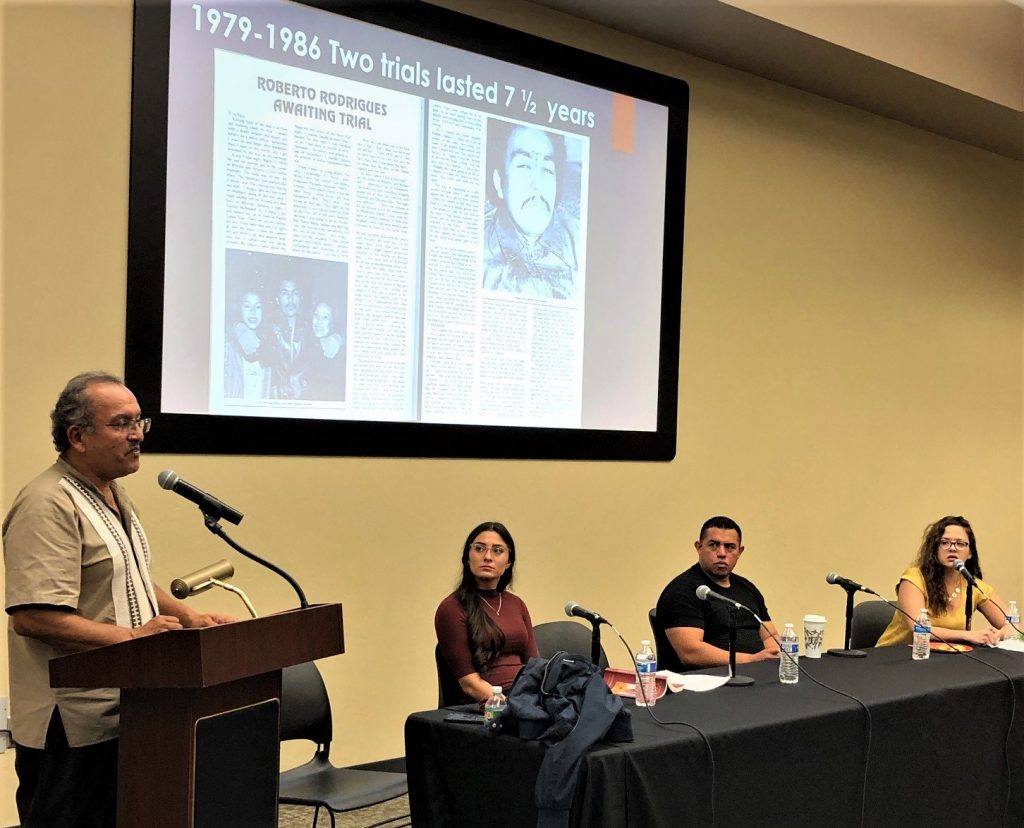
Roberto Rodriguez with contributors Arianna Martinez, Juvenal Caporale, and Michelle Rascon-Canales.

Joined by three of the 18 contributors to the book, Juvenal Caporale, Michelle Rascon-Canales, and Arianna Martinez, Rodriguez explained the history of this new book while a slideshow of victims of state violence hung above, showing faces like Ruben Salazar and Sandra Bland.
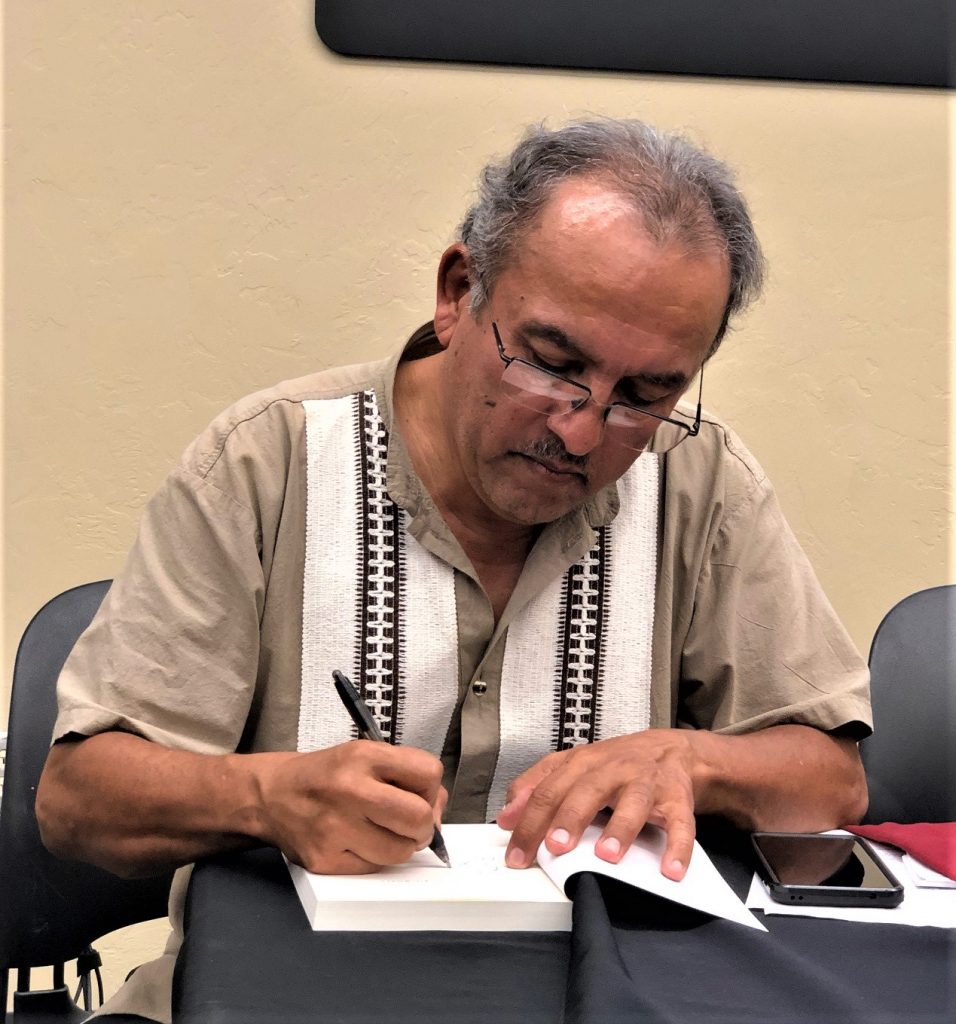
Signing book for students and friends.

Roberto Rodriguez, also called Dr. Cintli by his students and colleagues, has been at the University of Arizona for almost eighteen years. During that time he has stood by students traversing difficult challenges, such as the Mexican American Studies battle between the State and Tucson Unified School District. However, through those years and others, Rodriguez has only talked about what happened to him forty years ago on the periphery of his life–writing articles and stories on state violence against Red, Brown, and Black people and communities, and other social justice issues.

Rarely has he brought up his own experience of being severely beaten by a group of Los Angeles County deputies in retaliation for photographing a vicious beating in East Los Angeles by a different group of deputies. The trauma of that violence has followed him every day since often making it difficult to return to that night, especially in public settings.

To ease the difficulty of the evening and discussion, Tania Pacheco led the crowd in a guided meditation. During the book signing, Rodriguez was surrounded by a group carrying backpacks on their shoulders asking him questions. With pen in his hand, Rodriguez often looked up at the faces around him with a wide smile–his students.
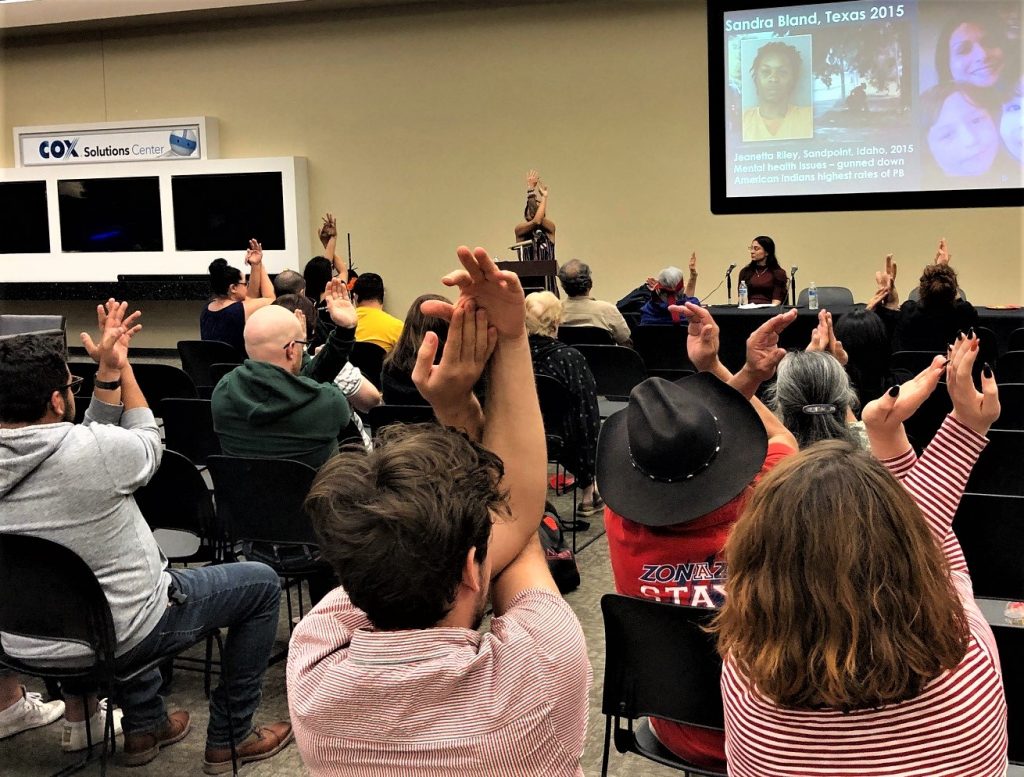
A guided meditation ended the book celebration.

Aloha from ASA 2019

November 13, 2019

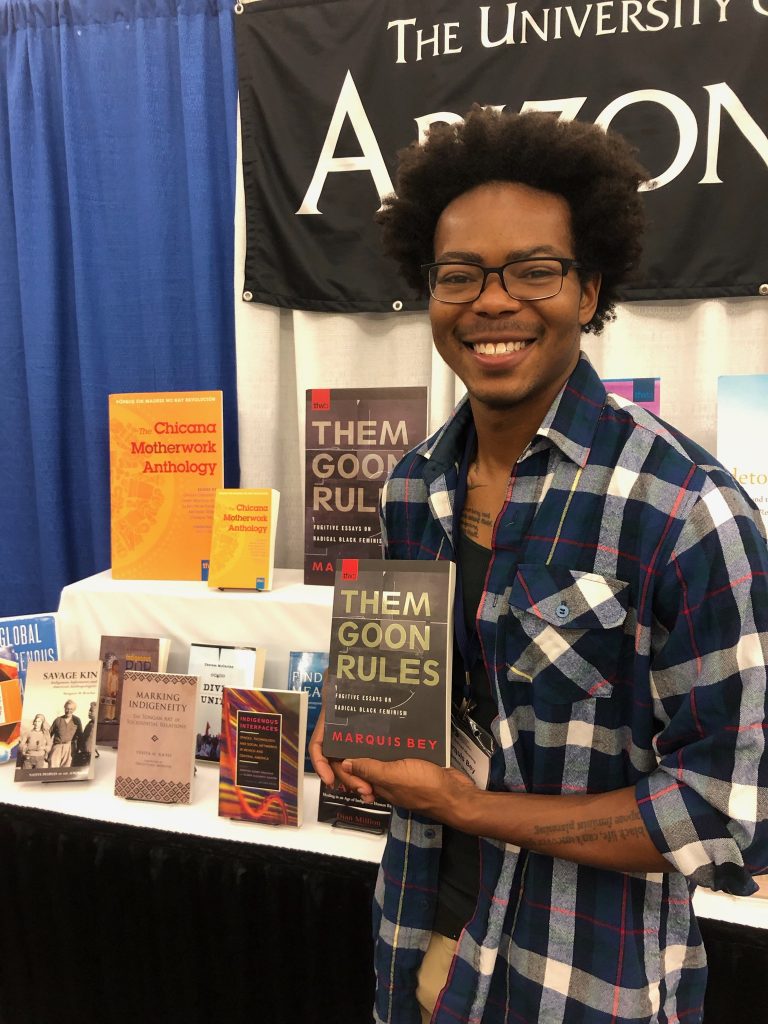
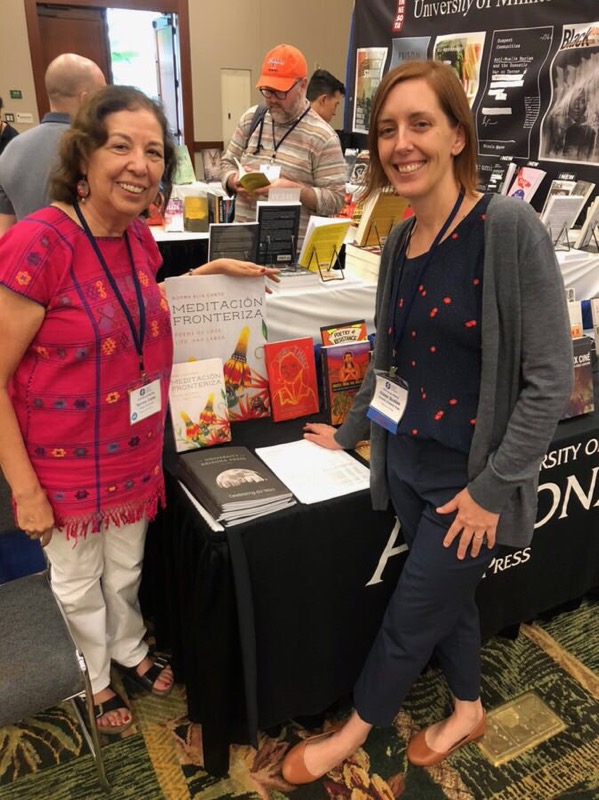
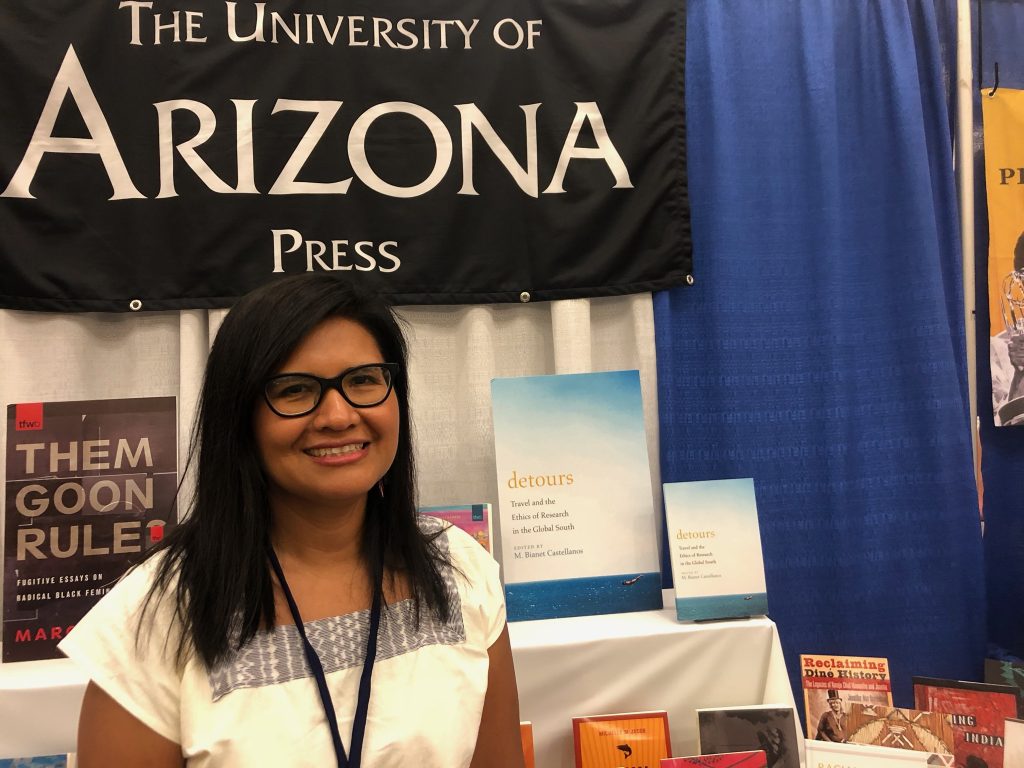
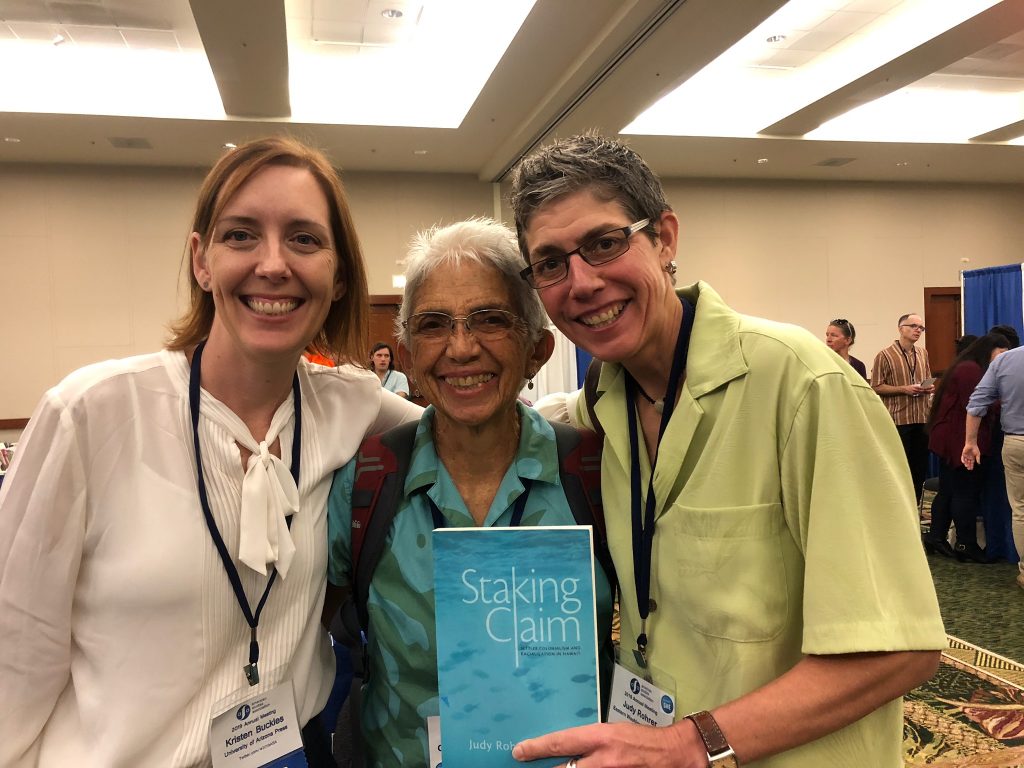
On November 7-10, our Editor-in-Chief Kristen Buckles attended the annual American Studies Association meeting in Honolulu, Hawaii! This year’s theme was “Build as We Fight,” which opened up many valuable conversations about colonialism. Below, find some photos of our wonderful authors with their University of Arizona Press books.

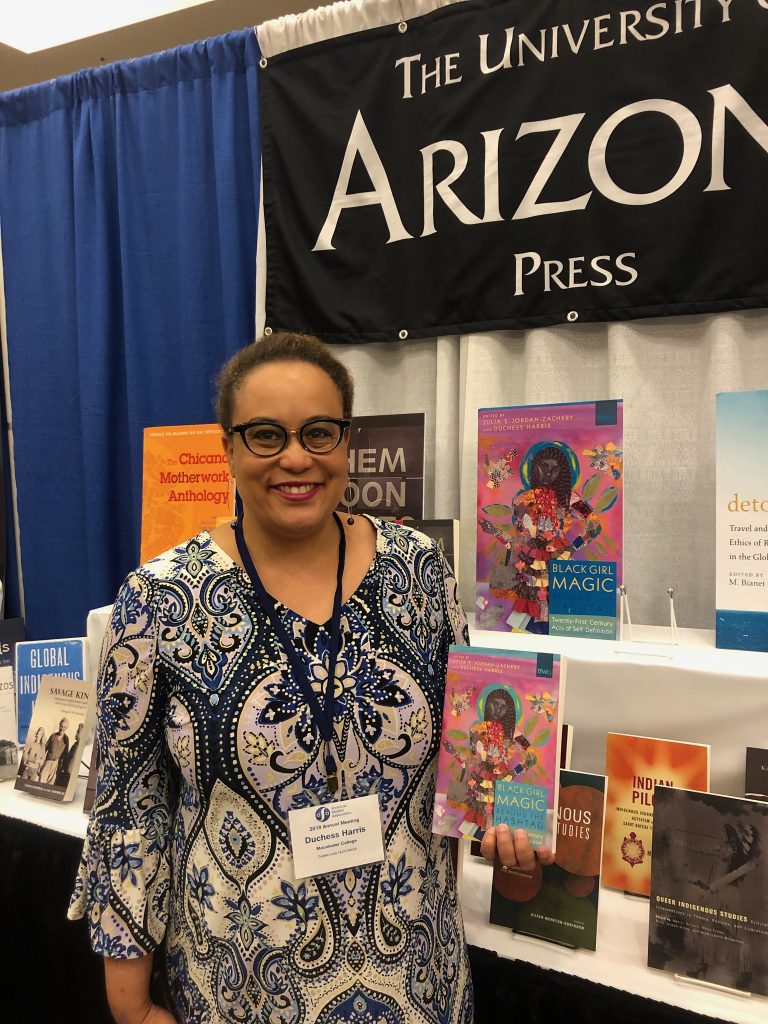
Duchess Harris with her new book, Black Girl Magic Beyond the Hashtag.
Marquis Bey with his Feminist Wire Series book Them Goon Rules.
Norma Cantú and Kristen Buckles with Norma’s new poetry collection, Meditación Fronteriza.
Bianet Castellanos with her new book, Detours.
Judy Rohrer and Georgia Kasnetsis Acevedo with Kristen Buckles and her University of Arizona Press book, Staking Claim.

People of the Press: Julia Balestracci

November 12, 2019

People of the Press is back this week! Inspired by the Association of University Presses celebration of the people of AUPresses, we would also like to celebrate our dedicated publishing professionals throughout our 60th anniversary year.

Today we’re featuring our Rights Manager and Assistant to the Director, Julia Balestracci.

Hello Julia, what do you do for the Press?

I’m the Rights Manager and also the Assistant to the Director, Kathryn Conrad.

I handle all permissions and all other sub-rights requests, input and manage author royalties, and draft and manage contracts.  I also do a lot of scheduling and coordinating for Kathryn and the Press as a whole. We are busy!

How long have you worked at UA Press?

It’s hard for me to believe, but I’ve worked at the Press since 2012.

The University of Arizona Press is committed to helping contribute to an informed society and enlightening readers. What’s one thing you’ve learned from your work?

I have learned that there is a growing commitment out there in the world at large to showcasing diverse voices and perspectives. Some of our most oft-licensed material was written by authors with disabilities, marginalized voices, and unique cultural perspectives. Increasingly, based on the requests I receive, I see a move to expand diversity in school curriculum at all levels.

What would people be surprised to learn about your work?

I think that people would be surprised to know the breadth of requests we get for re-use of material from our books. In addition to more standard requests for republication, we get requests for inclusion of author material in podcasts, various websites, radio shows, national newspapers, dissertations, plays, musical compositions, national and international museum exhibitions, public art installations, the ACT and AP tests, and the list goes on. Just this past year alone, our publications in whole or in part have been translated into Spanish, Czech, Mandarin, Korean, Swedish and Norwegian. I feel my work is constantly contextualizing the meaning and deep resonance of our authors’ scholarship in connection with the wider world.

Tucson has a thriving literary and scholarly community. What’s one of your favorite spots to hear authors, find a good book, or just curl up and read?

I’m an avid thrifter and a lover of vintage books (especially children’s books), so I love combing through a book section whenever I’m at one of the many thrifts in town, never knowing what I might come across. One of my all-time favorite finds is a copy of Frog and Toad Are Friends, inscribed and signed by Arnold Lobel, with a hand-drawn sketch of toad! For local bookstores, Antigone can’t be beat. I’m not picky when it comes to finding a spot to curl up and read; with two kids and a busy life full of interruptions, I’ll take any quiet and undisturbed moment I can get, irrespective of location!

People of the Press: Kristen Buckles

November 6, 2019

People of the Press is back this week! Inspired by the Association of University Presses celebration of the people of AUPresses, we would also like to celebrate our dedicated publishing professionals throughout our 60th anniversary year.

Today we’re featuring our Editor-In-Chief Kristen Buckles.

Hello Kristen, what do you do for the Press?

I am the editor-in-chief and an acquisitions editor. This means that I oversee the editorial program while also bringing in book projects. The acquisition areas I work on are history, Latinx studies, Native American and Indigenous studies, border studies, and the Southwest. University of Arizona Press books are largely about the Americas, but many of our titles in Native American and Indigenous studies and anthropology extend to topics across the globe. In the case for our space science list, it’s beyond!

How long have you worked at UA Press?

I have been here for fifteen years. I started in 2004 as the director’s assistant and moved into to the acquisitions department a couple of years after that. The Press is truly a second home for me. I love working here.

The University of Arizona Press is committed to helping contribute to an informed society and enlightening readers. What’s one thing you’ve learned from your work?

The old cliché about learning something new everyday is so apt here. It’s the nature of our work: we are all learning about the world we live in (and beyond!) through our daily engagement with the book content. So going back to the question, specifying one thing would be impossible! In general, though, by working on University of Arizona Press books for the last fifteen years, I would say I am much more aware of the complex history of the Americas and the challenges we face today, particularly in the U.S.-Mexico borderlands where the Press is located. I have also come to really appreciate the value of poetry and creative expression as a means to raise awareness of complex issues. Here are two great examples: Poetry of Resistance and Iep Jaltok.

What would people be surprised to learn about your work?

University presses in general rely heavily on peer review to develop projects and make editorial decisions. Rigorous peer review is foundational to university press publishing, and as such, everything that has a University of Arizona Press imprint has gone through an external peer-review process before acceptance, including our poetry, creative works, and others.

Tucson has a thriving literary and scholarly community. What’s one of your favorite spots to hear authors, find a good book, or just curl up and read?

I love going to readings at the University of Arizona Poetry Center. And every single bookstore in Tucson—from the UA Bookstore to the Barnes and Nobles to Bookman’s, Antigone, and the indies—is my favorite spot to find a good book. Tucson is a place for readers; just come to the Tucson Festival of Books to see! As for my favorite place to curl up and read: a weekend morning at home, smell of coffee in the background, completely quiet except for morning birdsong and a snoring spaniel by my side.

An Excerpt from Yolqui, A Warrior Summoned From the Spirit World by Roberto Cintli Rodriguez

November 5, 2019

In Nahuatl yolqui is the idea of a warrior brought back from the dead. For University of Arizona associate professor Roberto Cinctli Rodríquez, it describes his own experience one night in March 1979 after a brutal beating at the hands of L.A. sheriffs.

In his new University of Arizona Press book, Yolqui, a Warrior Summoned from the Spirit World: Testimonios on Violence, Rodriguez revisits that day and brings forward contributors who offer their own important and timely testimonios on state violence.

Here is an excerpt from the Preface of the book, which goes further on to explain how Rodriguez chose Yolqui as the title of the book:

Sometime close to midnight on March 23, 1979, on Whittier Boulevard and McDonnell Avenue in East Los Angeles, California, I died. On March 24, 1979, at a little past midnight, I willed myself back to life on that cold and bloody intersection.

I did not actually die, but I was killed that night: attacked, then beaten over and over again with riot sticks wielded by at least four members of the Special Enforcement Bureau, an elite tactical unit of the Los Angeles County Sheriff ’s Department, who struck my body and head repeatedly with their sticks until my skull fractured and my blood pooled in the street.

To the average person, that statement may not make any sense; for many years it didn’t make sense to me, either, until one night the explanation came to me in a dream. But it would be many more years before I was able to comprehend its message.

Hopefully, what I write here will explain both the above statements and how I came upon the title Yolqui for my memoir/testimonio.


In the middle of a cornfield in Huitzilac, Morelos, Mexico, I am given aguamiel, the juice of the maguey plant, to drink. That night, presumably, it prompts a dream.

I am hovering above a sprawled body.

Suddenly, I realize that the body is mine.

My spirit and my consciousness are outside of my body.

But how can this be possible? How can I be here, looking down at my own body?

I observe my bloodied body sprawled on the ground below me. I know it is me because those are my pants, my jacket, my hair.

I am not struggling. I am not moving. I am lifeless. A cold realization sets in, but it doesn’t make sense.

If my spirit and my consciousness are outside of my body, what does this mean?

I know I am not awake. This must be a dream. How else could this be happening?

The only other explanation is that I am no longer alive . . . that I am dead. No. This must be a mistake. There must be another explanation. I’m not going anywhere—I’m not ready to go!

At that, I am startled awake. I am in shock, trying to understand what I just saw.

For the past twenty years I’ve not had any dreams nor nightmares; either I
was not dreaming, or I was unable to remember my dreams. Either way, something changed that day in the cornfield, and that night I finally had a dream that I could remember. I was very disturbed by the dream, knowing full well there was meaning attached to it.

In the dream I’d been conscious of observing myself. It was the night of March 23–24, 1979, in East L.A., the night I was assaulted while photographing the brutal beating of a young man on Whittier Boulevard. Once I understood what I was looking at and where I was, my mind forced me to wake up.

That long-ago night resulted in my being arrested and charged with attempting to kill the four deputies who almost took my life. It took nine months to win that trial and another seven years to win the lawsuit I filed against those same deputies and the Los Angeles County Sheriff ’s Department.

Even as I write this, I realize that something else happened to me all those years ago, beyond the constant harassment and death threats, beyond having to live in fear and operating on survival instincts. Something was taken from me that night in 1979: the trauma to my brain and skull also had a long-term impact on my ability to process my thoughts in the dreamworld. I lost the ability to recall my dreams. A psychologist could probably comment about that; I know our ability to dream is a critical part of what makes us human. Dreams permit us to process our thoughts, our emotions, and our experiences, and dreams are what connect us to that other world. That was taken from me that weekend. Many Indigenous healers whom I am close to believe that our dream state is as important, if not more so, as our awakened state, and most view the inability to dream as unhealthy. I am also conscious as I write this that I am providing a psychological portrait of my mind and my spirit some forty years after that night in 1979 in East Los Angeles.

What was the meaning of the dream I had in Huitzilac? At the time, I was unsure, and that was disconcerting. In subsequent days, I internalized the idea that I had died that night in East L.A. Was that a nightmare, or was it a memory of what had happened to me that weekend? Regardless, I realized I had become a spirit walking outside of my body.

Sometime later, when I was living in San Antonio, Texas, I discussed that disturbing dream with a good friend, Enrique Maestas, who is also an Azteca/Mexica danzante. I told him I remembered having had recurring bouts of fear between 1979 and 1986, fear that I was going to be killed. “The dream is nothing to worry about,” Enrique told me.

All warriors have to die.

Okay. I got that. I now understand that I died on March 23, 1979, and on March 24, 1979, I was resuscitated. But why?

So that as warriors, we can come back and fight again.

Perhaps that was the answer I was looking for, though Enrique’s explanation did not sink in right away.


Roberto Cintli Rodríguez is an associate professor in the Department of Mexican American Studies at the University of Arizona. He writes for Truthout’s Public Intellectual Page and is a longtime award-winning journalist, columnist, and author. His first book with the UA Press is Sacred Maíz Is Our Mother: Indigeneity and Belonging in the Americas.

Read. Think. Act.

November 4, 2019

This week, November 3 through 9, is University Press Week. UP Week, as we call it, has its roots in a 1978 proclamation by President Jimmy Carter “in recognition of the impact, both here and abroad, of American university presses on culture and scholarship.” It has grown into a worldwide celebration.

This year our theme for UP Week speaks to the current moment: “Read. Think. Act.” Citizens around the globe are engaging in important debates that will influence vital decision-making in the months ahead. University presses offer the latest peer-reviewed research on issues that affect our present and future. By reading widely about politics, economics, climate science, race relations, and more, we can all better understand these complex issues and appreciate university presses’ important contributions to our world.

UA Press Director Kathryn Conrad

From the University of Arizona Press alone you can find books to better understand the fires raging in California, like Stephen Pyne’s California: A Fire Survey, or to go beyond pundits’ sound bites to explore the very human issue of immigration through books like The Border and Its Bodies.  Science Be Dammed offers a cautionary narrative in the age of climate change about the risks of ignoring scientific research and Yolqui offers a deeply personal meditation on the culture of violence against Red-Black-Brown communities in the United States.

And we are just one of the Association of University Presses’ 151-member presses, which together publish more than 13,000 books each year—books that advance knowledge and encourage thoughtful action. You can learn more about our work as it’s celebrated during University Press Week—and download a copy of our “Read. Think. Act. Reading List”—at universitypressweek.org.

—Kathryn Conrad, UA Press Director

Conrad currently serves as the President of the Association of American University Presses board of directors. Listen to Conrad explain more about UP Week in a podcast interview she did recently with New Books Network:

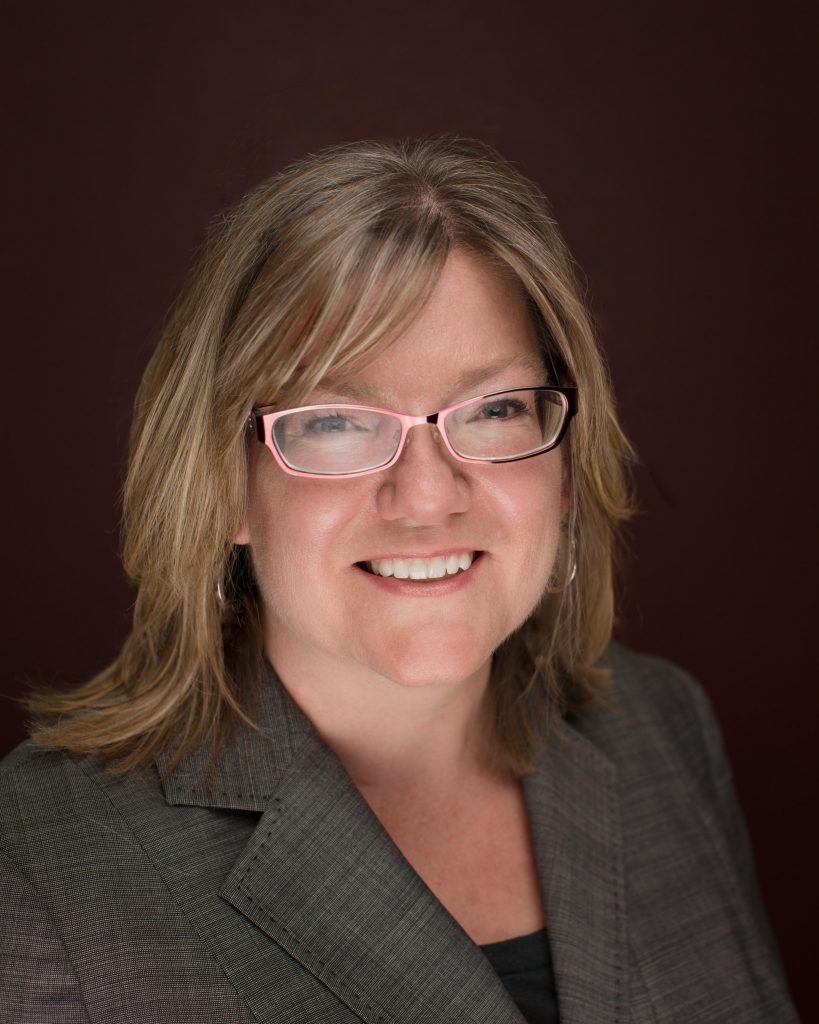
Yvette Saavedra Awarded the WHA-Huntington Library Martin Ridge Fellowship

October 29, 2019

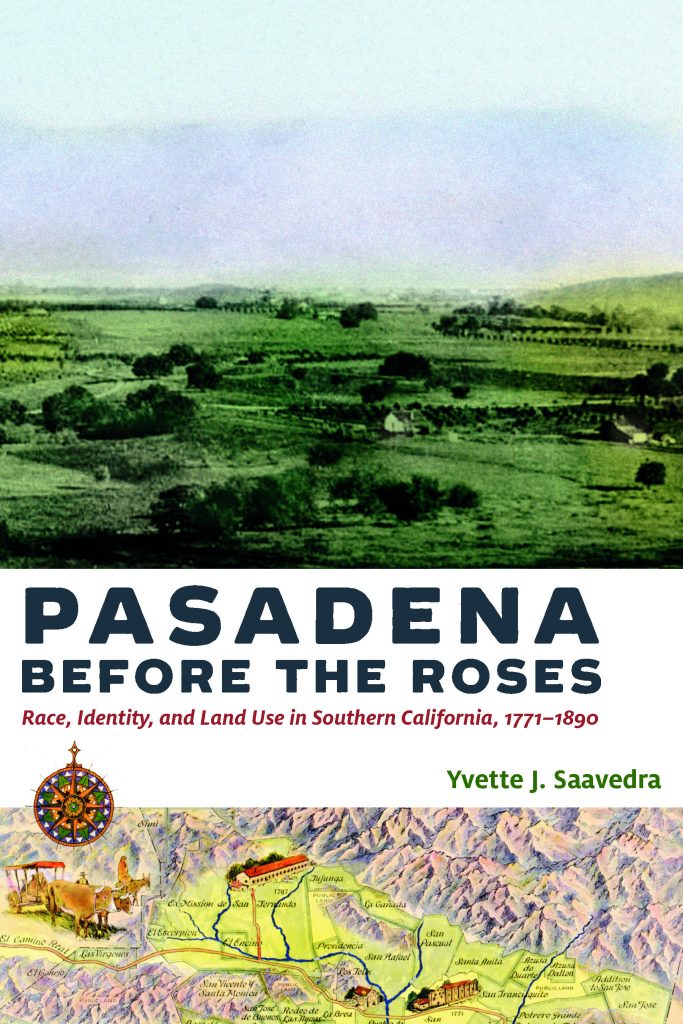
In recognition of Martin Ridge’s long service to both the Western History Association and The Huntington Library, the WHA-Huntington Library Martin Ridge Fellowship is a one-month research fellowship at The Huntington Library. The 2019 winner of the fellowship is University of Arizona Press author, Yvette Saavedra.

Yvette Saavedra’s recent book, Pasadena Before the Roses, examines a period of 120 years to illustrate the interconnectedness of power, ideas of land use, and the negotiation of identity within multiple colonial moments. By centering the San Gabriel Mission lands as the region’s economic, social, and cultural foundation, she shows how Indigenous, Spanish, Mexican, and American groups each have redefined the meanings of land use to build their homes and their lives. These visions have resulted in competing colonialisms that framed the racial, ethnic, gender, and class hierarchies of their respective societies.

Congratulations, Yvette, on receiving this honor!

Laura Da’ Wins 2019 Washington Book Award

October 29, 2019

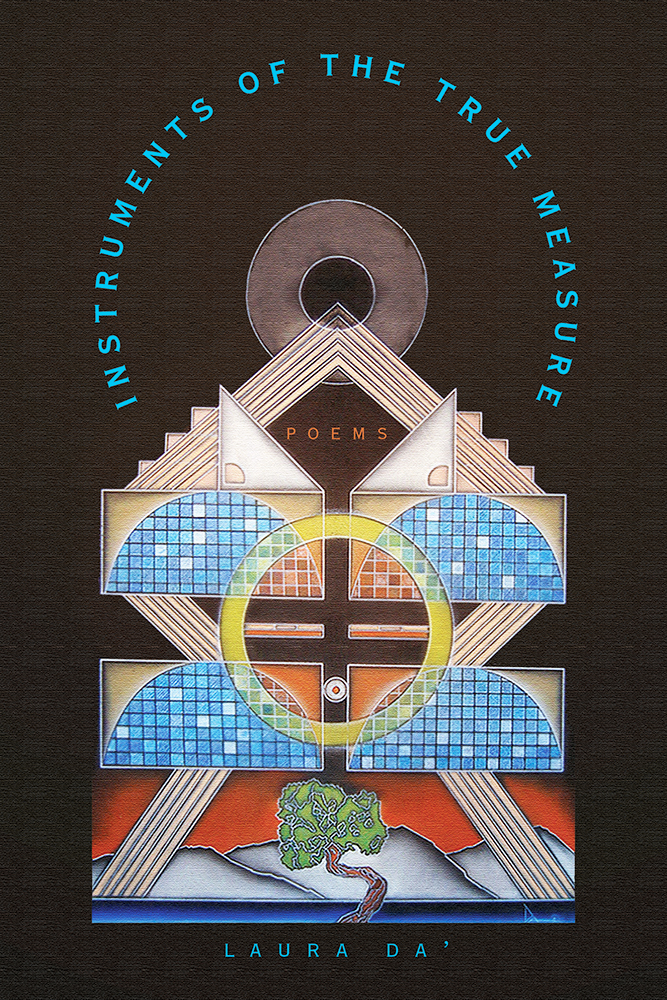
Poet Laura Da’ is the winner of the 2019 Washington Book Award poetry category, for her UA Press collection Instruments of the True Measure! The Seattle Review of Books writes, “This year’s list of nominees was the finest in recent memory; the judges must have been under tremendous pressure to select a single winner from each category. It really, truly was an honor just to be nominated this year, because it placed you in company with the best authors this state has to offer.

In Instruments of the True Measure, Da’ charts the coordinates and intersections of land, history, and culture. Lyrical passages map the parallel lives of ancestral figures and connect dispossessions of the past to lived experiences of the present. Shawnee history informs the collection, and Da’s fascination with uncovering and recovering brings the reader deeper into the narrative of Shawnee homeland.

Below, read an excerpt from an interview with Laura Da’ from the Seattle Review of Books:

“‘I think that I’ve always been well connected in the indigenous poetry community,’ Da’ says, ‘because I started my education at the Institute of American Indian Arts, and there are so many writers who have come out of that school. It’s a tight, small community generally speaking, though it’s incredibly vast in terms of talent and experience.’ She felt a part of that community almost immediately.

But even though she was born and raised in Snoqualmie Valley, and lived most of her life in western Washington, breaking into this city’s poetry community took more work. ‘Seattle is not easy to get in the door, I think, which is really unfortunate,’ Da’ says. She says Seattle’s literary community has a fair share of ‘gatekeepers’ who aren’t especially good at making new voices feel welcome.

But then ‘I was a Jack Straw fellow and a Hugo House fellow and that really helped me,’ Da’ says. What was it about those two programs that worked for her? ‘I met a lot of wonderful writers and good friends. I’m fairy introverted and shy, so usually I need an extrovert to sort of adopt me. And that was the way I found a place in the Seattle poetry community.’

The poets who influence Da’ range widely in terms of style and background. Da’ gushes over poems by Danez Smith, Natalie Diaz, Sherwin Bitsui, and Casandra Lopez. She speaks of Arthur Sze’s ‘respect for the reader and the reader’s ability to handle the ambiguity of the unanswered.’

Da’ is so enthusiastic about Sze’s writing that she doesn’t seem to realize that she could just as easily be describing her own work— these elegant couplets crafted from the smallest and most delicate materials, but which only grow finer with age.

Read the entire interview here.

Congratulations on winning this incredible award, Laura!

People of the Press: Sara Thaxton

October 28, 2019

People of the Press is back this week! Inspired by the Association of University Presses celebration of the people of AUPresses, we would also like to celebrate our dedicated publishing professionals throughout our 60th anniversary year.

Today we’re featuring our production coordinator, Sara Thaxton.

Hello Sara, what do you do for the Press?

Short version: I talk/cry a lot about e-books, and I magically transform Word files from chaos to order.

Long version: I’m the Book Production Coordinator which encompasses several things. I typeset two-thirds of our front-list titles, adapting our template designs to blend well with the cover design. I love working on books with lots of tables! I also assist with all of our backlist reprints and ushering those off to printers. The area other than typesetting I’m most proud of is our e-books: I finagle all of our front-list titles into e-pub format, thanks to our XML-first workflow.

How long have you worked at UA Press?

Two years in August but I’ve been typesetting since 2005!

The University of Arizona Press is committed to helping contribute to an informed society and enlightening readers. What’s one thing you’ve learned from your work?

I’ve learned that there is a wildflower colloquially known as “bog cheetos” (Polygala lutea L., orange milkwort) and that Charles Darwin’s daughter waged a one-woman war on a particularly strange-looking mushroom by wandering the forest with a spear.

What would people be surprised to learn about your work?

Typesetters think in an entirely different numbering system than most people. We go by picas/points and in multiples of 12s rather than 10s. We’re also probably the least-visible cog in the book publishing machine, but we’re always very proud of every book we create! Also, e-books are harder to make than they look!

Tucson has a thriving literary and scholarly community. What’s one of your favorite spots to hear authors, find a good book, or just curl up and read?

When I lived near the north Georgia mountains, I loved being able to sit by the Tallulah River and read during camping trips. I hope to find a similar spot in some of the higher-altitude wilderness surrounding Tucson!

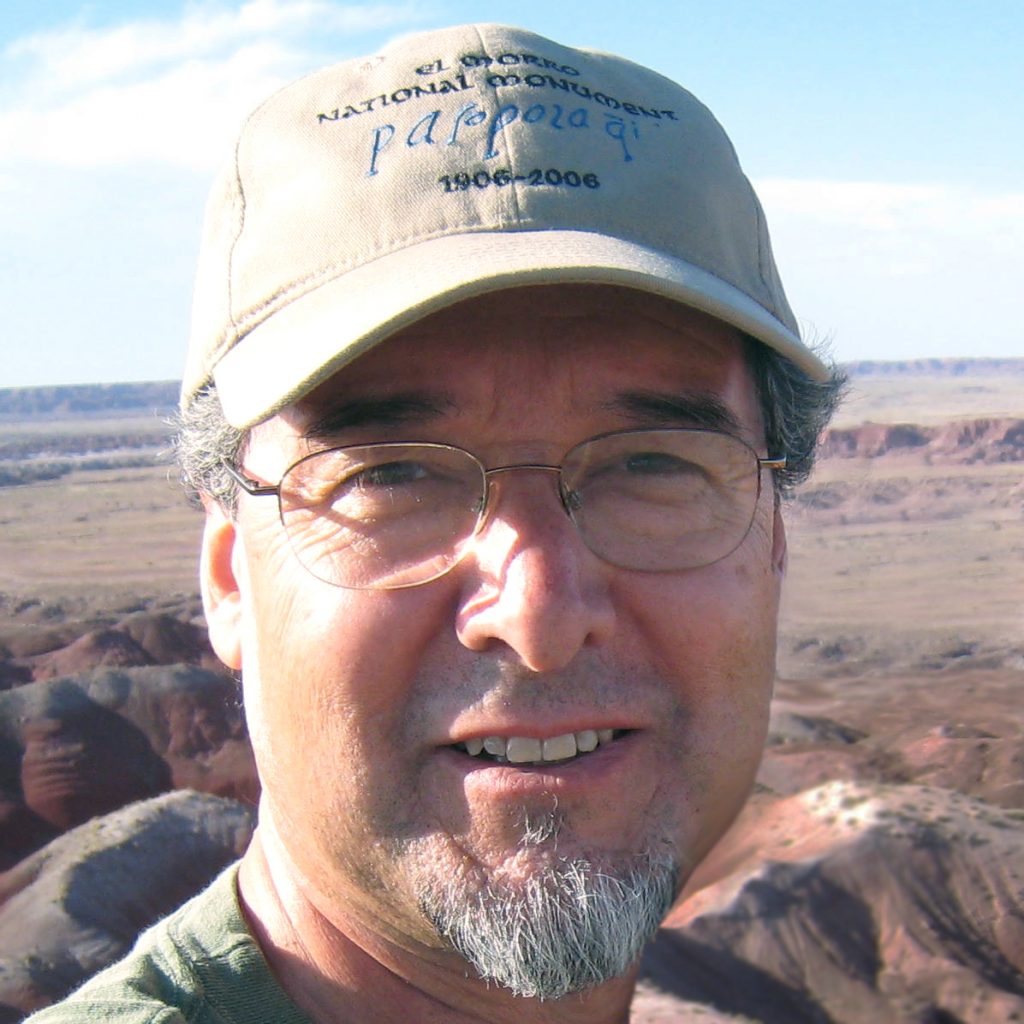
An Excerpt from Postcards from the Chihuahua Border by Daniel D. Arreola

October 23, 2019

In Postcards from the Chihuahua Border, Daniel D. Arreola provides a colorful and dynamic visual history of Mexico’s northern border. Drawing on more than three decades of archival work, Arreola invites the reader to time travel, to revisit the first half of the twentieth century, when the border towns of Ciudad Juárez, Ojinaga, and Palomas, were framed and made popular through picture postcards. Arreola provides a visual journey through the borderlands neighboring west Texas and New Mexico.

Below, read an excerpt written by Daniel D. Arreola from the introduction of Postcards from the Chihuahua Border.

“Arguably, the Mexico-United States border has been one of the most overlooked places on earth.  We now know, perhaps all too well, that the border is part of political consciousness although not necessarily understood through careful observation or experience and that some want to construct a wall at this boundary where, ironically, one already exists.  Too many of us don’t understand that the borderline itself is a nineteenth-century political agreement while the fence in all its many iterations is a twentieth century phenomenon, or that the first permanent fence along this international boundary between an Arizona town and a Sonora town is just now at this writing a century old.  Even fewer of us recognize the echoes resounding from this borderland that should remind us why the original monuments were planted along the divide without a fence.

Daniel D. Arreola

“The towns of the Chihuahua border, part of the system of cities that dot the Mexican side of the boundary, are the subjects of this book, the third installment in a series of writings about the visual historical geography of these forgotten places.  The purpose of Postcards from the Chihuahua Border as in my previous explorations of the Río Bravo border and the Sonora border is to caste a new eye on an old subject and bring light to a way of seeing the border that has been overlooked.

Looking, it turns out, is not the same as seeing.  We look at the world daily, but seeing the world engages the mind beyond the surficial glance.  In Postcards from the Chihuahua Border, I ask readers to contemplate what geographer Christopher L. Salter said about documents and the geographer’s point of view, to wit, “The cultural landscape—that is, landscape which has been modified and transformed by human action—is the oldest primary document in our possession.” As document, the landscape is worthy of reading, analysis, and understanding.  Unlike a book bound between two covers, the landscape is a leafless palimpsest, a surface partly erased but with relics still visible.  Yet, like a book, a landscape can be read if we ask the right questions. In that spirit, the book you hold in your hands is a kind of testimonial to landscape interpretation but not one limited to written evidence so common to historical investigation.  Rather, the focus of this work is reading and seeing visual representation of landscape as document, especially through the popular postcard both in its photographic and mechanical print forms.

Admittedly, a postcard view of the world is not a common vantage point.  Yet, the postcard is both a literary and visual document that can shed light on cultural understanding.  Anthropologists Patricia Albers and William James suggest that the postcard has largely been overlooked as a document, especially its utility to explore the relationship among photography, ethnicity, and travel.  Their research describes some of the qualitative approaches for using postcards, relates photographic communication in postcards to a wider ideological discourse, and discusses the interplay of ethnic appearance and photographic expression in world tourism. In a similar vein but with enhanced elegance, Rosamond Vaule’s As We Were: American Photographic Postcards, 1905-1930, serves as a model chronicle, informing how postcards are both documentary history and revealing witness to our past lives and places.”

Daniel D. Arreola is a Professor Emeritus in the School of Geographical Science and Urban Planning at Arizona State University. His research focuses on cultural landscapes, place-making, Mexican-American borderlands, and Hispanic/Latino Americans. In 2016 he was presented with the Preston E. James Eminent Latin Americanist Career Award by the Conference of Latin American Geographers.

For Authors

The University of Arizona Press publishes the work of leading scholars from around the globe. Learn more about submitting a proposal, preparing your final manuscript, and publication.

Inquire

Requests

The University of Arizona Press is proud to share our books with readers, booksellers, media, librarians, scholars, and instructors. Join our email Newsletter. Request reprint licenses, information on subsidiary rights and translations, accessibility files, review copies, and desk and exam copies.

Request

Support the Press

Support a premier publisher of academic, regional, and literary works. We are committed to sharing past, present, and future works that reflect the special strengths of the University of Arizona and support its land-grant mission.

Give