2019 Western History Association Recap

October 21, 2019

Last week, I attended the Western History Association conference in Las Vegas, Nevada. At this year’s conference, the question framing the Presidential Plenary was, “Does the West matter?” To this, I say yes! The “West” as a region is the rallying call for the best minds in history to gather and present new ideas. And from my perspective from the book room, there was no shortage of dynamic research to be shared at what was the third largest gathering of western historians in the organization’s history.

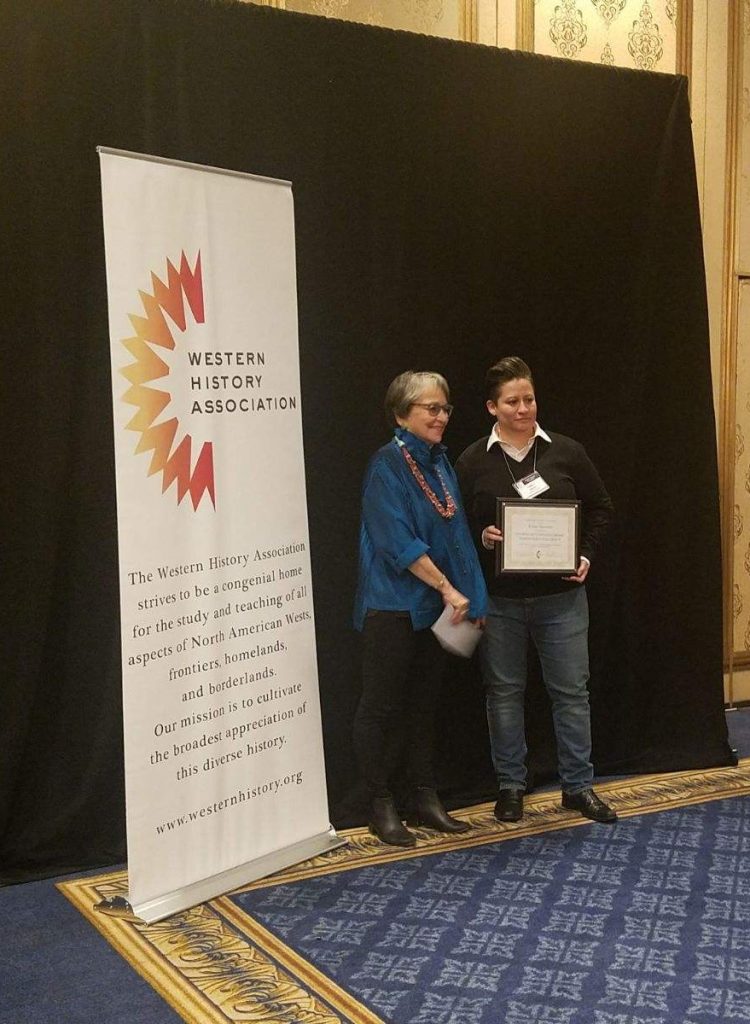
In the spirit of inclusion and community— “so we can all be together,” in the words of outgoing WHA President Martha A. Sandweiss— this year marked a change in programming, an eschewing of the annual ticketed banquet and opening up the awards ceremony to all. Witnessing the torch-passing from Dr. Sandweiss to new WHA President and longtime University of Arizona Press series editor, David Wrobel, was a highpoint of the conference. Another highpoint: Watching UAP author Yvette Saavedra receive the 2019 WHA Hunting Library Martin Ridge Fellowship. Congratulations, David and Yvette!

Yvette Saavedra with 2019 WHA President Martha Sandweiss. Congratulations to Yvette for receiving the 2019 WHA-Huntington Library Martin Ridge Fellowship.

This year, I had the honor of participating in Thursday morning’s panel on turning a dissertation into a book, organized and chaired by UAP author and series editor, Jeff Shepherd. The panel was fantastic! The room was packed, with a continuous flow of great questions from the audience. It was a joy to have conference-goers swing by the booth throughout the rest of the conference to continue the conversation.

Thank you to all who came to the University of Arizona Press booth this year to browse books and chat about your research. I look forward to seeing everyone in Albuquerque next year!

—Kristen Buckles, Editor in Chief

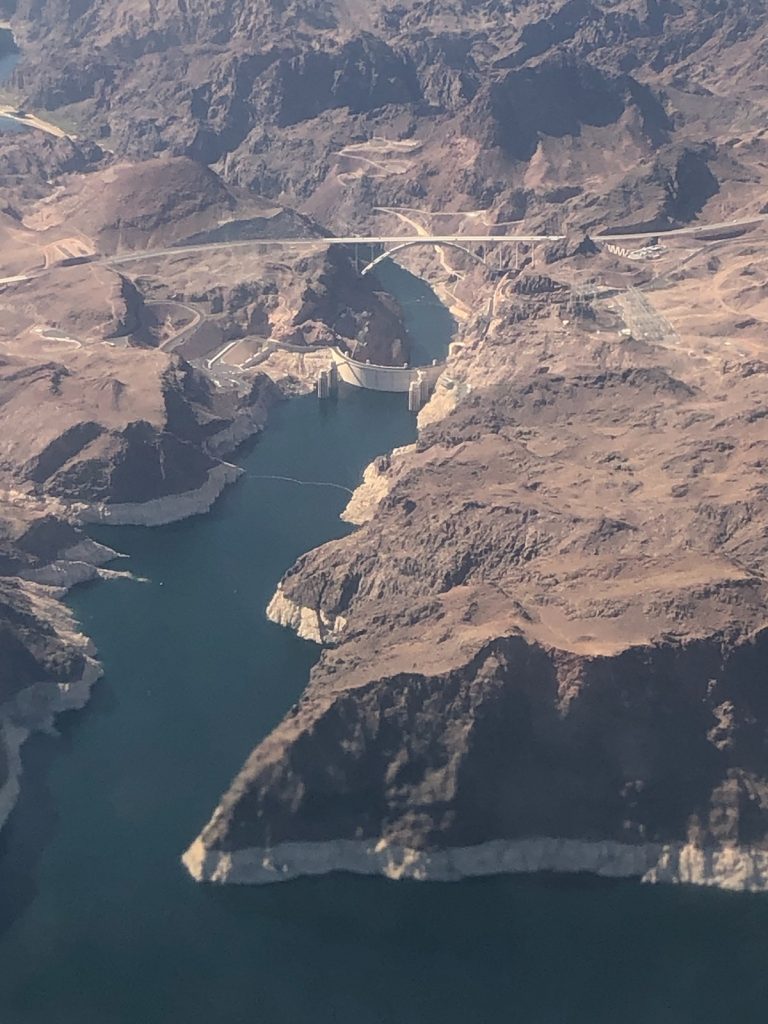
Flying to sunny Las Vegas for the Western History Association conference, my luck began early in catching a glimpse of the Hoover Dam from 15,000 feet.

Hernandez Interviews Chacón on Kafka in a Skirt

October 18, 2019

Daniel Chacón and Tim Z. Hernandez, both University of Arizona Press authors with titles in the award-winning Camino del Sol series of Latinx poetry and literature, co-host the literary program Words on a Wire on El Paso’s NPR station KTEP. Chacón is a professor of creative writing at the University of Texas, El Paso. Kafka in a Skirt, is Chacón’s first book of short stories with the UA Press. Hernandez spends his time between Fresno and El Paso, where he’s an assistant professor in the MFA Program in Creative Writing at the University of Texas at El Paso.

Chacón and Hernandez interview writers and poets regularly for their Words on a Wire series. We thought it would be great to ask Hernandez to turn the interview table a bit. In this interview, Hernandez talks to Chacón about writing, identity, and life:

Hernandez: I’d like to start at the beginning. In one of the first stories that appears in this collection, “The Hidden Order of Things,” you state outright, “This is a work of Chicano Literature.” Why, in this post-millennial reality where it seems many writers of color are trying to steer clear of these labels, is this distinction important to you, and to this specific body of work?

Chacón: In the context of the story I don’t think I am either trying to avoid labels nor am I asserting one. Rather, I am admitting a reality, that no matter what I may want for my book, it will be read by some, perhaps by most, as Chicano and or Latinx literature. In fact, the publisher itself is a Latino literary series, and a very good one. A publisher I deeply respect. And many of the stories in Kafka are specific to the Latinx experience, like the “Fuck Shakespeare” story, or the story “Bien Chicano.” Not all the stories should be classified as Latinx literature, and that’s kind of the idea I’m making fun of. I tell the reader, if you’re reading this book because you’re interested in Chicano literature, then here’s the order you should read the stories. Then I give an alternative Table of Contents to the “official” one. I’m saying this is one of many possibilities on how to read the book.

I think as a Latinx writer, who started out as a Chicano writer, long before the term Latinx was used by anyone, I wanted nothing more than to be read by all people, but immediately my work was put in the category of Chicano literature, whether or not I liked it, whether or not I would’ve chose that label. And I think Latinos are often put in that position. In fact, my collection has been called “magical realism,” which is a term I don’t necessarily embrace, nor have I ever set out to write a magical realist story. However, because I am Latino, and because my work belongs in the category of Chicano literature, if something irrreal happens in my stories, if the reality that I present–and by the way, the reality I live on a daily basis  does not parallel what most people think of as reality–because I’m Latino, it will be labeled magical realism. 

The mystic writer Evelyn Underhill says “Reality is the illusion we share with our neighbors.”  When something happens in my stories that is not concrete, linear reality, I don’t think it’s magical realism at all. I think it’s just another level of reality.

So in that story you’re referring to, “The Secret Order of Things,” I am giving readers suggestions on how to read the book, that is, what order to read the stories, depending on their interests. And I was trying to be funny by suggesting that if all they’re looking for is to read “Chicano literature,” after the list I give them, they don’t have to read the rest of the stories.

Hernandez: You’ve written a total of seven books. Each of them ranging in different topics, settings, characters and situations. Each of them also using a conceptual approach to narrative-making, i.e. loops, wormholes, unending rooms. Kafka in a Skirt is no exception, as it strings together seemingly disparate stories with a few common threads in mind. What is the fascination you have with these concepts? And how does this book differ from the previous books?   

Chacón: I’m not sure it so much as a fascination as it is my reality, that things in my life loop back and forth from the past to the future to the present and even at times into a space-time that I’m not even sure exists in the visible universe.

For example, if I’m walking on the sidewalk and I see a paperclip, and I reach down to grab it, I am not only reaching down in that space-time, but I am also reaching down every single time I have reached down or will reach down, as well as reaching in my mind for imaginary paperclips in the stars. I am invoking the energy of every single time I have/or will have done it. And the source of that energy comes from a fundamental concept that I have about paperclips, how paperclips may hold together the pages of my life, and even though I mean that humorously, there was a time when I was obsessed with paperclips. Perhaps obsessed is too strong of a word, but I was very conscious of paperclips as metaphor. I would walk down the street and notice paperclips, whereas most people wouldn’t, as they would notice things that are filtered through their particular consciousness at that particular time. But each time I encountered a paperclip, it deepened other times I have discussed and or encountered paperclips.

One time at a book festival I was going to give a lecture on parallel universes, the multi-verse, and I had planned on talking about the archetype of paperclips and how it manifests itself in various levels of my sense of reality, and as I approached the building where I was going to give this talk, I opened the door and there on the threshold spread about were about 50 brand new, shiny paperclips. I’m not kidding.

Somehow, somebody had dropped paperclips right there at the entrance, so I scooped them up in my hands, and when I started my talk, I open my hands and I showed them the paper clips, and then I let them fall, sparkling all over the ground. When I explained what I was going to say about paperclips, some people couldn’t believe it. They thought I set it up. But that’s just the way reality is, images loop in and out and deepen the experience of life.

So how could it not be true with the fictional worlds that we create? 

An image can come up in one story, and when that image comes up in another story, it releases the same energy, even if that other story is from an entirely different book. Every image is a wormhole. Wormholes take us to other space-times.

In several of my stories, a tubercular bookseller appears, like in the one called “The And Ne Forhtedon Na.” I don’t know why he continues to appear in my stories, but I know that the image of a bookseller who coughs all over his books is somehow part of the fabric of my reality.

Every collection I have written has a tubercular bookseller, even though the stories are vastly different, and the books different, and I believe each time he appears, he releases energy from the other times he appears, from other stories, from other books, and it creates or helps to contribute to an overall connection in the universe.

As for “how is this book different” from others, I think rather than it being different, it is more of a progression of the other books, a further development of the way I piece together lives.  

I like to think that every book that I write, especially my collection of stories, I get better at it, as I begin to understand what it is I am capable of saying about reality.

Hernandez: The characters in your book are so “normal,” but also really strange in their normalness. I think of the character Bino in your story “F&$% Shakespeare,” who is clearly one example. There is also the vegan couple in “The Barbarians,” who are strange in their own way, because the girlfriend has this highly honed sense of smell and can detect meat odors from miles away. Do you set out to find the “strange” in the normal? Or how do these aspects emerge in your characters?

Chacón: At the risk of quoting The Doors, “people are strange.” I don’t care how normal they appear to the rest of us, people are weird.

Tim, you are a very accomplished man, a responsible father, but you’re weird. You have quirks that I’ve never seen in anybody else.  I remember the late poet Andrés Montoya always exclaimed, at these immense moments of joy about surprises in life, God is weird! And what he meant by that, whether he would articulate it this way or not, is that at times life is so unexpectedly synchronous. You live everydayness and forgot to notice the amazing connectedness of reality. We live these patterns, and it seems like nothing’s going to change, and then suddenly, when we most need it, we find a check in the mail that we didn’t expect, for exactly the amount of money that we needed.

Reality is that way.

God is weird.

And people, metaphorically or literally depending on your perspective, are made in God’s image. And I think that when you have a character and you follow that character’s voice, her language, the weirdness comes out, because it’s what distinguishes them from anybody else. I don’t think you need to seek out weirdness in people, you just need to seek their inner voice, and that will lead you to a much more complex personality than most people might suspect.

But one thing I know for sure, when you are sitting around a table, say a department meeting, say–just as a random example–of the Creative Writing Dept at UTEP, everybody sitting at that table is weird! 

But I don’t think of weird as something negative. I think of weird as a part of our personalities that make us unique.

Hernandez: I know you’ve been interested in Mysticism and angelic systems for some time now, and some of this informs parts of the writing throughout. My question is, How do you feel Mysticism has influenced your work? And, what first turned you on to this particular subject?

Chacón: Every first draft I write is the non-thinking draft.

I don’t seek to write about mysticism. I don’t seek to write about physics. I don’t seek to write about Latinx issues. I just follow the language, or the spirit of the character, and that leads me into the story. But yes, I have been studying mysticism for some time now. And perhaps it effects my writing in how it helps shape how I see reality.

One of the first concepts you will encounter in studying Kabbalah, and this is Kabbalah 101, is that what we experience on a day-to-day basis is only 1% of reality.

99% is beyond some sort of veil, and although most of us get a glimpse beyond that veil, very few can sustain that vision for long, and we return to the banality of everydayness.

One day you could be washing dishes and you look out the window and you see a tree blowing in the wind, a cat curled up on the grass, and you feel the warm, sudsy water on your hands and you feel connected to everything.  You feel a surge of joy or gratitude, and all you’re doing is washing dishes. But the next day, you just have to wash the fricken dishes, and you hate it again. There is no joy.

I study mysticism to understand those higher levels of consciousness that we all experience at one time or another.

I study it because I’m intellectually curious about it. And I know it helps my brain, because studying any new subject creates new neurons.

But then, sometimes, when I’m following language into a story, some mystic concepts may appear, and sometimes I go into them, and other times I don’t, but they are available.

Hernandez: In your story, “The And Ne Forhtedon Na!” you make clear that the gift of desire is desire itself, not the attainment of what is desired. And I feel this can be said about the bulk of your stories in this collection. As a reader, there is a desire to find out where the story is going, because you imbue each story with so much mystery and intrigue, and yet, it really is about the desire itself, isn’t it? Why is this desire factor important to you, enough to base a collection of stories loosely on this concept? 

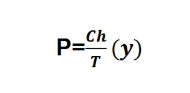
Chacón: I have a simple equation for character-driven stories:

Basically it means that plot equals character over time, times yearning. Desire is what drives us.

Desire is what gets us up in the morning, that which keeps writers isolated in an empty room for hours and hours, days and years of our lives to write a novel.

Desire, without singularizing it to a particular want, is what makes us human.

On the level of mysticism, the “Source,” the divine, God before image, before we place it on a throne and slap a beard across its face, is pure energy. That energy is desire.  I’m not talking about want. A lot of my characters want things, but beyond the want, is desire, that which makes them human and divine. Desire in us is the same thing that turns the seed into a tree. It makes us want to expand, to grow, to be better, to be the best human being we can be, the best fathers we can be, the best teachers, and of course the best writers.

Hernandez: What can we expect next from you? Will there be more short stories? A novel? Poetry?

Chacón: I’m working on two collections of stories right now, one more suitable for adults and another one, tentatively called Stories for Lucinda, which are stories that I tell my daughter, who at this time is six months old and has become the center of my creative being. 

Saints, Statues, and Stories feted at Tucson Meet Yourself

October 15, 2019

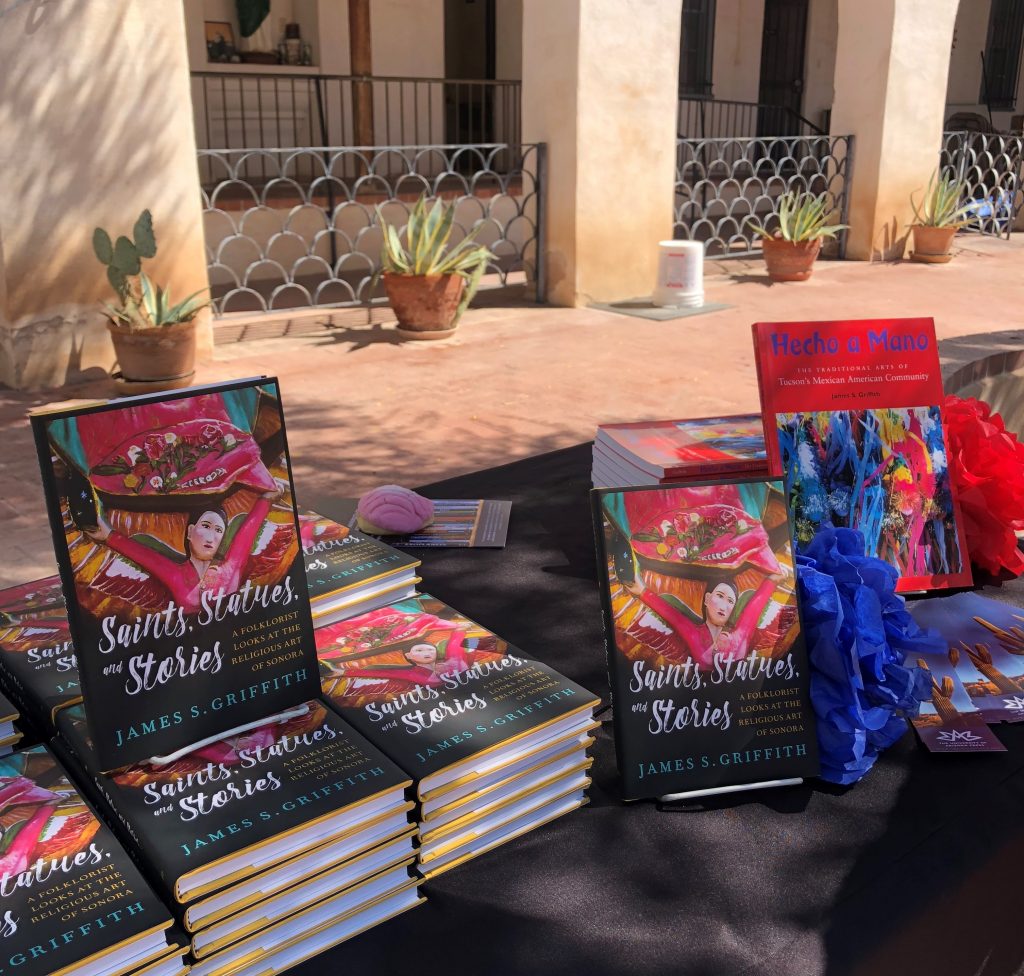
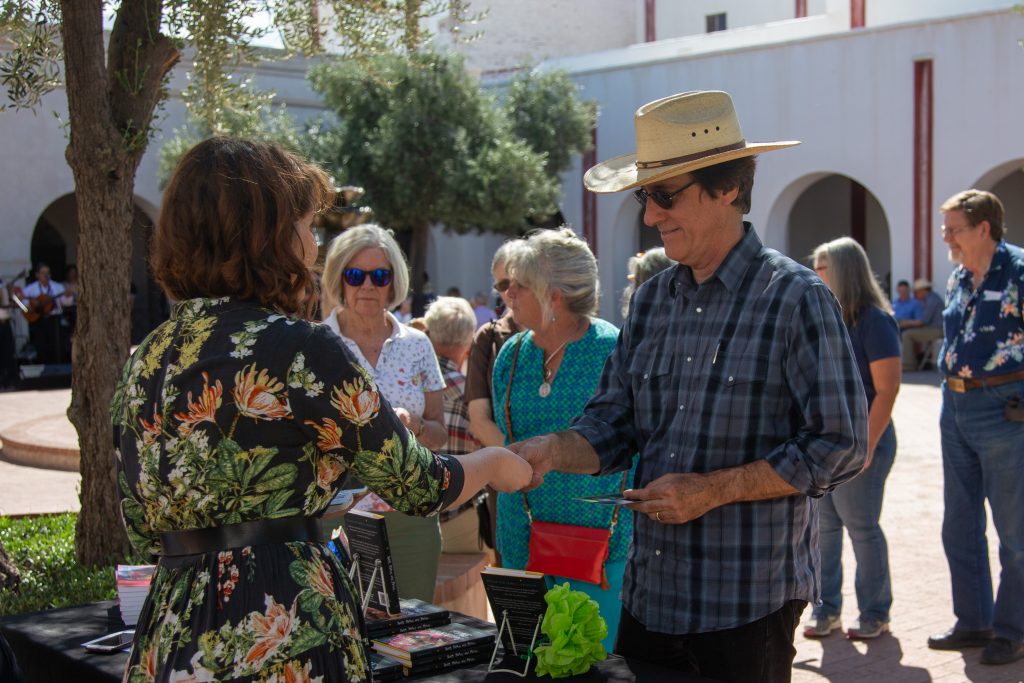
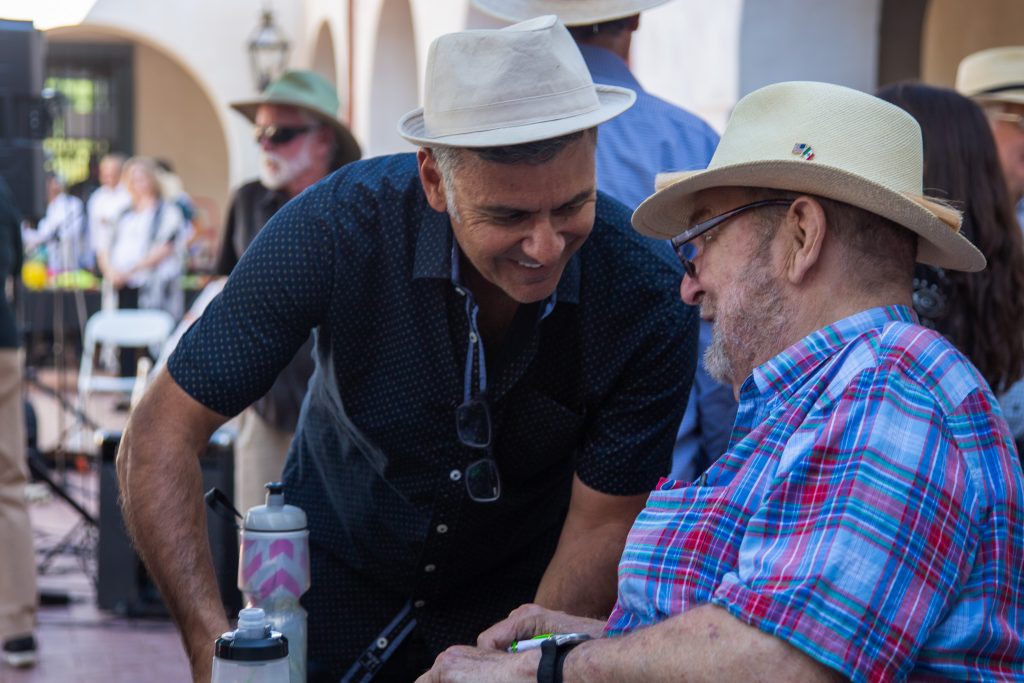
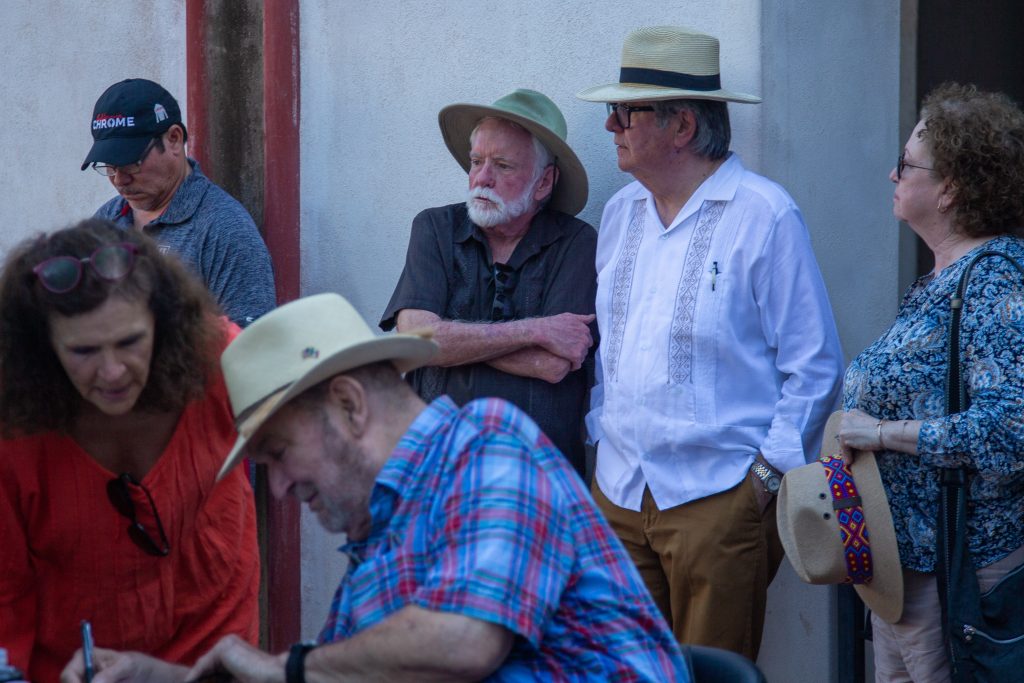
The 46th Tucson Meet Yourself this past weekend was a great way to continue celebrating Saints, Statues, and Stories, a new book by James “Big Jim” Griffith, recently published by the University of Arizona Press. The founder of Tucson Meet Yourself signed copies of his new book to followers eager to read about Griffith’s travels through Sonora, documenting religious art and traditions.

A big thank you to Tucson Meet Yourself for inviting Griffith and providing a space to help promote the book and give readers a chance to talk with the legendary folklorist.

Shortly after the release party at San Xavier Mission del Bac on September 28, Griffith’s book was the featured cover story by Margaret Regan in the October 10th Tucson Weekly. On October 12, another story on Griffith’s new book was published in the Arizona Daily Star by Johanna Eubank.

Keep checking back with us for additional Saints, Statues, and Stories events.

UA Press Authors at the 2019 Texas Book Festival

October 11, 2019

We are excited to announce that several University of Arizona Press authors are participating in the upcoming Texas Book Festival in Austin! On October 26 and 27, over 50,000 book lovers will gather to attend author panels, book signings, cooking demonstrations, and other programs which support learning and literacy. The book festival features 300 authors of the best new books, and while the Texas Book Festival is an important showcase for Texas authors, it also hosts writers from all over the world.

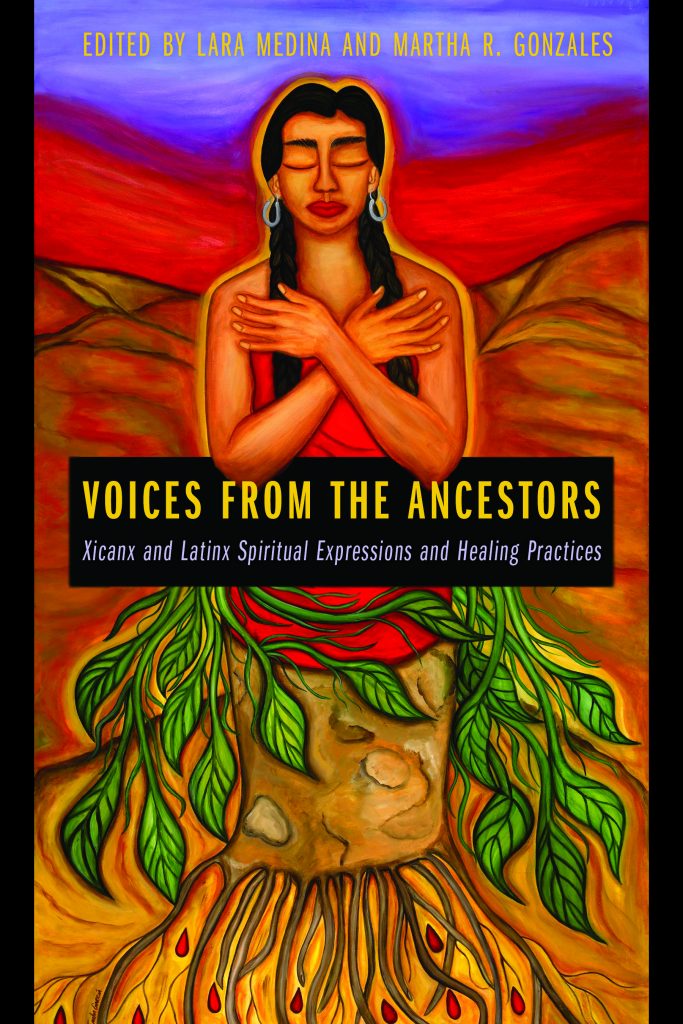
Lara Medina will be participating in the festival and speaking about her new UA Press book, Voices from the Ancestors, which she co-edited with Martha R. Gonzales. This collection offers 85 voices addressing how to live as a spiritually conscious Latinx in these challenging times. The reflections and practices are a return to ancestral wisdoms before colonization and the displacement of Indigenous knowledge. Medina is a professor in Chicana/o Studies at California State University, Northridge.

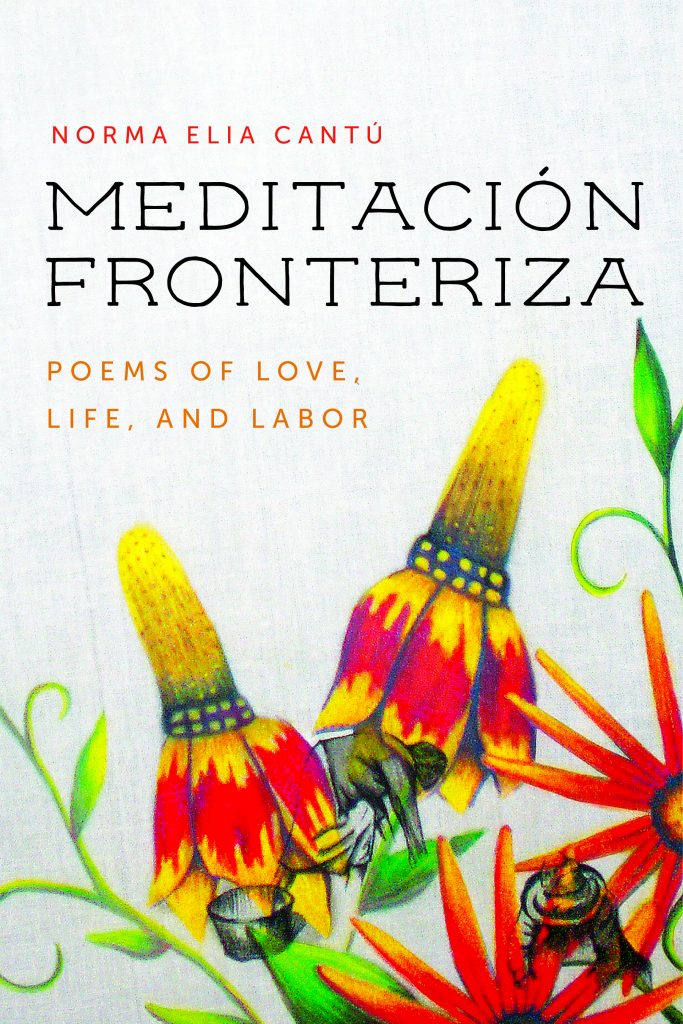
Norma Elia Cantú will be presenting her new UA Press poetry collection, Meditación Fronteriza, as well as her new novel, Cabañuelas. Norma is co-founder of CantoMundo, a space for Latin@ poets, and belongs to the Macondo Writers workshop. She is also the editor of two book series, and is a Distinguished Professor of the Humanities at Trinity University. Meditación Fronteriza unveils unique images that provide nuance and depth to the narrative of the borderlands. The poems are a celebration of culture, tradition, and creativity that navigate themes of love, solidarity, and political transformation.

Odilia Galván Rodríguez, poet-activist, writer, editor, and publisher, is the author of six volumes of poetry. She will be presenting her latest book, The Color of Light, at the Texas Book Festival. Among her publications are the award-winning anthology from UA Press, Poetry of Resistance, co-edited with the late Francisco X. Alarcón.

Sergio Troncoso will be presenting on his latest book, A Peculiar Kind of Immigrant’s Son. Among his publications are two UA Press books, From This Wicked Patch of Dust and The Last Tortilla. Sergio has taught at the Yale Writers’ Workshop for many years, and is Vice President of the Texas Institute of Letters.

Jeremy Slack will be participating in the Texas Book Festival with his new book, Deported to Death. Jeremy is an Assistant Professor in the Sociology and Anthropology Department of the University of Texas at El Paso with over 15 years of research along the U.S. Mexico Border. He is co-editor of the UA Press book, The Shadow of the Wall.

The Texas Book Festival is open to the public on Saturday, October 26th from 10:00 a.m. to 5:00 p.m. and on Sunday, October 27th from 11:00 a.m. to 5:00 p.m. The festival is held in and around the grounds of the State Capitol Building in Austin. If you need more information about how to access the festival, visit here.

Poet Carmen Giménez Smith Is National Book Foundation Finalist

October 9, 2019

The National Book Foundation recently announced the 2019 National Book Award finalists. UA Press author Carmen Giménez Smith is among those selected for poetry.

Giménez Smith’s Be Recorder, published in August by Graywolf Press is the nominated collection. Winners will be announced on Nov. 20.

About Giménez Smith’s last book published with the UA Press, Milk and Filth, a National Book Critics Circle Award Finalist:

Giménez Smith’s poetic arsenal includes rapier-sharp wordplay mixed with humor, at times self-deprecating, at others an ironic comment on the postmodern world, all interwoven with imaginative language of unexpected force and surreal beauty. Revealing a long view of gender issues and civil rights, the author presents a clever, comic perspective. Her poems take the reader to unusual places as she uses rhythm, images, and emotion to reveal the narrator’s personality. Deftly blending a variety of tones and styles, Giménez Smith’s poems offer a daring and evocative look at deep cultural issues.

University Press Week: Read. Think. Act.

October 7, 2019

According to Publisher’s Weekly, this year’s theme for University Press Week is, Read. Think. Act.

From Sunday, November 3 through Saturday, November 9, the Association of University Presses encourages readers to dive into publications about the issues that affect our present and future.

The theme, the AUPresses said in its statement, is timely in that “many citizens around the globe continue to engage in important debates that will influence vital decision-making in the months ahead; in fact, this year’s UP Week will begin exactly one year to the day before the 2020 Election Day in the U.S.” The organization added: “AUPresses members worldwide seek to encourage people to read the latest peer-reviewed publications about issues that affect our present and future—from politics to economics to climate change to race relations and more—and to better understand academic presses’ important contribution to these vital areas of concern.”

UA Press Director Kathryn Conrad, who currently serves as president of the Association of University Presses, said this in the same statement:

“Many of us choose to work for university presses because we believe in the UP mission of bringing the latest research and ideas to diverse audiences of readers, [and] the success of recent university press books such as White Fragility by Robin DiAngelo (Beacon Press) and Cyberwar by Kathleen Hall Jamieson (Oxford University Press) make it clear that there is a hunger for these books,” Kathryn Conrad, AUPresses president and director of the University of Arizona Press, said in a statement “In the last few years many people have found it difficult to have effective conversations about the most serious and important issues facing our communities, nations, and world. We hope that by encouraging readers to explore university press works on topics that affect everyone—and to reflect on their reading—our publications might help stimulate positive conversations and actions.”

To kick off your celebration, AUPresses put together a reading list from all of its membership that you can download and share. Recommended from the UA Press is a new book edited by Thomas E. Sheridan and Randal H. McGuire, The Border and Its Bodies.

The Border and Its Bodies examines the impact of migration from Central America and México to the United States on the most basic social unit possible: the human body. It explores the terrible toll migration takes on the bodies of migrants—those who cross the border and those who die along the way—and discusses the treatment of those bodies after their remains are discovered in the desert.

Read. Think. Act.

Tucson Shows Up to Celebrate Big Jim’s New Book

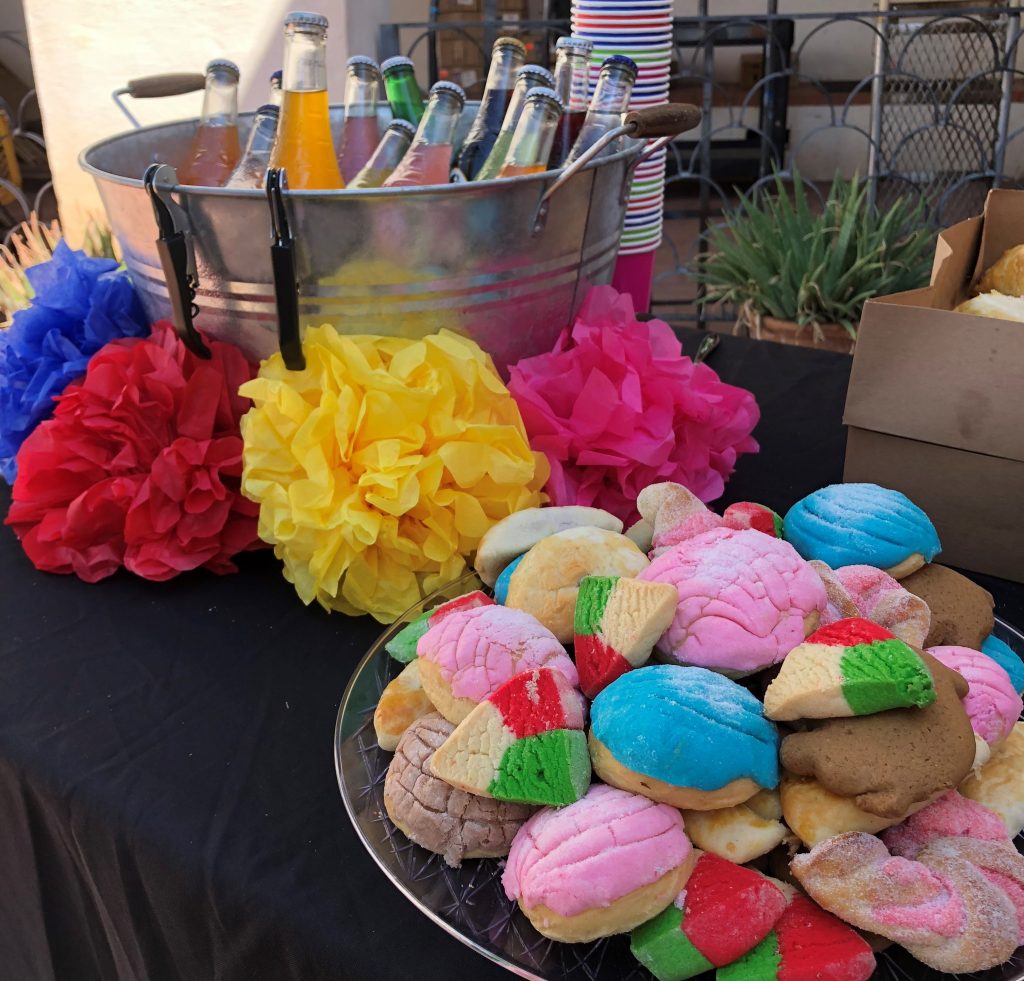
The Jarritos were on ice, the pan dulce piled high and not a cloud in the sky as more than 100 people filed into the San Xavier Mission del Bac plaza to celebrate the debut of James “Big Jim” Griffith‘s new book, Saints, Statues, and Stories on Saturday, September 28.

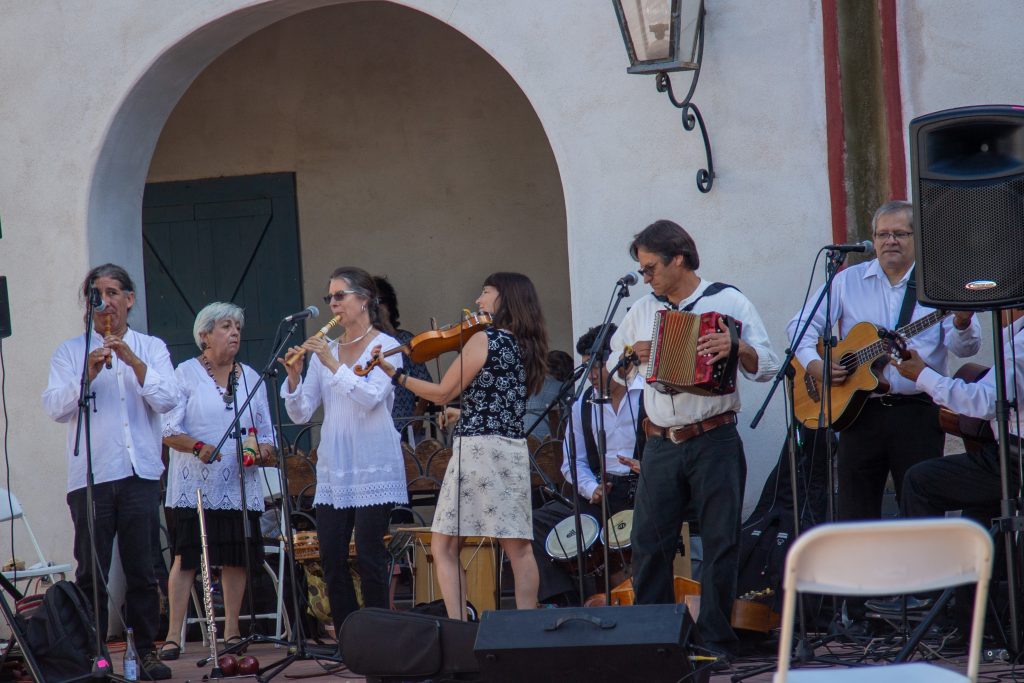
Griffith’s latest from the University of Arizona Press, is a collection of stories on Catholic community traditions from his 60 years of traveling through Sonora. Tradiciones, a local band that performs Andean and Mexican folk music, opened the event and moved many a Griffith fan and friend to dance.

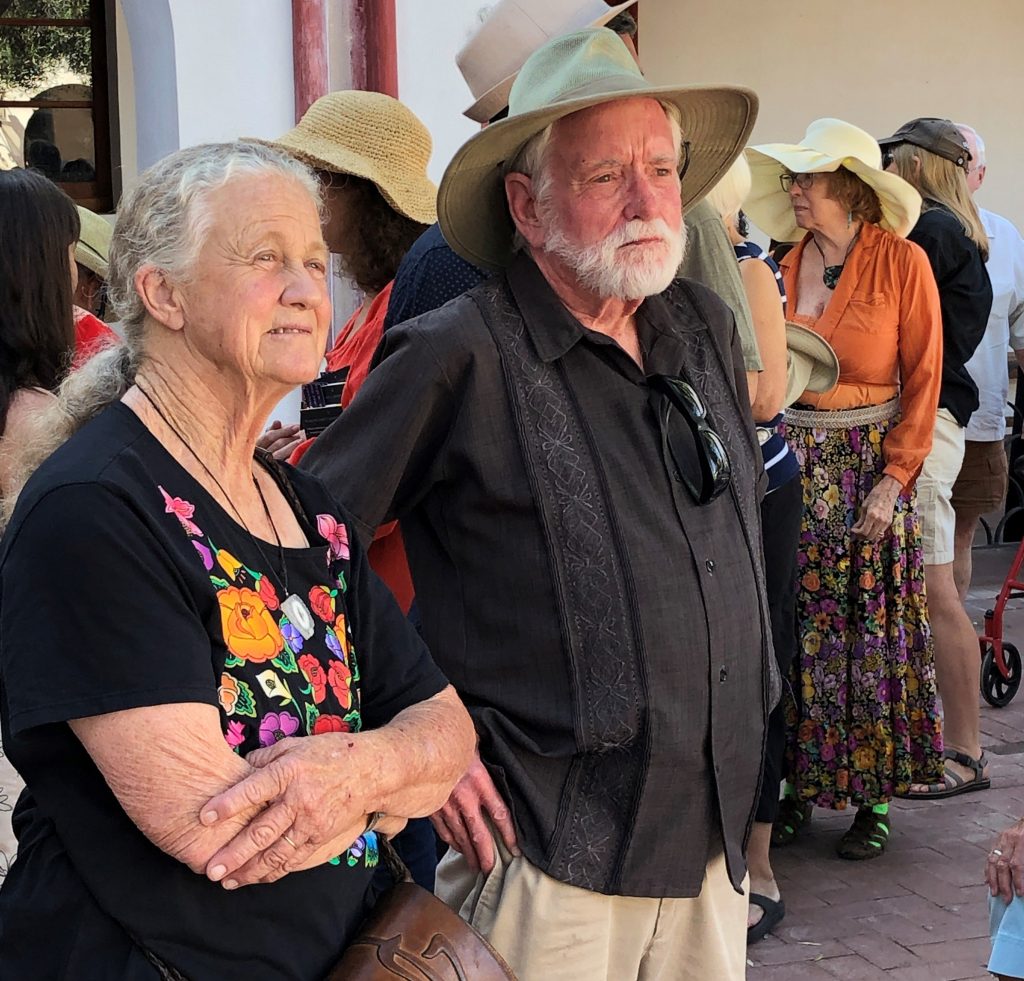
UA Press Director Kathryn Conrad, who welcomed attendees, said the Press is proud to partner with the Southwest Center to publish Griffith’s latest book as part of the Southwest Center series. Thanks also went out to the San Xavier Mission for hosting the event at a location meaningful to Griffith and his wife, Loma Griffith.

Thomas Sheridan and Francisco “Paco” Manzo both spoke about Griffith’s new book and their collaborations with the folklorist. Sheridan, a UA Press author, is a research anthropologist with the Southwest Center. Manzo, whom Griffith acknowledges in the book, emotionally reflected on the trips through Sonora he’s taken with Griffith.

Missed this chance to get Griffith’s book? Griffith will be at the Tucson Meet Yourself store booth on Saturday, October 12, from 11 a.m. to 1 p.m. and Sunday, October 13, from 12:30 to 2:30 p.m. Books will be available for purchase, and Griffith will be there to sign your copy, and maybe, tell you a good saint story.

Photo credit: Mark Corneliussen

Field Notes: Andrew Flachs Shares Insight from India

September 26, 2019

For anthropologist Andrew Flachs, fieldwork in Telanguana, India, was a critical way to understand the complex problems rural farmers face. In his new book Cultivating Knowledge, Flachs investigates how rural farmers come to plant genetically modified or certified organic cotton, sometimes during moments of agrarian crisis. Through months of on-the-ground ethnographic work, Flachs uncovered the unintended consequences of new technologies, which offer great benefits to some—but at others’ expense.

Today we share a few of Flachs’s photos and extended captions from his fieldwork, which offer insight into the stories and methods that have informed his work.

All photos and captions by Andrew Flachs:

Cultivating Knowledge_Image by Andrew Flachs_IMG_1416

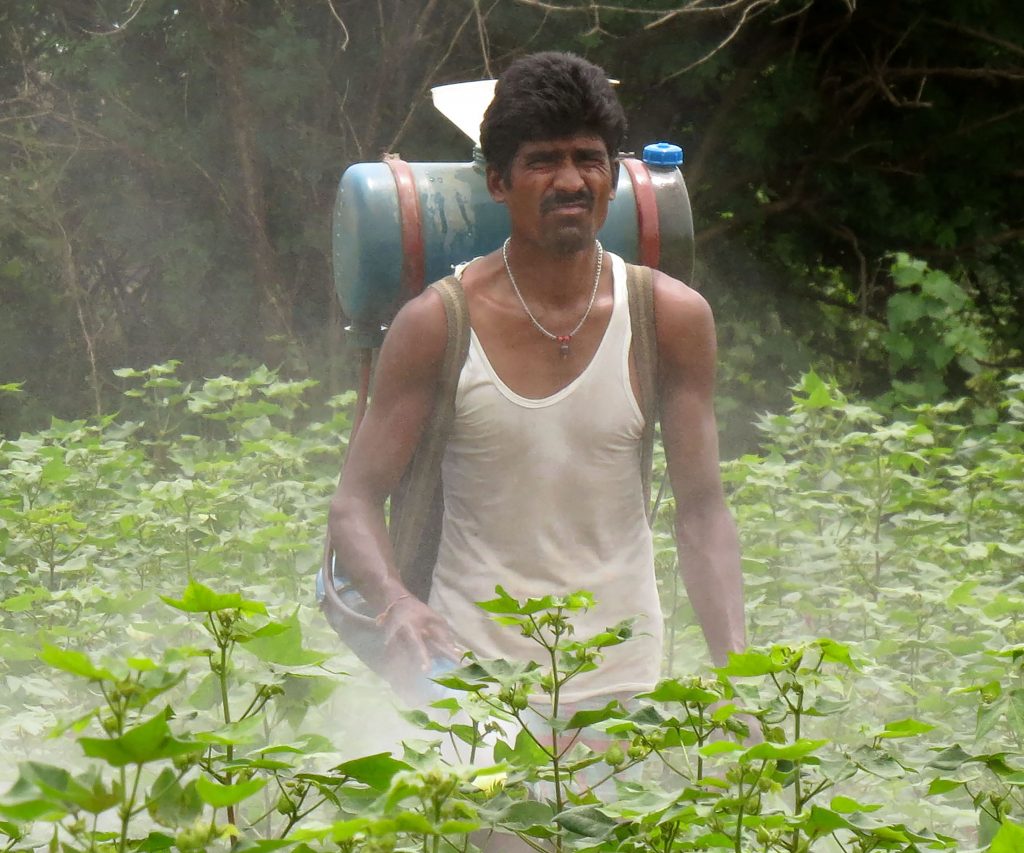
IMG_1416:  A young man in Parvathagiri squints through a pesticide mist as he sprays to control for whiteflies in his cotton crop, a pest unaffected by the pesticide genes for which cotton has been genetically modified. It took four hours to spray his seven acres in 100+ degree heat, he spraying and his brother running back and forth to a stream to gather water in which to dilute the pesticide for the mister. Worried that the monsoon rains would wash the pesticide off the cotton, he had hastily bought a cheaper generic brand pesticide from a local shop known to carry expired chemicals. By the end of the day, all three of us had a headache from the heat and the smell of the mist. “It was a waste”, he told me bitterly a few days later. The pesticide had only killed about a third of the insects eating his crop. Concerned about future losses, he ultimately had to travel to a larger town with a better agricultural shop to buy a more powerful pesticide. “What if this one doesn’t work either,” I asked. He shrugged. “I’ll have to get something even stronger,” he answered, stating the obvious (2013).

Cultivating Knowledge_Image by Andrew Flachs_IMG_1438

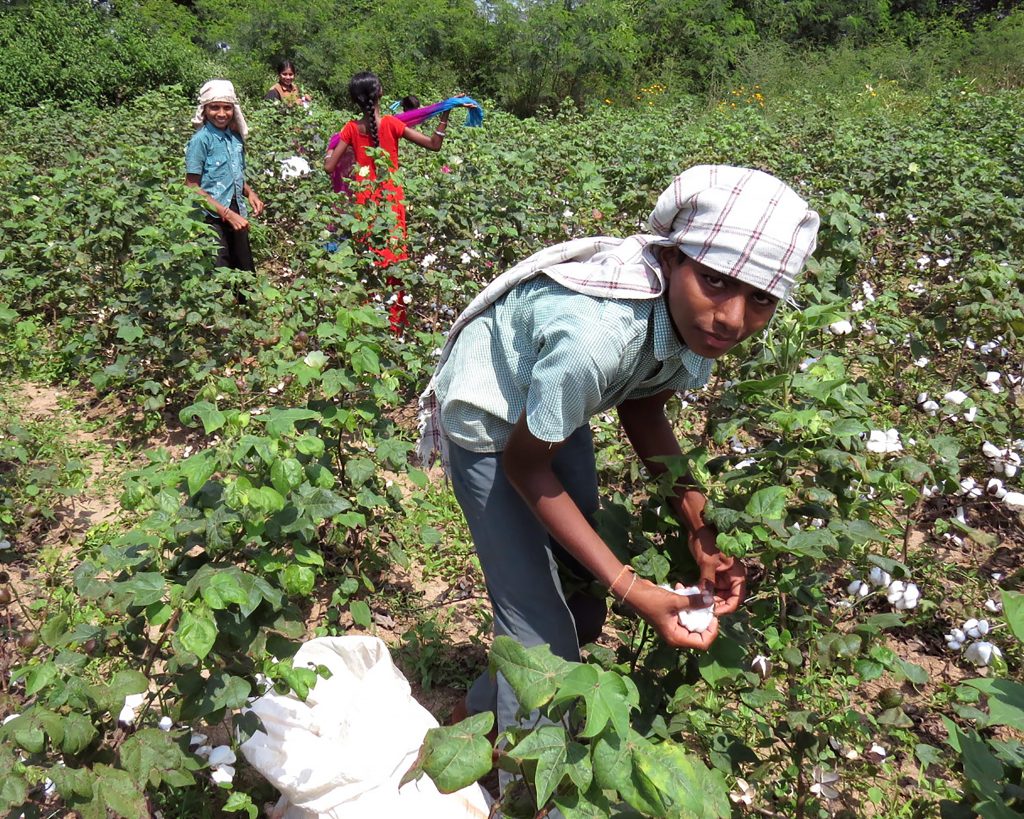
IMG_1438:  A boy in Jangaon helps his family pick organic cotton after school before the bolls can be damaged, still wearing his school uniform. At harvest, it is imperative to gather and protect the cotton as soon as the lint erupts. Delays risk insect attacks, rain, or molds, all of which distort the fibers and discolor the cotton. Any such blemishes are cause to downgrade the lint at the open-air markets where commodities are sold to brokers. Organic agriculture depends upon ethical marketing campaigns to build trust with buyers in the United States, Europe, and East Asia. The development program that sponsors this farm advertises that they do not make use of child labor, and fundraises for school supplies and infrastructure that keeps students out of farm labor. Yet such distinctions are not completely applicable for many household farms, in which everyone is expected to pitch in for the greater good of the family. It would be technically correct but highly misleading to label this child labor – the children in this photo are simply doing their normal chores (2013).

Cultivating Knowledge_Image by Andrew Flachs_IMG_0340

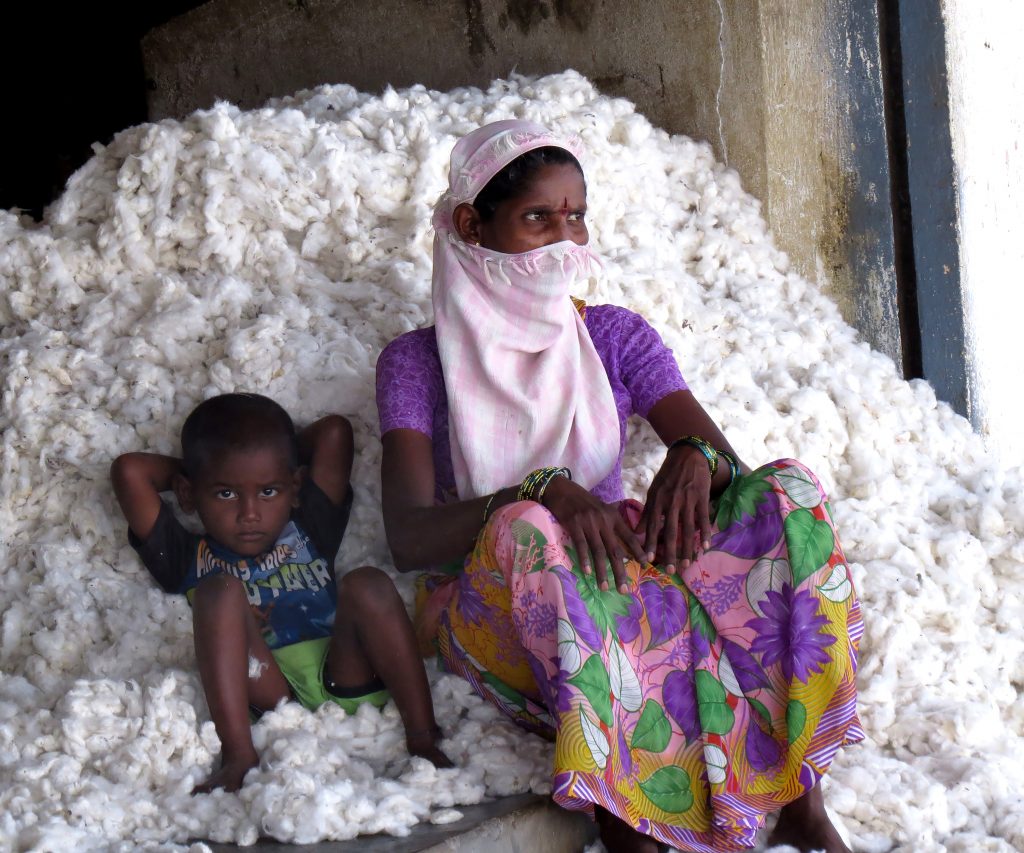
IMG_0340: Although most of the research for this book took place on cotton farms, I also accompanied farmers to sell their cotton in larger markets. This led me to tour gins and learn more about the processing stage of the commodity chain. Cotton is plucked with seeds intact, and farmers speculate about which brands might have the heaviest seeds and thus fetch the highest prices. At gins, seeds are removed from the cotton lint and pressed into oil cakes that may then be fed to livestock. The lint is swept into piles and then compressed into square bales than can be loaded onto trucks. While much of this work is automated, teams of men run the bale pressers and manage the factory floors while women, often accompanied by young children who are not in school, sweep cotton into piles and use bamboo poles to clear obstructions in the gin. Here, a cotton gin worker and her son rest on cotton lint during a shift break at a gin in Warangal (2014).

Cultivating Knowledge_Image by Andrew Flachs_Field pic

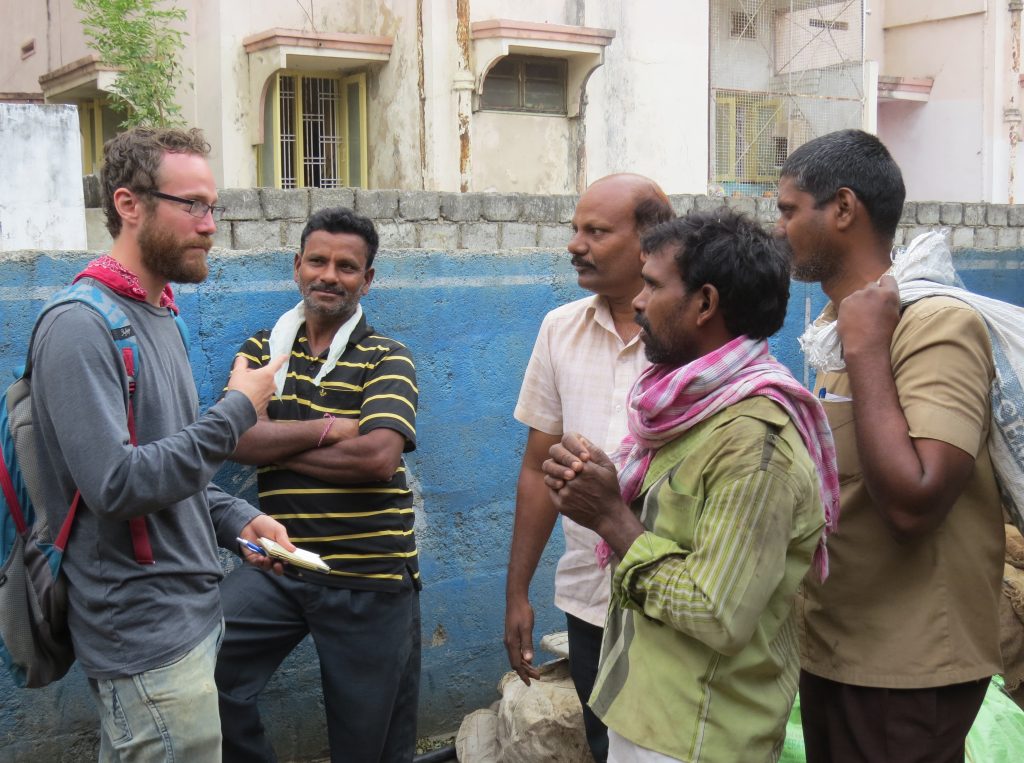
Field pic: To ask questions about how farmers make decisions about their cotton seeds, I used a variety of social science methods: surveys on farm decisions, spatial analysis of farm locations, collection of wild and cultivated plants, participation in and observation of farm life, interviews, and focus groups. Here, a group of farmers compare notes on their cotton seeds with me on the edge of a vegetable and meat market in Hanamkonda. Focus groups like this give people space to debate the nuance of a topic, like which seeds to plant, and explore several possible positions through a conversation.

Andrew Flachs is an assistant professor of anthropology at Purdue University. Trained as an environmental anthropologist, his research spans sustainable agriculture, food studies, the anthropology of knowledge, and political ecology.

Five Questions With Editors of Voices From the Ancestors

September 24, 2019

Central to the process of decolonization may be reclaiming and reconstructing spirituality, centering knowledge that goes back generations when our ancestors were connected to each other, nature and sacred cosmic forces. This exploration is central to Voices From The Ancestors: Xicanx and Latinx Spiritual Expressions and Healing Practices.

In the following Q&A, editors Lara Medina and Martha R. Gonzales, talk to us about why this book is timely, and their hopes and dreams on how it is used in community and the classroom:

Is there something about this time we are living that makes Voices from the Ancestors an important book?

LM: Currently 20 percent of Latinx are unaffiliated with any religious institution, yet there is an increase in the phrase “I am spiritual but not religious.” For Latinx of the baby boomer generation, this departure from institutional religion, particularly Christianity, began during the civil rights era of the ’60s and ’70s when self-determination became an essential component of our liberation. A return to our Indigenous ancestries and their profound spiritual knowledge has continued among later generations and Latinx scholarship now reflects this within the discourse of spiritual decolonization. Many of the issues faced today by Latinx in the U.S.A., such as the violent treatment of refugees at our borders, the mass shootings of Mexican Americans, the murders of transgendered folks, the destruction of our planet, on-going police brutality, and the obstacles being placed upon ethnic studies programs in our universities, require a spiritual response in addition to political responses. As editors of Voices from the Ancestors, we wanted to offer a collection of spiritual reflections and healing practices that Latinx are doing in order to keep themselves strong and grounded as they face the challenges of these current times. These reflections and practices are grounded in an epistemology that understands the relationship and interdependency between all life forms and they offer pathways to return to this Latinx ancestral heritage.             

MG: There are some interesting conversations happening now within academia in the realm of Xicanx/Latinx Studies around identity, cultural appropriation of Indigenous identities to be more specific. Xicanx and Latinx people, people of mixed descent and cultural heritages, have been utilized as the “buffer” between colonial authorities and colonial subjects, between modern state authorities and state subjects deemed a threat to state projects pushing modernizing agendas thereby relegating entire groups of people, if one didn’t fit the image of a “modern” state subject, to the margins of society or zones of death. It has always been expected by the authorities that the mixed heritage subject would identify with state authorities, rather than the subjugated community or communities from which one might be descended. Today, presently, this continues to be the case. We still hear the terms “savages”, “uncivilized”, “barbaric” constantly being used in the media to describe people who don’t fit the image of a “western global subject” in line with neoliberal global policies or agendas. Within the context of the United States the proper Latina or Mexican American subject would be one who identifies predominantly with U.S. state policy both nationally and globally; it could be argued then, that given current U.S. national and global policies, the ideal U.S. Latina or Mexican American subject is therefore one who would betray her own humanity. 

This text aims to intervene by first demonstrating through cultural practices that identity when based only on conceptions of bloodline is first and foremost still today a project of the state meant to create political divisions between communities of people. Second, that culture and our cultural practices, no matter who you are, is really what defines anyone as a part of a community or a person, more so than your bloodline. 

Thirdly, to demonstrate that the narrative of conquest and colonialism must be continually revisited in order to contest the prevailing narrative that a conquest of the Americas or Turtle Island (an Indigenous name for this continent) was complete, that there is nothing left of our ancestors. While it is true that millions of people were destroyed, and hundreds of lifeways and practices eradicated, “speaking” books and knowledges obliterated in fires, many of them perhaps never to return, much has survived over the last five centuries. Survived, and as all cultural forms do, have been transformed in the hands of womxn over time and space. 

If, Laguna Pueblo author Leslie Marmon Silko is correct in her collected essays Yellow Woman and a Beauty of the Spirit, then we humans, we as Xicanx/Latinx womxn are not just individual subjects, but as people constitute a part of larger energetic forces operating within the natural world. And what I conclude from her writings, and the wisdom teachings Lara and I were able to bring together in this text, is that the knowledges, which we have retained in our families and communities, those practices that survived and some of which are beginning to thrive, have reemerged into our public spheres over the last fifty years because they have been meant to, because the survival of these practices were in fact mandated and foretold for generations prior to contact. 

In decolonizing our spiritual lives, is there room to keep both practices?

LM: Yes, many practices or traditions if desired. Latinx are people of various ethnicities, bloodlines, and complex histories. Religious traditions historically imposed upon us through colonization have survived among our people because in many ways we expressed them on our own terms when religious officials marginalized our communities. I am thinking here of the rich traditions found within Mexican American Catholic popular religion and Santeria, where Indigenous and African spiritualities and values survived under the guise of Christianity. Today, we have Latinx theologians and scripture scholars whose scholarship interprets Christianity through feminist and liberatory lenses. We are pleased that some of them contributed to Voices from the Ancestors. Many Latinx also choose to practice Buddhism in a way that coexists alongside or integrated into other chosen spiritual paths. In my scholarship, I call this nepantla spirituality, which means to be in the middle of rich cultural/spiritual diversity and respectfully choose what nurtures us spiritually, emotionally, mentally, and physically.

MG: Are you referring to both a decolonial practice and spiritual practice at once? Of course there is. In fact many leading scholars in decolonial studies would argue that you cannot have one without the other, or to put it another way, a decolonial practice gives way for a spiritual practice; an important part of decolonial practice is a transformation of the self and how one self-interprets the world and our role within it, this practice requires constant self-reflection and self-reflection itself can amount to a spiritual practice; self-reflection can lead one to accountability for one’s actions thereby a conscious claiming of one’s own agency and an understanding of prayer or spiritual practice as an intentional and mindful practice as Laura Perez, a contributor to this volume, reminds us. 

Furthermore, for those of us who study history, in ancient settings across the world, the modern differentiations between spirituality, science and/or religion among other subjects we have so neatly categorized, did not exist in the way they do today. The goal in a reconsideration of antiquity, or ancient societies, might be then to try to comprehend how these terms or practices coincided one within the other thereby contributing to a more balanced mode of living within the world and in relation to all of life. 

The book begins with morning prayers and ends with evening prayers, the rest of our lives in between. How do you see readers using this book?

LM: We hope readers will take in the introductions to each chapter that explains our intent in choosing those aspects of our lives. We also hope that readers will be enriched by the teachings held within the essays reflecting the spiritual perspectives and experiences of our contributors. And we hope that readers will be empowered to learn how specific spiritual practices can be conducted for themselves, their families, and groups they are involved in. This book could be used for personal, familial, and/or collective efforts to decolonize Latinx spirituality. We believe it can be used in college classrooms, community groups, and in homes. It is written in language for the general public and all the writings are “from the heart.”

MG: I don’t necessarily view this book as one which a person will sit and read from front to back. But rather as a text which a person may pick up, turn to a section which pertains to them in that very moment, and find a practice for themselves to serve the moment. Or perhaps the reader will feel inspired after reading a selection to look within their own homes/families to “see” if there is something there, has always been something there, a practice, a prayer, a home ritual, which they can recall for themselves.

I do think it is a text the same person can return to over several years when perhaps one part of the book may become more meaningful to that individual than when they first came across the book. These are the best kinds of books, the ones that become like a good friend you always have something to learn from. This is the kind of relationship I hope readers will develop to this text; a long lasting, well-worn relationship. 

In the early life of this book, when you began gathering the practices, essays, and poems, what was the community reaction that made you feel you were heading in the right direction?

LM: The idea was discussed among our professional networks, and we received affirmative responses. When we sent the call out widely the response was exceptional with Latinx across the U.S.A. sending us their contributions. We knew many people desired a text like this.

MG: We received a lot of positive feedback from most of our community. I would say about 95 percent. As someone who enjoys bookstores of all sorts and never having encountered a book such as this by Xicanx/Latinx women, I know this book is arriving at the right time, and I think most of our community feels the same way. We are living during a very interesting and intense moment; a moment which requires a radical shift in consciousness if we are going to survive and thrive as people; as humans. Most of our contributors, if not all, would agree with this statement and one could claim that their submissions to the project are reflective of this understanding.  

Do you have a special dream for this book of how it will be used or who it will touch?

LM: We hope that Latinx across generations will benefit from this book. We include blessings for newborns, teachings for our young ones, puberty or first moon rituals, rituals for our dying and deceased, holistic health care practices, moon meditations, songs, poems, and reflections on how spirituality can be expressed through the arts and our sexualities, and more … We have something for almost everyone! We send it out with the best of intentions, and we give thanks to our ancestors who speak through all of us!

MG: My biggest hope for this book is that it transcends or move between and beyond the artificial and real barriers between communities of people and the halls of academia. Lara and I purposefully set out to create a text meant for as a wide of an audience as possible. Both of us are aware of the power of the written word, we know the interventions that scholarly texts can make, do make and have made, within academia and the importance of these texts in wrestling with and shifting discourses. However, both of us as experienced scholars, Lara with more years than I, intentionally chose to write in a prose or language of the heart, of rhythms that reflect our daily struggles, joys and celebrations; in a prose that can set the stage for a different experience in the classroom and at the same time speak to the hearts of our communities: of our mothers, our grandmothers, aunties because they can read and see themselves in these words which would not be possible without the teachings that have been passed over to us generation after generation in our families, our communities. 

Claudia Leal Featured on New Book Network Podcast

September 23, 2019

University of Arizona author, Claudia Leal, was featured on a recent episode of New Books Network podcast to discuss her new book, Landscapes of Freedom.

Claudia Leal’s Landscapes of Freedom: Building a Postemancipation Society in the Rainforests of Western Colombia (University of Arizona Press, 2018), narrates the unknown history of the transition from slavery to freedom in the Pacific lowlands of Colombia. Not only does Leal centers a region long neglected in histories of Colombia—and more generally in histories of slavery and manumission in Latin America—but she also asks us to use this case to understand the centrality of the environment in any historical account. According to Leal, the particularities of the environment of the Pacific lowlands in Colombia explains the formation of a black peasantry that was able to attain high levels of freedom and autonomy. Here we hear about the importance of rainforests, of minerals, of vegetable ivory, and we learn that through extractive practices black Colombians were able to carve and maintain degrees of freedom perhaps only comparable to the maroons of Surinam.

This history, however, does not start in 1851 with the total abolition of slavery in Colombia, for Leal goes back to the colonial period in order to explain why a political economy of extraction was established in the first place. In fact, Leal tracks how blacks appropriated an environment that originally didn’t belong to them, how they negotiated with whites their access to resources and power, and how even in moments in which mining companies challenged their autonomy, they nonetheless found ways to maintain their hard-won freedom. Paradoxically, even if blacks of the Pacific lowlands fulfilled one of the main values of the republican order of the Colombian national state (freedom!), they were not recognized as contributors to the national project. Quite to the contrary, white elites equated them to an environment deemed unhealthy, and allegedly suitable only for savages. The pacific lowlands, and its recently created cities of Tumaco and Quibdó, were thus built as racialized landscapes; geographies plagued by ideologies of racism and biological determinism. Whites’ project to control and “civilize” the territory was ultimately a failed one, for black culture crept into cities and forests. Eventually, with the advent of the 1991 Colombian constitution, black ethnicity became a part and asset of the nation as Colombia entered the era of multiculturalism.”

Listen to the podcast and read more here.

For Authors

The University of Arizona Press publishes the work of leading scholars from around the globe. Learn more about submitting a proposal, preparing your final manuscript, and publication.
Inquire

Requests

The University of Arizona Press is proud to share our books with readers, booksellers, media, librarians, scholars, and instructors. Join our email Newsletter. Request reprint licenses, information on subsidiary rights and translations, accessibility files, review copies, and desk and exam copies.
Request

Support the Press

Support a premier publisher of academic, regional, and literary works. We are committed to sharing past, present, and future works that reflect the special strengths of the University of Arizona and support its land-grant mission.

Give