Congratulations to Oscar J. Martínez on winning second place in the History category of the prestigious International Latino Book Awards! The 2019 International Latino Book Awards Ceremony took place on Saturday, September 21st in Los Angeles at the Los Angeles City College. The International Latino Book Awards have grown to be the largest Latino literary and cultural awards in the USA.
The award-winning book,Ciudad Juárez, is a critical historical overview of the legendary border city of Juárez. Martínez explores the economic and social evolution of this famous transnational urban center, emphasizing the city’s deep ties to the United States. In countless ways, the history of Juárez is the history of the entire Mexican northern frontier. Understanding how the city evolved provides a greater appreciation for the formidable challenges faced by Mexican fronterizos and yields vital insights into the functioning of borderland regions around the world.
Oscar J. Martínez is a Regent’s Professor of History at the University of Arizona. He has authored and edited numerous books and many articles, book chapters, and reviews.
In 2015, Aengus Anderson, UA Special Collections’ oral historian and digital media producer, interviewed “Big Jim” Griffith, the founder of Tucson Meet Yourself and former director of the Southwest Folklore Center.
In this interview series, Griffith talks about his life and work in Tucson. It’s not only Tucson Meet Yourself’s 40th anniversary this year, but it’s also a special time for Griffith, with a new book coming out this month. Saints, Statues, and Stories: A Folklorist Looks At The Religious Art of Sonora, Griffith takes us on a different kind of Sonoran geographical tour to roadside shrines, fiestas, saints and miracles.
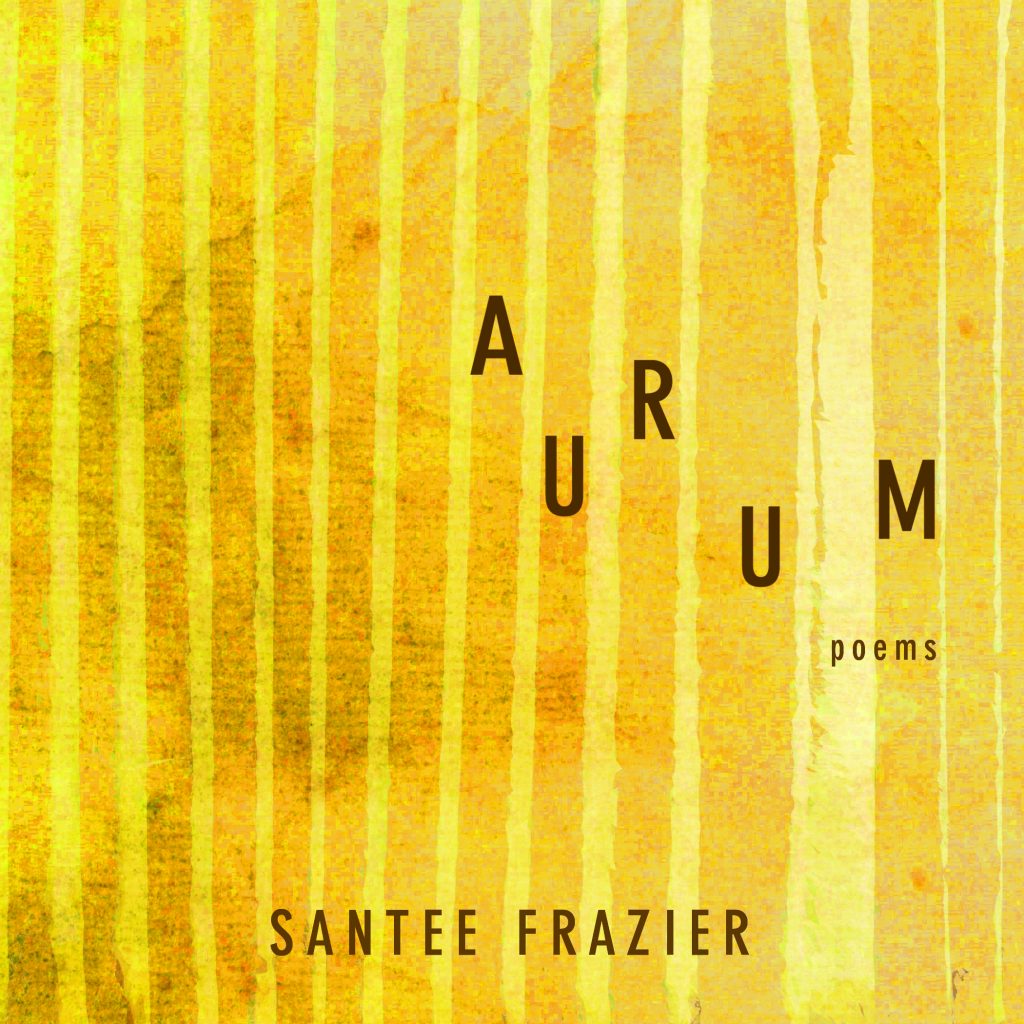
Unflinching and magnetic, the language and structure of Aurum never strays from its dedication to revealing the prominent reality of Native people being marginalized and discarded in the wake of industrial progress. With images that taunt, disturb, and fascinate, Aurum captures the vibrantly original language in Santee Frazier’s first collection, Dark Thirty, while taking on a completely new voice and rhythm. Frazier has crafted a wrought-iron collection of poetry that never shies away from a truth that America often attempts to ignore.
Below, Santee Frazier answers five questions about his second poetry collection.
What inspired you to write this work?
It’s hard to point to anything specific in regards to inspiration. My poems tend to be receptacles for research, lived experiences, and techniques acquired from other poets (mostly dead poets). In this way, poems manifest through ritual and mindfulness. For instance, the final poem of Aurum, “Half-Life”, was written on train rides from the Northeast to the Southwest. On stops along the rails I would write two to three lines. Over a period of 2-3 years the poem took shape, and you can see this process unfold in the form. This is representative of all my poems, but the ritual varies from project to project. I am continuously working in three voices, perhaps more, but there are three in Aurum. I am of the mind that a poet should have many voices, and through those voices different modes of verse making and revision.
Detailed descriptions of food appear frequently in these poems. What is the significance of food in your writing?
I had this idea of using images of food to introduce cultural leanings without exorcizing the figures that populate the poems. In Aurum, the food images or references to culinary knowledge are isolated to a specific milieu. For instance, in “Sun Perch” the image of the Vietnamese dish served to the speaker is elaborate, which contrasts with their experiences with food. This image also introduces the recursive image system that dominates the poem and the larger collection. Going back to contrasts, the references to food in “Half-Life” are basic. The world the speaker experiences is devoid of the vividness represented in “Sun Perch”, “Sanguinaria”, and “Chaac”. The images of corn, beans, and potatoes hold significance to many peoples and cultures indigenous to Turtle Island. (Note, I use the moniker “Turtle Island”, due to the fact that phrases and terms used to describe North America and the indigenous peoples are inaccurate, and were conceived within oppressive political constructs.) In some cultures, corn, beans, and potatoes will be the only food that grows in a prophesied dystopian future. Furthermore, corn, beans, and potatoes represent horticultural knowledge lost to many of us living hand to mouth.
Mangled is a character who appears in Aurum and who also appeared in your collection titled Dark Thirty. Could you tell us about what Mangled represents for you?
The Mangled Creekbed poems work in a serialized form. The character is a container for research in music, pop culture, violence, and oppression in America. Mangled is what I write when I’m not obsessing over another poem or set of poems. I get these long periods of silence where I am reading and taking in lots of information, but not making art. When this happens I revisit Mangled and see if he will give me any new poems. In Dark Thirty my research in the Impalement Arts dominated the poems, in Aurum, my research into the accordion factored into many of the poems. The serialized form allows for verse driven and prosaic poetic modes. Some of these poems can occur in a moment, some longer narratives delve into back story. Mangled’s world also serves as historical context to poems set in a contemporary milieu.
Speaking of Mangled, the title “Mangled & the Accordion” is ascribed to five of the poems in Aurum. What is the significance of repeating this title?
The title is both representative of his anatomy and the structure of the collection. At times the poems have a dense structure, sometimes fragmented while utilizing white space. Similar to the constraints of the accordion. There are certainly allegorical and biblical references. As many Indigenous people create identities rooted in western religious morals and ethics, Mangled suffers on multiple levels. However, he is unaware of the threads of oppression that lord over his life. This mainly harkens back to some of his origin story in Dark Thirty, but in Aurum Mangled attempts to reconcile his history of violence through performance akin to vaudeville.
What are you working on now?
I am working on these small vignettes which I am calling nonfiction, but at times they feel like poems. I have always been so interested in Eduardo Galeano’s nonfictions and histories, specifically, Memory of Fire. I am also a fan of Italo Calvino’s Invisible Cities, and by proxy The Grand Hotels (of Joseph Cornell) by Robert Coover. So, I am writing these small pieces of text that take on different prosaic forms. There are no line breaks, but there is attention to sound. I’m hoping to shape some kind of book out of these vignettes, but I write slower and slower these days.
Below, read a poem from Frazier’s Aurum.
TWICE-RUINED

Mangled does not remember the beating outside the tavern,
just that when he woke the air under the rumbling bridge smelt
like hot engine oil, like tire. His twice ruined face inflated, cheeks
and hair crusted with muddy earth, boots spackled with blood.

Crouched near a creek, saw his face wavy in the ripple,
slit eyes buried under swollen flesh. He thought of the knife,
its baptism—flicker of sunlight in the current— blade hidden
behind the rust. As Mangled dipped his face in the water he saw
the creek bed, minnows darting along the moss-covered stones.
Santee Frazier received his BFA from the Institute of American Indian Arts and his MFA from Syracuse University. Frazier is director of the Institute of American Indian Arts Low Residency MFA Program. He is a member of the Cherokee Nation of Oklahoma.
People of the Press is back this week! Inspired by the Association of University Presses celebration of the people of AUPresses, we would also like to celebrate our dedicated publishing professionals throughout our 60th anniversary year.
Today, we’re featuring our Publicity Manager, Mari Herreras.
Hello Mari, what do you do for the Press?
I work as Publicity Manager for the Press with the marketing team crafting publicity campaigns for the fifty or so books published by the Press each year, as well as working on events and social media.
How long have you worked at UA Press?
I’m new. By the time this goes online, it will be my 10th or 11th day. I am beyond grateful to be here, and can honestly say I’ve wanted to work for the UA Press the last five years. The Press has been part of my life since I moved back home in 2007 to take the position as staff writer for the Tucson Weekly. But when I was living in Seattle in the early 1990s, my mother sent me a copy of Patricia Preciado Martin’s Songs My Mother Sang To Me, a collection of oral histories from Mexican-American women who pioneered and were part of Southern Arizona’s history. Talking about this book sometimes makes me cry because it meant so much to me then and now. It was the first time I read a book that reflected my family’s own history and story. That’s one example of the gifts the UA Press gives many of us from Tucson and Southern Arizona.
The University of Arizona Press is committed to helping contribute to an informed society and enlightening readers. What’s one thing you’ve learned from your work?
I think I’ve always known this, but see it more clearly now—that there’s more to the story then what’s written in each book published by the Press. Each book comes with the author’s own unique story about their life, their world, their research, and how they decided this one book needed to be published. That’s the great opportunity I’ve been given in this position—to help tell those stories and reach out to media to inform them of the deeper stories that come with each author.
What would people be surprised to learn about your work?
Oh probably all the details that go into each book. It’s more then just reaching out to scholarly journals and journalists about our new books and their importance. It’s also about the meetings and careful discussions with almost everyone on staff about each books’ unique story, and how we are going to communicate that to booksellers and reviewers. It’s also tracking that work on different software systems and spreadsheets. There’s a lot of love there, but also a lot of computer time.
Tucson has a thriving literary and scholarly community. What’s one of your favorite spots to hear authors, find a good book, or just curl up and read?
When the Tucson Festival of Books first started in 2009, I was invited to participate as a moderator for panels taking place at the Nuestra Raices stage. Over the years, being involved in those panels meant the world to me because that particular venue hosts Latinx writers from throughout the country, as well as local writers directly involved in community work. It’s been an important venue for local writers and book lovers. I’ve been grateful for local poets who’ve worked to create reading spaces, such as Teré Fowler-Chapman, TC Tolbert, and Kristen Nelson. I also don’t think Tucson would have been much of a home for me to return to after being gone for almost twenty years without Antigone Books and the UA Poetry Center.
From academic scholarship to community scholarship, the University of Arizona Press has grown in ways that reflect the city in which it resides, as well as the people, the skies, and the mountains of Tucson.
Preeminent archaeologist Emil Walter Haury’s quest to convince the University of Arizona to start a publishing program has been described as relentless. After all, it took more than twenty years, so perhaps the professor’s quest should also be described as an example of extreme patience.
In 1937, Haury returned to his alma matter to accept a faculty position in the UA’s Department of Anthropology, where a thriving culture of research and scholarship blossomed among students and professors. Haury felt strongly that the then-existing venues to publish this scholarship were antiquated.
It’s good to have relentlessness and patience on your side, but in Haury’s case it also involved timing. Enter Richard Harvill, whose tenure as University of Arizona’s president is still considered one that fostered immense growth, as well as a distinct collegiality between faculty and the president’s office.
Past reports on the Press paint a Harvill who was notorious for calling different department heads and faculty for no other reason then to check in and chat. These chats, most often after work hours, gained a reputation as being one of the best ways to share information or projects that the university president should know or help with. This, back in the day, was one way things got done. Haury got calls from Harvill often, and the need for a press came up often.
In 1958, Harvill called Haury with good news. He had $6,000 to start the Press without waiting for the new fiscal year. In a New Year’s Eve memo, Haury didn’t hold back. He responded with an outline on staffing and a list of eleven books ready or nearly ready to publish.
… This possible development has been a great encouragement to us, and I hope that the plan as outlined has sufficient merits to be activated. We stand by to answer further questions should they arise …
— Emil W. Haury
At the top of his list was a manuscript from George Webb, the anthropologist’s recollections of his childhood and his Pima Indian heritage during his grandparents’ lives. A Pima Remembers is the first book published by the UA Press in 1959. Webb’s goal was to provide a documented history and culture of his people for younger members of the Pima, now referred to as Akimel Oʼotham. The book remains in print today.
Hundreds of anthropology and archeology titles have continued to be published through the Press, from UA scholars and others throughout the country. The connection to anthropology grew to reflect other areas of critical research and scholarship at the UA, including space and planetary science, border studies, and a new understanding about the environment.
What also grew was a willingness to change, reflect, and share voices that might not otherwise be heard. Sun Tracks began in the 1970s, as a journal written mostly by Native American undergraduate students. Today, Sun Tracks is a ground-breaking and award-winning literary series dedicated to Native American and Indigenous writers.
We have UA linguistics professor and Tohono O’odham poet Ofelia Zepeda to thank for this beloved series. In an O’odham language class taught by Zepeda, she had her students bring in poems and songs to workshop in class. By the end of the year she had this beautiful collection, and Larry Evers, a UA English professor who edited the Sun Tracks journal, thought they needed to be published. The result was When It Rains, the first book published under Sun Tracks. Zepeda now serves as editor of the series, which has published the work of Santee Frazier, Simon Oritz, Joy Harjo, and Jennifer Elise Foerster, and many, many others.
The same can be said of another award-winning series called Camino Del Sol, which focuses on Latinx writers. Launched in 1994, the series is considered a significant vehicle for Latinx literary voices–established and first-time authors. The series includes poetry from Francisco X. Alarcón, fiction from Christine Granados, and nonfiction from Luis Alberto Urrea.
Scholarship has always been at the core of the Press. The staff recognizes the importance of telling stories and sharing the scholarship found in our very own backyard. As Tucson and the region changed, so did the Press, holding a mirror to our community these past 60 years.
Lydia Otero‘s book, La Calle, is a great example of sharing scholarship with community. When the book was released in 2016, the Press held a party at a restaurant in Barrio Hollywood, one of Tucson’s beloved Mexican-American neighborhoods. The restaurant, at capacity, was filled with folks who lived through the experiences detailed in Otero’s book about the politics of the destruction of the heart of Tucson’s Barrio Viejo all in the name of community redevelopment.
There were tears and joy in celebrating Otero’s work. The associate professor in the UA’s Department of Mexican American Studies created a book of immense importance in teaching Latinx history and urbanization that presented detailed research and unique storytelling important to scholars and community.
UA Press author Daniel Chacón’s book, Kafka in a Skirt, made it on a BuzzFeed News list praising 18 books from small publishers:
Chacón goes beyond the US–Mexico border and looks at the walls that divide all of us in this short story collection, the author’s seventh book. He doesn’t mince words about the US’s dangerous foreign policy in Latin America while presenting a nuanced look at life in urban Latinx spaces, where the political and the personal collide.
Read “18 Books From Small Publishers That Deserve Your Attention,” here.
People of the Press is back this week! Inspired by the Association of University Presses celebration of the people of AUPresses, we would also like to celebrate our dedicated publishing professionals throughout our 60th anniversary year.
I coordinate our presence at the many academic conferences we attend, as well as make sure that our books have a presence at the conferences we can’t attend. These conferences are very important to our authors and to our acquiring department. We often have pop-up UA Press bookstores at conferences, so I make sure we have the right books for our respective audiences and the necessary means to sell our books to customers. This includes the wonderfully hectic Tucson Festival of Books! When I’m lucky, I get to travel and attend these meetings, which gives me the opportunity to meet our fantastic authors. I also support more general marketing efforts by writing some of our web content, designing program advertisements for the aforementioned meetings, writing promotional copy for a few of our books each season, submitting books for awards, running our Instagram account, and any other marketing adventure that may pop up!
How long have you worked at the UA Press?
I have worked at the Press for a little over a year now.
The University of Arizona Press is committed to helping contribute to an informed society and enlightening readers. What’s one thing you’ve learned from your work?
This is definitely the kind of job where I learn something new almost every day, and I really appreciate that. Until I started coordinating exhibits here, I would have never guessed that there is an academic society and corresponding conference for practically any topic you can imagine!
What would people be surprised to learn about your work?
While we do a lot of work “behind the scenes” in our offices, we also spend time in the community organizing events, attending conferences, greeting loyal and new customers at the book festival, and generally championing our books and our authors in a more socially tangible way. Even though a lot of our presence appears to be digital, I’m happy to say that some of the most meaningful and joyful interactions in publishing still happen face-to-face.
Tucson has a thriving literary and scholarly community. What’s one of your favorite spots to hear authors, find a good book, or just curl up and read?
I love attending poetry readings and literary events at Exo. Antigone and the University of Arizona Poetry Center are also great spaces for the literary community in Tucson. Oh, and those quirky little free library things around town… occasionally they have really great books in them. My favorite place to read is under a tree at Himmel Park in the cooler months, or in a nice cozy café such as Raging Sage when the weather is extreme.
Norma Elia Cantú‘s new poetry collection, Meditación Fronteriza, is a celebration of culture, tradition, and creativity that navigates themes of love, solidarity, and political transformation. Deeply personal yet warmly relatable, these poems flow from Spanish to English gracefully. With Gloria Anzaldúa’s foundational work as an inspiration, Meditación Fronteriza unveils unique images that provide nuance and depth to the narrative of the borderlands. Written by the award-winning author of Canícula, Cantú has crafted a collection which carries the perspective of a powerful voice in Chicana literature— and literature worldwide.
Meditación Fronteriza is a collection of poems from the last 40 years and many poems were inspired by my life… I was inspired to put the poems into a book by the need to counter the general view that the border is a violent place and to counter the erasure of our culture and our reality by the mainstream.
The speaker of these poems often asks questions. What is the function of posing questions within your poetry?
I believe life is a series of questions that we pose— to ourselves and to others. I often teach using questions. I write in search of answers.
Many of the poems in this collection appear in both Spanish and English. Could you tell us a little more about why you chose to translate certain poems, and have others appear solely in English?
Usually the poems that were originally written in Spanish stayed in Spanish without translation; however, I also found that I had already translated some of the poems that were first written in Spanish, so I kept the translations. I also want to honor the Spanish of the borderlands and to keep the language we use, so many poems include both Spanish and English. Translating everything seemed to be a betrayal of sorts to the linguistic spirit of the work.
The poem “Song of the Borderlands” calls for six voices to perform the lines. What do you think the importance of performing poetry out loud is?
Poetry has always been about sound and rhythm— about oral delivery, even when it went from oral to written, the essence lies in orality. Spoken word and slam poetry are rooted in this orality. I first recited poetry as a child in a tradition called declamación where one memorizes the poem and declaims it in public. Hence, my love of poetry is intimately linked to my love of hearing the voice and performing poetry out loud. This particular poem was written for my students to perform and it works really well as a performance piece for a class.
What are you working on now?
I am working on a novel called Champú, or Hair Matters. It is set in a beauty shop in Laredo, Texas. I am also working on a collection of poems called Elemental Odes, I am writing poems inspired by the Periodic Table of the Elements. It is challenging but so much fun!
Rio Grande flows from the Rockies to the Gulf holy waters heal the border scar pecan, nogal, retama sway, tower o'er mesquites, huisaches buried treasure brown
fiery gold crown sun sets over Mexico death defies life a packed train speeds by transports precious cargo arrives with the moonlight
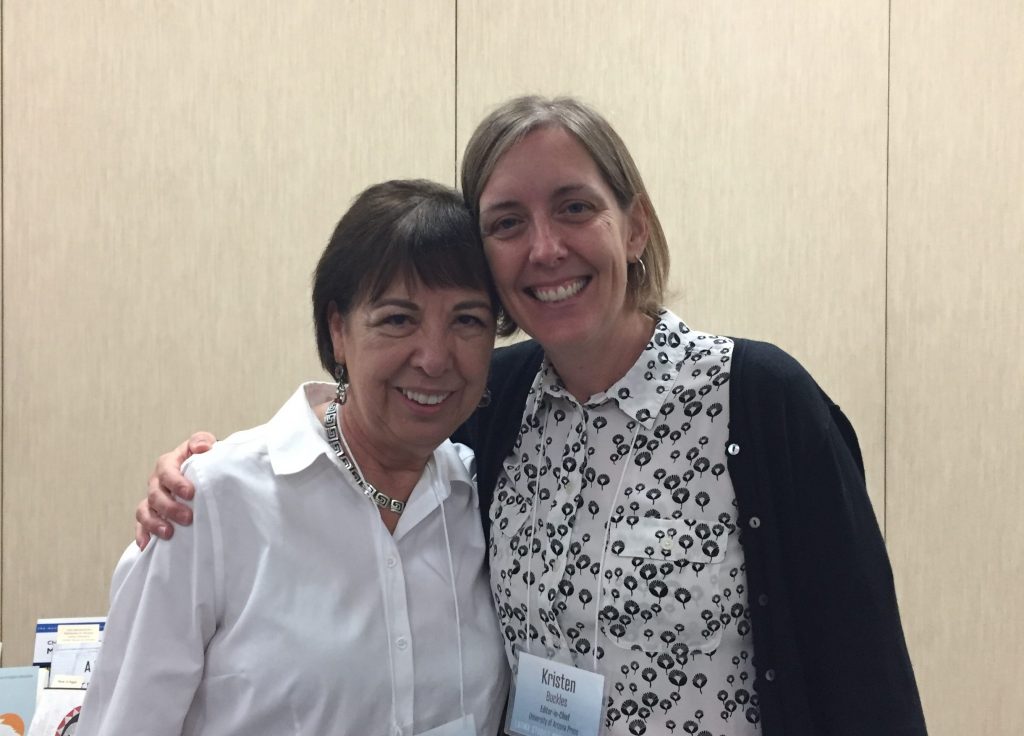
Norma Cantú and UA Press Editor-In-Chief Kristen Buckles
Norma Elia Cantú is a daughter of the borderlands, a scholar, and a creative writer. She serves as Norine R. and T. Frank Murchison Distinguished Professor of the Humanities at Trinity University in San Antonio.
A satisfying part of our work as scholarly publishers is seeing our authors share their scholarship. Late last month, Anthony Pahnke spoke with the Democratic Socialists of America in Sacramento. He shared the following brief reflection with us. Thanks for sharing your work with us and with the community, Dr. Pahnke:
From Anthony Pahnke: Some years ago, it was the famous Brazilian singer, Tom Jobim, who said that “Brazil is not for beginners.” Today, his words ring true, as the Amazon burns, the country’s–perhaps the world’s–largest corruption scandal occupies the nation’s courts, and Brazil’s far-right President, Jair Bolsonaro, slams the left, and deconstructs the economy. With many of theses issues in mind, we had the opportunity to discuss contemporary Brazilian politics with the Democratic Socialists of America (DSA) in Sacramento, California. I was invited to this event to share what I wrote about in Brazil’s Long Revolution: The Radical Achievements of the Landless Workers Movementand to discuss international solidarity efforts.
The
principle focus was the Landless Movement (O Movimiento dos Trabalhadores
Rurais Sem Terra). We had the opportunity to discuss the movement’s
history, tactics, and trajectory, while also making the movement’s struggle for
agrarian reform relevant in current discussions of political corruption, the
rise of the right, and the destruction of the Amazon.
While the event in Sacramento was a time to talk about the book, it was also a space where a group of about thirty committed activists took the evening to imagine the future. At a time–in Brazil and the United States–many of us struggle to navigate our divisive political times. In Sacramento, we had the chance to think together on the things that Brazil and the U.S. share, and what the MST can contribute to this discussion.
Brazil’s Long Revolution shows how the Movimento dos Trabalhadores Rurais Sem Terra (the Brazilian Landless Workers Movement, or MST) positioned itself to take advantage of challenging economic times to improve its members’ lives. Pahnke analyzes the origins and development of the movement, one of the largest and most innovative social movements currently active. Over the last three decades, the MST has mobilized more than a million Brazilians through grassroots initiatives, addressing political and economic inequalities.To learn more about Anthony Pahnke’s work, see his website at: https://anthonypahnke.com/.
Anthony Pahnke at an event at the Arden-Dimick Library in Sacramento.
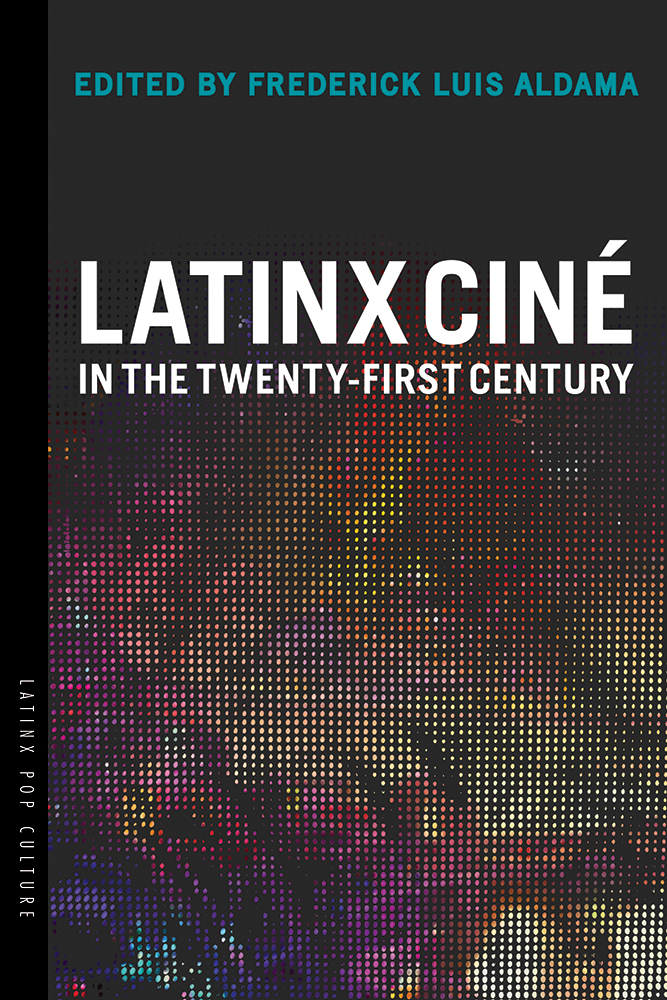
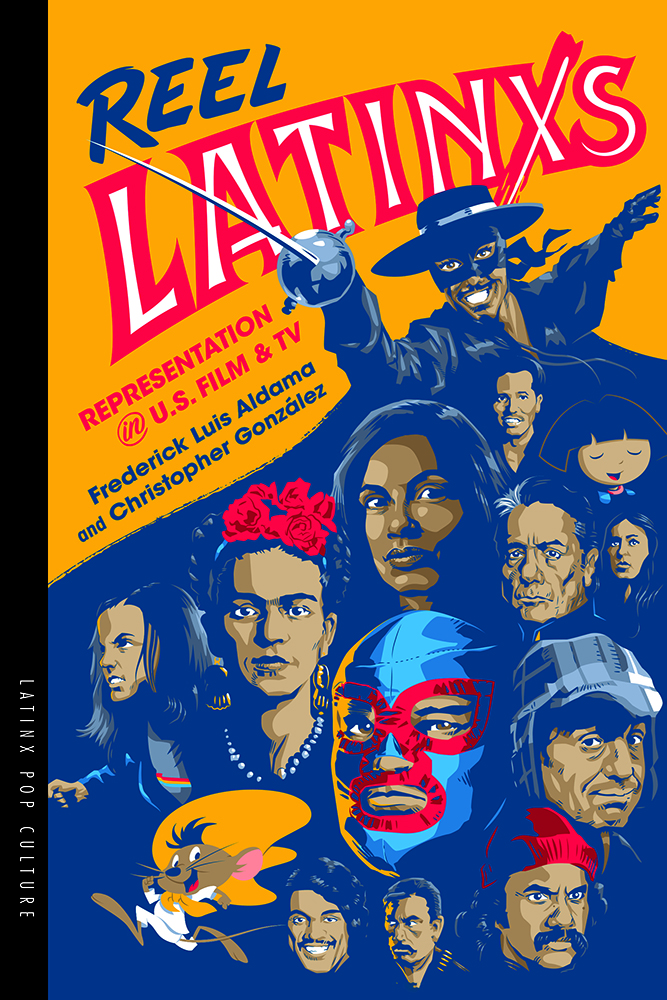
Frederick Luis Aldama and Christopher González‘ new book, Reel Latinxs, dives into Latinx representation in film and television in the twenty-first century. Latinx representation in the popular imagination has infuriated and befuddled the Latinx community for decades. These misrepresentations and stereotypes soon became as American as apple pie. Not seeing real Latinxs on TV and film reels as kids inspired the authors to dig into the world of mainstream television and film to uncover examples of representation, good and bad. The result: a riveting ride through televisual and celluloid reels that make up mainstream culture.
Today, Frederick Aldama and Christopher González share with us some of the inspiration and thought that helped craft Reel Latinxs.
Frederick Luis Aldama: We both spend a bunch of time thinking, writing, and teaching all varieties of Latinx pop culture, film, and TV. I often get asked, “What shows or films do you recommend watching that get Latinx representation right?”. My reflex answer for recent brown televisual reconstructions: check out the representations of Latinas in Golden Globe awardee, Brooklyn Nine-Nine, the playful panoply of Latino-ness represented in East WillyB, and those awesome Agents of S.H.I.E.L.D webisodes that feature Cisco Ramone or Elena “Yo-Yo” Rodriguez. My reflex answer for recent brownings of the silver-screen: Robert Rodriguez’ Alita, Lee Unkrich and Adrian Molina’s Coco, and, of course, Bob Persichetti’s Spider-Man: Into the Spider-Verse. I add to this, that it’s not just the representation that matters, it’s the shaping of the representation, too. That is, we can have Latinxs in front of the camera, but we also need Latinx writers, directors, cinematographers, costume designers, and showrunners.
Christopher González: Those are all great examples, and we may as well confront the specific difficulty when it comes to representation of the Latinx community. Representation is not merely about casting a Latinx actor in a given role. We know that characters— their function within the narrative, their reliance on or avoidance of recognizable tropes or even stereotypes, and their capability of signifying a given community— all highlight why the kind of representation we encounter in film and television is so powerful. And you are correct in pointing to why it’s so crucial to examine the other major contributors to a given instance of representation such as writers, producers, and so forth. The shaping that you are referring to, however, is also something with which audiences must contend. What do you feel are the challenges audiences of these Latinx representations face with these emerging televisual narratives?
Frederick Luis Aldama: Subtlety. Nuance. Knowing the difference between an abuelitas throwing a spoon at us— that would never happen— and a chancla— always happens. If Lalo hadn’t been brought in to consult Disney in the making of Coco, it would have been a big wooden spoon that Mamá Coco would’ve launched at Miguelito. We would have noticed, and likely exhaled our inner Latinx-sigh of disappointment. But subtlety and nuance in other ways. How many times have you seen an East Coast Puerto Rican Latinx family preparing tamales or mole— and not, say, mofongo or lechon asado? A show like Ugly Betty did this in spades. It also cast non-Nuyorican actors to play Nuyoricans, including LA-born, Honduran ancestral Latinx America Ferrera and Cuban Latinx Tony Plana as the papa.
Christopher González: So, a kind of insider knowledge is helpful, then— someone who knows the nuances and subtleties you mention. But we also have to contend with what we might call unconventional Latinx representation. For instance, let’s take the example of the new version of Magnum P.I. (2018-present). Thomas Magnum is an iconic 80’s character that was a career-defining role for Tom Selleck, who is of English ancestry. This new reboot stars Jay Hernandez as Magnum. Thanks to his Hispanic surname and mestizo looks, most reasonable viewers will instantly recognize Jay as Latinx. The writers of the show, however, are much more reserved in expressions of Latinx identity for the character. The question as to whether or not Thomas Magnum, the character, is Latinx is made ambiguous for most of the first season. Hernandez is now playing a role that was conceived of originally as a white man, and it is nothing more than his physical presence in the visual medium of television that signals the possibility that this new version of Thomas Magnum is Latinx. More complicated still is Hernandez’ turn as the voice of Bonnie’s dad in Toy Story 4 (2019). Though he performs the role with no hint of a Spanish accent, Bonnie’s entire family is rendered as olive-skinned, dark-haired, people. I left the theater wondering, along with my family, if Bonnie’s family was Latinx. It was possible, but not confirmable. What I’m suggesting here is that Latinx representation is much more complex of late than it has been for most of the history of television and film.
Frederick Luis Aldama: We could say the same of a lot of Demi Lovato’s roles for Disney, right? As Mitchie Torres in Camp Rock (2008) do we read her last name and the fact that her mom’s a cook (aren’t all our mamas preternaturally good with food?) as Latinx? Gosh, I remember doing that way back when I was a kid. Starved of Latinxs on TV I wish-fulfilled the Addams family as Latinx. I guess what I’m saying, Chris, is that we haven’t arrived yet. We’re still so few and far between on TV and silver screens that I think we need clear, affirming Latinx identifiers. So, yeah, today’s Magnum should be loud-and-proud Latinx. This brings up another important issue. Do we fault the Latinx actors for playing roles that whitewash a given character’s Latinidad? Do we fault an actor like Zoe Saldana for taking roles that either portray her as African American or Outerworld Alien, and not for roles, say, that would affirm a complex Afrolatinidad? I raise this because of late one of my brilliant PhD students had an Instagram exchange with Saldana. My student wrote this super insightful piece about how the industry itself is at fault for essentializing and simplifying— even alien-afying Saldana. I don’t know if you caught the piece, “Race and Alien Face“? Saldana read it as somehow a critique of her choice of roles played. My student, of course, wrote a heartfelt further explanation: that it was the industry at fault, not Saldana. My point here is that, well, in the end Latinx actors have to play the roles that pay the bills. I have noticed that as Michael Peña, one of my favorite actors long with Saldana, has become more famous, he’s been either more choosy about his roles, or playing less-than-straight stereotypical Latinx roles. As far as I know, he’s the first Latinx actor to be the protagonist in a mainstream sci-fi flick. I’m thinking of Extinction. And, let’s face it, he steals the show from Paul Rudd in the Ant-Man franchise. And, when he’s playing a Latinx gangbanger, there’s always a wink to the Latinx audience. He knows he’s playing a stereotype, subverting it from within.
Christopher González: I am always very quick to point out that actors (Latinx or otherwise) are professionals who are pursuing their careers to the best of their abilities. We should not fault non-white actors for making business decisions in an industry that has often been inhospitable to them. In one of my current book projects, I uncover how the film industry has deep-rooted insecurities about how Latinx actors could and should appear in speculative films in genres such as Sci-Fi, Fantasy, Horror, and more. Raquel Welch made a business decision to take on her white husband’s surname rather than use her own (Tejada) because she knew that doing so would limit the kinds of roles she would be offered. In the mid-1960s she had to whitewash her own Latinx identity in order to play characters such as Loana the Fair One in One Million Years B.C. and Cora in Fantastic Voyage. Now, over fifty years later, Zoe Saldana has to confront many of the same issues Welch faced. That Saldana took exception to your PhD student’s take reveals to me that Saldana is keenly aware that the roles she plays do matter, and that she perhaps feels frustration over how she is able to express her Latinx identity. But it should stagger us to consider that Saldana has starred in three of the five all-time grossing films at the box office (#1 Avengers: Endgame, #2 Avatar, #5 Avengers: Infinity War), and she still does not have the clout to make more forceful demands concerning the roles she takes. On the other hand, her Marvel co-star, Scarlett Johansson, is the highest-paid female actor in Hollywood, and she has taken roles that effectively whitewash characters. She came under fire recently for saying, and I’m paraphrasing, that as an actor she should be able to play any conceivable role. She later clarified that she was aware of how non-white, non-majority don’t have the same sort of access to roles of their white, cisgendered counterparts. In all of these cases, it is easy to get wrapped up with the actors and their decisions to take certain roles. What we should continue to critique is the system itself that allows these discrepancies in representation to occur. And, of course, we should take note of the opportunities some actors take to discretely subvert the stereotypical material they have been given.
Frederick Luis Aldama: Checking one’s privilege, now there’s a topic— and an urgent need, everywhere. We’ve seen a lot of push from historically underrepresented audiences for folks to check their privilege. We’re seeing the rearing of our collective ugly heads. We’ve had enough. I’m not only thinking of the #HollywoodSoWhite #OscarsSoWhite movements that have led to a lot of studios and television production units to create pipelines for young folks of color to become writers, directors, showrunners, and actors. I also think of the power of the internet as a platform to air our consumption needs and wants. Netflix canned the Latinx reboot of One Day At a Time. And, now after a hailstorm of internet mobilization, it’s back. We still need those boots-on-the-ground watchdogs like the National Hispanic Media Coalition and research centers like USC’s Media, Diversity, & Social Change, of course. However, with social media it seems like the power is really with the people.
Christopher González: Fede, our TV’s and silver-screens have shrunk. Elsewhere you talk about carrying these around in your back pocket, now. Sometimes I think this has emancipated #brownTV and also diminished our presence, representationally and physically.
Frederick Luis Aldama: The two-edged paradox: social media platforms like YouTube as well as spaces like VIMEO offering distribution channels to us Latinxs without deep Hollywood pockets yet the seeming continuation of stereotypical representation. I just watched a good friend, Ernesto Martínez’s short film, La Serenata, on VIMEO. It’s a masterpiece of short filmmaking, telling the much needed story of a Latinx niño telling his parents about his love for another boy. Queer Latinx Roberta Colindrez as the queer Latinx character, Devon, grabs the limelight in I Love Dick— a show made possible with funding from Amazon Prime. And, well, the way that Netflix’s One Day At a Time weaves into its one-familia storyworld the great variety of linguistic, religious, cultural, sexual, gender, class, regional resplendent variations that make up Latinidad is breathtaking. And, I have to say I love how Gabriel Iglesias uses humor to decolonize minds in Mr. Iglesias— an informal reboot of Welcome Back Carter from back in the day. Network TV could do these shows, but it doesn’t and it hasn’t. But then on the flipside, we have an abundance of us as “bad hombres”, not only in the super abundant narco Netflix offerings, but also in platforms like Discovery’s Border Live, where you can literally see ICE officers shake down innocents in real time.
Christopher González: Yes, distribution and availability are certainly enhanced. We can now watch these shows and films on the go, seemingly anywhere. That is the inevitable cost of the miniaturization of the screens we watch. The examples you just listed have benefitted from the almost grassroots efforts of audiences and creators to take more control of what they consume and what they make, even of the behemoth studios of Hollywood are still stuck in cement and antiquated ways of imagining the possibilities of visual storytelling. My sense is that there are many things that make this confluence of time, media, technology, and activism a great opportunity to see such change in how Latinxs are imagined within televisual spaces. There is no magic wand for instantly changing how things have been and where they are now. It takes hard work, bold choices, and the courage to be dogged enough to blaze a new trail. Our book, Reel Latinxs takes inventory of this shifting landscape and reveals what’s at stake for all of us, but particularly Latinxs like you and me who are old enough to see the progress that has been made and take stock of what work remains.
Frederick Luis Aldama: As we wrap this up, I wanted to mention that I’m super optimistic. At Stanford’s Great Books Program this summer, I got to spend time with a young, up-and-coming amazing Latinx actor, Emilio Garcia-Sanchez. He’s not bitter about having to step into the non-Latinx identified jock character, Jason, in Netflix’s The Society. He’s super comfortable with the fact that he brings his Latinidad with him, everywhere. Organically super-savvy about how he plays roles, he’s like a new gen Peña/ Saldana all rolled into one, and without effort. Like so many new gen Latinxs, he’s comfortable in his own skin— his self— as Latinx, y por vida.
Related Titles:
For Authors
The University of Arizona Press publishes the work of leading scholars from around the globe. Learn more about submitting a proposal, preparing your final manuscript, and publication.
The University of Arizona Press is proud to share our books with readers, booksellers, media, librarians, scholars, and instructors. Join our email Newsletter. Request reprint licenses, information on subsidiary rights and translations, accessibility files, review copies, and desk and exam copies.
Support a premier publisher of academic, regional, and literary works. We are committed to sharing past, present, and future works that reflect the special strengths of the University of Arizona and support its land-grant mission.
 The University of Arizona Press