Decolonizing Latinx Masculinities: Five Questions with Frederick and Arturo Aldama

August 5, 2020

In Decolonizing Latinx Masculinities, eighteen contributors explore how legacies of colonization and capitalist exploitation and oppression have created toxic forms of masculinity that continue to suffocate the lives of Latinx people. And while the authors seek to identify all cultural phenomena that collectively create reductive, destructive, and toxic constructions of masculinity that traffic in misogyny and homophobia, they also uncover the many spaces—such as Xicanx-Indígena languages, resistant food cultures, music performances, and queer Latinx rodeo practices—where Latinx communities can and do exhale healing masculinities.

Below, editors Arturo J. Aldama and Frederick Luis Aldama answer five questions about their new volume.

 What inspired you to create this edited volume?

The short answer: It’s the right moment. Of course, there’s been much important work done already within different critical (street and ivory tower) spaces to trouble, overturn, and break from stagnant, stagnating, straightjacketing behaviors (thought and feeling systems), policies, and cultural imaginaries. In our introduction to the volume, we mention a whole slew of such powerfully transformative creators, writers, and activist-thinkers. Too many to list here.

We are both very inspired and transformed by Xicana, indigenous and women of color feminist thought and queer of color critique so we thought it is important to bring a decolonial gaze into the constructions and performance of Latinx masculinities.

By moment, we mean that there’s today un gran Latinx tsunami pushing up from seafloors with a hereto unimagined potent kinetic energy. Young gen Latinxs creator-scholars are leading the charge, modeling vital and vigorous twenty-first century decolonizing ontological and epistemological practices. It’s more than a moment. It’s a movement. The legion of extraordinary activist creator-scholars that make up Decolonizing Latinx Masculinities are its avantgarde.

What do you think the long-term implications of negative masculine stereotypes in the popular media—from fictional TV shows to political news coverage— are for Latinx youths?

From TV shows like Narcos and Borderforce and films such as Sicario to the Chief Executive Cheeto’s racist, sexist, and hetero-thuggish Tweets, mainstream media continues to give free license to retrograde social and economic policies. Arguably, as never before the mainstream media functions to justify Klansman-like terrorist actions against LGBTQ+ and Brown, Black, and Indigenous communities in this country. The mainstream media filled with images of Latinxs as a Brown horde threat that threatens White civilization justifies the intensification of violence and surveillance within our carceral state.  That results in the curtailing—no, the destruction—of the full flourishing of complex, non-binaristic Latinx thought, feeling, and action systems.  That allow us to be in ways far more expansive than erstwhile concepts of gender and sexuality captured.

This said, and as the work in this volume attests, we’re not sitting around on our hands. We never have. We never will. We’re using our pens as our machetes. We continue to work hard to resist the onslaught of destructive media, wrenching tight tourniquets to stop culturacidal hemorrhages.

The transformative work seen by the scholar-creator activists in this volume are testament to this fact. They not only re-act. They open new spaces for us to inhale multispectrumed identities and exhale multifarious experiences. They clear new affirming paths that invite us to move powerfully forward.

With Decolonizing Latinx Masculinities we hope that millennial Latinx subjects will begin to truly question and decolonize the practices of toxic masculinities and learn to love each other and others without the straitjackets of misogyny and homophobic/transphobic violence(s) perpetuated by the capitalist media congloms.

Do you think the young adult literature, shows, films, podcasts, and music of today are opening the conversation for healthier masculinities, or do you think all of these industries still have a long way to go?

Everywhere we turn, Latinx creators are opening eyes to the resplendent spectrum of liberatory modes that we exist—and can exist. We think readily of queer author Alex Sanchez’s breathtaking coming of age and out Aqualad superhero graphic novel for DC. (See Fred’s “Anatomy of a Panel with Alex Sanchez”.). We think of Latinx-helmed TV shows like the rebooted One Day at a Time, Vida, and Gentefied that variously trouble simplistic and stifling ways of being in terms of language, culture, gender and sexuality. (See Fred’s “Love Victor: Brown Queer Teen Tvlandia Watershed; or Hollywood Brown Flavored Bubblegum”.) We think of the vital new audioscapes created by new gen nonbinary Latinx musicians such as Dominican Latinx Rubby and Afro-Boricua Nitty Scott. It’s in these Latinx-grown cultural spaces that we see the pop happening when it comes to waking the world to the vibrant, multispectrumed non-binary ways that we can and do feel, think and perceive in the world.

Recognizing that many aspects of toxic masculinity are rooted in colonialism, how do you think communities should work toward more Indigenous ways of thinking about and performing gender?

Unfortunately, the colonial legacy is still with us. From generation to generation, we’ve passed down a colonial mentality; we’ve passed down centuries of destructive and restrictive ways of thinking and feeling as colonized peoples. The result: we Latinxs act from fear—a fear that divides us from one another—that atomizes us—and that ultimately destroys our families and communities. It’s hate that we see rear its ugly head when a family member fires pejorative bullets at us like puto, maricón, chavala, puta, crybaby, lloroncito, bitch, pussy, niñita. Decolonizing Latinx Masculinities offers the many different ways we can begin to unlearn this hate and fear. It’s the work of those who have come before us and new gen Latinx scholar-creator activists like those in this volume that can and do show us how to decolonize minds,  bodies—spirits. They can and do invite us to struggle free from those straightjackets of binary and polarized models of existence. They welcome us into new dynamic and multispectrumed modes of existing as genders, sexualities—as expansively loving masculinities.

What are you working on now?

We have our individual projects, of course. Fred’s working on the animation adaptation of his debut kid’s lit book, The Adventures of Chupacabra Charlie and continues his work Latinx-diversifying the otherwise white space of comics studies. As Chair of Ethnic Studies, Arturo is focused on doing outreach to the Latinx community through the funded Latinx history projects and continue work with the lyripeutics project to bring decolonial spoken word and hip hop pedagogy to Latinx and other youth of color who are surviving the school to prison pipeline.

We love working together, not only on editing volumes such as Decolonizing Latinx Masculinities but also the work of shepherding new visions and voices through our Latinx Pop Culture book series with you all, the University of Arizona Press. We have some extraordinary books to look forward to seeing on library bookshelves, classroom desks, and ruffled up in backpacks and back-pockets, so be sure to keep an eye out for them in the future.

Arturo J. Aldama is an associate professor and chair of Ethnic Studies at the University of Colorado, Boulder, and affiliate faculty in Gender and Women’s Studies. He received his doctorate in ethnic studies from University of California, Berkeley, in 1996. He is co-editor of the University of Arizona Press’s series Latinx Pop Culture. He is the author of Disrupting Savagism: Intersecting Chicanalo, Mexican Immigrant and Native American Struggles for Representation and author and curator of Moments in Mexican American History: Racism and Resistance, a forty-panel traveling exhibit on the histories of racism, violence, and activism in Mexican American and Chicanx communities of the Southwest. He is co-editor of numerous volumes, including Comparative lndigeneities of the Américas: Toward a Hemispheric Approach.
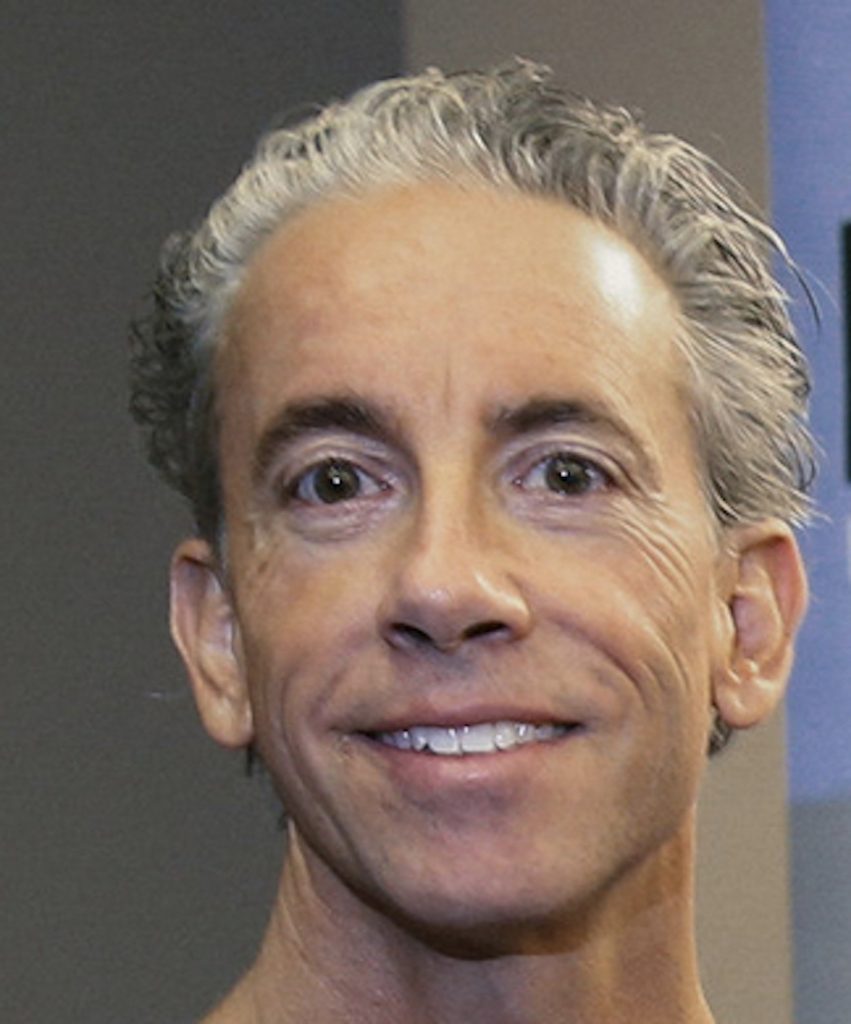
Frederick Luis Aldama is University Distinguished Professor, Arts & Humanities Distinguished Professor of English, University Distinguished Scholar, and Alumni Distinguished Teacher at The Ohio State University. He is the 2018 recipient of the Rodica C. Botoman Award for Distinguished Teaching and Mentoring and the Susan M. Hartmann Mentoring and Leadership Award. He is the award-winning author, co-author, and editor of more than forty books. In 2018 his Latinx Superheroes in Mainstream Comics won the International Latino Book Award and the Eisner Award for Best Scholarly Work. He is editor and co-editor of eight academic press book series, including Latinx Pop Culture, as well as editor of Latinographix, a trade press series that publishes Latinx graphic fiction and nonfiction. His other University of Arizona Press books include Latinx Ciné in the Twenty-First Century, Long Stories Cut Short, and Reel Latinxs.
‘Divided Peoples’ Author on Border Policy and Its Impacts on Indigenous Communities

July 31, 2020

Christina Leza, author of Divided Peoples: Policy, Activism, and Indigenous Identities on the U.S.-Mexico Border, recently asked in an essay published in Yes!, ‘What is the U.S.-Mexico border to indigenous peoples who have lived there?’ especially during this latest border wall construction.

An excerpt from the essay:

The Indigenous Alliance has long advocated for the development of comprehensive legislation that would address Indigenous border rights at both the Canada-U.S. and U.S.-Mexico borders, and has envisioned summits that include both tribal government and grassroots community leaders. Recent tribal border summits in Tucson, Arizona, organized by the Pascua Yaqui Tribe, the Tohono O’odham Nation, and the National Congress of American Indians are building toward this vision. The Indigenous Alliance has also advocated for the adoption of the United Nations Declaration on the Rights of Indigenous Peoples by U.S. tribal governments on the U.S.-Mexico border to help build a common reference for Indigenous border rights.

While Indigenous leaders work to address issues they face with U.S.-Mexico border policy, Indigenous members must continue to grapple with the everyday impacts of increasing border enforcement, including the growing presence of Border Patrol and surveillance technology on reservation lands, as well as the disruption of their lands by border barrier construction.

Read the entire essay in Yes! here.

Daniel Olivas Pays Tribute to Father of Chicano Literature

July 29, 2020

University of Arizona Press author Daniel Olivas, author of King of Lighting Fixtures and Book of Want, recently paid tribute to Rudolfo Anaya, who passed away on June 28.

In the Fall 2013, Olivas did a two-question interview for the Los Angeles Review of Books. The interview was only in the LARB print edition, and not online. Olivas asked if that could change, and LARB in return asked if Olivas could write an intro.

Here’s an excerpt of the intro:

On June 28, Rudolfo Anaya died in his home in Albuquerque, New Mexico. The man commonly referred to as the Father of Chicano literature had been suffering from ill health for a while. For many of us who shared in some or all of his cultural touchstones—and who therefore embraced his literature—it felt as though a family member had passed.

Two generations of Latinx writers had been inspired by Anaya to become writers themselves because he proved that our stories matter and could be published and read and appreciated. I can say without a doubt that his trailblazing 1972 novel, Bless Me, Ultima, convinced me to start telling my own stories in fiction, nonfiction, and poetry. Eleven books and one full-length play later, Rudy still inspires me to write.

Yes, I just called the great writer “Rudy.” And that is because I reached out to him seven years ago to propose a short, email interview for LARB regarding his new novel, The Old Man’s Love Story (University of Oklahoma Press). In response, on June 7, 2013, at 12:14 p.m., he responded with a short email: “Ese, email me questions & thanks. Rudy.”

Read the entire intro, as well as Olivas’s interview with Anaya here.

Buelna News Book Review On Chicano Communists

July 28, 2020

Gabriel Buelna gave some positive attention to Chicano Communists and the Struggle for Social Justice, published by the University of Arizona Press, on his online program, Buelna News. Buelna, a Chicano studies professor in Los Angeles, focuses on Latinos and Latin American issues and interests.

Chicano Communists, by Enrique M. Buelna, follows the thread of radical activism and the depth of its influence on Mexican Americans struggling to achieve social justice and equality.

Q & A with Heather Cahoon Offers Deeper Look at Horsefly Dress

July, 2020

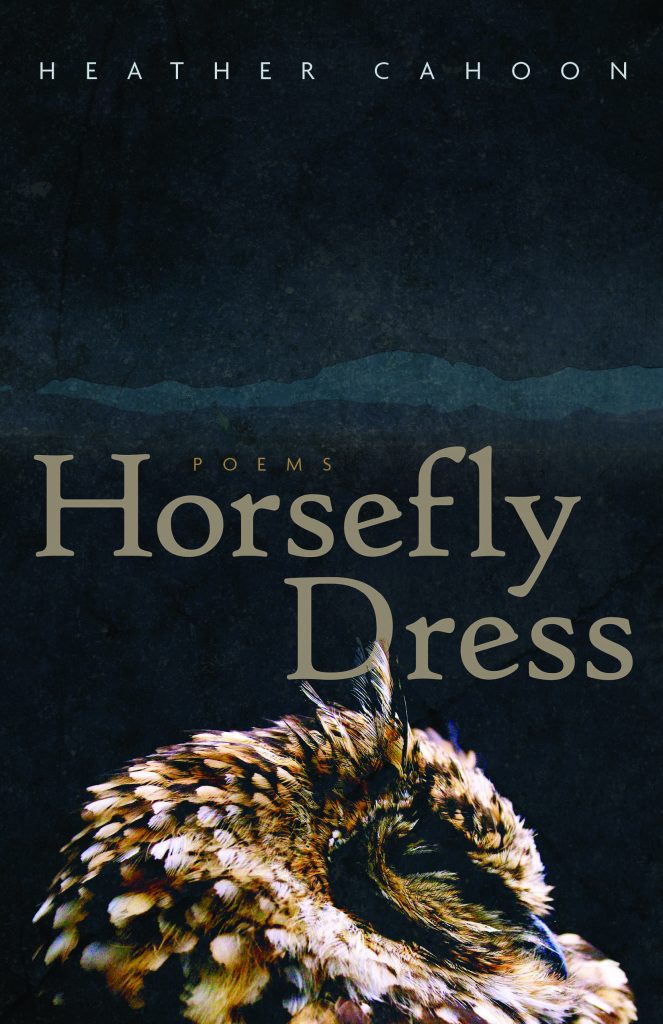
Horsefly Dress is a meditation on the experience and beauty of suffering. Rich in the imagery of autumnal foliage, migrating birds, and frozen landscapes, Heather Cahoon’s collection calls forth the sensory experience of grief and metamorphosis. The transformative powers associated with the human experience of loss belong to the past, present, and future, as do the traditional Salish-Pend d’Oreille stories that create the backbone of these intricate poems.

Below, Heather Cahoon answers a few questions about her beautiful new poetry collection.

The poems in Horsefly Dress are influenced by traditional Séliš and Qĺispé stories. How do you think these stories guide and impact the contemporary lives of Salish-Kalispel peoples?

I think it varies a lot from individual to individual and depends on each person’s exposure—or lack thereof—to the stories.  There are many reasons for the lack of exposure but among the foremost are federal Indian policies of assimilation that were designed to acculturate American Indians.  These policies were very aggressive and included on- and off-reservation boarding schools for Native youth, the banning of sacred spiritual practices, and the forced allotment of reservations, among other collateral outcomes from these policies.  Federal assimilation efforts were obviously never fully successful, however, and many people managed to maintain their traditions to varying degrees.  As a result of both of these sort of countervailing efforts by federal officials and tribal people, American Indians today may have more or less access to their cultural traditions, including their traditional stories.  That said, there are definitely segments of my community whose contemporary lives are very much guided and impacted by our traditional stories.  These stories are hyperlocal and relevant; they are located right here where we live out our daily lives and they continue to have so much to teach us about inhabiting this place and about being human.

Avian symbolism plays a powerful role in this collection. Could you please tell us more about the significance of birds in your work?

Some of the significance is tied to tribal symbolism but most of it, in this collection, is personal.  Whenever I’m out trail walking or hiking there are birds present—you can hear them, you often see them moving about the forest and so much of the time they seem to be just part of the scenery.  But every so often, one steps out of that in a way that penetrates my experience or perception of being the primary observer and suddenly I am aware that I am being perceived by something just as alive and sentient as I am.  Some of these exchanges or interactions are longer and more drawn out while some are very brief.  Each one is unique but they are all so poignant and meaningful that they’ll often make their way into my poems.

The poems in Horsefly Dress are bursting with vivid foliage, animals, and natural elements. What is your process for weaving nature so intimately into your poetry?

My family has spent so much time outdoors in the mountains.  Growing up, my father made a living by hunting and by selling things he could harvest from around our reservation and we often helped him in these endeavors.  He sold Christmas trees, firewood, landscaping stones and even dropped deer and elk antlers, which sometimes he would make into antler lamps and chandeliers.  We also spent time as a family just driving to pretty places for either camping or fishing or just to enjoy the peacefulness and smell of the mountains.  It has been my father’s belief that for whatever ails a person, all they need is to retreat into the mountains in order to become well.  Needless to say, I continue to spend time in the outdoors and the experiences I have with local places, flora and fauna inevitably end up in my poems. 

Dreams are featured prominently in this collection. How do dreams affect your creative process?

I occasionally have dreams that are so vivid and powerful that I think about them off and on for days, sometimes even years, until I understand their meaning.  Interestingly, it’s often the creative process of making them into poems—the act of writing about them in such detail—that helps me fully understand them, to see or hear or decode their messages for me. 

What are you working on now?

I am working on and off on a longer-term project that involves revising and expanding my 2005 poetry chapbook Elk Thirst into a full-length collection.  Besides this, I recently launched and direct the American Indian Governance and Policy Institute at the University of Montana and am working to develop a comprehensive tribal public policy needs assessment for each of the tribal governments located our state.  I can get mentally caught up in my policy research and writing, which is very cerebral, but this state is countered by writing poetry, which brings me back to into the present and helps ground me in a bodily experience of time and place.

Read a poem from Horsefly Dress, included below.

RENDER

May I be worthy 
   of my most embattled moments.
          May I find a way    to render meaning 
from the blood marbled-memories
          cached inside
the carcass of the past. 

© 2020 by Heather Cahoon

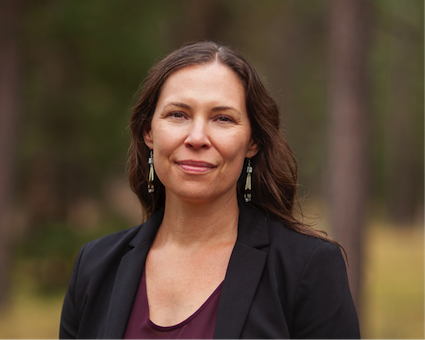
Heather Cahoon, PhD, earned her MFA in poetry from the University of Montana, where she was the Richard Hugo Scholar. She has received a Potlatch Fund Native Arts Grant and Montana Arts Council Artist Innovation Award. Her chapbook, Elk Thirst, won the Merriam-Frontier Prize. She is an assistant professor of Native American studies at the University of Montana. She is from the Flathead Reservation and is a member of the Confederated Salish and Kootenai Tribes.

Charles Bowden’s Blue Desert Featured in Harper’s Magazine

7/24/2020

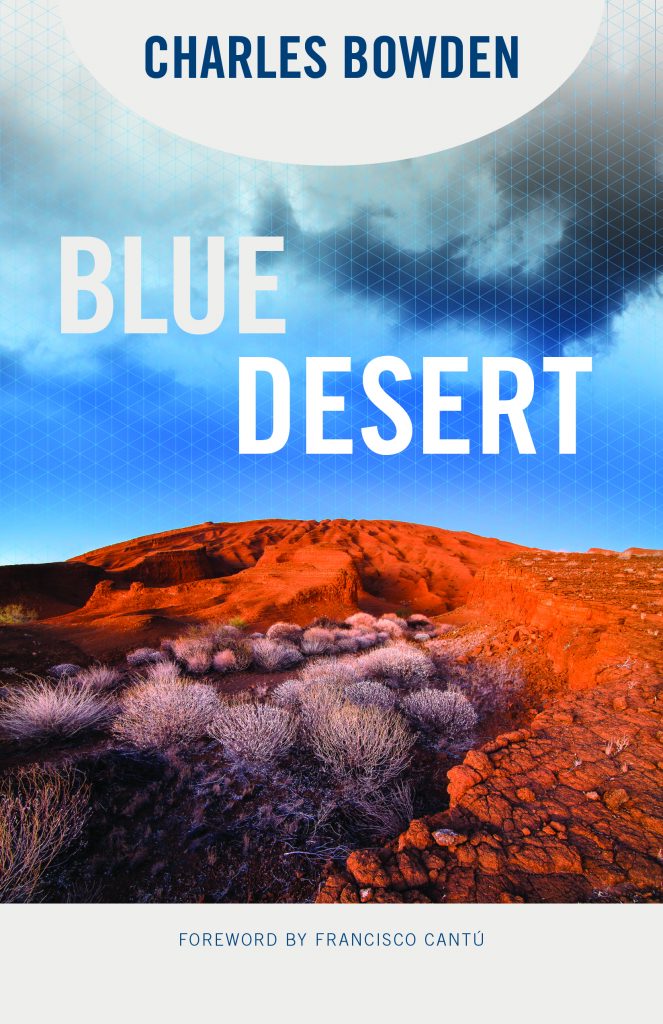
In the August 2020 issue of Harper’s Magazine, Wes Enzinna writes an essay on Charles Bowden that praises, criticizes, and recognizes Bowden as a shrewd predictor of the current chaos surrounding the United States borderlands. Below, read an excerpt from the essay which pertains to our book Blue Desert, originally published in 1986 and recently re-released with a new forward by Fransciso Cantú in 2018.

“For all his cynicism, Bowden’s response to this crisis was never a desire to strengthen the border, but rather to destroy it. ‘There aren’t any Mexican stars or American stars,’ he once said in a radio profile, as he hiked with the correspondent through the Buenos Aires wildlife refuge in southern Arizona, a popular route for migrants sneaking into the United States. ‘It’s like a great biological unity with a meat cleaver of law cutting it in half.’ His work was an attempt to heal this cleavage, and to remind us how our hunger, pollution, and violence connected us all, especially in the Sonoran and Chihuahuan Deserts, where nature was a stingy mother and death ruled over everything. ‘We are becoming more and more aware that our civilization destroys the foundations that support it by devouring the earth and the things of the earth,’ he wrote in Blue Desert. ‘But we don’t have the courage to back away, to stop, to restrain ourselves. I know I don’t.’

Like the beasts and criminals he admired, Bowden was a complicated, contradictory creature. He loved dogs, dirt, wine, worms, Cadillacs, cacti. He held backyard parties to watch summer cereus flowers bloom at midnight, and owned scores of guns but was reluctant to shoot them lest they scare the birds. In Most Alarming, a priest named Gary Paul Nabhan reports that the last time he saw Bowden the surly old tough guy was weeping for a cottonwood tree that had died. Bowden’s teeth were falling out. He was poor and owned little more than a laptop, a Le Creuset pot, a sleeping bag, a Honda Fit, and a pair of binoculars. If in life he sometimes failed to be a decent man, in his writing he tried to be a better animal. ‘The whippoorwill’s name reflects the sounds we hear it make,’ he once wrote in a letter to a friend.”

Read the entire essay here.

Published in 1986, Blue Desert was Charles Bowden’s third book-length work and takes place almost entirely in Arizona, revealing Bowden’s growing and intense preoccupation with the state and what it represented as a symbol of America’s “New West.” In a thoughtful new foreword, Francisco Cantú writes, “In Blue Desert, we follow Bowden in the processes of becoming. We see the version of Bowden that he would likely most want us to remember—someone who did their best to be an honest witness, someone who was haunted by modernity and his place in it, someone who grappled with his demons by gazing deeply into the desert.”

Charles Bowden (1945–2014) was the author of many acclaimed books about the American Southwest and U.S.-Mexico border issues. He was a contributing editor for GQ, Harper’s, Esquire, and Mother Jones. His honors include a PEN First Amendment Award and the Lannan Literary Award for Nonfiction.

Diana Negrín on Cracking the Silence on Racism in Mexico

July 23, 2020

Recently author Diana Negrín published a piece in Medium about racism in Mexico. Negrín is the author of Racial Alterity, Wixarika Youth Activism, and the Right to the Mexican City, which examines the legacy of the racial imaginary in Mexico with a focus on the Wixarika (Huichol) Indigenous peoples.

In the piece in Medium, Negrín writes, “A few years back it would have been very difficult to find platforms through which to discuss race and racism in Mexico. When I began sharing my writing and research detailing the contemporary experiences of Indigenous youth as they confronted and challenged structural and everyday forms of discrimination, few people I encountered, beyond the Wixarika university students who collaborated and protagonized my research, seemed interested. Within Mexico, the fact of racism has often been downplayed by the country’s long tradition of centering the mestizo identity as one that is composed of various racial and ethnic lineages. European cultural mannerisms, political economic orders, language, and general world views were to replace or, at the least, hybridize with Indigenous heritages.”

See the complete piece here.

The University of Arizona Press Fall 2020 Catalog

July 21, 2020

Every season with the availability of our new catalog our staff takes a collective moment to reflect proudly and fondly on what we are presenting to you. The Fall 2020 season is no different.

These works are months and even years in the making. They illuminate the commitment, passion, and generosity of our authors, editors, peer reviewers, and above all you, our readers. These books bring new perspectives to our world, looking deeply, hopefully, critically, and thoughtfully.

Essays, history, poetry, ethnography, archaeology, and so much more are showcased in the Fall 2020 Season. It is with great pride we offer you this look at what we will be publishing in coming months!

Browse and enjoy!

Carlos Velez-Ibáñez Honored with the 2020 Franz Boas Award

July 15, 2020

We are thrilled to announce that Carlos Velez-Ibáñez is the recipient of the American Anthropological Association’s 2020 Franz Boas Award for Exemplary Service to Anthropology! This award is presented annually by the AAA to its members whose careers demonstrate extraordinary achievement that have well served the anthropological profession.

Carlos G. Vélez-Ibáñez is a Regents Professor and the Motorola Presidential Professor of Neighborhood Revitalization in the School of Transborder Studies and a Regents Professor of in the School of Human Evolution and Social Change at Arizona State University. His numerous honors include the 2004 Robert B. Textor and Family Prize for Excellence in Anticipatory Anthropology and the 2003 Bronislaw Malinowski Medal. Vélez-Ibáñez was elected fellow of the American Association for the Advancement of Science in 1994 and was named as a corresponding member of the Mexican Academy of Sciences (Miembro Correspondiente de la Academia Mexicana de Ciencias) in 2015, the only American anthropologist so selected.

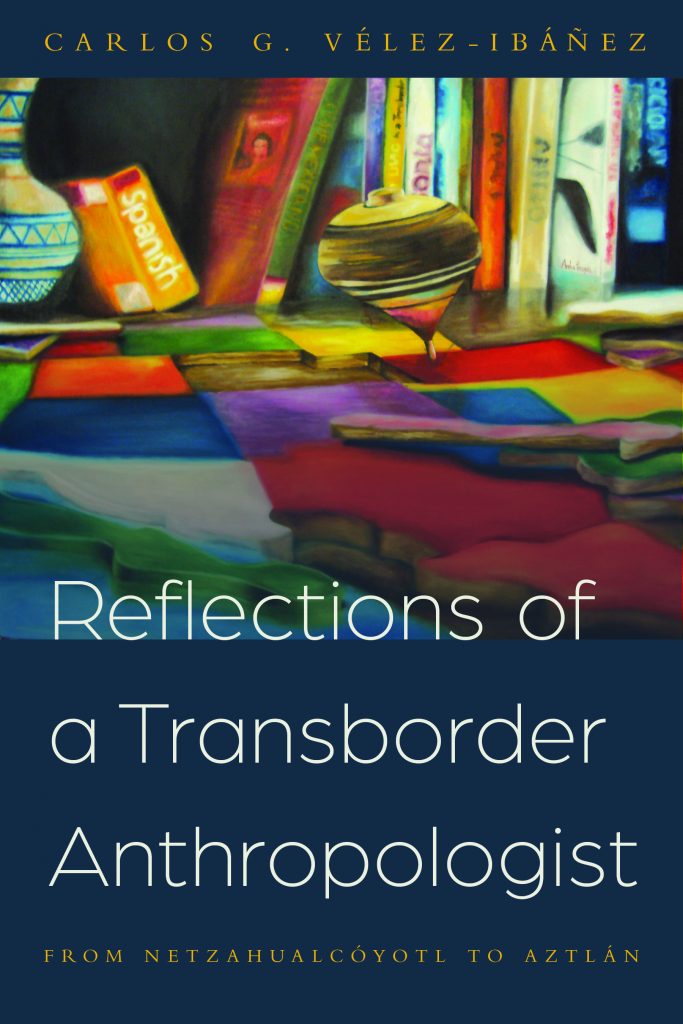
Carlos is the author of five University of Arizona Press books, including Border Visions, Hegemonies of Language and Their Discontents, An Impossible Living in a Transborder World, and The U.S.-Mexico Transborder Region. His forthcoming book, Reflections of a Transborder Anthropologist, explores Vélez-Ibáñez’s development as a scholar and in so doing the development of the interdisciplinary fields of transborder and applied anthropology.

Congratulations, Carlos!

For Authors

The University of Arizona Press publishes the work of leading scholars from around the globe. Learn more about submitting a proposal, preparing your final manuscript, and publication.

Inquire

Requests

The University of Arizona Press is proud to share our books with readers, booksellers, media, librarians, scholars, and instructors. Join our email Newsletter. Request reprint licenses, information on subsidiary rights and translations, accessibility files, review copies, and desk and exam copies.

Request

Support the Press

Support a premier publisher of academic, regional, and literary works. We are committed to sharing past, present, and future works that reflect the special strengths of the University of Arizona and support its land-grant mission.

Give