‘The Sins of Our Fathers’: An Excerpt from Vanessa Fonseca-Chávez’s Forthcoming Book

June 17, 2020

In New Mexico two statues of Juan de Oñate, sixteenth-century Spanish conquis­tador who founded the first Spanish town in the present-day Southwest at San Juan de los Caballeros, were removed following protests this week. In this excerpt from Vanessa Fonseca-Chávez’s forthcoming book, Colonial Legacies in Chicana/o Literature and Culture, we learn that this action follows decades of a contested conversation:

Within the colonial kaleidoscope, everyone sees the pieces differently. There are prisms that reveal a propensity to shut out others. If one’s own privileged history or legacy is at stake, then they choose not to look or acknowledge history beyond their own perspective, for if they validate the existence of oppositional thought, it somehow diminishes their own story. Indigenous histories represent the jagged fragments that, when viewed separately, tell a more complex history that needs to be seen and acknowledged. For Indigenous people, colonization itself is a jagged edge that will never find a solid place within the kaleidoscope. But this same history represents a point of pride for people who hold on to these legacies.

Patricia Marina Trujillo, Corrine Kaa Pedi Povi Sanchez, and Scott Davis (2020) refer to Oñate as a chispa, the flyaway piece of hair that keeps resting on your face. You tuck it back, but you know it’s bound to get loose again and be bothersome. Oñate is a tired, drawn-out character in the story of New Mexico. How do we secure this chispa? And where? National debates in 2017 surrounding Confederate flags and statues in the South and monuments, more generally, suggest museums as potential locations, rather than public spaces as a site of remembrance.26 And Guthrie (2013) reminds us these sites serve as an epicenter for the politics of recognition with ties to how we celebrate multiculturalism, specifically in New Mexico. The white supremacist marches and counterprotests in Charlottesville, Virginia, prompted social media users and KUNM, a public radio station broadcasting from the University of New Mexico’s Oñate Hall (sigh), to return to the topic of Oñate’s legacy in August 2017.

As I finished this chapter, I could not find a way to break away from the controversy surrounding Oñate that was again brought to the forefront via national conversations on Confederate statues. A recent manifestation of resis­tance to this narrative was the renaming of the Oñate Monument Resource and Visitors Center as the Northern Río Grande National Heritage Center, whose vision centers on the economic sustainability of the people of the north­ern Río Grande. This marks a shift from an Oñate-centered space to one that demonstrates an investment in and recognition of the economic structures that were created through centuries of colonial violence in New Mexico and the Southwest. The rededication of this space came to my attention through a Facebook post by Patricia Marina Trujillo on March 2, 2017, where she included a photo showing a new sign posted near the Oñate monument. The sign, a conquistador hat with a line through it, was accompanied by Patricia’s hashtag, #buenobyeoñate. Though the artist was not known at the time of her posting, it marks a pattern of resistance to the Oñate narrative and a desire to move past exhausted, old arguments of former Spanish glory that fail to nuance history.

Just as 1998 prompted new conversations about Oñate’s legacy in light of the four hundredth anniversary of his arrival, so too did more recent events surrounding monuments dedicated to Confederate heroes. In 2017, on the cusp of the Entrada Pageant in Santa Fe for the annual Santa Fe Fiesta held each September, the Oñate statue located in Alcalde, New Mexico, was vandalized with red paint covering the left foot. Painted on a nearby wall were the words “Remember 1680” (Bennett 2017). This act demonstrated a continued lack of interest by some in celebrating pageantry and monuments to Spanish coloni­zation, and a reminder that this conversation may never be silenced.

Vanessa Fonseca-Chávez is an assistant professor of English at Arizona State University. Her work focuses on colonialism, place studies, and the narratives of southwestern U.S. communities. She is co-editor of Spanish Perspectives on Chicano Literature: Literary and Cultural Essays and Querencia: Reflections on the New Mexico Homeland. Colonial Legacies in Chicana/o Literature and Culture will be published by the University of Arizona Press in October.

Thinking Like a Burned Mountain: An Excerpt from Stephen J. Pyne’s To the Last Smoke Anthology

June 16, 2020

For more than a week, the Tucson community has watched the Bighorn Fire burn its way across the Santa Catalina Mountains. Many people have been ordered to evacuate their homes as firefighters from surrounding regions fight the blaze. As of today, the fire has burned 14,686 acres with 30 percent containment. 

Since 2015, we’ve published the works of fire historian Stephen J. Pyne, starting with a narrative examination of fire in the United States Between Two Fires: A Fire History of Contemporary America. Next, we published a series of regional fire surveys. This spring, Pyne brought together the best of each regional study into the anthology To the Last Smoke, which offers a unique and sweeping view of the nation’s fire scene and serves as a punctuation mark to the series.

Pyne is an emeritus professor at Arizona State University. He is the author of more than 30 books, mostly on wildland fire and its history but also dealing with the history of places and exploration, including The Ice, How the Canyon Became Grand, and Voyager.

Below, read an excerpt from the “Southwest” section of Pyne’s new anthology:

“On September 18, 1909, a young Aldo Leopold, then a ranger with the U.S. Forest Service, shot two timber wolves in Arizona’s White Mountains. He noted the episode casually in a letter home. But the incident, like embers in an old campfire, glowed in his mind, and in April 1944 he wrote one of his most celebrated meditations, ‘Thinking Like a Mountain’, in which he described standing over the dying she-wolf and watching the ‘fierce green fire’ in her eyes die and wondered if shooting the wolf had helped unhinge the larger landscape. Too much emphasis on safety, he thought, was dangerous. He quoted Thoreau’s dictum, ‘In wildness is the salvation of the world.’

The essays, or more accurately moral epistle, became one of the founding documents of 20th-century American environmentalism. It helped make the wolf the living emblem of the wild, and wolf restoration a measure of ecological enlightenment. About 10 miles of Leopold’s kill site, Mexican gray wolves were reintroduced in 1998. But his insights also helped underwrite a campaign of nature protection that focused on the preservation of pristine lands. Leopold was the architect of America’s first ‘primitive area’, the Gila, located in an adjacent national forest, which subsequently became the inspiration for a National Wilderness Preservation System 40 years later. In 1984 the system acquired the 11,000-acre Bear Wallow Wilderness, about 10 miles as the crow flies southwest from where Leopold shot is wolf. Between them the three sites from a triangle of environmental thinking transformed into action— the deed into an idea, the emblem into a restored species, the wild into a legally gazetted preserve.

A century later a mammoth wildfire boiled out of the Bear Wallow Wilderness, blew over the wolf reintroduction site, and overran Leopold’s vantage point above the Black River. The Wallow fire, kindled by an untended campfire, burned 50 times as much land as the wilderness held. An idealistic green fire met an all-too-real red one.

The contrast almost overflows with symbolism, but two themes seem most useful. One speaks to nature protection, and that preserving the wild is perhaps not just a paradox but an example of a misguided urge toward safety, in this case the security of nature, not unlike Leopold’s shooting a wolf. ‘In those days we never heard of passing up a chance to kill a wolf.’ Fewer wolves meant more deer, and no wolves meant ‘a hunter’s paradise.’ So, too, it has seemed self-evident that removing the human presence would mean a healthier land, and no people would mean paradise.

The other theme is fire. At the time Leopold killed the green fire, he was also swatting out red ones. Fire control was among the most fundamental of ranger tasks; to ignore fire could be cause for dismissal. Interestingly, posters from the era even equated fire with wolves: the fire wolf running wild through reserves was a ravenous killer that needed to be hunted down and shot. Over time this belief, too, yielded to the realization that fire’s removal, like the wolf’s, could unravel ecosystems. The difference was that fire was renewed annually, if not through human artifice then through lightning (the American Southwest is North America’s epicenter for lightning fire). The spark is always there: if wind and fuel are aligned, fire can spread.

But the deeper story was that the sparks decreased and the fuel was stripped away. Lightning fires were attacked and distinguished at their origin. People quit setting tame fires to substitute for nature’s wild ones. And overgrazing slow-metabolized on a vast scale what fire had formerly fast-burned. Cattle and sheep cleaned out the country’s combustibles. Flame might kindle in the isolated snag; it could not easily spread. Over decades, however, the removal of predatory fire allowed a woody understory to flourish, akin to the metastasizing deer population that blew up after the wolves were extinguished. Both yielded a sick, impoverished landscape.

So a campaign to restore fire ran parallel to that for reinstating wolves. Their histories are oddly symmetrical. The population of neither wolf nor fire has reached its former levels, and the landscape teeters on a metastable ridgeline. The issue is that success requires not merely the presence of wolf and flame but a suitable habitat in which they can thrive. The power of fire resides in the power to propagate, and that sustaining setting was gone. Fire, however, had other properties wolves lacked, notably a capacity not simply to recycle but to transform. A single spark could transmute thousands of acres almost instantaneously.

On Memorial Day weekend, May 2011, flames returned. This time they came as feral fire. It was certainly not a tame fire— not a controlled burn or a prescribed one suitable for wildlands. Neither was it a truly natural fire; it started from a slovenly kept campfire and burned through decades of forests whose structure had been destabilized by logging, of grazing that had destroyed their capacity to carry surface fire, and of doctrines of fire exclusion that had prevented nature’s economy from brokering fuel and flame. The Wallow fire could no more behave as it would have in presettlement times than could a wolf pack dropped into a former hunting site now remade into a Phoenix shopping mall.

Probably fires had burned as widely in the past, but through long seasons in which they crept and swept as the mutable comings and goings of local weather allowed. Undoubtedly, in the past spring winds, underwritten by single-digit humidity, had blown flame through the canopies of mixed-conifer spruce and fir and left landscapes of white ash and sticks. But it is unlikely that earlier times had witnessed a similar combination of size and intensity. The Wallow burn was not what forest officers had in mind when they sought to reintroduce the ecological alchemy of free-burning flame.

© 2020 by The Arizona Board of Regents

If you would like to read more about fire in the Southwest, we are currently offering Stephen J. Pyne’s The Southwest as a free e-book through 6/25/2020. Use the code AZFIRE20 at checkout!

Free E-Book of the Week: Wildfire in the Southwest

June 15, 2020

For more than a week, our community has watched the smoke from the Bighorn Fire float up above the Santa Catalina Mountains, which sit just north of Tucson. As of today, the fire has burned more than 14,000 acres of our beloved Sky Island.

But wildfire has been on the mind of all of us at the Press for several years. Since 2015, we have been publishing the works of fire historian Stephen J. Pyne, who has been illuminating the regional and national history of wildfire in the United States.

For this week’s free e-Book of the Week, we’re drawing attention to Pyne’s To the Last Smoke Series by offering The Southwest for free download from our website. The volume helps to explain the challenges wildland firefighters are facing right now with the Bighorn Fire, and why this is likely to be just one of many burns in the Southwest this summer.

The Southwest is part of the multivolume series describing the nation’s fire scene region by region. The volumes in To the Last Smoke serve as an important punctuation point to Pyne’s 50-year career with wildland fire—both as a firefighter and a fire scholar. These unique surveys of regional pyrogeography are Pyne’s way of “keeping with it to the end,” encompassing the directive from his rookie season to stay with every fire “to the last smoke.”

Download here using code AZFIRE20. Available until 6/25/2020.

“An elegant and informed treatise on the history and evolving nature of wildfire in our arid and rugged landscape.”—Journal of Arizona History

“This is an exceptionally readable work; the analyses of events reflect the interpretation of humans, ecology, and institutions.”—Choice

“An accessible entry point into the kaleidoscopic set of shifting interests that characterize the relationships of fire to the Southwest.”—Southwestern Historical Quarterly

Learn more about the book

Social Justice-Centered Books to Amplify Voices and Educate Allies

June 4, 2020

The University of Arizona Press is committed to publishing the voices and scholarship of Black, Indigenous, and Latinx authors. In a world filled with injustices, racism, and inequalities, we encourage people to read books that will educate them on the experiences and perspectives of people of color, furthering understanding as we move forward. The books included in this post highlight social justice, resistance, and social movements— topics which are crucially important now and always.

Use the code AZJUSTICE20 to get 40% off with free shipping on all of the titles included in this post.

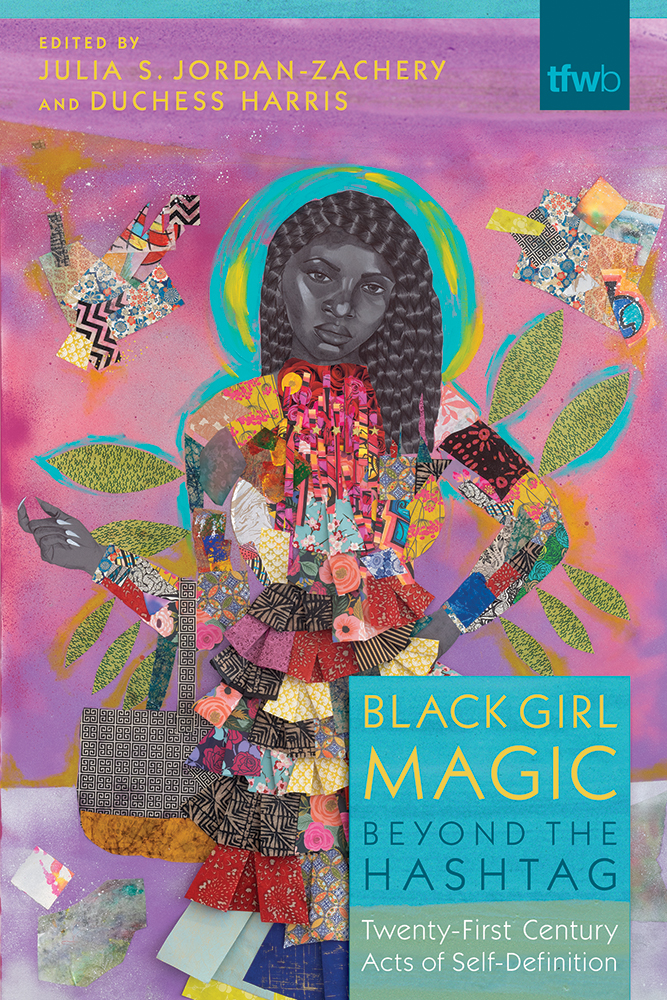
Black Girl Magic Beyond the Hashtag poses the question: how does the #BlackGirlMagic political and cultural movement translate outside of social media? The essays in this volume move us beyond the digital realm and reveals how Black girls and women foster community, counter invisibility, engage in restorative acts, and create spaces for freedom in the face of structural oppression.

Read an excerpt from Black Girl Magic Beyond the Hashtag here.

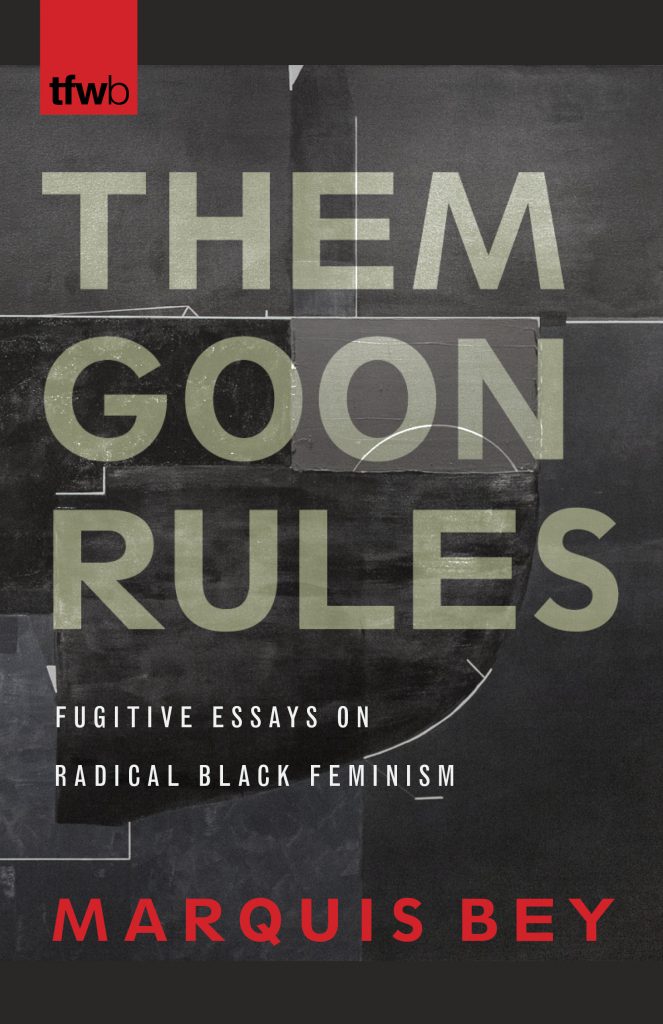
Marquis Bey’s debut essay collection unsettles normative ways of understanding Blackness, Black feminism, and queerness. Them Goon Rules is an un-rulebook, a long-form essayistic sermon that meditates on how Blackness and nonnormative gender impact and remix everything we claim to know.

Read an excerpt from Them Goon Rules here.

Them Goon Rules is our free e-book of the week from 6/3/2020 to 6/10/2020. Use the code AZBEY20 at checkout.

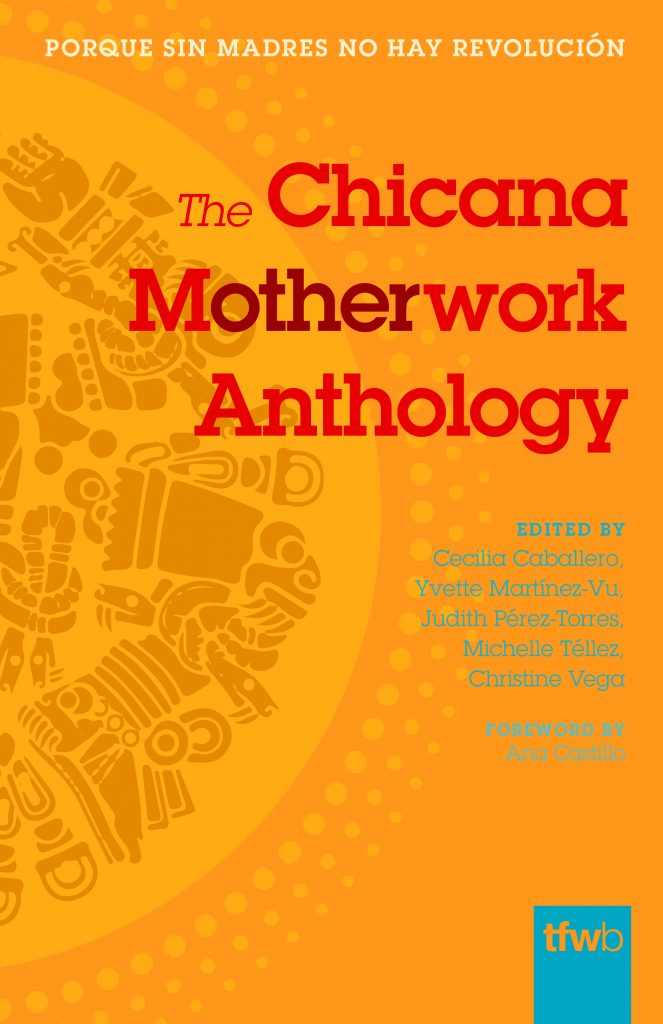
The Chicana M(other)work Anthology is a call to action for justice within and outside academia. This volume brings together emerging scholarship and testimonios by and about self-identified Chicana and Women of Color mother-scholars, activists, and allies who, using an intersectional lens, center mothering as transformative labor.

Read an excerpt from The Chicana M(other)work Anthology here.

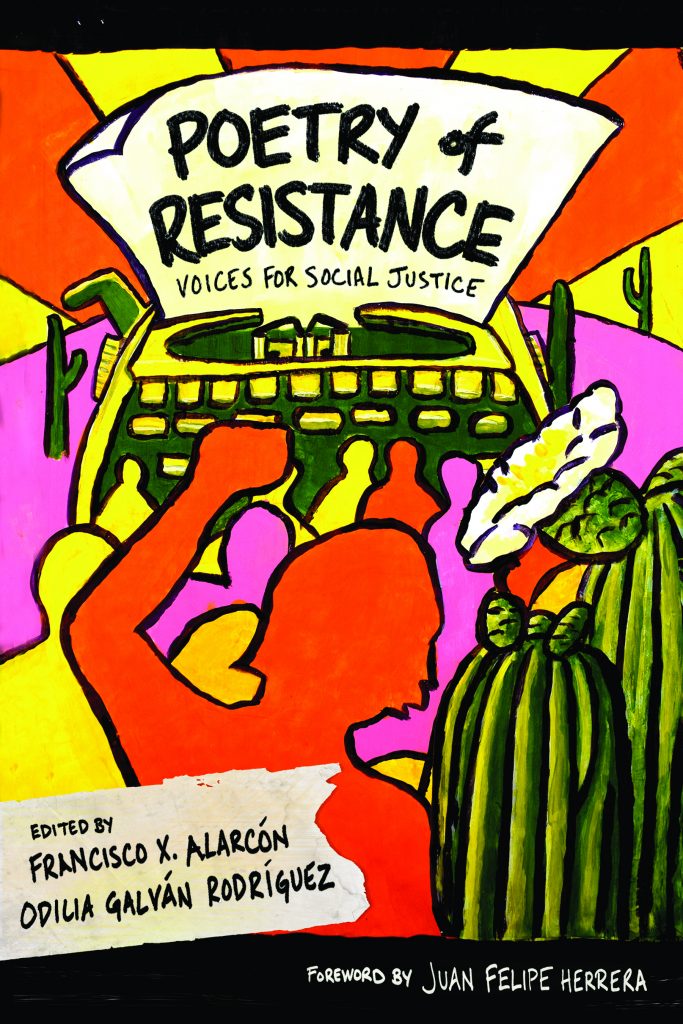
Poetry of Resistance offers a poetic call for tolerance, reflection, reconciliation, and healing. Bringing together more than eighty writers, the anthology powerfully articulates the need for change and the primacy of basic human rights.

Alarcón and co-editor the eco-poet and activist Odilia Galván Rodríguez selected the strongest work from the hundreds of entries to shape this anthology whose communal message—a plea for social change—will remain timeless and resonant.”—NBC News

We are proud to have published this award winning collection.

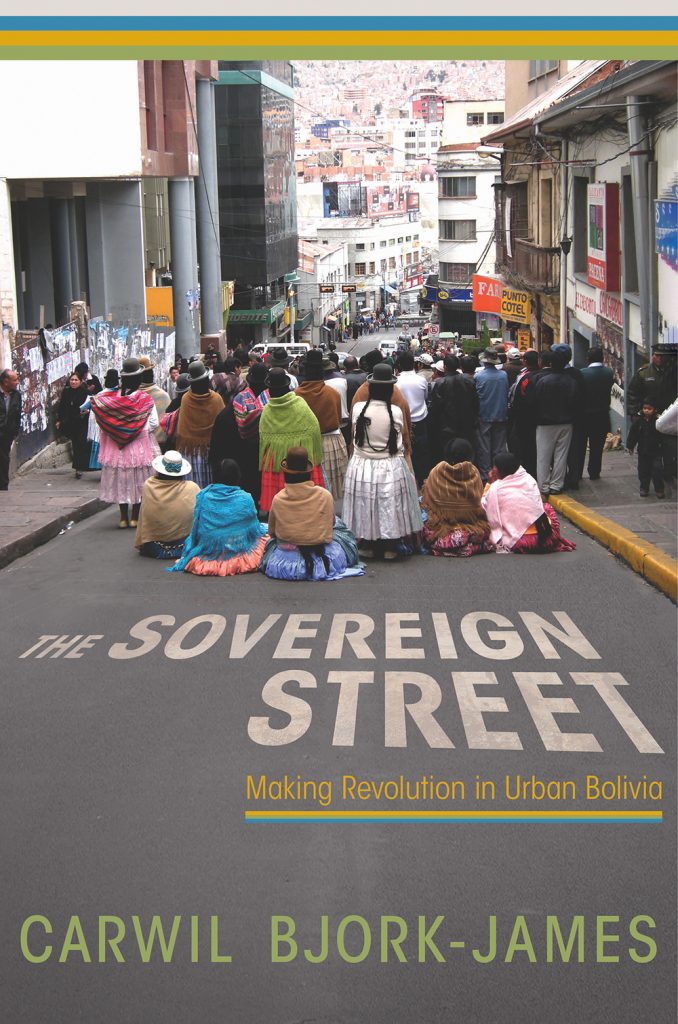
The Sovereign Street offers a rare look at political revolution as it happens, showing how mass street protest can change national political life.  It documents a critical period in twenty-first century Bolivia, when small-town protests made headlines worldwide, where a generation of pro-globalization policies were called into question, and where the indigenous majority stepped into government power for the first time in five centuries.

Listen to a podcast interview with author Carwil Bjork-James here.

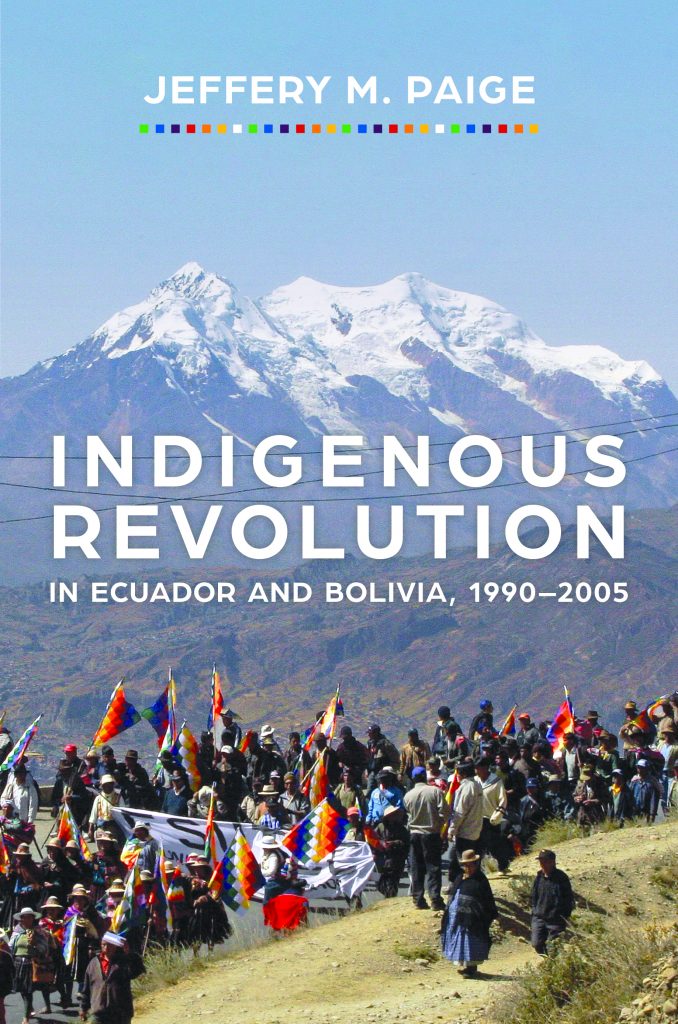
In the fifteen-year span from 1990 to 2005 uprisings of the indigenous peoples of Ecuador and Bolivia changed their societies forever. The combination of mass mobilization, elections, and indigenous socialism created a new form of twenty-first-century revolution that applies to cultures far beyond the Andes. In Indigenous Revolution in Ecuador and Bolivia, 1990-2005, Jeffrey M. Paige’s interviews present the powerful personal experiences and emotional intensity of the revolutionary leadership.

The early 1960s are remembered for the emergence of new radical movements. One such protest movement rose in the Mexican state of Chihuahua. With large timbering companies moving in on the forested sierra highlands, campesinos and rancheros did not sit by as their lands and livelihoods were threatened. Agrarian Revolt in the Sierra of Chihuahua, 1959-1965 is the story of how they organized and demanded agrarian rights—ultimately with deadly consequences.

This is a testimonio, a historia profoundo of the culture of extralegal violence against the Red-Black-Brown communities in the United States that operates with impunity. Framed by Roberto Cintli Rodríguez’s personal testimony of police violence, Yolqui, a Warrior Summoned from the Spirit World is a clarion call to end that violence and those philosophies that permit such violence to flourish.

Read an excerpt from Yolqui, a Warrior Summoned from the Spirit World here.

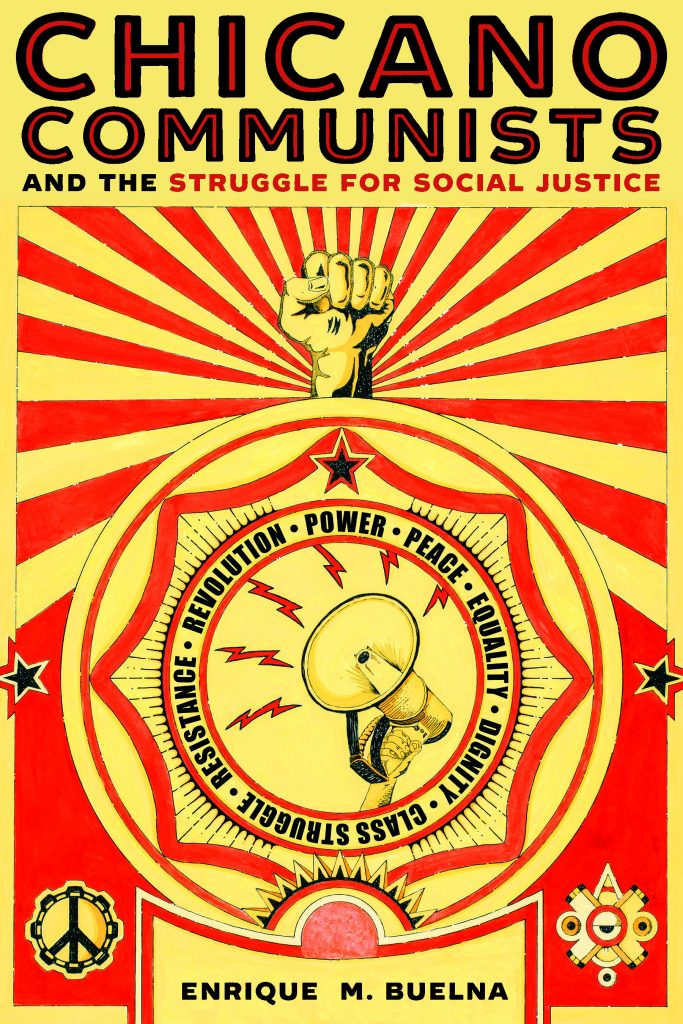
Chicano Communists and the Struggle for Social Justice traces the early roots of the Chicano Movement. It follows the thread of radical activism of the 1930s and 1940s to today, showing the depth of its influence on Mexican Americans struggling to achieve social justice and equality. 

Don’t forget, all of our e-books are 40% off right now. Use the code AZEBOOK40 at checkout.

AUPresses Statement on Equity and Anti-Racism

June 3, 2020

The Association of University Presses, of which the University of Arizona Press is a member, recently released this statement on equity and anti-racism. This statement was originally proposed and drafted by the organization’s 2017-2018 Diversity & Inclusion Task Force. The Equity, Justice, and Inclusion Committee established in 2019 took the statement through a process of peer review and revision. The AUPresses Board of Directors, of which University of Arizona Press Director Kathryn Conrad currently serves as president, approved the statement in March 2020. 

The Association of University Presses and its members aspire to hold justice, equity, diversity, and inclusion as values that guide our policies, practices, and publications. Upholding these values requires introspection, honesty, and reform of our current practices, the interests they serve, and the people and perspectives they exclude.

Through the work that we publish, university presses have helped to document the histories of institutions in the United States and elsewhere. This scholarship shows that most colleges and universities were built through the exploitation of people of color and established as white and male-only institutions, on land from which indigenous peoples were and continue to be displaced. The racist and exploitative practices that shaped this history remain embedded, even within institutions that work to study and critique that history. Currently, within universities and presses, systems that perpetuate bias, inequalities, and white supremacy go unquestioned and unchecked; in this way, they are perpetuated.

Please go here to read the statement in its entirety.

Free E-Book of the Week: Them Goon Rules

June 3, 2020

For this week’s free e-Book of the Week, we’re drawing attention to our exceptional works in social justice, offering Marquis Bey’s Them Goon Rules for free download from our website.  

A series of essays that reads like a critical memoir, this work queries the function and implications of politicized Blackness, Black feminism, and queerness. Bey binds together his personal experiences with social justice work at the New York–based Audre Lorde Project, growing up in Philly, and rigorous explorations of the iconoclasm of theorists of Black studies and Black feminism. Bey’s voice recalibrates itself, creating a collection that tarries in both academic and nonacademic realms.

Download here using code AZBEY20. Available until 6/10/2020.

“Weaving pop culture, rap, literary analysis, politics, and anger, Bey challenges readers to think of the intersectionality of gender, race, and politics in a different way.”—CHOICE

“Marquis Bey has gifted us with more than a collection of essays about Blackness, feminism, and queerness—it is a tome for and with the ‘ontologically criminalized.’ Bey demonstrates a distinctive radical vulnerability that can only be the result of working in and through a Black queer feminist lens. Unapologetically, this text dances, bends, moves, breaks open and through language—an elaborated nah! There is powerful poetry here asking that we, scholars who believe in freedom, interrogate our own methods and motives again and again. This book is courageous as it dwells, a break in the break. A must-read for any scholar, poet, or (non)human seeking the spectacular possibility of taking flight.” —Kai M. Green, Assistant Professor of Women’s, Gender, and Sexuality Studies at Williams College

“Bey challenges those of us who are committed to Black justice to approach every day with the force of revolution. By refiguring Black freedom-making in this way, we are able not only to ‘steal life back’ from a white fickle normativity but also to enwrap that life in the promise of escape.”—Hashim Pipkin, The Opportunity Network

Them Goon Rules is an exciting collection of essays—brimming with insight, inspiration, love, and rage, the book leads readers through an urgent set of questions about the body, identity, race, place, sex, Blackness, subversion, and gender. Offering what Bey at one point calls a ‘fugitive praxis,’ this book believes in transformation and shows us how it is done! Brilliant!”—Jack Halberstam, author of Trans*: A Quick and Quirky Guide to Gender Variance

Learn more about the book

Strong’s Book on Early Whalemen Receives Some New England Love

May 22, 2020

Big thanks to The East Hampton Star and Richard Barons for the review of University of Arizona Press author John A. Strong‘s America’s Early Whalemen: Indian Shore Whalers on Long Island, 1650–1750.

You can read the entire review here.

When Strong began teaching at Long Island University in 1964, he found little mention of the local Indigenous people in history books. The Shinnecocks and the neighboring tribes of Unkechaugs and Montauketts were treated as background figures for the celebratory narrative of the “heroic” English settlers. America’s Early Whalemen highlights the important contributions of Native peoples to colonial America.

From the review:

The world of the South and North Forks’ native people changed forever with the permanent arrival of the English in 1639, when Lion Gardiner bought the island soon to bear his name. But nothing prepared them for the broken floodgate, when in the next year there were two sizable settlements on the East End, in Southold and Southampton. By 1645, a group of Southampton residents decamped farther east to found East Hampton. The rest of Mr. Strong’s book is a look at this clash of cultures.

From reading the town records of Southampton and East Hampton, the author agrees with the historian David Goddard, who realized that Southampton’s Puritan pioneers, led by Edward Howell, John Cooper Sr., Daniel How, and Thomas Halsey, were more interested in improving their economic status than in religious piety. There were disputes about ownership of drift whales, so in 1644 Southampton drew up an ordinance that formed four wards, with 11 persons in each. By lot two of each ward were employed in cutting up the whale, and for their work they would receive a double share. The ordinance goes on to describe who gets the rest of the shares, on down to a resident and his child or servant. Such ordinances changed with new arrivals and departures. The English were in charge, but most of the work force was native.

University of Arizona Press Announces New Partnership With The Academy of American Poets

May 21, 2020

The University of Arizona Press is thrilled to announce a new partnership with the Academy of American Poets.

Beginning in 2020, recipients of the Academy of American Poets’ Ambroggio Prize will have their winning manuscript published in Spanish with the English translation by the University of Arizona Press, a nationally recognized publisher of award-winning works in Latinx and Indigenous literature. The Ambroggio Prize is a $1,000 publication award given for a book-length poetry manuscript originally written in Spanish and with an English translation.

This new partnership is part of the Academy of American Poets’ ongoing commitment to supporting American poets at all stages of their careers, fostering the appreciation of contemporary poetry, and collaborating with other poetry organizations and presses.

“The University of Arizona Press is one of the first publishers to spotlight Latinx literary voices. We are honored to be selected by the Academy of American Poets to publish annually the Ambroggio Prize-winner,” said Kathryn Conrad, director of the University of Arizona Press. “This prize celebrates the voices of many Latinx poets whose first language is Spanish, building on our mission to foreground voices that might otherwise not be heard.”

In addition to the 2020 Ambroggio Prize-winning manuscript, which will be announced in the fall of 2020 and published in the fall of 2021, the University of Arizona Press will publish the 2019 Ambroggio Prize-winning manuscript, Danzsirley/Dawn’s Earlyby Gloria Muñoz in the spring of 2020.

Established in 2017, the Ambroggio Prize is the only annual award of its kind in the United States that honors American poets whose first language is Spanish. It is one of the American Poets Prizes, a collection of eleven major awards given by the Academy of American Poets.

About the Academy of American Poets

The Academy of American Poets is the nation’s leading champion of poets and poetry with supporters in all fifty states. Founded in 1934, the organization produces Poets.org, the world’s largest publicly funded website for poets and poetry; organizes National Poetry Month; publishes the popular Poem-a-Day series and American Poets magazine; provides award-winning resources to K–12 educators, including the Teach This Poem series; administers the American Poets Prizes; hosts an annual series of poetry readings and special events; and coordinates a national Poetry Coalition working together to promote the value poets bring to our culture. Through its prize program, the organization annually awards more funds to individual poets than any other organization, giving a total of $1,250,000 to more than 200 poets at various stages of their careers. This year, in response to the global health crisis, the Academy launched the #ShelterInPoems initiative, inviting members of the public to select poems of comfort and courage from its online collection to share with others on social media. The initiative culminated in the organization’s first-ever virtual reading, which was watched more than 25,000 times by viewers in more than 40 countries around the world. The Academy is also one of seven national organizations that comprise Artist Relief, a multidisciplinary coalition of arts grantmakers and a consortium of foundations working to provide resources and funding to the country’s individual poets, writers, and artists who are impacted by the ongoing Covid-19 pandemic.

About the University of Arizona Press

The University of Arizona Press is nationally recognized for its commitment to publishing the award-winning works of emerging and established voices in Latinx and Indigenous literature, as well as groundbreaking scholarship in Latinx and Indigenous studies. The Camino del Sol series has cultivated an admirable and sizeable list of distinguished contemporary authors, including Richard Blanco, Vicki Vértiz, Juan Felipe Herrera, Carmen Giménez Smith, Francisco X. Alarcon, Emmy Pérez, and Luís Alberto Urrea. The Sun Tracks series focuses exclusively on the creative works of Native American artists, such as Joy Harjo, N. Scott Momaday, Simon J. Ortiz, Casandra López, Santee Frazier, dg nanouk okpik and Luci Tapahonso.

Kafka In A Skirt: ‘Brimming With Verve And Wisdom’

May 21, 2020

Chicanx studies professor, writer and visual artist Maceo Montoyarecently penned a review of University of Arizona Press author Daniel Chacón‘s short story collection, Kafka in a Skirt: Stories from the Wall.

The review, published in the New York Journal of Books, captures Chacón’s literary landscape that pushes Chicanx literature to a bigger and ever-evolving universe.

https://www.nyjournalofbooks.com/book-review/kafka-skirt-storiesYou can read the entire review here.

Chacón has no qualms about identifying as a Chicano writer. In “The Hidden Order of Things,” he offers us a path to contextualize his work: “This is a work of Chicano literature. Most readers will know that before they buy the book or before they open it, and Chicano literature is one of the fibers of the Latinx literary fabric.”

At the same time, Chacón has created a universe all his own. Beginning with Unending Rooms: Stories (Black Lawrence Press, 2008) and Hotel Juarez: Stories, Rooms, and Loops (Arte Público Press, 2013), Chacón has refused any boundaries on what Chicanx fiction should look like. Yes, he’s interested in identity and his stories explore what it means to straddle cultures, nations, languages—all very Chicanx themes—but he pushes these concepts further, beyond the limiting dichotomy of Mexico and the U.S., Spanish and English, brown and white.

Free E-Book of the Week: Mexico in Verse

May 20, 2020

For this week’s free e-Book of the Week, we’re drawing attention to our exceptional works in Latin American studies by offering Mexico in Verse: A History of Music, Rhyme, and Power for free download from our website.  

Focusing on modern Mexico, from 1840 to the 1980s, this volume examines the cultural venues in which people articulated their understanding of the social, political, and economic change they witnessed taking place during times of tremendous upheaval, such as the Mexican-American War, the Porfiriato, and the Mexican Revolution. The words of diverse peoples—people of the street, of the field, of the cantinas—reveal the development of the modern nation. Editors Neufeld and Matthews have chosen sources so far unexplored, showing the ways that individuals interpreted—whether resisting or reinforcing—official narratives about formative historical moments.

Download from our online shopping cart here. Available until 5/28/2020. Discount code is AZVERSE20.  

“Rich in historical data and thoughts about pursuing alternative interpretations of popular lyrical expressions.”—Choice

Learn more about the book

Mexico in Verse: Contents
Foreword by William H. Beezley
Acknowledgments

Introduction: Mexico in Verse
1. Sister at War: Mexican Women’s Poetry and the U.S.-Mexican War
Christopher Conway

2. The Sly Mockeries of Military Men: Corridos and Poetry as Critical Voice for the Porfirian Army
Stephen Neufeld

3. The Track from Beyond the Grave: Challenges to Porfirian Policymaking in Popular Verse
Michael Matthews

4. “I’m Going to Write You a Letter”: Coplas, Love Letters, and Courtship Literacy
William French

5. Singing for Cristo Rey: Masculinity, Piety, and Dissent in Mexico’s Cristero Rebellion
Stephen J. C. Andes

6. El Niño Proletario: Jesús Sansón Flores and the New Revolutionary Redeemer, 1935–1938
Elena Jackson Albarrán

7. “That Mariachi Band and That Tequila”: Modernity, Identity, and Cultural Politics in Alcohol Songs of the Mexican Golden Age Cinema
Áurea Toxqui

8. Let Us Weep Among the Dust: Recycled Poems of 1968 and Operas of Earthquake
Amanda Ledwon

Conclusion
Contributors
Index

For Authors

The University of Arizona Press publishes the work of leading scholars from around the globe. Learn more about submitting a proposal, preparing your final manuscript, and publication.

Inquire

Requests

The University of Arizona Press is proud to share our books with readers, booksellers, media, librarians, scholars, and instructors. Join our email Newsletter. Request reprint licenses, information on subsidiary rights and translations, accessibility files, review copies, and desk and exam copies.

Request

Support the Press

Support a premier publisher of academic, regional, and literary works. We are committed to sharing past, present, and future works that reflect the special strengths of the University of Arizona and support its land-grant mission.

Give