Terrain.org Features Review of Valerie Martínez’s ‘Count’

August 18, 2022

Literary and arts magazine Terrain.org recently featured a review of Valarie Martínez’s book-length poem Count.

From the review:

Martínez’s brilliance, beyond her lyrical lines, is her querencia, her deep love of people and place, which moves us to a deep longing. Through the poet’s personal narration, science, and mythic story, we also understand even more deeply the drastic impacts of climate change.

… Can we also, in our own disintegrating world, find lasting balance and beauty? Through a powerful poetry both of sorrow and hope, Count helps us believe we can—if we are collective in our response. If we too have a deep love of people and place.

Read the entire review here.

‘Discovering Mars’ Explored and Praised

January 8, 2022

Discovering Mars: A History of Observation and Exploration of the Red Planet, by William Sheehan and Jim Bell, was recently featured on the Planetary Society’s Planetary Radio podcast, and reviewed by Leonard David’s Inside Outer Space.

From the Planetary Radio interview:

Mat Kaplan: I already shared what Bill Nye said about the book. Here’s a quote from our friend, Andy Chaikin, the author of the Man in the Moon. “Read and understand why we will never be done with Mars,” which is a short and sweet, I would say. Bill, I think you and I got our first small telescopes in the same mid-’60s year and we both immediately turned them toward the Red Planet. Did that begin your passion for Mars?

Bill Sheehan: Certainly did. I mean, Mars was the main act really back then as in many ways it still lives. So as a kid getting everything I could out of the branch library and all of the books being several years out of date. So the idea that Mars might still be inhabited even by intelligent beings had not completely been exorcized from our imagination. So I was a believer at the time in the canals of Mars and had hoped against hope that that might all pan out. I certainly remember looking at Mars through a small telescope, one of those department store telescopes that everybody pretty much says they’re worthless. But tell that to a kid of about 10 and seeing that little red disc up there, even though it was little bit bigger than a pin’s head, it still was infinitely evocative to the imagination. So, yeah, that was 1965, March 1965. That was the opposition I got started.

Mat Kaplan: Just about the time I got my little department store refractor and that belief, that wanting to believe in the canals of Mars and that we might just find somebody up there to welcome us. That is a theme that runs through this book, how belief sometimes got in the way almost… Well, right from the start of the science, of the actual facts about the planet Mars. Jim, do you also see that thread?

Jim Bell: Yeah, absolutely. And it really starts with Bill taking the historical perspective and part of this book is an update to Bill’s book from ’96, I want to say. Yeah.

Mat Kaplan: ’96. Right. The Planet Mars?

Jim Bell: The Planet Mars. Yeah. A lot has happened since then, of course, on the mission side, but a lot has happened on the historical side as well. Lots of research, lots of new photos and manuscripts uncovered, et cetera. And so yes, that thread of belief winds all the way through the historical side that Bill has researched so expertly and you know, it also runs through the spacecraft side. Right. We wanted to believe that the ALH84001 meteorite was loaded with Martian micro fossils. Some people want to believe there are human faces carved into the rocks of Mars. Right? Some people want to believe that we can do sample return in the next decade. Right? You know? And so yes, there’s scientific facts. Yes, there’s engineering reality, but yes, it’s also a very human endeavor, this exploration of Mars.

To listen to the entire interview, please visit here.

Space journalist Leonard David recently offered this praise and more on Discovering Mars:

“This epic and one-of-a-kind volume is best read with a mind in full-inquisitive mode and why our technologies have provided decade-after-decade of astounding and captivating reveals … and what awaits us.”

Read the entire review here.

Arizona Daily Star Includes ‘Famine Foods’ in Book Review Roundup

October 12, 2021

The Arizona Daily Star recently featured reviews of books by regional authors, including University of Arizona Press author Paul Minnis and his new book, Famine Foods: Plants We Eat to Survive.

From Helene Woodhams on Famine Foods:

“‘A starving man does not sniff his food.’ Paul E. Minnis, professor emeritus of Anthropology at the University of Oklahoma, prefaces this volume with an old Ukrainian adage that prepares the reader for an extensive survey of comestibles you hope you’ll never have to eat — but that you probably should be aware of all the same. As Minnis ably demonstrates, the threat of starvation is as close as the next political upheaval, severe water shortage, or climate catastrophe.”

Read all the book reviews here.

Orion Magazine Poetry Praises for Latinx Heritage Month

September 29, 2021

Orion Magazine’s poetry editor, Camille T. Dungy, featured four University of Arizona Press poetry collections in this month’s issue celebrating Latinx Heritage Month.

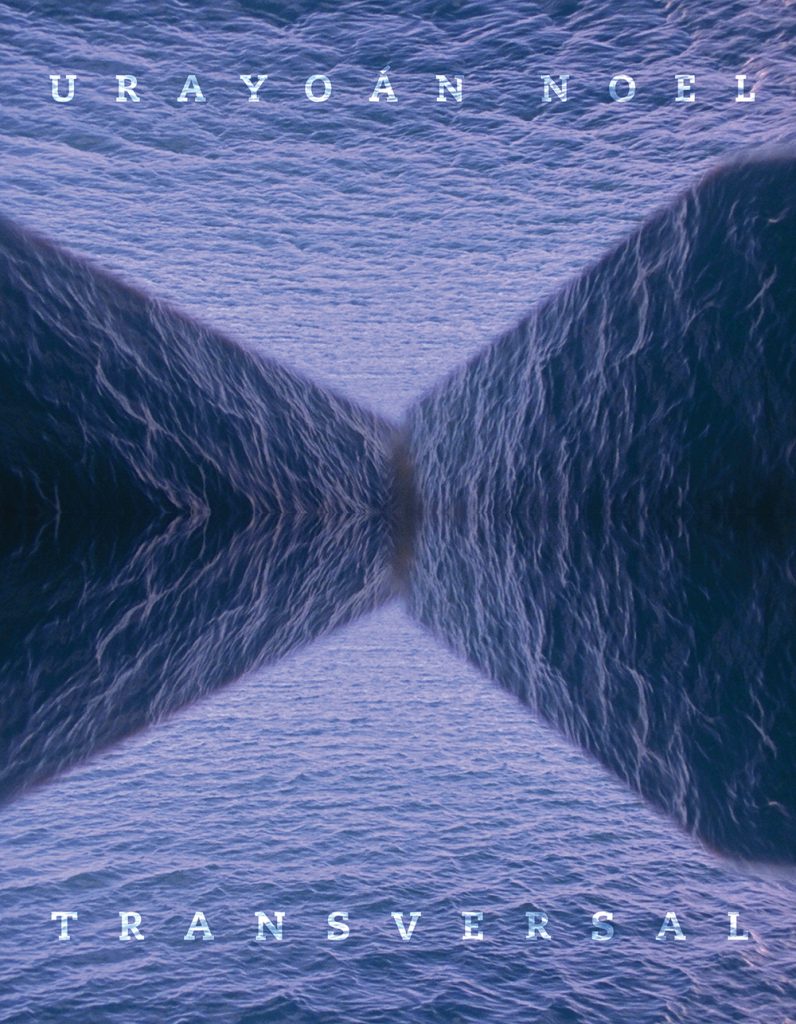
At the top of the review list is Urayoán Noel‘s Transversal, from our award-winning Camino del Sol series edited by Rigoberto González.

From Dungy: “That I am writing this mini-review only in English means I will leave out huge parts of what makes Transversal such a wonder and whopper to read. Moving fluidly between English, Spanish, Spanglish, and even more, this book uses language as a tool (read: monkey wrench; read: hammer; read: carabineer clip; read: steam engine; read: love).”

Dungy also reviewed Count by Valerie Martínez and x/ex/exis: poemas para la nación by Raquel Salas Rivera, the first recipient of the Academy of American Poets’ Ambroggio Prize.

Dungy invited other established poets to review other Latinx collections. Gloria Muñoz, author of Danzirly, an Academy of American Poets’ Ambroggio Prize winner, reviewed Mara Pastor‘s Deuda Natal, the most recent Ambroggio Prize recipient.

From Muñoz: “Deuda Natal calls us to carry the environmental disregard and abandon of Puerto Rico and of our entire planet. It is a loss we bundle and hold with care as we look into its face and wonder how and what if and what now? Pastor’s poems are maps to help us make sense of our past and future migrations. Feminism and environmentalism intersect on pages that assess our relationship to nature, materialism, hope, and ourselves as byproducts of history and society.”

To read all the recommendations, head here.

Savor the Southwest turns to ‘Famine Foods’ for Answers on Indigenous Survival in the Sonora Desert

June 24, 2021

In the Tucson blog, Savor the Southwest: Forage, Raise, Cook, University of Arizona Press author Carolyn Niethammer asks: When drought led to famine, what did people eat in our desert?

Niethammer’s recent book, A Desert Feast: Celebrating Tucson’s Culinary Heritage, covers more than 4,000 years of food history, from the hunter-gatherers, to the Early Agriculturalists to today’s farmers. However, to answer her question, the celebrated food writer turned to another University of Arizona author Paul Minnis and his recent title, Famine Foods: Plants We Eat to Survive.

In Famine Foods, Minnis focuses on the myriad plants that have sustained human populations throughout the course of history, unveiling those that people have consumed, and often still consume, to avoid starvation. This book offers a fascinating overview of famine foods—how they are used, who uses them, and, perhaps most importantly, why they may be critical to sustain human life in the future.

From Niethammer’s review:

“Another way Native Americans faced food shortages is what Minnis calls “social banking.” In 1939, the town chief of Acoma, a New Mexico Pueblo said, “The people of Zuni are coming. They have no crops. They are coming to work for us. Some day we might have to go to them when our crops are small.” The Tohono O’odham when facing food shortages would sometimes go visit their cousins the Akimel O’odham who had an easier time growing crops with the Gila River water. Because there were no draft animals, it was easier to move the people to the food rather than try to transport large quantities of food.”

Read the full review here.

Publisher’s Weekly Reviews ‘The Diné Reader’

April 27, 2021

Publisher’s Weekly, an international news platform for book publishing and bookselling, recently reviewed The Diné Reader: An Anthology of Navajo Literature.

This seminal anthology is unprecedented. It showcases the breadth, depth, and diversity of Diné creative artists and their poetry, fiction, and nonfiction prose. The Diné Reader brings together writers who offer perspectives that span generations and perspectives on life and Diné history. The collected works display a rich variety of and creativity in themes: home and history; contemporary concerns about identity, historical trauma, and loss of language; and economic and environmental inequalities.

From Publisher’s Weekly:

“Navajo artist and writer Esther Belin and her coeditors compile a marvelously comprehensive anthology of Navajo literature, comprising a mix of familiar authors and bright new voices. Readers will come away with a sense of the tremendous diversity in a seemingly small corner of the Native literary world.”

Read the entire review here.

Tucson Daily Praises Southern Arizona Books

February 28, 2021

In a round-up of books by Southern Arizona authors or about Southern Arizona, the Arizona Daily Star included two University of Arizona Press books—Beyond Earth’s Edge: The Poetry of Spaceflight, and The Arizona Diary of Lily Frémont, 1878–1881.

Beyond Earth’s Edge is a groundbreaking anthology of poetry centered on space that features a beautiful line-up of poets, such as Robert Hayden, Rae Armantrout, N. Scott Momaday, Adrienne Rich, Tracy K. Smith, Ray Bradbury, May Swenson, Pablo Neruda, and many other engaging poetic voices. This book was edited by Julie Swarstad JohnsonChristopher Cokinos.

The Arizona Diary of Lily Frémont, edited by  Mary Lee Spence,  is a rich detail, and day-by-day narrative of Territorial life in Arizona. For students of western history, Lily Frémont’s diary provides a wealth of fresh information on frontier politics, mining, army life, social customs, and ethnicity. The book was recently released as a paperback.

Read the Star reviews here.

Publisher’s Weekly Reviews Mihesuah’s Supernatural Mystery ‘Hatak Witches’

February 24, 2021

Publisher’s Weekly, an international news platform for book publishing and bookselling, recently reviewed Devon A. Mihesuah’s new mystery novel, The Hatak Witches.

Set to publish in late April 2021, The Hatak Witches follows Detective Monique Blue Hawk in Norman, Oklahoma. Blending tribal beliefs and myths into a modern context, the book continues the storyline of Choctaw cosmology and cultural survival that are prominent in Mihesuah’s award-winning novel, The Roads of My Relations.

From Publisher’s Weekly:

“As informative as it is gripping, this supernatural mystery from Mihesuah—the 88th installment of Sun Tracks: An American Indian Literary Series—is rooted in Choctaw cosmology and contemporary Native American life. … The author’s ability to immerse the reader in the lives of her characters is prodigious, making the social realism of Monique’s life as fascinating as the supernatural elements. … Readers looking for intelligent, diverse supernatural fiction will be captivated.”—Publishers Weekly

Read the entire review here.

Rosa’s Einstein Reviewed in The Adroit Journal

September 9, 2019

Rosa’s Einstein is a Latinx retelling of the Brother’s Grimm’s Snow-White and Rose-Red, reevaluating border, identity, and immigration narratives through the unlikely amalgamation of physics and fairy tale. Using details both from Einstein’s known life and from quantum physics, Jennifer Givhan crafts a circus-like landscape of childhood trauma and survival.

Below, read an excerpt from a review of Rosa’s Einstein in the Adroit Journal, written by poet and essayist Allison Bird Treacy.

Every culture has traditional stories, and every family has its lore. We depend on these narratives to make meaning, but there are times in our lives when we call on those stories with a greater desperation, particularly when faced with tragedy. This is the state of affairs in Jennifer Givhan’s new poetry collection, Rosa’s Einstein; disaster looms in the air in the form of the atomic bomb, but also in the form of more intimate losses. What’s truly magical about this collection is how Givhan brings the science underlying nuclear technology into the magical world of myth and fairytale. What her approach uncovers is their mutual uncertainty, what Albert Einstein might have called “spooky action at a distance”— a phrase he used to describe that which is real, but unbelievable. In Rosa’s Einstein, what’s imagined is more believable, more present in many ways. than what we name reality.

To enter the strange alchemy of Rosa’s Einstein, we could start in any number of places, but perhaps the most useful place to begin is with Los Alamos, with the Trinity Project and the invention of the atomic bomb. Its violence haunts these pages, and in “Field Trip: Lieserl Blanketed in Fallout, or Nieve,” Rosa, Givhan’s reinvention of Rose Red and Lieserl, Einstein’s missing daughter, venture into the mythos of that day:

At the nuclear museum we watched the Trinity test
the day the sun rose twice:

Nieve appeared in the mushroom cloud
above our rancho.

That's what I called her. I renamed her
Nieve, my Good sister, favored one.

Sometimes, we pretend the extra limbs
are here to comfort us, snow-white

branches growing from our sheets
like snowflake arms in sixfold radial symmetry.

Nothing's so fragile, so perfectly shaped, as melting.

Read more of this review here.

Jennifer Givhan is an NEA Fellowship recipient and author of three previous collections of poetry. She teaches English at Western New Mexico University.

The Real Horse Discussed in West Branch

August 15, 2019

A sustained address to the poet’s daughter, The Real Horse takes its cues from the child’s unapologetic disregard for things as they are, calling forth the adult world as accountable for its flaws and as an occasion for imagining otherwise. Farid Matuk‘s interrogations of form cut a path through the tangle of a daughter’s position as a natural-born female citizen of the “First World” and of the poet’s position as a once-undocumented immigrant of mixed ethnicity. These luminously multifaceted poem sequences cast their lot with the lyric voice, trusting it to hold a space where we might follow the child’s ongoing revolution against the patrimony of selfhood and citizenship.

In the following excerpt, author Hilary Plum and poet Zach Savich dive deeply into The Real Horse, and discuss their thoughts and questions which arise from the text. You can find this review and discussion on West Branch, a thrice-yearly magazine of poetry, fiction, essays, and reviews.

A hero’s pretty feet on her legs white hose skin exposed in sumptuous folds bound as freight on the back of this real horse running into its own outline.”

The questions of authenticity, representation (whose, of whom?), and legibility (to whom? saying what?) are the weighty and beautiful burden of this book, entangled ever with the cruel realities and constructions of race (the phrase “white enough” accumulates in devastating refrain). The couplet quoted above describes the stage actor Adah Menken (1835-1868), whose racial identity was a source of speculation and her own self-invention. Matuk considers her famous role as the “Cossack hero, Ivan Mazeppa”: “Each night on stage she covered her skin, though not her shape, in a pinkish white body stocking to play the culminating scene in which Mazeppa is stripped nude and bound, against a scrolling panorama, to a runaway horse.” There’s a real horse and fake nudity and flamboyantly performed race, of unknown “authenticity”; there’s a fake land in real motion. There are flesh and presence and life in their quickness, elusive amid inescapable representation and discursive force. Performances (Menken’s act; Homelands truest graffiti) may overflow the constraints of their stages, may claim sites of resistance, of “freedom, neither public nor private,” at least for a scrolling moment.

“Where does opposition go after it frames our beautiful camaraderie?” Matuk asks in a letter to his daughter that prefaces the book. “You show me that even if the outlines of our circumstance burn without consequence, we can tend at once to the plain moment and to material things and to the projections they bear.” Both things and the “projections they bear”; both the real horse and its outline. This book forms hope somewhere between reality and representation, in the quick movement of that opposition’s going, the horizon it’s heading toward. Read more.

Poet Farid Matuk

Farid Matuk is the author of the poetry collections This Isa Nice Neighborhood and The Real Horse. Born in Peru to a Syrian mother and Peruvian father, Matuk lived in the U.S. variously as an undocumented person, a “legal” resident, and a “naturalized” citizen. Matuk’s work has been recognized most recently with a New Works grant from the Headlands Center for the Arts and a Holloway Visiting Professorship at University of California, Berkeley.

For Authors

The University of Arizona Press publishes the work of leading scholars from around the globe. Learn more about submitting a proposal, preparing your final manuscript, and publication.

Inquire

Requests

The University of Arizona Press is proud to share our books with readers, booksellers, media, librarians, scholars, and instructors. Join our email Newsletter. Request reprint licenses, information on subsidiary rights and translations, accessibility files, review copies, and desk and exam copies.

Request

Support the Press

Support a premier publisher of academic, regional, and literary works. We are committed to sharing past, present, and future works that reflect the special strengths of the University of Arizona and support its land-grant mission.

Give