Photos from Tim Z. Hernandez & Melani Martinez at Special Collections

October 3, 2024

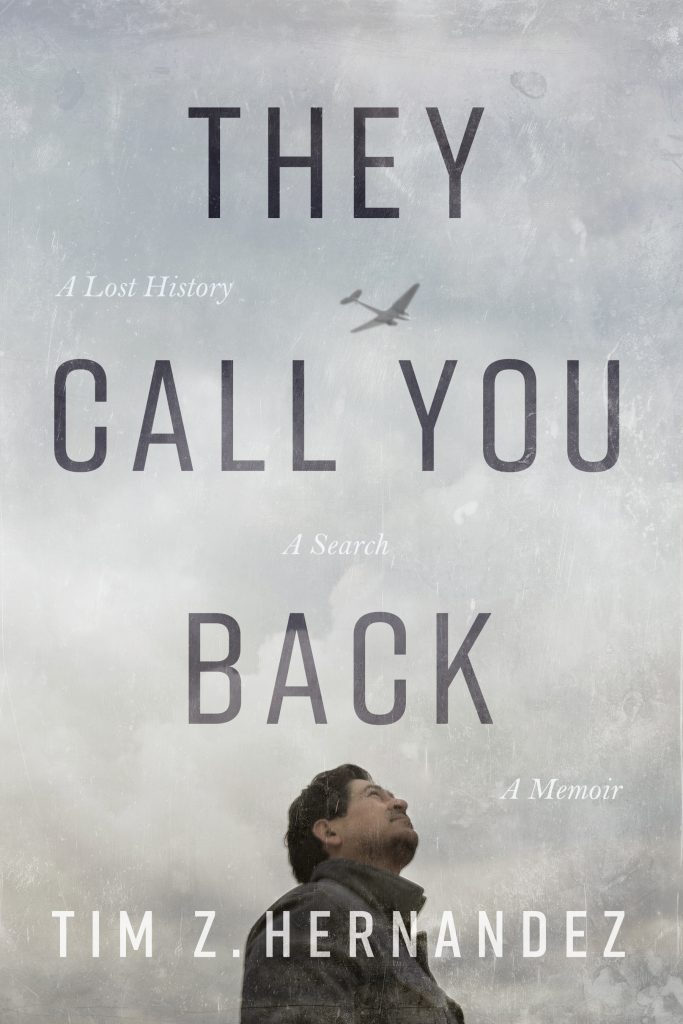
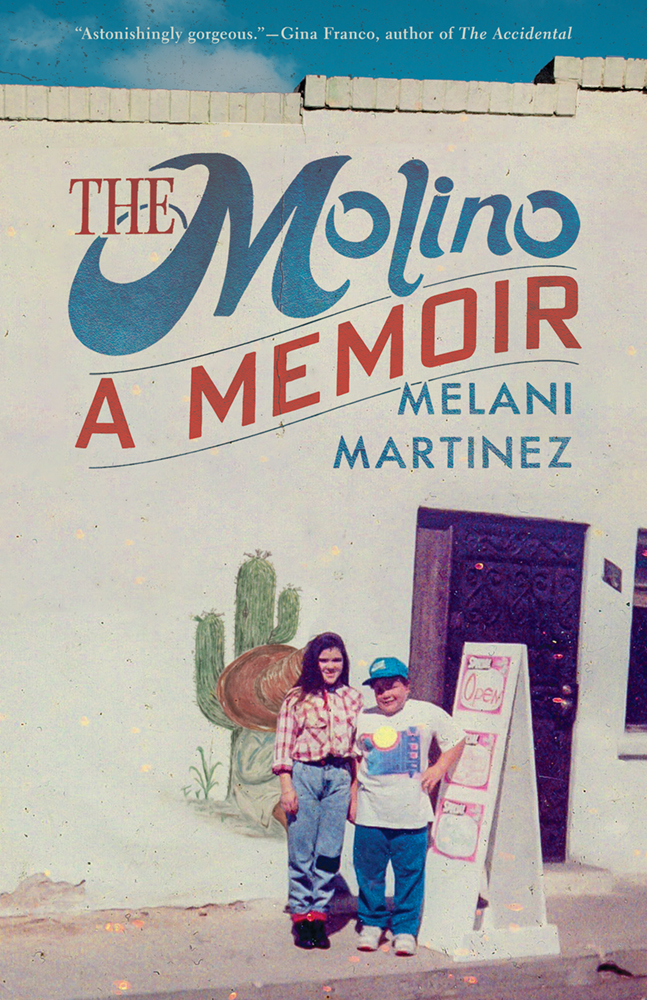
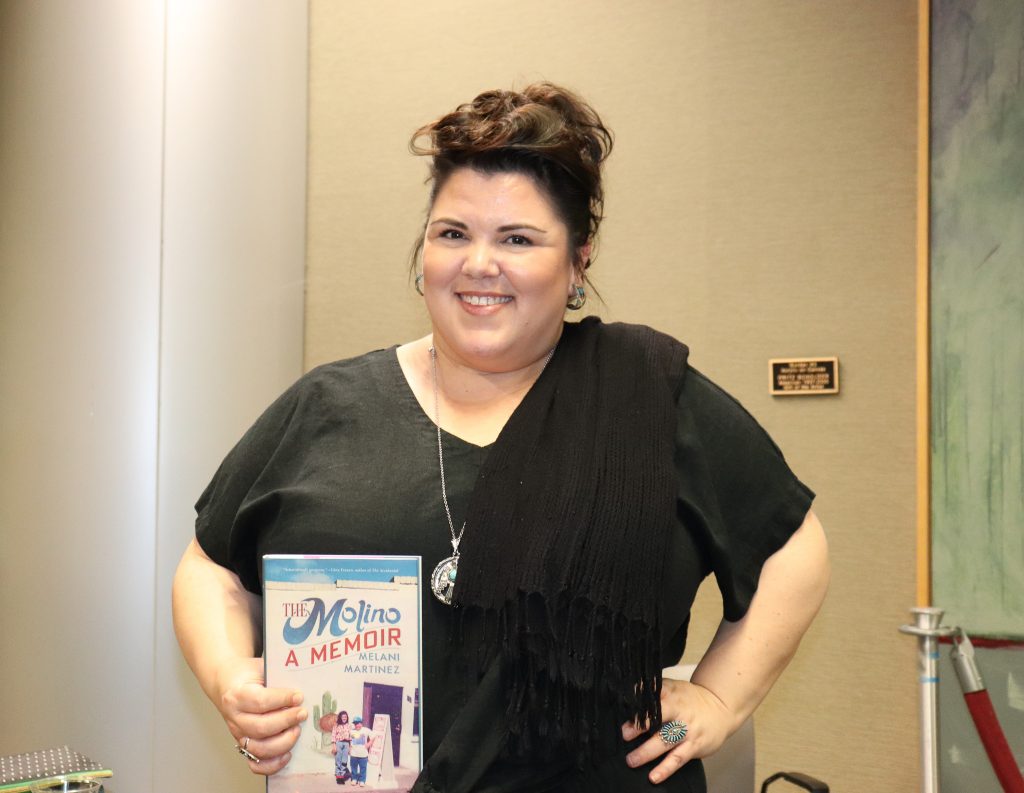
Thank you to everyone who came out Tuesday night for the incredible discussion between Tim Z. Hernandez, author of They Call You Back: A Lost History, A SearchA Memoir, and Melani (Mele) Martinez, author of The Molino: A Memoir.

Below, check out some photos from the event:

Head of Special Collections, Verónica Reyes-Escudero, introduces the authors and moderator.

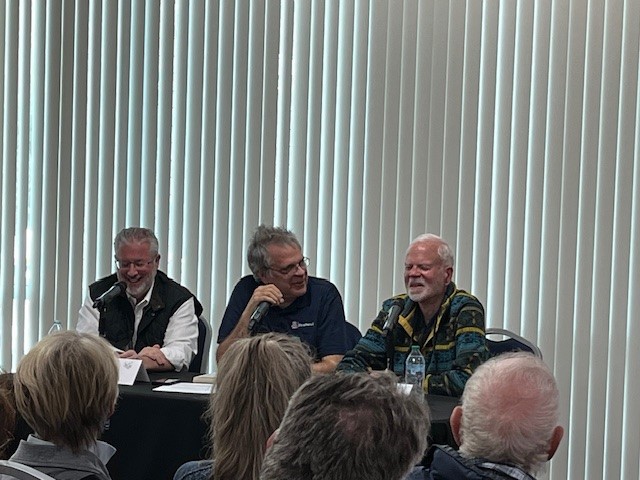
Hosted in the University of Arizona’s Special Collections reading room, our audience was treated to a fascinating conversation between Tim and Mele, which was moderated by Javier D. Duran, Professor of Latin-American and Border Studies at the Center for Latin American Studies and the founding director of the Confluencenter for Creative Inquiry under The Office of Research, Innovation, & Impact at the University of Arizona.

Javier D. Duran moderates a fantastic conversation between the authors.
Melani Martinez shares about the context of The Molino.

The authors discussed their creative processes, the challenges of writing in the memoir genre, and the way their work is in conversation with traditions both within and beyond Latinx literature. Afterwards, attendees got to chat with the authors and get their books signed.

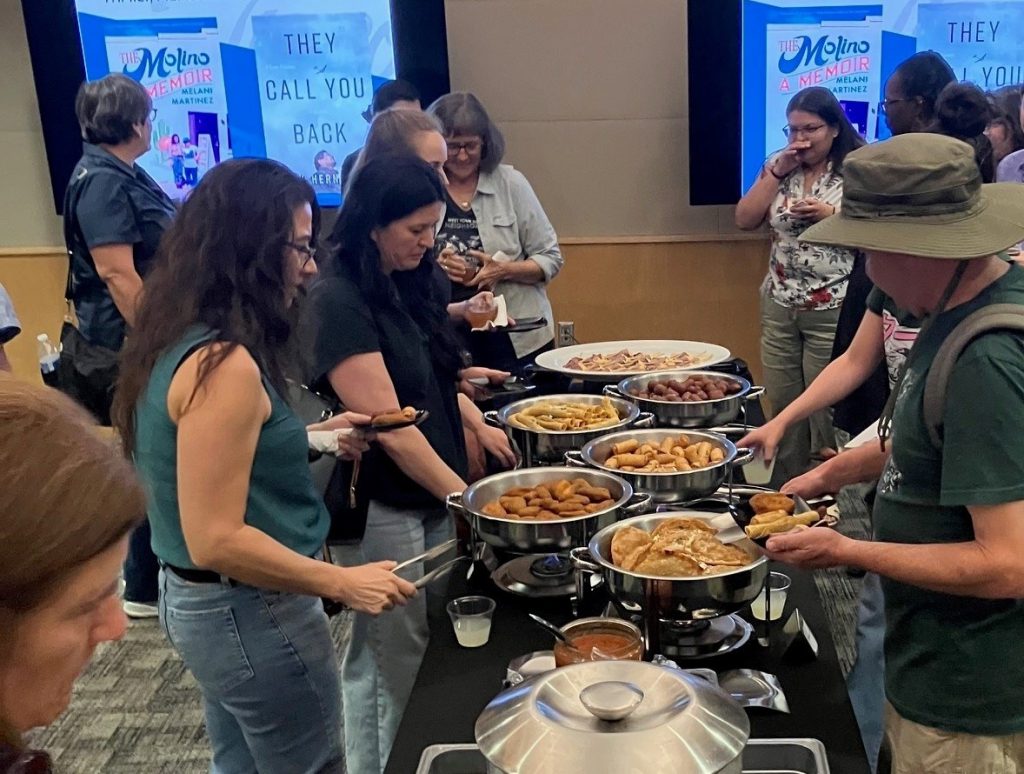
The audience enjoyed some tasty snacks after the reading!
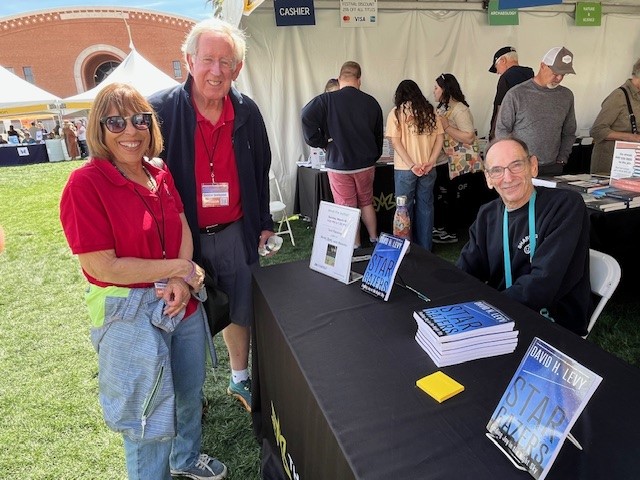
Both authors signed books and got to continue the conversation with the audience.
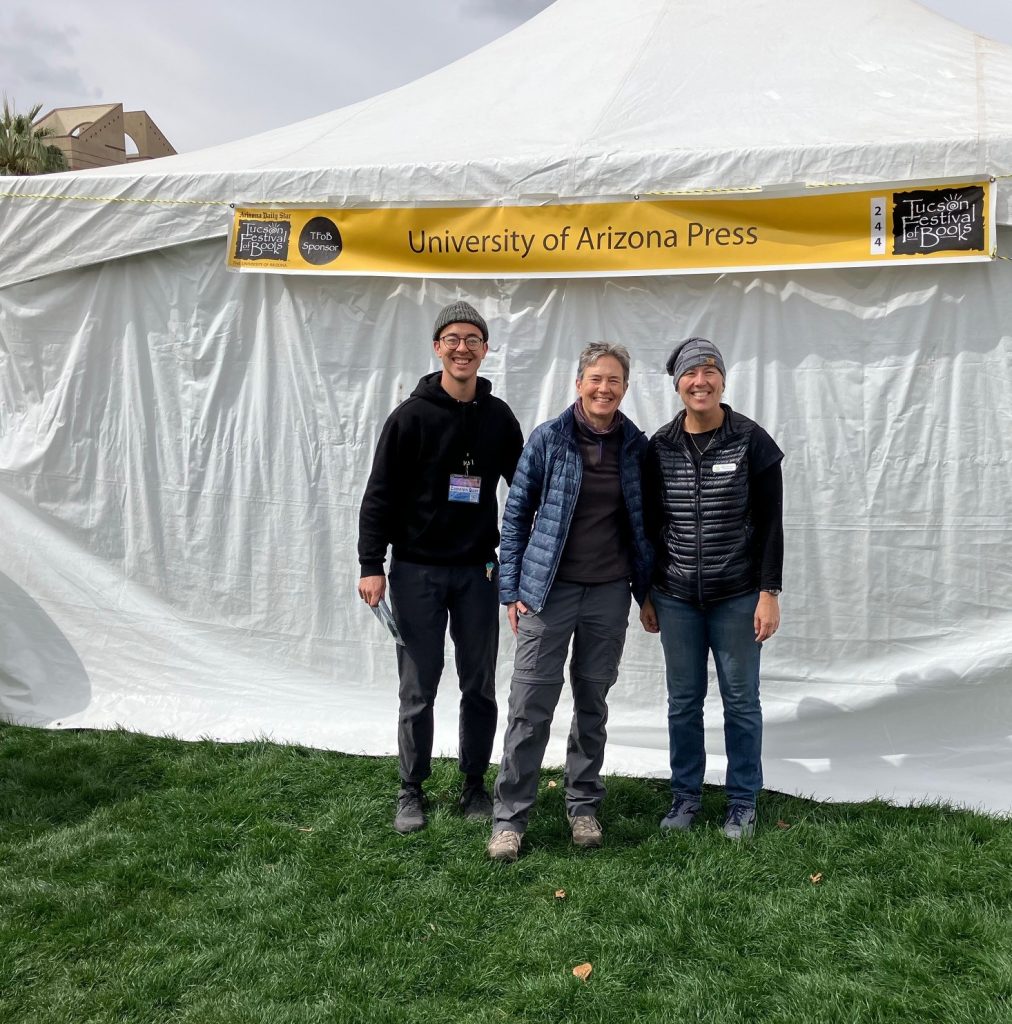
University of Arizona Press Editor-in-Chief, Kristen Buckles, talks with Melani Martinez before the event.
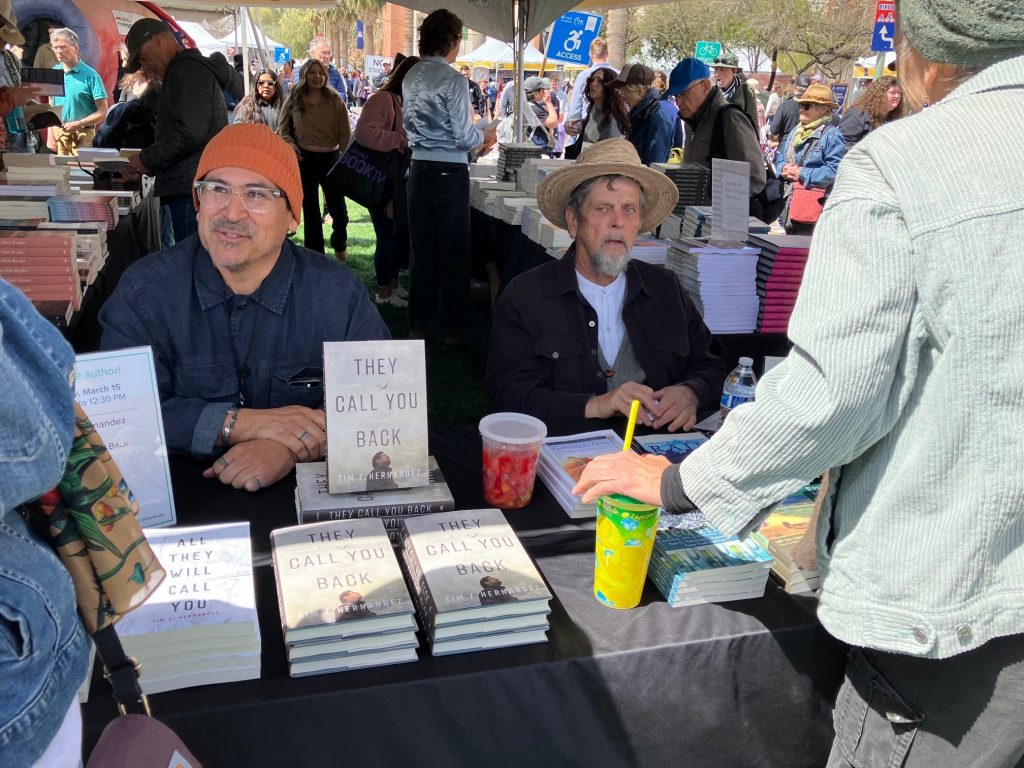
Tim Z. Hernandez and Melani Martinez at the book signing table.

Thank you to everyone for making this event truly special! Check out our website’s events page for information about the next opportunity to meet our wonderful authors.

About the books:

They Call You Back: A Lost History, A Search, A Memoir

A haunting, an obsession, a calling: Tim Z. Hernandez has been searching for people his whole life. Now, in this highly anticipated memoir, he takes us along on an investigative odyssey through personal and collective history to uncover the surprising conjunctions that bind our stories together.

Hernandez’s mission to find the families of the twenty-eight Mexicans who were killed in the 1948 plane wreck at Los Gatos Canyon formed the basis for his acclaimed documentary novel All They Will Call You, which the San Francisco Chronicle dubbed “a stunning piece of investigative journalism,” and the New York Times hailed as “painstaking detective work by a writer who is the descendant of farmworkers.”

In this riveting new work, Hernandez continues his search for the plane crash victims while also turning the lens on himself and his ancestral past, revealing the tumultuous and deeply intimate experiences that have fueled his investigations—a lifelong journey haunted by memory, addiction, generational trauma, and the spirit world.

They Call You Back is the true chronicle of one man’s obsession to restore dignity to an undignified chapter in America’s past, while at the same time making a case for why we must heal our personal wounds if we are ever to heal our political ones.
The Molino: A Memoir

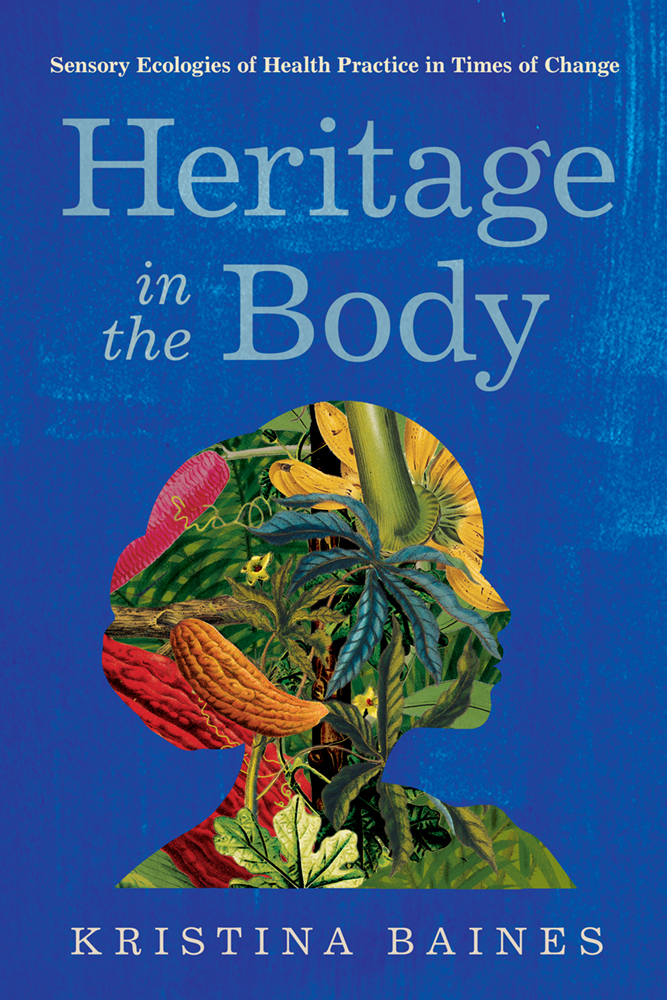
Set in one of Tucson’s first tamal and tortilla factories, The Molino is a hybrid memoir that reckons with one family’s loss of home, food, and faith.

Weaving together history, culture, and Mexican food traditions, Melani Martinez shares the story of her family’s life and work in the heart of their downtown eatery, El Rapido. Opened by Martinez’s great-grandfather, Aurelio Perez, in 1933, El Rapido served tamales and burritos to residents and visitors to Tucson’s historic Barrio Presidio for nearly seventy years. For the family, the factory that bound them together was known for the giant corn grinder churning behind the scenes—the molino. With clear eyes and warm humor, Martinez documents the work required to prepare food for others, and explores the heartbreaking aftermath of gentrification that forces the multigenerational family business to close its doors.

The Molino is also Martinez’s personal story—that of a young Tucsonense coming of age in the 1980s and ’90s. As a young woman she rejects the work in her father’s popular kitchen, but when the business closes, her world shifts and the family disbands. When she finds her way back home, the tortillería’s iconic mural provides a gateway into history and ruin, ancestry and sacrifice, industrial myth and artistic incarnation—revealing a sacred presence still alive in Tucson.

A must-read for foodies, history lovers, and anyone searching for spiritual truth in the desert, this is a story of belonging and transformation in the borderlands. 

Western Literature Association 2024: Discounts, New Books, and More

September 30, 2024

We hope to see you at the 2024 Western Literature Association meeting here in Tucson this week! We’ll have a vibrant selection of new and featured Indigenous, Latinx, and Southwestern literature titles available for sale at our table.

If you can’t attend this year, or if you need an extra copy of a book you discover at our table, we’re extending a special offer to everyone: use AZWLA24 for 35% off all titles until October 20, 2024.

We’re also excited to be hosting the BorderVisions series editors at our table on Friday, October 4th, 10-11 a.m. Stop by to learn about the most recent book in this series—or share your projects-in-progress about the U.S.-Mexico borderlands with the editors!

New & Featured Titles


A haunting, an obsession, a calling: Tim Z. Hernandez has been searching for people his whole life. Now, in this highly anticipated memoir following his acclaimed documentary novel, All They Will Call You, Hernandez takes us along on an investigative odyssey through personal and collective history to uncover the surprising conjunctions that bind our stories together. They Call You Back is the true chronicle of one man’s obsession to restore dignity to an undignified chapter in America’s past, while at the same time making a case for why we must heal our personal wounds if we are ever to heal our political ones.


Set in one of Tucson’s first tamal and tortilla factories, The Molino is a hybrid memoir that reckons with one family’s loss of home, food, and faith. Weaving together history, culture, and Mexican food traditions, Melani Martinez shares the story of her family’s life and work in the heart of their downtown eatery, El Rapido. With clear eyes and warm humor, Martinez documents the work required to prepare food for others, and explores the heartbreaking aftermath of gentrification that forces the multigenerational family business to close its doors. A must-read for foodies, history lovers, and anyone searching for spiritual truth in the desert, this is a story of belonging and transformation in the borderlands. 


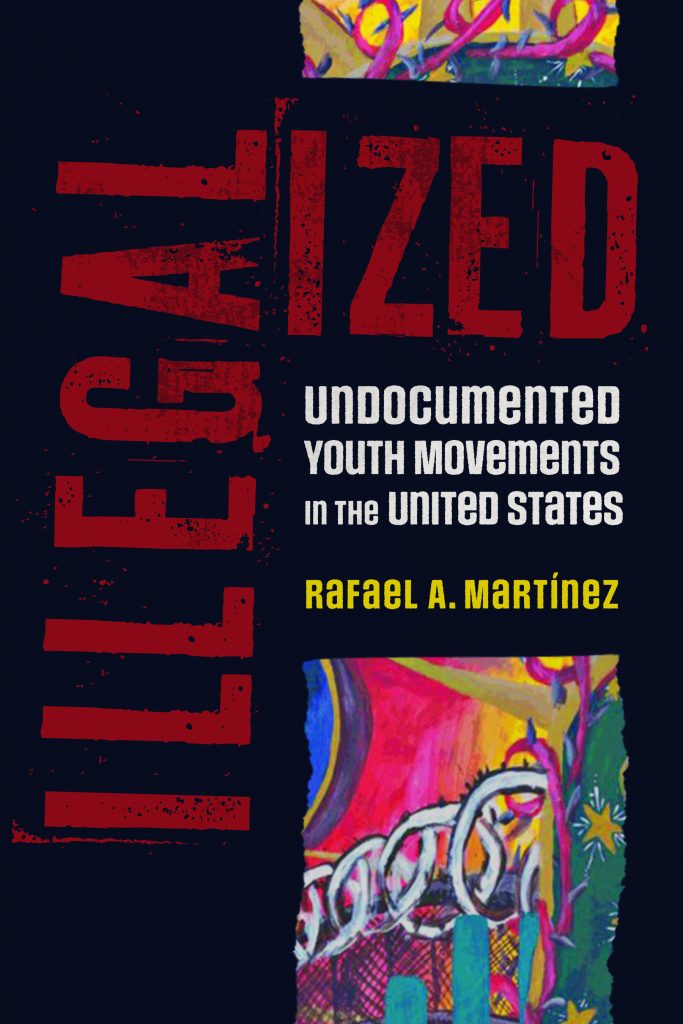
Illegalized

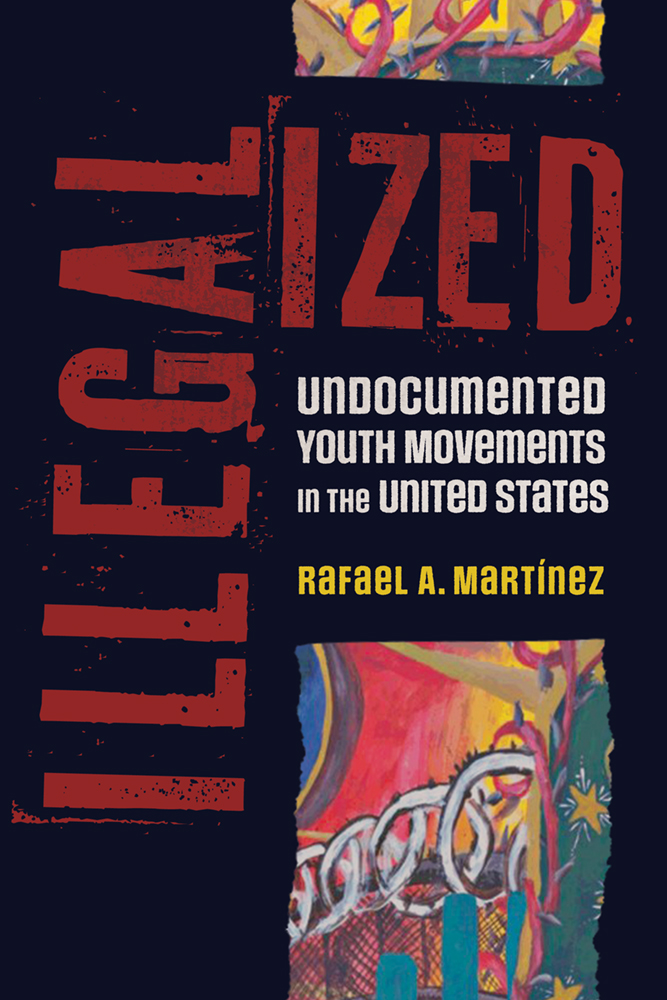
Illegalized: Undocumented Youth Movements in the United States takes readers on a journey through the history of the rise of undocumented youth social movements in the United States in the twenty-first century. The book follows the documentation trail of undocumented youth activists spanning over two decades of organizing. Each chapter carefully analyzes key organizing strategies used by undocumented youth to produce direct forms of activism that expose and critique repressive forms of state control and violence. This inquiry is particularly generative in relation to how immigrant bodies are erased, contained, and imagined as “aliens” or “illegal.” Rafael A Martínez, an undocu-scholar, intricately weaves his lived experience into this deeply insightful exploration.


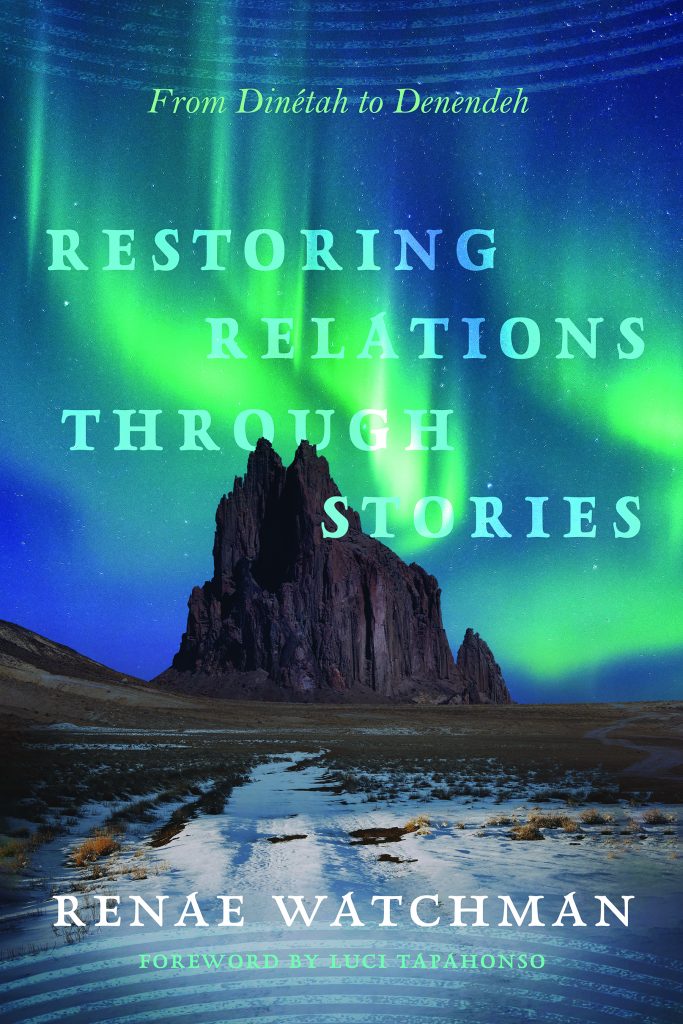
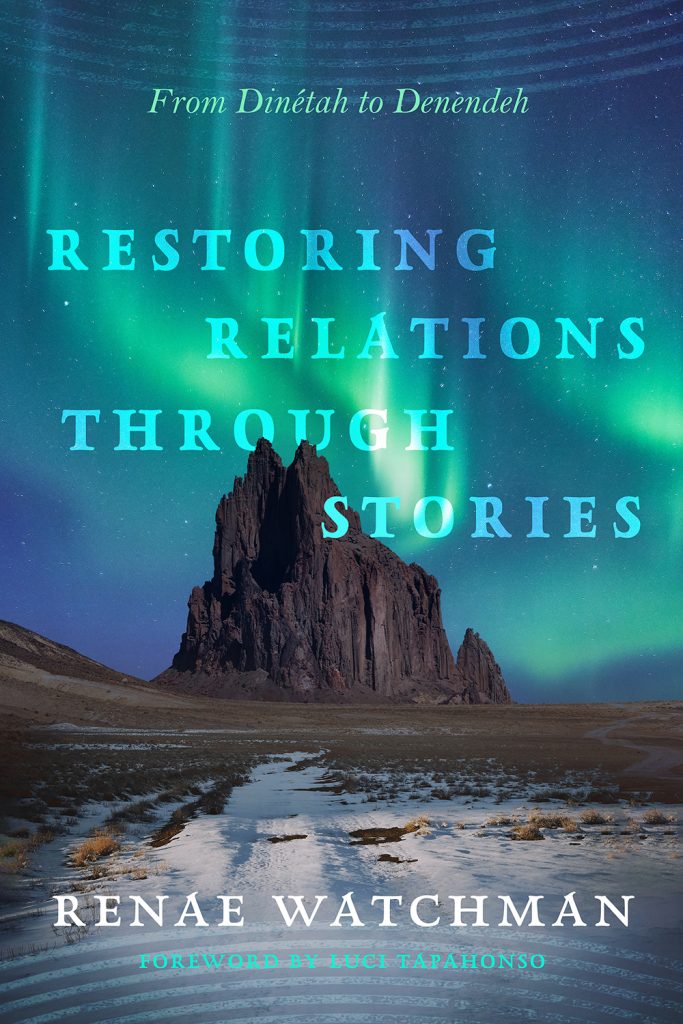
Renae Watchman‘s insightful volume delves into land-based Diné and Dene imaginaries as embodied in stories—oral, literary, and visual. Like the dynamism and kinetic facets of hózhǫ́,* Restoring Relations Through Stories takes us through many landscapes, places, and sites. Watchman introduces the book with an overview of stories that bring Tsé Bitʼaʼí, or Shiprock Peak, the sentinel located in what is currently the state of New Mexico, to life. The book then introduces the dynamic field of Indigenous film through a close analysis of two distinct Diné-directed feature-length films, and ends by introducing Dene literatures.


Elegiac and powerful, Ancient Light uses lyric, narrative, and concrete poems to give voice to some of the most pressing ecological and social issues of our time. With vision and resilience, Kimberly Blaeser’s poetry layers together past, present, and futures. The collection invites readers to see with a new intimacy the worlds they inhabit. Blaeser brings readers to the brink, immerses them in the darkest regions of the Anthropocene, in the dangerous fallacies of capitalism, and then seeds hope. Ultimately, as the poems enact survivance, they reclaim Indigenous stories and lifeways.


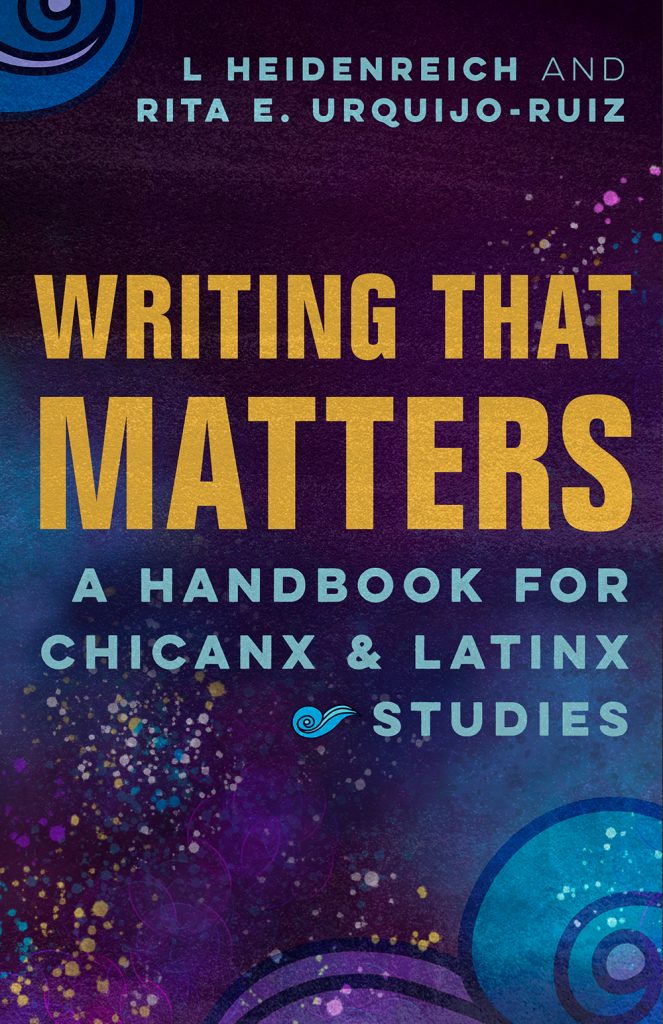
Have you ever wanted a writing and research manual that centered Chicanx and Latinx scholarship? Writing that Matters does just that. While it includes a brief history of the roots of the fields of Chicanx literature and history, L Heidenreich and Rita E. Urquijo-Ruiz emphasize practice: how to research and write a Chicanx or Latinx history paper; how to research and write a Chicanx or Latinx literature or cultural studies essay; and how to conduct interviews, frame pláticas, and conduct oral histories.

Featured Series

We are excited to be adding new titles to our BorderVisions, Sun Tracks, and Camino del Sol series!

BorderVisions, edited by Vanessa Fonseca-Chávez and Yvette J. Saavedra, engages the U.S.-Mexico borderlands’ dynamic histories and cultures and expands our understanding of the borderlands beyond a site of geopolitical inquiry. We are especially interested in books that address the complexities and richness of borderlands experiences at different historical, cultural, and sociopolitical moments. Watch a recording of the series launch for BorderVisions here.

Sun Tracks, launched in 1971, was one of the first publishing programs to focus exclusively on the creative works of Native Americans. The series has included more than eighty volumes of poetry, prose, art, and photography by such distinguished artists as Joy Harjo, N. Scott Momaday, Simon J. Ortiz, Carter Revard, and Luci Tapahonso.

Cool Off with Desert River Reading

July 10, 2024

Desert rivers weave through arid landscapes, providing oases of resilience and adaptation in some of our harshest environments. Shimmering lifelines, such as the Colorado River and the Gila River, teem with life and serve the communities that depend on them. However, this is only made possible through protective measures that defend against looming threats. Questionable water distribution policies and lower water flows threaten plant and animal habitats, and may reduce water for industrial, agricultural, and residential use. Now more than ever, it is imperative that restoration and preservation efforts are implemented to ensure the desert ecosystem and communities continue to thrive. Cool off this summer with some of our books that feature desert rivers listed below.

Unraveling a complex web of tension, distrust, and political maneuvering, Damming the Gila continues the story of the Gila River Indian Community’s struggle for the restoration of its water rights. This volume chronicles the history of water rights and activities on the Gila River Indian Reservation. Centered on the San Carlos Irrigation Project and Coolidge Dam, it details the history and development of the project, including the Gila Decree and the Winters Doctrine. Embedded in the narrative is the underlying tension between tribal growers on the Gila River Indian Reservation and upstream users. Told in seven chapters, the story underscores the idea that the Gila River Indian Community believed the San Carlos Irrigation Project was first and foremost for their benefit and how the project and the Gila Decree fell short of restoring their water and agricultural economy.

Our rivers are in crisis and the need for river restoration has never been more urgent. Water security and biodiversity indices for all of the world’s major rivers have declined due to pollution, diversions, impoundments, fragmented flows, introduced and invasive species, and many other abuses. Developing successful restoration responses are essential. Renewing Our Rivers addresses this need head on with examples of how to design and implement stream-corridor restoration projects. Based on the experiences of seasoned professionals, Renewing Our Rivers provides stream restoration practitioners the main steps to develop successful and viable stream restoration projects that last. Ecologists, geomorphologists, and hydrologists from dryland regions of Australia, Mexico, and the United States share case studies and key lessons learned for successful restoration and renewal of our most vital resource.

In the late nineteenth and early twentieth centuries, Americans assumed the land and water resources of the West were endless. Water was as vital to newcomers to Arizona’s Florence and Casa Grande valleys as it had always been to the Pima Indians, who had been successfully growing crops along the Gila River for generations when the white settlers moved in. Diverting the Gila explores the complex web of tension, distrust, and political maneuvering to divide and divert the scarce waters of the Gila River. Residents of Florence, Casa Grande, and the Pima Reservation fought for vital access to water rights. Into this political foray stepped Arizona’s freshman congressman Carl Hayden, who not only united the farming communities but also used Pima water deprivation to the advantage of Florence-Casa Grande and Upper Gila Valley growers. The result was the federal Florence-Casa Grande Project that, as legislated, was intended to benefit Pima growers on the Gila River Indian Reservation first and foremost. As was often the case in the West, well-heeled, nontribal political interests manipulated the laws at the expense of the Indigenous community.

No fewer than forty million people have come to rely on the Colorado River system in modern times—a river system immersed in an unprecedented, unrelenting megadrought for more than two decades. Attempting to navigate this “new normal,” policymakers are in the midst of negotiating new management rules for the river system, a process coinciding with the compact’s centennial that must be completed by 2026. Animated by this remarkable confluence of events, Cornerstone at the Confluence leverages the centennial year to reflect on the compact and broader “Law of the River” to envision the future. It is a volume inviting dialogue about how the Colorado River system’s flows should be apportioned given climate change, what should be done about environmental issues such as ecosystem restoration and biodiversity protection, and how long-standing issues of water justice facing Native American communities should be addressed.

MALCS Summer Institute 2024

The University of Arizona Press is proud to be a MALCS 2024 sponsor! We’re offering a special discount on all of our books for MALCS attendees. Use AZMALCS24 on our website or for call-in orders to get 35% off all our books from 6/23/24 to 7/25/24.

In their own words, Mujeres Activas en Letras y Cambio Social (MALCS) “is a volunteer professional organization for self-identified Chicana, Latina, Native American / indígena mujeres and gender non-conforming academics, students, and activists.”

For the last 40 years, MALCS has hosted a summer institute bringing together this vital group to engage “feminist intersectionality, social justice, empowerment, and healing.” For their 41st year, MALCS is in Oaxaca, México, and the theme is “De Aquí y de Allá: Reclaiming Our Indigenous Lineages and Serving Future Generations.” The institute will be held June 24-27, 2024.

Below, read about some of our recent and forthcoming titles in Latinx Studies, Indigenous Studies, Gender & Women’s Studies, Border Studies, and more.

Founded in 1997, Mujeres de Maiz (MdM) is an Indigenous Xicana–led spiritual artivist organization and movement by and for women and feminists of color. Chronicling its quarter-century-long herstory, editors Amber Rose GonzálezFelicia ‘Fe’ Montes, and Nadia Zepeda collect diverse stories with attention to their larger sociopolitical contexts. Mujeres de Maiz en Movimiento: Spiritual Artivism, Healing Justice, and Feminist Praxis crosses conventional genre boundaries through the inclusion of poetry, visual art, testimonios, and essays.


Have you ever wanted a writing and research manual that centered Chicanx and Latinx scholarship? Writing that Matters does just that. While it includes a brief history of the roots of the fields of Chicanx literature and history, L Heidenreich and Rita E. Urquijo-Ruiz emphasize practice: how to research and write a Chicanx or Latinx history paper; how to research and write a Chicanx or Latinx literature or cultural studies essay; and how to conduct interviews, frame pláticas, and conduct oral histories. It also includes a brief chapter on nomenclature and a grammar guide. Each chapter includes questions for discussion, and all examples from across the subfields are from noted Chicanx and Latinx scholars.


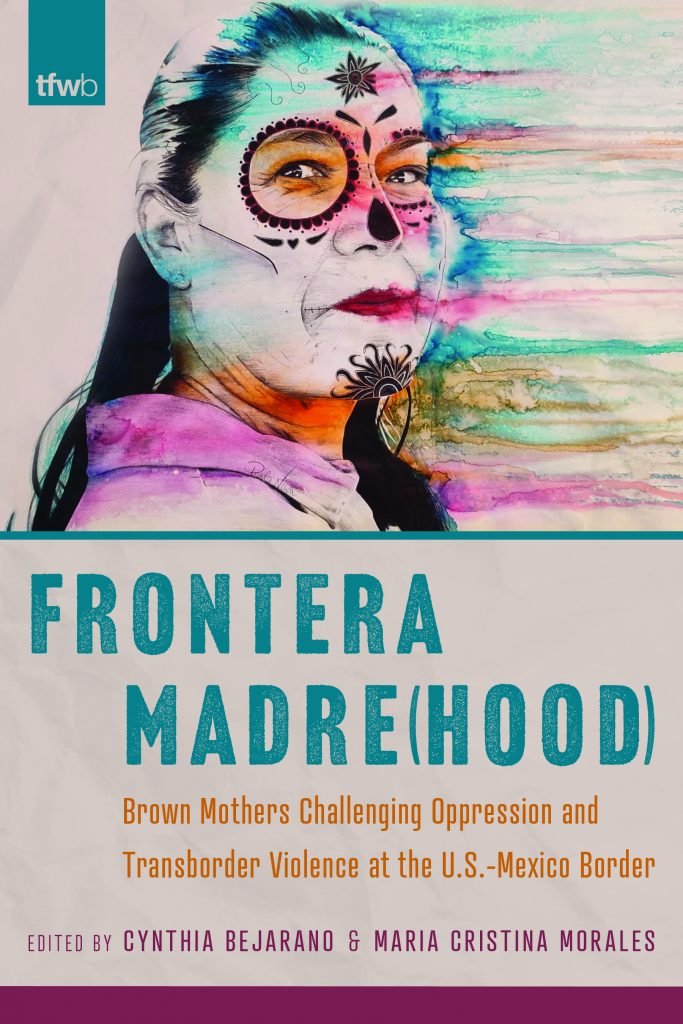
The topic of mothers and mothering transcends all spaces, from popular culture to intellectual thought and critique. In Frontera Madre(hood): Brown Mothers Challenging Oppression and Transborder Violence at the U.S.-Mexico Border, editors Cynthia Bejarano and Maria Cristina Morales collect essays from thirty contributors that bridge both methodological and theoretical frameworks to explore forms of mothering that challenge hegemonic understandings of parenting and traditional notions of Latinx womxnhood. It articulates the collective experiences of Latinx, Black, and Indigenous mothering from both sides of the U.S.-Mexico border.


Edited by Norma Elia Cantú, Chicana Portraits: Critical Biographies of Twelve Chicana Writers pairs portraits with critical biographies of twelve key Chicana writers, offering an engaging look at their work, contributions to the field, and major achievements. Arranged chronologically by birth order of the authors, the book can be read cover to cover for a genealogical overview, or scholars and general readers can easily jump in at any point and read about an individual author, regardless of the chronology.

John P. Schaefer to Bring “Desert Jewels” to Downtown Tucson

April 23, 2024

The Southern Arizona Heritage & Visitor Center will host renowned Tucson photographer, author, and University of Arizona President Emeritus John P. Schaefer for a book signing. He will sign his book, Desert Jewels: Cactus Flowers of the Southwest and Mexico on May 14, at 11 a.m., at the Visitor Center in the Historic Pima County Courthouse, 115 N Church Ave., in downtown Tucson.

Cactus flowers are jewels of the desert—they add brilliant pops of color to our arid surroundings. In Desert Jewels, photographer Schaefer brings the exquisite and unexpected beauty of the cactus flower to the page. Hundreds of close-up photographs of cactus flowers native to the U.S. Southwest and Mexico offer a visual feast of color and texture, nuance and light.

These stunning photographs allow us to appreciate the spectacular range of color and form cactus flowers have to offer. The book offers a glimpse into Schaefer’s process for capturing these elusive desert gems. His beautiful photographs were featured as a book of stamps issued by the U.S. Postal Service.

About the author
John P. Schaefer had an active twenty-one-year career in teaching and research at the University of Arizona. A conservationist and avid birdwatcher, he helped organize the Tucson Audubon Society and founded the Nature Conservancy in Arizona. In addition to his academic and conservation work, Dr. Schaefer is a skilled photographer and author of several books on photography, including A Desert Illuminated: Cactus Flowers of the Sonoran Desert. He and Ansel Adams founded the Center for Creative Photography at the University of Arizona in 1975.

April 22, 2024

We had a great time at the 2024 Latinx Studies Association’s Annual Meeting in Tempe, Arizona, last week. Sincerest thanks to everyone who visited our table!

If you weren’t able to visit us at the bookfair, there’s still time to order the books we had on display. Get 35% off with discount code AZLSA24 at checkout until 5/18/24.

Check out the photos of the event below!

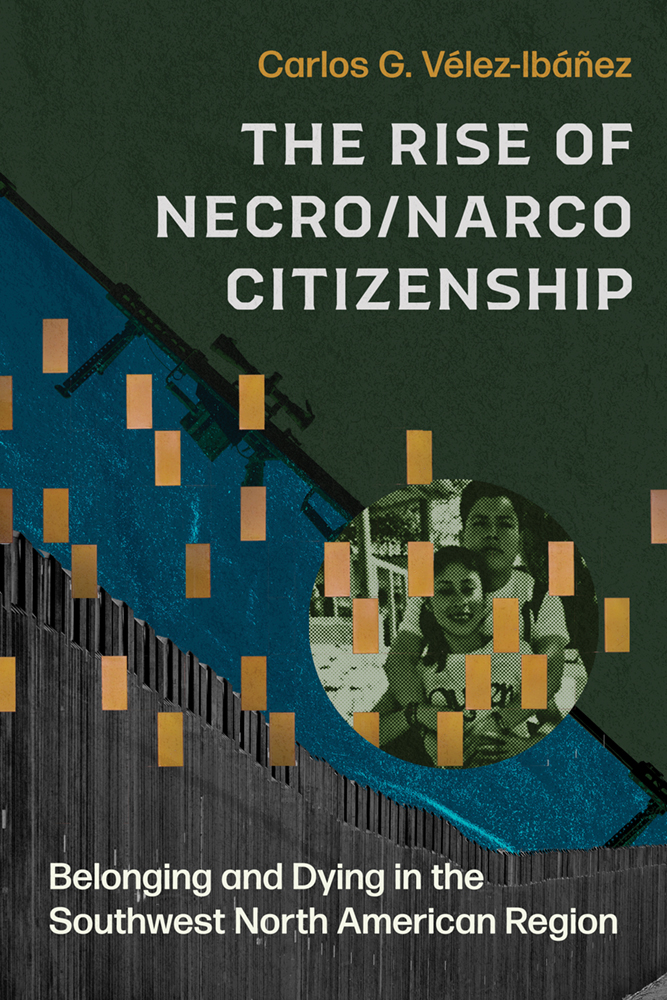
Co-editors Jesús Rosales and Vanessa Fonseca-Chávez with their work La Plonqui: The Literary Life and Work of Margarita Cota-Cárdenas, along with forthcoming author Rafael A Martínez, author of Illegalized: Undocumented Youth Movements in the United States.

Author Michelle Téllez with her books Border Women and the Community of Maclovio Rojas
Autonomy in the Spaces of Neoliberal Neglect
and The Chicana Motherwork Anthology.

Co-editors Natalia Deeb-Sossa and Jennifer Bickham Mendez with their book Latinx Belonging: Community Building and Resilience in the United States.

Co-editors Nadia Zepeda and Amber Rose González sign copies of their book Mujeres de Maiz en Movimiento: Spiritual Artivism, Healing Justice, and Feminist Praxis.

Lisa Magaña, author of Empowered!: Latinos Transforming Arizona Politics, and Editor-in-Chief Kristen Buckles

Author and series editor Vanessa Fonseca-Chávez and Editor-in-Chief Kristen Buckles discuss the new series BorderVisions during a panel on publishing.

2024 NACCS Conference: Signings, Discounts, and New Books

April 22, 2024

We are thrilled to be attending the 2024 National Association for Chicana and Chicano Studies Conference in San Francisco, California this week! From April 24 to 27, find our table at the Hilton San Francisco Union Square to purchase books and meet our authors in-person.

We’re also thrilled to have a number of University of Arizona Press authors signing books at our table this year! Take a look at the schedule below to find out where and when you can meet them and get your books signed. You can also meet Vanessa Fonseca-Chávez and Yvette J. Saavedra, the editors of our BorderVisions series, on Thursday, 4/25 from 3:00-3:30 PM.

Finally, we’ll be selling a curated selection of our new, featured, and popular Chicana/o/x Studies and Latina/o/x Studies titles at a special conference discount of 35%. If you can’t attend this year, or if you need an extra copy of a book you discover at our table, we’ve got you covered: enter AZNACCS24 at checkout on our website for 35% off all titles through 5/25/24.

Book Signing Schedule

Thursday, April 25

10:30-11:30 AM: Michelle Téllez, author of Border Women and the Community of Maclovio Rojas

1:00-2:00 PM: L Heidenreich and Rita E. Urquijo-Ruiz, authors of Writing that Matters

2:00-3:00 PM: Amber Rose GonzálezFelicia ‘Fe’ Montes, and Nadia Zepeda, editors of Mujeres de Maiz en Movimiento: Spiritual Artivism, Healing Justice, and Feminist Praxis

Friday, April 26

9:30-10:30 AM: Vanessa Fonseca-Chávez, co-editor of La Plonqui: The Literary Life and Work of Margarita Cota-Cárdenas

New & Featured Chicano/a/x and Latina/o/x Studies Titles

Have you ever wanted a writing and research manual that centered Chicanx and Latinx scholarship? Writing that Matters does just that. While it includes a brief history of the roots of the fields of Chicanx literature and history, L Heidenreich and Rita E. Urquijo-Ruiz emphasize practice: how to research and write a Chicanx or Latinx history paper; how to research and write a Chicanx or Latinx literature or cultural studies essay; and how to conduct interviews, frame pláticas, and conduct oral histories. It also includes a brief chapter on nomenclature and a grammar guide. Each chapter includes questions for discussion, and all examples from across the subfields are from noted Chicanx and Latinx scholars. Women’s and queer scholarship and methods are not addressed in a separate chapter but are instead integral to the work.

Founded in 1997, Mujeres de Maiz (MdM) is an Indigenous Xicana–led spiritual artivist organization and movement by and for women and feminists of color. Chronicling its quarter-century-long herstory, Mujeres de Maiz en Movimiento weaves together diverse stories with attention to their larger sociopolitical contexts. The book crosses conventional genre boundaries through the inclusion of poetry, visual art, testimonios, and essays. The multidisciplinary, intergenerational, and critical-creative nature of the project coupled with the unique subject matter makes the book a must-have for high school and college students, activist-scholars, artists, community organizers, and others invested in social justice and liberation.

Growing Up in the Gutter offers new understandings of contemporary graphic coming-of-age narratives by looking at the genre’s growth in stories by and for young BIPOC, LGBTQ+, and diasporic readers. Through a careful examination of the genre, Ricardo Quintana-Vallejo analyzes the complex identity formation of first- and subsequent-generation migrant protagonists in globalized rural and urban environments and dissects the implications that these diasporic formative processes have for a growing and popular genre.

Author Karina Alma offers a systemic method and artistic mode for unpacking social and political memory formation that resists dominant histories. Central American Counterpoetics responds to political repression through acts of creativity that prioritize the well-being of anticolonial communities. Building on Toni Morrison’s theory of rememory, the volume examines the concept as an embodied experience of a sensory place and time lived in the here and now. By employing primary sources of image and word, interviews of creatives, and a critical self-reflection as a Salvadoran immigrant woman in academia, Alma’s research breaks ground in subject matter and methods by considering cultural and historical ties across countries, regions, and traditions. The diverse creatives included explore critical perspectives on topics such as immigration, forced assimilation, maternal love, gender violence, community arts, and decolonization.

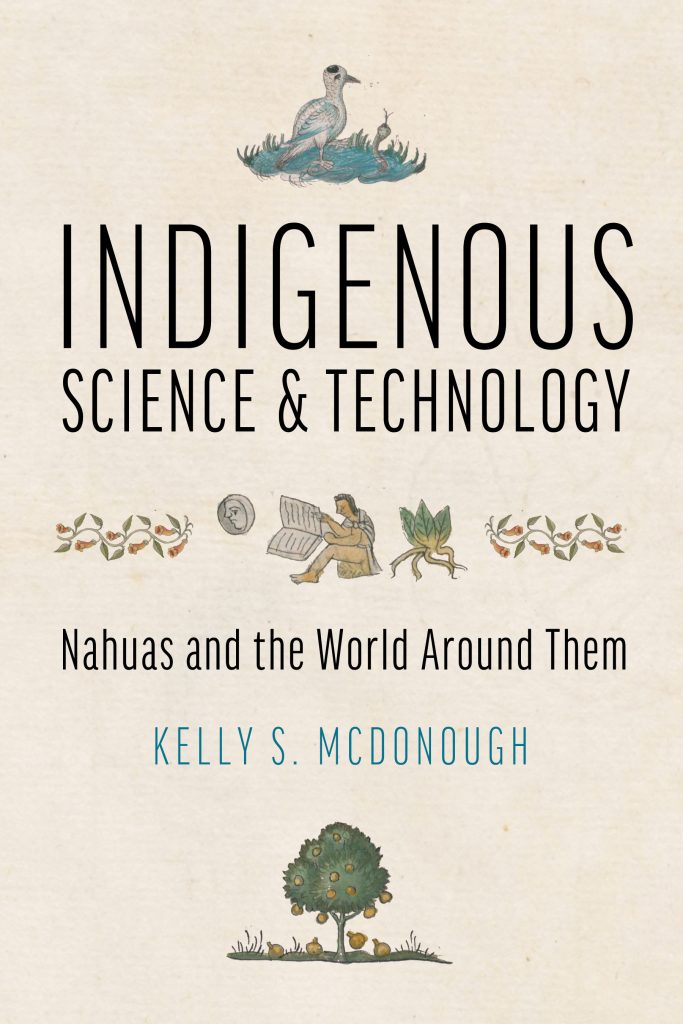
In Indigenous Science and Technology:
Nahuas and the World Around Them
, author Kelly S. McDonough addresses Nahua understanding of plants and animals, medicine and ways of healing, water and water control, alphabetic writing, and cartography. Interludes between the chapters offer short biographical sketches and interviews with contemporary Nahua scientists, artists, historians, and writers, accompanied by their photos. The book also includes more than twenty full-color images from sources including the Florentine Codex, a sixteenth-century collaboration between Indigenous and Spanish scholars considered the most comprehensive extant source on the pre-Hispanic and early colonial Aztec (Mexica) world.

Featured Series

BorderVisions engages the U.S.-Mexico borderlands’ dynamic histories and cultures and expands our understanding of the borderlands beyond a site of geopolitical inquiry. The series conceptualizes borderlands as both a place and a methodology and addresses the constraints of traditional fields, challenging authors to think creatively and critically about the expansive frameworks and possibilities of borderlands studies.

The Feminist Wire Books: Connecting Feminisms, Race, and Social Justice is a new series from The Feminist Wire (TFW) and the University of Arizona Press that presents a cultural bridge between the digital and printing worlds. These timely, critical books will contribute to feminist scholarship, pedagogy, and praxis in the twenty-first century.

Latinx Pop Culture is a new series that aims to shed light on all aspects of Latinx cultural production and consumption as well as the Latinx presence globally in popular cultural phenomena in the late twentieth and early twenty-first centuries.

The Critical Issues in Indigenous Studies series anchors intellectual work within an Indigenous framework that reflects Native-centered concerns and objectives. Series titles expand and deepen discussions about Indigenous people beyond nation-state boundaries, and complicate existing notions of Indigenous identity.

Arizona Crossroads explores the history of peoples and cultures, events and struggles, ideas and practices in the place we know today as Arizona.

Are you an author or editor? Do you have a project that would be a great fit for The University of Arizona Press? For questions or to submit a proposal to any of these series, please contact Editor-In-Chief Kristen Buckles at KBuckles@uapress.arizona.edu.

2024 LSA Conference: Signings, Discounts, and New Books

April 16, 2024

We are thrilled to be attending the 2024 Latina/o/x Studies Association conference in Tempe this week! From April 17 to 20, find our table in the LSA Plaza, “a dynamic space to get together with long-time friends and colleagues—and find new ones—over coffee and conversation.” Navigation help and additional details are available on the LSA website.

We’re also thrilled to have some University of Arizona Press authors signing books at our table this year! Take a look at the schedule below to find out where and when you can meet our authors and get your books signed.

Finally, we’ll be selling a curated selection of our new, featured, and popular Latinx studies titles at a special conference discount of 35%. If you can’t attend this year, or if you need an extra copy of a book you discover at our table, we’ve got you covered: enter AZLSA24 at checkout on our website for 35% off all titles through 5/18/24.

Book Signing Schedule

Thursday, April 18

1:30-2:30 PM: Jesús Rosales and Vanessa Fonseca-Chávez, editors of La Plonqui: The Literary Life and Work of Margarita Cota-Cárdenas

2:30-3:30 PM: Michelle Téllez, author of Border Women and the Community of Maclovio Rojas

Friday, April 19

2:00-3:00 PM: Natalia Deeb-Sossa and Jennifer Bickham Mendez, authors of Latinx Belonging: Community Building and Resilience in the United States

Saturday, April 20

10:00-11:00 AM: Amber Rose GonzálezFelicia ‘Fe’ Montes, and Nadia Zepeda, editors of Mujeres de Maiz en Movimiento: Spiritual Artivism, Healing Justice, and Feminist Praxis

New & Featured Latinx Studies Titles

Have you ever wanted a writing and research manual that centered Chicanx and Latinx scholarship? Writing that Matters does just that. While it includes a brief history of the roots of the fields of Chicanx literature and history, L Heidenreich and Rita E. Urquijo-Ruiz emphasize practice: how to research and write a Chicanx or Latinx history paper; how to research and write a Chicanx or Latinx literature or cultural studies essay; and how to conduct interviews, frame pláticas, and conduct oral histories. It also includes a brief chapter on nomenclature and a grammar guide. Each chapter includes questions for discussion, and all examples from across the subfields are from noted Chicanx and Latinx scholars. Women’s and queer scholarship and methods are not addressed in a separate chapter but are instead integral to the work.

Founded in 1997, Mujeres de Maiz (MdM) is an Indigenous Xicana–led spiritual artivist organization and movement by and for women and feminists of color. Chronicling its quarter-century-long herstory, Mujeres de Maiz en Movimiento weaves together diverse stories with attention to their larger sociopolitical contexts. The book crosses conventional genre boundaries through the inclusion of poetry, visual art, testimonios, and essays. The multidisciplinary, intergenerational, and critical-creative nature of the project coupled with the unique subject matter makes the book a must-have for high school and college students, activist-scholars, artists, community organizers, and others invested in social justice and liberation.

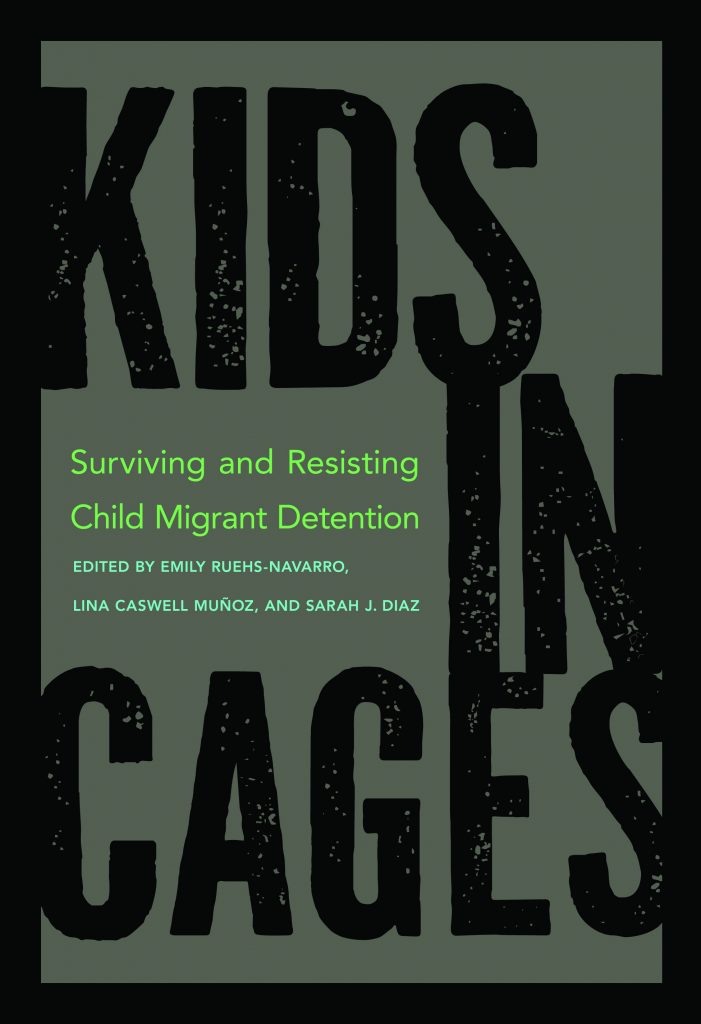
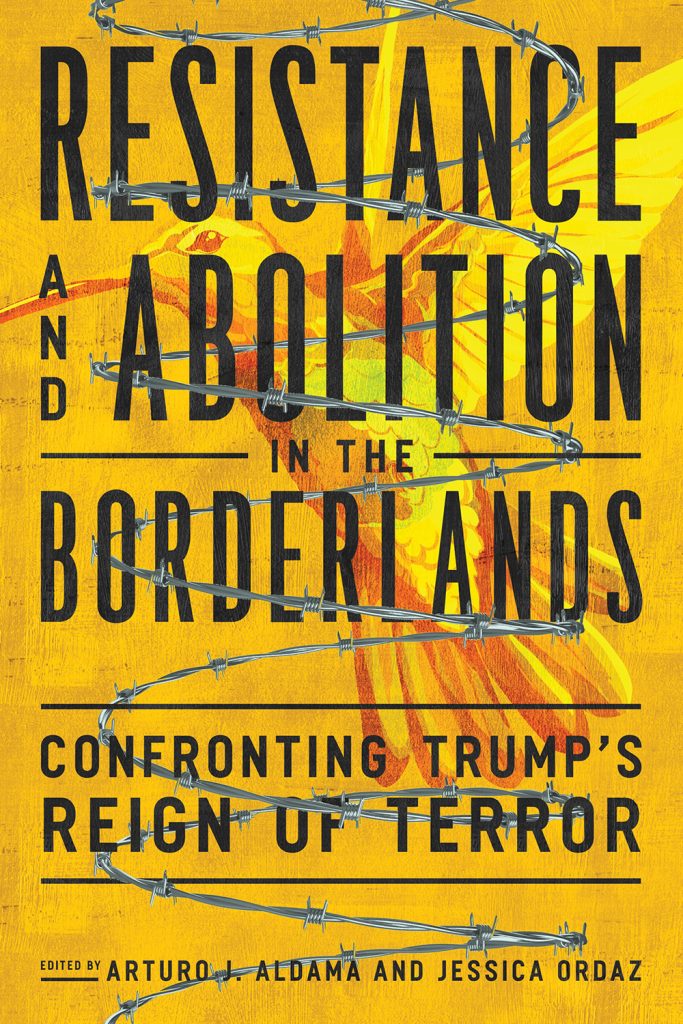
While there is a long history of state violence toward immigrants in the United States, the essayists in this interdisciplinary collection tackle head-on the impacts of the Trump administration. This volume provides a well-argued look at the Trump era. Insightful contributions delve into the impact of Donald Trump’s rhetoric and policies on migrants detained and returned, immigrant children separated from their parents and placed in detention centers, and migrant women subjected to sexual and reproductive abuses, among other timely topics. The chapter authors document a long list in what the book calls “Trump’s Reign of Terror.” Resistance and Abolition in the Borderlands is an essential reader for those wishing to understand the extent of the damage caused by the Trump era and its impact on Latinx people.

Growing Up in the Gutter offers new understandings of contemporary graphic coming-of-age narratives by looking at the genre’s growth in stories by and for young BIPOC, LGBTQ+, and diasporic readers. Through a careful examination of the genre, Ricardo Quintana-Vallejo analyzes the complex identity formation of first- and subsequent-generation migrant protagonists in globalized rural and urban environments and dissects the implications that these diasporic formative processes have for a growing and popular genre.

Kneeling Before Corn focuses on the intimate relations that develop between plants and humans in the milpas of the northern rural region of El Salvador. It explores the ways in which more-than-human intimacies travel away from and return to the milpa through human networks. Collective and multivocal, this work reflects independent lines of investigation and multiple conversations between co-authors—all of whom have lived in El Salvador for extended periods of time. Throughout the six chapters, the co-authors invite readers to consider more-than-human intimacies by rethinking, experimenting with, and developing new ways of documenting, analyzing, and knowing the intimacies that form between humans and the plants that they cultivate, conserve, long for, and eat. This book offers an innovative account of rural El Salvador in the twenty-first century.

Author Karina Alma offers a systemic method and artistic mode for unpacking social and political memory formation that resists dominant histories. Central American Counterpoetics responds to political repression through acts of creativity that prioritize the well-being of anticolonial communities. Building on Toni Morrison’s theory of rememory, the volume examines the concept as an embodied experience of a sensory place and time lived in the here and now. By employing primary sources of image and word, interviews of creatives, and a critical self-reflection as a Salvadoran immigrant woman in academia, Alma’s research breaks ground in subject matter and methods by considering cultural and historical ties across countries, regions, and traditions. The diverse creatives included explore critical perspectives on topics such as immigration, forced assimilation, maternal love, gender violence, community arts, and decolonization.

Featured Series

BorderVisions engages the U.S.-Mexico borderlands’ dynamic histories and cultures and expands our understanding of the borderlands beyond a site of geopolitical inquiry. The series conceptualizes borderlands as both a place and a methodology and addresses the constraints of traditional fields, challenging authors to think creatively and critically about the expansive frameworks and possibilities of borderlands studies.

The Feminist Wire Books: Connecting Feminisms, Race, and Social Justice is a new series from The Feminist Wire (TFW) and the University of Arizona Press that presents a cultural bridge between the digital and printing worlds. These timely, critical books will contribute to feminist scholarship, pedagogy, and praxis in the twenty-first century.

Latinx Pop Culture is a new series that aims to shed light on all aspects of Latinx cultural production and consumption as well as the Latinx presence globally in popular cultural phenomena in the late twentieth and early twenty-first centuries.

The Critical Issues in Indigenous Studies series anchors intellectual work within an Indigenous framework that reflects Native-centered concerns and objectives. Series titles expand and deepen discussions about Indigenous people beyond nation-state boundaries, and complicate existing notions of Indigenous identity.

Arizona Crossroads explores the history of peoples and cultures, events and struggles, ideas and practices in the place we know today as Arizona.

Are you an author or editor? Do you have a project that would be a great fit for The University of Arizona Press? For questions or to submit a proposal to any of these series, please contact Editor-In-Chief Kristen Buckles at KBuckles@uapress.arizona.edu.

2024 SAA Conference: Discounts, New Books, and More

April 15, 2024

We are thrilled to be attending the 89th annual meeting annual meeting of the Society for American Archaeology this week in New Orleans! On April 17-21, find us at booth #203 and 205 to browse the University of Arizona Press’ latest archaeology titles and meet with Senior Editor Allyson Carter.

If you can’t attend this year, or if you need an extra copy of a book you discover at our booth, we’ve got you covered: use AZSAA24 for 35% off all titles.

Are you an author or editor? Do you have a project that would be a great fit for The University of Arizona Press? To learn more about publishing with us, click here.

New Archaeology and Anthropology Titles

El Fin del Mundo describes a remote desert corner of Sonora, Mexico where the first evidence of Paleoindian interactions with gomphotheres, an extinct species related to elephants, has been recorded. This site is the northernmost dated late Pleistocene gomphothere and the youngest in North America. It is the first documented intact buried Clovis site outside of the United States, the first in situ Paleoindian site in northwestern Mexico, and the first documented evidence of Clovis gomphothere hunting in North America. This volume also describes a paleontological bone bed below the Clovis level, which includes a rare association of mastodon, mammoth, and gomphothere.

The Spanish conquest of Peru was motivated by the quest for precious metals, a search that resulted in the discovery of massive silver deposits in what is now southern Bolivia. The enormous flow of specie into the world economy is usually attributed to the Spanish imposition of a forced labor system on the Indigenous population as well as the introduction of European technology. This narrative omits the role played by thousands of independent miners, often working illegally, who at different points in history generated up to 30 percent of the silver produced in the region. In Silver “Thieves,” Tin Barons, and Conquistadors, Mary Van Buren examines the long-term history of these workers, the technology they used, and their relationship to successive large-scale mining.

In the Mimbres Valley of southwestern New Mexico, archaeologists have been working for decades to meticulously excavate archaeological sites. Expanding beyond studies that focus on a single pueblo, Ancient Communities in the Mimbres Valley represents the final report on the excavations of the Mimbres Foundation. It brings together data from a range of pithouse and pueblo sites of different sizes and histories in diverse locations—to refine the current understandings of Mimbres region archaeology in the context of the Greater Southwest.

Focused on the coast near Puerto Peñasco, Sonora, Mexico, Coastal Foragers of the Gran Desierto examines the diverse groups occupying the coast for salt, abundant food sources, and shells for ornament manufacturing. The archaeological patterns demonstrated by the data gathered lead to the conclusion that, since ancient times, this coastal landscape was not a marginal zone but rather an important source of food and trade goods, and a pilgrimage destination that influenced broad and diverse communities across the Sonoran Desert and beyond.

Including research from both highland central Mexico and the tropical lowlands of the Maya and Olmec areas, Ancient Mesoamerican Population History reexamines the demography in ancient Mesoamerica. Contributors present methods for determining population estimates, field methods for settlement pattern studies to obtain demographic data, and new technologies such as LiDAR (light detecting and ranging) that have expanded views of the ground in forested areas. Contributions to this book provide a view of ancient landscape use and modification that was not possible in the twentieth century. This important new work provides new understandings of Mesoamerican urbanism, development, and changes over time.

Featured Series

The Anthropological Papers of the University of Arizona is a peer-reviewed monograph series sponsored by the School of Anthropology. Established in 1959, the series publishes archaeological and ethnographic papers that use contemporary method and theory to investigate problems of anthropological importance in the southwestern United States, Mexico, and related areas. Selected volumes in the series are now open-access titles available through the University of Arizona Campus Repository.

The Archaeology of Indigenous-Colonial Interactions in the Americas is a series that highlights leading current research and scholarship focused on Indigenous-colonial processes and engagement throughout all regions of the Americas. The series builds on the success of its predecessor, The Archaeology of Colonialism in Native North America.

Amerind Studies in Anthropology is a series that publishes the results of the Amerind Seminars, annual professional symposia hosted by the Amerind Foundation in Dragoon, Arizona, and cosponsored by the Society for American Archaeology (SAA). Series titles that emerge from these symposia focus on timely topics like the analysis of regional archaeological sites, current issues in methodology and theory, and sweeping discussions of world phenomena such as warfare and cultural settlement patterns.

Native Peoples of the Americas is an ambitious series whose scope ranges from North to South America and includes Middle America and the Caribbean. Each volume takes unique methodological approaches—archaeological, ethnographic, ecological, and/or ethno-historical—to frame cultural regions. Volumes cover select theoretical approaches that link regions, such as Native responses to conquest and the imposition of authority, environmental degradation, loss of Native lands, and the appropriation of Native knowledge and cosmologies. These books illuminate the strategies that Native Peoples have employed to maintain both their autonomies and identities. The series encourages the participation of Native, well-established, and emerging scholars as authors, contributors, and editors for the books.

For questions or to submit a proposal to any of these series, please contact Senior Editor Allyson Carter at acarter@uapress.arizona.edu.

2024 NOAZ Book Festival: Discounts, New Books, and More

April 13, 2024

We are thrilled to be attending the 2024 Northern Arizona Book Festival (NOAZBF) in Flagstaff, AZ this week! On April 13, find our table in Heritage Square where we’ll have the University of Arizona Press’ latest Indigenous literature titles on sale for 35% off.

If you can’t attend this year, or if you need an extra copy of a book you discover at our table, we’ve got you covered: use AZNOAZ24 for 35% off all titles.

If you’re at the festival, don’t miss Assistant Editor Elizabeth Wilder, who is on an Indigenous Publishing Panel happening at 1:00 PM at the Theatrikos Theatre Company, 11 W Cherry Ave. See the full schedule of events for more details.

Are you an author or editor? Do you have a project that would be a great fit for The University of Arizona Press? To learn more about publishing with us, click here.

New Indigenous Literature Titles

Light As Light is acclaimed poet Simon J. Ortiz’s first collection in twenty years. The poems in this volume celebrate the wonders and joy of love in the present while also looking back with both humorous and serious reflections on youth and the stories, scenes, people, and places that shape a person’s life. Light As Light brims with giddy, wistful long-distance love poems that offer a dialogue between the speaker and his beloved. Written in Ortiz’s signature conversational style, this volume claims poetry for everyday life. The collection also includes prayer poems written for the speaker’s son; poems that retell traditional Acoma stories and history; and poems that engage environmental, political, and social justice issues—making for a well-rounded collection that blends the playful and the profound.

Elegiac and powerful, Ancient Light uses lyric, narrative, and concrete poems to give voice to some of the most pressing ecological and social issues of our time. With vision and resilience, Kimberly Blaeser’s poetry layers together past, present, and futures. Against a backdrop of pandemic loss and injustice, MMIW (Missing and Murdered Indigenous Women), hidden graves at Native American boarding schools, and destructive environmental practices, Blaeser’s innovative poems trace pathways of kinship, healing, and renewal. With an Anishinaabe sensibility, her words and images invoke an ancient belonging and voice the deep relatedness she experiences in her familiar watery regions of Minnesota.

The Diné Reader: An Anthology of Navajo Literature is unprecedented. It showcases the breadth, depth, and diversity of Diné creative artists and their poetry, fiction, and nonfiction prose.This wide-ranging anthology brings together writers who offer perspectives that span generations and perspectives on life and Diné history. The collected works display a rich variety of and creativity in themes: home and history; contemporary concerns about identity, historical trauma, and loss of language; and economic and environmental inequalities.

Featured Series

Sun Tracks, launched in 1971, was one of the first publishing programs to focus exclusively on the creative works of Native Americans. The series has included more than eighty volumes of poetry, prose, art, and photography by such distinguished artists as Joy Harjo, N. Scott Momaday, Simon J. Ortiz, Carter Revard, and Luci Tapahonso.

For questions or to submit a proposal to this series, please contact Assistant Editor, Elizabeth Wilder, at EWilder@uapress.arizona.edu.
For Authors

The University of Arizona Press publishes the work of leading scholars from around the globe. Learn more about submitting a proposal, preparing your final manuscript, and publication.

Inquire

Requests

The University of Arizona Press is proud to share our books with readers, booksellers, media, librarians, scholars, and instructors. Join our email Newsletter. Request reprint licenses, information on subsidiary rights and translations, accessibility files, review copies, and desk and exam copies.

Request

Support the Press

Support a premier publisher of academic, regional, and literary works. We are committed to sharing past, present, and future works that reflect the special strengths of the University of Arizona and support its land-grant mission.

Give