“Mexico’s Valleys of Cuicatlán and Tehuacán” Book Launch

September 26, 2023

David Yetman and Alberto Búrquez celebrated the publication of Mexico’s Valleys of Cuicatlán and Tehuacán last night, hosted by the gracious Consulate of Mexico in Tucson, AZ and supported by The Southwest Center. Special thanks to everyone who came out to support our authors!

Enjoy the photos below for a recap of the event:

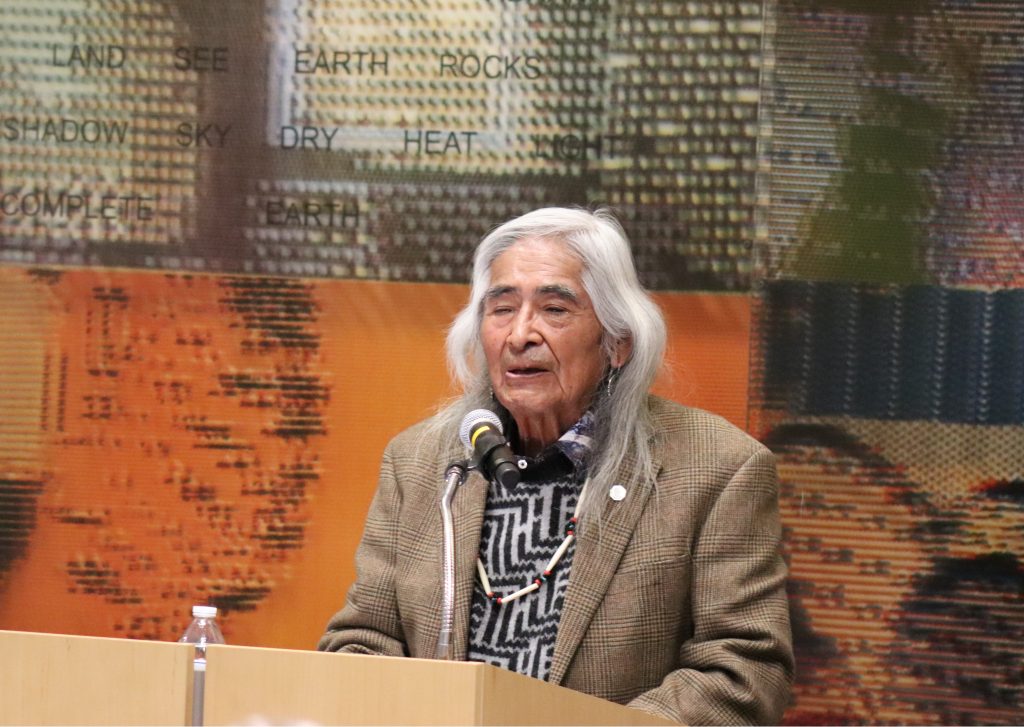
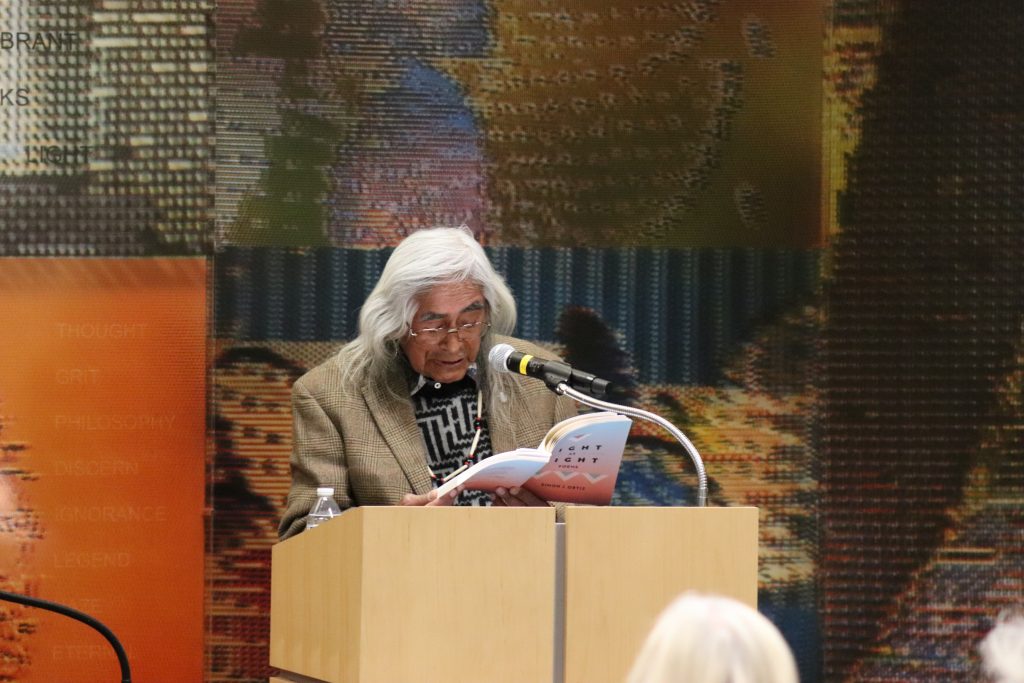
Alberto Búrquez presents photographs from Mexico’s Valleys of Cuicatlán and Tehuacán
David Yetman presents photographs from Mexico’s Valleys of Cuicatlán and Tehuacán
A packed house! The consulate staff had to bring in lots of extra chairs
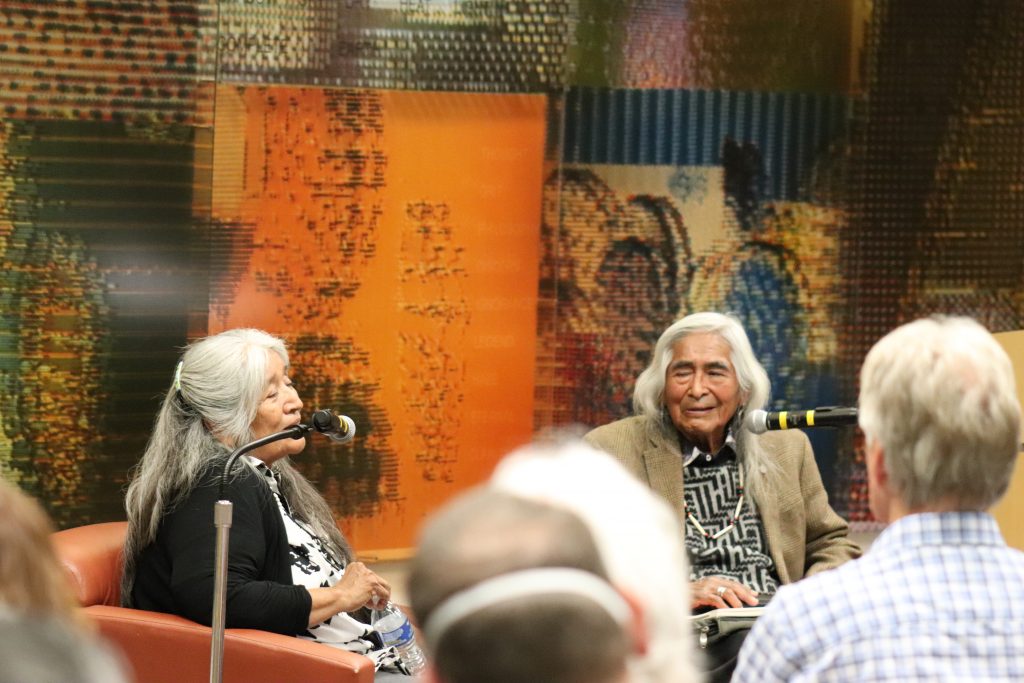
Yetman and Búrquez during the audience Q & A
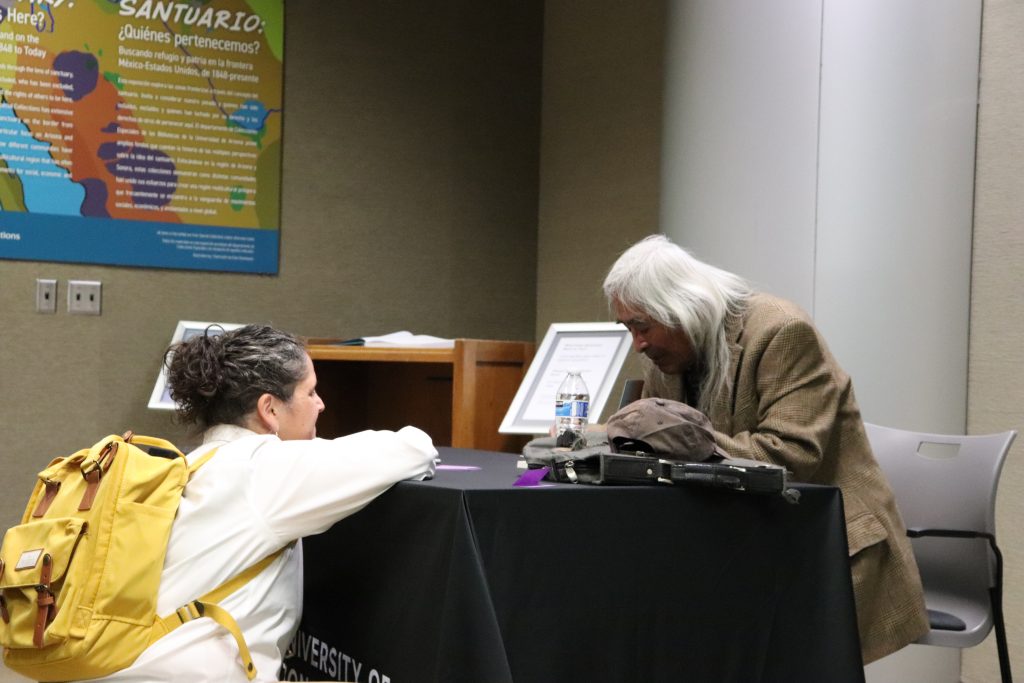
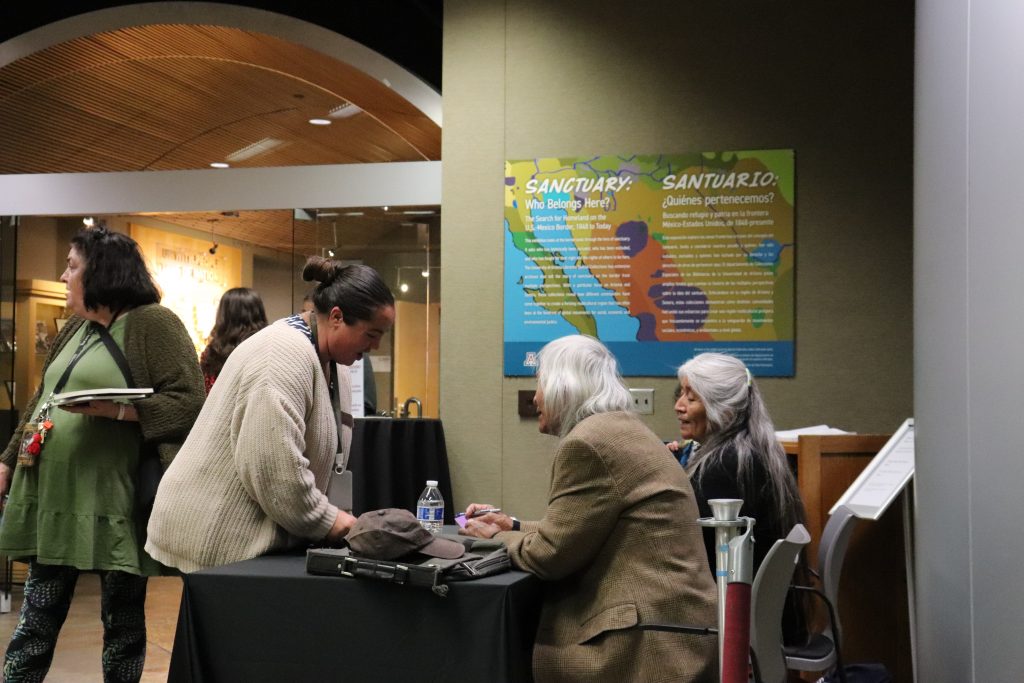
David Yetman signs copies of his new book during the reception
Lots of book signing!
Thanks to everyone who came out to support our authors

About Mexico’s Valleys of Cuicatlán and Tehuacán:

Mexico’s Valleys of Cuicatlán and Tehuacán: From Deserts to Clouds provides an accessible and photographic view of the culture, history, and environment of an extraordinary region of southern Mexico. The Valleys of Cuicatlán and Tehuacán are lauded by botanists for their spectacular plant life—they contain the densest columnar cacti forests in the world. Recent archaeological excavations reveal them also to be a formative Mesoamerican site as well. So singular is this region that it is home to the Tehuacán-Cuicatlán Biosphere Reserve and a UNESCO World Heritage Site.

Through firsthand experience and engaging prose, the authors provide a synthesis of the geology, ecology, history, and cultures of the valleys, showing their importance and influence as Mesoamerican arteries for environmental and cultural interchange through Mexico. It also reveals the extraordinary plant life that draws from habitats ranging from deserts to tropical forests.

The authors, both experts in their respective fields, begin with a general description of the geography of the valleys, followed by an introduction to climate and hydrology, a look at the valleys’ often bewildering geology. The book delves into cultural and linguistic backgrounds of the valleys and discusses archaeological sites that that encapsulate the valleys’ fascinating history prior to the arrival of Europeans. The book concludes by describing the flora that makes the region so singular.

University of Arizona Press at 2023 FILUNI Book Fair

We’re excited to share some images from La Feria Internacional del Libro de las Universitarias y de los Universitarios, (FILUNI) 2023!

This year’s book fair was held in late August at the UNAM Center in Mexico City. FILUNI brings together editors, academics, librarians, researchers, professors, and the general public with the goal of supporting international university publishers. Learn more about FILUNI by visiting their website.

Though we weren’t able to attend in person, we’re grateful to the Association of University Presses for displaying our books at the fair!

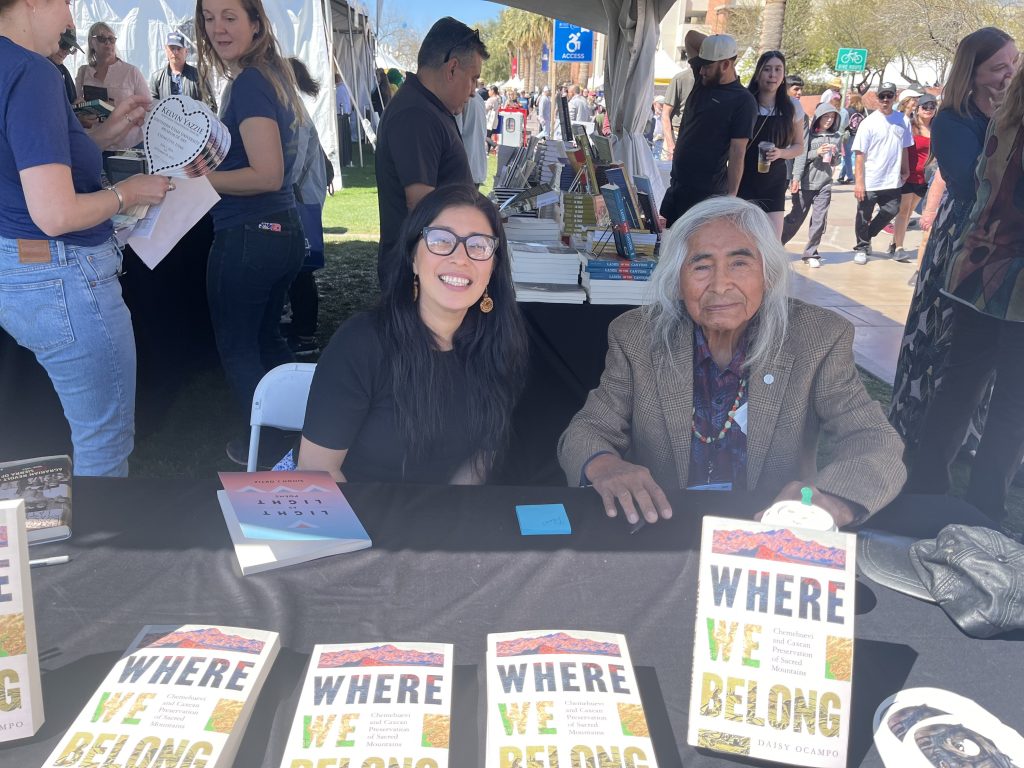
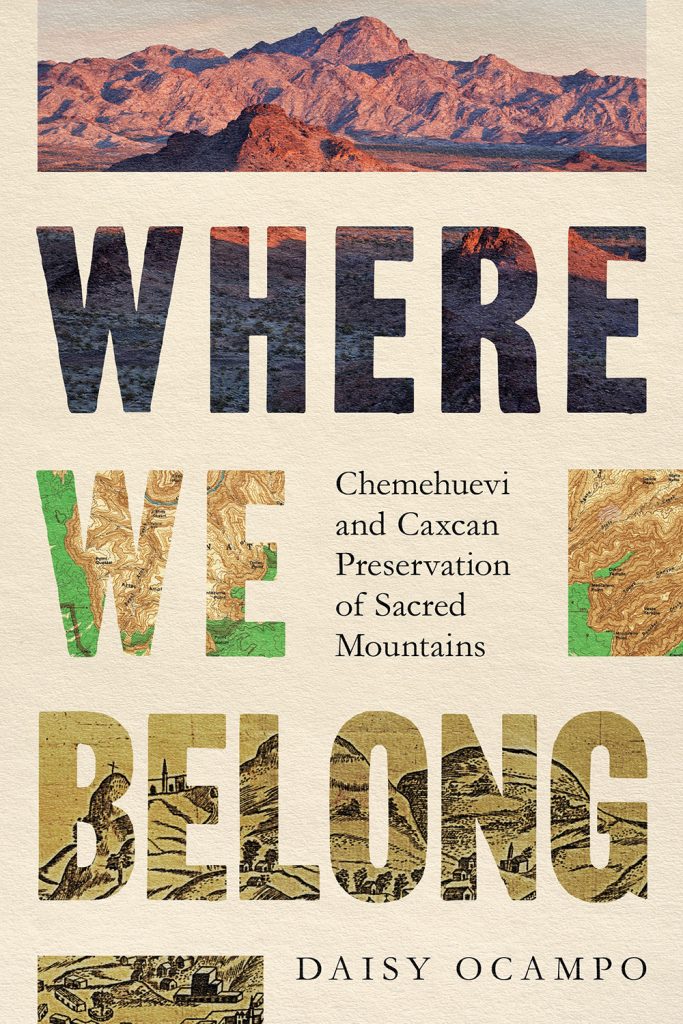
Below, you’ll see a few of our books on display: Federico: One Man’s Remarkable Journey from Tututepec to L.A. by Federico Jiménez Caballero, edited by Shelby Tisdale; Border Water: The Politics of U.S.-Mexico Transboundary Water Management, 1945–2015 by Stephen P. Mumme; and Where We Belong: Chemehuevi and Caxcan Preservation of Sacred Mountains by Daisy Ocampo.

The flyer tucked inside each book has a list of titles, including the ones you see here, that are available for translation!

New Titles Available for Translation

One of the reasons we love FILUNI is that it helps us connect with translators! Translation rights are currently available for many of our titles. To learn more, or to request a complimentary PDF for review, please contact our subsidiary rights department.

Photo Credit: Kate Kolendo, AUPresses

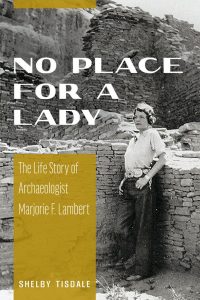
Shelby Tisdale Presents “No Place for a Lady” at the University of Arizona

September 19, 2023

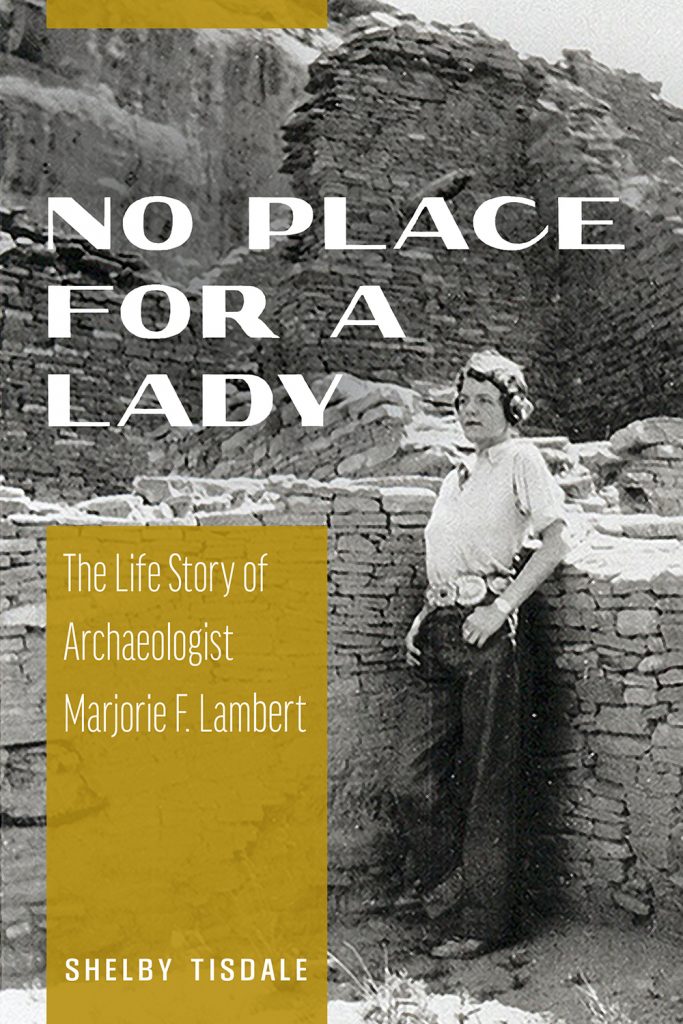
Shelby Tisdale gave a talk on her recent book, No Place for a Lady, on September 18th, 2023 at the University of Arizona’s ENR2 building. We were delighted to attend this event, which was hosted by the Arizona Archaeological and Historical Society. Thanks for including us!

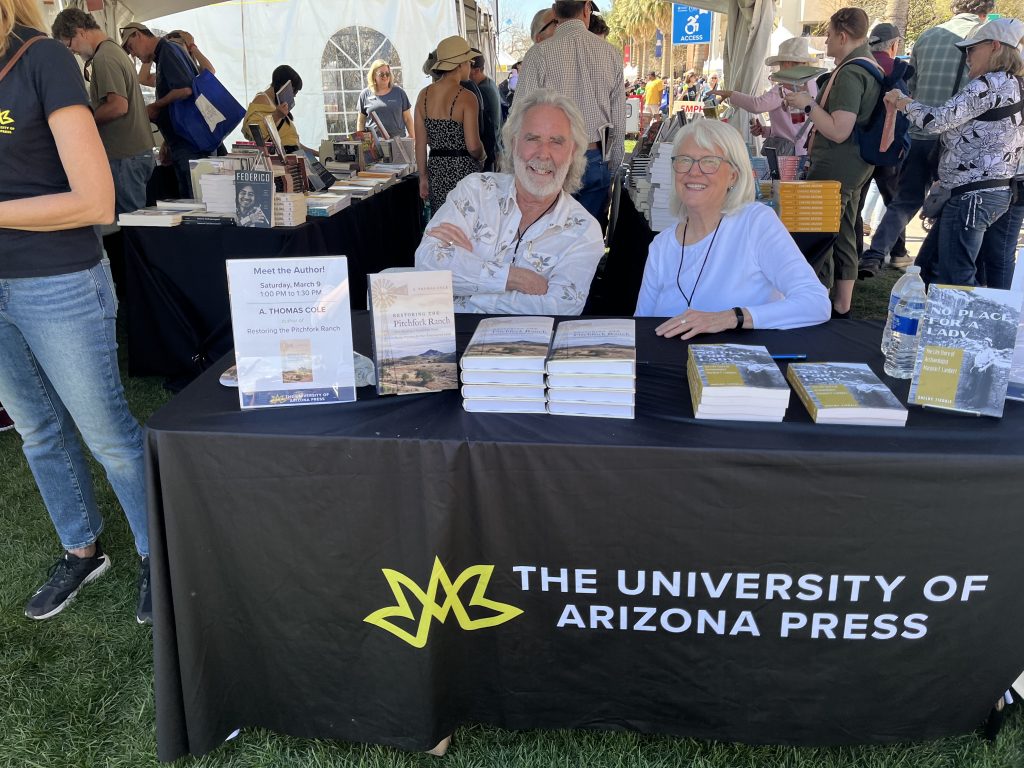
Held in the beautiful ENR2 building on the University of Arizona campus, we were happy to display Shelby Tisdale’s recent No Place for a Lady (2023) and Federico (2021), which she edited.
Shelby Tisdale gave a wonderful presentation on the life and work of Marjorie F. Lambert, the subject of No Place for a Lady.
Thanks to everyone for coming and attending on Zoom!
We love our authors!

About No Place for a Lady:

In the first half of the twentieth century, the canyons and mesas of the Southwest beckoned and the burgeoning field of archaeology thrived. Among those who heeded the call, Marjorie Ferguson Lambert became one of only a handful of women who left their imprint on the study of southwestern archaeology and anthropology.

In this delightful biography, we gain insight into a time when there were few women establishing full-time careers in anthropology, archaeology, or museums. Shelby Tisdale successfully combines Lambert’s voice from extensive interviews with her own to take us on a thought-provoking journey into how Lambert created a successful and satisfying professional career and personal life in a place she loved (the American Southwest) while doing what she loved.

Through Lambert’s life story we gain new insight into the intricacies and politics involved in the development of archaeology and museums in New Mexico and the greater Southwest. We also learn about the obstacles that young women had to maneuver around in the early years of the development of southwestern archaeology as a profession. Tisdale brings into focus one of the long-neglected voices of women in the intellectual history of anthropology and archaeology and highlights how gender roles played out in the past in determining the career paths of young women. She also highlights what has changed and what has not in the twenty-first century.

Women’s voices have long been absent throughout history, and Marjorie Lambert’s story adds to the growing literature on feminist archaeology.

Texas Book Festival Invites García and Momen

September 15, 2023

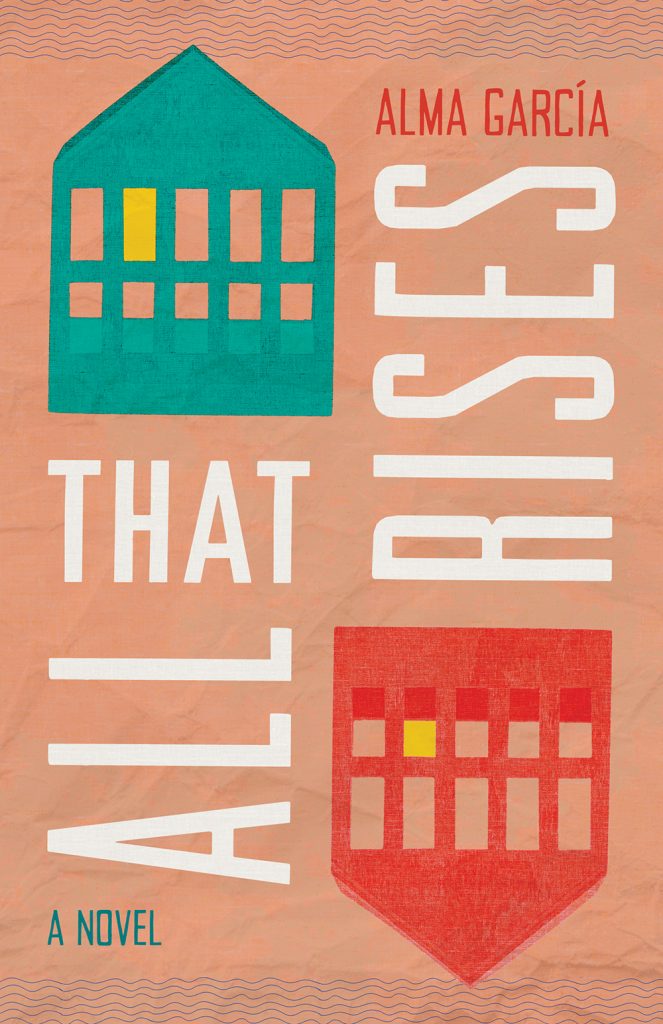
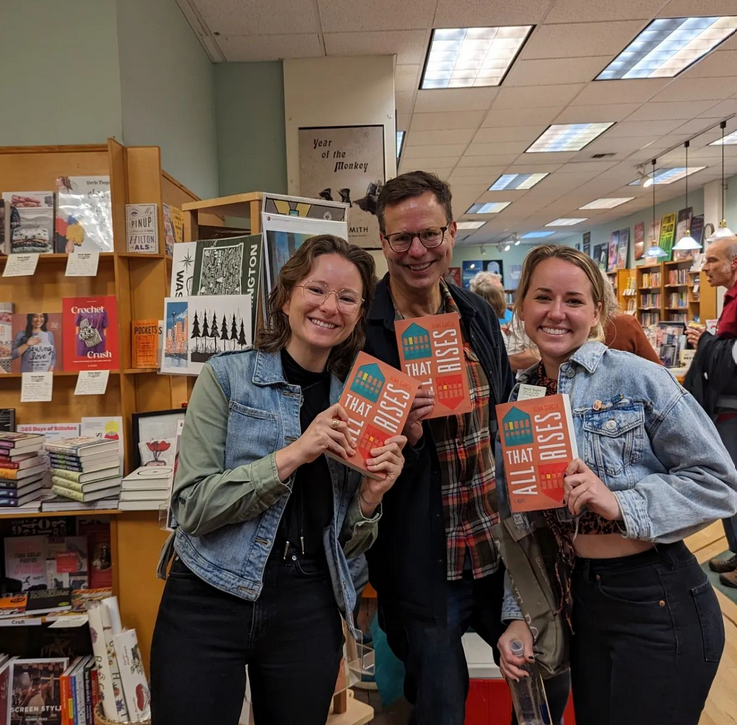
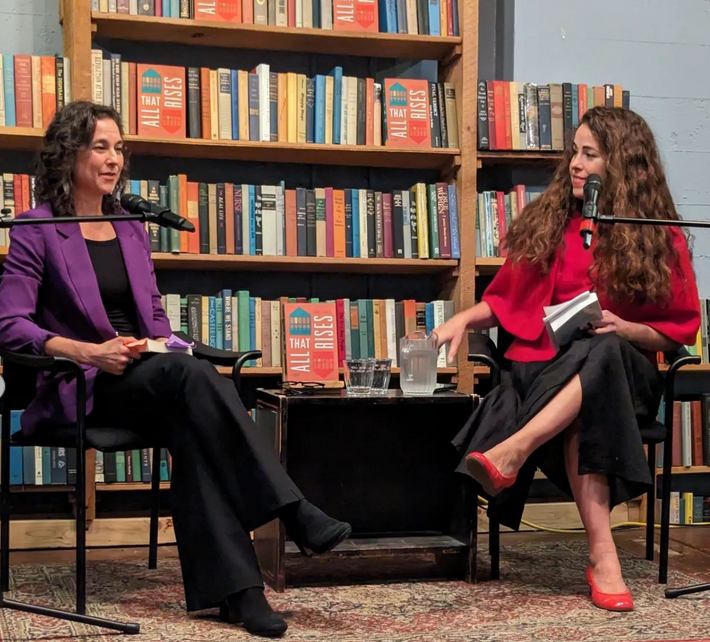
Authors Alma García and Mehnaaz Momen have been invited to the Texas Book Festival in Austin, Texas, November 11 -12. García will talk about her debut novel, All That Rises, and Momen will discuss Listening to Laredo, A Border City in a Globalized Age.

The Texas Book Festival (TBF) began with a simple purpose: to bring authors and readers together in a celebration of literature and literacy. Founded in 1995 by Laura Bush (a former librarian and then First Lady of Texas), Mary Margaret Farabee, and a dedicated group of volunteers, the TBF set out to honor Texas authors, promote the joys of reading, and benefit the state’s public libraries. The first Festival took place in November 1996 and is now one of the nation’s premier annual literary events, featuring 300 authors of the year’s best books and drawing 50,000 book lovers. Discover all the 2023 Festival authors.

Congratulations to Alma and Mehnaaz!

About All That Rises:

In the border city of El Paso, Texas, two guardedly neighboring families have plunged headlong into a harrowing week. Rose Marie DuPre, wife and mother, has abandoned her family. On the doorstep of the Gonzales home, long-lost rebel Inez appears. As Rose Marie’s husband, Huck (manager of a maquiladora), and Inez’s brother, Jerry (a college professor), struggle separately with the new shape of their worlds, Lourdes, the Mexican maid who works in both homes, finds herself entangled in the lives of her employers, even as she grapples with a teenage daughter who only has eyes for el otro lado—life, American style.

About Listening to Laredo:

Nestled between Texas and Tamaulipas, Laredo was once a quaint border town, nurturing cultural ties across the border, attracting occasional tourists, and serving as the home of people living there for generations. In a span of mere decades, Laredo has become the largest inland port in the United States and a major hub of global trade. Listening to Laredo is an exploration of how the dizzying forces of change have defined this locale, how they continue to be inscribed and celebrated, and how their effects on the physical landscape have shaped the identity of the city and its people.

Tom Zoellner Is Keynote Speaker for Arizona Library Association

August 31, 2023

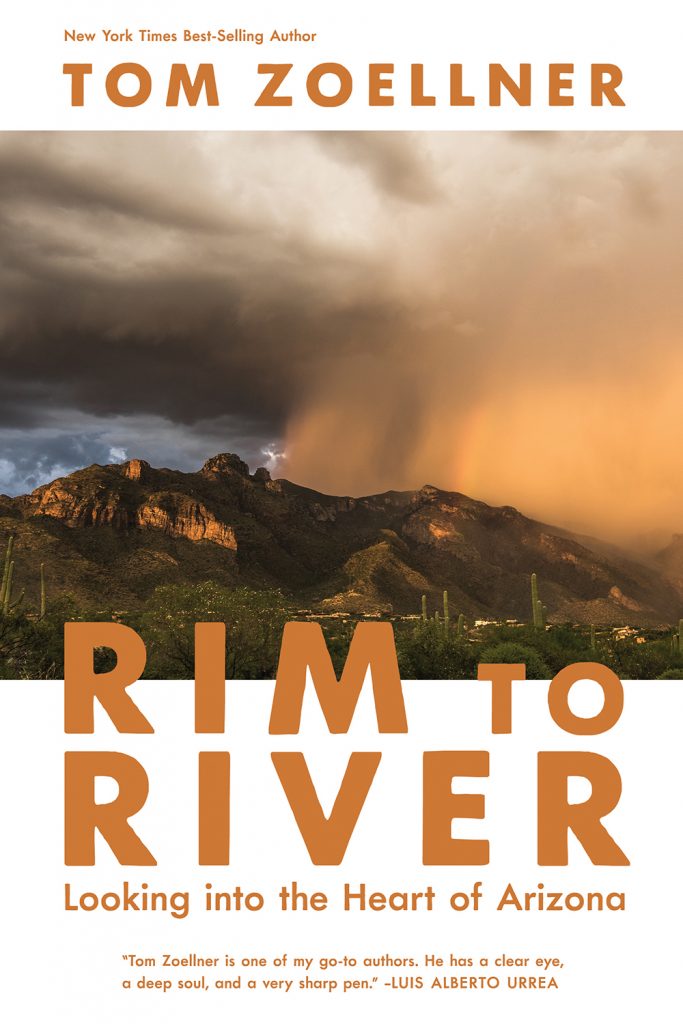
Tom Zoellner will speak on “The Arizona Literary Tradition” at the Arizona Library Association conference on October 19, 2023, at the We Ko Pa Resort in Fort McDowell, Arizona. Zoellner, author of Rim to River, will talk about the writing tradition in Arizona. Many great works of non-fiction come from Arizona; however, something is missing. He says, “There have been plenty of very good novels set here, but none that has truly captured the essence of the state. This is a challenge laid before the state’s fiction writers: where is the Great Arizona Novel? Can you write it, please?”

About the book:

Rim to River is the story of Zoellner’s walk on the Arizona Trail. Follow his extraordinary journey through redrock country, down canyons, up mesas, and across desert plains to the obscure valley in Mexico that gave the state its enigmatic name. The trek is interspersed with incisive essays that pick apart the distinctive cultural landscape of Arizona: the wine-colored pinnacles and complex spirituality of Navajoland, the mind-numbing stucco suburbs, desperate border crossings, legislative skullduggery, extreme politics, billion-dollar copper ventures, dehydrating rivers, retirement kingdoms, old-time foodways, ghosts of old wars, honky-tonk dreamers, murder mysteries, and magical Grand Canyon reveries.

MALCS 2023: Recent Books & Conference Discounts

July 10, 2023

We’re thrilled to be attending the 40th Anniversary MALCS Summer Institute at the University of California, Riverside July 13-15. This year’s theme is “40 years of MALCS, Centuries of Activism: La Lucha Sigue for Racial, Reproductive and Decolonial Justice.” In honor of this special occasion, we are offering 30 percent off all titles on our website with discount code AZMALCS23 through 8/12/2023. Here are just a few of the books we’ll be featuring at the conference:

Letres y Limpias by Amanda V. Ellis
Letras y Limpias is the first book to explore the literary significance of the figure of the curandera within Mexican American literature. Amanda Ellis traces the significance of the curandera and her evolution across a variety of genres written by leading Mexican American authors, including Américo Paredes, Rudolfo Anaya, Gloria E. Anzaldúa, Manuel Munoz, ire’ne lara silva, and more.

Teaching Gloria E. Anzaldúa edited by Margaret Cantú-Sánchez, Candace de León-Zepeda, Norma Elia Cantú
Teaching Gloria E. Anzaldúa is a pragmatic and inspiring offering of how to apply Anzaldúa’s ideas to the classroom and in the community rather than simply discussing them as theory. The book gathers nineteen essays by scholars, activists, teachers, and professors who share how their first-hand use of Anzaldúa’s theories in their classrooms and community environments.

Border Women and the Community of Maclovio Rojas by Michelle Téllez
Near Tijuana, Baja California, the autonomous community of Maclovio Rojas demonstrates what is possible for urban place-based political movements. This work tells the story of Maclovio Rojas, a women-led social movement that works for economic and political autonomy to address issues of health, education, housing, nutrition, and security.

Latinx Belonging edited by Natalia Deeb-Sossa &, Jennifer Bickham Mendez
Latinx Belonging is anchored in the claim that Latinx people are not defined by their marginalization but should instead be understood as active participants in their communities and contributors to U.S. society. The volume’s overarching analytical approach recognizes the differences, identities, and divisions among people of Latin American origin in the United States, while also attending to the power of mainstream institutions to shape their lives and identities.

Nuclear Nuevo México by Myrriah Gómez
Contrary to previous works that suppress Nuevomexicana/o presence throughout U.S. nuclear history, Nuclear Nuevo México focuses on recovering the voices and stories that have been lost or ignored in the telling of this history. By recuperating these narratives, Myrriah Gómez tells a new story of New Mexico, one in which the nuclear history is not separate from the collective colonial history of Nuevo México but instead demonstrates how earlier eras of settler colonialism laid the foundation for nuclear colonialism in New Mexico.


Colonial Legacies in Chicana/o Literature and Culture by Vanessa Fonseca-Chávez
Colonial Legacies in Chicana/o Literature and Culture exposes the ways in which colonialism is expressed in the literary and cultural production of the U.S. Southwest, a region that has experienced at least two distinct colonial periods since the sixteenth century. Vanessa Fonseca-Chávez traces how Spanish colonial texts reflect the motivation for colonial domination. She argues that layers of U.S. colonialism complicate how Chicana/o literary scholars think about Chicana/o literary and cultural production.

La Gente by Lorena V. Márquez
La Gente traces the rise of the Chicana/o Movement in Sacramento and the role of everyday people in galvanizing a collective to seek lasting and transformative change during the 1960s and 1970s. In their efforts to be self-determined, la gente contested multiple forms of oppression at school, at work sites, and in their communities.

Activist Leaders of San José by Josie Méndez-Negrete
The community of San José, California, is a national model for social justice and community activism. This legacy has been hard earned. In the twentieth century, the activists of the city’s Mexican American community fought for equality in education and pay, better conditions in the workplace, better health care, and much more. Sociologist and activist Josie Méndez-Negrete has returned to her hometown to document and record the stories of those who made contributions to the cultural and civic life of San José in Activist Leaders of San José.

Calling the Soul Back by Christina Garcia Lopez
Calling the Soul Back explores the spiritual and ancestral knowledge offered in narratives of bodies in trauma, bodies engaged in ritual, grieving bodies, bodies immersed in and becoming part of nature, and dreaming bodies. Reading across narrative nonfiction, performative monologue, short fiction, fables, illustrated children’s books, and a novel, Garcia Lopez asks how these narratives draw on the embodied intersections of ways of knowing and being to shift readers’ consciousness regarding relationships to space, time, and natural environments.

NAISA 2023: Recent Books, Conference Discounts, and More!

May 8, 2023

Join us for the Native American and Indigenous Studies Association Conference in Toronto, ON on May 11-13! Stop by our booth to browse our latest Indigenous studies titles and catch up with our Editor-in-Chief, Kristen Buckles! Order our books with the code AZNAISA23 at checkout for a 30% discount with free U.S. shipping. If you have questions about our publishing program, visit this page or contact Kristen at kubuckles@uapress.arizona.edu. If you aren’t able to check out our books in person in Toronto, browse our recent titles below!

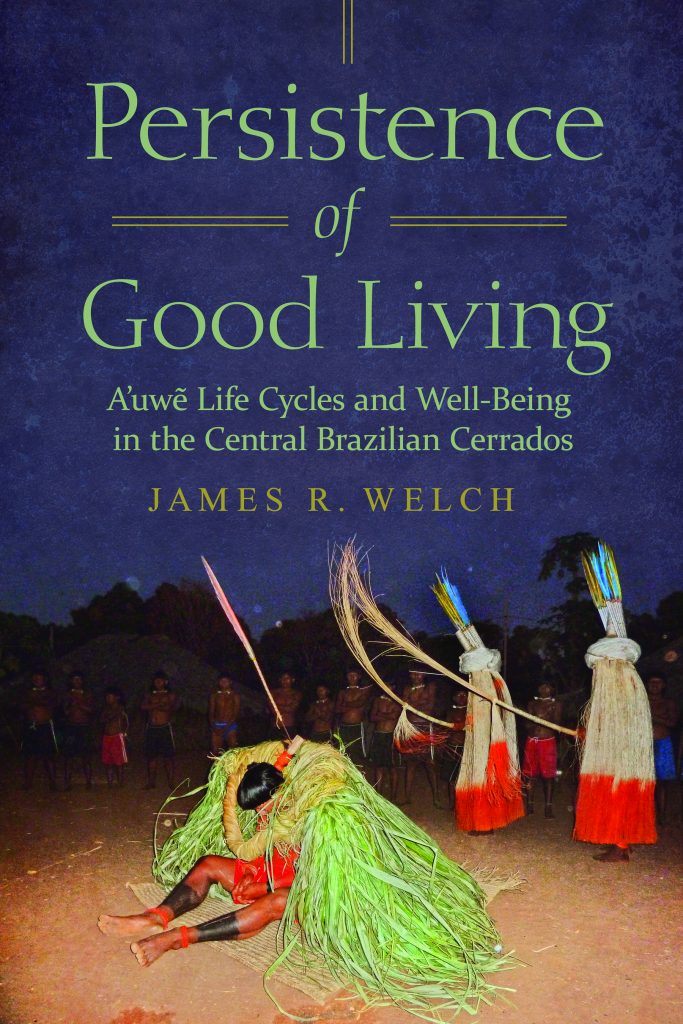
This book explains how Indigenous peoples organize their economies for good living by supporting relationships between humans and the natural world. This work argues that creating such relationships is a major alternative to economic models that stress individualism and domination of nature.

O’odham artist Michael Chiago Sr.’s paintings provide a window into the lifeways of the O’odham people. This book offers a rich account of how Tohono O’odham and Akimel O’odham live in the Sonoran Desert now and in the recent past.

We are thrilled that Michael Chiago won a Southwest Book of the Year Award! Check out the great book launch we had for Michael Chiago, in collaboration with Western National Parks Association!

In this book, disappearance of a young Choctaw leads Detective Monique Blue Hawk to investigate a little-known ceremonial dance. As she traces the steps of the missing man, she discovers that the seemingly innocuous Renewal Dance is not what it appears to be. After Monique embarks on a journey that she never thought possible, she learns that the past and future can converge to offer endless possibilities for the present. She must also accept her own destiny of violence and peacekeeping.

Read a brief interview with the author here. Listen to the author speak about her work on Native American Calling here. Are you attending the Tucson Festival of Books this year? Catch Devon Mihesuah and other UA Press authors at signings and on panels!

In Raven’s Echo, Tlingit artist and poet Robert Davis Hoffmann’s poetry grapples with reconstructing a life within Tlingit tradition and history. The destructiveness of colonialism brings a profound darkness to some of the poems in Raven’s Echo, but the collection also explores the possibility of finding spiritual healing in the face of historical and contemporary traumas.

Watch the poet discuss his work here.

This ethnography examines the role of language and embodied behaviors in producing a congregational split in a Catholic parish serving Guatemala’s Q’eqchi’ Maya people. Drawing on a range of methods from linguistic and cultural anthropology, author Eric Hoenes del Pinal examines how the introduction of the Catholic Charismatic Renewal movement in the parish produced a series of debates between parishioners that illustrate the fundamentally polyvocal nature of Catholic Christianity.

Read field notes from the author here.

Visualizing Genocide engages the often sparse and biased discourses of genocidal violence against Indigenous communities documented in exhibits, archives, and museums. Essayists and artists from a range of disciplines identify how Native knowledge can be effectively incorporated into memory spaces.

Read an excerpt from the book here.

From the early colonial period to the War on Terror, translation practices have facilitated colonialism and resulted in epistemicide, or the destruction of Indigenous and subaltern knowledge. This book discusses translation-as-epistemicide in the Americas and providing accounts of decolonial methods of translation.

Reading the Illegible weaves together the stories of the peoples, places, objects, and media that surrounded the creation of the anonymous Huarochirí Manuscript (c. 1598–1608) to demonstrate how Andean people endowed the European technology of writing with a new social role in the context of a multimedia society.

Critically examining the United States as a settler colonial nation, this literary analysis recenters Oceti Sakowin (historically known to some as the Sioux Nation) women as their tribes’ traditional culture keepers and culture bearers, while offering thoughtful connections between settler colonialism, literature, nationalism, and gender.

Centering historically neglected Indigenous voices as its primary source material, author David Martínez shows how Carlos Montezuma’s correspondence and interactions with his family and their community influenced his advocacy—and how his important work in Arizona specifically motivated his work on a national level.

This deep dive into the coal industry and the Navajo Nation captures a pivotal moment in the history of energy shift and tribal communities. Geographer Andrew Curley spent more than a decade documenting the rise and fall coal, talking with those affected most by the changes—Diné coal workers, environmental activists, and politicians.

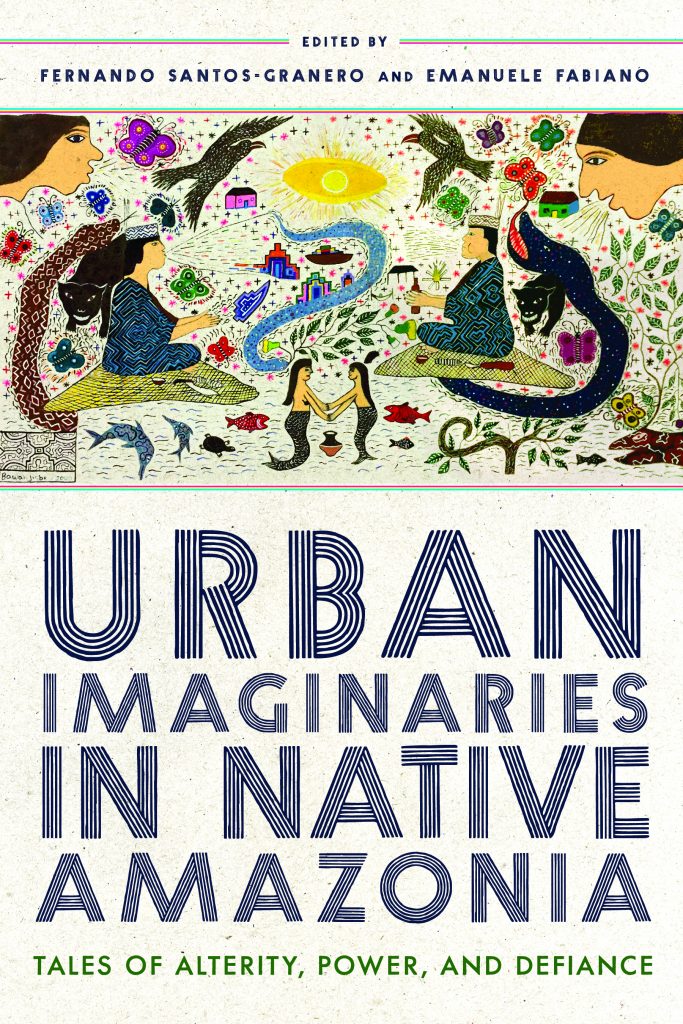
Featuring analysis from historical, ethnological, and philosophical perspectives, this volume dissects Indigenous Amazonians’ beliefs about urban imaginaries and their ties to power, alterity, domination, and defiance. Contributors analyze how ambiguous urban imaginaries express a singular view of cosmopolitical relations, how they inform and shape forest-city interactions, and the history of how they came into existence, as well as their influence in present-day migration and urbanization.

This comparative work dispels the harmful myth that Native people are unfit stewards of their sacred places. This work establishes Indigenous preservation practices as sustaining approaches to the caretaking of the land that embody ecological sustainability, spiritual landscapes, and community well-being.

‘Āina Hānau / Birth Land is a powerful collection of new poems by Kanaka ʻŌiwi (Native Hawaiian) poet Brandy Nālani McDougall. These poems cycle through sacred and personal narratives while exposing and fighting ongoing American imperialism, settler colonialism, militarism, and social and environmental injustice to protect the ʻāina and its people.

We are thrilled that Brandy Nālani McDougall was selected as the new Hawai’i state poet laureate!

Arizona History Convention Recap

Editors, authors, and readers of Arizona history came together at the Arizona History Convention (AHC) in-person sessions on April 15, 2023. AHC also hosted sessions online on April 13 and 14. Check out our photos below from April 15 at the Tempe History Museum. THANK YOU to Heidi Osselaer, Peg Kearney and all the other volunteers who made it a great Convention! In the photo above, Tom Zoellner, Wynne Brown and Gil Storms discuss “The Art of Writing Biography.”

Anabel Galindo, Octaviana Trujillo, Antonia Campoy, and Robert Valenica discuss “Itom Hiak Noki: You Can Find Our Strength in Our Words.”
Elsie Szecsy, Dennis Preisler, Katherine Morrissey and Lorrie McAllister discuss “Re-thinking Geography and History.”
Editor-in-Chief Kristen Buckles talks to Katherine Morrissey, Arizona Crossroads series co-editor.

Arizona History Convention 2023: Recent Books, Conference Discounts, and More!

April 11, 2023

Join us for the 2023 Arizona History Convention! This year’s convention will be held online April 13 and 14 and in-person on Saturday, April 15, at the Tempe Community Center, located on the southwest corner of Rural and Southern roads in Tempe, Arizona. Stop by our table to browse our fantastic recent titles, purchase books at a 30% discount, and catch up with press staff! If you aren’t able to make it to the in-person section of the convention, browse our recent titles below and use the code AZHISTCON23 for 30% off plus free U.S. shipping. If you have questions about our publishing program, visit this page or reach out to our Editor-in-Chief, Kristen Buckles, at kbuckles@uapress.arizona.edu.

We are excited to be launching two new series, BorderVisions and Arizona Crossroads, this year! Learn more below.

BorderVisions, edited by Vanessa Fonseca-Chávez and Yvette J. Saavedra, engages the U.S.-Mexico borderlands’ dynamic histories and cultures and expands our understanding of the borderlands beyond a site of geopolitical inquiry. The series conceptualizes borderlands as both a place and a methodology and addresses the constraints of traditional fields, challenging authors to think creatively and critically about the expansive frameworks and possibilities of borderlands studies. This series will deepen our understanding of the ways in which gender, class, race, sexuality, and other intersectional concerns are reflected in humanities and humanistic social science borderlands scholarship. This series will publish monographs and edited collections by new and established authors who employ innovative interdisciplinary methodologies on topics reflecting both sides of the U.S.-Mexico border. We seek to foster an intellectual space that envisions and manifests the multitude of perspectives for understanding the borderlands through interdisciplinary humanities and humanistic social sciences scholarship. We are especially interested in books that address the complexities and richness of borderlands experiences at different historical, cultural, and sociopolitical moments.

Watch a recording of the series launch for BorderVisions here.

Arizona Crossroads, edited by Anita Huizar-Hernández, Eric V. Meeks, and Katherine G. Morrissey, is a series in collaboration with the Arizona Historical Society that explores the history of peoples and cultures, events and struggles, ideas and practices in the place we know today as Arizona. Throughout its history, Arizona has long served as a crossroads between Native peoples, settler colonists, and immigrants from around the world. It has been a contested site among peoples, nations, and empires; it is also a place where events, decisions, and struggles have had far-reaching consequences beyond its shifting borders. As the series title suggests, we welcome books that deepen our understanding of Arizona as a diverse crossroads and meeting ground within broad national and transnational contexts, whether topical, thematic, or geographic (the region, the nation, the borderlands). Open to any topic within any time period of Arizona history, the series will publish scholarship that is cutting-edge and innovative, yet generally accessible and readable to an educated general audience. We are open to a variety of book formats: monographs, multi-authored works, and edited collections, as well as broader more synthetic works. Interdisciplinary projects that engage the past are encouraged.

Watch a recording of the series launch for Arizona Crossroads here.

For questions or to submit a proposal to either of these series, please contact Kristen Buckles, kbuckles@uapress.arizona.edu.

A sharp examination of Arizona by a nationally acclaimed writer, Rim to River follows Tom Zoellner on a 790-mile walk across his home state as he explores key elements of Arizona culture, politics, and landscapes. This book is essential reading for anyone interested in learning more about a vibrant and baffling place.

This deep dive into the coal industry and the Navajo Nation captures a pivotal moment in the history of energy shift and tribal communities. Geographer Andrew Curley spent more than a decade documenting the rise and fall coal, talking with those affected most by the changes—Diné coal workers, environmental activists, and politicians.

This history of Sabino Canyon shows like never before why this mountain canyon near Tucson, Arizona, is such a beloved place. With more than two hundred images and engaging text, David Wentworth Lazaroff relays a hundred years of history, revealing how the canyon changed from a little-known oasis into an immensely popular recreation area on the edge of a modern metropolis.

Centering historically neglected Indigenous voices as its primary source material, author David Martínez shows how Carlos Montezuma’s correspondence and interactions with his family and their community influenced his advocacy—and how his important work in Arizona specifically motivated his work on a national level.

World of Our Mothers highlights the largely forgotten stories of forty-five women immigrants in the early twentieth century. Through interviews in Arizona mining towns, Phoenix barrios, and selected areas of California, Texas, and the Midwest, we learn how they negotiated their lives with their circumstances.

WSSA 2023: Recent Books, Conference Discounts, and More!

April 10, 2023

Join us for the 2023 World Social Sciences Assocation meeting in Tempe, Arizona on April 12-15! We will be selling our recent books at a 30% discount, and you can catch up with our Editor-in-Chief, Kristen Buckles! If you aren’t able to attend the conference this year, please take a look at our recent titles below, and use the code AZWSSA23 to order books at a 30% discount with free U.S. shipping through 5/15/2023. If you have questions about our publishing program, visit this page or email Kristen at kbuckles@uapress.arizona.edu.

Accessible and engaging, Latinx Belonging underscores and highlights Latinxs’ continued presence and contributions to everyday life in the United States as they both carve out and defend their place in society.

Sitting at the intersection of border studies, immigration studies, and Latinx studies, this concise volume shows how Central American migrants in transit through Mexico survive the precarious and unpredictable road by forming different types of social ties, developing trust, and engaging in acts of solidarity. The accessible writing and detailed ethnographic narratives of different associations, ties, and groups that migrants form while in transit weave together theory with empirical observations to highlight and humanize the migrant experience.

This volume draws much-needed attention to the plight of migrant children and their families, illuminating the human and emotional toll that children experience as they crisscross the Americas. Exploring the connections between education, policy, cultural studies, and anthropology, the essays in this volume navigate a space of transnational children’s rights central to Latin American life in the twentieth and twenty-first centuries.

Read an excerpt from the book here.

Centering historically neglected Indigenous voices as its primary source material, author David Martínez shows how Carlos Montezuma’s correspondence and interactions with his family and their community influenced his advocacy—and how his important work in Arizona specifically motivated his work on a national level.

Border Water places transboundary water management in the frame of the larger binational relationship, offering a comprehensive history of transnational water management between the United States and Mexico. As we move into the next century of transnational water management, this important work offers critical insights into lessons learned and charts a path for the future.

This new book offers a broad overview of topics pertaining to gender-related health, violence, and healing. Employing a strength-based approach (as opposed to a deficit model), the chapters address the resiliency of Indigenous women and two-spirit people in the face of colonial violence and structural racism.

Colonialism has the power to corrupt. This important new work argues that even the early Quakers, who had a belief system rooted in social justice, committed structural and cultural violence against their Indigenous neighbors.

For Authors

The University of Arizona Press publishes the work of leading scholars from around the globe. Learn more about submitting a proposal, preparing your final manuscript, and publication.
Inquire

Requests

The University of Arizona Press is proud to share our books with readers, booksellers, media, librarians, scholars, and instructors. Join our email Newsletter. Request reprint licenses, information on subsidiary rights and translations, accessibility files, review copies, and desk and exam copies.
Request

Support the Press
Support a premier publisher of academic, regional, and literary works. We are committed to sharing past, present, and future works that reflect the special strengths of the University of Arizona and support its land-grant mission.
Give