Urayoán Noel Featured on the Poetry Centered Podcast

August 13, 2020

Poetry Centered features curated selections from voca, the University of Arizona Poetry Center’s online audiovisual archive of more than 1,000 recordings of poets reading their work during visits to the Center between 1963 and today. In each episode, a guest poet introduces three poems from voca, sharing their insights about the remarkable performances recorded in our archive. Each episode concludes with the guest poet reading a poem of their own. Our inaugural season includes episodes hosted by Hanif Abdurraqib, Alison Hawthorne Deming, Ada Limón, Urayoán Noel, Maggie Smith, and TC Tolbert.

In this episode, Urayoán Noel introduces recordings of Ai engaging with war through necessary fury (“The Root Eater”), Lehua M. Taitano composing a lifeline to communities living with the legacies of colonialism (“A Love Letter to the Chamoru People in the Twenty-first Century”), Ofelia Zepeda on the untranslatability of song (“Ñeñe’i Ha-ṣa:gid / In the Midst of Songs”), and a fable of radical imagination by Gloria E. Anzaldúa (“Nepantla”). Noel ends the episode with his poem “Molecular Modular,” built around open-ended questions considering virality and modes of community.

Urayoán Noel is the author of Buzzing Hemisphere/ Rumor Hemisférico, a playful and irreverent mash-up of voices and poetic traditions from across the Americas, which imagines an alternative to the monolingualism of the U.S. literary and political landscape, and proposes a geo-neuro-political performance attuned to damaged or marginalized forms of knowledge, perception, and identity. Urayoán Noel has been a fellow of CantoMundo and the Ford Foundation, and he is currently the poetry editor of NACLA Report on the Americas. Born in San Juan, Puerto Rico, Noel lives in the Bronx and is an assistant professor of English and Spanish at New York University.

Keep an eye out on our website for a forthcoming collection from Urayoán Noel!

Charles Bowden’s Blue Desert Featured in Harper’s Magazine

7/24/2020

In the August 2020 issue of Harper’s Magazine, Wes Enzinna writes an essay on Charles Bowden that praises, criticizes, and recognizes Bowden as a shrewd predictor of the current chaos surrounding the United States borderlands. Below, read an excerpt from the essay which pertains to our book Blue Desert, originally published in 1986 and recently re-released with a new forward by Fransciso Cantú in 2018.

“For all his cynicism, Bowden’s response to this crisis was never a desire to strengthen the border, but rather to destroy it. ‘There aren’t any Mexican stars or American stars,’ he once said in a radio profile, as he hiked with the correspondent through the Buenos Aires wildlife refuge in southern Arizona, a popular route for migrants sneaking into the United States. ‘It’s like a great biological unity with a meat cleaver of law cutting it in half.’ His work was an attempt to heal this cleavage, and to remind us how our hunger, pollution, and violence connected us all, especially in the Sonoran and Chihuahuan Deserts, where nature was a stingy mother and death ruled over everything. ‘We are becoming more and more aware that our civilization destroys the foundations that support it by devouring the earth and the things of the earth,’ he wrote in Blue Desert. ‘But we don’t have the courage to back away, to stop, to restrain ourselves. I know I don’t.’

Like the beasts and criminals he admired, Bowden was a complicated, contradictory creature. He loved dogs, dirt, wine, worms, Cadillacs, cacti. He held backyard parties to watch summer cereus flowers bloom at midnight, and owned scores of guns but was reluctant to shoot them lest they scare the birds. In Most Alarming, a priest named Gary Paul Nabhan reports that the last time he saw Bowden the surly old tough guy was weeping for a cottonwood tree that had died. Bowden’s teeth were falling out. He was poor and owned little more than a laptop, a Le Creuset pot, a sleeping bag, a Honda Fit, and a pair of binoculars. If in life he sometimes failed to be a decent man, in his writing he tried to be a better animal. ‘The whippoorwill’s name reflects the sounds we hear it make,’ he once wrote in a letter to a friend.”

Read the entire essay here.
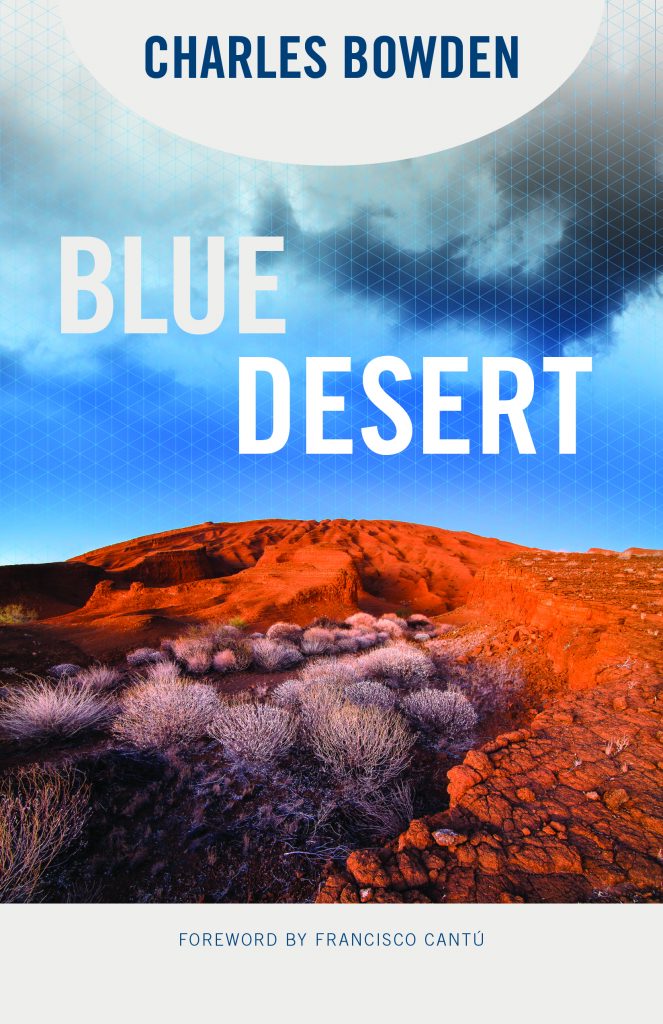
Published in 1986, Blue Desert was Charles Bowden’s third book-length work and takes place almost entirely in Arizona, revealing Bowden’s growing and intense preoccupation with the state and what it represented as a symbol of America’s “New West.” In a thoughtful new foreword, Francisco Cantú writes, “In Blue Desert, we follow Bowden in the processes of becoming. We see the version of Bowden that he would likely most want us to remember—someone who did their best to be an honest witness, someone who was haunted by modernity and his place in it, someone who grappled with his demons by gazing deeply into the desert.”

Charles Bowden (1945–2014) was the author of many acclaimed books about the American Southwest and U.S.-Mexico border issues. He was a contributing editor for GQ, Harper’s, Esquire, and Mother Jones. His honors include a PEN First Amendment Award and the Lannan Literary Award for Nonfiction.
Escape the News with University Press Books

May 1, 2020

The university press community has compiled an “Escape the News” reading list! The escape theme was interpreted broadly: submissions range from music history and poetry, graphic novels, photography and illustrated books, short stories, novels, memoirs, and natural history. There is also an international flavor to the list—especially in the areas of creative literature, fiction, poetry, and fine arts—indicating the global nature of the university press community. The goal for the list is to offer readers a way to entertain and inform in a time when reading allows us a portal to other worlds, when we can’t quite get there in person.

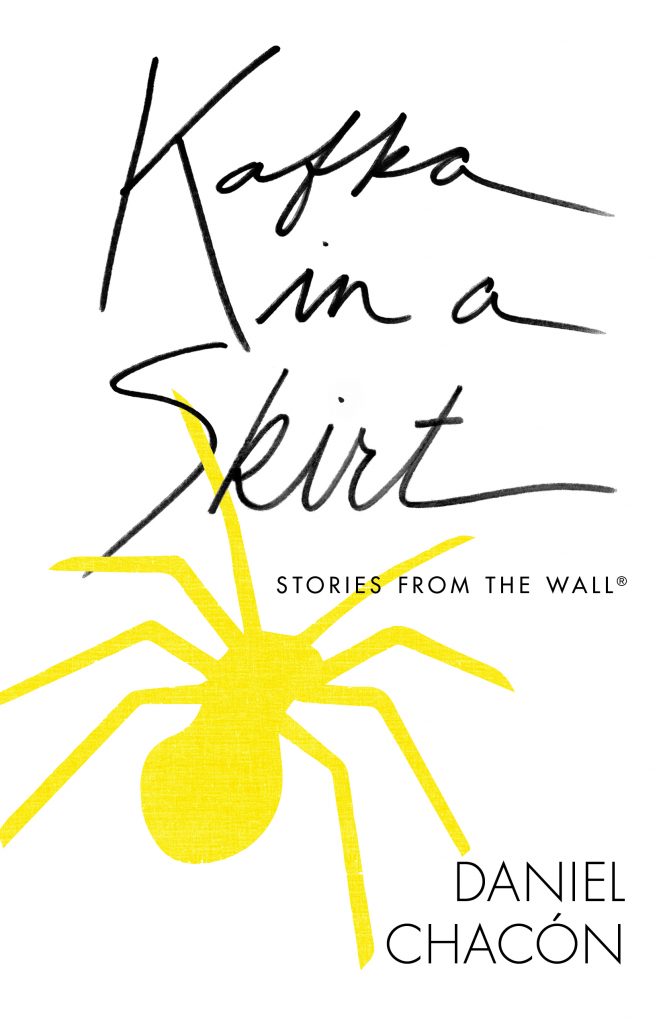
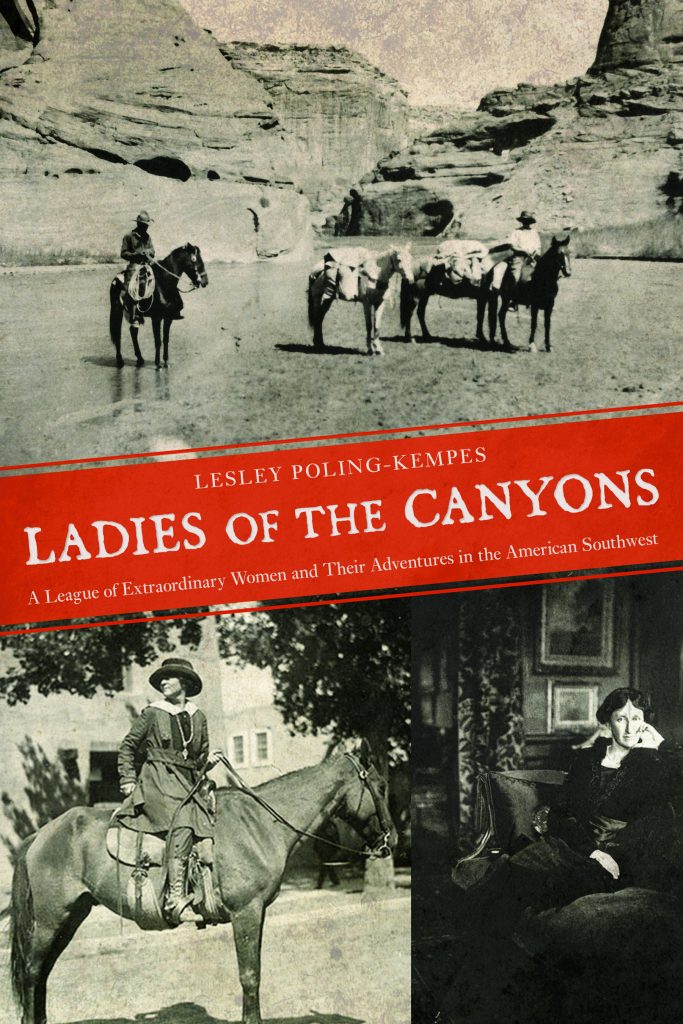
Our book picks for this “Escape the News” reading list are Kafka in a Skirt by Daniel Chacón and Ladies of the Canyons by Lesley Poling-Kempes.

“Daniel Chacón’s collection of stories challenges convention and resolution, offering us thought-provoking insights into our current (and oftentimes surreal) political climate. Kafka in a Skirt breaks new ground in the art of social commentary that highlights the strangeness of our human condition and the follies of the skewed perceptions we maintain of ourselves, our neighbors, and the troubled world we live in.”—Rigoberto González

Poling-Kempes has done an admirable job scouring archives for these women, who have been largely left out of the historical record of the West. It’s a kind of prequel to our common history of the Southwest, peopled by women with long skirts and cinched waists in the desert heat, riding cowboy style, trying to do right by the land they all loved.”—Los Angeles Times

Discover more books from this reading list here.

Smithsonian Magazine Selects Sugarcane and Rum for Their Weekly Reading Series

April 30, 2020

We are thrilled that Sugarcane and Rum was selected for the latest installment of Smithsonian magazine’s “Books of the Week” series!

Here’s what Smithsonian had to say about Sugarcane and Rum:

Gust and MathewsSugarcane and Rum looks beyond the Yucatán Peninsula’s reputation as an idyllic getaway spot to expose the harsh conditions faced by its 19th-century Maya laborers.

Hacienda owners implemented punitive economic systems where workers became deeply indebted to their bosses, only to see their freedoms curtailed as a result. At the same time, the authors note, these men and women enjoyed a certain level of autonomy as an indispensable source of labor come harvest time.

‘What this history shows,’ according to the book’s introduction, ‘is that sugarcane and rum are produced on a massive scale to satisfy the consumptive needs of the colonizers, which only compounds its exploitative nature as the products became available to the middle and working class.’

Meilan Solly for Smithsonian magazine

Read the full list of book recommendations here.

Molly McGlennen Reads ‘Ode To Prince’ from Our Bearings

April 27, 2020

University of Arizona Press author Molly McGlennen shared a video she did recently of her reading her poem “Ode To Prince,” a poem she dedicated to the late Minneapolis musician and read to honor the recent four-year anniversary of Prince’s passing.

The poem is in McGlennen’s new collection, Our Bearings, published by the University of Arizona Press.

Emmy Pérez Selected for The Big Texas Read

April 27, 2020

Readers in Texas now have the opportunity to be part of statewide book clubs, which have started recently as a way for readers to connect while they are staying home and staying safe. We are thrilled that Texas Poet Laureate and University of Arizona Press author Emmy Pérez is one of the featured authors in The Big Texas Read! Her collection, With the River on Our Face, will be one of the books bringing Texans from all over the state together during these stressful times.

“In Texas, the organizations Writing Workshops Dallas and Gemini Ink have joined forces for The Big Texas Read, a statewide book club that will take place over Zoom every two weeks from April 29 through June 10. As described on Writing Workshops Dallas’s site, “[W]e’ll be reading ONE work of prose or poetry written by a Texas author every 1-2 months from now until the bug is squashed…Think of it as a big virtual book club, only you get to stay home, mix a cocktail, eat a big piece of chocolate cake, and snuggle up on the sofa.” Organizer Blake Kimzey told The Dallas Morning News, “Most people are siloed at home with their families, or they’re by themselves. The goal of this is to bring back interactivity with people. Not just to read the books, but to have a release from the current moment.” Independent bookstore partners of the event include Dallas’s Interabang Books and San Antonio’s The Twig Book Shop, where readers can order the titles for home delivery or curbside pickup.”

Rachel Kramer Bussel for Forbes

Read the entire article for Forbes here.

Emmy Pérez’s poetry collection With the River on Our Face flows through the Southwest and the Texas borderlands to the river’s mouth in the Rio Grande Valley/El Valle. The poems celebrate the land, communities, and ecology of the borderlands through lyric and narrative utterances, auditory and visual texture, chant, and litany that merge and diverge like the iconic river in this long-awaited collection.

 “In divided times, Emmy Pérez’s voice speaks not only from America, but from the Americas, north and south. A wise, healing poetry.”—Sandra Cisneros

 “Emmy Pérez is a word musician and magician. This book has a powerful pull—it has secret places where part of you will reside. It is a good season when work like this is in bloom.”—Luis Alberto Urrea

Carwil Bjork-James Talks Social Movements in Bolivia on the Howard Zinn Book Fair Podcast: Books to the Barricades

April 20, 2020

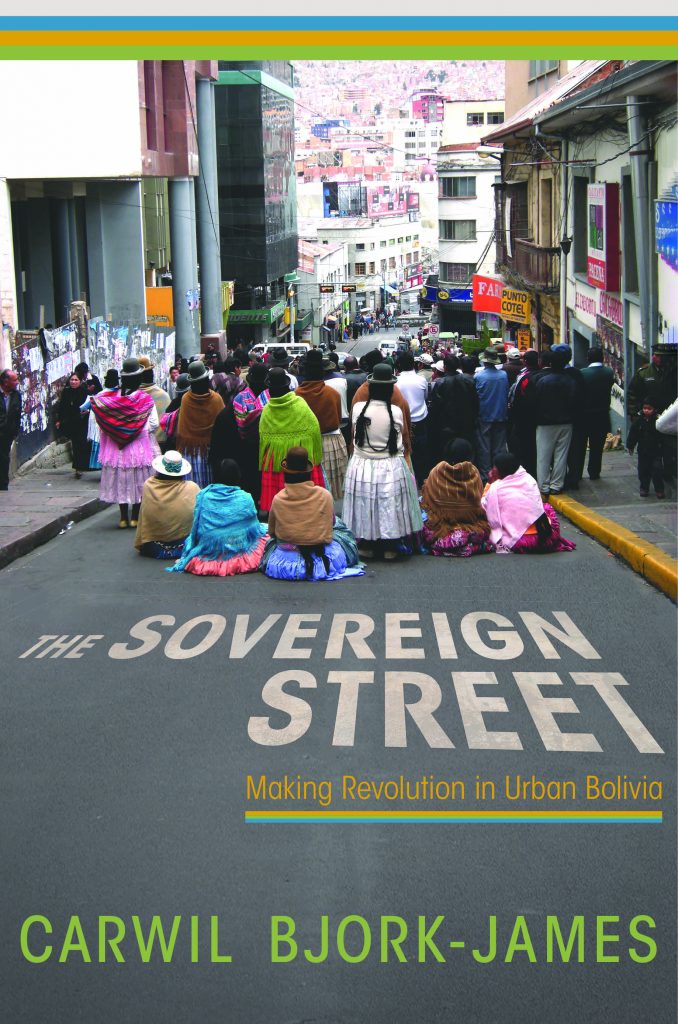
In a new podcast series, Books to the Barricades, Carwil Bjork-James discusses his new book, The Sovereign Street. This podcast series is hosted by the Howard Zinn Book Fair, which is an annual celebration of the people’s history— past, present, and future. Listed to the podcast here.

In the early twenty-first century, Bolivian movements made streets, plazas, and highways into the decisively important spaces for acting politically, rivalling and at times exceeding voting booths and halls of government. The Sovereign Street documents this important period, showing how indigenous-led mass movements reconfigured the politics and racial order of Bolivia from 1999 to 2011.

Taking the streets of Cochabamba, Sucre, and La Paz as its vantage point, The Sovereign Street offers a rare look at political revolution as it happens. It documents a critical period in Latin American history, when protests made headlines worldwide, where a generation of pro-globalization policies were called into question, and where the indigenous majority stepped into government power for the first time in five centuries.

Carwil Bjork-James is an assistant professor of anthropology at Vanderbilt University. His research, both ethnographic and historical, concerns disruptive protest, grassroots autonomy, state violence, and indigenous collective rights in Bolivia.

Two Podcasts with the Authors of Unwriting Maya Literature

April 17, 2020

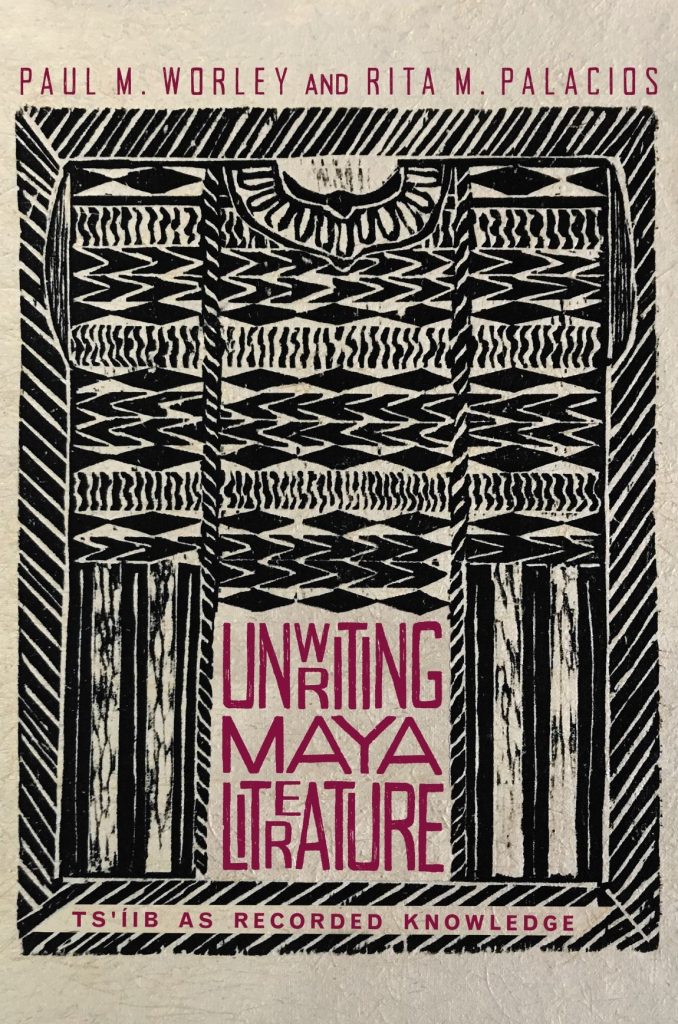
Paul M. Worley and Rita M. Palacios discussed their new book, Unwriting Maya Literature, in two podcasts. If you’ve been wanting to hear more about their work, here is your chance!

The first podcast is for SECOLAS’s Historias series can be listened to here.

Historias is a SECOLAS (Southeastern Council of Latin American Studies) production and it has been around for a little while. Until recently, their focus has been History, but its shifting to include other disciplines.

The second podcast is available in both Spanish and English, and was recorded for Mesoamerican Studies Online’s On Air series. The English version can be listened to here and the Spanish version can be listened to here.

Mesoamerican Studies Online and On Air is a fairly new project by Catherine Nuckols-Wilde, a PhD student of Art History and Latin American Studies from Tulane University. She began the podcast a short while ago, and she interviews experts on Mesoamerica from all different disciplines.

As Rita M. Palacios says, “Listening to these podcasts is like going to a conference but with the ability to space out the talks you attend. That, and you can do it in your PJs. So, do yourself a favor and subscribe to Mesoamerican Studies On Air and Historias.” So, enjoy listening!

Unwriting Maya Literature places contemporary Maya literatures within a context situated in Indigenous ways of knowing and being. Through the Maya category ts’íib, the authors propose an alternative to traditional analysis of Maya cultural production that allows critics, students, and admirers to respectfully interact with the texts and their authors. Unwriting Maya Literature offers critical praxis for understanding Mesoamerican works that encompass non-Western ways of reading and creating texts.

To learn more, visit Rita’s website and Paul’s website.

Isabel Molina-Guzmán Talks Latinx TV & Pop Culture with Frederick Aldama in a New Video

April 16, 2020

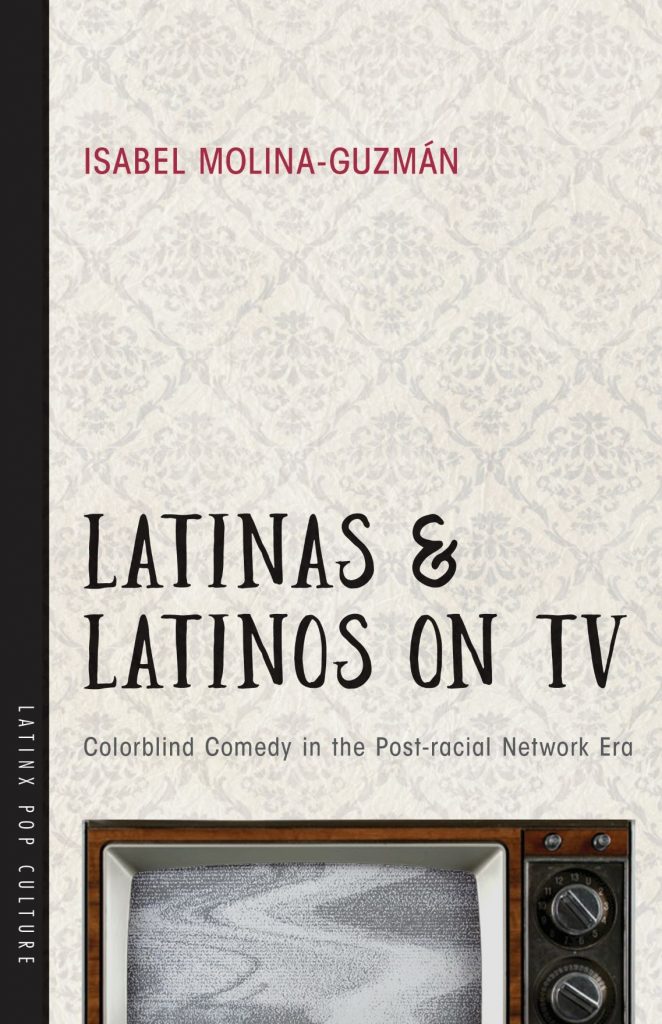
In this new video, Isabel Molina-Guzmán— author of Latinas and Latinos on TV— talks with Latinx Pop Culture series co-editor Frederick Luis Aldama about the significance of Latinx representations in TV and mainstream culture. View their discussion below, or watch it on YouTube here.

Latinas and Latinos on TV provides crucial insights into understanding Latinx representation. Interweaving discussions about the ethnic, racial, and linguistic representations of Latinas/os within network television comedies, Isabel Molina-Guzmán probes published interviews with producers and textual examples from hit programs like Modern Family, The Office, and Scrubs to understand how these primetime sitcoms communicate difference in the United States.

Understanding the complex ways that audiences interpret these programs, Molina-Guzmán situates her analysis within the Obama era, a period when ethnicity and race became increasingly grounded in “hipster racism”, and argues that despite increased inclusion, the feel-good imperative of TV comedies still inevitably leaves racism, sexism, and homophobia uncontested.

Isabel Molina-Guzmán is an associate professor of media and cinema studies and Latina/Latino studies at the University of Illinois at Urbana–Champaign.

Five Questions with Guadalupe Correa-Cabrera and Victor Konrad

April 13, 2020

According to Guadalupe Correa-Cabrera and Victor Konrad, if ever there was a time to better understand the borders of North America, it’s now during a global pandemic crisis.

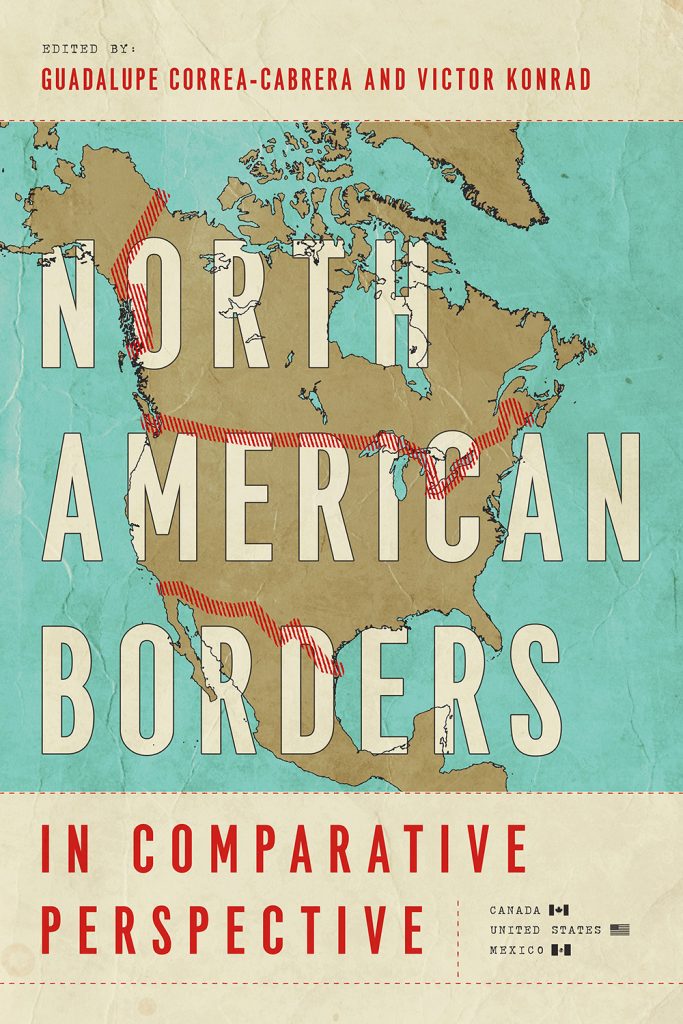
The editors of North American Borders in Comparative Perspective, recently published by the University of Arizona Press, said the pandemic has the potential to further change policies and life along both borders. Correra-Cabrera and Konrad, took time from their work, to talk about these growing border issues, their book, and the importance of learning more about both borders, not only our southern borderlands.

In North American Borders in Comparative Perspective, leading experts provide a contemporary analysis of how globalization and security imperatives have redefined the shared border regions of Canada, the United States, and Mexico.

This volume offers a comparative perspective on North American borders and reveals the distinctive nature first of the over-portrayed Mexico-U.S. border and then of the largely overlooked Canada-U.S. border. The perspectives on either border are rarely compared. Essays in this volume bring North American borders into comparative focus; the contributors advance the understanding of borders in a variety of theoretical and empirical contexts pertaining to North America with an intense sharing of knowledge, ideas, and perspectives.

For Authors

The University of Arizona Press publishes the work of leading scholars from around the globe. Learn more about submitting a proposal, preparing your final manuscript, and publication.

Inquire

Requests

The University of Arizona Press is proud to share our books with readers, booksellers, media, librarians, scholars, and instructors. Join our email Newsletter. Request reprint licenses, information on subsidiary rights and translations, accessibility files, review copies, and desk and exam copies.

Request

Support the Press

Support a premier publisher of academic, regional, and literary works. We are committed to sharing past, present, and future works that reflect the special strengths of the University of Arizona and support its land-grant mission.

Give