University Presses Are a Wise Investment for Scholarship and Community

February 5, 2020

Inside Higher Ed featured an opinion piece on the value university presses offer their parent institutions, and how that value uplifts scholarship, and community.

Written by Kathryn Conrad, director of the University of Arizona Press and president of the Association of University Presses, and Jennifer Crewe, associate provost and director of Columbia University Press and the association’s immediate past president, the editorial points out that some institution leaders are unfamiliar with the role their presses play in scholarly publishing, and the important role presses play in advancing the values of their home institutions.

More than 100 North American universities choose to invest in a university press, including nearly 70 percent of leading research institutions and almost 80 percent of Association of American Universities members. Publishing scholarship of the highest quality in an environment driven by mission, and not profit, is an endeavor that top universities heartily endorse. Our daily work as scholarly publishers is firmly grounded in the foundational beliefs and goals of our parent institutions. While the publishing mix of individual university presses may vary, as do our universities’ areas of strength, our purpose is the same: the advancement of knowledge.

Looking back on a year that has included soul-searching at both Stanford University, an elite private institution, and the University of Western Australia, a vital public university, we are reminded that leaders at our home institutions sometimes are unfamiliar with what university presses do or with their own integral role in supporting scholarly publishing. Misunderstanding can lead to hasty or inaccurate judgments. …

Please read the entire op-ed here.

Our Border Heart: Reflections from Our Authors on ‘American Dirt’

January 31, 2020

As an academic press situated near the Arizona-Mexico border, when a flash point like the American Dirt controversy occurs, it’s hard to ignore voices from the books that line the University of Arizona Press bookshelves.

After all, as some University of Arizona Press authors have explained recently in national interviews and op-eds, university presses have long been home to many Latinx and Indigenous authors of fiction, poetry, and scholarship focused on social justice, anthropology, popular culture, gender studies, and the borderlands.

Chicano author David Bowles, who translated the late beloved Francisco X. Alarcón’s poems in the University of Arizona Press’s 2019 edition of Snake Poems: An Aztec Invocation, pointed this out in an NPR interview on Monday, January 27 —that indie and university presses have committed to publishing authors and scholars of color. Bowles offered further analysis in the New York Times.

The University of Arizona Press is not alone in publishing Latinx and Indigenous authors. Other university presses and independent publishers doing similar work: Arte Publico, Bilingual Press, University of Texas Press, University of New Mexico Press, and Cinco Puntos.

In the University of Arizona Press’s sixty years, publishing Latinx and Indigenous authors was purposeful and remains a priority. The Sun Tracks series, which publishes work by Indigenous authors, began in the early 1970’s as a journal and then individual titles. The first book, When it Rains: Tohono Oodham and Pima Poetry was edited by University of Arizona professor and linguist Ofelia Zepeda, a Tohono O’odham poet who remains editor of the series.

Camino del Sol, a series dedicated to Latinx authors, started in 1994, two years before Oprah’s Book Club kicked off. The series, initiated by author Ray Gonzalez, its first editor, has had a number of awards bestowed on its titles: the PEN/Beyond Margins Award to Richard Blanco’s Directions to the Beach of the Dead; Before Columbus Foundation American Book Awards to Diana Garcia’s When Living Was a Labor Camp and Luis Alberto Urrea’s Nobody’s Son; International Latino Book Awards to Pat Mora’s Adobe Odes and Kathleen Alcalá’s The Desert Remembers My Name; the Premio Aztlán literary prize to Sergio Troncoso’s The Last Tortilla; and the PEN Oakland-Josephine Miles National Literary Award to Kathleen de Azevedo’s Samba Dreamers. The first National Book Critics Circle Award for a Chicana/o went Juan Felipe Herrera’s Half of the World in Light, also published by the University of Arizona Press.

University of Arizona Press authors who have weighed in on the controversy:

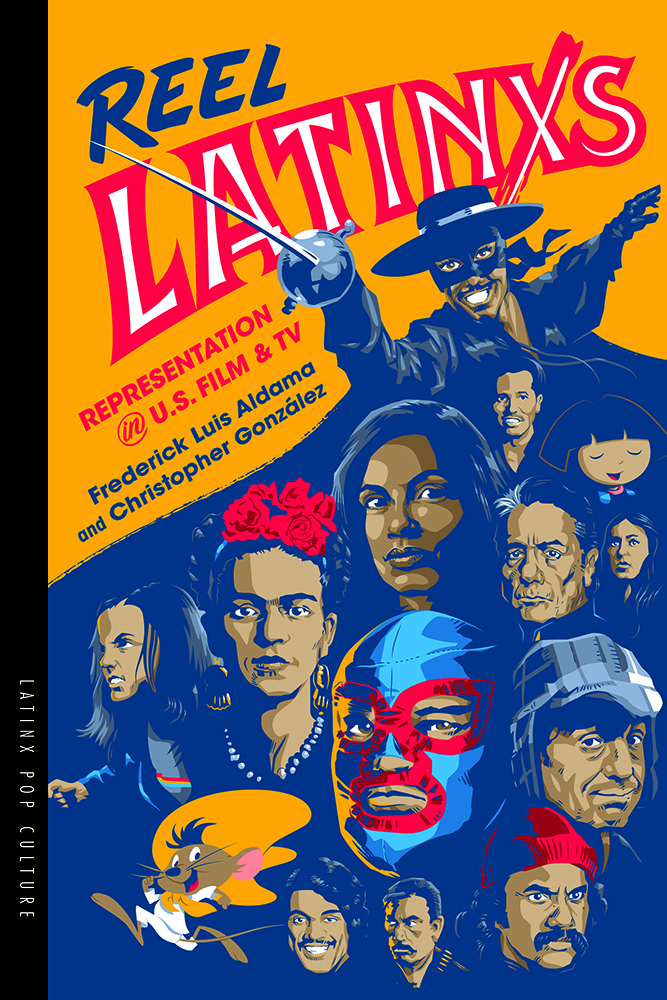
Frederick Luis Aldama, University Distinguished Professor at Ohio State University, is a leading Latinx cultural scholar with three important titles in the University of Arizona Press’s Latinx Pop Culture series. From his January 24 essay Brownface Minstrelsy; or a Defense of Our Freedom in the Art of Latinx Storytelling? on Latinx Spaces:

Wiping windows clean of roadkill, let me focus attention on this point about a non-Mexican or non-Latinx author writing this book. Of course, authors different from her run deep, including D.H. Lawrence, Valle Inclán, Kerouac, Nabokov, Boyle, and Theroux, among many others. Here, however, we return to Sánchez Prado’s point that a non-Mexican author can create fictions about Mexico, if they do the work for it to represent and cohere well. In other words, none of this cutting corners to get away with caca because you know your main audiences will be white and not be Mexican or Latinx.

University of Arizona author Daniel A. Olivas offered further perspective in an opinion piece published recently in The Guardian:

American Dirt is an insult to Latinx writers who have toiled – some of us for decades – to little notice of major publishers and book reviewers, while building a vast collection of breathtaking, authentic literature often published by university and independent presses on shoestring budgets. And while the folks who run Flatiron Books have every right to pay seven figures to buy and publish a book like American Dirt, they have no immunity from bad reviews and valid criticism.

​And that’s why more than ninety Latinx and other writers signed an open letter to Oprah Winfrey asking her to rethink the much-publicized inclusion of American Dirt in her renowned book club. I signed on to this letter with the hope Winfrey will do the right thing.

You can read the letter Olivas refers to here. Another University of Arizona Press author, poet Vickie Vértiz, signed the letter. Her collection, Palm Frond with Its Throat Cut, won the 2018 PEN America Literary Poetry award. Other authors who signed the letter include Luis Alberto Urrea (also a University of Arizona Press author), Wendy C. Ortiz, and Vanessa Angélica Villarreal.

Near the top of the University of Arizona Press website are the words: Books that make a difference, enrich understanding, and inspire curiosity. The exceptional Latinx and Indigenous voices from University of Arizona Press books accomplish that, and guide us through an entire universe, too.

Science Be Dammed Featured on Phoenix Radio Program Looking at Future of Colorado River

December 19, 2019

KJZZ ‘s Bret Jaspers in Phoenix recently interviewed University of Arizona Press author John Fleck, co-author of Science Be Dammed, on Colorado River mismanagement as part of a larger story on the river’s future. Listen to the interviews here.

“In 1968 when the Central Arizona Project was approved, Arizona knew that there was not sufficient water to keep that canal full year in and year out,” Fleck said. 

He points to testimony from then-Reclamation Commissioner Floyd Dominy, who told a House of Representatives subcommittee that “sooner or later, and mostly sooner, the natural flows of the Colorado River will not be sufficient to meet water demands, either in the lower basin or the upper basin, if these great regions of the Nation are to maintain their established economies and realize their growth potential.”

Fleck said Arizona knew that without augmentation, the water available for CAP canal customers would fluctuate.

“And somehow that was forgotten, and Arizona grew to depend on a full CAP canal every year,” Fleck said.

The river’s structural deficit is about 1.2 million acre feet each year. That’s an annual over commitment of almost four Phoenixes covered in a foot of water. As more users actually use their full allocations, the imbalance contributes to drops in Lakes Mead and Powell, the two main reservoirs. Declines led to the temporary shortage guidelines signed in 2007 and updated this year.

Today’s negotiators are preparing to tackle the structural deficit in a new agreement that will replace the guidelines, which expire in 2026. Fleck said these modern folks adhere much closer to science than their predecessors did.

“We are much better now at accepting rather than ignoring inconvenient science,” he said. “You see serious analytical work being done within the federal agencies even in the midst of the Trump administration’s attitude toward climate change.”

The truth about the river may finally be too powerful to ignore. 

Along with climate change, the deficit is one of the big reasons why Lake Mead has dropped in recent years.

Fixing it could be a big problem for Arizona.

“Unfortunately, Arizona’s facing some of the largest cuts and it really puts Arizona in a political vice,” said Brad Udall, a research scientist at Colorado State University. “You can’t take that much water out of the canal, the entire 1.2 million acre-feet, and do justice to Arizona’s water needs. Yet that’s what the 1968 law says.”

Stephen Pyne on Preparing for the Pyrocene

August 29, 2019

With millions of acres burning in the Arctic, Amazon, and between California to the Gran Canaria, fire seems to be everywhere. Stephen Pyne recently posted a thoughtful essay on History News Network, from the George Washington University. Here’s a brief excerpt:

Winter Isn’t Coming. Prepare for the Pyrocene

by Steve Pyne

Millions of acres are burning in the Arctic, thousands of fires blaze in the Amazon, and with seemingly endless flareups in between, from California to Gran Canaria–fire seems everywhere, and everywhere dangerous and destabilizing. With a worsening climate, the fires dappling Earth from the tropics to the tundra appear as the pilot flames of an advancing apocalypse.  To some commentators, so dire, so unprecedented are the forecast changes that they argue we have no language or narrative...read more.

Stephen Pyne is an emeritus professor at Arizona State University. He is the author of more than 30 books, mostly on wildland fire and its history but also dealing with the history of places and exploration, including The Ice, How the Canyon Became Grand, and Voyager. Most recently, he has surveyed the American fire scene with a narrative, Between Two Fires: A Fire History of Contemporary America, and a suite of regional reconnaissances, To the Last Smoke, all published by the University of Arizona Press.

Sergio Troncoso on His Family’s El Paso Story

August 7, 2019

Author Sergio Troncoso shared an op-ed on CNN today about his hometown El Paso and his parents’ hometown Juárez, Chihuahua.

(CNN)–I am and always will be the proud son of Mexican immigrants from El Paso. My parents came from Juárez, Chihuahua, to the United States in the 1950’s, newlyweds with on a few dollars in their pickets. In the east side of the neighborhood of Ysleta, they built an adobe house that at first… Read more.

Joy Harjo Named U.S. Poet Laureate

June 19, 2019

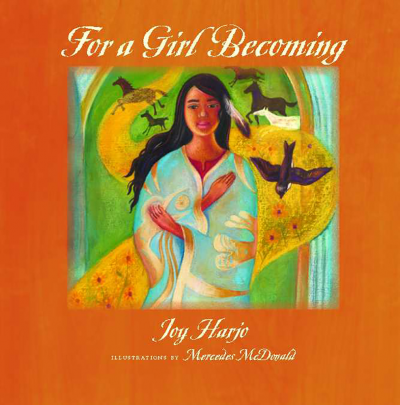
Joy Harjo (Mvskoke/Creek), an internationally known poet, writer, and musician, was named the 23rd poet laureate by the Library of Congress. The University of Arizona Press is the proud publisher of two books by Harjo:

For a Girl Becoming
With its rich, symbolic artwork and captivating language, For a Girl Becoming is the perfect gift to recognize a birth, graduation, or any other significant moment in a young woman’s life. Not only for children, this lively and touching story speaks to that part in each of us who still stands at the door of becoming.

Part of our award-winning Sun Tracks series, For A Girl Becoming is the winner of several awards. Launched in 1971, Sun Tracks was one of the first publishing programs to focus exclusively on the creative works of Native writers. The series includes more than eighty volumes of poetry, prose, art, and photography by such distinguished artists, including Joy Harjo.

Secrets from the Center of the World
This is Navajo country, a land of mysterious and delicate beauty. “Stephen Strom’s photographs lead you to that place,” writes Joy Harjo. “The camera eye becomes a space you can move through into the powerful landscapes that he photographs. The horizon may shift and change all around you, but underneath it is the heart with which we move.” Harjo’s prose poems accompany these images, interpreting each photograph as a story that evokes the spirit of the Earth. Images and words harmonize to evoke the mysteries of what the Navajo call the center of the world.

Here’s the announcement of Harjo’s appointment on NPR: https://www.npr.org/2019/06/19/733727917/joy-harjo-becomes-the-first-native-american-u-s-poet-laureate

Here’s a link to The University of Arizona’s Poetry Center, where Harjo read from her work in 2016. https://poetry.arizona.edu/blog/vocalisms-2-joy-harjo

Above: Literary legends Allison Hedge Coke and Joy Harjo.

Stephen Strom’s “Bears Ears” Featured in New York Times

November 30, 2018

Today we were thrilled to see Stephen Strom’s Bears Ears: Views from a Sacred Land featured in the New York Times. The article, authored by the one and only Rick Bass, highlights three volumes of nature photography that “take us back to Earth’s innocent roots.”

Stephen E. Strom’s eloquent “Bears Ears: Views From a Sacred Land” is perhaps a more palatable picture book — if not also in its own way a perverse bummer, another chronicling of territory taken by force. In 2016, President Obama relied on the Antiquities Act of 1906 (signed by Theodore Roosevelt) to set aside 1.35 million acres of public land in southeastern Utah, intending to protect for all time more than 100,000 sacred Native American sites, not to mention a contained landscape upon which the narrative of time has been written more eloquently and indelibly than anywhere else on earth. What Yellowstone is to wildlife, Bears Ears is to geology. However, just half a year later President Trump, in one of his first acts in office (and with characteristic racism), reduced the scope of the protected monument by 85 percent — one of the many illegal executive orders that will remain caught up in courts for years.

Read the full feature by Rick Bass in print or online.


Mark Nelson Shares Personal Experience of Biosphere 2 Experiment at Annual UA Libraries’ Luncheon

March 16, 2018

One of the eight crew members locked in Biosphere 2 during its first closure experiment, UA Press author Mark Nelson had an active visit to Tucson this past weekend. He participated in two panels at the Tucson Festival of Books as well as multiple signings across the University of Arizona campus, and was a crowd favorite following his appearance on the cover of last week’s Tucson Weekly.

One of the many highlights of his trip was presenting his new book Pushing Our Limits as part of the University of Arizona Libraries’ annual luncheon at the Arizona Inn the Monday following the festival. Nelson offered luncheon attendees a rare and compelling insider’s view of the dramatic story behind the mini-world and cleared up a few common misconceptions about the 1991–1993 closure experiment. Today we look back at some of the highlights of that talk:


University of Arizona Libraries Dean Shan Sutton and UA Libraries Annual Luncheon keynote speaker Mark Nelson.

Sutton provides luncheon attendees with an update on the state of the libraries and previews exciting upcoming projects before introducing Mark Nelson.

A display of Mark Nelson’s Pushing Our Limits: Insights from Biosphere 2 provided by our friends at the University of Arizona Bookstores.

From left to right: UA Press Director Kathryn Conrad, Mark Nelson, and UA Press Senior Editor Allyson Carter.

Nelson presents the goals and results of the Biosphere 2 experiment and the project’s implications for today’s global environmental challenges.

To close, Nelson stressed the importance of reconnecting people to a healthy relationship with nature.

Photos courtesy Aengus Anderson

January 17, 2018

Discrimination is rampant, and working conditions are poor. Safety, pay, and class-war all threaten the future of one of the highest producing copper mines in the United States. Workers are pitted against owners, as the rich receive their keep and leave the bees to fend for the mighty Copper Queen Mine. This may sound like a recurrent story, and it is! For the town of Bisbee, Arizona, it’s actually a centennial of truths reenacted every July.

Such is the basis of Robert Greene’s new documentary film, Bisbee ’17, premiering at this year’s Sundance Film Festival in Park City, Utah:

It’s 2017 in Bisbee, Arizona, an old copper-mining town just miles from the Mexican border. The town’s close-knit community prepares to commemorate the 100th anniversary of Bisbee’s darkest hour: the infamous Bisbee Deportation of 1917, during which 1,200 striking miners were violently taken from their homes, banished to the middle of the desert, and left to die.

Townspeople confront this violent, misunderstood past by staging dramatic recreations of the escalating strike. These dramatized scenes are based on subjective versions of the story and “directed,” in a sense, by residents with conflicting views of the event. Deeply personal segments torn from family history build toward a massive restaging of the deportation itself on the exact day of its 100th anniversary.

Filmmaker Robert Greene confronts the current political predicaments of immigration, unionization, environmental damage, and corporate corruption with direct, haunting messages about solidarity and struggle. With consummate skill and his signature penchant for bending the boundaries of documentary, Greene artfully stirs up the ghosts of our past as a cautionary tale that speaks to our present.

But this isn’t the first time Bisbee’s secret has been told. In 1999, the Press re-released Robert Houston’s  Bisbee ’17, for which the new film takes its name. Houston, a novelist and professor emeritus in creative writing at the University of Arizona, vividly re-creates a West of miners and copper magnates, bindlestiffs and scissorbills, army officers, private detectives, and determined revolutionaries in his historical fiction novel.

The protagonists in a bitter strike: the Wobblies (the IWW), the toughest union in the history of the West; and Harry Wheeler, the last of the two-gun sheriffs. In this class-war western, they face each other down in the streets of Bisbee, pitting a general strike against the largest posse ever assembled.

Against this backdrop runs the story of Elizabeth Gurley Flynn, strike organizer from the East, caught between the worlds of her ex-husband—the Bisbee strike leader—and her new lover, an Italian anarchist from New York. As the tumultuous weeks of the strike unfold, she struggles to sort out what she really feels about both of them, and about the West itself.


For Authors

The University of Arizona Press publishes the work of leading scholars from around the globe. Learn more about submitting a proposal, preparing your final manuscript, and publication.

Inquire

Requests

The University of Arizona Press is proud to share our books with readers, booksellers, media, librarians, scholars, and instructors. Join our email Newsletter. Request reprint licenses, information on subsidiary rights and translations, accessibility files, review copies, and desk and exam copies.

Request

Support the Press

Support a premier publisher of academic, regional, and literary works. We are committed to sharing past, present, and future works that reflect the special strengths of the University of Arizona and support its land-grant mission.

Give