The Donald Fixico Book Award recognizes innovative work in the field of American Indian and Canadian First Nations History that centers Indigenous epistemologies and perspectives. The award honors Dr. Fixico’s prolific scholarly legacy and celebrates the vibrant future of the field. Books that address Indigenous history in the United States and Canada are eligible for the award.
Returning Home features and contextualizes the creative works of Diné (Navajo) boarding school students at the Intermountain Indian School, which was the largest federal Indian boarding school between 1950 and 1984. Diné student art and poetry reveal ways that boarding school students sustained and contributed to Indigenous cultures and communities despite assimilationist agendas and pressures.
Learn more about the book and watch book trailer videos from the editors here.
Congratulations to University of Arizona Press author’s Farina Noelani King, Michael P. Taylor, and James R. Swensen for their book Returning Home: Diné Creative Works from the Intermountain Indian School placing as finalist for Best Book in Utah History from the Utah Division of State History and Utah State Historical Society.
Returning Home features and contextualizes the creative works of Diné (Navajo) boarding school students at the Intermountain Indian School, which was the largest federal Indian boarding school between 1950 and 1984. Diné student art and poetry reveal ways that boarding school students sustained and contributed to Indigenous cultures and communities despite assimilationist agendas and pressures.
This book works to recover the lived experiences of Native American boarding school students through creative works, student interviews, and scholarly collaboration. It shows the complex agency and ability of Indigenous youth to maintain their Diné culture within the colonial spaces that were designed to alienate them from their communities and customs.
Literary and arts magazine Terrain.org recently featured a review of Valarie Martínez’s book-length poem Count.
From the review:
Martínez’s brilliance, beyond her lyrical lines, is her querencia, her deep love of people and place, which moves us to a deep longing. Through the poet’s personal narration, science, and mythic story, we also understand even more deeply the drastic impacts of climate change.
… Can we also, in our own disintegrating world, find lasting balance and beauty? Through a powerful poetry both of sorrow and hope, Count helps us believe we can—if we are collective in our response. If we too have a deep love of people and place.
We are thrilled to be participating in the 2022 MALCS Summer Institute! While we can’t make it to the meeting in-person, you’ll be able to find some of our new and recent books on display, our latest catalogs, and special discount slips. Were offering a 30% discount plus free U.S. shipping on all titles when you use the code AZMALCS22 at checkout through 8/31/22.
If you have any questions about our publishing program, visit our proposal guidelines page here, or contact our Editor-in-Chief, Kristen Buckles, at kbuckles@uapress.arizona.edu.
We’re excited to highlight our new series, BorderVisions! BorderVisions engages the U.S.-Mexico borderlands’ dynamic histories and cultures and expands our understanding of the borderlands beyond a site of geopolitical inquiry. This series will publish monographs and edited collections by new and established authors who employ innovative interdisciplinary methodologies on topics reflecting both sides of the U.S.-Mexico border. Read more about the series here, and hear about BorderVisions from series editors Vanessa Fonseca-Chávez and Yvette J. Saavedra in a recorded event here.
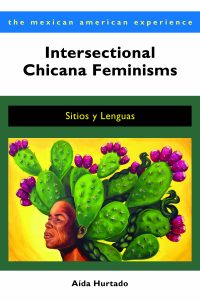
Advocating for and demonstrating the importance of an intersectional, multidisciplinary, activist understanding of Chicanas, Intersectional Chicana Feminisms provides a much-needed overview of the key theories, thinkers, and activists that have contributed to Chicana feminisms.
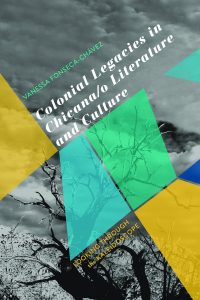
Colonial Legacies in Chicana/o Literature and Culture traces the development of Chicana/o literature and cultural production from the Spanish colonial period to the present. In doing so, it challenges us to look critically at how we simultaneously embody colonial constructs and challenge their legacies.
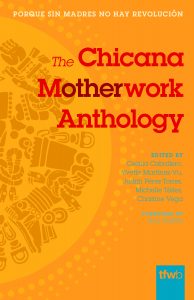
The Chicana M(other)work Anthology is a call to action for justice within and outside academia. This volume brings together emerging scholarship and testimonios by and about self-identified Chicana and Women of Color mother-scholars, activists, and allies who, using an intersectional lens, center mothering as transformative labor.
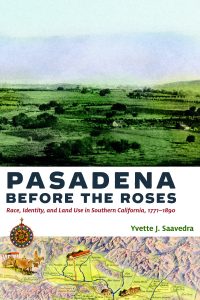
In Pasadena Before the Roses, historian Yvette J. Saavedra shows how Indigenous, Spanish, Mexican, and American groups each have redefined the meanings of land use to build their homes and their lives. This social and cultural history illustrates the interconnectedness of power, ideas of land use, and the negotiation of identity within multiple colonial moments.
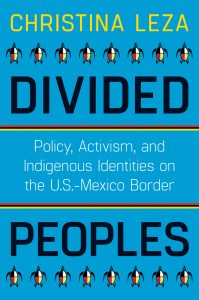
Divided Peoples addresses the impact border policies have on traditional lands and the peoples who live there—whether environmental degradation, border patrol harassment, or the disruption of traditional ceremonies. Anthropologist Christina Leza shows how such policies affect the traditional cultural survival of Indigenous peoples along the border. The author examines local interpretations and uses of international rights tools by Native activists, counter-discourse on the U.S.-Mexico border, and challenges faced by Indigenous border activists when communicating their issues to a broader public.
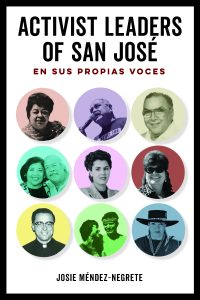
Challenging stereotypes, Activist Leaders of San José unearths and makes visible lived experiences of Chicana and Latino activists from San José, California, who made contributions to the cultural and civic life of the city. Through oral histories, we see a portrait of grassroots leadership in the twentieth century.
The decolonial approaches found in Writing the Goodlifeprovide rich examples of mutually respectful relations between humans and nature. Ybarra’s book takes on two of today’s most discussed topics: environmentalism and Latina/o population growth. Ybarra shines a light on long-established traditions of environmental thought that have existed in Mexican American literary history for at least 150 years.
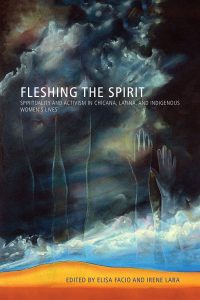
Fleshing the Spirit brings together established and new writers to explore the relationships between the physical body, the spirit and spirituality, and social justice activism. The anthology incorporates different genres of writing—such as poetry, testimonials, critical essays, and historical analysis—and stimulates the reader to engage spirituality in a critical, personal, and creative way.
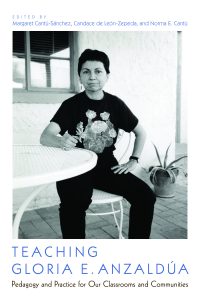
Teaching Gloria E. Anzaldúa provides pedagogical applications of Anzaldúa’s noted theories, including la facultad, the path of conocimiento, and autohistoria, among others. This text provides examples, lesson plans, and activities for scholars, professors, teachers, and community members in various disciplines—such as history, composition, literature, speech and debate, and more—and for those interested in teaching the theories of Gloria Anzaldúa.
Watch editors and contributors to the volume discuss the book here.
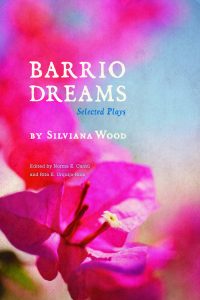
Silviana Wood’s teatro has elicited tears and laughter from audiences young and old. Barrio Dreams brings together for the first time the plays of Wood, one of Arizona’s foremost playwrights. Wood is acclaimed locally, regionally, and nationally as a playwright, actor, director, and activist.
Author Silviana Wood was featured on New Books Network podcast. You can listen here.
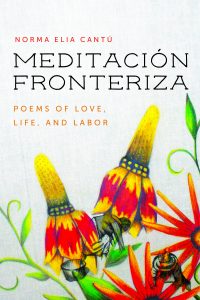
Meditación Fronterizais a beautifully crafted exploration of life in the Texas-Mexico borderlands. Written by award-winning author Norma Elia Cantú, the poems flow from Spanish to English gracefully as they explore culture, traditions, and solidarity.
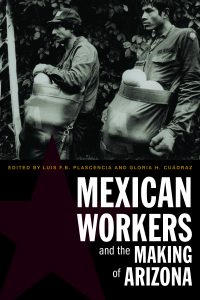
Mexican Workers and the Making of Arizonaexpands our understanding of the critical role played by Mexican and Mexican American laborers in making Arizona a prominent and influential state in the Southwest and beyond.
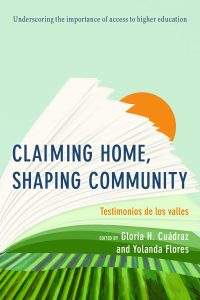
To offer testimonio is inherently political, a vehicle that counters the hegemony of the state and illuminates the repression and denial of human rights. Claiming Home, Shaping Community offers the testimonios from and about the lives of Mexican-descent people who left rural agricultural valles, specifically the Imperial and the San Joaquín Valleys, to pursue higher education at a University of California campus. Through telling their stories, the contributors seek to empower others on their journeys to and through higher education.
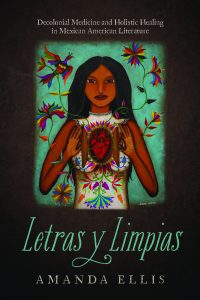
Letras y Limpias is the first book to explore the literary significance of the curandera. It offers critical new insights about how traditional medicine and folk healing underwrite Mexican American literature. Amanda Ellis traces the significance of the curandera and her evolution across a variety of genres written by Mexican American authors such as Gloria E. Anzaldúa, Manuel Munoz, ire’ne lara silva, and more.
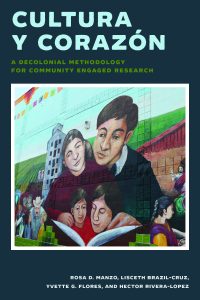
Cultura y Corazón is a cultural approach to research that requires a long-term commitment to community-based and engaged research methodologies. This book presents case studies in the fields of education and health that recognize and integrate communities’ values, culture, and funds of knowledge in the research process.
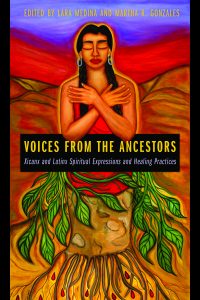
Reclaiming and reconstructing one’s spirituality based on non-Western epistemologies is central to the process of decolonization.Voices from the Ancestorsbrings together reflective writings and spiritual practices by Chicanx, Latinx, and Afro-Latinx womxn and male allies in the United States who seek to heal from the historical traumas of colonization by returning to ancestral traditions and knowledge.
Read brief interviews with the editors here and here.
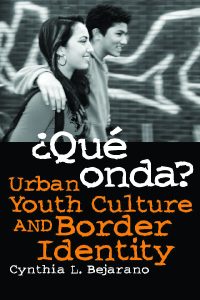
Through in-depth interviews and focus groups with both Mexicana/o and Chicana/o students, Cynthia Bejarano explores such topics as the creation of distinct styles that reinforce differences between the two groups; the use of language to further distinguish themselves from one another; and social stratification perpetuated by internal colonialism and the “Othering” process. These and other issues are shown to complicate how Latinas/os ethnically identify as Mexicanas/os or Chicanas/os and help explain how they get to this point.
Baja California’s Coastal Landscapes Revealed by Markes E. Johnson was published in November 2021. Therein, expert geologist and guide Johnson takes us on a dozen rambles through wild coastal landscapes on Mexico’s Gulf of California. Descriptions of storm deposits from the geologic past conclude by showing how the future of the Baja California peninsula and its human inhabitants are linked to the vast Pacific Basin and populations on the opposite shores coping with the same effects of global warming. In this update on his work on storm deposits, the author shares new experiences and new images from fieldwork conducted in June 2022.
By Markes E. Johnson
Whether or not another storm of similar magnitude can be expected to reach these same shores is not in contention, but rather how soon such an event is likely to occur. The current state of affairs in which we find ourselves living through accelerated global warming was the main reason for writing my book on the region’s coastal landscapes. In part, the book’s goal was to relate the much smaller Gulf of California to the vast Pacific Ocean basin where major hurricanes are far more prevalent and reach across to Asian shores on the opposite side, where much damage is done to places in the Philippines, mainland China, Taiwan, and Japan. After my isolation due to the covid-19 pandemic during the last two years, the opportunity arose for me to make my first excursion back to Baja California for a two-week visit in June 2022. The objective was to proceed directly to the region around San Basilio Bay (subject of Chapter 4 in the book), where a team was assembled to produce a video focused on the area’s most interesting geological features.
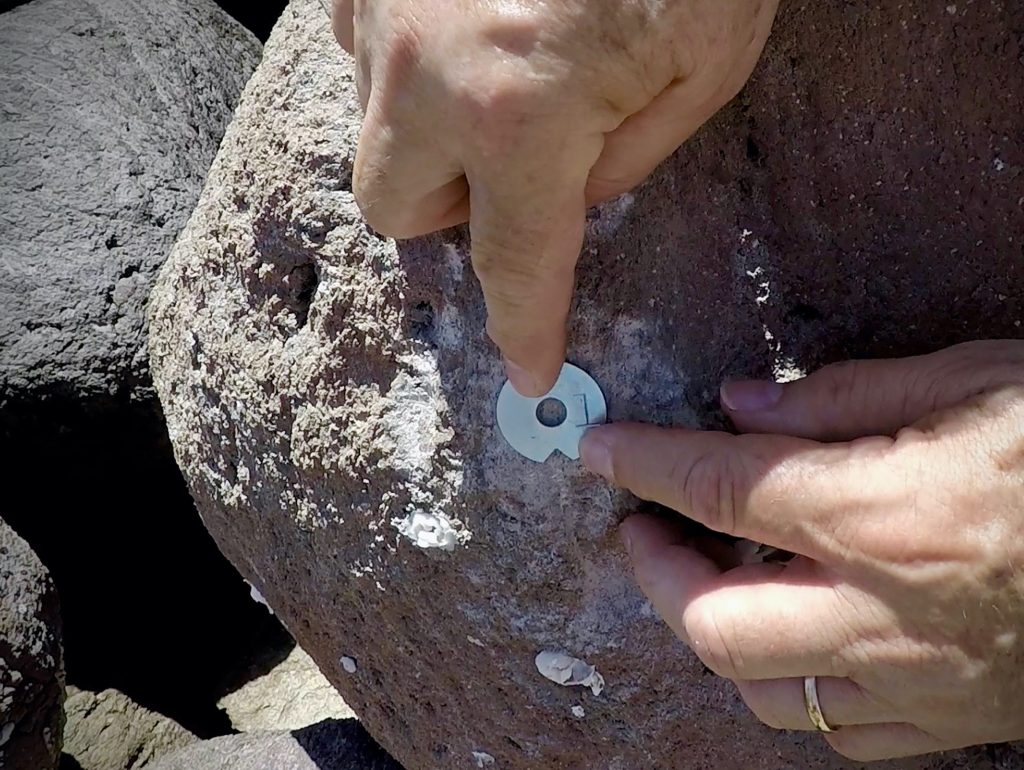
I have described the San Basilio area with its ancient Pliocene volcanic islets as one of the best-kept secrets hidden by a remote landscape. For me, it was like a long-delayed home-coming to finally reach the safe-haven of the Spanish Contessa’s former house overlooking the embayment. Much of the bay is surrounded by massive cliffs of rhyolite, which emerged from volcanic eruptions roughly four million years ago just as they did at Clam Bay nearby to the north. Two of the goals for the visit were to include drone footage with the video under production and to affix a set of tags to some of the boulders in the deposit at Clam Bay. The metal tags are small and unobtrusive (only an inch in diameter) but numbered and cut with a notch to point in an upward direction after attachment to a boulder’s vertical surface. The drone footage captured not only a spectacular overview of the entire deposit, but hovered overhead as I recorded dialog for the video and then worked with the crew to implant a few tags on selected boulders near the water’s edge.
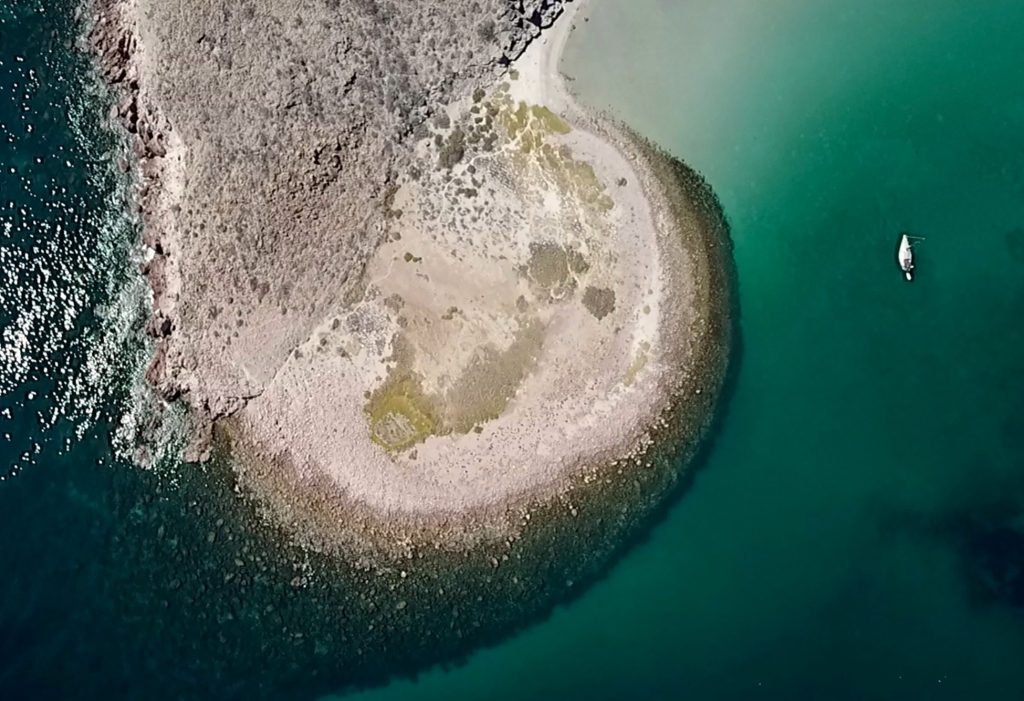
Clam Bay and its coastal boulder deposit: Located on a normally placid bay a short distance north of the larger San Basilio embayment, the storm deposit at Clam Bay (Ensenada Almeja) forms an arc-shaped pattern that encloses an area of 3.25 acres behind a high wall of loosely piled boulders and cobbles. The drone image reflects the darker sub-surface extent of the deposit, which borders the source of erosion at the tip of the peninsula (center-right part of the image) and curves off to the far end where a small sandy beach appears (upper-center left part of the image). The overall shape of the deposit is due to the refraction of storm waves arriving from the east (left) and turning southward into the bay. The bottom of the image faces to the north. A 30-foot sailboat anchored in the bay (center-left part of the image) gives a sense of scale to the deposit.
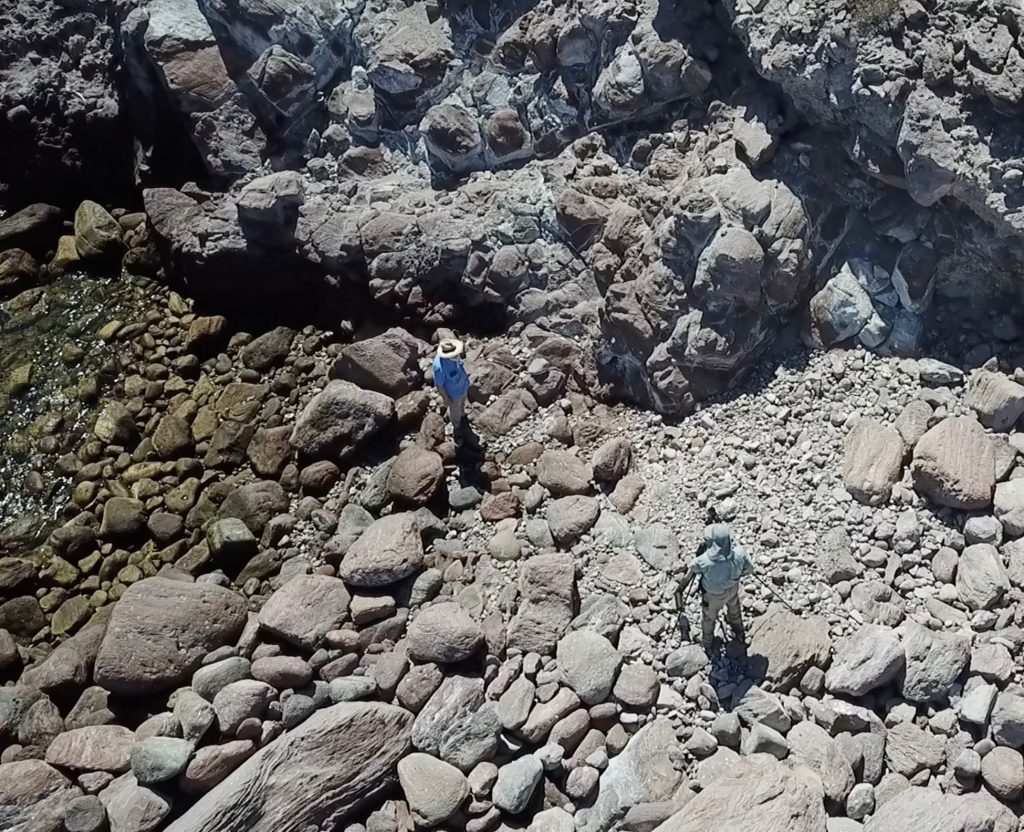
Rocky shoreline at Clam Bay: The view in this image was captured overhead by the drone as author Markes Johnson (center in blue shirt) is video-taped explaining how strong wave action eroded large boulders from the jointed rhyolitic cliffs at the shore.
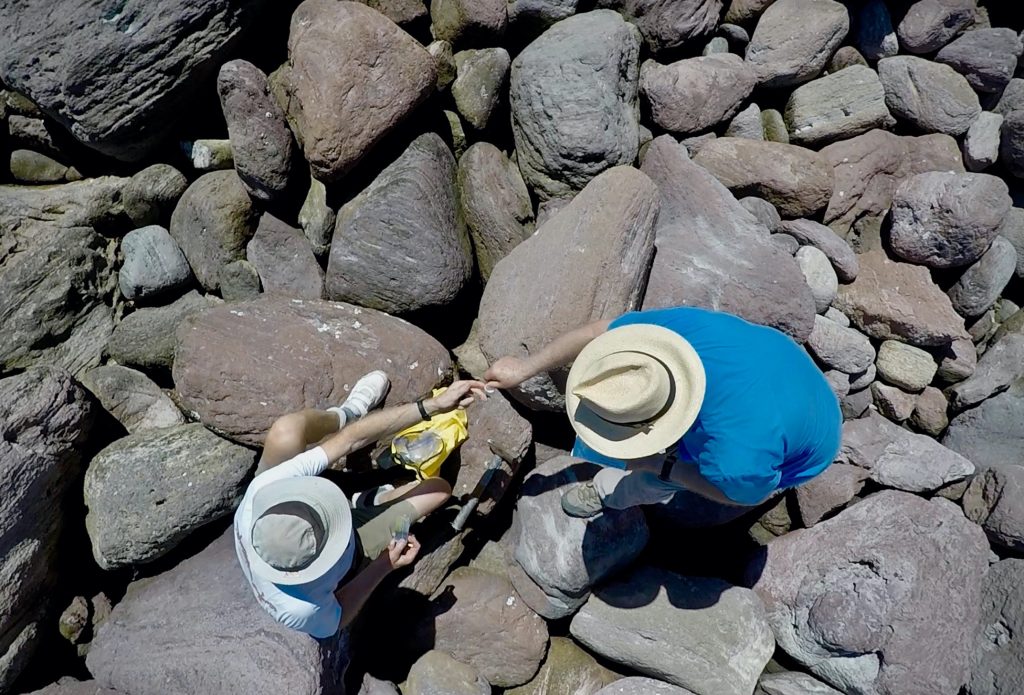
Preparations to affix a boulder tag: Hovering closely overhead, the drone captures action as the author (right) works with team member Norm Christie (left) to prepare epoxy for attachment of a boulder tag.
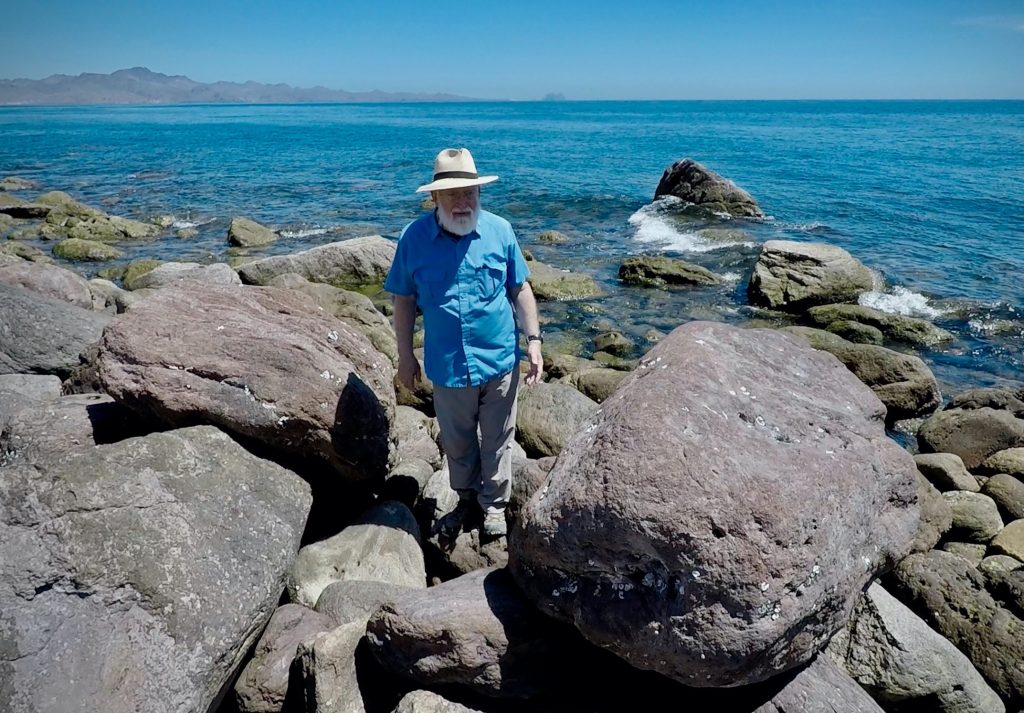
Big shore boulder: Taken at ground level, this image shows the author standing next to one of the larger rhyolite boulders in the Clam Bay storm deposit (left). Based on its dimensions and the relative density of the rock, the boulder is estimated to weigh about four metric tons.
Tag placement: In this image, the author holds a numbered metal tag with a notch pointing upward against the vertical side of a small rhyolite boulder. The surface was prepared prior to fixing the tag in place with epoxy.
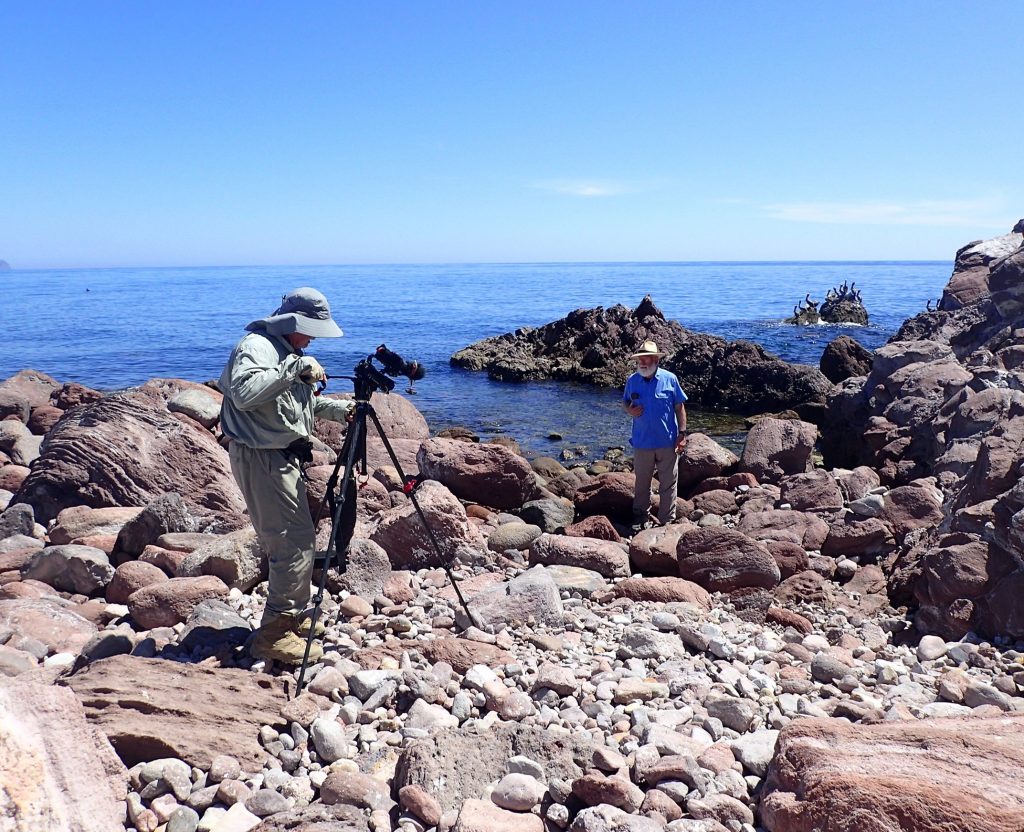
More video action: Ground view with more video action showing the author (right) speaking about the storm deposit at Clam Bay. A colony of pelicans sat on an offshore rock (upper left) as the only audience in attendance.
The general climate in the American southwest and adjacent Mexico is currently in transition between a La Niña phase and the next episode of El Niño years when hurricanes in the eastern Pacific basin are expected to be more numerous due to excessive heating of surface waters stretching over the equatorial Pacific Ocean. After the next big storm enters the Sea of Cortéz, Professor Johnson will return to Clam Bay to assess the degree to which a series of tagged boulders have been displaced. The coastal boulder deposit at Clam Bay is regarded as very young in age due to its unconsolidated nature, meaning that individual rocks are loosely aggregated and not cemented together as a solid conglomerate. Moreover, it is an unfinished deposit meaning that more erosion is likely to occur in the near future as big storms lash the shoreline. The coastal landscapes at San Basilio Bay and elsewhere all along the eastern coast of the Baja California peninsula suggest that the El Niño pattern of weather was far more prevalent in the past than today, and that global warming may be returning us to a comparable time of more severe coastal erosion and coastal flooding. Time will prove the veracity of such a prediction, perhaps sooner than one might guess.
***
Markes E. Johnson is the Charles L. MacMillan Professor of Natural Science, Emeritus, at Williams College (Williamstown, Massachusetts). He is the author of three books on the geology and ecology of landscapes in Baja California: Discovering the Geology of Baja California (2002); Off-Trail Adventures in Baja California (2014); and most recently Baja California’s Coastal Landscapes Revealed (2021) all published by the University of Arizona Press. His last two books include color plates showing landscapes photographed during various commercial flights between Los Angles and Loreto in Mexico’s Baja California Sur.
The University of Arizona Press is thrilled to announce that twenty backlist archaeology books are now available Open Access thanks to a grant from the National Endowment of the Humanities. The titles, which include classics as well as some newer works, are available for online reading or downloading from Open Arizona, the press’s OA portal. These works include works by leading archaeologists. Learn more about each title:
Ancestral Landscapes of the Pueblo World by James E. Snead This revolutionary study makes an important contribution to landscape archaeology and explains how the Precolumbian Pueblo landscape was formed.
Ancestral Zuni Glaze-Decorated Pottery by Deborah L. Huntley This research explores interaction networks among residents of settlement clusters in the Zuni region of westcentral New Mexico during the thirteenth and fourteenth centuries AD.
Canals and Communities by Jonathan B. Mabry Canals and Communities can serve as a sourcebook for social scientists and development planners investigating the cultural ecology of irrigated agriculture, the ethnology of cooperative social formations, the politics of collective-resource institutions, and the sociology of rural development.
Ceramic Ethnoarchaeology Edited by William A. Longacre Drawing on projects undertaken around the world, in the Phillipines, East Africa, Mesoamerica, India, in both traditional and complex societies, the contributors focus on identifying social and behavioral sources of ceramic variation to show how analogical reasoning is fundamental to archaeological interpretation.
Ceramic Production in the American Southwest Edited by Barbara J. Mills and Patricia L. Crown This volume covers nearly 1000 years of southwestern prehistory and history, focusing on ceramic production in a number of environmental and economic contexts.
Hinterlands and Regional Dynamics in the Ancient Southwest Edited by Alan P. Sullivan III and James M. Bayman This work was the first volume dedicated to understanding the nature of and changes in regional social autonomy, political hegemony, and organizational complexity across the entire prehistoric American Southwest.
Landscapes and Social Transformations on the Northwest Coast by Jeff Oliver The Fraser Valley in British Columbia has been viewed historically as a typical setting of Indigenous-white interaction. Jeff Oliver reexamines the social history of this region from pre-contact to the violent upheavals of nineteenth and early twentieth century colonialism.
Lifeways in the Northern Maya Lowlands Edited by Jennifer P. Mathews and Bethany A. Morrison This book was the first volume to focus entirely on the northern Maya lowlands, presenting a broad cross-section of research projects in the region by a wide range of scholars.
The Marana Community in the Hohokam World Edited by Suzanne K. Fish, Paul R. Fish, and John H. Madsen This account of Classic Period settlement in the Tucson Basin between A.D. 1100 and 1300 was the first comprehensive description of the organization of territory, subsistence, and society in a Hohokam community of an outlying region.
Mexican Macaws By Lyndon L. Hargrave The Anthropological Papers of the University of Arizona is a peer-reviewed monograph series sponsored by the School of Anthropology. Established in 1959, the series publishes archaeological and ethnographic papers that use contemporary method and theory to investigate problems of anthropological importance in the southwestern United States, Mexico, and related areas.
Mimbres during the Twelfth Century By Margaret Nelson While most scholars view abandonment in terms of failed settlements, Margaret Nelson shows that, for the Mimbres, abandonment of individual communities did not necessarily imply abandonment of regions. By examining the economic and social reasons for change among the Mimbres, Nelson reconstructs a process of shifting residence as people spent more time in field camps and gradually transformed them into small hamlets while continuing to farm their old fields.
Multidisciplinary Research at Grasshopper Pueblo, Arizona By Edited by William A. Longacre, Sally J. Holbrook, and Michael W. Graves This volume presents the results of research from the University of Arizona’s archaeological field school at Grasshopper Pueblo in Arizona. Contributors considered issues of environmental and climactic change; regional and interregional economics; and subsistence change.
Navajo Multi-Household Social Units By Thomas R. Rocek In a rigorous and innovative study, Thomas R. Rocek examines the 150-year-old ethnohistorical and archaeological record of Navajo settlement on Black Mesa in northern Arizona. Rocek’s study not only reveals a rich array of interacting factors that have helped to shape Navajo life during this period but also constructs a valuable case study in archaeological method and theory, certain to be useful to other researchers of nonurban societies.
Neighbors of Casas Grandes By Michael E. Whalen and Paul E. Minnis Casas Grandes, or Paquimé, in northwestern Mexico was of one of the few socially complex prehistoric civilizations in North America. Based on more than a decade of surveys, excavations, and field work, the authors provide a comprehensive look at Casas Grandes and its surrounding communities.
Of Marshes and Maize By Bruce B. Huckell This work presents archaeological information obtained from small-scale investigations at two deeply buried preceramic sites in Arizona’s Cienega Creek Basin. Its report on excavations at the Donaldson Site and at Los Ojitos offers a thorough description of archaeological features and artifacts, floral and faunal remains, and their geological and chronological contexts.
Sedentism and Mobility in a Social Landscape By Mark D. Varien Research on hunting and gathering peoples has given anthropologists a long-standing conceptual framework of sedentism and mobility based on seasonality and ecological constraints. This work challenges that position by arguing that mobility is a socially negotiated activity and that neither mobility nor sedentism can be understood outside of its social context. Drawing on research in the Mesa Verde region that focuses on communities and households, Mark Varien expands the social, spatial, and temporal scales of archaeological analysis to propose a new model for population movement.
Settlement, Subsistence, and Society in Late Zuni Prehistory By Keith W. Kintigh Beginning about A.D. 1250, the Zuni area of New Mexico witnessed a massive population aggregation in which the inhabitants of hundreds of widely dispersed villages relocated to a small number of large, architecturally planned pueblos. Over the next century, twenty-seven of these pueblos were constructed, occupied briefly, and then abandoned. Another dramatic settlement shift occurred about A.D. 1400, when the locus of population moved west to the “Cities of Cibola” discovered by Coronado in 1540. Keith W. Kintigh demonstrates how changing agricultural strategies and developing mechanisms of social integration contributed to these population shifts.
Sourcing Prehistoric Ceramics at Chodistaas Pueblo, Arizona By Maria Zedeño For decades archaeologists have used pottery to reconstruct the lifeways of ancient populations. It has become increasingly evident, however, that to make inferences about prehistoric economic, social, and political activities through the patterning of ceramic variation, it is necessary to determine the location where the vessels were made. Through detailed analysis of manufacturing technology and design styles as well as the use of modern analytical techniques such as neutron activation analysis, Zedeño here demonstrates a broadly applicable methodology for identifying local and nonlocal ceramics.
The Southwest in the American Imagination Edited by Curtis M. Hinsley and David R. Wilcox This work presents a cultural history of the Hemenway Expedition and early anthropology in the American Southwest, told in the voices of its participants and interpreted by contemporary scholars.
White Roads of the Yucatán By Justine M. Shaw Presents original field data collected with the Cochuah Regional Archaeological Survey at two ancient Maya sites, Ichmul and Yo’okop. Both centers chose to invest enormous resources in the construction of monumental roadways during a time of social and political turmoil in the Terminal Classic period. Shaw carefully examines why it was at this point—and no other—that the settlements made such a decision.
We are pleased to announce that Danzirly, the Ambroggio Award-winning poetry collection by Gloria Muñoz, received an honorable mention in 24th annual Foreword INDIES Book of the Year Awards in the poetry category.
Foreword Reviews, a book review journal focusing on independently published books, recently announced the winners of its INDIES Book of the Year Awards. The INDIES recognize the best books published in 2021 from small, indie, and university presses, as well as self-published authors.
From Foreword on Danzirly:
Danzirly is a stunning bilingual poetry collection that considers multigenerational Latinx identities in the rapidly changing United States. Winner of the Academy of American Poets’ Ambroggio Prize, Gloria Muñoz’s collection is an unforgettable reckoning of the grief and beauty that pulses through twenty-first-century America.
A recent issue of The Quarterly Review of Biology featured a review of Stephen J. Pyne’s To the Last Smoke: An Anthology.
From the review by Donald A. Falk at the University of Arizona’s School of Natural Resources & the Environment:
Some of the best sections of book are chapters in which fire is seen through the lens of a particular person, including fire managers and scientists, some of them well known and others underappreciated. These sections are refreshing because they center on narrative rather than politics or philosophy.
Pyne’s language is exceptional among writers about wildfire. Describing how the indigenous inhabitants of the Southwest used the increasingly sparse fuels near their settlements, the author writes that “[l]andscape fires thinned, and then shrank into the hearths of kivas and kilns”. In fact, this displacement of fire from landscapes to controlled combustion in human devices is a theme throughout the volume and elsewhere in his writing, a phenomenon he describes as the “pyric transition” in human and Earth history.
… There are many poets of place; Stephen Pyne is a poet of process, and his work is required reading for anyone who wants to understand wildland fire in today’s world and into the future. The irony of the title is that there is no last smoke.
We have another amazing season ahead of us at the University of Arizona Press. Here’s a preview of our upcoming fall 2022 season with the best the Press has to offer, from Indigenous lit, Latinx poetry, to Indigenous studies, anthropology, borderlands, as well as the return of a classic you love. You know the drill. Tuck in.
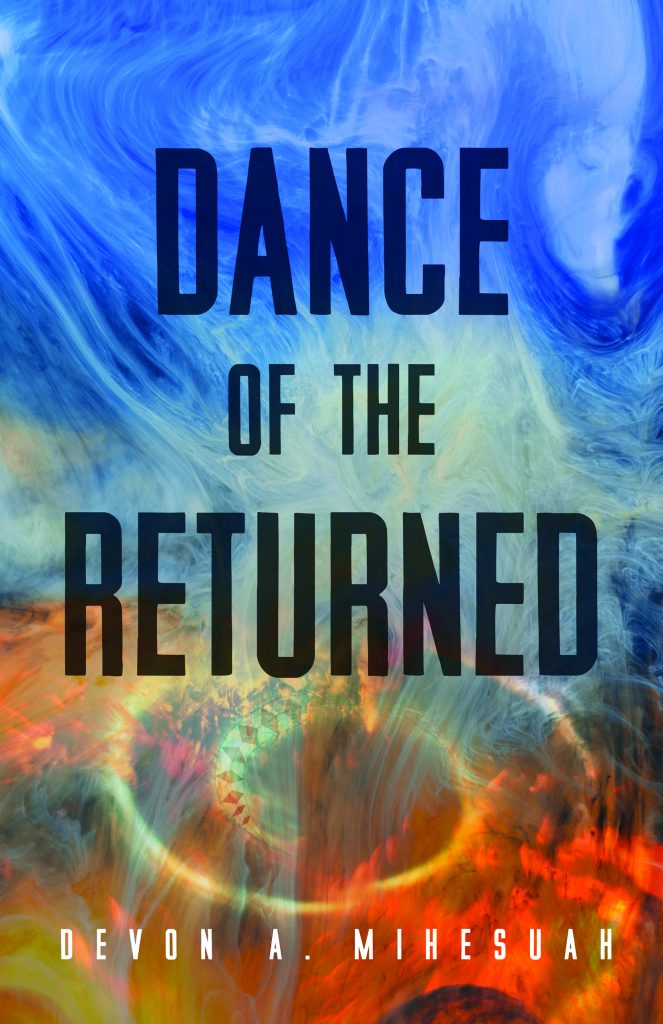
Detective Monique Blue Hawk returns in Devon A. Mihesuah new novel, Dance of the Returned. The disappearance of a young Choctaw leads Detective Blue Hawk to investigate a little-known ceremonial dance. As she traces the steps of the missing man, she discovers that the seemingly innocuous Renewal Dance is not what it appears to be. After Monique embarks on a journey that she never thought possible, she learns that the past and future can converge to offer endless possibilities for the present. She must also accept her own destiny of violence and peacekeeping.
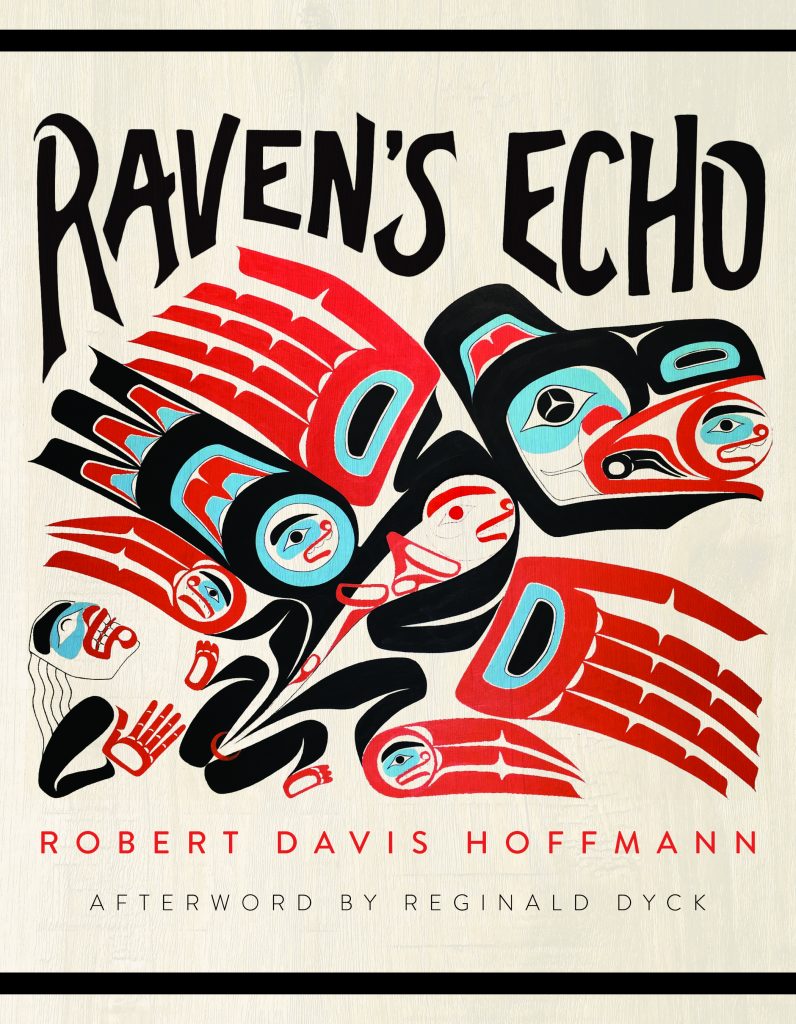
In Raven’s Echo, Tlingit artist and poet Robert Davis Hoffmann calls on readers to nurture material as well as spiritual life, asking beautiful and brutal questions about our individual positions within the universe and within history. The poems in this collection are brimming with an imaginative array of characters, including the playful yet sometimes disturbing trickster Raven, and offer insights into both traditional and contemporary Native life in southeast Alaska.
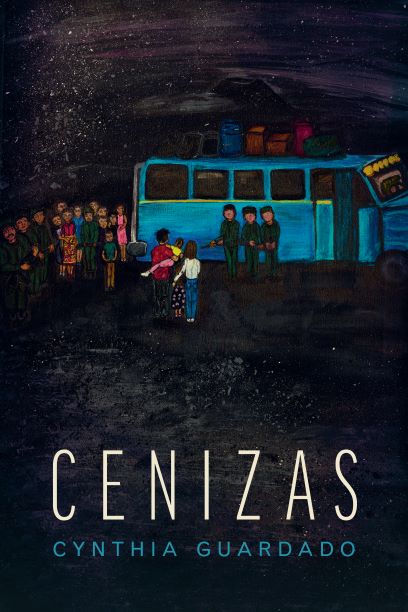
Cenizas offers an arresting portrait of a Salvadoran family whose lives have been shaped by the upheavals of global politics. The speaker of these poems—the daughter of Salvadoran immigrants—questions the meaning of homeland as she navigates life in the United States while remaining tethered to El Salvador by the long shadows cast by personal and public history. Cynthia Guardado’s poems give voice to the grief of family trauma, while capturing moments of beauty and tenderness. Maternal figures preside over the verses, guiding the speaker as she searches the ashes of history to tell her family’s story. The spare, narrative style of the poems are filled with depth as the family’s layers come to light.
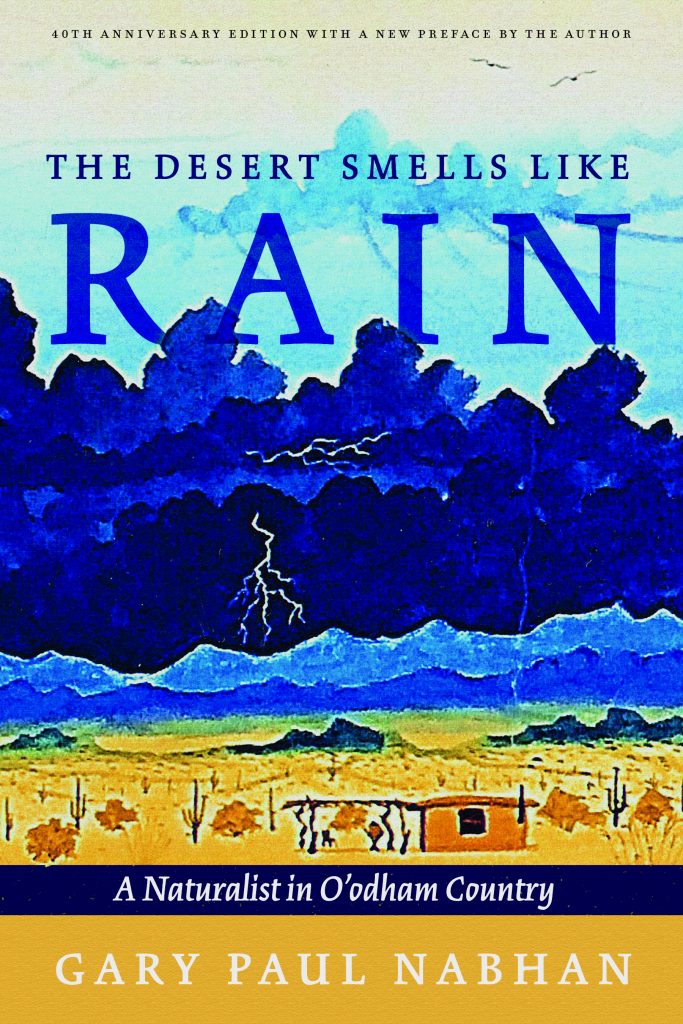
Published more than forty years ago, The Desert Smells Like Rain: A Naturalist in O’odham Country by Gary Paul Nabhan remains a classic work about nature, how to respect it, and what transplants can learn from the longtime residents of the Sonoran Desert, the Tohono O’odham people. This edition includes a new preface written by the author, in which he reflects on his gratitude for the O’odham people who shared their knowledge with him.
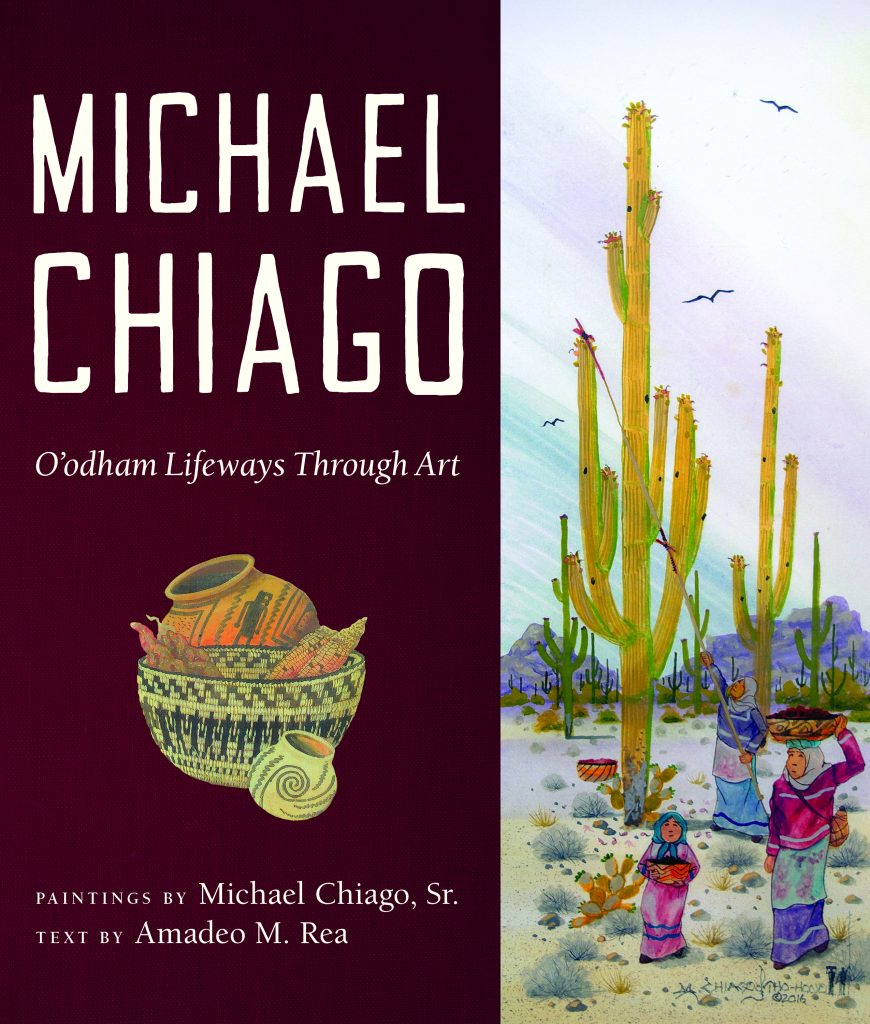
This special rerelease also includes a beautiful new cover by Tohono O’odham artist Michael Chiago, who happens to have a book coming out this spring 2022 season with Press on his work depicting O’odham life and traditions, Michael Chiago: O’odham Lifeways Through Art.
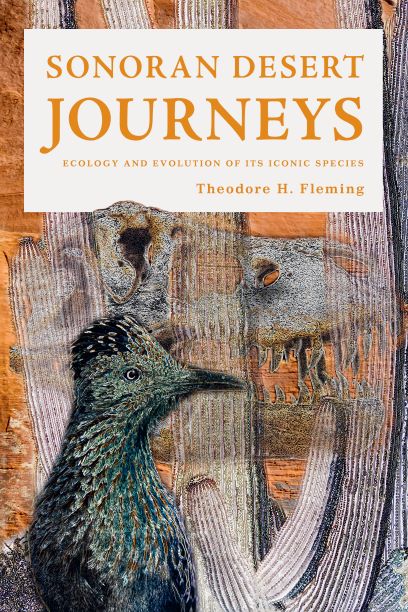
In Sonoran Desert Journeys: Ecology and Evolution of Its Iconic Species ecologist Theodore H. Fleming discusses two remarkable journeys. First, Fleming offers a brief history of our intellectual and technical journey over the past three centuries to understand the evolution of life on Earth. Next, he applies those techniques on a journey of discovery about the evolution and natural history of some of the Sonoran Desert’s most iconic animals and plants. Fleming details the daily lives of a variety of reptiles, birds, mammals, and plants, describing their basic natural and evolutionary histories and addressing intriguing issues associated with their lifestyles and how they cope with a changing climate. Finally, Fleming discusses the complexity of Sonoran Desert conservation.
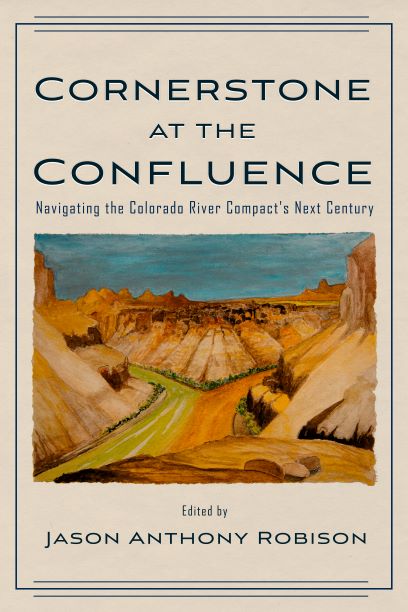
Animated by this remarkable confluence of events, Cornerstone at the Confluence: Navigating the Colorado River Compact’s Next Century, edited by Jason A. Robison, leverages the centennial year to reflect on the compact and broader “Law of the River” to envision the future. It is a volume inviting dialogue about how the Colorado River system’s flows should be apportioned given climate change, what should be done about environmental issues such as ecosystem restoration and biodiversity protection, and how long-standing issues of water justice facing Native American communities should be addressed. In one form or another, all these topics touch on the concept of “equity” embedded within the compact—a concept that tees up what is perhaps the foundational question confronted by Cornerstone at the Confluence: Who should have a seat at the table of Colorado River governance?
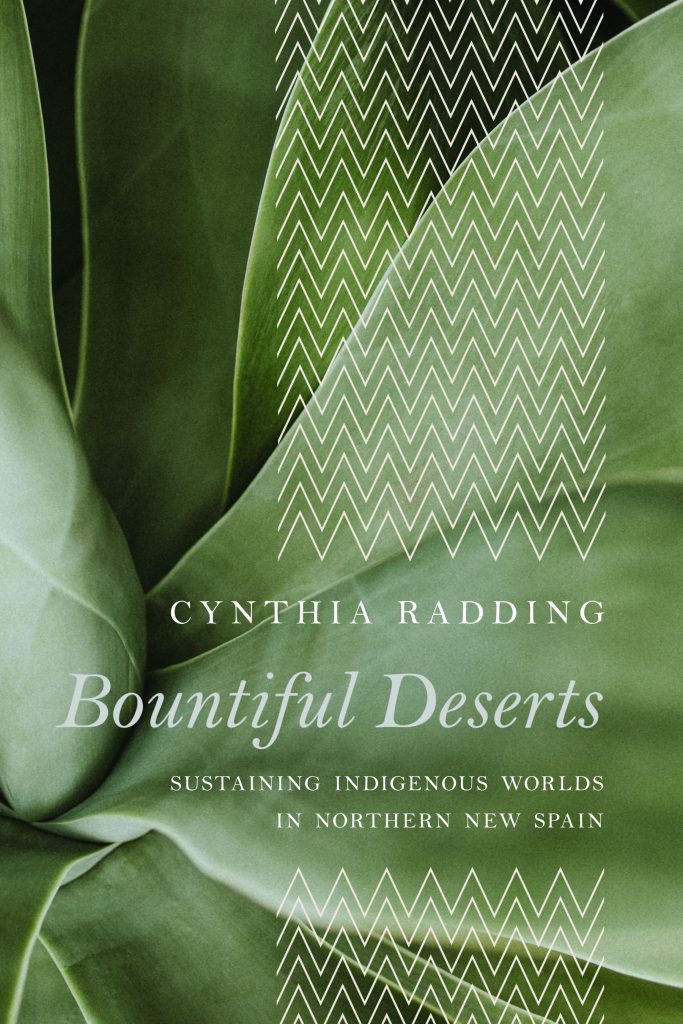
Bountiful Deserts: Sustaining Indigenous Worlds in Northern New Spain foregrounds the knowledge of Indigenous peoples in the arid lands of northwestern Mexico, for whom the desert was anything but barren or empty. Instead, they nurtured and harvested the desert as a bountiful and sacred space. Drawing together historical texts and oral testimonies, archaeology, and natural history, author Cynthia Radding develops the relationships between people and plants and the ways that Indigenous people sustained their worlds before European contact through the changes set in motion by Spanish encounters, highlighting the long process of colonial conflicts and adaptations over more than two centuries. This work reveals the spiritual power of deserts by weaving together the cultural practices of historical peoples and contemporary living communities, centered especially on the Yaqui/Yoeme and Mayo/Yoreme.
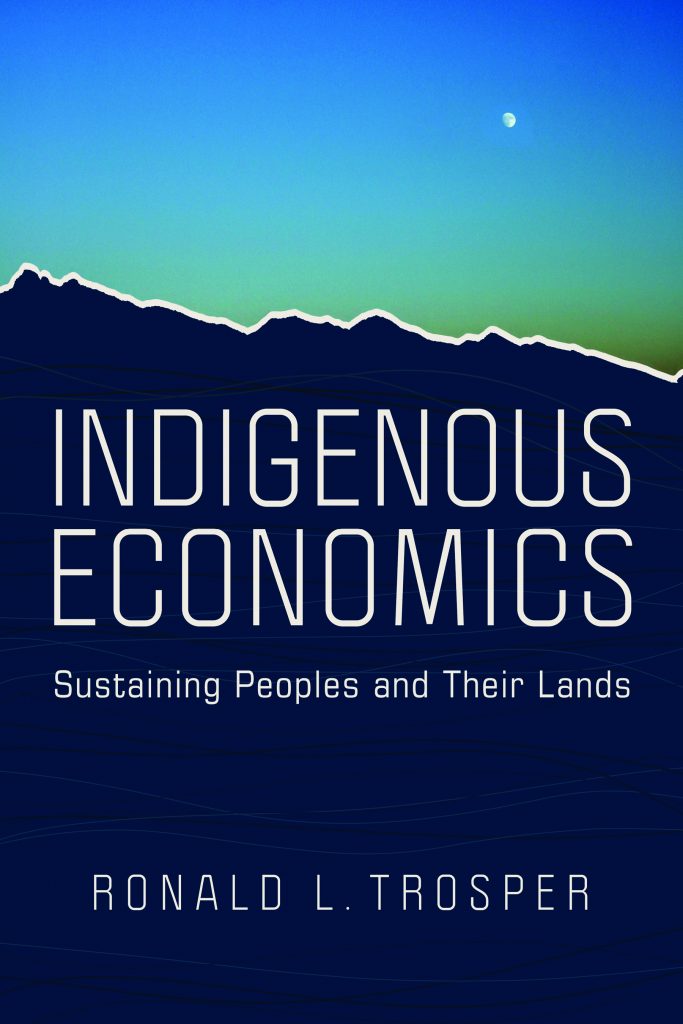
What does “development” mean for Indigenous peoples? Indigenous Economics: Sustaining Peoples and Their Lands lays out an alternative path showing that conscious attention to relationships among humans and the natural world creates flourishing social-ecological economies. Economist Ronald L. Trosper draws on examples from North and South America, Aotearoa/New Zealand, and Australia to argue that Indigenous worldviews centering care and good relationships provide critical and sustainable economic models in a world under increasing pressure from biodiversity loss and climate change. He explains the structure of relational Indigenous economic theory, providing principles based on his own and others’ work with tribal nations and Indigenous communities. Trosper explains how sustainability is created at every level when relational Indigenous economic theory is applied—micro, meso, and macro.
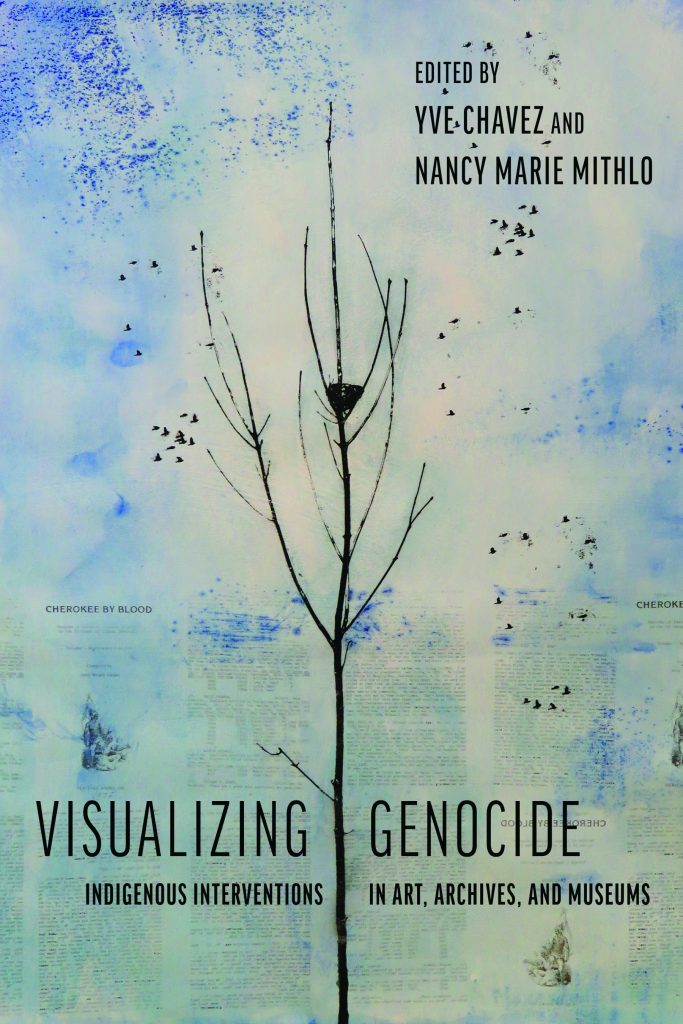
Visualizing Genocide: Indigenous Interventions in Art, Archives, and Museums, edited by Yve Chavez and Nancy Marie Mithlo, examines how creative arts and memory institutions selectively commemorate or often outright ignore stark histories of colonialism. The essays confront outdated narratives and institutional methods by investigating contemporary artistic and scholarly interventions documenting settler colonialisms including land theft, incarceration, intergenerational trauma, and genocide. Interdisciplinary approaches, including oral histories, exhibition practices, artistic critiques, archival investigations, and public arts, are among the many decolonizing methods incorporated in contemporary curatorial practices.
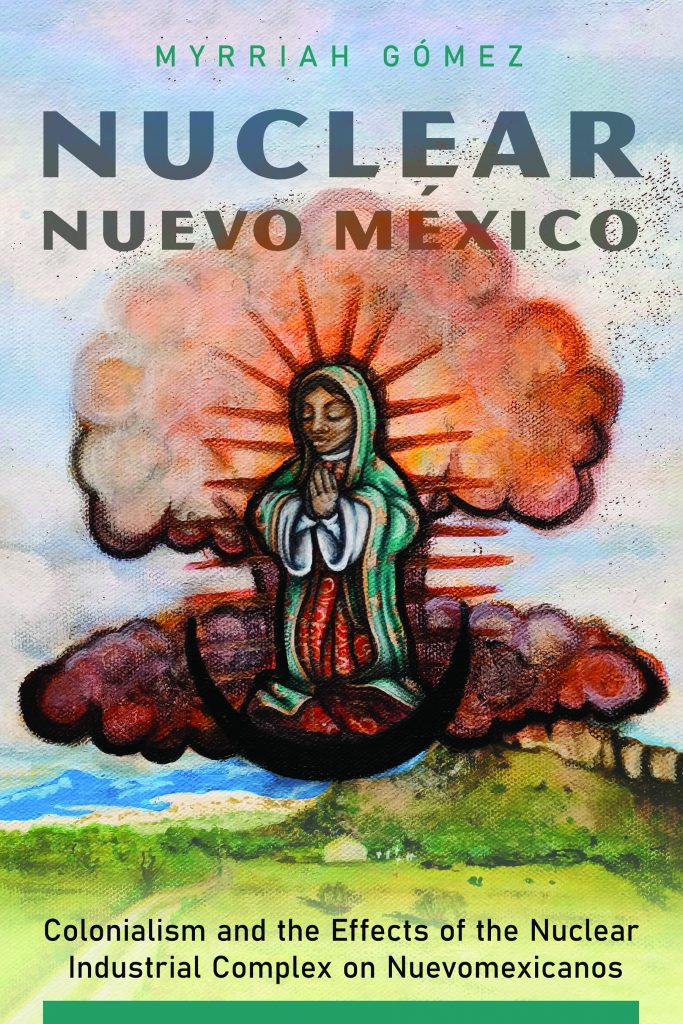
Contrary to previous works that suppress Nuevomexicana/o presence throughout U.S. nuclear history,Nuclear Nuevo México: Colonialism and the Effects of the Nuclear Industrial Complex on Nuevomexicanosfocuses on recovering the voices and stories that have been lost or ignored in the telling of this history. By recuperating these narratives, Myrriah Gómez tells a new story of New Mexico, one in which the nuclear history is not separate from the collective colonial history of Nuevo México but instead demonstrates how earlier eras of settler colonialism laid the foundation for nuclear colonialism in New Mexico.
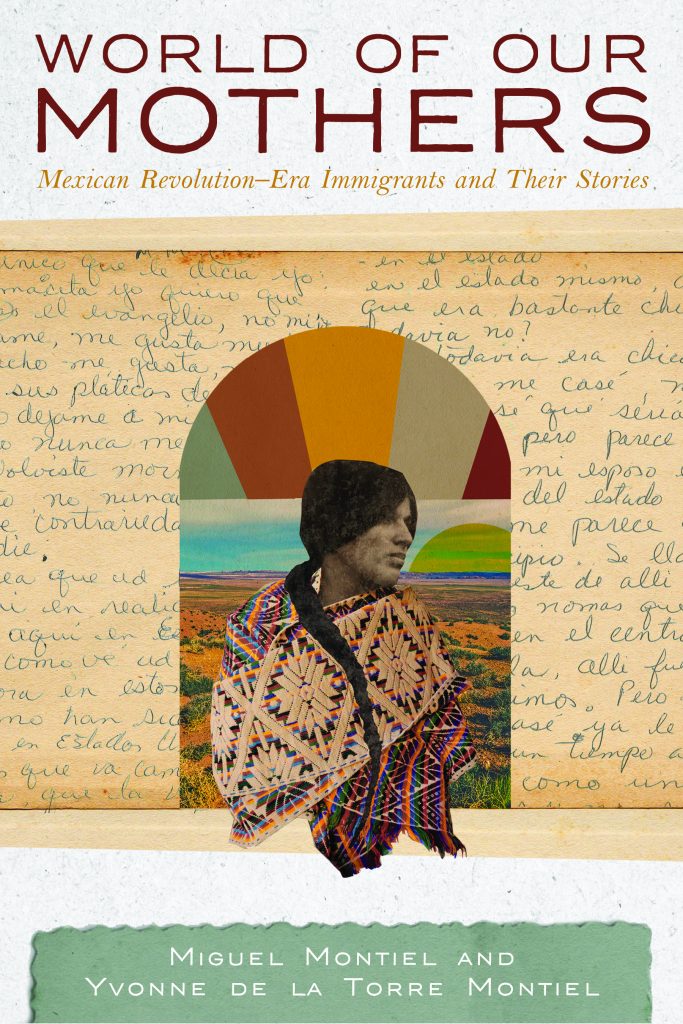
World of Our Mothers: Mexican Revolution–Era Immigrants and Their Storiesby Miguel Montiel and Yvonne de la Torre Montiel, captures the largely forgotten history of courage and heartbreak of forty-five women who immigrated to the United States during the era of the 1910 Mexican Revolution. The book reveals how these women in the early twentieth century reconciled their lives with their circumstances—enduring the violence of the Revolution, experiencing forced labor and lost childhoods, encountering enganchadores (labor contractors), and living in barrios, mining towns, and industrial areas of the Midwest, and what they saw as their primary task: caring for their families.
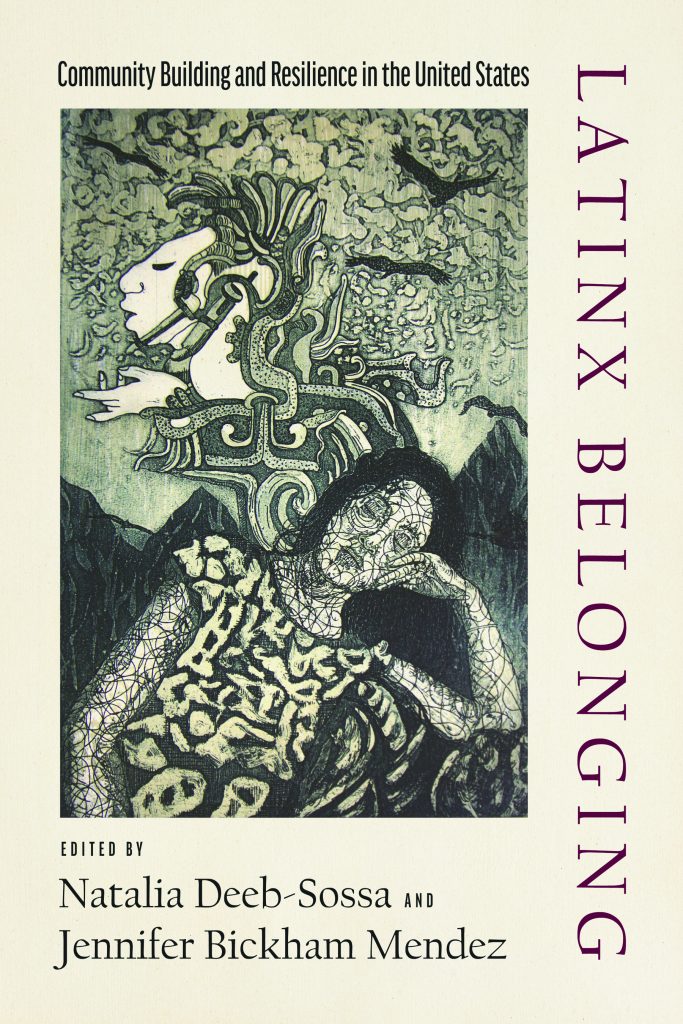
Edited by Natalia Deeb-Sossa and Jennifer Bickham Mendez, Latinx Belonging: Community Building and Resilience in the United States is anchored in the claim that Latinx people are not defined by their marginalization but should instead be understood as active participants in their communities and contributors to U.S. society. The volume’s overarching analytical approach recognizes the differences, identities, and divisions among people of Latin American origin in the United States, while also attending to the power of mainstream institutions to shape their lives and identities. Contributors to this volume view “belonging” as actively produced through struggle, survival, agency, resilience, and engagement.
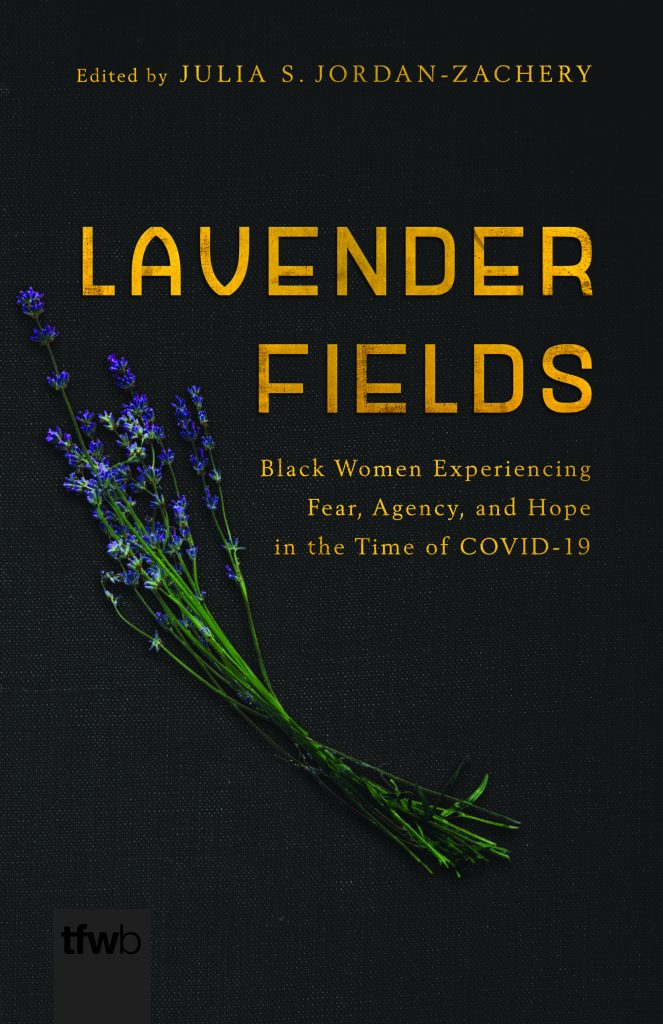
Lavender Fields: Black Women Experiencing Fear, Agency, and Hope in the Time of COVID-19, edited by Julia S. Jordan-Zachery, uses autoethnography to explore how Black girls and women are living with and through COVID-19. It centers their pain, joys, and imaginations for a more just future as we confront all the inequalities that COVID-19 exposes. The essays center Black girls and women and their testimonies in hopes of moving them from the margin to the center. With a diversity of voices and ages, this volume taps into the Black feminine interior, that place where Audre Lorde tells us that feelings lie, to access knowledge—generational, past, and contemporary—to explore how Black women navigate COVID-19. Using womanism and spirituality, among other modalities, the authors explore deep feelings, advancing Black feminist theorizing on Black feminist praxis and methodology.
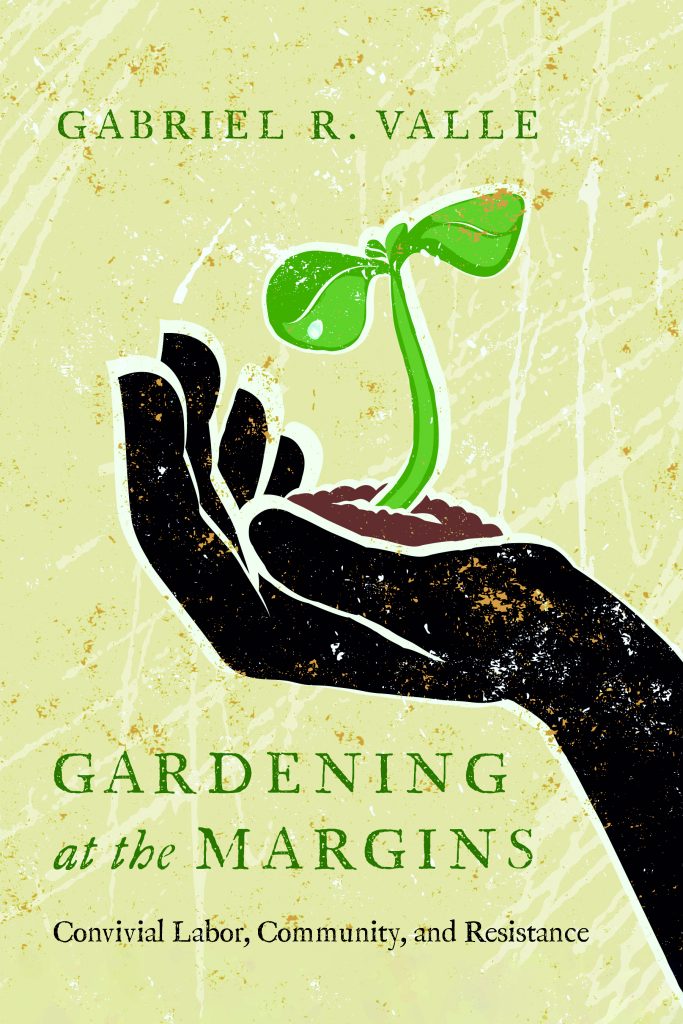
Gardening at the Margins: Convivial Labor, Community, and Resistance tells the remarkable story of a diverse group of neighbors working together to grow food and community in the Santa Clara Valley in California. Based on four years of deeply engaged ethnographic field research via a Participatory Action Research project with the people and ecosystems of La Mesa Verde home garden program, Gabriel R. Valle develops a theory of convivial labor to describe how the acts of care among the diverse gardeners—through growing, preparing, and eating food in one of the most income unequal places in the country—are powerful, complex acts of resistance.
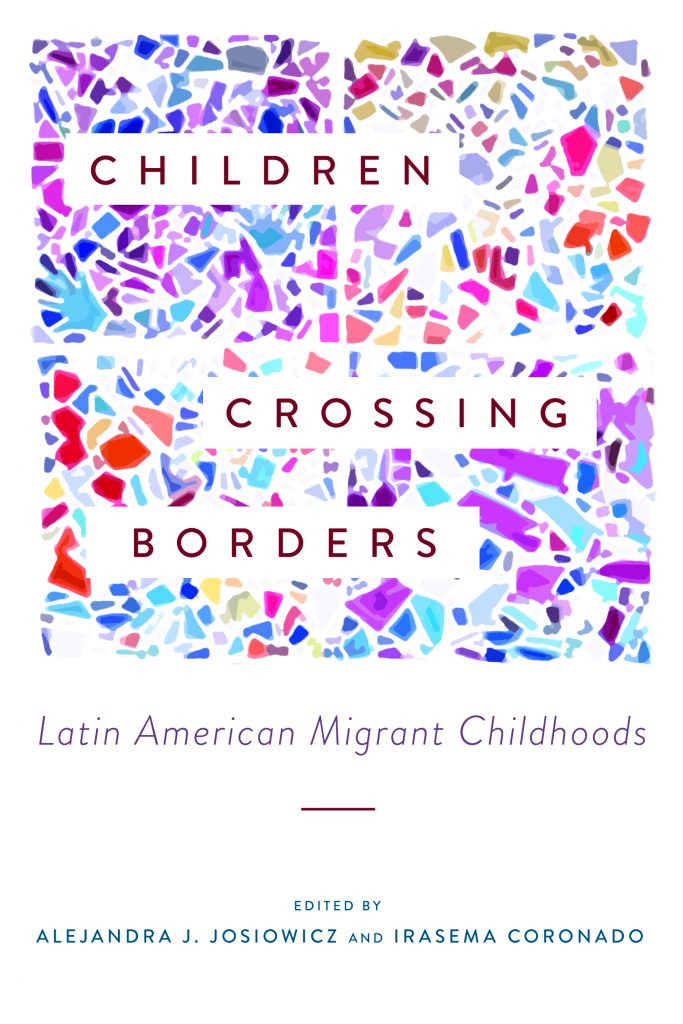
The Americas are witnessing an era of unprecedented human mobility. With their families or unaccompanied, children are part of this immense movement of people. Edited by Alejandra J Josiowicz and Irasema Coronado, Children Crossing Borders: Latin American Migrant Childhoodsexplores the different meanings of the lives of borderland children in the Americas. It addresses migrant children’s struggle to build a sense of belonging while they confront racism and estrangement on a daily basis. This volume draws much-needed attention to the plight of migrant children and their families, illuminating the human and emotional toll that children experience as they crisscross the Americas. Exploring the connections between education, policy, cultural studies, and anthropology, the essays in this volume navigate a space of transnational children’s rights central to Latin American life in the twentieth and twenty-first centuries.
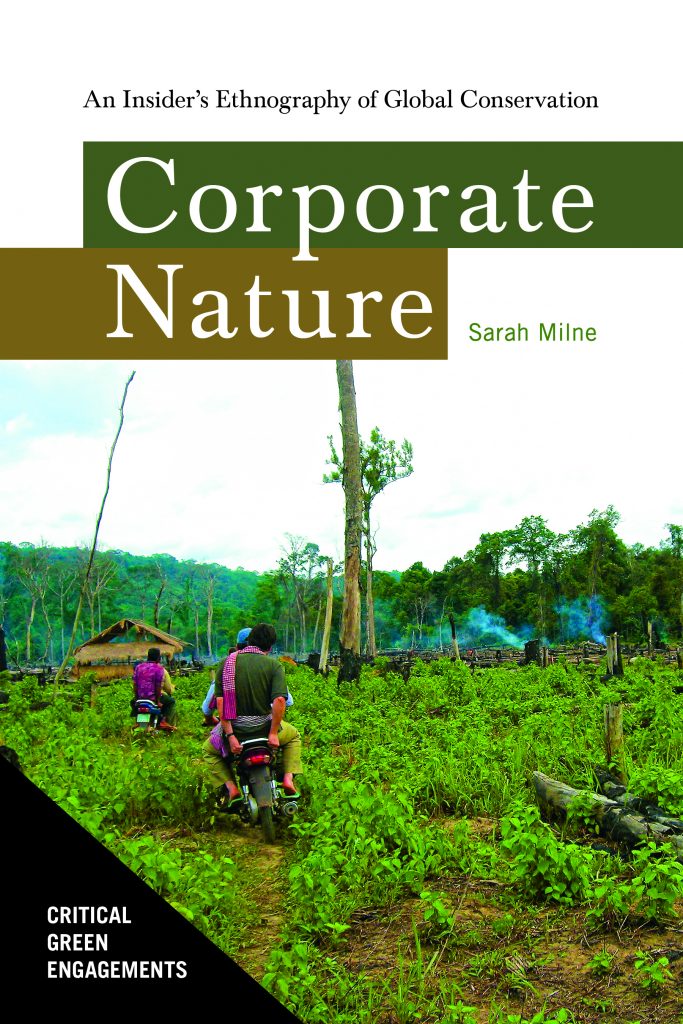
Author Sarah Milne spent more than a decade working for and observing global conservation projects in Cambodia. During this time, she saw how big environmental NGOs can operate rather like corporations. Their core practice involves rolling out appealing and deceptively simple policy ideas, like Payments for Ecosystem Services (PES). Yet, as policy ideas prove hard to implement, NGOs must also carefully curate evidence from the field to give the impression of success and effectiveness. In her new book, Corporate Nature: An Insider’s Ethnography of Global Conservation, Milne delves inside the black box of mainstream global conservation. She reveals how big international NGOs struggle in the face of complexity—especially in settings where corruption and political violence prevail. She uses the case of Conservation International’s work in Cambodia to illustrate how apparently powerful NGOs can stumble in practice: policy ideas are transformed on the ground, while perverse side effects arise, like augmented authoritarian power, illegal logging, and Indigenous dispossession.
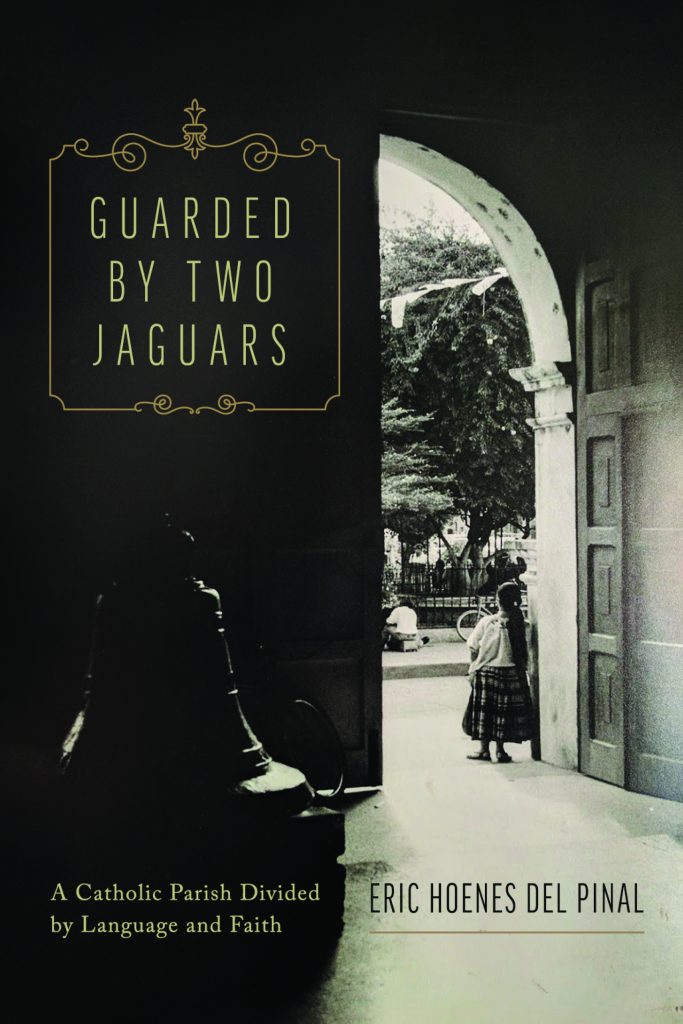
In communities in and around Cobán, Guatemala, a small but steadily growing number of members of the Q’eqchi’ Maya Roman Catholic parish of San Felipe began self-identifying as members of the Catholic Charismatic Renewal. Their communities dramatically split as mainstream and charismatic Catholic parishioners who had been co-congregants came to view each other as religiously distinct and problematic “others.” InGuarded by Two Jaguars: A Catholic Parish Divided by Language and Faith, Eric Hoenes del Pinal tells the story of this dramatic split and in so doing addresses the role that language and gesture have played in the construction of religious identity. Drawing on a range of methods from linguistic and cultural anthropology, the author examines how the introduction of the Catholic Charismatic Renewal movement in the parish produced a series of debates between parishioners that illustrate the fundamentally polyvocal nature of Catholic Christianity.
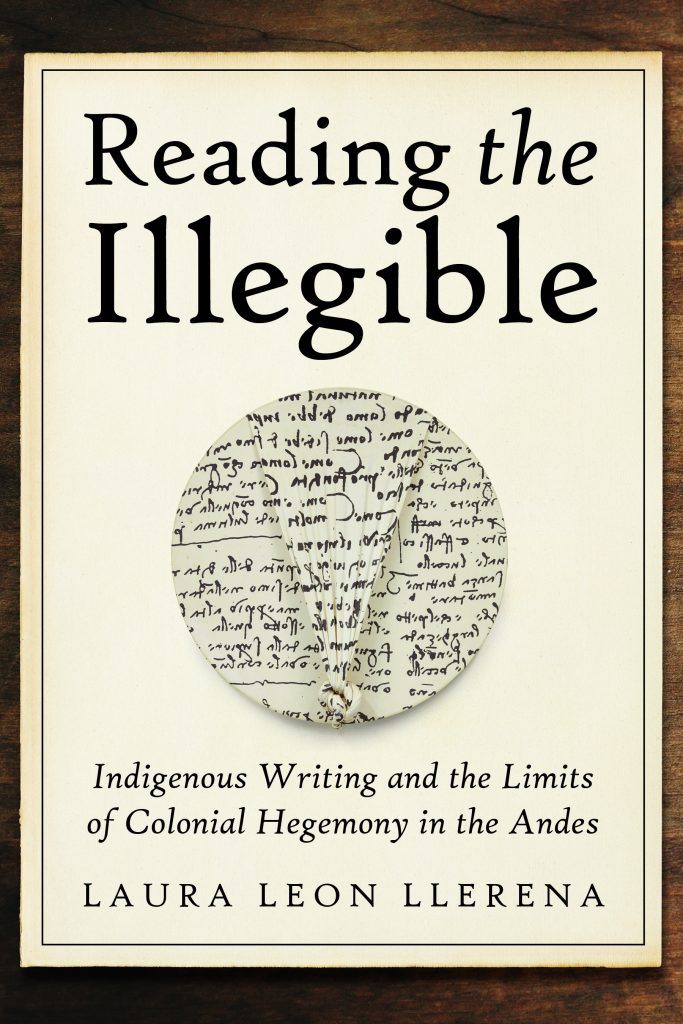
Reading the Illegible: Indigenous Writing and the Limits of Colonial Hegemony in the Andes examines the history of alphabetic writing in early colonial Peru, deconstructing the conventional notion of literacy as a weapon of the colonizer. This book develops the concept of legibility, which allows for an in-depth analysis of coexisting Andean and non-Native media. The book discusses the stories surrounding the creation of the Huarochirí Manuscript (c. 1598–1608), the only surviving book-length text written by Indigenous people in Quechua in the early colonial period. The manuscript has been deemed “untranslatable in all the usual senses,” but scholar Laura Leon Llerena argues that it offers an important window into the meaning of legibility.
In Translation and Epistemicide: Racialization of Languages in the Americas author Joshua Martin Price tracks how through the centuries translation practices have enabled colonialism and resulted in epistemicide, or the destruction of Indigenous and subaltern knowledge. The book gives an account of translation-as-epistemicide in the Americas, drawing on a range of examples from the early colonial period to the War on Terror. The first chapters demonstrate four distinct operations of epistemicide: the commensuration of worlds, the epistemic marginalization of subaltern translators and the knowledge they produce, the criminalization of translators and interpreters, and translation as piracy or extractivism. The second part of the book outlines decolonial translation strategies, including an epistemic posture the author calls “bewilderment.”
Environmental Directions Radio recently featured author Markes Johnson, discussing his newest bookBaja California’s Coastal Landscapes Revealed. In the interview, Johnson and host Nancy Pearlman talk about the islands in the Gulf of California, the peninsula itself, and myriad ways that geology reveals change through time.
The program is a long-running environmental radio series, started in 1977. Pearlman has featured leading scientists, activists, and representatives from the business, academic, government, and nonprofit sectors. Since it began, more than 2,300 shows have been produced.
In Baja California’s Coastal Landscapes Revealed Johnson takes us on a dozen rambles through wild coastal landscapes on Mexico’s Gulf of California. Descriptions of storm deposits from the geologic past conclude by showing how the future of the Baja California peninsula and its human inhabitants are linked to the vast Pacific Basin and populations on the opposite shores coping with the same effects of global warming.
For Authors
The University of Arizona Press publishes the work of leading scholars from around the globe. Learn more about submitting a proposal, preparing your final manuscript, and publication.
The University of Arizona Press is proud to share our books with readers, booksellers, media, librarians, scholars, and instructors. Join our email Newsletter. Request reprint licenses, information on subsidiary rights and translations, accessibility files, review copies, and desk and exam copies.
Support a premier publisher of academic, regional, and literary works. We are committed to sharing past, present, and future works that reflect the special strengths of the University of Arizona and support its land-grant mission.
 The University of Arizona Press