MALCS 2021: Browse Our Latest Chicana and Latina Studies Titles

July 22, 2021

We are excited to be offering a special discount on our new and recent Chicana and Latina studies titles for the MALCS 2021 Summer Institute! The MALCS 2021 Summer Institute’s theme is: Abriendo caminos, abriendo corazones: Renewing Mind, Body, and Spirit in the Time of COVID. Temporarily moving to a virtual format, the MALCS Executive and Coordinating Committees are pleased to bring you a wonderful week of programming meant to bridge the distance by bringing love, healing, and community to you—wherever you are. Fraught with loss, sadness, and worry—exacerbated by continued social injustice, social inequity, and political unrest, the pandemic and its accompanying uncertainties wreaked havoc on our physical, mental, and emotional wellbeing. 

Use the code AZMALCS21 for 40% off all titles, with free U.S. shipping. If you have questions about our publishing program, click here to learn more, or contact our Editor-in-Chief, Kristen Buckles, at kbuckles@uapress.arizona.edu.

Pre-order these titles now!

Letras y Limpias is the first book to explore the literary significance of the curandera. It offers critical new insights about how traditional medicine and folk healing underwrite Mexican American literature. Amanda Ellis traces the significance of the curandera and her evolution across a variety of genres written by Mexican American authors such as Gloria E. Anzaldúa, Manuel Munoz, ire’ne lara silva, and more.

Border Women and the Community of Maclovio Rojas tells the story of the community’s struggle to carve out space for survival and thriving in the shadows of the U.S.-Mexico geopolitical border. This ethnography by Michelle Téllez demonstrates the state’s neglect in providing social services and local infrastructure. Téllez shows that in creating the community of Maclovio Rojas, residents have challenged prescriptive notions of nation and belonging. Through women’s active participation and leadership, a women’s political subjectivity has emerged—Maclovianas. These border women both contest and invoke their citizenship as they struggle to have their land rights recognized, and they transform traditional political roles into that of agency and responsibility.

Currently Available

Teaching Gloria E. Anzaldúa provides pedagogical applications of Anzaldúa’s noted theories, including la facultad, the path of conocimiento, and autohistoria, among others. This text provides examples, lesson plans, and activities for scholars, professors, teachers, and community members in various disciplines—such as history, composition, literature, speech and debate, and more—and for those interested in teaching the theories of Gloria Anzaldúa.

Watch a recording of a fantastic virtual event celebrating the release of Teaching Gloria E. Anzaldúa here.

Colonial Legacies in Chicana/o Literature and Culture traces the development of Chicana/o literature and cultural production from the Spanish colonial period to the present. In doing so, it challenges us to look critically at how we simultaneously embody colonial constructs and challenge their legacies.

Read an excerpt from the book here, then listen to author Vanessa Fonseca-Chávez discuss topics from the book on NPR here.

Cultura y Corazón is a cultural approach to research that requires a long-term commitment to community-based and engaged research methodologies. This book presents case studies in the fields of education and health that recognize and integrate communities’ values, culture, and funds of knowledge in the research process.

Challenging stereotypes, Activist Leaders of San José unearths and makes visible lived experiences of Chicana and Latino activists from San José, California, who made contributions to the cultural and civic life of the city. Through oral histories, we see a portrait of grassroots leadership in the twentieth century.

 Watch a book release event with author Josie Méndez-Negrete here. Congratulations to Josie for being honored as the 2021 NACCS Scholar!

Advocating for and demonstrating the importance of an intersectional, multidisciplinary, activist understanding of Chicanas, Intersectional Chicana Feminisms provides a much-needed overview of the key theories, thinkers, and activists that have contributed to Chicana feminisms.

Congratulations to author Aída Hurtado for winning an AAHHE Distinguished Author Award, and for receiving an honorable mention for the 2020 NWSA Gloria E. Anzaldúa Book Prize!

The Chicana M(other)work Anthology is a call to action for justice within and outside academia. This volume brings together emerging scholarship and testimonios by and about self-identified Chicana and Women of Color mother-scholars, activists, and allies who, using an intersectional lens, center mothering as transformative labor.

Read an excerpt from the book here, and read more about our Feminist Wire Book Series here.

Mexican Workers and the Making of Arizona expands our understanding of the critical role played by Mexican and Mexican American laborers in making Arizona a prominent and influential state in the Southwest and beyond.

Read an excerpt from the book here.

In Pasadena Before the Roses, historian Yvette J. Saavedra shows how Indigenous, Spanish, Mexican, and American groups each have redefined the meanings of land use to build their homes and their lives. This social and cultural history illustrates the interconnectedness of power, ideas of land use, and the negotiation of identity within multiple colonial moments.

Congratulations to author Yvette Saavedra for winning the 2019  WHA-Huntington Library Martin Ridge Fellowship!

Silviana Wood’s teatro has elicited tears and laughter from audiences young and old. Barrio Dreams brings together for the first time the plays of Wood, one of Arizona’s foremost playwrights. Wood is acclaimed locally, regionally, and nationally as a playwright, actor, director, and activist.

Silviana Wood was featured on the New Books Network Podcast. Listen here. Borderlands Theater honored the lifetime achievements of Silviana Wood through a series of virtual events. Learn more here.

The decolonial approaches found in Writing the Goodlife provide rich examples of mutually respectful relations between humans and nature. Ybarra’s book takes on two of today’s most discussed topics: environmentalism and Latina/o population growth. Ybarra shines a light on long-established traditions of environmental thought that have existed in Mexican American literary history for at least 150 years.

Fleshing the Spirit brings together established and new writers to explore the relationships between the physical body, the spirit and spirituality, and social justice activism. The anthology incorporates different genres of writing—such as poetry, testimonials, critical essays, and historical analysis—and stimulates the reader to engage spirituality in a critical, personal, and creative way.

“A comprehensive collection of feminist spirituality will be incomplete without this volume.”—Publishers Weekly

¿Qué Onda? analyzes the construction of Mexicana/o and Chicana/o identities through a four-year ethnographic study in a representative American high school. It reveals how identity politics impacts young people’s forms of communication and the cultural spaces they occupy in the school setting. By showing how identities are created and directly influenced by the complexities of geopolitics and sociocultural influences, it stresses the largely unexplored divisions among youths whose identities are located along a wide continuum of “Mexicanness.”

Stephen Pyne on Arizona’s Fire Problem in Az Republic

July 12, 2021

In a special opinion piece for the Arizona Republic Stephen Pyne writes that Fires in the West–and the world, for that matter, is not a problem solved with a once-and-done project:

“Places that historically had fire are having more and nastier outbreaks. Places without routine fire are experiencing it. An equal reality is that we need more landscape fire to dampen fuels and enhance ecological integrity. All in all, too much bad fire, too little good.”

Read the Op Ed

***

Stephen J. Pyne is an emeritus professor at Arizona State University. Best known for his research into the history of fire, he is the author of Between Two Fires and To The Last Smoke, along with several other works on fire. He has also written a suite of studies that orbit around the concept of three ages of discovery: The Ice: A Journey to Antarctica; How the Canyon Became Grand; Voyager: Exploration, Space, and the Third Great Age of Discovery; and The Great Ages of Discovery.

Cultivating Knowledge Shortlisted for the ICAS Book Prize

June 22, 2021

We are thrilled to announce that University of Arizona Press author Andrew Flachs’ recent title, Cultivating Knowledge, was shortlisted for the International Convention of Asian Scholars’ Book Prize 2021 English- Best Book in the Social Sciences!

In Cultivating Knowledge anthropologist Andrew Flachs shows how rural farmers come to plant genetically modified or certified organic cotton, sometimes during moments of agrarian crisis. Interweaving ethnographic detail, discussions of ecological knowledge, and deep history, Flachs uncovers the unintended consequences of new technologies, which offer great benefits to some—but at others’ expense. Flachs shows that farmers do not make simple cost-benefit analyses when evaluating new technologies and options. Their evaluation of development is a complex and shifting calculation of social meaning, performance, economics, and personal aspiration. Only by understanding this complicated nexus can we begin to understand sustainable agriculture.

Andrew Flachs is an assistant professor of anthropology at Purdue University. Trained as an environmental anthropologist, his research spans sustainable agriculture, food studies, the anthropology of knowledge, and political ecology.

Congratulations, Andrew!

‘Desert Feast’ and ‘A Good Map’ Top Picks for Southwest Books of the Year 2021

June 15, 2021

We are thrilled to announce that Carolyn Niethammer‘s A Desert Feast: Celebrating Tucson’s Culinary Heritage, and and Alberto Álvaro Ríos‘s A Good Map of All Things: A Picaresque Novel were selected as top picks for the Pima County Library’s Southwest Books of the Year 2021.

Gregory McNamee: “Tucson is a food city, boasting, as Carolyn Niethammer writes, the best 23 square miles of Mexican food north of Mexico. It is also the first US venue designated as a City of Gastronomy by the United Nations. Why should that be? Niethammer explains: the honor grows from having a food tradition that extends back thousands of years, making use of hundreds of desert plants, and then adding on to it, like so many ingredients in a good bowl of cocido, elements from many other food traditions and cultures. We can eat food from just about every corner of the world here, and we’ve made it part of an almost inexhaustible culinary lexicon. You’ll want to try Niethammer’s carefully curated recipes—and develop a greener thumb by growing ingredients yourself and a broadened geography by visiting the growers and chefs she highlights. Every Southwestern city—every city, period—needs a book like hers, and it’s Tucson’s good fortune to have this.

From Helene Woodhams: “A small town nestled in the Pimería Alta of northern Mexico is home to folks as warmly engaging as they are idiosyncratic in this delightful novel by award-winning poet and author Alberto Álvaro Ríos. Midway through the 20th century, modern ways have just begun to creep into lives long accustomed to swaying in time to the rhythms of tradition, and as a result the local public science society has few members. Far from mundane, the simplicity of the town’s everyday-ness is rendered exquisite in Ríos’s able hands: love emerges and endures, faith is uncompromising, and a good day is one in which nothing much happens. The characters glide in and out of each other’s orbit, weaving their individual stories into a communal chronicle. The narrative is particularly elegant, marked by a poetic charm that makes this memorable work both a comfort and a joy to read–but this is not surprising, coming as it does from Arizona’s first Poet Laureate.

NAISA 2021: New & Recent Indigenous Studies Titles

June 9, 2021

Hello, virtual NAISA attendees! We are excited to share our new and recent Indigenous studies titles with you, and we think you’ll enjoy our conference discount as well. From now until July 15, 2021, use the code AZNAISA21 at checkout to receive 40% off all titles, plus free U.S. shipping. We hope to see you all again at a future NAISA conference.

If you have any questions about our publishing program, please visit this page. Alternatively, please contact our Editor-in-Chief, Kristen Buckles, at kbuckles@uapress.arizona.edu or our Senior Editor, Allyson Carter, at acarter@uapress.arizona.edu. If you have questions about course adoptions, please visit this page and/or send an email to shicks@uapress.arizona.edu.

“This collection is essential to American literature and should be required for anyone studying American, First Nations, or world literature.”—Joy Harjo, U.S. Poet Laureate

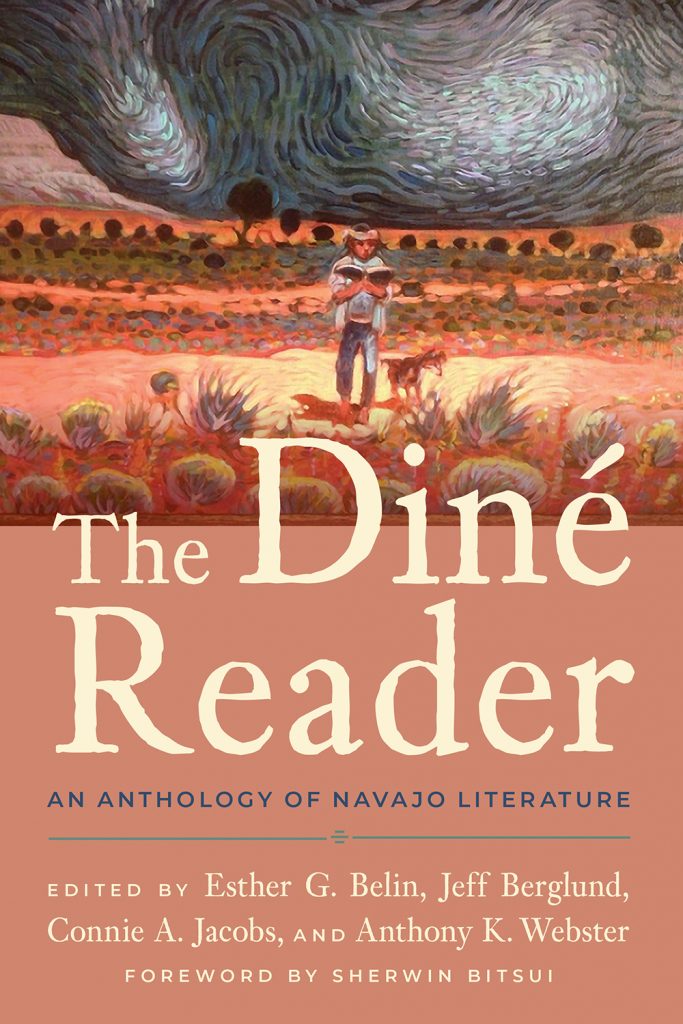
Watch an incredible book release celebration for The Diné Reader here, which features many of the contributors. Then, read a Publishers Weekly review of the book here, and read an excerpt from the book here.

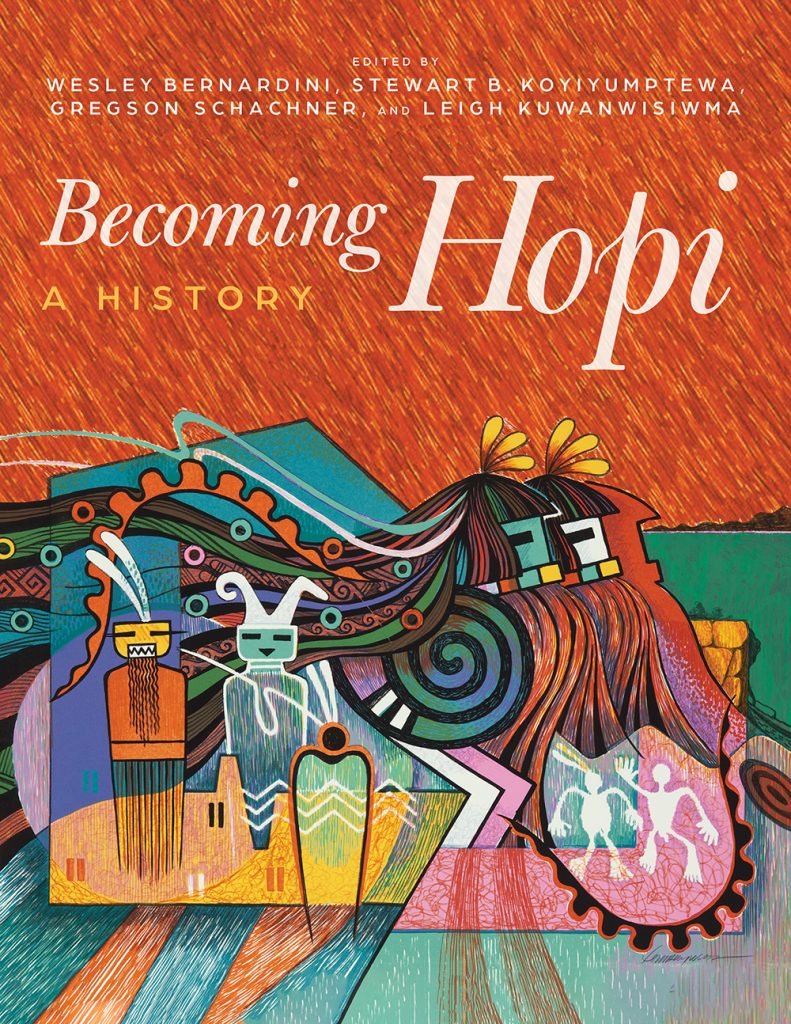
Becoming Hopi is a comprehensive look at the history of the people of the Hopi Mesas as it has never been told before, and is the product of more than fifteen years of collaboration between tribal and academic scholars.

Watch a book trailer for Becoming Hopi on the book’s web page to learn more.

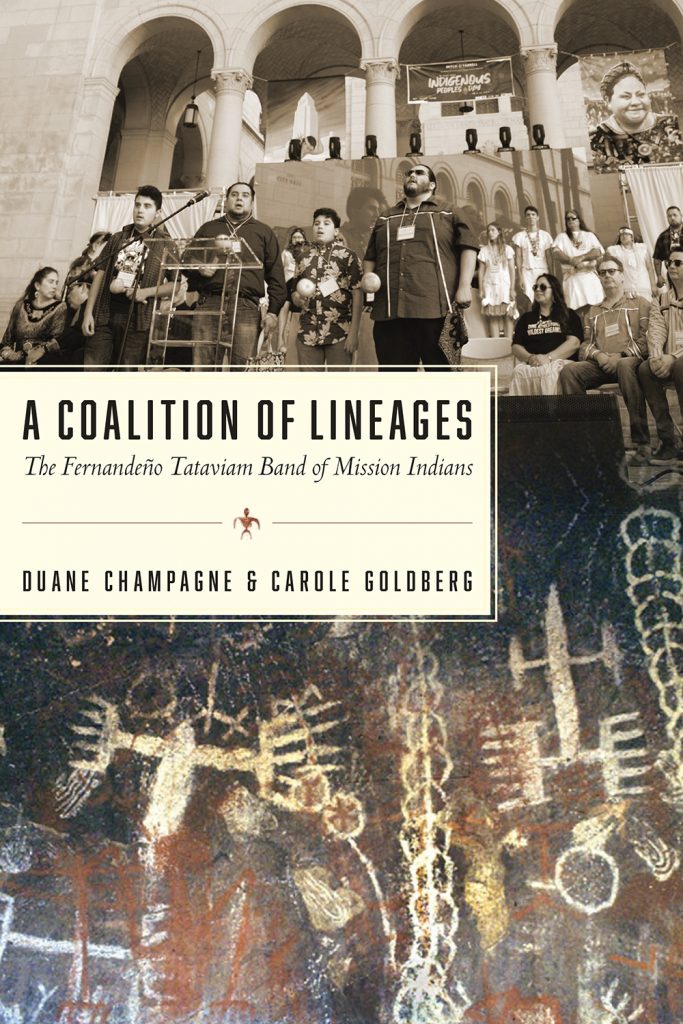
A Coalition of Lineages by Duane Champagne and Carole Goldberg shows how the experience of the Fernandeño Tataviam Band of Mission Indians is an instructive model for scholars and provides a model for multicultural tribal development that may be of interest to recognized and nonrecognized Indian nations in the United States and elsewhere.

From the day he was born, Federico Jiménez Caballero was predicted to be a successful man. So, how exactly did a young boy from Tututepec, Oaxaca, become a famous Indigenous jewelry artist and philanthropist in Los Angeles? Federico tells the remarkable story of willpower, curiosity, hard work, and passion coming together to change one man’s life forever.

Watch a recorded book release event here, in which Federico recounts many details from his remarkable life.

Decolonizing “Prehistory” critically examines and challenges the paradoxical role that modern historical-archaeological scholarship plays in adding legitimacy to, but also delegitimizing, contemporary colonialist practices. Using an interdisciplinary approach, this volume empowers Indigenous voices and offers a nuanced understanding of the American deep past.

Carrying the Burden of Peace weaves together stories of Indigenous life, love, eroticism, pain, and joy to map the contours of diverse, empowered, and non-dominant Indigenous masculinities. It is from here that a more balanced world may be pursued.

This book was co-published in collaboration with the University of Regina Press.

A baffling museum murder that appears to be the work of twisted human killers results in an unexpected and violent confrontation with powerful shape-shifters for Choctaw detective Monique Blue Hawk. Blending tribal beliefs and myths into a modern context, The Hatak Witches continues the storyline of Choctaw cosmology and cultural survival that are prominent in Devon A. Mihesuah’s award-winning novel, The Roads of My Relations.

Read a Publisher’s Weekly review of the book here, then read an interview with Devon Mihesuah here. Sign up for the virtual book release event here!

Indigenous Women and Violence offers an intimate view of how settler colonialism and other structural forms of power and inequality created accumulated violences in the lives of Indigenous women. The chapters in this book are engaged, feminist, collaborative, and activism focused, conveying powerful messages about the resilience of Indigenous women in the face of violence and systemic oppression.

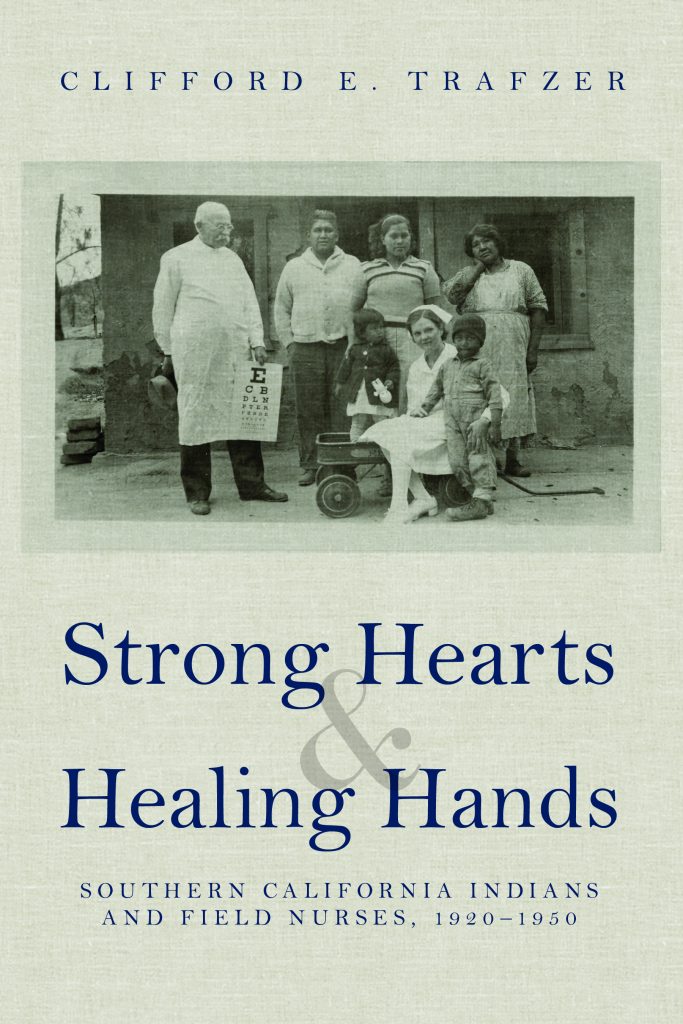
In 1924, the United States began a bold program in public health. The Indian Service of the United States hired its first nurses to work among Indians living on reservations. Strong Hearts and Healing Hands shows how field nurses and Native people formed a positive working relationship that resulted in the decline of mortality from infectious diseases. With strong hearts, Indians eagerly participated in the tuberculosis campaign of 1939–40 to x-ray tribal members living on twenty-nine reservations. Through their cooperative efforts, Indians and health-care providers decreased deaths, cases, and misery among the tribes of Southern California.

Read an excerpt from the book here.

Revitalization Lexicography is a unique look under the hood of lexicography in a small community, highlighting how the creation of the Tunica dictionary was intentionally leveraged to shape the revitalization of the Tunica language. It details both the theoretical and the practical aspects that contributed to the Tunica dictionary in manner compelling to readers from all walks of life.

Horsefly Dress is a meditation on the experience and beauty of suffering. Rich in the imagery of autumnal foliage, migrating birds, and frozen landscapes, Heather Cahoon’s collection calls forth the sensory experience of grief and metamorphosis. The transformative powers associated with the human experience of loss belong to the past, present, and future, as do the traditional Salish-Pend d’Oreille stories that create the backbone of these intricate poems.

Watch a recorded virtual book release with Heather Cahoon here, then read her interview with Poetry Northwest here, and her interview with us here.

Narrating Nature opens up dialogue that counters traditional conservation narratives. It offers conservation efforts that not only include people as beneficiaries but also demonstrate how they are essential and knowledgeable members of the conservation landscape itself.

Soldiers, Saints, and Shamans documents how and why the Indigenous Náayari, Wixárika, O’dam, and Mexicanero peoples took part in the Mexican Revolution as they struggled to preserve their cultures, lands, and political autonomy in the face of civil war, bandit raids, and radical political reform. In unpacking the ambiguities that characterize their participation in this tumultuous period, it sheds light on the inner contradictions of the revolution itself.

Read Nathaniel Morris’ field notes and see some photos from his research here, then watch Nathaniel Morris discuss the book with UCLAmericas here.

Chie Sakakibara shows how knots of connection came into being between humans and nonhuman others and how such intimate and intense relations will help humans survive the Anthropocene. Whale Snow offers an important and thought-provoking look at global climate change as it manifests in the everyday life of the Iñupiat in Arctic Alaska.

We are so thrilled that Whale Snow won the 2020 AAG Meridian Award! Read an interview with author Chie Sakakibara here.

La Raza Cosmética examines postrevolutionary identity construction as a project of settler colonialism that at once appropriated and erased indigeneity. In its critique of Indigenous representation, it also shows how Indigenous women strategically engaged with and resisted these projects as they played out in beauty pageants, films, tourism, art, and other realms of popular culture.

Read the introduction here.

Spiral to the Stars offers a critical and concrete map for community making that leverages Mvskoke way-finding tools of energy, kinship, knowledge, power, and spaces. It is must-have book for community organizers, radical pedagogists, and anyone wishing to empower and advocate for their community.

If you are attending the virtual NAISA conference, there will be a live roundtable about Spiral to the Stars at 1:00 p.m. EDT.

We are thrilled that Spiral to the Stars won the 2020 Beatrice Medicine Award! Read an excerpt from the book here.

Cathead Biscuits and the Warmth of Home: An Excerpt from Moveable Gardens

June 4, 2021

Moveable Gardens, edited by Virginia D. Nazarea and Terese Gagnon, highlights itineraries and sanctuaries in an era of massive dislocation, addressing concerns about finding comforting and familiar refuges in the Anthropocene. The worlds of marginalized individuals who live in impoverished rural communities, many Indigenous peoples, and refugees are constantly under threat of fracturing. Yet, in every case, there is resilience and regeneration as these individuals re-create their worlds through the foods, traditions, and plants they carry with them into their new realities.

Below, read an excerpt from contributor Taylor Hosmer’s chapter in Moveable Gardens, titled “The Tale of Cathead Biscuits”.

In most cases, as in my own, southerners never stop to consider why we prefer White Lily over other flours. At first, I staked it all on the traditions and rituals of cross- generational beliefs, but its taste may have even more to do with the cultural, regional, and historical connotations. To be considered a cathead, a biscuit must have a crisp crust and a soft inside. Soft winter wheat has been used to achieve this most desired effect. Since the beginning of the cathead, White Lily has been passed down as the type of flour one uses. Years have passed, and few other flours have found themselves embedded in southern biscuit ideals. Expectations of how a biscuit should look and taste have led to a strict dedication to soft red winter wheat. Ultimately, what may have started off as a regional and historical identity soon ingrained its importance as traditional and cultural markers as well. White Lily has undoubtedly had a role in producing and reproducing southern foodways as a hallmark ingredient that has defined what a biscuit should be.

Without fail the cathead’s taste of place has brought the warmth of my home to me time and time again. In college and far from home, I have often found myself lost in the present moment and at times prone to forgetting connections to my roots. Despite this, no true difficulty presents itself during my efforts to bring forth the warmth of home when I am assisted by a fresh biscuit. That being said, it cannot be just any biscuit. Like champagne, it must meet the requirement to be called a cathead. If it is not a true cathead, it cannot evoke the many rich meanings that are wrapped up inside each bite, and it would not have the power to bring forth the sense of home across hundreds of miles to wherever I might be. A true cathead is, for me, a portable sanctuary in moments such as these. It can transform any reality into the likeness of my home.

With every smell, taste, and texture consumed, memories and feelings present themselves. It is funny to think of a biscuit no larger than a cat’s head as a boundless haven. But it has, without fail, provided a direct link to my home each time I have caught myself drifting away. A central feature in the memories it evokes, the biscuit is vital in the moment of recall. Without it, certain memories may have been forgotten, and feelings may have faded. Instead, it has allowed connections to be made between the people and places associated with it, creating an integrated system of meaning that is steady and at the same time ever changing. Layers of meaning can be added with every new memory made, and even old memories can be altered in light of something newly learned. The cathead biscuit, however, will always be the catalyst for me when I am looking to produce this very particular meaning system.

Cathead biscuits represent a tradition that was a constant throughout my childhood. My brother and I spent every summer roaming the land around Mema’s house, accompanied by the smells and tastes of biscuits. Breakfast, lunch, and dinner, you could easily claim your fill of biscuit without any true difficulty. Whether we were determined explorers or nature survivalists, we would always give in to our hunger when Mema yelled out “fresh biscuits!” Knapsacks in hand, we would fill them with all sorts of treasures. This, of course, included the delicious golden rounds, which would later be eaten deep inside the woods. We would strike off into the wilderness with our renewed supplies to conduct feasts at our many secret fortresses and hideouts. As children, we associated biscuits with long summer days spent at Mema’s, early morning breakfasts with our cousins, and the knowledge that this food could always fill whatever need we had that day. The biscuit contains within it memories we draw on with each bite taken. In an instant I can travel through space and time to find myself a young child again sitting at my mema’s table. With biscuit in hand, I can close my eyes and hear the laughter of cousins, while the soothing warmth of nostalgia floods my senses. As Sutton explains in his book Remembrance of Repasts (2001), food is so much more than simply a source of energy. Food can be symbolic, and in that symbolism, it can contain countless layers of meaning. Our relationship to the food we eat reflects our cultural beliefs, regional preferences, and socio-economic status, among other things. Most importantly, it can provide us with a link to our past.

***

Taylor Hosmer hails from a small town in southern Georgia. She is an anthropology and geography major at the University of Georgia, with a focus on disaster management. Her ethnobiography takes a new and more personal approach to the history of resilience. Her time spent volunteering at UGArden and William’s Farm, two local community gardens in Athens, Georgia, has taught her that knowing one’s food can have powerful positive impacts from the community level down to each individual.

Paul E. Minnis Receives the Society of Ethnobiology’s 2021 Distinguished Ethnobiologist Award

May 21, 2021

We are thrilled to announce that University of Arizona Press author Paul E. Minnis is the recipient of the 2021 Distinguished Ethnobiologist Award from the Society of Ethnobiology! The Society of Ethnobiology announces its Distinguished Ethnobiologist award to honor an ethnobiologist who has made outstanding contributions to the field of ethnobiology and advancing the goals of the Society. In recognition of these contributions, the recipient will be awarded a lifetime honorary membership to the Society of Ethnobiology.

Paul E. Minnis (PhD, University of Michigan) is a professor emeritus of anthropology at the University of Oklahoma, now living in Tucson, Arizona, where he is a visiting scholar in the School of Anthropology at the University of Arizona. He conducts research on the prehispanic ethnobotany and archaeology of the northwest Mexico and the U.S. Southwest. His recent University of Arizona Press books include Famine Foods: Plants We Eat to Survive and The Prehispanic Ethnobotany of Paquimé and Its Neighbors, which he co-authored with Michael E. Whalen.

Congratulations, Paul!

LASA 2021: Explore Our Latest Latin American Studies Titles and Enjoy a Conference Discount

May 24, 2021

We are excited to be participating in the second virtual LASA congress! Below, browse and learn more about our recent Latin American studies titles. Through 6/15/2021, use the code AZLASA21 for 40% off all titles, including free U.S. shipping.

Are you interested in our publishing program? Read about the details here, and contact our Editor-in-Chief Kristen Buckles at kbuckles@uapress.arizona.edu, or our Senior Editor Allyson Carter at acarter@uapress.arizona.edu.

By the start of the century, nearly one billion international travelers were circulating the globe annually, placing tourism among the worlds’ most ubiquitous geopolitical encounters. While the COVID-19 pandemic brought the industry to a sudden halt, its geopolitical significance remained. With striking clarity, tourism desires and reinvented mobilities revealed the impermanence of Old World orders as new global alliances were forged. Tourism Geopolitics offers a unique and timely intervention into the growing significance of tourism in geopolitical life as well as the intrinsically geopolitical nature of the tourism industry.

Read an excerpt from the book here, and look at the table of contents on the book’s web page.

Indigenous Women and Violence offers an intimate view of how settler colonialism and other structural forms of power and inequality created accumulated violences in the lives of Indigenous women. The chapters in this book are engaged, feminist, collaborative, and activism focused, conveying powerful messages about the resilience of Indigenous women in the face of violence and systemic oppression.

“Bringing together leading Indigenous and non-Indigenous scholars, this volume explores the connections between structural, extreme, and everyday violence against Indigenous women across time and borders. It makes important contributions to current debates about gender violence and research methods.”—Rachel Sieder, editor of Demanding Justice and Security: Indigenous Women and Legal Pluralities in Latin America

David Barton Bray has spent more than thirty years researching and studying Mexican community forest enterprises (CFEs). In Mexico’s Community Forest Enterprises he shares the scientific evidence for Mexico’s social and environmental achievements and how, in its most successful manifestations, it became a global model for common-property forest management, sustainable social-ecological systems, and climate change mitigation in developing countries.

Mexico’s Community Forest Enterprises is the culmination of a lifetime of research on how community forests in Mexico are successful and why some of them fail. Bray captures the complexity of Mexican forestry in a masterful way. Amidst all the negative news about global deforestation, Bray makes a compelling case for understanding the stories that we don’t get to hear much on the media, the success of common property regimes in Mexican forests can be a source of hope to the future of community forests.”—José E. Martínez-Reyes, author of Moral Ecology of a Forest: The Nature Industry and Maya Post-Conservation

Soldiers, Saints, and Shamans documents how and why the Indigenous Náayari, Wixárika, O’dam, and Mexicanero peoples took part in the Mexican Revolution as they struggled to preserve their cultures, lands, and political autonomy in the face of civil war, bandit raids, and radical political reform. In unpacking the ambiguities that characterize their participation in this tumultuous period, it sheds light on the inner contradictions of the revolution itself.

Read some field notes from author Nathaniel Morris, complete with stunning photographs, here. Then, watch Morris discuss the book in a recorded virtual book launch event here.

Binational Commons focuses on whether the institutions that presently govern the U.S.-Mexico transborder space are effective in providing solutions to difficult binational problems as they manifest themselves in the borderlands. The volume addresses key binational issues and explores where there are strong levels of institutional governance development, where it is failing, how governance mechanisms have evolved over time, and what can be done to improve it to meet the needs of the U.S.-Mexico borderlands in the next decades.

 “This excellent book addresses border governance institutions and documents how dynamic events have outgrown institutional capabilities for governance. Exceptional chapters on institutions and governance that address transportation, data generation, planning, energy, health, security, the environment, and other areas of the border reality make this book essential reading for border students, researchers, and practitioners.”—Paul Ganster, author of The U.S.-Mexican Border Today: Conflict and Cooperation in Historical Perspective

La Raza Cosmética examines postrevolutionary identity construction as a project of settler colonialism that at once appropriated and erased indigeneity. In its critique of Indigenous representation, it also shows how Indigenous women strategically engaged with and resisted these projects as they played out in beauty pageants, films, tourism, art, and other realms of popular culture.

Natasha Varner’s book insightfully traces how nationalists used the female Indigenous body to construct settler colonialism in postrevolutionary Mexico. In the process, it creatively bridges Indigenous studies in the United States and Latin America.”—Rick A. López, author of Crafting Mexico: Intellectuals, Artisans and the State After the Revolution

Read the book’s introduction here.

Taking us on a journey of remembering and rediscovery, anthropologist Carlos G. Vélez-Ibáñez shares important insights into his development as a scholar and in so doing the development of the interdisciplinary field of transborder anthropology. Reflections of a Transborder Anthropologist shows how both Vélez-Ibáñez and anthropology have changed and formed over a fifty-year period. Throughout, he has worked to understand how people survive and thrive against all odds. Vélez-Ibáñez has been guided by the burning desire to understand inequality, exploitation, and legitimacy, and, most importantly, to provide platforms for the voiceless to narrate their own histories.

We are thrilled that Carlos G. Vélez-Ibáñez was honored with the 2020 Franz Boas Award, as well as the inaugural AAHHE Distinguished Author Award. Read an excerpt from the book here, then watch a recording of a virtual book launch and discussion here.

Salvador González: Cuba’s Arts Defender and Believer, Recently Died in Havana

April 27, 2021

In Tom Miller’s Cuba, Hot and Cold, the University of Arizona Press author wrote about Cuban life, but he also included a reverential revival in Afro-Cuban arts, music, and community led by Salvador Gonzalez.

The artist, cultural promoter, and manager of the Callejón de Hamel Community Socio-Cultural Project in the Havana neighborhood of Cayo Hueso, passed away recently in Havana, leaving a remarkable legacy on Cuban culture, essentially in the visual arts and traditional popular culture, to which he was closely linked until his last days, according to TeleSUR. You can read their story on Gonzalez here.

To better understand this Cuban arts defender and believer, read the following excerpt from Miller’s book:

On the Street

No slice of Cuban life is less understood by outsiders than its African-based religions—not its athletic prowess nor its government’s colossal miscalculations nor the power of a machete during the sugar harvest nor its devotion to José Martí. You could visit here for weeks and not encounter Afro-Cuban religion, go home, and be none the wiser. But it’s here, it’s in the air, people wear it on their bodies, you can hear it if you listen, you can see it if you want. It’s even in my family, and I’m not confident I entirely understand it either.

Until recent decades polite society considered Afro-Cuban religions something to dismiss, practiced only by la chusma—the lowest of the low—tucked away out of sight. Gradually, however, the religions surfaced—their music assertive, their rituals open, their societies and deities accessible to all. Brought to the Caribbean by slaves and prac-ticed under cover of Catholicism, these religions now draw domes-tic respectability and worldwide attention. The easiest way to catch a comfortable glimpse of them is on a small side street in Cayo Hueso, a working-class barrio of Centro Habana. On Sundays neighbors start gathering on Callejón de Hamel before noon, joined by habaneros from other parts of town and, now, a considerable turnout of visitors from abroad.

Since 1990 Hamel has grown from an unkempt back alley to a site for impressionistic Afro-Cuban art, music, dance, and drumming. Salvador González deserves credit for this, beginning the transition when he was in his forties with a block-long mural overpowering in theme, presence, and execution. Spinning smoke, water, limbs, eyes, and roots surround feathers, goddesses, and serpents. Yemayá and Ochun, both deities of the Yoruba sect, entwine; others from the Abakuá dominate adjoining segments of the mural. The most recent addition is a thematic paint job on the back sides of the run-down five-story apartment houses that line the callejón, all the way up to the rooftop water tanks hundreds of feet above street level.

The Jovellanos, a musical group from Matanzas, had already begun when I arrived. They played on the sweltering street, shaded beneath corrugated tin. The group’s four drummers could be heard blocks away, and soon the crowd grew to two hundred sweaty onlookers, mesmerized by the full-throttle beat as first the singers chanted Yoruba and other incantations, then danced a wild yet precise ritual whose increasing momentum summoned just the right frenzy. The first number was a soft yambú in which a couple acted out in slow motion a rooster and his hen circling and pecking, lunging and leaning. It was meant to be erotic and provocative, and it was both. Next came a faster rumba with rattling maracas that crescendoed as the dancers acted out a fight, then made up as the woman pushed off the man with a turn of the torso, coyly drawing him under her spell. The conga and the batá drums were the lead instruments, accompanied by rhythmic clatter from gourds, a cowbell, and well-defined non-Western free-form singing.

Next, the guaguancó, sweat-drenched dancers’ hips and groins gyrating in sync inches from each other, moving forward, sideways, backward, arms flailing, bodies slowing, building up again, thrusting, almost brushing each other, then pausing, the dancers impressing each other and the captivated crowd.

It was wonderfully suggestive; you can get hot just writing about it. During a break in the dancing, people strolled the alley reading Salvador’s philosophical graffiti, admiring the elaborate structures he’s built. He has a storefront art gallery and a regular work crew, and on weekdays he paces the street, remote phone in hand. He’s built a crude temple inspired by palo monte, a religion with its roots in the Congo and its branches in the New World. It’s a lean-to made with sticks from the Zapata swampland on Cuba’s south coast, with a lifelike couple seated in front of jungle growth. Salvador stopped to explain his complex composition. “It symbolizes the powerful force of nature,” he said, “the waters of the sea, the strength of the rivers, and the volcanic energy we feel from the land. This temple is alive. Look.” He reached far back into the altar, pulled out a machete, and hacked out eyes, a nose, and a mouth in what obviously was not volcanic rock at all. It was the outer growth of a tree stump, still very much alive with thousands of termites that erupted as Salvador sculpted his work.

As for the turnout, Alba Rodríguez a, hospital janitor who lives around the corner, said she’s been coming to the Sunday rumbas faith-fully ever since they began. “I tell people at work to come, but some of them say no, they’re not interested in this, they don’t like it. For me, it’s tranquilo. Tranquilo.”

The crowd eventually thinned out, carrying with it the energy of the rumba. On their way out they passed an empty herb stand, then one of the many dictums painted on the wall: I can wait longer than you, because I am time itself.

The Diné Reader: An Excerpt

April 8, 2021

The Diné Reader: An Anthology of Navajo Literature is unprecedented. It showcases the breadth, depth, and diversity of Diné creative artists and their poetry, fiction, and nonfiction prose. This wide-ranging anthology brings together writers who offer perspectives that span generations and perspectives on life and Diné history. The collected works display a rich variety of and creativity in themes: home and history; contemporary concerns about identity, historical trauma, and loss of language; and economic and environmental inequalities.

Below, read an excerpt from Sherwin Bitsui‘s foreword to The Diné Reader.

“I’ve met young Navajo college students attending universities throughout the United States who are surprised to discover that Navajos have been writing books for decades—Blackhorse Mitchell’s Miracle Hill was published decades ago, in 1967. The students, excited about stories and poems that reflect their own experiences, ask for the names of Navajo authors and their book titles with hopes of finding them in their local bookstores and libraries. Such works invoke memories of their families, reservation life, and cultural concerns. They also capture the red rock panoramas of their homeland, where stories and everyday life are perpetually intertwined. Each book contains an entire world and gives voice to Navajo thought and worldview with the utmost care and respect for language and ancestral knowledge.

Navajo poets and writers often refer to Diné bizaad as the source for their written work. Navajo Nation Poet Laureate Laura Tohe writes, “Diné bizaad is medicine for healing, was used as a secret code during World War II by the Navajo Code Talkers, and has blessed me in writing poetry, stories, essays, and now writing librettos for operas. It has grounded me to Navajo spirituality and community.”

Whether Diné bizaad was forcibly repressed at boarding schools, or because a generation of traumatized parents were convinced not to teach their children, these writers rediscover it in their written work. The layers of each line, image, or word carry not only personal story but the entirety of a people’s history and worldview. These stories restore memory and reconnect a people, some of whom have moved beyond the sacred mountains to work and live in distant cities. These stories are doorways opening inward, back into the world that is always home.

This anthology will aid in making known to readers the incredible diversity Navajo literature offers. These poems and stories are as vast and dynamic as the land on which they were imagined and created. The editors of this anthology have presented the works in a format that honors culture. They have provided interviews with the authors and resources for teachers to aid in the teaching of these works, elucidating the cultural context to bring greater depth to the reader’s understanding. Elizabeth Woody, in her interview, gracefully sums up the thesis of this collection: “I write from the core belief the word of our ancestors still reverberates in our present. It is a whisper in the grasses moving in all directions.” With the publication of this book, the whisper has grown louder and cannot be ignored any longer. The songs and memories of our ancestors continue to reverberate in these contemporary stories and poems; they bridge worlds and restore beauty within all things.”

Sherwin Bitsui

For Authors

The University of Arizona Press publishes the work of leading scholars from around the globe. Learn more about submitting a proposal, preparing your final manuscript, and publication.

Inquire

Requests

The University of Arizona Press is proud to share our books with readers, booksellers, media, librarians, scholars, and instructors. Join our email Newsletter. Request reprint licenses, information on subsidiary rights and translations, accessibility files, review copies, and desk and exam copies.

Request

Support the Press

Support a premier publisher of academic, regional, and literary works. We are committed to sharing past, present, and future works that reflect the special strengths of the University of Arizona and support its land-grant mission.

Give