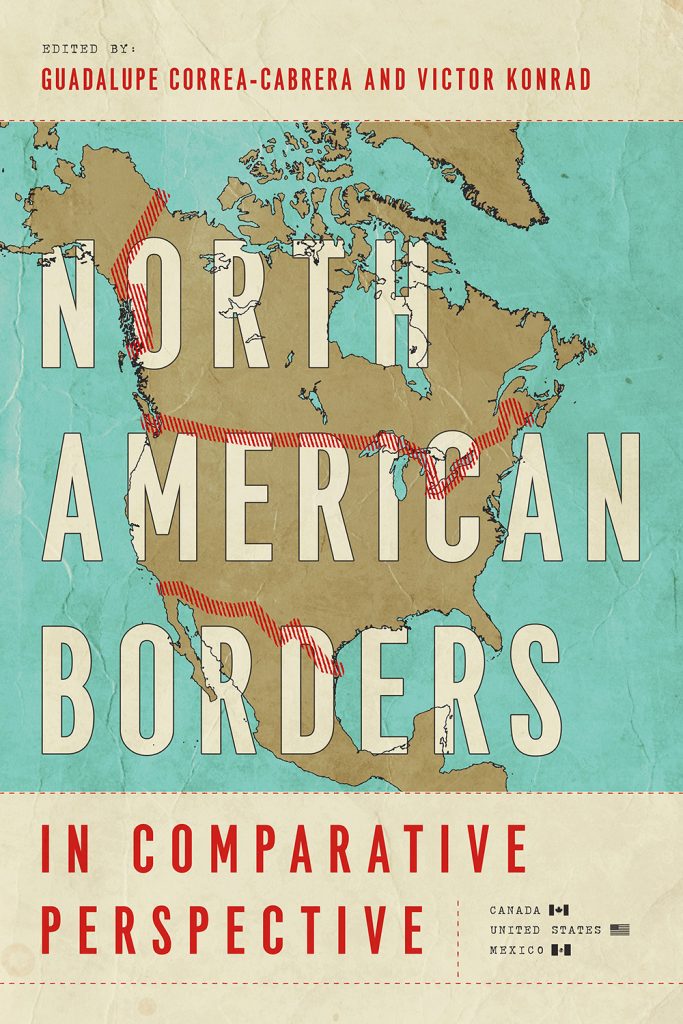
According to Guadalupe Correa-Cabrera and Victor Konrad, if ever there was a time to better understand the borders of North America, it’s now during a global pandemic crisis.
The editors of North American Borders in Comparative Perspective, recently published by the University of Arizona Press, said the pandemic has the potential to further change policies and life along both borders. Correra-Cabrera and Konrad, took time from their work, to talk about these growing border issues, their book, and the importance of learning more about both borders, not only our southern borderlands.
In North American Borders in Comparative Perspective, leading experts provide a contemporary analysis of how globalization and security imperatives have redefined the shared border regions of Canada, the United States, and Mexico.
This volume offers a comparative perspective on North American borders and reveals the distinctive nature first of the over-portrayed Mexico-U.S. border and then of the largely overlooked Canada-U.S. border. The perspectives on either border are rarely compared. Essays in this volume bring North American borders into comparative focus; the contributors advance the understanding of borders in a variety of theoretical and empirical contexts pertaining to North America with an intense sharing of knowledge, ideas, and perspectives.
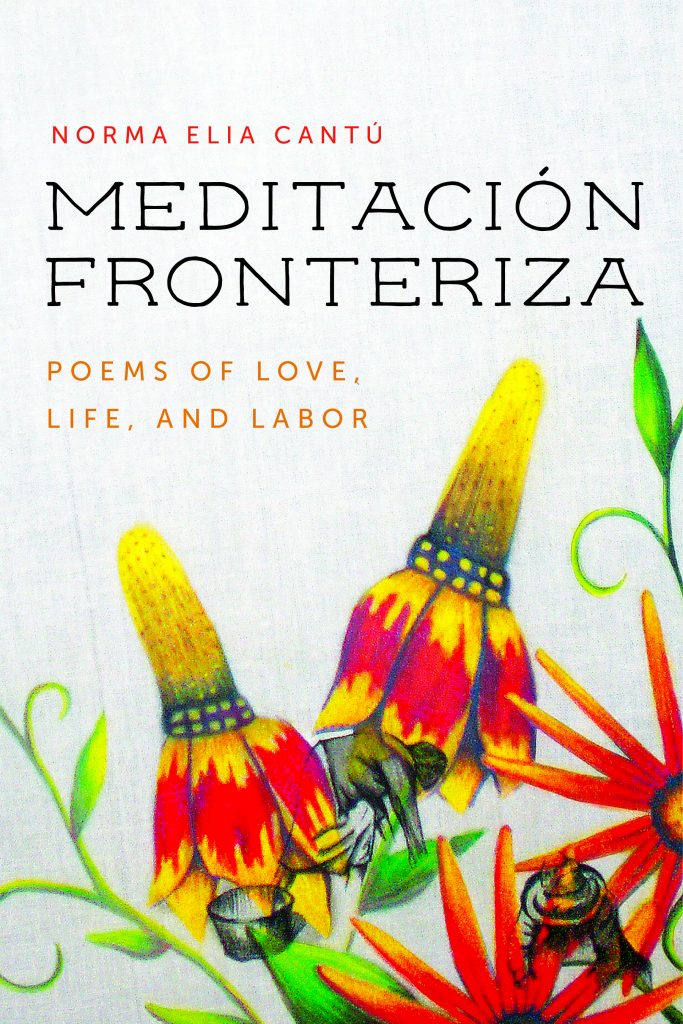
Maestra Norma Cantú, author, activist, and scholar, took time to talk with the University of Arizona Press from her San Antonio home about life during COVID-19, community, family, and her poetry collection, Meditación Fronteriza: Poems of Love, Life, and Labor.
Life in Cantú’s Texas-Mexico borderlands is centered in these poems, a collection that celebrates culture, tradition, love, solidarity, and political transformation from Spanish to English.
Cantú, author of Canícula: Snapshots of a Girlhood en la Frontera, currently serves as the Norine R. and T. Frank Murchison Professor of the Humanities at Trinity University. She is founder and director of the Society for the Study of Gloria Anzaldúa.
Voices from the Ancestors brings together the reflective writings and spiritual practices of Xicanx, Latinx, and Afro-Latinx womxn and male allies in the United States who seek to heal from the historical traumas of colonization by returning to ancestral traditions and knowledge.
The editors and contributors want to share these practices from the book that relate to the online discussion on dreaming, one and two; on house blessings; on spiritual limpias; rituals and remedies; and honoring the Four Directions.
More information on Voices editors and contributors:
Berenice Dimas shared information on herbs and wellness practices. Dimas is a queer writer, community-based herbalist, health educator, wellness promotora, and full-spectrum birth doula. Find out more about Berenice’s work by visiting her website and her Instagram pages @hoodherbalism y @brujatip.
Martha R. Gonzales, whose partner is currently battling COVID-19, shared her experience caring for her partner and turning to traditional ways to help him fight the virus and heal. Gonzales was raised in East Los Angeles, earned her bachelor’s degree in philosophy and literature from University of California, Santa Cruz, and her doctorate in literature from University of California, San Diego. She lectures in the Ethnic Studies Department at Glendale Community College, Glendale, California.
Marta López-Garza, shared information on how to do a blessing for a house or sacred space. López-Garza is a professor in gender and women’s studies and Chicana/o studies departments at California State University, Northridge. She co-facilitates Revolutionary Scholars, an organization of formerly incarcerated students and is a cofounder of Civil Discourse and Social Change, a campus-wide initiative combining education, community involvement, and sustained activism. Her scholarship focuses on formerly incarcerated womxn.
Lara Medina (Xicanx) was raised in the San Francisco Bay Area, earned an MA in theology from Graduate Theological Union in Berkeley, California, and a PhD in history from Claremont Graduate University. She is a professor in the Chicana/o Studies Department at California State University, Northridge.
Sandra M. Pacheco is a professor and independent scholar. Her teaching and research focuses on Chicana/Latina/Indígena feminisms and spirituality. Sandra cofounded Curanderas sin Fronteras, a mobile clinic dedicated to serving the health and well-being of Chican@/Latin@/Indígena communities through the use of curanderismo.
Download from our online shopping cart here. Available until 4/12/2020. Discount code is AZTULSA.
“For a book that unfurled like a wild, restless road trip, I took great delight in Jennifer Foerster’s Leaving Tulsa. Sensuous, generous, full of beginnings and endings, this map of America flapping in the dark meditates on Foerster’s Muskegee ancestry, the American prairie, the loss of her grandmother’s land, and her shard-like rediscovery in California.”—Tess Taylor, NPR
Book Description: Leaving Tulsa, a book of road elegies and laments, travels from Oklahoma to the edges of the American continent through landscapes at once stark and lush, ancient and apocalyptic. Each poem gives the collection a rich lyrical-dramatic texture. Ultimately, these brave and luminous poems engage and shatter the boundaries of time, self, and continent. Learn more
Based on fifteen years of archaeological and historical research in the two regions, Narratives of Persistence charts the remarkable persistence of the Ohlone and Paipai alongside a synthesis of Native Californian endurance over the past five centuries. Lee M. Panich draws connections between colonial events and processes of the deeper past and the way the Ohlone and Paipai today understand their own histories and identities, offering a model for how scholars of Indigenous histories may think about the connections between the past and the present.
Below, read an interview with Lee M. Panich about his new book.
What inspired you to embark on this research?
Narratives of Persistence has its origins in my dissertation research in Baja California,
back in 2005, for which I conducted an archaeological excavation at the site of
Mission Santa Catalina, in the heart of the Paipai reserve of Santa Catarina.
The initial idea for my dissertation was to compare the Dominican mission
system of Baja California to the contemporaneous Franciscan missions of Alta
California. However, Paipai community members quickly convinced me to change my
research questions to center on the tribe’s long-term history. They downplayed
the importance of the mission, saying in effect, “We’re still here, while the
mission is just ruins now.”
This idea became the central focus of my dissertation and stuck with me when I shifted my research to the San Francisco Bay area about ten years ago. I saw a similar situation with local Ohlone groups, who had persisted in different ways during and after the mission period. Given the variables involved—different Indigenous cultural traditions, different missionary orders, differences between the U.S. and Mexico—I thought the two case studies would make an interesting comparison. I hope readers agree.
Why do the Ohlone people lack popular recognition and official acknowledgement from the U.S. government, even though they share a similar colonial history to the Paipai people?
That’s a great question and one of the key issues I try to
address in the book. There are, of course, a lot of reasons for this
discrepancy. One reason has to do with differences in how central California
and northern Baja California were colonized by the United States and Mexico,
respectively. Despite maintaining community cohesion, the Ohlone lost ancestral
lands and were demographically outnumbered in the Bay Area shortly after the
Gold Rush. The Paipai, in contrast, were able to hold onto portions of the
ancestral homelands at the same time that Mexican settlement in the region
remained relatively small well into the twentieth century.
But, for the Ohlone in particular, I think the biggest issue is simply that outsiders have always had essentialized notions of what Native people should be like. This can be seen in the early twentieth century when anthropologists and government officials alike pronounced the Ohlone extinct. The people were still there, but they didn’t fit rigid stereotypes about American Indians. One of the arguments I make in the book is that expectations about authenticity continue to do harm to Native Californian communities today.
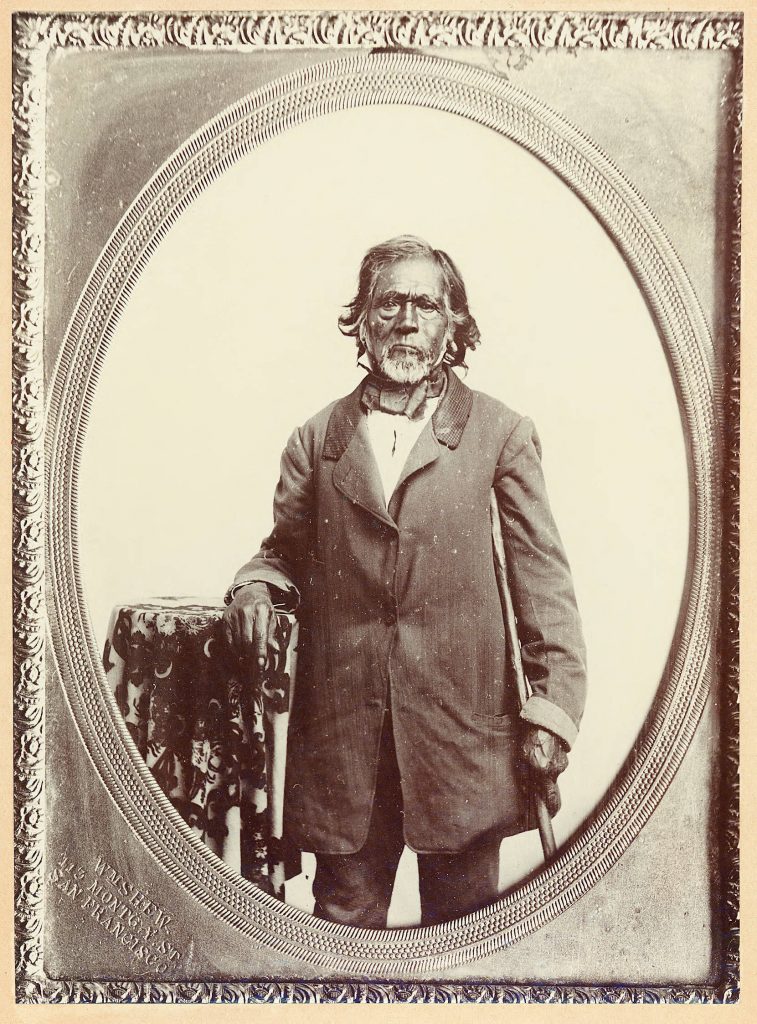
A portrait of Inigo, taken in 1860. Inigo was an Ohlone man who joined the missions as a child, rose to the rank of alcalde, and eventually received part of the former mission lands as a grant from the Mexican government in the 1840s. Use of this image is courtesy of the Santa Clara University Archives & Special Collections.
What do you think the biggest lasting changes colonialism brought to the Ohlone and Paipai peoples are? How do those changes manifest today?
Perhaps counterintuitively, people in both
communities are quick to acknowledge how their ancestors incorporated aspects
of colonial lifeways into their own. For example, Paipai men are well regarded vaqueros,
or cowboys, and my hosts in Santa Catarina credited the mission system for
teaching their ancestors how to rides horses and drive cattle. Here in the Bay
Area, many members of the Ohlone community remain practicing Catholics, another
direct legacy of missionization. In both cases, people today are adamant about
the fact that their communities have suffered unjustly under different colonial
regimes, but they also recognize that the issues are not always black and
white.
Certainly, one of the biggest changes has been a long process of social and political coalescence. Prior to colonization, people in both regions were organized into myriad autonomous communities – communities that have come together in various ways over the past 250 years. What I think most people misunderstand about that process is that it was both intentional and shaped by enduring cultural practices. In the missions, for example, Ohlone and Paipai people drew on existing marriage patterns to expand the pool of potential spouses amid devastating population losses. Later, in the late nineteenth and early twentieth centuries, Ohlone and Paipai communities opened their doors to other Native people seeking refuge from violence and exploitation. These changes look dramatic when one compares the situation in 2020 to that in, say, 1780. But when you view it from the perspective of lived experience, the overall picture is one of individuals and families striving for community continuity. That’s the perspective I hope readers take away from the book.
Could you please tell us more about the persistent Indigenous traditions of the Ohlone and Paipai peoples? What do those traditions and traditional ways of knowing look like in contemporary life in California?
There is so much amazing work that is happening across Native California, and especially in the Ohlone and Paipai communities. Here in the Bay Area, for example, you can get a meal of acorn bread and venison at Cafe Ohlone in Berkeley. Run by Vincent Medina (Chochenyo Ohlone) and Louis Trevino (Rumsen Ohlone), the café honors traditional knowledge, serves as a hub for Native cultural events, and simultaneously educates the non-Native public about continued Ohlone presence. There is also an active program of language revitalization. In addition to reintroducing Chochenyo Ohlone language to everyday usage, the Muwekma Ohlone Tribe regularly renames important ancestral sites in order to undo the processes of erasure that have written them out of their homelands for the past two centuries.
South of the border, the Paipai are similarly working to maintain Native languages – there are several spoken in Santa Catarina today, including Paipai and Ko’alh. Paipai artisans are also renowned for their pottery, as Santa Catarina is the only Native Californian community with an unbroken ceramic tradition stretching from precontact times to the present. The potters, nearly all of whom are women, and other Paipai artisans are in high demand at workshops and cultural events throughout northern Baja California and southern California. In fact, many Native artisans from Baja California regularly connect with tribal communities in the United States—ranging from Kumeyaay groups in San Diego County to the Hualapai, Yavapai, and Havasupai in Arizona—to share knowledge and to rekindle connections.
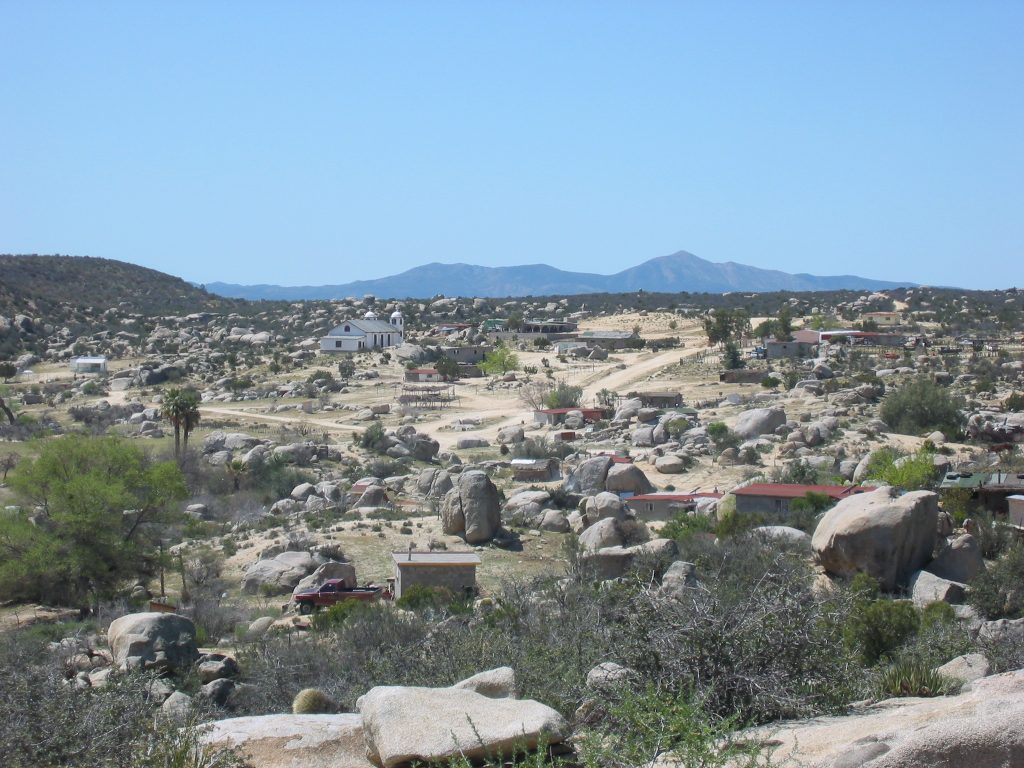
The Paipai community of Santa Catarina in Baja California, taken in 2005. Use of this photo is courtesy of Lee M. Panich.
What are you working on now?
For
the past year or so, I’ve been involved in several interrelated projects
focused on bringing Ohlone perspectives to a wider audience, particularly at
Santa Clara University where I work. Our campus is on the site of Mission Santa
Clara, where thousands of Ohlone people lived and labored during the colonial
period. To date, their descendants have been largely left out of the public
interpretation of the mission and the ways we teach the history of the SCU
campus to our students and visitors.
This is all changing rapidly, and we’ve been working closely with the Bay Area Ohlone community — particularly those groups who trace their ancestry through Mission Santa Clara, including the Muwekma Ohlone Tribe and the Ohlone Indian Tribe. This work is both top-down and bottom-up. We’re working with the University administration, for example, to assess official monuments and markers on our campus and to make sure we do a better job of acknowledging Ohlone history and continued presence. Along with faculty colleagues and undergraduate students, we’re also working with the Ohlone community to build pedagogical resources that instructors here at Santa Clara and elsewhere can use and that feature Ohlone voices and perspectives. The coronavirus situation has obviously put these efforts on the back burner for the time being, but the story of the Ohlone—like that of the Paipai—is one of overcoming obstacles big and small.
Lee M. Panich is an associate professor of anthropology at Santa Clara University, specializing in the archaeology and ethnohistory of colonial California, particularly the Spanish mission system.
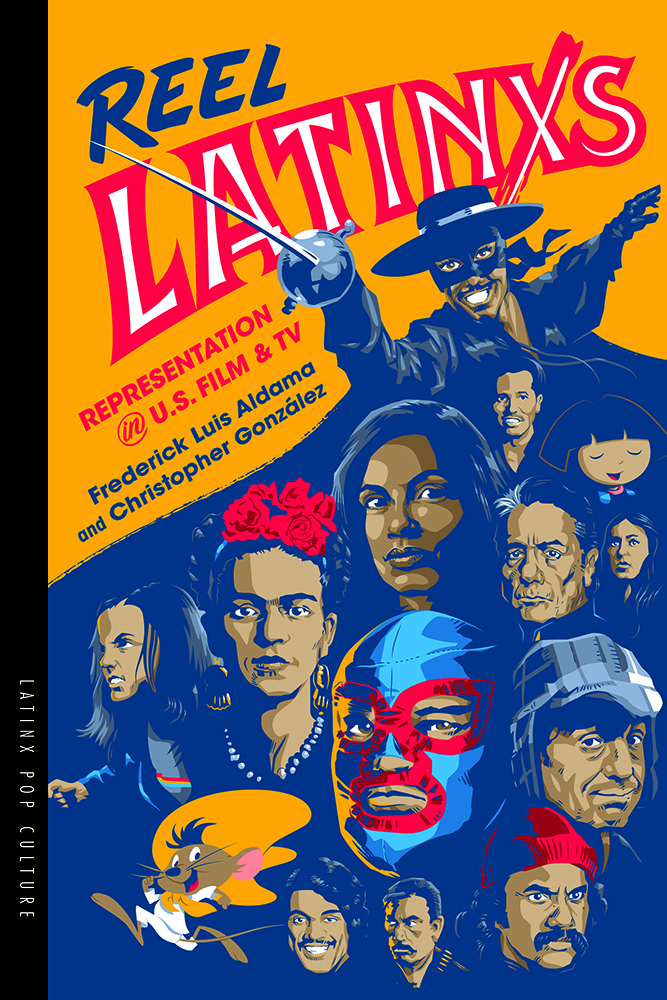
In a new video, Reel Latinxs authors Frederick Aldama and Christopher González discuss why Latinx pop culture matters inside and outside of the classroom with Sor Juanaauthor Ilan Stavans. Below, watch their discussion, or view the video on YouTube here.
Don’t forget,Sor Juana is available as a free e-book download until Wednesday, April 8, 2020! Use the code AZJUANA when you check out on our website.
Sor Juana: Or, the Persistence of Pop encapsulates the life, times, and legacy of Sor Juana. In this immersive work, essayist Ilan Stavans provides a biographical and meditative picture of the ways in which popular perceptions of her life and body of work both shape and reflect modern Latinx culture.
Latinx representation in the popular imagination has infuriated and befuddled the Latinx community for decades. These misrepresentations and stereotypes soon became as American as apple pie. But these cardboard cutouts and examples of lazy storytelling could never embody the rich traditions and histories of Latinx peoples. In Reel Latinxs, a grand sleuthing sweep of Latinx representation in mainstream TV and film, pop culture experts Frederick Luis Aldama and Christopher González call us all to scholarly action.
Happy National Poetry Month from the University of Arizona
Press!
National Poetry Month was launched by the Academy of American Poets in April 1996 to remind the public that poets have an integral role to play in our culture, and that poetry matters. Over the years, it has become the largest literary celebration in the world!
We always look forward to celebrating National Poetry Month because we have so much incredible Indigenous and Latinx poetry to share with the world. We are grateful and proud every month of the year to publish the work of truly phenomenal poets, and we hope you will take this month to dive into some of our poetry collections in the award-winning Sun Tracks and Camino del Sol series from the comfort of your home. Below, find a look our recently published collections, along with a few of our favorite new poems to kick-start the poetry celebration.
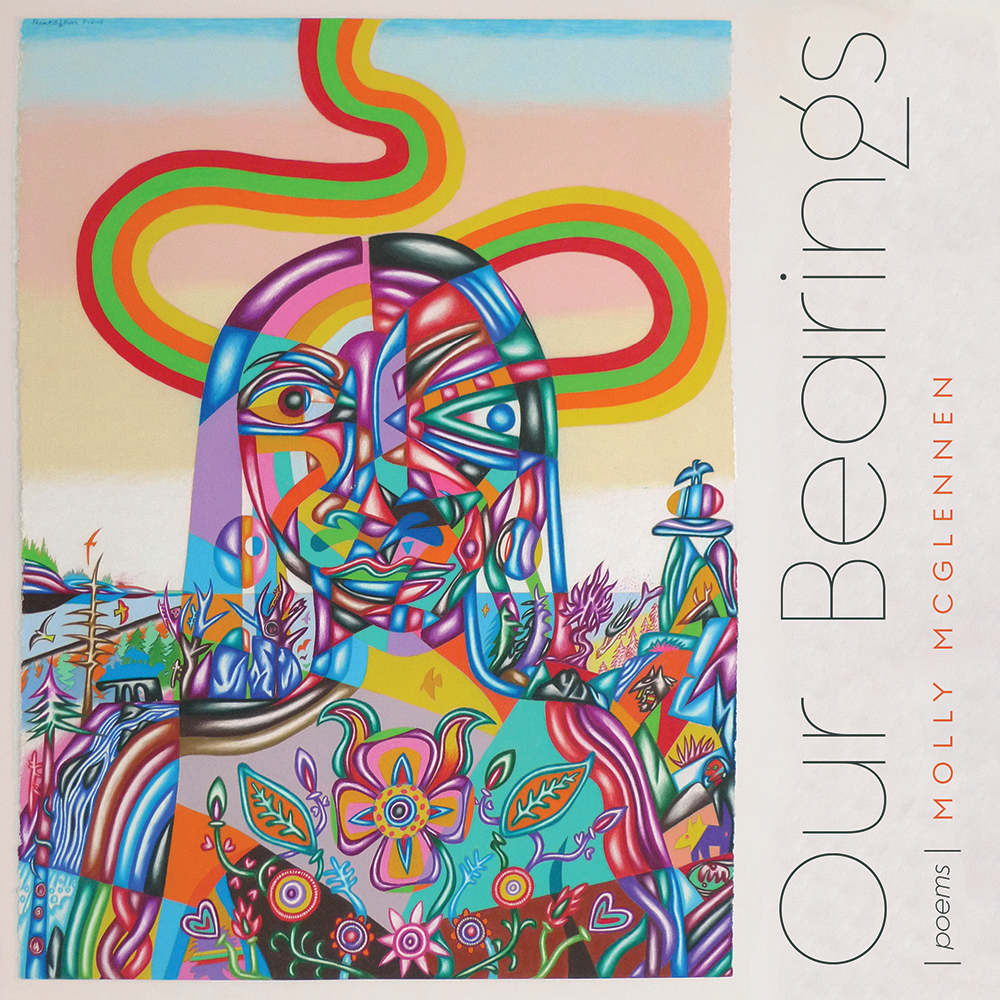
Our Bearings is a collection of narrative poetry that examines and celebrates Anishinaabe life in modern Minneapolis. Crafted around the four elements—earth, air, water, and fire— the poems are a beautifully layered discourse between landscapes, stories, and the people who inhabit them. Throughout the collection, McGlennen weaves the natural elements of Minnesota with rich historical commentary and current images of urban Native life. Reverence for wildlife and foliage is pierced by the sharp man-made skylines of Minneapolis while McGlennen reckons with the heavy impact of industrial progress on the souls and everyday lives of individuals.
BEARINGS IV

 When we were water
 we joined as we needed,
 were protected, we knew to come
 back around

 When we were water
 we were patient for rain
 and knew its arrival
 forecasted by purple sky.

 When we were water
 days worked in circles
 and years concentrically
 until we knew our beginnings.

 When we were water
 we dove and scouted
 like loons, swallowed
 pebbles by night.

 When we were water
 we turned into ourselves
 leaving behind what was
 no longer essential.

 When we were water
 we turned into ourselves
 claimed by heart circles
 that have never washed away.
Click here to read five questions about Our Bearings with Molly McGlennen.
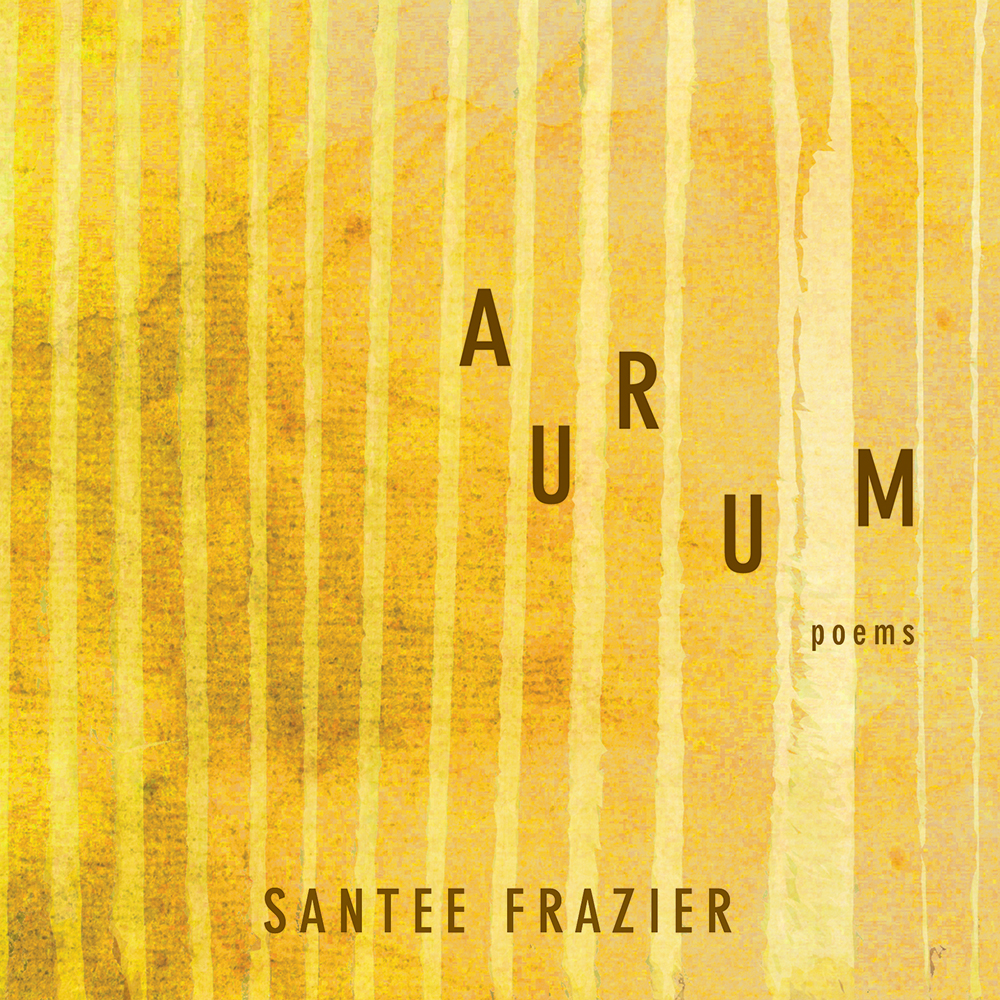
With images that taunt, disturb, and fascinate, Aurum captures the vibrantly original language in Santee Frazier’s first collection, Dark Thirty, while taking on a completely new voice and rhythm. Each poem is vivid and memorable, beckoning to be read again and again as the words lend an enhanced experience each time. Frazier has crafted a wrought-iron collection of poetry that never shies away from a truth that America often attempts to ignore.
ORE BODY
The shine off the streets reflects the coming bustle of dawn, of plastic and bolted steel, neon and industry caught in the asphalt. And as the grass sweats—the groan of machinery echoing off masonry—the dust rises, sewing itself in the fat of trees, shining the faces of men in the ditch under hard hats, shoveling dirt, whose language rolls the tongue of digging. The clank and song of Mimbres, a music hidden in the busting rock and soil. This ritual of sunrise, of shovel, and the gearing mechanisms of progress reminds me of a man in unlaced high-tops finger-painting a wall. Smearing gold into brick. His face shined like gunmetal, and when he sucked the gold from a paper bag, I knew his ritual had something to do with time travel, with brick, before mineral, polygon, the invention of wheel, story of flat, firing of clay. And now making my way through this city whose streets are named by numbers and minerals— the sunlight breaking the haze of dust and exhaust— I realize the oldest thing in this city is thirst.
Click here to dive deeper into Aurum with Santee Frazier.
The poems in Meditación Fronteriza are a celebration of culture, tradition, and creativity that navigates themes of love, solidarity, and political transformation. Written by Norma Elia Cantú, the award-winning author of Canícula, this collection carries the perspective of a powerful force in Chicana literature—and literature worldwide. Deeply personal yet warmly relatable, these poems flow from Spanish to English gracefully. With Gloria Anzaldúa’s foundational work as an inspiration, Meditación Fronteriza unveils unique images that provide nuance and depth to the narrative of the borderlands.
THE WALL
Written on a visit to Nuevo Progreso, Tamaulipas, Méjico, May 15, 2009

 No one believed it would happen here
 en el Valle
 where the birders find such joy
 in spotting unique exotic birds.
 No one believed they would build it here.
 “Just talk,” someone said,
 “puro puedo,
 Not to worry, they’ll never get the money.”

 But the wall went up,
 and hardly anyone noticed
 the way the land was rent in two
 the way the sky
 above seemed bluer against the brown metal
 jutting up and up
 like soldiers saluting a distant god
 sentinels silently guarding… what?

 Perhaps a way of life
 incongruent with their dreams,
 a pastiche of broken people
 crossing their quotidian desires
 from one side to the other.

 All legal and safe,
 sipping margaritas in el mercado
 or shopping at Walmart
 living.

 Best of both worlds,
 a friend tells me. But you gotta be legal to live it.
 Not for everyone the fruits of gringolandia.
 Not everyone sees the wall.

 Walls make good enemies: suspicious, defensive,
 fearful, who hide behind a wall
 solid as a heart hardened by fear.
 Who would’ve believed it would happen here?
Stephen J. Pyne and the University of Arizona Press have just completed an 11 book opus series that explains the fire history of the United States. The series started with Between Two Fires and concludes this month with To the Last Smoke: An Anthology. In between are nine regional looks at localized fire history. Together, Steve has captured the environmental and human history of wildfire in America. In this short video Steve discusses his approach.
Stephen J. Pyne is an emeritus professor at Arizona State University. He is the author of more than 30 books, mostly on wildland fire and its history but also dealing with the history of places and exploration, including The Ice, How the Canyon Became Grand, and Voyager. Most recently, he has surveyed the American fire scene with a narrative, Between Two Fires: A Fire History of Contemporary America, and a suite of regional reconnaissances, To the Last Smoke, all published by the University of Arizona Press.
In this time to read, we will be featuring one free e-book each week. This week we’re offering a book from our Latinx Pop Culture Series, which sheds light on all aspects of Latinx cultural production and consumption as well as the Latinx presence globally in popular cultural. This week, we’re featuring Sor Juana: Or, the Persistence of Pop by Ilan Stavans.
Download from our online shopping cart here. Available until 4/8/2020. Discount code is AZJUANA.
“Stavans introduces readers to a woman who, in the crucible of Spanish monastic life, forged a poetic idiom for writing verse between the identities of Europe and America.”–Los Angeles Review of Books
Book Description: Sor Juana: Or, The Persistence of Pop encapsulates the life, times, and legacy of seventeenth-century Mexican nun Sor Juana Inés de la Cruz. Ilan Stavans provides a biographical and meditative picture of how popular perceptions of her life and work both shape and reflect Latinx culture. Learn more
More than 2,000 entries spread across 55 genres were submitted for consideration. The list of finalists was determined by Foreword’s editorial team. Winners are now being decided by teams of librarian and bookseller judges from across the country.
Winners in each genre will be announced June 17, 2020 at noon Eastern time.
Congratulations, Derek!
For Authors
The University of Arizona Press publishes the work of leading scholars from around the globe. Learn more about submitting a proposal, preparing your final manuscript, and publication.
The University of Arizona Press is proud to share our books with readers, booksellers, media, librarians, scholars, and instructors. Join our email Newsletter. Request reprint licenses, information on subsidiary rights and translations, accessibility files, review copies, and desk and exam copies.
Support a premier publisher of academic, regional, and literary works. We are committed to sharing past, present, and future works that reflect the special strengths of the University of Arizona and support its land-grant mission.
 The University of Arizona Press