Open Arizona: New Essays Discuss Classic Works

May 6, 2020

We are pleased to announce the publication of three important new essays on our open access platform, Open Arizona. The essays bring together leading contemporary scholars to add perspective to formerly out-of-print works that have been republished on the site.

A key component of the Open Arizona project, which was funded by the Andrew W. Mellon foundation to make out-of-print books available as open access, is to add contemporary context to these works, some decades old. The newest essays are by Maurice Crandall, Vanessa Fonseca-Chávez, and Yvette J. Saavedra. These scholars offer perspectives framed by their expertise in history, Indigenous studies, border studies, and English, as well as women’s, gender, and sexuality studies. In thoughtful, individual essays, the address the works of Henry Dobyns, Grenville Goodwin, and María Herrera-Sobek.

The Social Organization of the Western Apache by Grenville Goodwin

In this book, Goodwin presents an in-depth historical reconstruction and a detailed ethnographic account of the Western Apache culture based on firsthand observations made over a span of nearly ten years in the field.

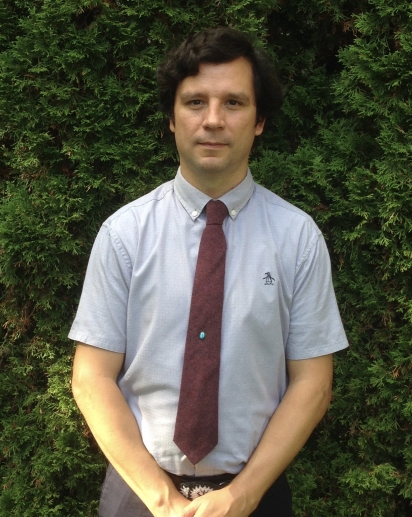
This project includes a new essay by Maurice Crandall, a citizen of the Yavapai-Apache Nation of Camp Verde, Arizona. He is a historian of the Indigenous peoples of the U.S.-Mexico borderlands and is currently assistant professor of Native American studies at Dartmouth College. Crandall’s essay, “Reflections on The Social Organization of the Western Apache and Grenville Goodwin Among the Western Apache: Letters from the Field” addresses the complexity of a white ethnographer’s relationship to and with the community where he worked.

Crandall is the author of These People Have Always Been a Republic published by The University of North Carolina Press.

Reconstructing a Chicano/a Literary Heritage edited by María Herrera-Sobek

Early literary works written in Spanish in what is today the American Southwest have been largely excluded from the corpus of American literature, yet these documents are the literary antecedents of contemporary Chicano and Chicana writing. This collection of essays establishes the importance of this literary heritage through a critical examination of key texts produced in the Southwest from 1542 to 1848.

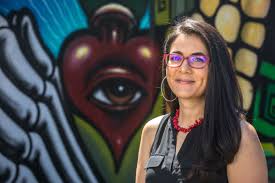
This project also includes the new essay “Reflections on Reconstructing a Chicano/a Literary Heritage: Hispanic Colonial Literature of the Southwest” by Vanessa Fonseca-Chávez, an assistant professor of English at Arizona State University. She writes, “Perhaps the most salient truth made evident by the collection is that the Spanish conquest left a troubled inheritance on which to build a literary trajectory.”

Fonseca-Chávez is the author of Colonial Legacies in Chicana/o Literature and Culture, which is forthcoming from the University of Arizona Press.

Spanish Colonial Tucson by Henry F. Dobyns

This book offers a fascinating account of the ethnic development of early Tucson. Using a variety of methods and sources, Dobyns reveals how Spaniards, mestizos from New Spain, and Native people from many tribes laid the ethnic foundations for the modern city.

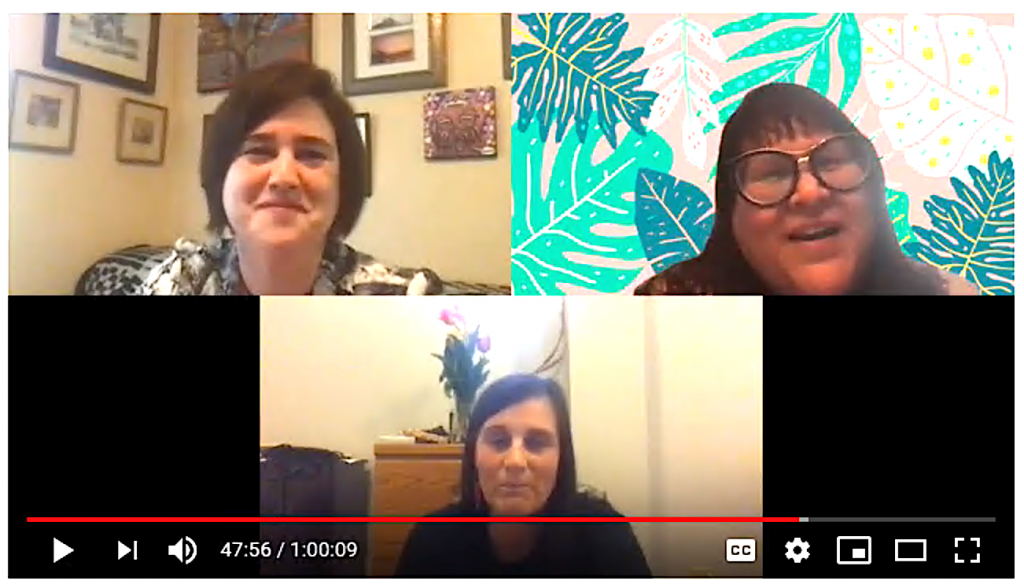
This project also includes a new essay by Yvette J. Saavedra, an assistant professor of Women’s, Gender and Sexuality Studies at the University of Oregon, titled “Spanish Colonial Tucson: Shifting the Paradigms of Borderlands History.” Saavedra writes, “When we review the significance of Dobyns’s work forty-three years after its publication, it becomes clear that his study marked an important shift in the field of borderlands history by further complicating our understanding of how communities develop within the processes of conquest and colonization.”

Saavedra is the author of Pasadena Before the Roses, published by the University of Arizona Press.

Excerpt From Sugarcane and Rum by John Gust and Jennifer Mathews

May 5, 2020

In Sugarcane and Rum: The Bittersweet History of Labor and Life on the Yucatán Peninsula, authors John Gust and Jennifer Mathews tell the story of sugarcane and rum production through the lens of Maya laborers who worked under brutal conditions on small haciendas to harvest sugarcane and produce rum. The book explains how rum continues to impact the Yucatán and the people who have lived there for millennia.

Below, read an excerpt on the Maya of Quintana Roo:

SUGAR AND RUM PRODUCTION ON THE YUCATAN PENINSULA

Sugar and rum production in Yucatan were influenced by two major factors: (1) the long growing cycle that affected when and how much labor was needed, and (2) the social relationship between the owner and working class that influenced where sugar was produced. This chapter explores the interrelationship of these factors through a discussion of how sugar growing moved from the central and southeastern portions of the peninsula to the wilds of the northeastern coast. The final section details the authors’ work investigating the small site of Xuxub and the larger site of San Eusebio near the northeastern coast of Yucatan.

THE WILD NORTH COAST OF QUINTANA ROO

The historical trajectory of the northern coast of Quintana Roo, including the Yalahau region, where the authors’ ongoing archaeological investigations are focused (see map 2), is quite different from the rest of the Yucatan Peninsula. Within the century following contact, European-introduced diseases resulted in a massive population reduction, perhaps as high as 90 percent. The surviving native peoples were concentrated into settlement regions across the peninsula, but Quintana Roo became a bastion for Maya rebelling against the Spanish.2 Because of this unstable social environment, in the mid-1500s only six encomiendas were established in Quintana Roo. These were located at the sites of Kantunilkin, Conil, Cozumel, Ecab, Pole, and Zama (Tulum/Tancah).

In 1546, the Maya of what is today Quintana Roo initiated the “Great Revolt” to protest their treatment by the Spanish. Although this uprising was squelched by 1547, the Spanish still regarded the area as hostile. A combination of low population density and little supervision by the Spanish along the northeastern tip of the peninsula fostered the development of piracy in the area.5 Legends recall pirates hiding their booty along the coast, and by the mid-1600s they began extracting the logwood tree (known locally as palo de tinte or palo tinto) near Ecab. The Spanish virtually abandoned the region to a small population of Maya and pirates by the mid-1600s because of the difficulty of maintaining the area. This lack of attention continued for the next two centuries, making the region a place of escape for those fed up with the colonial and early postcolonial system.

INDEPENDENCE, LAND LOSS, AND REVOLUTION

The previous chapter discussed the failure of the elites to live up to their promises of reform and betterment for Indigenous peoples after the war for Mexican independence. The result was loss of land and the Indigenous populations, including Yucatan’s Maya, being treated as nothing more than cheap labor instead of full participants in efforts to modernize Yucatan and grow its economy. Haciendas continued to expand, and by 1840, hacienda owners were buying up property, virtually land-locking Maya villages and making it impossible for them to sustain themselves, develop infrastructure, or have access to education.

When the Caste War of the Yucatan Peninsula (Guerra de Castas) started in 1847, the rebels began specifically targeting sugar-producing haciendas for destruction. The war raged on for several years, resulting in massive casualty losses of approximately 40 percent on both sides. By 1850, the armies of Yucatan had secured the western part of the peninsula. The Caste War ended with the defeat of the remaining rebels in most of the Mexican Yucatan by the mid-1850s. The exception was in the southeast, where war raged until finally ending in 1901, when the remaining rebels (the cruceros) were defeated by General Ignacio Bravo and his soldiers. Throughout the conflict, many Maya retreated to the remote “uncontrollable wilds” of the east.

The razing of sugar plantations not only devastated some of the Yucatan’s most profitable enterprises, but also led to sugar shortages and curtailed the production of cane alcohol. Those looking to restart production in the 1870s looked to the isolated north coast of Quintana Roo, which had soils suitable for sugarcane. Although the area had once been abandoned to pirates and hostile Maya, the inhabitants of the largest Maya town in the area, known as Kantunilkin, agreed to cease hostilities circa 1855, and instead helped local authorities keep the peace. The region was isolated and lacked infrastructure but was relatively safe and became the best option for sugar production. This region, which includes our study area, still contains historic ruins of several of these sugar operations.

Mapping Our Hearts: A Virtual Poetry Reading with Three Sun Tracks Poets

May 4, 2020

On Wednesday, April 29th, the University of Arizona Press partnered with Birchbark Books for a National Poetry Month event featuring three poets from the University of Arizona Press Sun Tracks series: Molly McGlennen, Casandra López, and Laura Da’.

Molly McGlennen read from her first book with the Press, Our Bearings, a collection of narrative poetry that examines and celebrates Anishinaabe life in modern Minneapolis. Crafted around the four elements—earth, air, water, and fire— the poems are a beautifully layered discourse between landscapes, stories, and the people who inhabit them.

Casandra López, read from her book, Brother Bullet, which speaks to both a personal and collective loss, as López confronts her relationships with violence, grief, guilt, and ultimately, endurance. Revisiting the memory and lasting consequences of her brother’s murder, López traces the course of the bullet—its trajectory, impact, wreckage—in lyrical narrative poems.

Laura Da’, has two books published with the Press, Instruments of True Measure, and Tributaries. Her newest book, Instruments of True Measure, charts the coordinates and intersections of land, history, and culture. Lyrical passages map the parallel lives of ancestral figures and connect dispossessions of the past to lived experiences of the present.

Big thanks to Birchbark Books in Minneapolis. Please consider ordering our poets’ books from their website to help support this important independent bookstore. Use this link.

Five Questions with Beaule and Douglass on ‘The Global Spanish Empire’

May 4, 2020

The Global Spanish Empire tackles broad questions about Indigenous cultural persistence, pluralism, and place making using a global comparative perspective grounded in the shared experience of Spanish colonialism. Edited by Christine Beaule, and John G. Douglass, the volume’s eleven case studies include regions often neglected in the archaeology of Spanish colonialism. The time span under investigation is extensive as well, transcending the entirety of the Spanish Empire, from early impacts in West Africa to Texas during the 1800s. The contributors examine the making of a social place within a social or physical landscape.

Here, Beaule and Douglass discuss the book, and the unique approach of looking at Spanish colonization globally.

This book has a unique wide scale approach in looking at the colonial Spanish empire beyond the Americas. What drove you to bring this book together?

Christine Beaule: John and I proposed an electronic symposium for the SAA meetings in 2018 on ethnogenesis because we were both very interested in identity formation processes in Spanish colonial contexts. We ended up with 16 papers, and a very well attended symposium. The discussion between the participants and audience members that day was highly engaging and interesting. Winning the SAA-Amerind Foundation prize meant hard decisions about how to winnow the papers down to ten (plus an introduction), but our workshop at Amerind was one of the most personally and professionally rewarding experiences we have ever had. Everyone learned so much from each other, particularly about case studies and regions that we rarely bring into conversations about the archaeology of Spanish colonialism. Moreover, it quickly became apparent on day 1 of the workshop that our ethnogenesis theme was not going to work for the book. The opportunity to talk it through in person, and to put our heads together to work out new themes and a different organizational schema, was invaluable. We believe that the volume is much more cohesive and focused because of the process. From the electronic symposium through several days of working together in person on our chapters, without interruptions or distractions, the process was ideal.

John Douglass: Christine and I went to grad school together many years ago and had wanted to collaborate on something. We both have been researching different aspects of Spanish colonialism for quite some time in different parts of the world from one another, so it seemed like a good match to work on this project together. We both wanted to learn more about other parts of the Spanish Empire than what we were familiar with because, in the end, we wanted to learn more about the parts of the world we did know through comparison. The group of colleagues we worked with on this project really were fantastic as their work spans close to 500 years, and is situated all across the globe.

Why is it important to look at colonialism on a global scale?

Christine Beaule: There is much to learn from in-depth analyses of the impacts of colonialism in a single community or region. However, a comparative approach allows us to see patterns over a longer span of time, as well as bringing disparate regions into conversation with each other. In doing so, we gain perspective on local impacts and local agencies that would not be visible otherwise. As Americanists, John and I do not always have time to keep up with the abundant literature produced by our regional colleagues, let alone cutting edge scholarship about other colonized regions of the world. Comparative projects like this one help us see those all-important similarities and differences in the ways that Indigenous cultures were impacted by and responded to colonialism. Although we often speak of colonists and Indigenous communities in binary terms, each of these groups was itself multicultural, so identity categories such as native and Spanish are problematized when we take a global perspective. Finally, I think that it is important to include cases in which strong Spanish footholds were not successfully established, or where efforts to incorporate peoples in regions outside colonies failed. Although they’re harder to see archaeologically, they remind us that Spanish colonialism was not monolithic or homogeneous, and that its impacts on local religious practices, political organization, and economies were similarly varied in scope and kind. Scholarship in regions such as Central America, Africa, the U.S. southeast, Pacific and Caribbean islands, and the Philippines help us all see the full range of impacts and responses, in ways that focusing on single colonies or heartlands of colonialism do not.

John Douglass: This book focuses not just on the global scale, but the global scale through time, which is an important piece of the puzzle. Chris DeCorse’s chapter looks at the very early spread of Spanish colonialism in west Africa in the 1400s and the last chapter is Steve Tomka’s work looking at what is now southern Texas and northeastern Mexico, and all the other chapters in the book are in other portions of the globe between these two points in time. To me, one of the main utilities of looking globally is that we are able to have comparative viewpoints on the ebb and flow of Spanish colonialism and the diverse actions and reactions by indigenous peoples the Spanish worked hard to colonize (with mixed results). I was also so impressed at the way different chapters were able to communicate with one another due to this global approach. The cultural, linguistic, and social historical connections between the Pacific and South America, between the Philippines and Mexico, between Colombia and west Africa, and many more such examples in the book, all led to extremely interesting conversations.

How does this approach possibly change the way we look at the studies of colonization?

Christine Beaule: Work on this project and others like it has taught me to question assumptions and generalizations about colonialism and colonization. Living in Hawaiʼi, an island archipelago that was colonized and overthrown relatively recently by the U.S., colloquial conversations about colonialism and indigeneity are part of daily public life. The opportunities I have had to work with so many brilliant archaeologists studying Spanish colonialism around the world have equipped me to challenge others’ generalizations about European and American imperial histories. When we are able to see the failures of colonization efforts, the pluricultural actors in these histories, and patterns of cultural persistence through time, it teaches us to talk about colonialism in more nuanced ways. For me, that more nuanced understanding is a gift, one that I try to share with family, friends, students and colleagues here in Hawaiʼi, and one that I look forward to developing further in our next academic project. 

John Douglass: Again, to me, the comparative approach of our volume helps bring us to fresh and new ideas about Spanish colonialism and indigenous actions and reactions to it. I’ve done a lot of research on Spanish colonialism in Alta California over the years and my eyes have been opened up in numerous ways by learning more the Spanish colonial experience – including both successes and failures – in other parts of the world. California was relatively late in the sequence and by then the Spanish has honed their models significantly. At the same time, we see some of the same difficulties and gains that were previously experienced in other parts of the world.

Was the Spanish approach to colonization the same globally? How?

Christine Beaule: Oh my goodness, no! Like all imperial powers, the Spanish borrowed an imperfect model from others (in this case, the Portuguese in west Africa), and modified it over time. There were certainly patterns that colonial decision-makers in Europe and in local contexts outside of Iberia tried to impose. Spatial patterns in planned colonies in Central America and missions in Texas and Guam provide one set of examples. Restricted access to sartorial and other material goods under racialized sociopolitical hierarchies are another category. These impositions, like ideological elements of Catholicism, were imperfectly adopted or enforced. The realities of each situation throughout the empire, and through time, meant that translations of beliefs and practices were incomplete. Local geographies and resources (material, capital, and human) meant that outside ideals, categories and standards required modifications. And, of course, Indigenous resistance and cultural persistence meant that, like many other non-colonial cases of intercultural interaction, people did not simply passively substitute one culture for another. The Spanish approach to colonization, as a result of these and many other axes of variability, had to adapt. Even then, they often failed, or some of their successes (e.g., with planned communities) were short lived and incomplete.

John Douglass: To parallel Christine here, while the Spanish did try to adapt in different ways through time, it was a mixed bag in terms of methods and results. I think the Spanish were good, in some ways, in approaching their goals through the lens of the local perspective and situation, although, again, there were varied actions and courses within the same general region. In the case of the Maya, for example, early on the general theme was to do whatever the Spanish could to destroy Maya culture through, among other things, burning almost all examples of their bark paper books. Several hundred years later, the way the Spanish taught local indigenous populations in the highlands of Guatemala about Christianity was through understanding the local oral and written traditions and belief systems, and then recasting Christianity through those same local perspectives.  At the same time, like Laura Matthews and Bill Fowler’s example of Ciudad Vieja in San Salvador in the book, the Spanish did try to recreate colonies as they had elsewhere, with poor results.

Looking at all the contributions to this book, were there any surprises that surfaced in Spanish colonization?

Christine Beaule: … our journey began with a focus on documenting variability in processes of ethnogenesis. Once we got a subset of the original symposium’s participants together in a room, we collectively realized that our case studies (with only one exception) did not address ethnogenesis at all the way we were defining it narrowly! The two themes of the edited volume, place making and pluralism, emerged in the course of an intensive discussion of the points of overlap between chapter drafts. That rapid shift in focus informed the workshop discussions for the rest of our time together in Dragoon. I do not believe it would have been possible without the opportunity to work through these issues together, and so the book’s focus turned out to be the first big surprise.

The other surprise was just how powerful the concept of place making turned out to be for our comparative study of Spanish colonialism. We wrestled with conceptions of space and place that incorporated geographic, social, and agency considerations. What we all came up with is a theoretically powerful framework that helped us all to understand and explain patterns in material culture, diverse conceptions and uses of space, and the roots of Indigenous resistance and resiliency.

Because there were so many points of connection between all of the different case studies, despite big differences in their foci and details in their historical trajectories, we came to deeply appreciate how the two related themes wove all of the chapters together into a coherent whole. John and I are proud of both the journey and the final product. We treasure the friendships we fostered and the joy of pure intellectual exchange and growth that this book represents.

John Douglass: I think Christine makes good points. The only other thing I would add is that I was surprised as we discussed our draft chapters during our workshop at the Amerind Foundation how many interesting and pointed connections there were between papers: geographically, thematically, culturally, and the list goes on. This relates to one of my answers above. These connections were clear between the inhabitants of colonies and expeditions even in situations where they were separated vastly geographically or temporally. As one example of many, the papers by Chris DeCorse (west Africa) and Juliette Wiersema (western Colombia) are focused on two regions of the world thousands of miles apart and their papers analyze events hundreds of years apart. Yet, as we discussed the papers in the workshop, we all came to realize that the enslaved, and later freed, Africans working in mines and along the rivers of western Colombia Juliet wrote about were from the region Chris detailed in his paper. These kinds of surprising connections help us better understand the deep, and poignant, history of colonialism across the globe which have created complicated webs of relationships both in the past and present.

Escape the News with University Press Books

May 1, 2020

The university press community has compiled an “Escape the News” reading list! The escape theme was interpreted broadly: submissions range from music history and poetry, graphic novels, photography and illustrated books, short stories, novels, memoirs, and natural history. There is also an international flavor to the list—especially in the areas of creative literature, fiction, poetry, and fine arts—indicating the global nature of the university press community. The goal for the list is to offer readers a way to entertain and inform in a time when reading allows us a portal to other worlds, when we can’t quite get there in person.

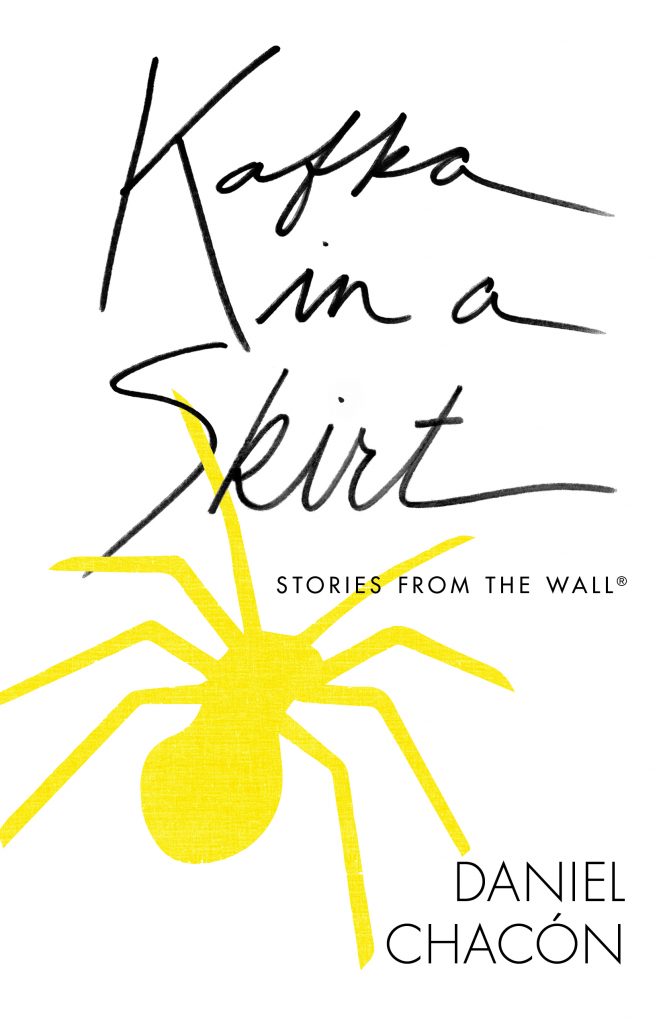
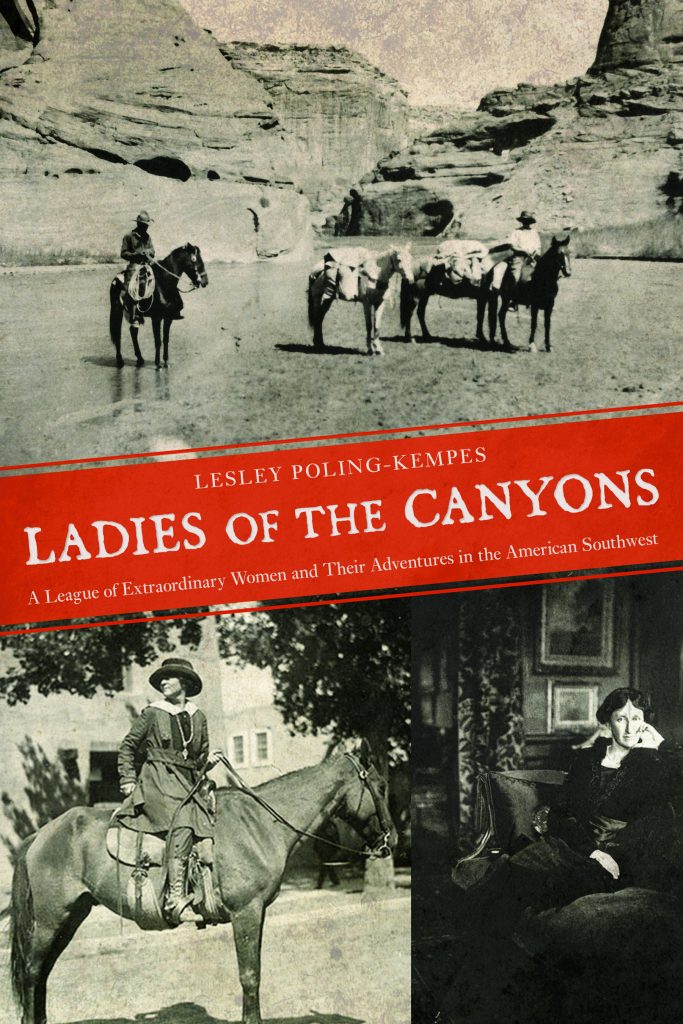
Our book picks for this “Escape the News” reading list are Kafka in a Skirt by Daniel Chacón and Ladies of the Canyons by Lesley Poling-Kempes.

“Daniel Chacón’s collection of stories challenges convention and resolution, offering us thought-provoking insights into our current (and oftentimes surreal) political climate. Kafka in a Skirt breaks new ground in the art of social commentary that highlights the strangeness of our human condition and the follies of the skewed perceptions we maintain of ourselves, our neighbors, and the troubled world we live in.”—Rigoberto González

Poling-Kempes has done an admirable job scouring archives for these women, who have been largely left out of the historical record of the West. It’s a kind of prequel to our common history of the Southwest, peopled by women with long skirts and cinched waists in the desert heat, riding cowboy style, trying to do right by the land they all loved.”—Los Angeles Times

Discover more books from this reading list here.

Smithsonian Magazine Selects Sugarcane and Rum for Their Weekly Reading Series

April 30, 2020

We are thrilled that Sugarcane and Rum was selected for the latest installment of Smithsonian magazine’s “Books of the Week” series!

Here’s what Smithsonian had to say about Sugarcane and Rum:

Gust and MathewsSugarcane and Rum looks beyond the Yucatán Peninsula’s reputation as an idyllic getaway spot to expose the harsh conditions faced by its 19th-century Maya laborers.

Hacienda owners implemented punitive economic systems where workers became deeply indebted to their bosses, only to see their freedoms curtailed as a result. At the same time, the authors note, these men and women enjoyed a certain level of autonomy as an indispensable source of labor come harvest time.

‘What this history shows,’ according to the book’s introduction, ‘is that sugarcane and rum are produced on a massive scale to satisfy the consumptive needs of the colonizers, which only compounds its exploitative nature as the products became available to the middle and working class.’

Meilan Solly for Smithsonian magazine

Read the full list of book recommendations here.

Free E-Book of the Week: Buzzing Hemisphere / Rumor Hemisférico

April 28, 2020

For this week’s free e-Book of the Week, we’re wrapping up National Poetry Month by featuring a collection from our award-winning Camino del Sol Series, which spotlights poetry, fiction, and essays from both emerging and established voices in Latinx literature. A work of global urgency that maps across spaces and between and across languages, this week we are pleased to offer Buzzing Hemisphere / Rumor Hemisférico by poet Urayoán Noel as a topical, critical work of poetic artistry.

In Buzzing Hemisphere / Rumor Hemisférico, poet Noel creates a hemispheric poetics that is both broadly geopolitical and intimately neurological. We hear the noise of cities such as New York, San Juan, and São Paulo abuzz with flickering bodies and the rush of vernaculars as untranslatable as the murmur in the Spanish rumor. Oscillating between baroque textuality and vernacular performance, Noel’s bilingual poems experiment with eccentric self-translation, often blurring the line between original and translation as a way to question language hierarchies and allow for translingual experiences.

Download from our online shopping cart here. Available until 5/6/2020. Discount code is AZBUZZ20.  

“Noel succeeds in creating a new kind of compilation, a testament to the limits of genre, and a compelling endeavor for any reader up to the challenge.”—Booklist

“A book of daring, cheeky, trendy Nuyorican poetry.”—Virtual Boricua

“Along with such rigorous structural framework and play, the collection is pleasingly grounded at each turn in a sensibility able to alternate not only between languages but also between personal and social purpose.”—The Volta Blog

Learn more 

Molly McGlennen Reads ‘Ode To Prince’ from Our Bearings

April 27, 2020

University of Arizona Press author Molly McGlennen shared a video she did recently of her reading her poem “Ode To Prince,” a poem she dedicated to the late Minneapolis musician and read to honor the recent four-year anniversary of Prince’s passing.

The poem is in McGlennen’s new collection, Our Bearings, published by the University of Arizona Press.

Emmy Pérez Selected for The Big Texas Read

April 27, 2020

Readers in Texas now have the opportunity to be part of statewide book clubs, which have started recently as a way for readers to connect while they are staying home and staying safe. We are thrilled that Texas Poet Laureate and University of Arizona Press author Emmy Pérez is one of the featured authors in The Big Texas Read! Her collection, With the River on Our Face, will be one of the books bringing Texans from all over the state together during these stressful times.

“In Texas, the organizations Writing Workshops Dallas and Gemini Ink have joined forces for The Big Texas Read, a statewide book club that will take place over Zoom every two weeks from April 29 through June 10. As described on Writing Workshops Dallas’s site, “[W]e’ll be reading ONE work of prose or poetry written by a Texas author every 1-2 months from now until the bug is squashed…Think of it as a big virtual book club, only you get to stay home, mix a cocktail, eat a big piece of chocolate cake, and snuggle up on the sofa.” Organizer Blake Kimzey told The Dallas Morning News, “Most people are siloed at home with their families, or they’re by themselves. The goal of this is to bring back interactivity with people. Not just to read the books, but to have a release from the current moment.” Independent bookstore partners of the event include Dallas’s Interabang Books and San Antonio’s The Twig Book Shop, where readers can order the titles for home delivery or curbside pickup.”

Rachel Kramer Bussel for Forbes

Read the entire article for Forbes here.

Emmy Pérez’s poetry collection With the River on Our Face flows through the Southwest and the Texas borderlands to the river’s mouth in the Rio Grande Valley/El Valle. The poems celebrate the land, communities, and ecology of the borderlands through lyric and narrative utterances, auditory and visual texture, chant, and litany that merge and diverge like the iconic river in this long-awaited collection.

 “In divided times, Emmy Pérez’s voice speaks not only from America, but from the Americas, north and south. A wise, healing poetry.”—Sandra Cisneros

 “Emmy Pérez is a word musician and magician. This book has a powerful pull—it has secret places where part of you will reside. It is a good season when work like this is in bloom.”—Luis Alberto Urrea

Free E-Book of the Week: Prehistory, Personality, and Place

April 22, 2020

In this time to read, we will be featuring one free e-Book each week. This week we’re highlighting our books in archaeology and offering Prehistory, Personality, and Place: Emil W. Haury and the Mogollon Controversy as the free e-Book of the week.

When Emil Haury defined the ancient Mogollon in the 1930s as a culture distinct from their Ancestral Pueblo and Hohokam neighbors, he triggered a major intellectual controversy in the history of southwestern archaeology, centering on whether the Mogollon were truly a different culture or merely a “backwoods variant” of a better-known people. In this book, archaeologists Jefferson Reid and Stephanie Whittlesey tell the story of the remarkable individuals who uncovered the Mogollon culture, fought to validate it, and eventually resolved the controversy.

Download from our online shopping cart here. Available until 4/30/2020. Discount code is AZHAURY20.  

“Archeologists Jefferson Reid and Stephanie Whittlesey ably chronicle this controversy and the personalities who drove it.”—American Archeology

Learn more 

For Authors

The University of Arizona Press publishes the work of leading scholars from around the globe. Learn more about submitting a proposal, preparing your final manuscript, and publication.
Inquire

Requests

The University of Arizona Press is proud to share our books with readers, booksellers, media, librarians, scholars, and instructors. Join our email Newsletter. Request reprint licenses, information on subsidiary rights and translations, accessibility files, review copies, and desk and exam copies.

Request

Support the Press

Support a premier publisher of academic, regional, and literary works. We are committed to sharing past, present, and future works that reflect the special strengths of the University of Arizona and support its land-grant mission.

Give